Orion CT-80 f/5 Refractor Telescope Review:
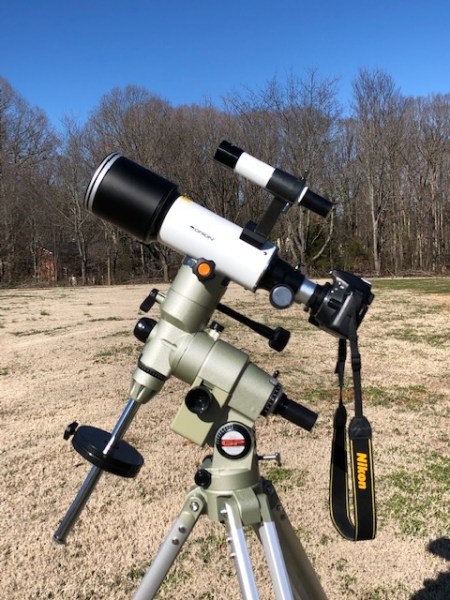
This telescope is sold as an optical tube assembly, without accessories from Orion Telescopes and Binoculars. However, no problem, as I have extra finders, an equatorial mount and a correct image (amici) diagonal and plenty of eyepieces.
This is a surprise birthday gift from my son, Brad. I’d always wanted an 80mm f/5 refractor, since University Optics sold their 80mm refractor kit, which required painting and assembly. However, I wasn’t too excited about the painting and assembly. It’s hard to duplicate a factory paint job with a spray can. 🙂
The telescope fits nicely to my Vixen GP mount and I had a three pound counterweight which allows for perfect balance. A smaller and lighter duty equatorial mount would be sufficient for the CT-80, but the Vixen GP makes for a rock steady mount for sure. A good quality heavy duty tripod could also suffice for either astro or terrestrial viewing. The GP mount and tripod with the legs folded together, with the telescope can be easily be carried all together and all in one trip.
Before I go to my first light evaluation, I’ll share what I found in the shipping box. It was packed very nicely in a heavy corrugated box and I was surprised at its light weight. The optical tube and dew-shield are both made of aluminum and has a beautiful pearl-white paint job.
The rack and pinion gear assembly is made of steel. The focuser had a minor rough feel, but after a little petroleum jelly on the gear rack, and then with a bit of adjusting the “lock-down” thumb-knob, problem solved.
So, everything was good so far, but how would it perform under the night sky?
First Light:
My first target was the beautiful double star, Castor in Gemini. I started with 33x, but this was not enough magnification. I then added a 2.8x Barlow, giving a magnification of 93x and was pleased with the double being cleanly separated.
Something worth noting: When focusing on lunar or planetary features, they would”snap into focus” which is an indicator of good optics. I was actually surprised, as I’ve tested much more expensive telescopes that lacks this ability, and would seemingly “drag” into focus.
My next object was the Trapezium in Orion. The four primary components were crisp and clean even at 33x. When increasing the magnification to 93x, the four primary stars were a beautiful sight indeed. The Orion Nebula appeared very bright with excellent contrast, but what about galaxies?
M81 and M82, located in Ursa Major, have always been two of my favorite galaxies. Both galaxies fit nicely within the large 1.8º field of view at a 33x magnification. A beautiful sight! This took me back more than forty years (1977) when I first observed this galaxy pair with a 4.25-inch f/10 Edmund Newtonian. So, I’d been outside for almost an hour which was my time allowance for this night. I have much larger telescopes, but would never set one up for such a short observing session.
This telescope had already proved its value and convenience as being light and compact, also providing excellent views of brighter deep-sky objects.
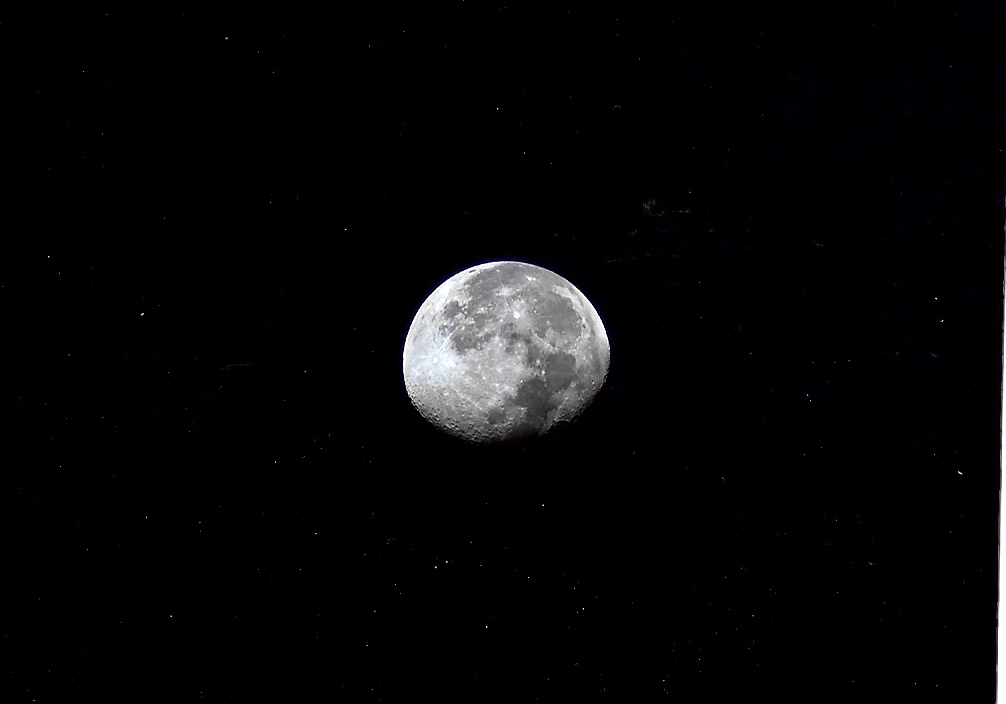
My wife has always had an interest in making some photos of the moon. Now for her story: By Debbie Ivester
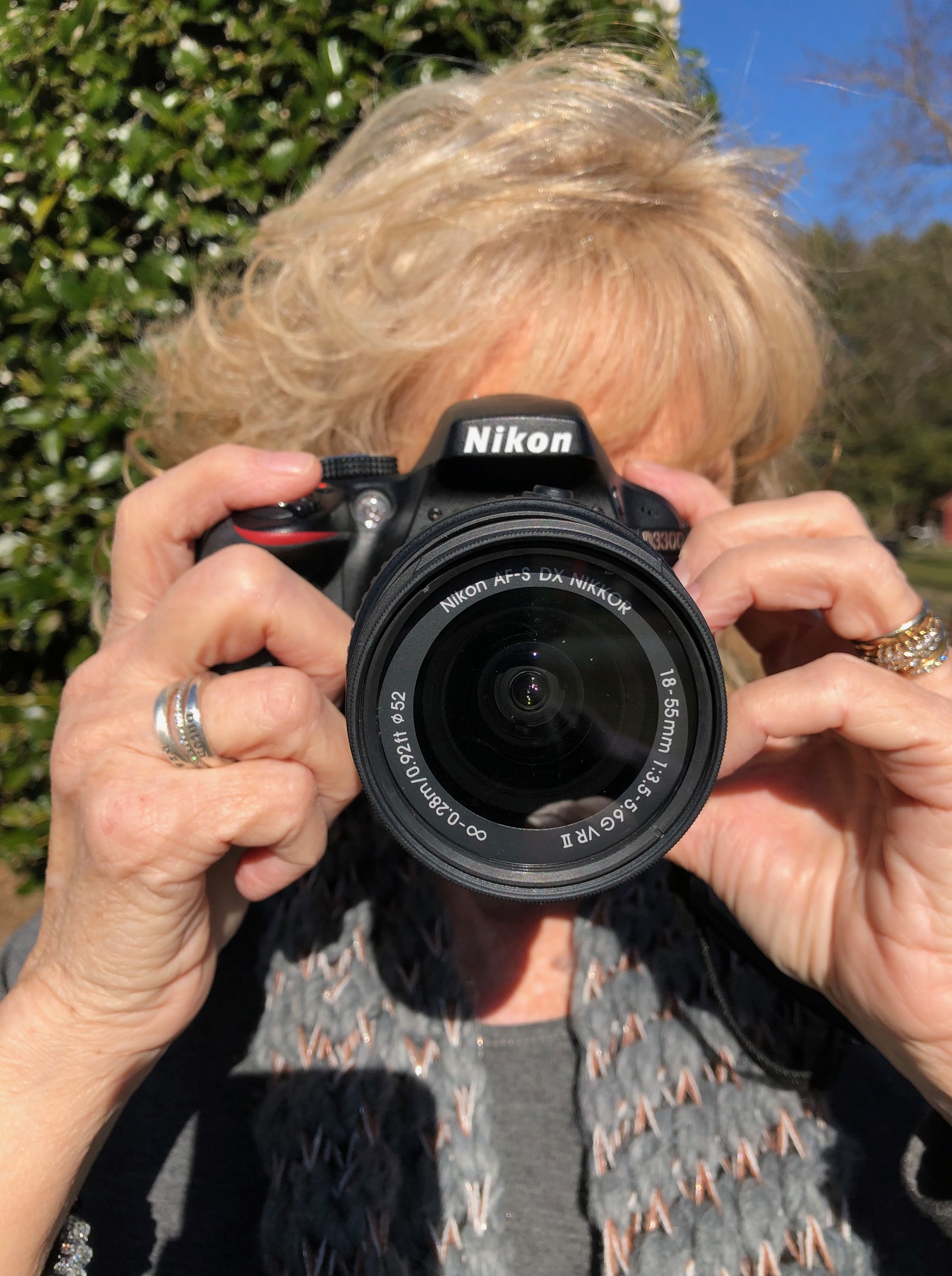
My first photo of the moon: By Debbie Ivester
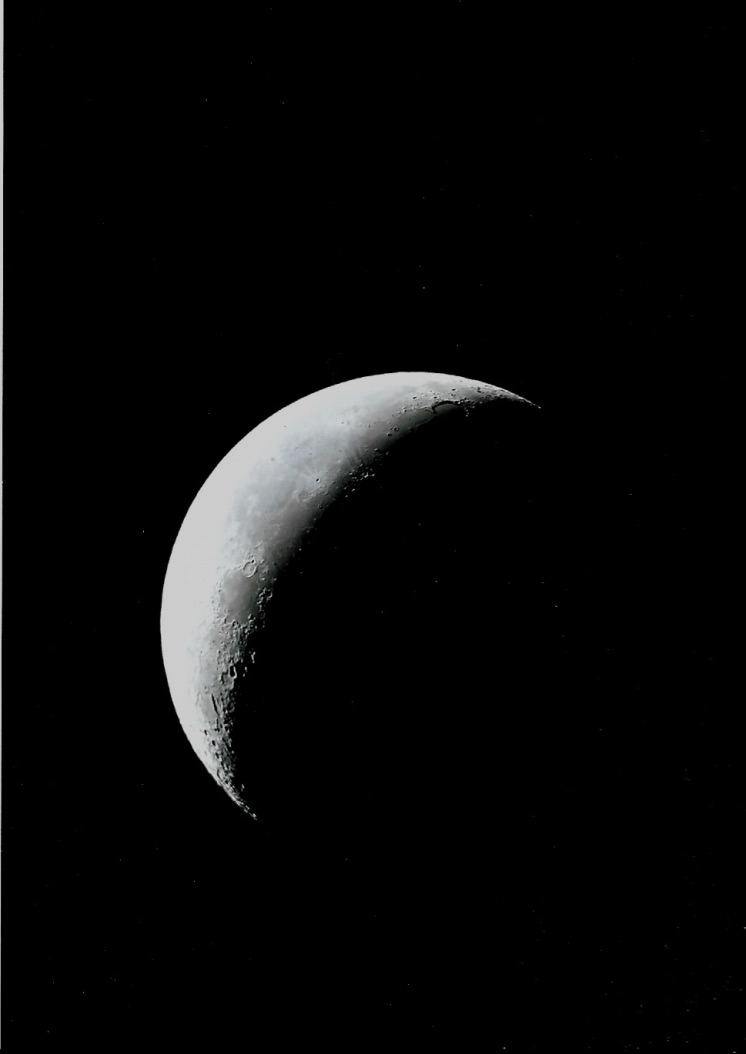
Other attempts of the moon:
Easy enough to attach the camera to the telescope:

I changed the “single-screw” attachment ring on the back of the telescope, to a more secure “carbon-fiber” ring with two-screws to more securely hold the camera: Debbie

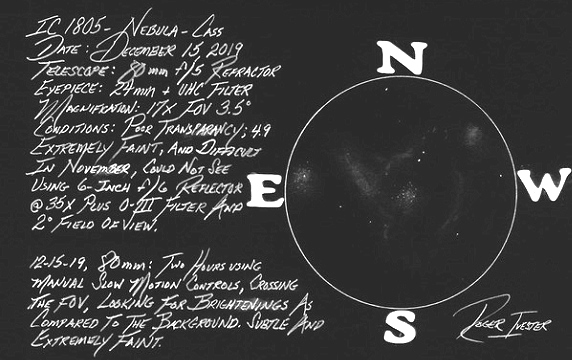
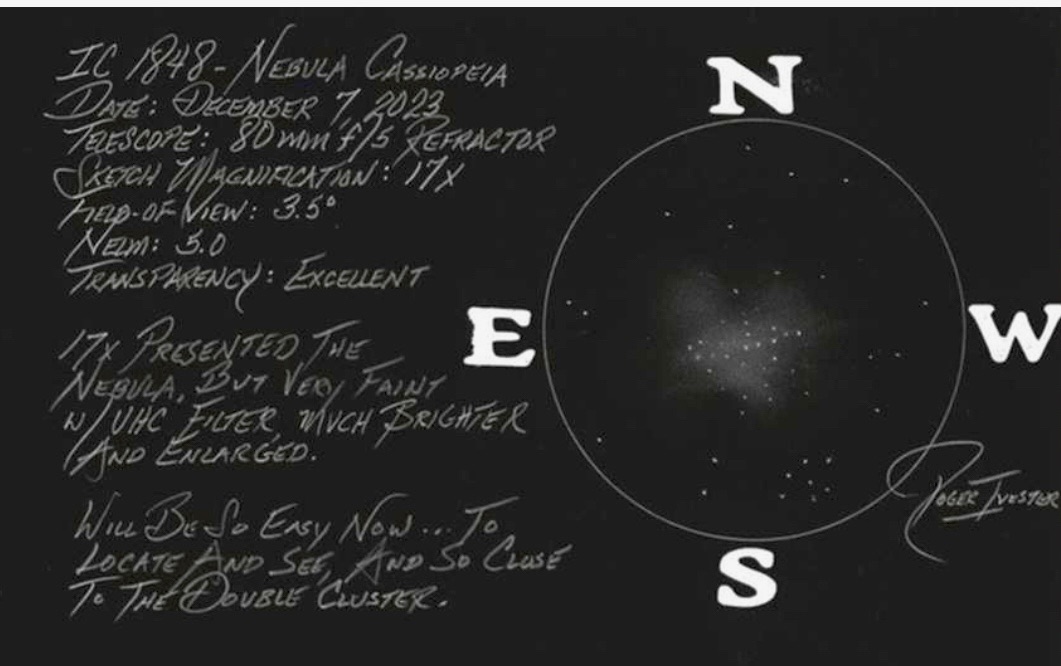
I wanted to include a couple examples of my pencil sketches using the CT-80: Roger
 rogerivester.com