The 61 Finest Double And Red Stars: From The Finest Deep-Sky Objects By James Mullaney And Wallace McCall
“On Public Nights at Allegheny Observatory, when the dome of the 13-inch refractor is crowded with visitors, all anxious to look at everything in the sky, a handy finding list of impressive objects is invaluable.”
” These words prefaced our short list of celestial showpieces published in the December, 1962, issue of “Sky and Telescope.” We now present an expanded version….” James Mullaney and Wallace McCall
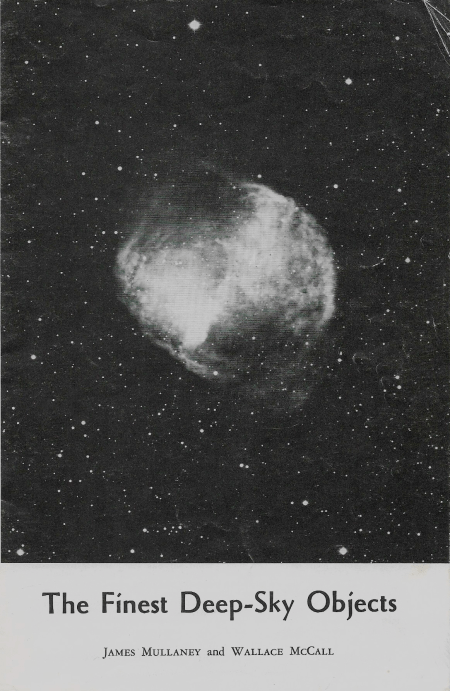
I’ve been wanting to compile an observing list of “only double and red stars” using a 4-inch or smaller telescope. I wanted a fairly short list that would allow for a more casual approach and to bring back memories from my earlier days as an amateur. I’m also anxious to begin observing double and red stars again, which are perfect targets for suburban observers, as light pollution and a bright moon has little effect on these objects.
From February 2009 until June 2024, the Observer’s Challenge report consumed most of my time as related to observing. The report began in Las Vegas with Fred Rayworth, but the last five years were with Sue French.
The original objective was to promote visual observing, notes and pencil sketching, but with so few visual observers it became more imaging. It’s my opinion, based on my experiences, and with many astronomy clubs over the past 30 years, pencil sketching is “pretty much” nil or naught in amateur astronomy these days or currently.
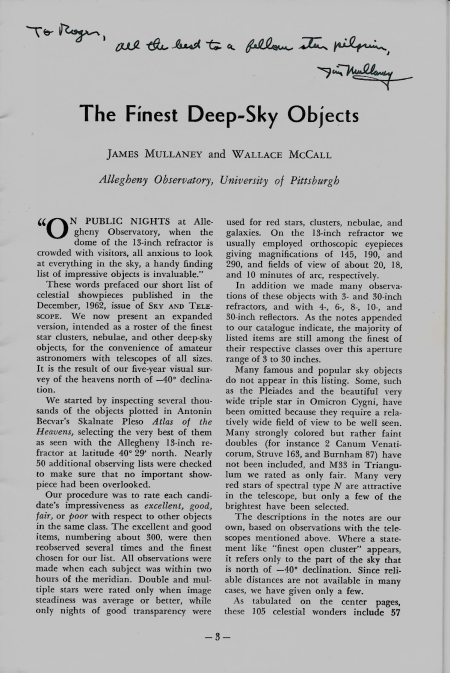
The “Finest Deep-Sky Objects” was one of my very first deep-sky reference books, which makes this effort special. The FDSO’s contains 57 double and multiple stars, 4 red stars, 10 open and 11 globular clusters, 12 planetary nebulae, 3 diffuse nebulae, and 8 galaxies.
For this project, I will use only the 57 double/multiples and the 4 red stars listed in the book. The most difficult of the double stars is Sirius, but now (2026) with the wide separation is a great time to attempt this one really challenging double. I’ve seen Sirius B with a 102mm f/9.8 Vixen refractor, 102mm f/8 FS Takahashi, and a 10-inch f/4.5 Newtonian with a 5.25-inch effective aperture.
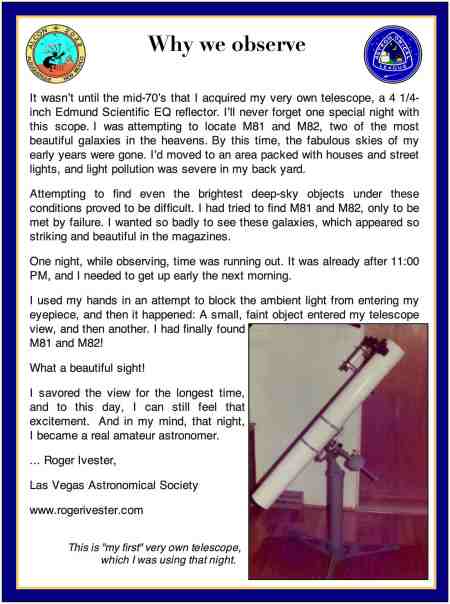
So, I am wanting to go back and “maybe feel” some of the excitement I had while using my first telescope: A 4.25-inch Edmund EQ reflector…when all deep-sky objects were new to me.
My 4.25-inch Edmund reflector is pictured below which I purchased in March 1977. I have so many fond memories using this telescope.
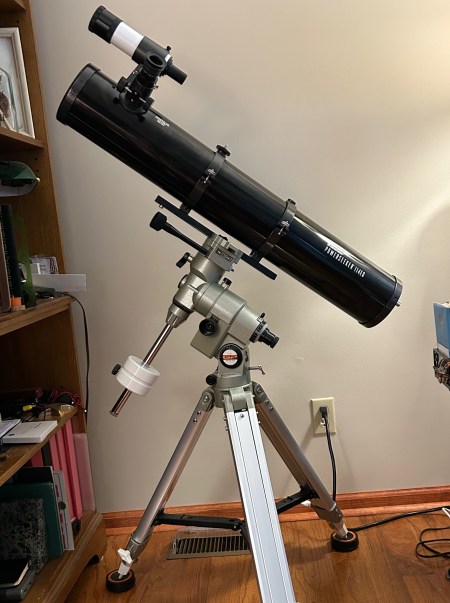
Since I no longer have the Edmund reflector, I’m planning to use a 4.5-inch f/8 reflector, which was given to me by a friend, earlier this year (2025). I thought oh no…I don’t need another telescope, but took it anyhow. I’m glad I did, and after center-marking the primary mirror and collimating, I was surprised how good it performed. And it’s also in pristine condition, with a really nice black/charcoal metallic paint job, with a clear coat! So, little did I know that six-months later I would attempt the “61 Finest Double and Red Stars” with this telescope.
I’m thinking that this telescope will or should perform similar to the Edmund reflector. Excellent collimation is essential for double stars. I’m anxious to get started and will begin the next clear night, but I’ll not be in any hurry, as the “fun is the journey, and not the destination.”
Note: There are a few of the double stars that have a separation too close to split with the 4.5-inch and will require that I use my 6-inch f/6 Newtonian or 102mm f/9.8 Vixen refractor. I will definitely leave out Sirius for obvious reasons.
The equatorial mount that came with this telescope was too lightweight and flimsy for serious deep-sky work. Fortunately I had a quality Vixen GP mount that works perfectly with this telescope. A simple sight-tube would have worked better than the original finder scope. Fortunately, I had an extra 8 x 50 quality finder. The quality of the optical tube assembly is actually pretty good, and I look forward to using this telescope.
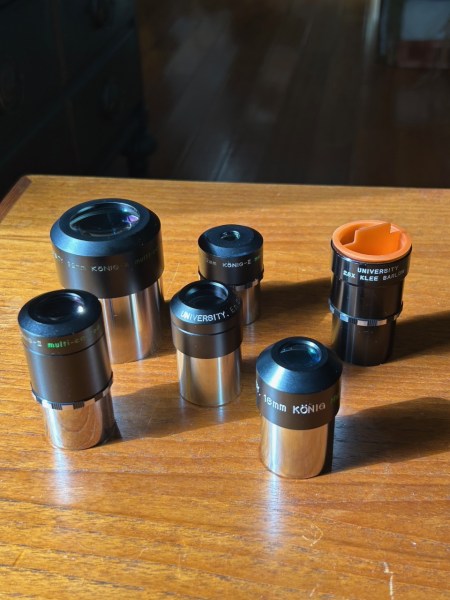
I plan to use “only my vintage” University Optics Konig’s (pictured below) for my double star project. Since I’m trying to mimic my observations from more than 40 years ago, using a 4.25-inch Edmund reflector, these “less modern” but excellent quality eyepieces would seem more appropriate.
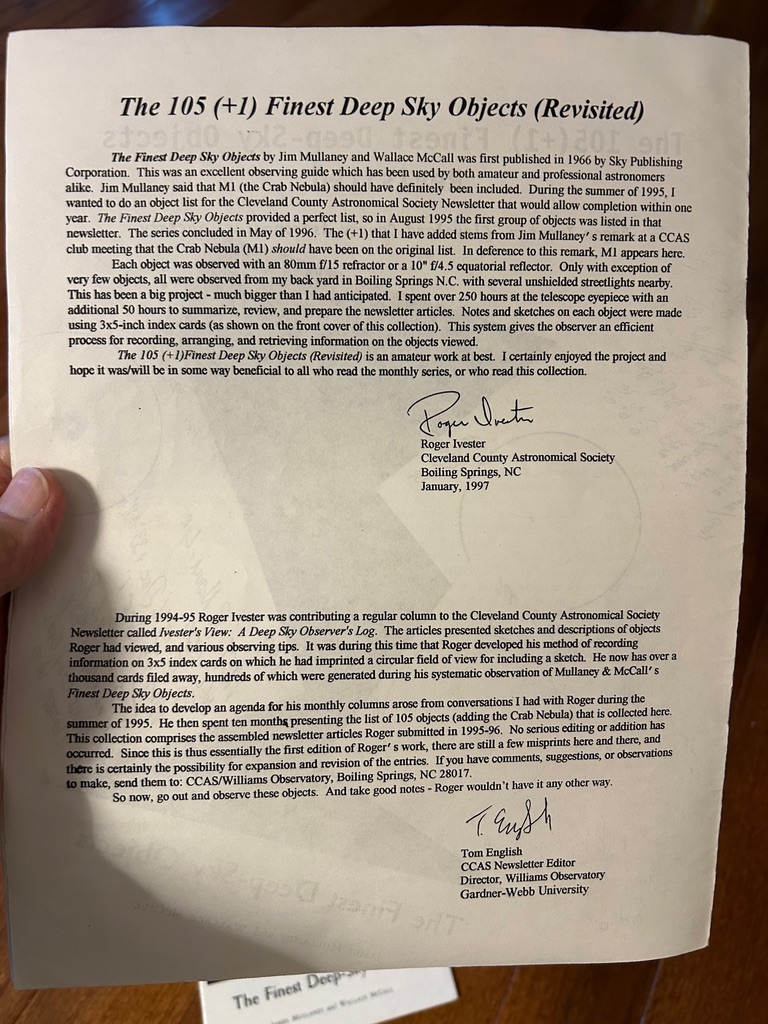
Beginning in August 1995, I began a comprehensive review of all 105 objects in the FDSO’s, but adding the Crab Nebula. Jim always said that M1 should have been included. So, I added and named my publication “The 105 (+1) Finest Deep-Sky Objects (Revisited)” and spent over 250 hours at the eyepiece. I finished or concluded my quest in May 1996, but then spending at least 50 or more hours to compile my notes for the self-published book. My goal was to complete the list within one year…which I achieved. I really underestimated just much time and effort this project would require.
My astronomy friend Tom English helped me compile and print the book. At one time, for about eight years we enjoyed many nights of observing together from my backyard. Tom, at that time was an astronomy professor at a local university and also enjoyed observing both double and red stars.

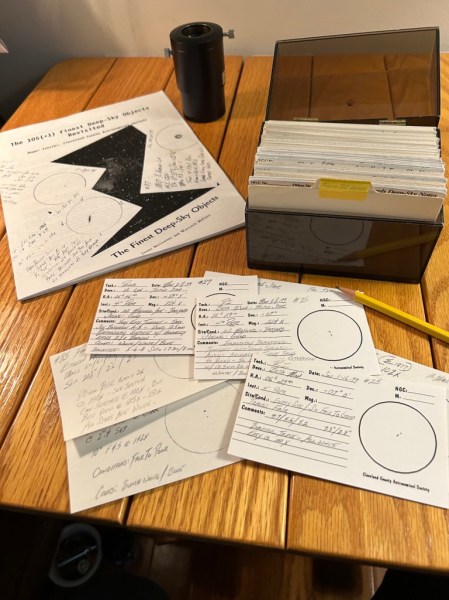
All of the 3 x 5 note cards, more than 400 of them contain notes and pencil sketches with all work being performed at the telescope eyepiece.
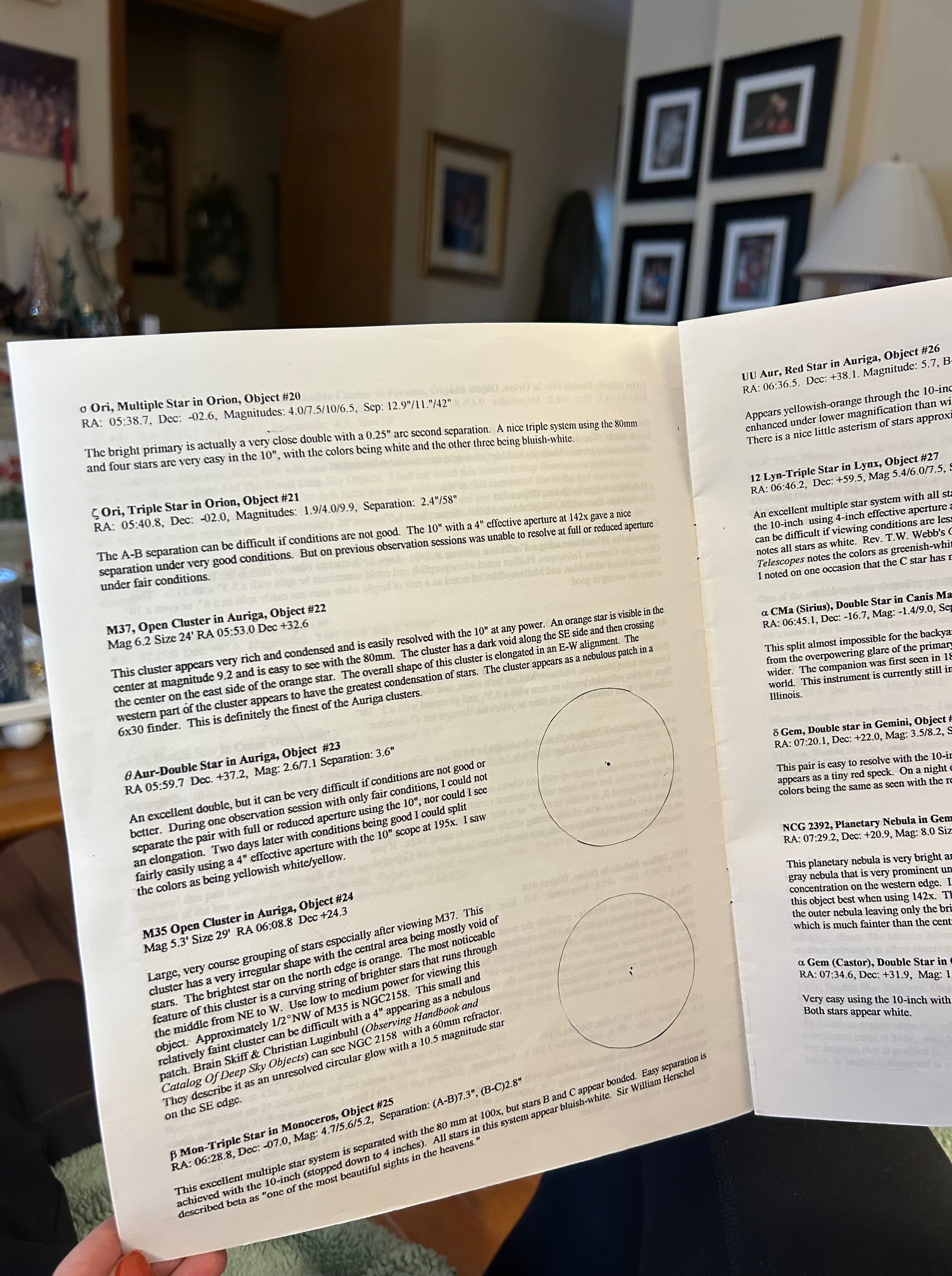
The FDSO’s list of double and red stars are as following:
- Eta Cas
- Gamma Ari
- Alpha Psc
- Gamma And
- Iota Cas
- Gamma Cet
- Theta Eri
- 32 Eri
- Beta Ori
- Eta Ori
- Lambda Ori
- Theta Ori
- Iota Ori
- Sigma Ori
- Zeta Ori
- Theta Aur
- Beta Mon
- UU Aur (Red Star)
- 12 Lyn
- Alpha CMa
- Deta Gem
- Alpha Gem
- Kappa Pup
- Zeta Cnc
- Iota Cnc
- Gamma Leo
- Xi UMa
- Delta Crv
- 24 Com
- Gamma Vir
- Y CVn (Red Star)
- Alpha CVn
- Zeta UMa
- Epsilon Boo
- Xi Boo
- Mu Boo
- Delta Ser
- Zeta Crv
- Xi Sco
- Beta Sco
- Nu Sco
- Alpha Sco
- 16-17 Dra
- Alpha Her
- Delta Her
- Rho Her
- Nu Dra
- 95 Her
- 70 Oph
- Alpha Lyr
- Epsilon Lyr
- Theta Ser
- Beta Cyg
- Delta Cyg
- Gamma Del
- 61 Cyg
- Beta Cep
- Mu Cep (Red Star)
- Zeta Aqr
- Delta Cep
- 19 (TX) Psc (Red Star)
 rogerivester.com