My Attempt To Observe The Entire Messier Catalog With Small Telescopes From A Bortle ~ 6.5 Sky
Over the past year, I’ve discussed observing difficult Messier objects using a small telescope, with a number of amateurs. Seems that everyone has a list, but most all agree with M74, M76, M97, M101 and M109. However, we know that the observer, location, and light pollution are all important factors.
One observer told me they had observed all 110 objects from a good site, but was younger using a 3.5-inch Questar.
Expert visual observers, Tony Flanders and Jay Reynolds Freeman shared their thoughts also.
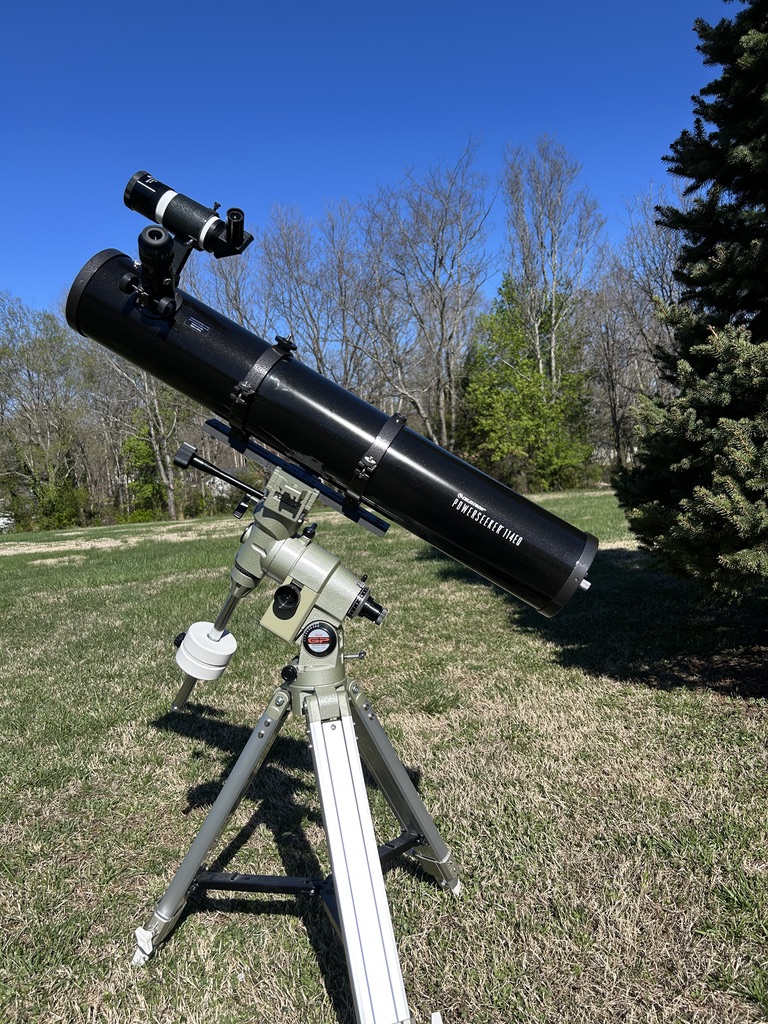
Using a humble 4.5-inch f/8 Newtonian that a friend gave me last year, I observed eight Messier objects from my suburban backyard on Friday night (March 20th.) The transparency was really poor, due to incredible amounts of pollen in the air. The Crab Nebula was easy and bright, but couldn’t see galaxy M109. I decided not to use my 80 mm f/5 refractor due to the poor transparency.
I will “not likely be able to see many of the objects” using the small refractor, due to light pollution, but hopefully with the 4.5-inch reflector. Now remember, I’ll be attempting all from my suburban backyard with a Bortle 6.5 sky, and sometimes worse!
I’ve observed all of the Messier’s three times using a 10-inch f/4.5 Newtonian, and from my suburban backyard, and as expected with ease. After 15 years of the Observer’s Challenge report, I needed a challenge, but a fun challenge, and using two small telescopes for the Messier objects seemed to be the perfect challenge.
The two telescopes I plan to use are as following:
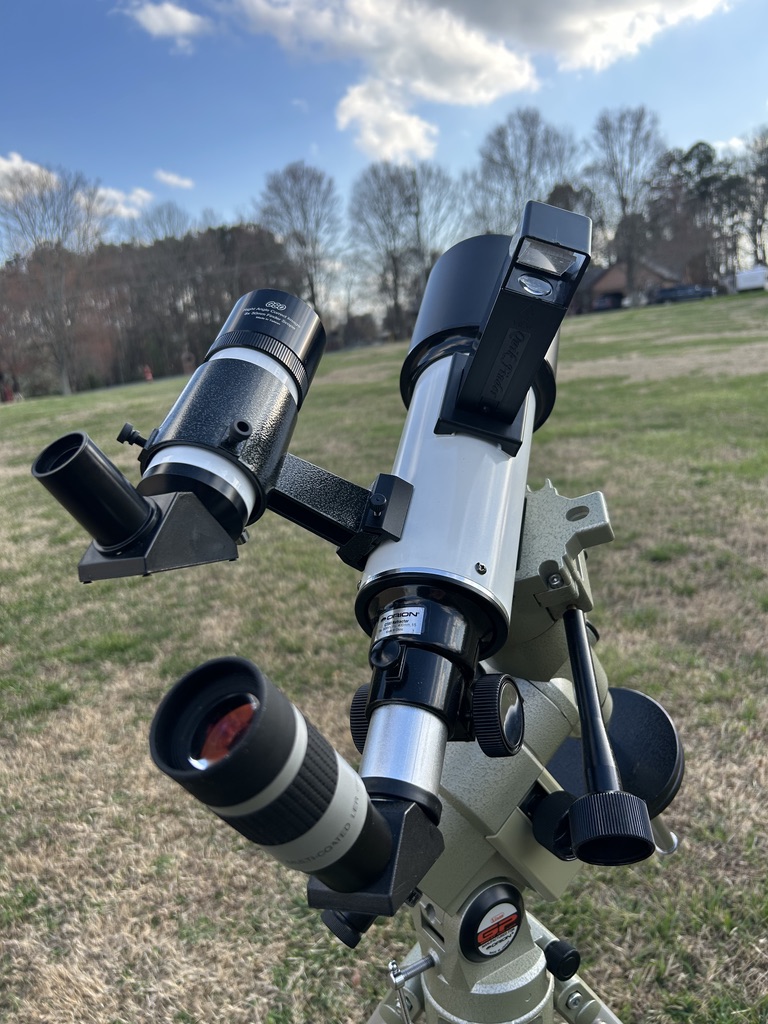
80 mm f/5 achromat (A gift to me for a birthday) a few years ago by my son, Brad, making it a special telescope. I use an amici diagonal with this telescope for a right angle correct image view. I want my pencil sketches to be scientifically correct, as they appear in the sky.
4.5-inch f/8 reflector:
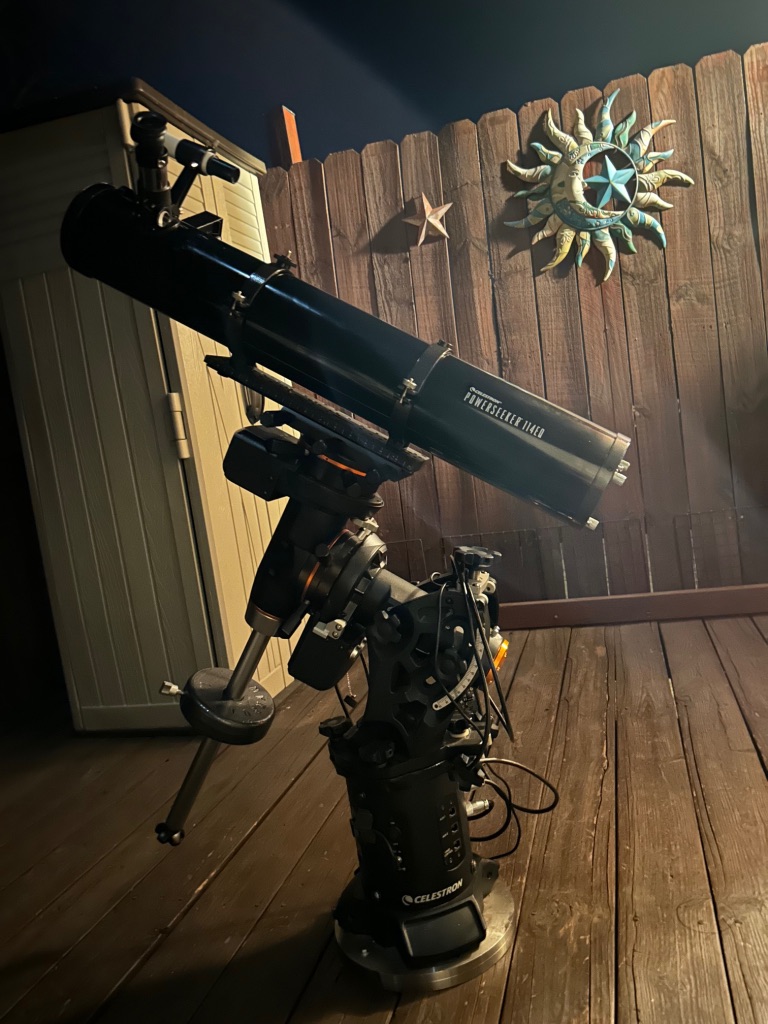
For the sake of time…I’ll use a GoTo mount as often as possible:
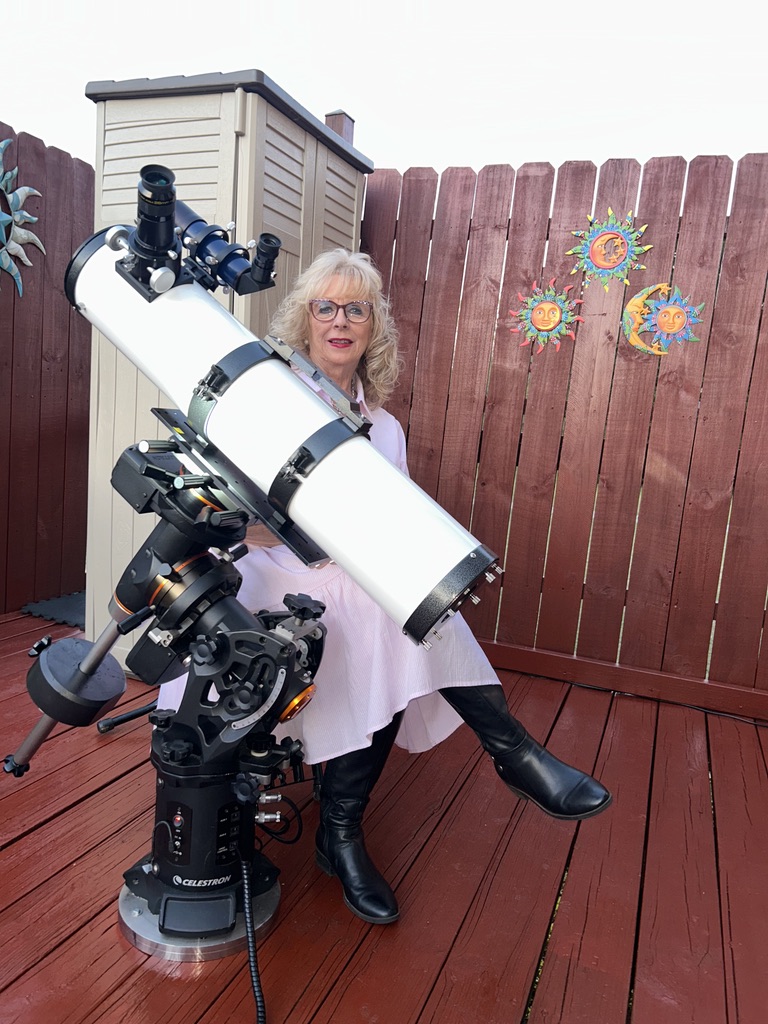
The following 6-inch f/6 Newtonian is “now” my largest telescope, but I’m not planning to use for my Messier quest. As it does not qualify as a small telescope. After 34 years using a 10-inch f/4.5 reflector and over 2,000 hours at the eyepiece, I sold the telescope only this month. (March 2026)
Expert visual observers, Tony Flanders and Jay Reynolds Freeman shared the following. Remember, Jay saw all of the Herschel 400 objects using a 55 mm Vixen f/8 Fluorite refractor! T
Explore posts in the same categories: Observing The Messier's With A Small TelescopeRoger invited me to post my own personal list of the five hardest, and on the whole I find it’s really impossible to say. All the Messier objects are bright and obvious to an experienced observer with a 90-mm scope under dark skies. Once you start to increase the level of light pollution and decrease the aperture, they become harder in varying degrees depending on the precise level of skyglow, the particular instrument, and my own mood and inclination.
For what it’s worth, I looked over my Urban/Suburban Messier Guide, and here are the objects I was unable to see through my 70-mm refractor from my local city park, with skyglow probably a tad worse than 18.0 mpsas:
M20, M26, M59, M61, M68, M73, M74, M76, M83, M90, M91, M95, M98, M99, M100, M101, M107, M108, M109
I was able to see M97 with a filter, but not without one. A filter makes a huge difference for this object, and somewhat less so for M20.
Of these, I’m sure M20, M68, and M83 were hard only because they’re far south, and therefore very low from my latitude of 42N. I’m a little surprised that the open cluster M26 is on my can’t-see list; maybe I should have tried harder.
Of the listed galaxies, I’d say that M74 and M91 are almost certainly intrinsically hardest, ignoring issues with latitude. I’ve also always had problems with M109, due to the combination of small size and fairly low surface brightness, and likely also proximity to bright Gamma UMa (Phecda).
M101 is challenging under bright skies due to its extremely faint core, but even a slight improvement in skyglow makes it relatively easy due to its huge size. M76 is challenging in very small instruments and in conventional binoculars due to its tiny size, but becomes quite easy as I use larger apertures even under very bright skies.
Tony Flanders
M74 and M76 have given me trouble occasionally.
My problem with M74 is that it has low surface brightness — I have found it with a 7×50 binocular in dark sky, but it becomes more difficult in brighter conditions. More aperture helps — it was no problem in a 12.5 inch Newtonian when observing from a location in the peninsular suburbs of San Francisco.
M76 is simply small in angular size, which makes it difficult for me to verify as non-stellar with low magnification, such as when observed with binoculars. Yet I have found it in a 50 mm refractor with a little more magnification, I think I recall using 24x.
Clear sky… Jay Reynolds Freeman
 rogerivester.com