2.1×42 SVBONY Constellation Binoculars And Their Unique Purpose: Review
Constellation binoculars are specialized optical devices designed for stargazing, particularly for viewing entire star constellations and celestial objects. They offer lower magnification and a wider field of view, making it easier to observe larger swatches of the night sky as compared to standard binoculars and telescopes.
For more than a year, I had been reading about constellation binoculars and considering whether they might be useful to me. In August 2026, I finally decided to purchase a pair of SVBONY constellation binoculars. The price from Amazon was only $107.99. How could I possibly go wrong?
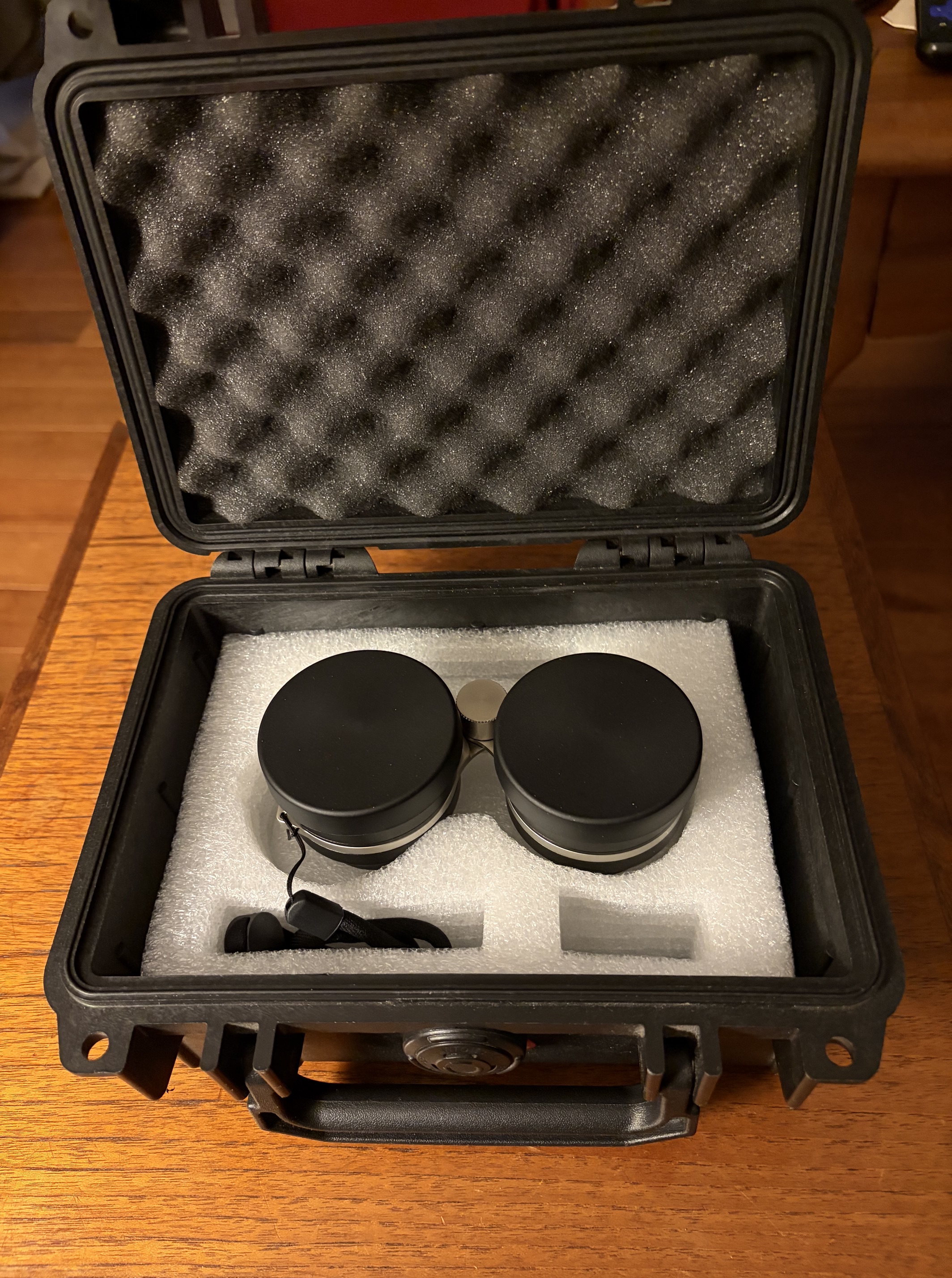
The binoculars arrived well packaged in a sturdy box with custom-fitted foam for added protection. After removing the foam, I found that it fit perfectly in a small Pelican case. This makes for excellent storage and transport of the binoculars. (See the photo at the bottom of this article)
Shortly after sunset the sky was completely clear: I began looking for Polaris with my naked eyes, but couldn’t see it. I then looked through the constellation binoculars, and Polaris was immediately visible. I started scanning the sky, and gradually, random stars began to appear through the binoculars….stars that were completely invisible to my naked eyes.
It was interesting to see just how many more stars the binoculars revealed, maybe a bit like going back in time (without optical aid) with younger eyes and a dark sky.
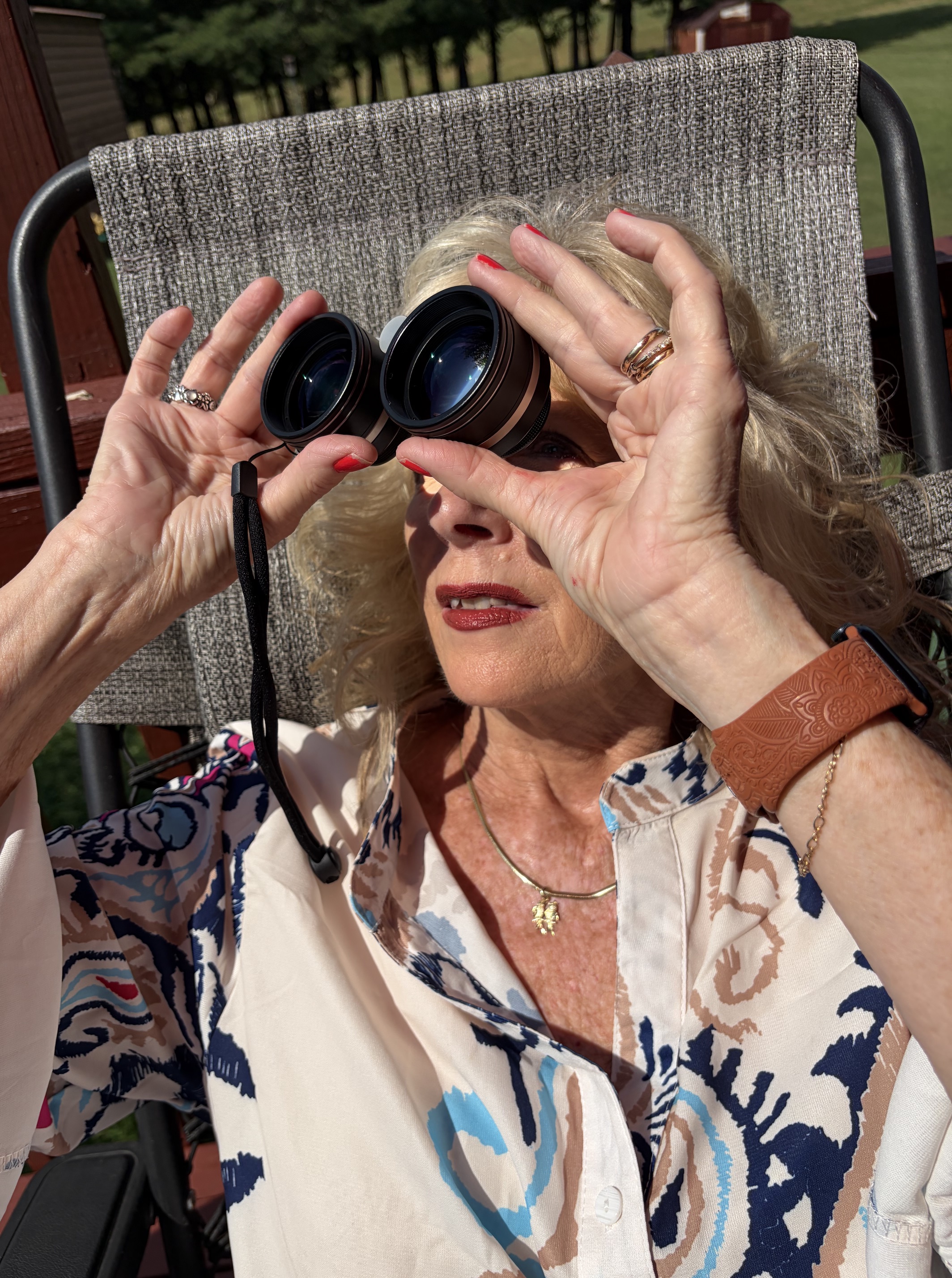
I find the binoculars are very comfortable to use, easy to hold, and with excellent eye relief. There is a slight amount of distortion around the edges of the field of view, but I don’t find it particularly objectionable.
My observing notes as following from my Bortle 6.0-6.5 suburban backyard, over several nights, with some early morning sessions.
- Shortly after sunset: Polaris appearing first through the binoculars is a great demonstration of their light-gathering ability. Other stars that were invisible to my naked eyes suddenly became obvious.
- Little Dipper: I could only see three stars naked-eye, but “essentially” the whole constellation through the binoculars.
- Mizar being visibly double, but not cleanly separated.
- The long eye relief is a major advantage. Being able to observe while wearing glasses, and actually getting cleaner star images “maybe” because my mild astigmatism is corrected.
- Corona Borealis observation is another nice example of what these instruments can do. I could see seven stars with the binoculars “before complete darkness” versus one without.
- Pleiades star cluster appears very small due to the lack of magnification, so conventional binoculars work best.
- Double Cluster can be seen as two clusters, with resolution of a few brighter outer stars.
- The Andromeda Galaxy is easily seen with the constellation binoculars.
- The entire constellation of Orion fits nicely within the FoV.
Terrestrial observations are a bonus. They brighten the nighttime woods just enough for me to see deer walking and wandering about. This is something that’s otherwise invisible without the binoculars.
Walter Scott Houston often discussed holding a nebula filter directly in front of his eye when observing large nebulae. That got me wondering about using the constellation binoculars in a similar way. Their very wide field of view and low magnification, combined with an O-III or UHC filter, might produce some interesting results. However, given the binoculars’ small apertures, I wonder if the filters might make the view too dim.
Observing aurora could prove to be interesting. I’ve previously observed aurora that was photographically obvious, but visually subtle or invisible naked eyes. The constellation binoculars may assist and brighten the colors, but this will only be known with actual observations.
My only other binoculars at the moment are a pair of Pentax 7×21s that I’ve had for more than 30 years. For much of that time, when the mornings were still dark, I would keep them tucked into my coat pocket. Before getting into the car for work, I’d always spend a few minutes scanning the sky.
During the winter months, open cluster M41 was one of my favorite targets. I could easily pick it out with those little 7×21 binoculars, even with a nearby streetlight competing for attention. They provided surprisingly good resolution, although I could never make out the red color of the famous Espin star.
The Andromeda Galaxy and so many other deep-sky objects became familiar treats during those early-morning, casual observing sessions. Looking back, those few quiet minutes beneath the morning sky were some of the most enjoyable observing I’ve ever done.
Those few minutes meant more to me than just observing the sky…
….they gave me a little relaxation and enjoyment before starting a day at work that was almost guaranteed to present plenty of problems and stress. Looking up at the stars, even briefly, gave me a chance to clear my mind before the day began.
I feel the constellation binoculars will add to my small and lightweight astronomy devices for those quick and sometimes spontaneous observing sessions. Also remembering what Leslie Peltier said: “Were I to write one prescription designed to alleviate at least some of the self-made miseries of mankind, it would read like this: “One gentle dose of starlight to be taken each clear night just before retiring.”
Observing the night sky without optical aid, or with a pair of small binoculars, seems to be an excellent way to follow Peltier’s prescription before bedtime. It has worked remarkably well for me on many occasions. Roger Ivester