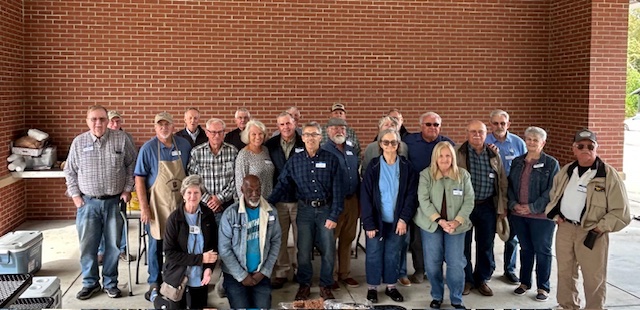
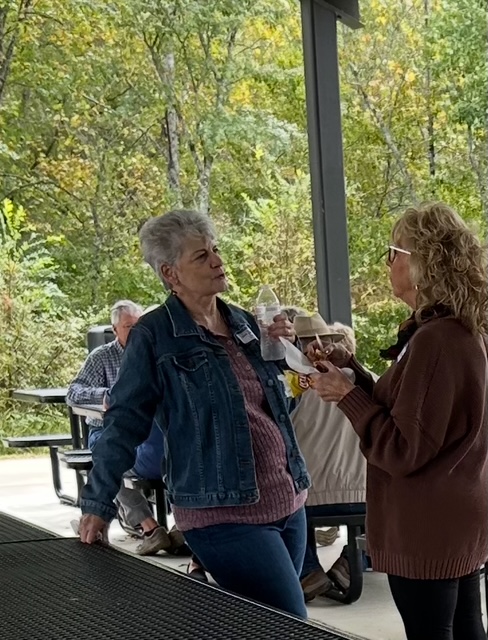
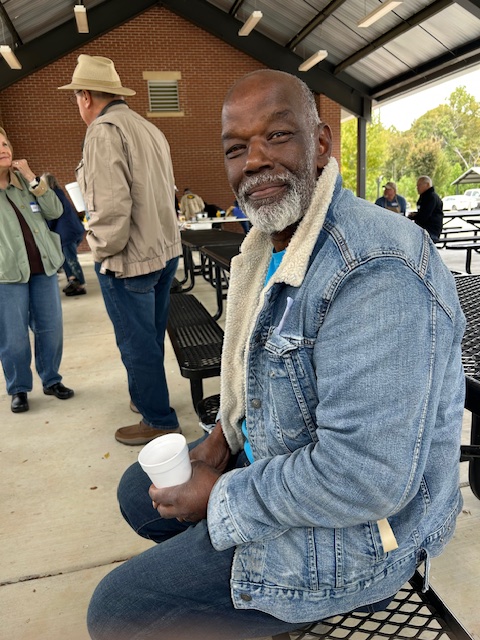
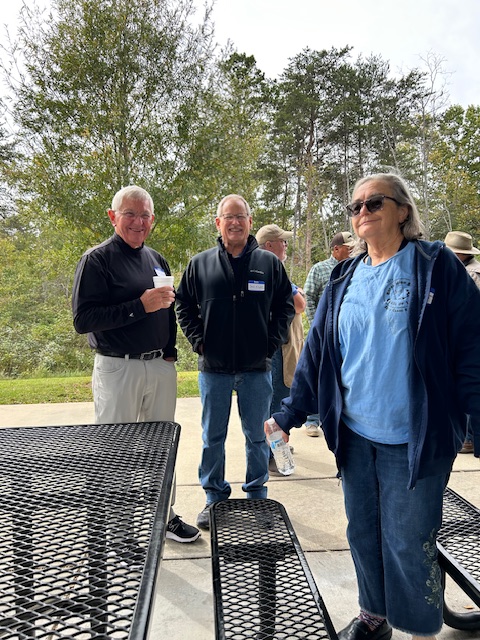
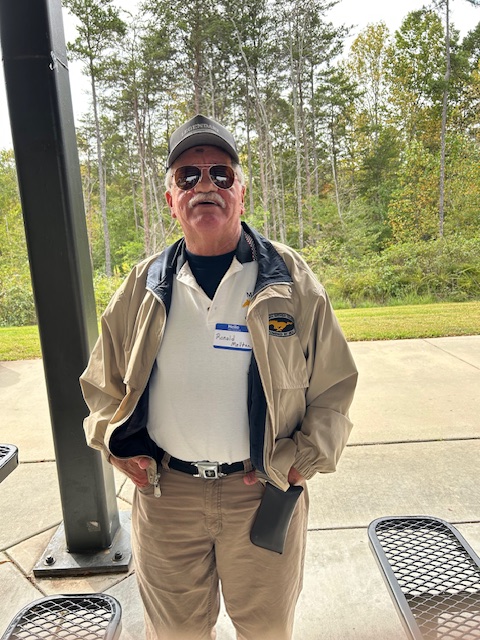
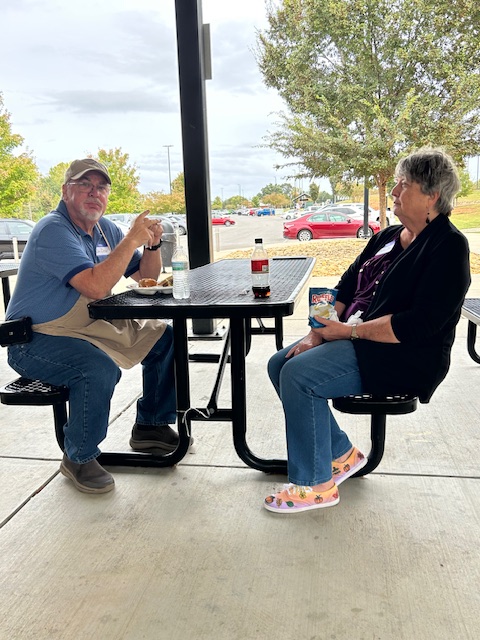
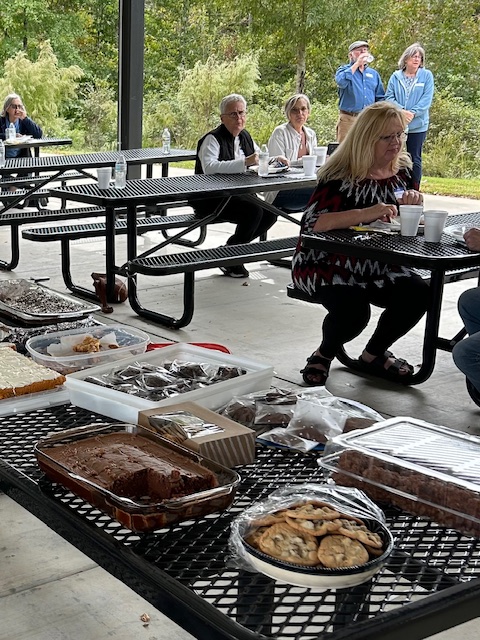
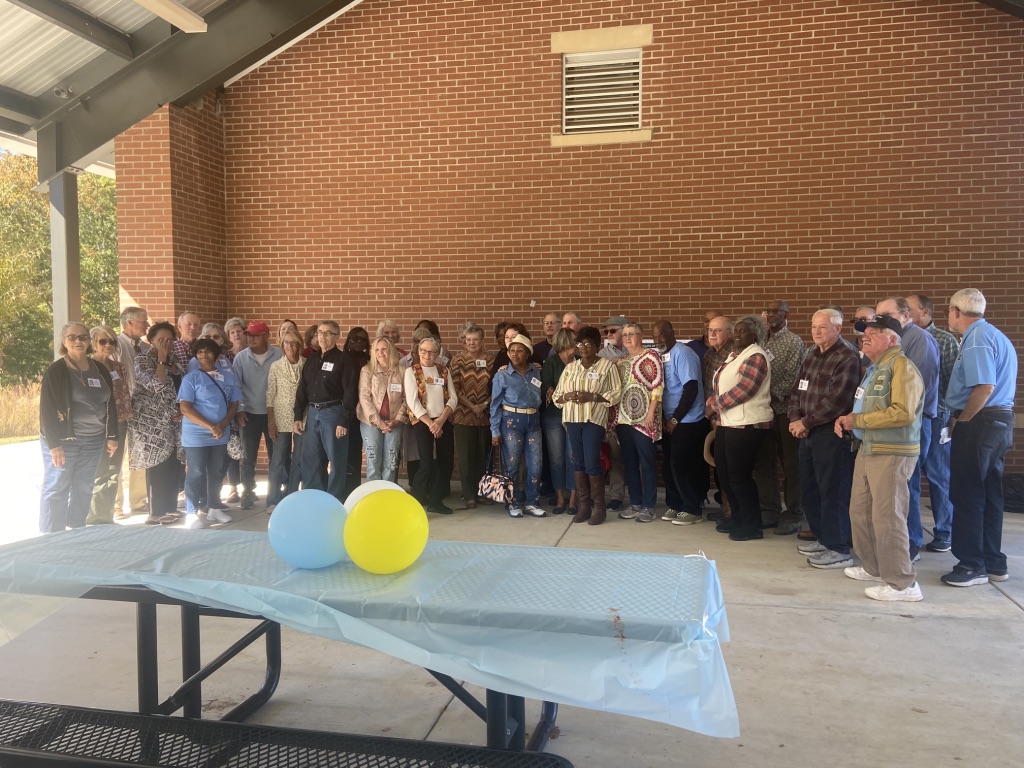
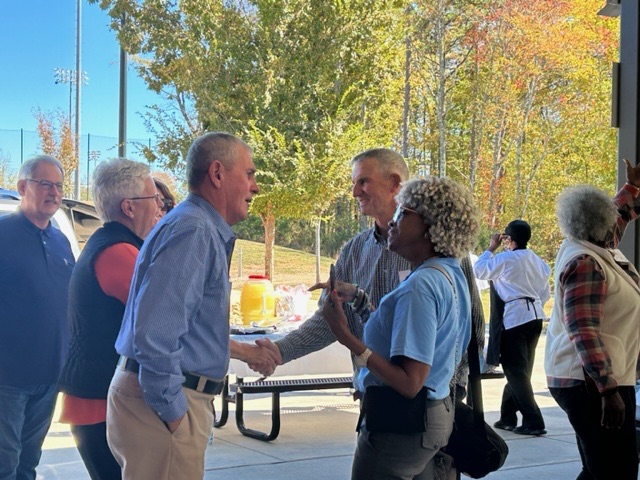
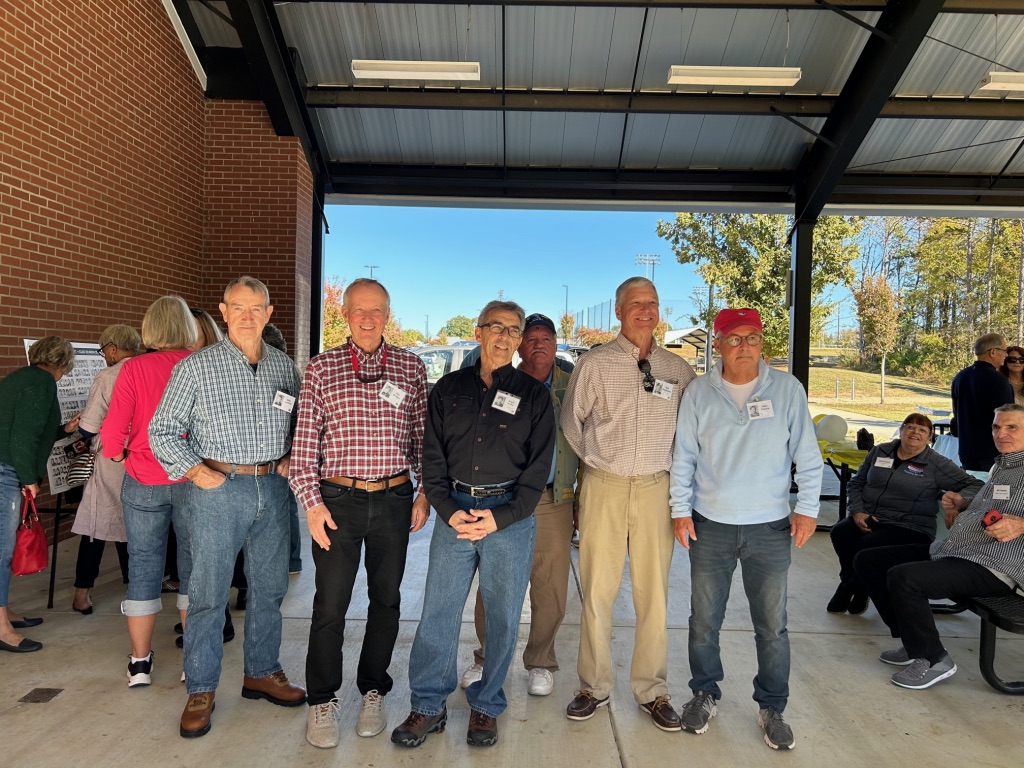
1971 class reunion: October 11th 2025: And a great time was had by all! It was a breezy (windy) and really cool Saturday afternoon.
The 2023 event follows 2025….just keeping scanning down.
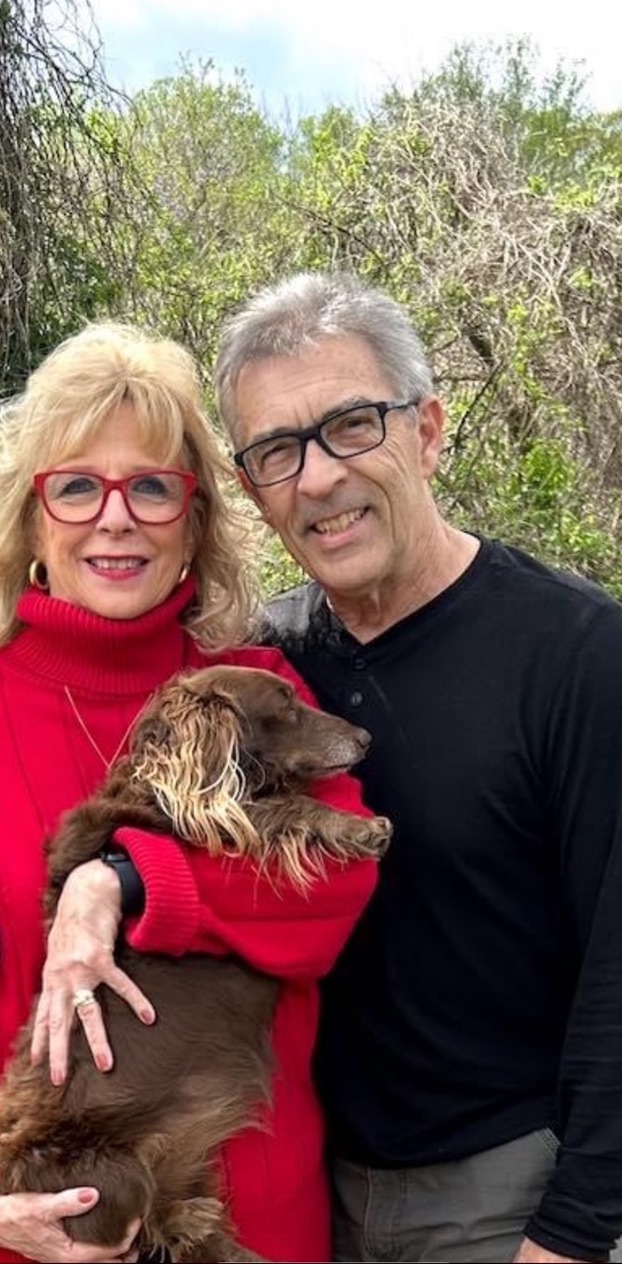
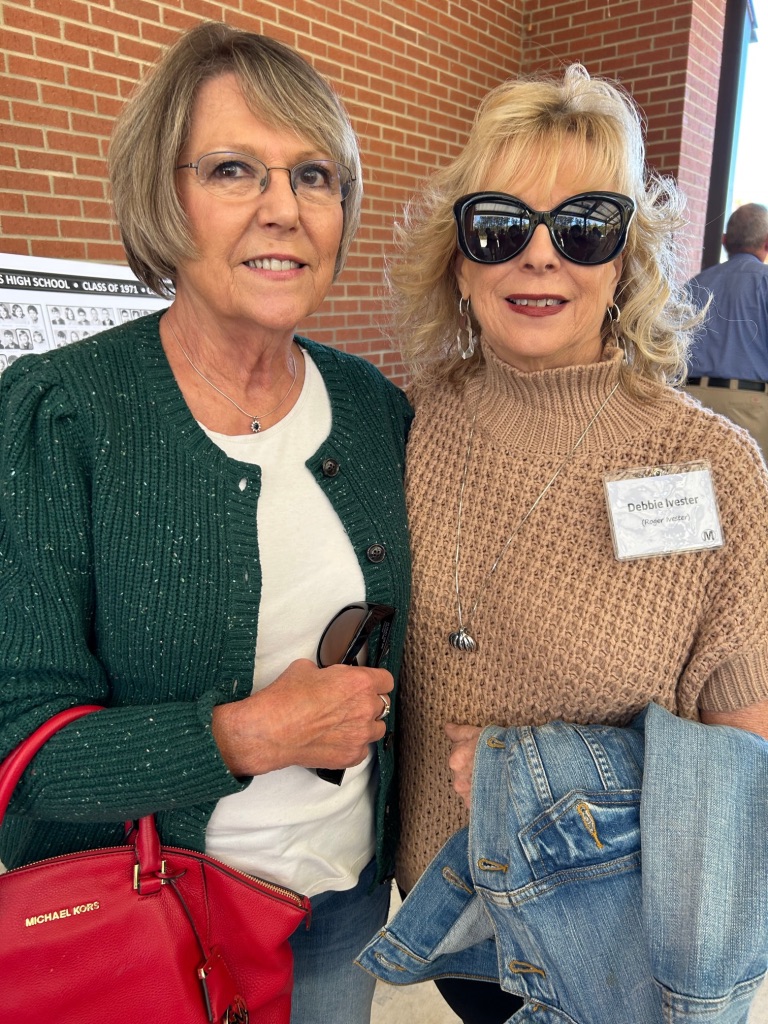
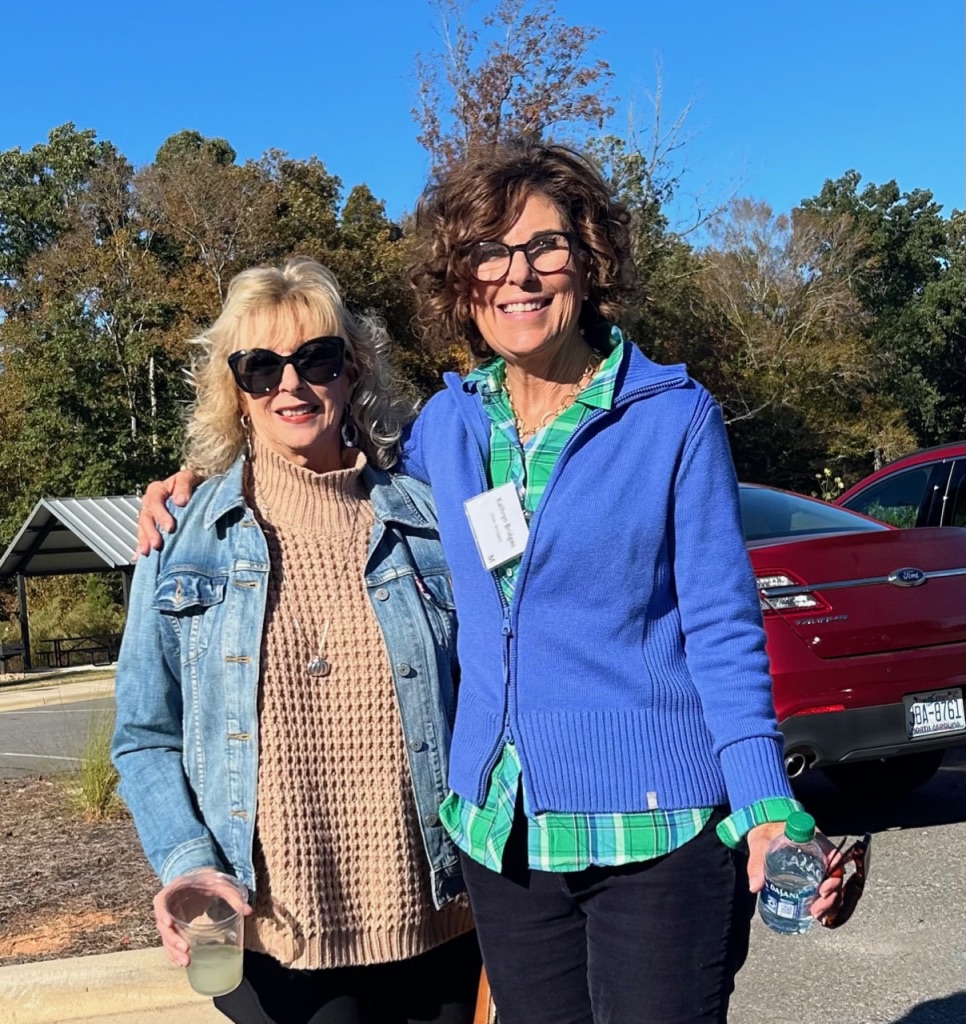
I missed getting a “face-on” picture of Debbie. How was that possible? So, I thought I’d just share a photo of Debbie and Sophie from May 2025.
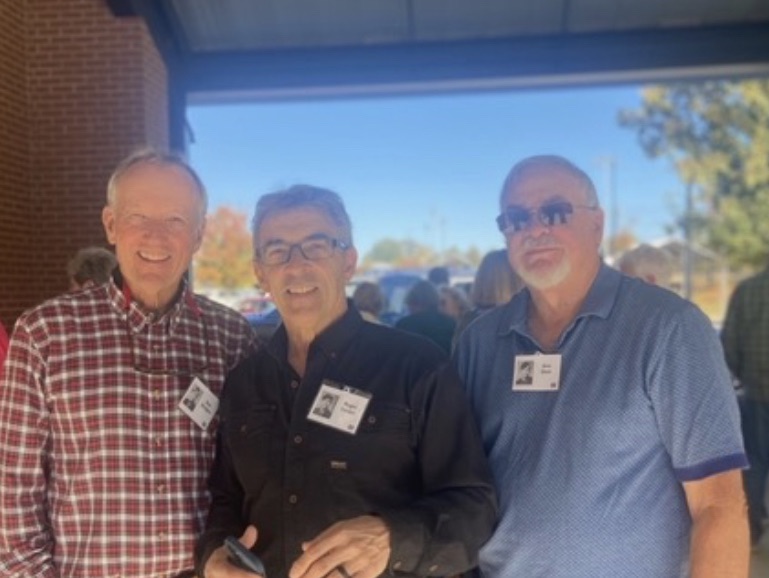
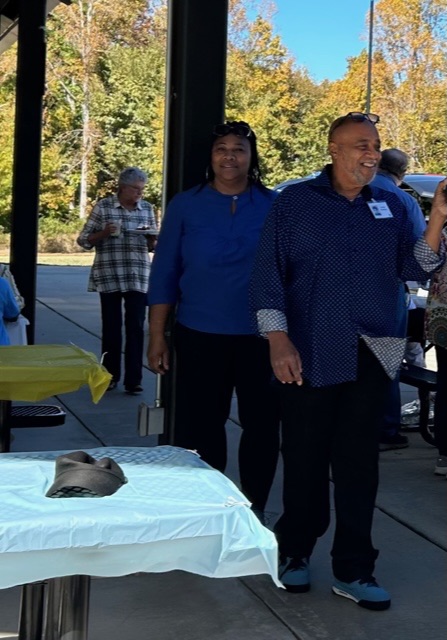
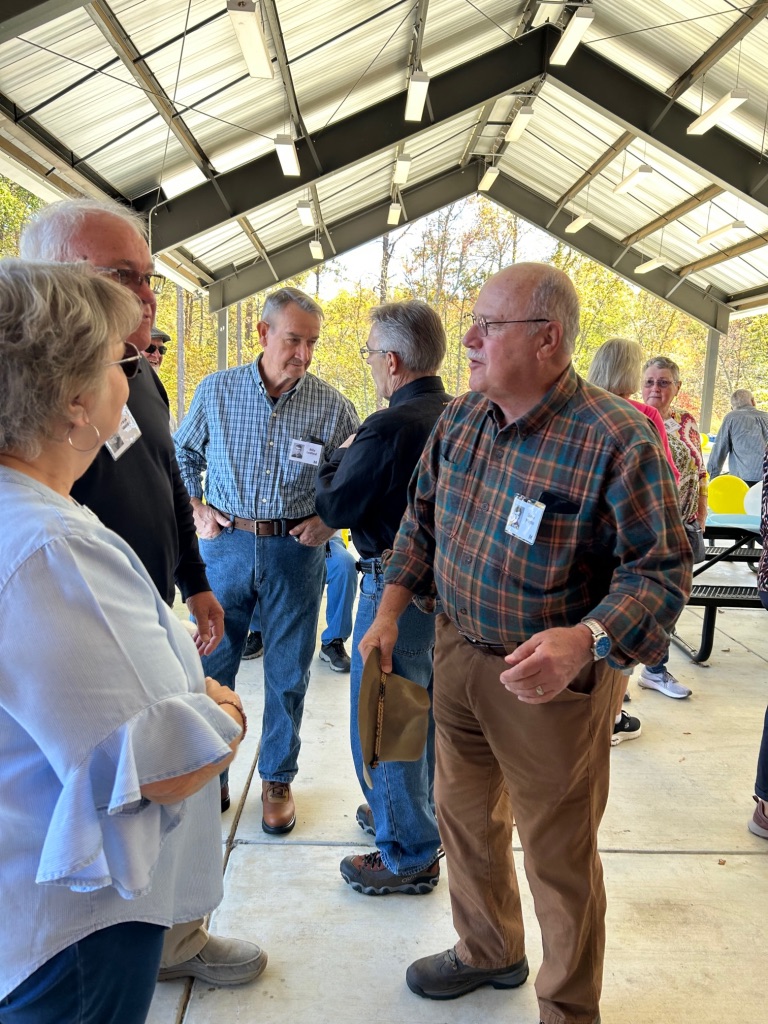
Photos of the 2023 Burns High School class reunion are as following: Much appreciation to Charlotte Sinclaire for taking the lead in organizing this fabulous event. Everything was perfect! A memorable class reunion for sure.
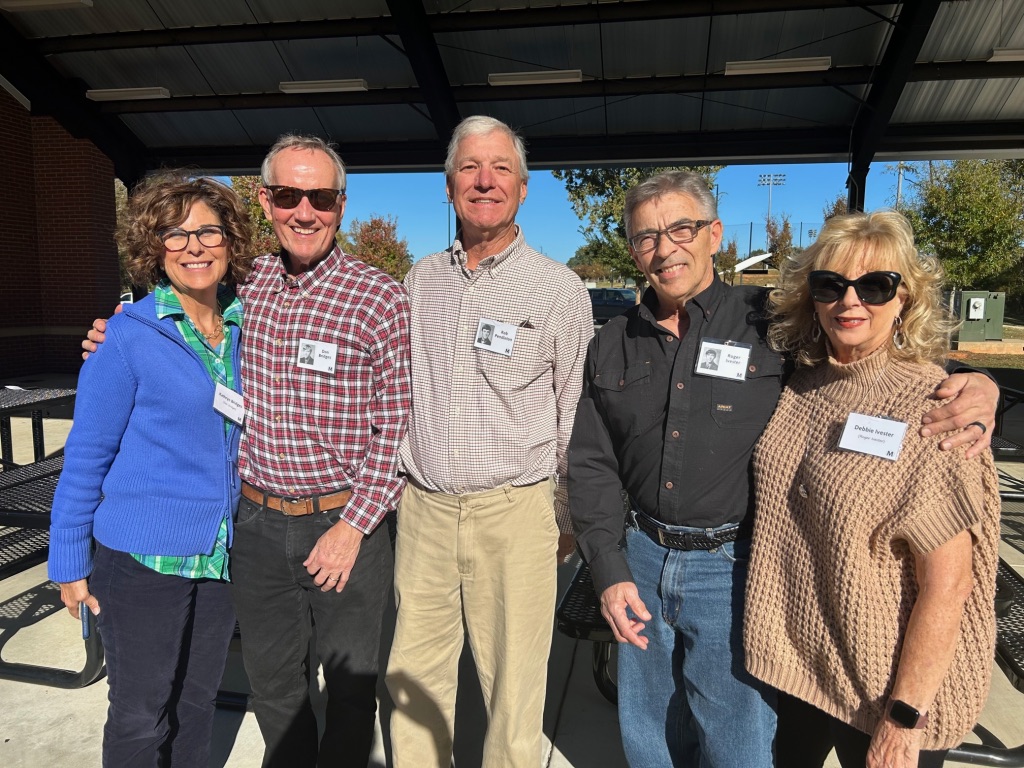
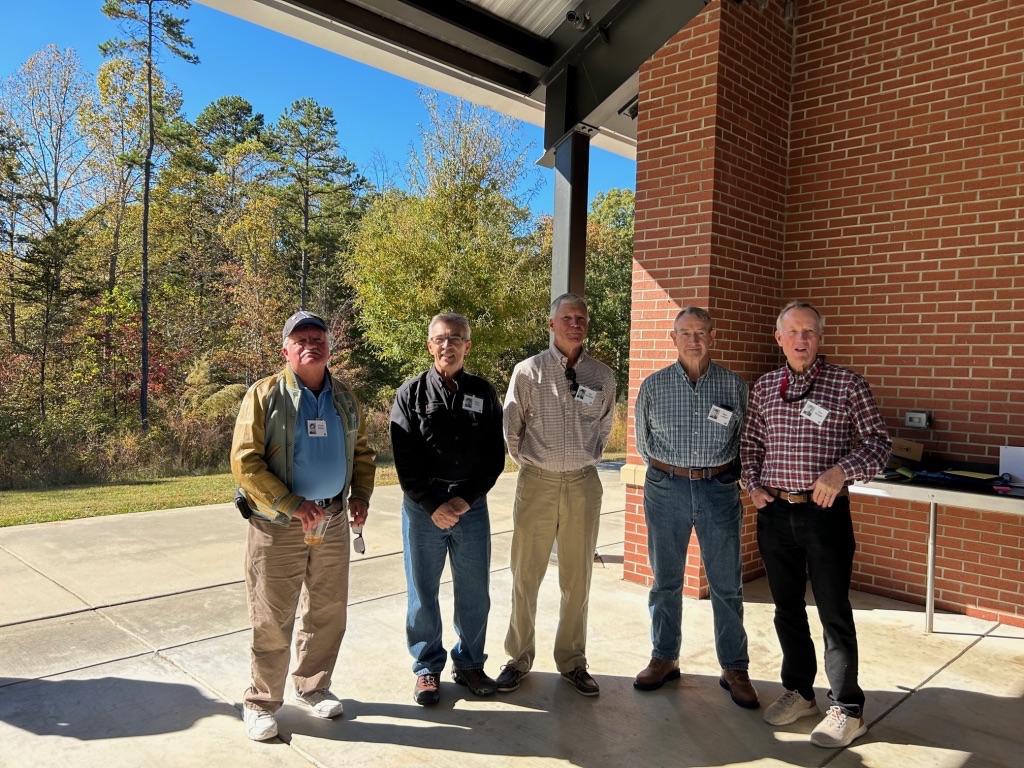
In the following photo…Five guys began 1st grade at Polkville in August 1959, and graduated together at Burns. We were the first class at the new school, and went all four years.
However, after the 5th grade, some of us parted ways for three years, some went to Casar and some went to Piedmont…but back together again at the new Burns High School in the fall of 1967.
Left to right: Charles Melton, Roger Ivester, Rob Pendleton, Bill Ledford and Don Bridges.
Comments:Comments Off on 1971 Burns High Class Reunion: Saturday October 11th 2025 At Hanna Park In Shelby, NC. The 2023 Event Is Also Included: Just Keep Scanning Down
The Bortle Dark Sky Scale was developed by John Bortle “based on nearly 50 years of observing experience,” to describe the amount of light pollution in a night sky. It was first published in a 2001 Sky & Telescope article.
Depending on the device you are using, it may be necessary to slide the chart to the right to see in its entirety.
Number Code
Map Color Code
Label
Sky Mag.
Naked Eye Limit Mag.
320mm Limit Mag.
M33 visible?
M31 visible?
Central Galaxy visible?
Zodiacal light visible?
Light Pollution
Clouds
Ground Objects
1
excellent dark sky
22.00–21.99
≥ 7.5
> 17
obvious
.
casts shadows
striking
airglow apparent
.
visible only as silhouettes
2
average dark sky
21.99–21.89
7.0–7.49
16.5
easy with direct vision
.
appears highly structured
bright, faint yellow color
airglow faint
dark everywhere
large near objects vague
3
rural sky
21.89–21.69
6.5–6.99
16.0
easy with averted vision
.
complex structure
obvious
LP on horizon
dark overhead
large distant objects vague
4
rural/suburban transition
21.69–20.49
6.0–6.49
15.5
difficult with averted vision
obvious
only large structures
halfway to zenith
low LP
lit in distance
distant large objects distinct
5
suburban
20.49–19.50
5.5–5.99
14.5–15.0
.
easy with direct vision
washed out
faint
encircling LP
brighter than sky
6
bright suburban
19.50–18.94
5.0–5.49
14.0–14.5
.
easy with averted vision
visible only near zenith
.
LP to 35°
fairly bright
small close objects distinct
7
suburban/urban transition
18.94–18.38
4.5–4.99
14.0
.
difficult with averted vision
invisible
.
LP to zenith
brilliantly lit
.
8
city sky
< 18.38
4.0–4.49
13
.
.
.
.
bright to 35°
.
headlines legible
9
inner city sky
.
≤ 4.0
.
.
.
.
bright at zenith
.
.
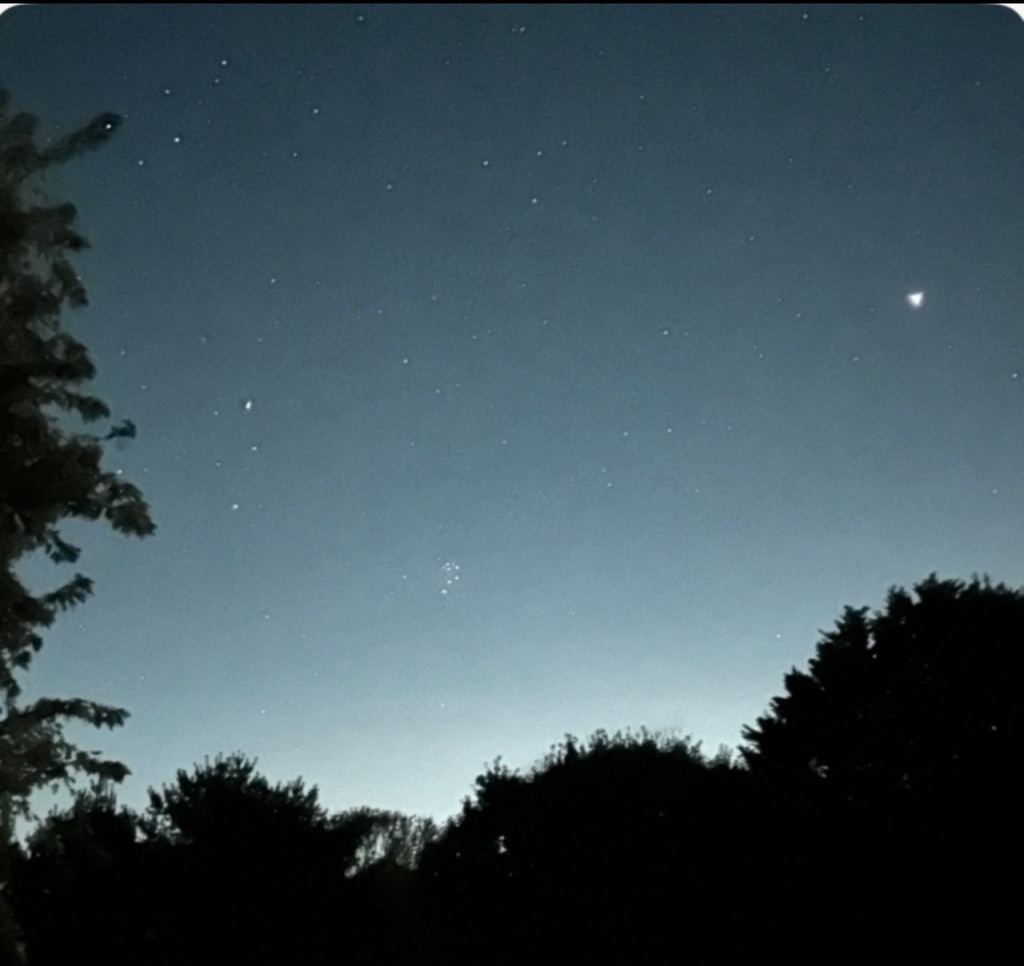
My view to the east (last night @ 9:15 PM, November 18, 2023 from my back deck) showing the light pollution at about 15º above the treetops.
I always try to observe deep-sky objects at least one hour or two from the meridian.
It is difficult to see the Pleiades “visually” at this low altitude. I was using an iPhone 14 “handheld” to make a photo for illustrative purposes.
The Pleiades was my first deep-sky object when I was 12 years old. I remember so well, walking out in my front yard in about mid-November and seeing this cluster rising above the treetops.
At that time, I had no clue as to what this group of stars were.
A year or so later I found out it was the Pleiades, M45 and my interest in amateur astronomy began, which continues to this day. Interesting to note: This was Leslie Peltier’s first deep-sky object also, as probably so many others.
The following photo:
Andromeda is difficult for me visually, and requires averted vision.At the meridian, it can be fairly easy, but averted vision still works best.
The following photo using my phone, presents the galaxy quite a bit brighter than naked-eye.
So, I estimate the Bortle Scale from my backyard to be ~6.5. I think we can all agree, the Bortle scale is not a definitive number, but using this criteria can describe an observing site pretty accurately. I’d say John Bortle developed an excellent, simple and objective measurement system for judging different observing sites, and for comparison with others.
Comments:Comments Off on Light Pollution Is Increasing Everywhere. What Is The Bortle Scale? Use The Following Chart To Determine How Dark Your Observing Site Is
I continue to ride, but “absolutely certain” I’ll not be able to ride another 100,000 miles. My rides in recent years are quite a bit shorter and much slower, but more fun.
Comments:Comments Off on October 11, 2023: 15 Years Ago I Achieved My 100,000 Miles With A Celebration Following At The Broad River Coffee Shop. I Appreciated Debbie Putting It Together…
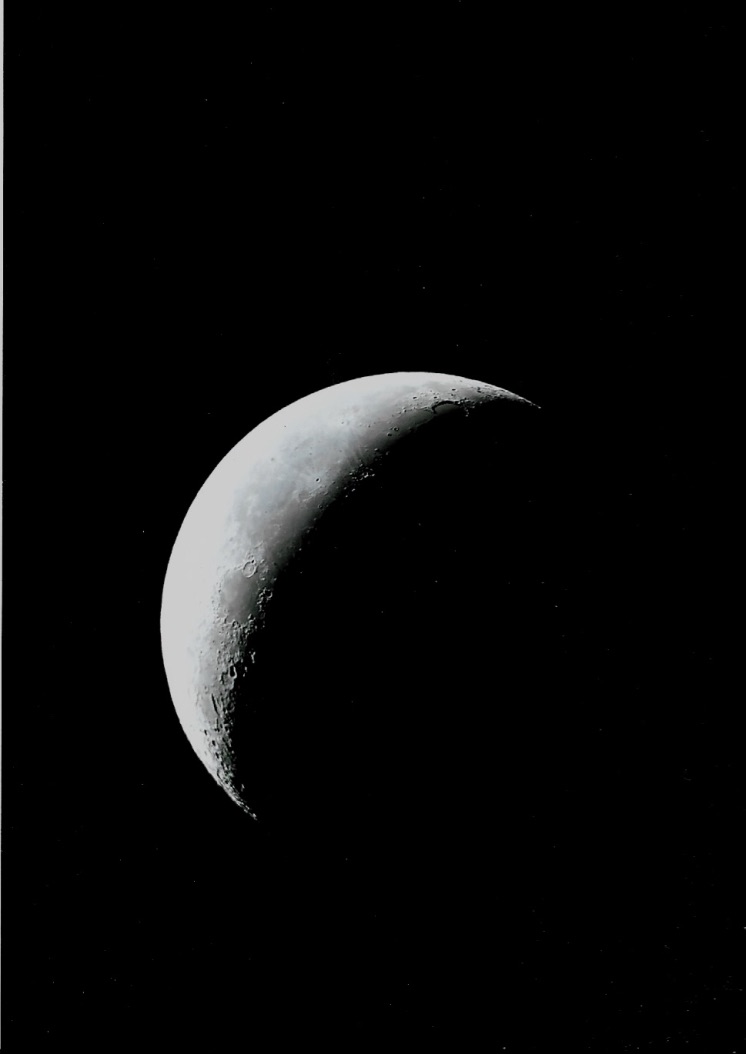
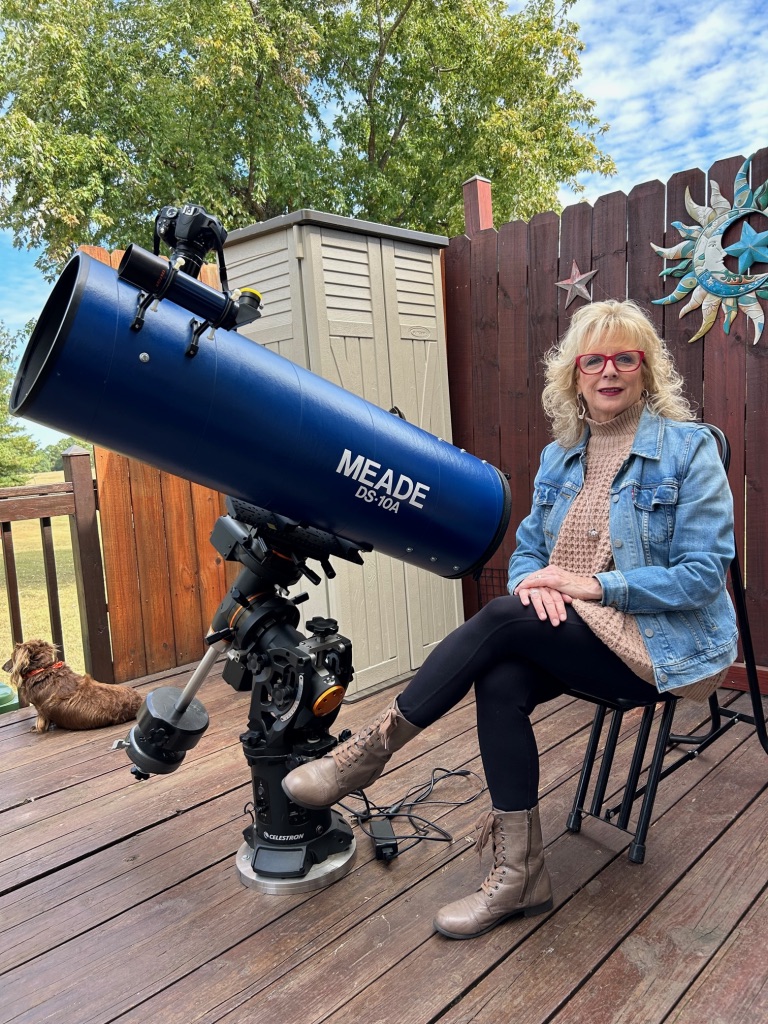
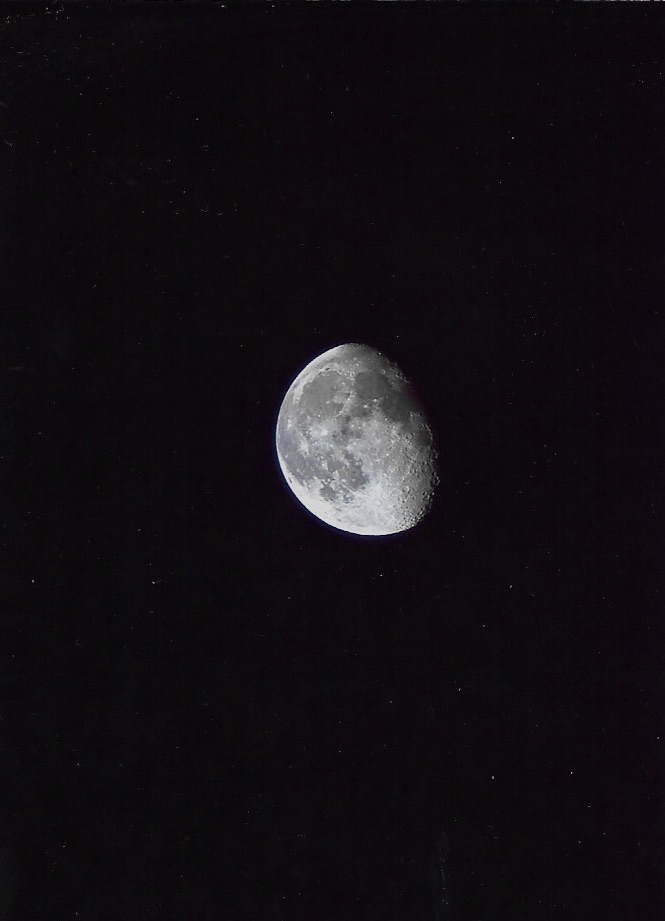
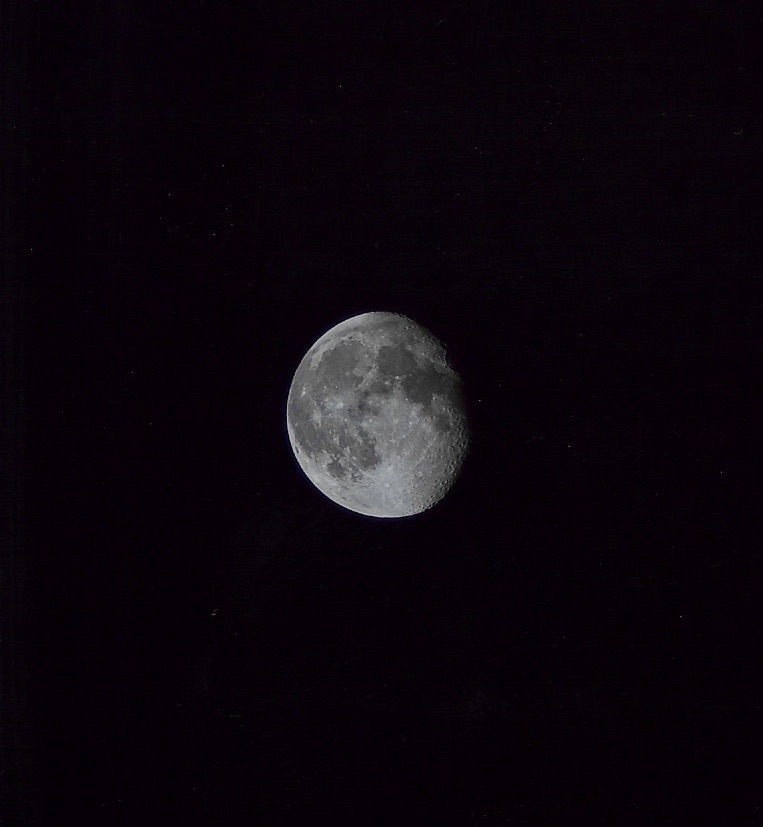
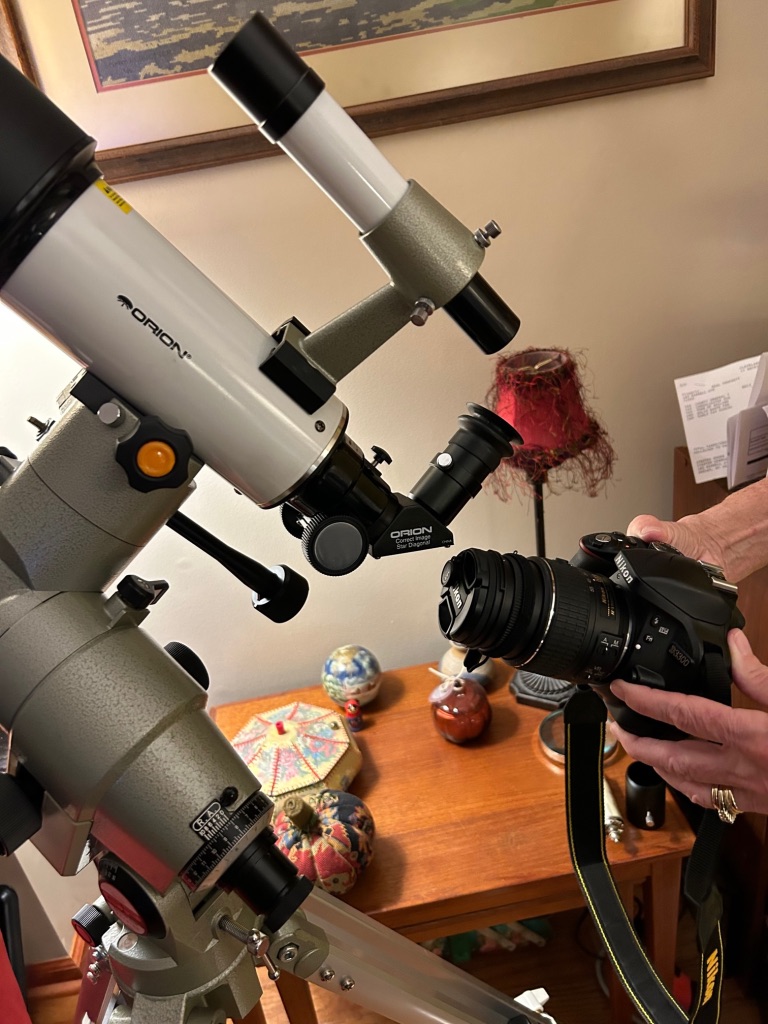
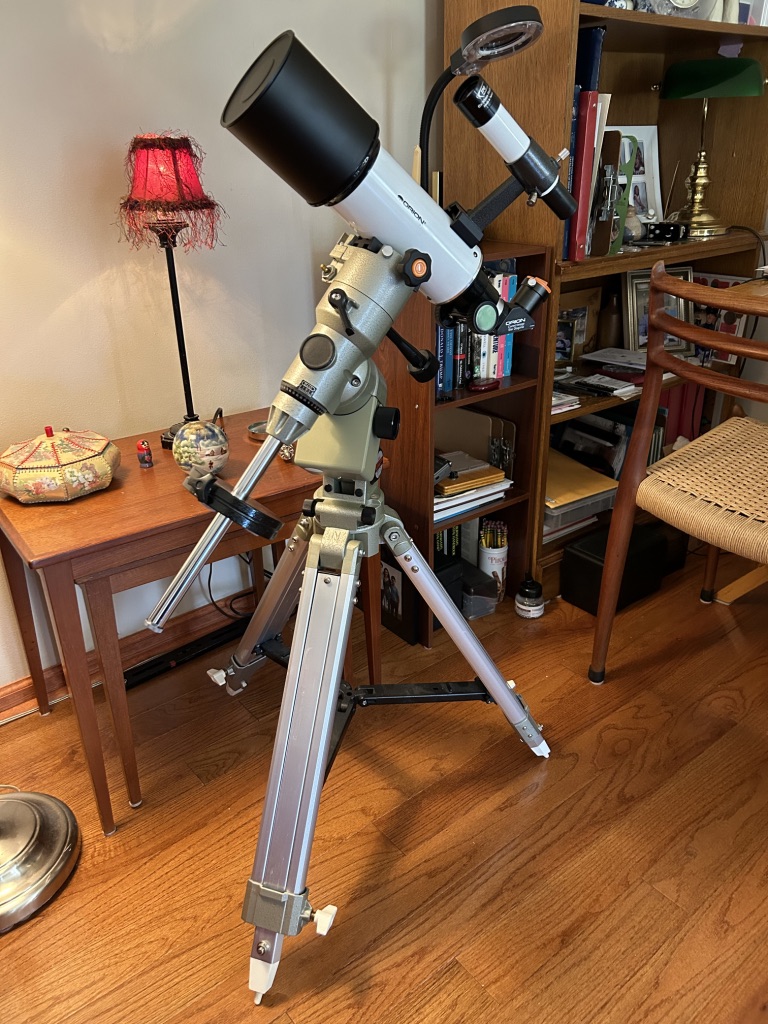
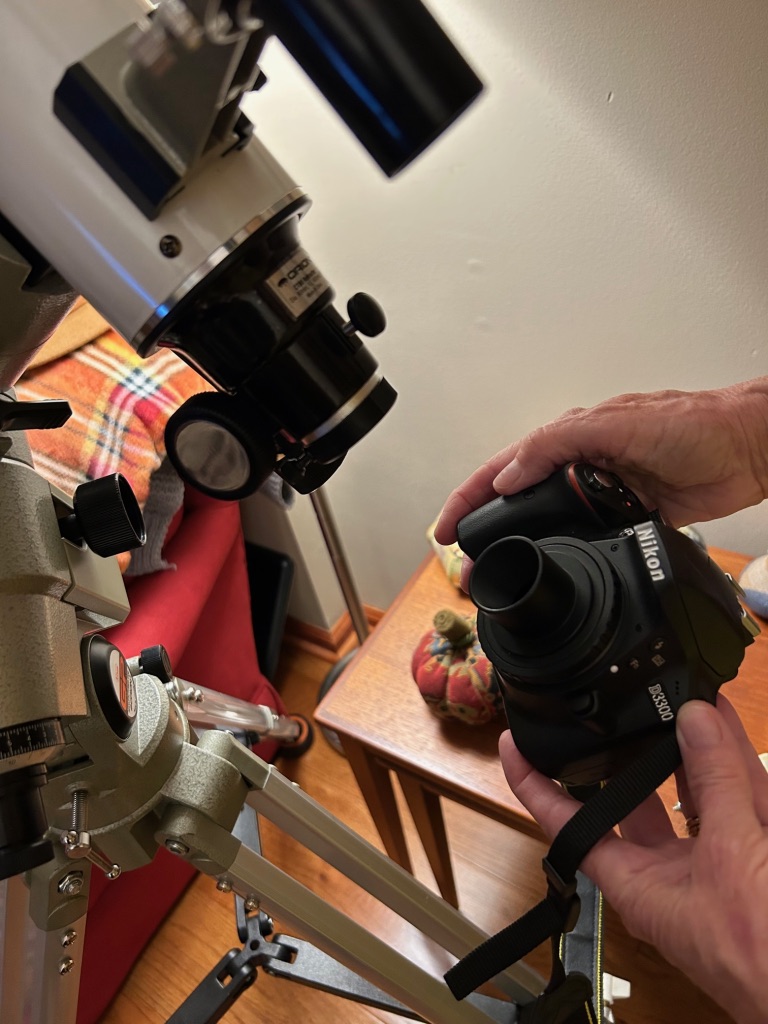
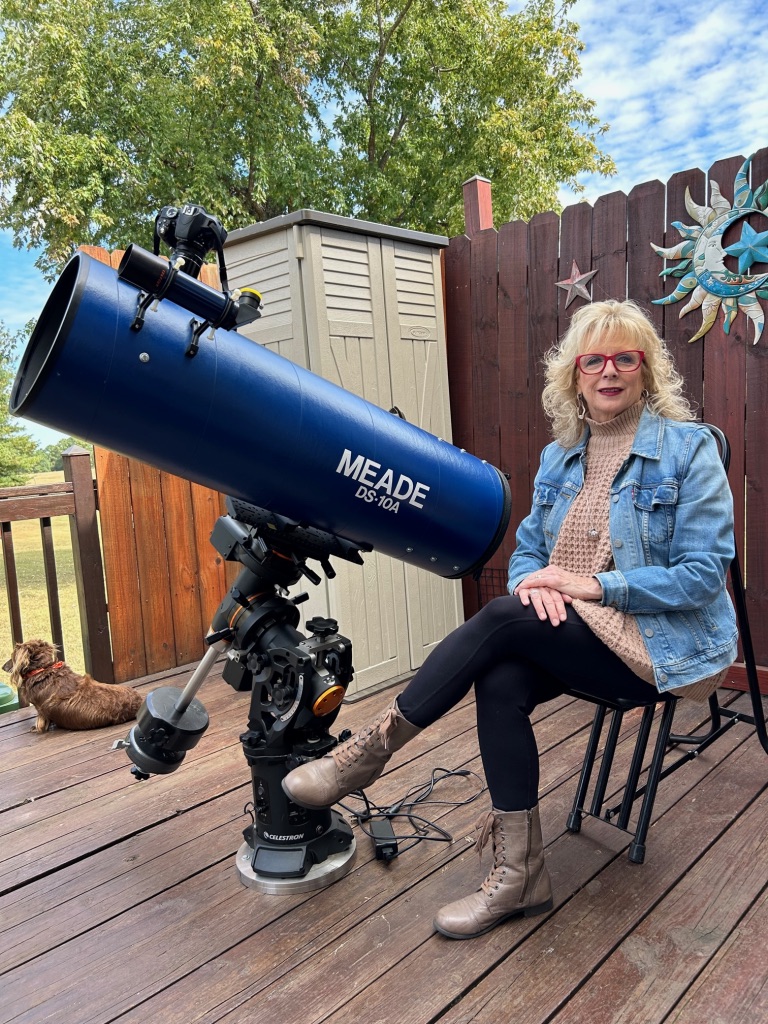
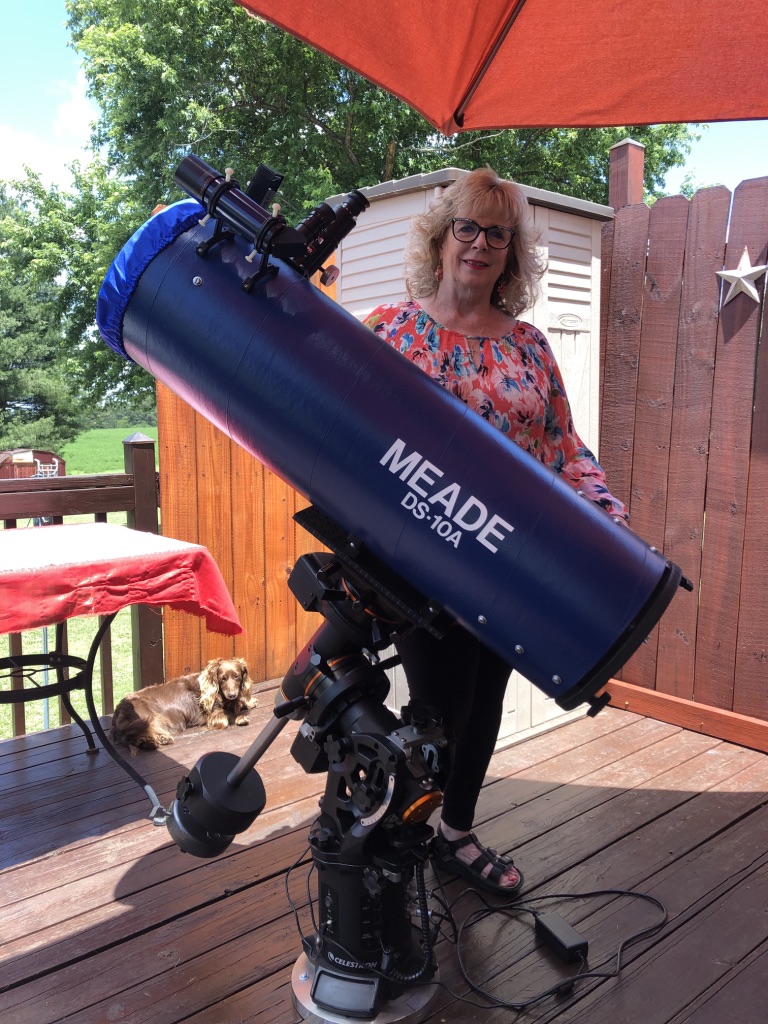
I’ve went from an 80mm f/5 refractor to this 10-inch Newtonian in just a matter of days. So, I’m proud of the progress I’ve make, from never using a camera with a telescope, to “at least” an image of the moon. And all within a week!
I changed some settings on my camera, something I’d never done before. It had been set on ISO 100, for my everyday snapshots, and changed to ISO 400this morningfor this moon shot.I was amazed how much brighter the moon was when focusing through the camera using this 10-inch versus the 80mm refractor.
For sure a lot easier to focus with the brighter view due to the size of the telescope.
The field using this telescope is really narrow and small as this photo shows. Now I’ve got to figure out how to set the “exposure time” for some small and bright deep-sky objects.
I’m actually amazed that I could do this...and hopefully more and better to come. Debbie
Comments:Comments Off on Another First For Me: Using A 10-inch Newtonian f/4.5 For A Photo Of The Waning Crescent Moon At 6:00 AM This Morning: By Debbie Ivester
I also made a photo as following using a 10-inch f/4.5 EQ telescope. Roger had using this telescope during an early morning 4:00 AM observing session of a galaxy. So, before bringing it back into the house, he suggested I try a moon photo with this telescope. This is my photo.
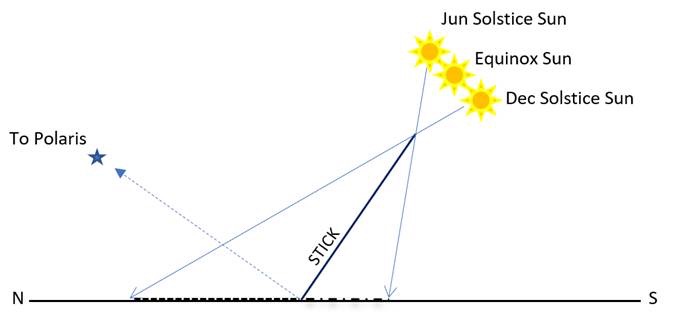
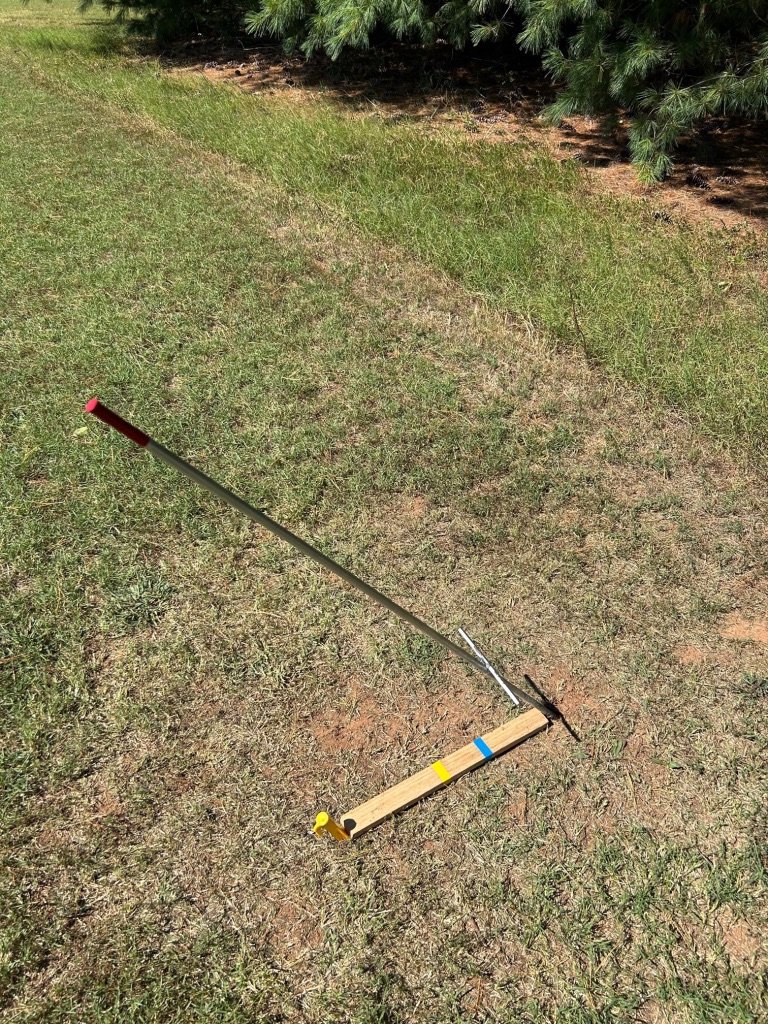
There are two equinoxes (the first day of spring, and the first day of fall) the sun will cast no shadow, as the sun will be shining directly down the steel rod. See the expalanation as following.
I found out about the following sun measurement by Tom English, who was formerly an astronomy and physics professor at a local university. The following information was made during the year 2023.
Place a straight pole into the ground, facing due south, and at an angle of 55 degrees:
So, on June 21st, 2023 (Summer Solstice) the shadow will cast its greatest extent southward, and on the winter solstice (December 22nd 2023) the shadow will cast its greatest extent northward on the stick.
My latitude is 35º 15 mins.
So a simple calculation to determine the angle of the rod.
(90º – 35º) = 55º
Note the shadow: It will be increasing, each day, and getting shorter, until September 23rd 2023, when there will be no shadow, as the sun will be “pointing directly down” the rod.
At 12:00 Noon EST (use standard time) on the first day of fall showing no shadow as the sun was shining directly down the steel rod. This photo as following on September 22nd or 23rd, 2023.
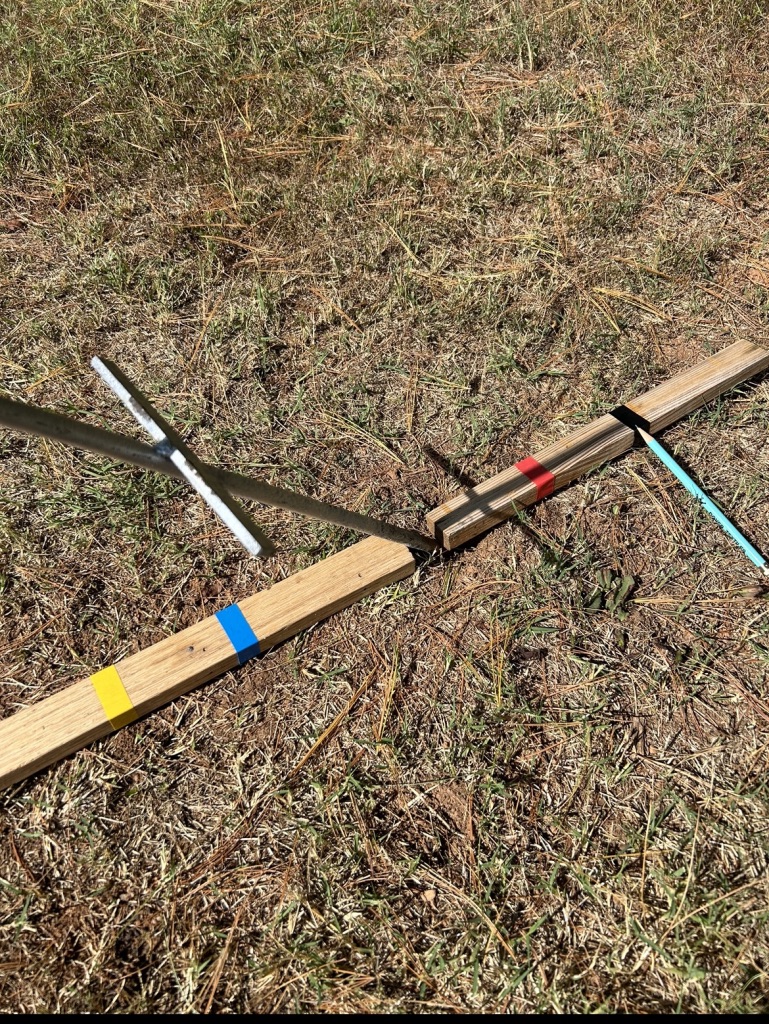
The following photo:
The yellow mark indicated the sun shadow on August 24th (2023) and the position of the sun shadows on different days following.
The red mark was made on October 4th 2023.
The black mark was made on October 13th (2023). Note the rapid movement of the sun heading south in less than two weeks!
Comments:Comments Off on The First Day Of Fall: On September 22, 2026 The Sun Crosses The Celestial Equator Moving South. This Changes The Angle Of The Sun, Bringing Cooler Fall Weather And Then Winter.
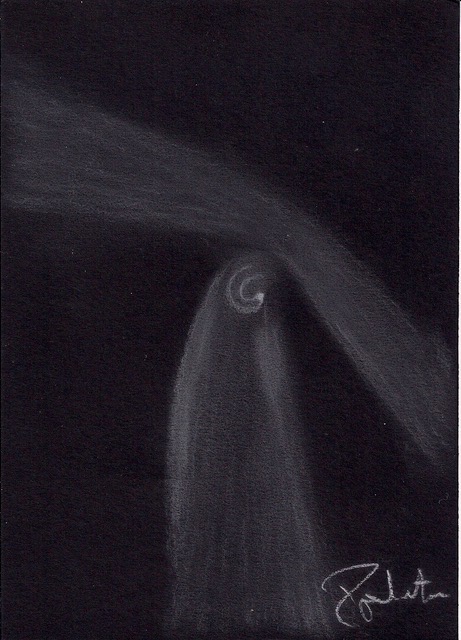
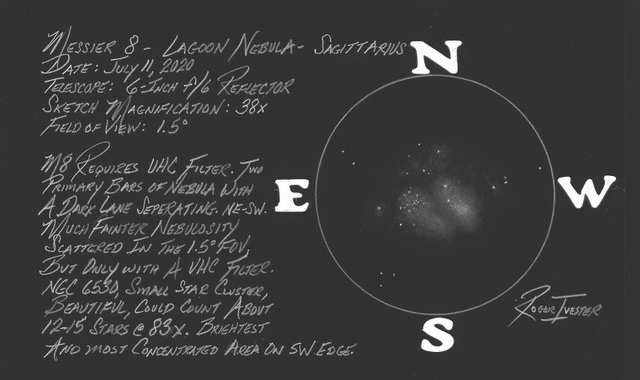
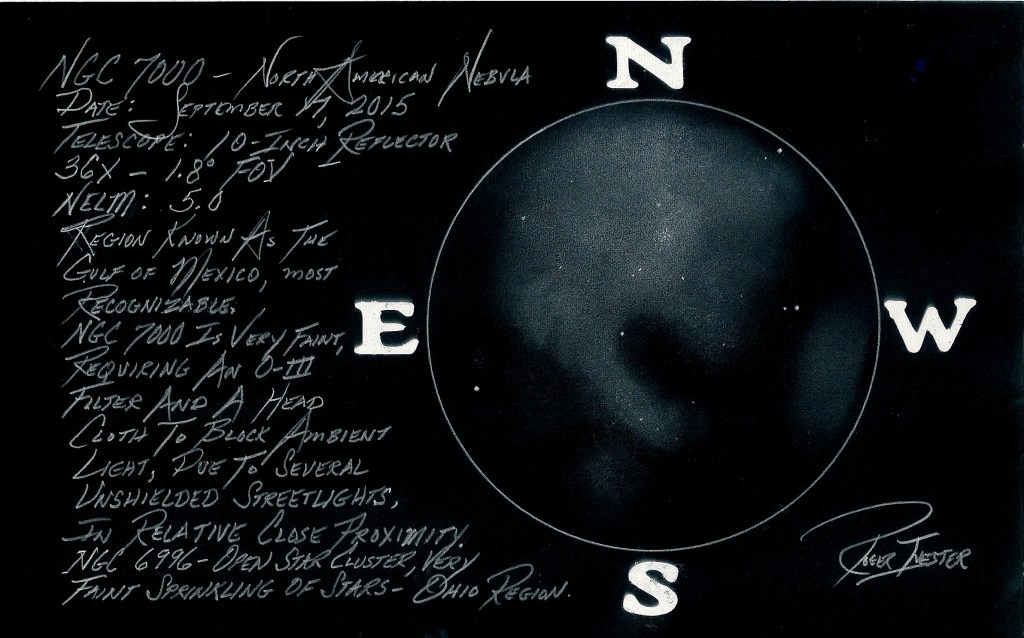
Cocoon Nebula in Cygnus: Very faint and difficult, but with patience and a “reasonably” dark-sky it’s possible. Look for the tiny star chain, just to the NE and you know, you’re close to the Cocoon.
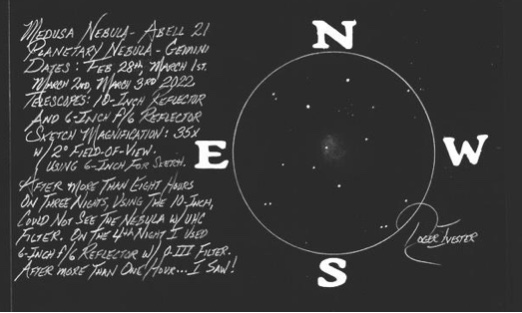
Comet Hale-Bopp With All Three Tails Being Sketched: The Gas Tail, The Dust Tail and The Anti-Tail. Charcoal sketch on black card stock.(March 1997)
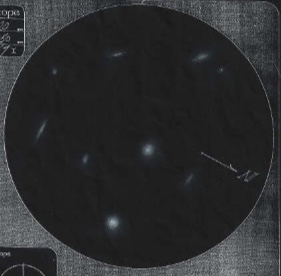
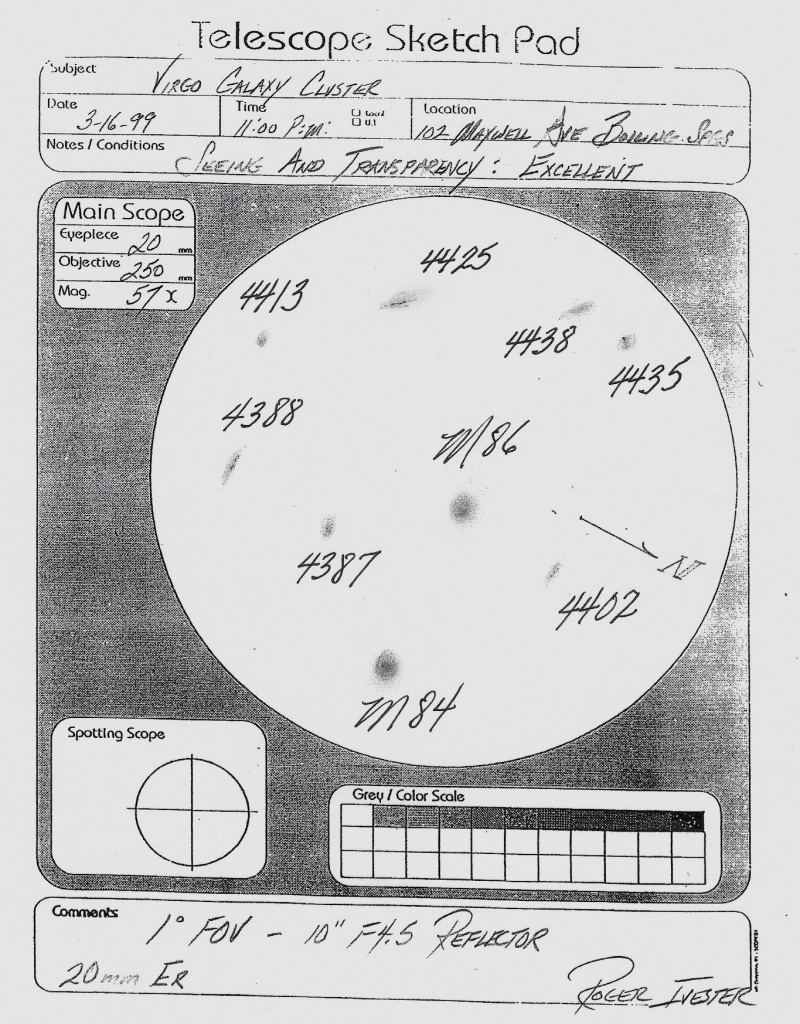
10-inch EQ f/4.5 Newtonian Telescope: Nine Galaxies in a 1/2º Field-of-View, when centered on M86
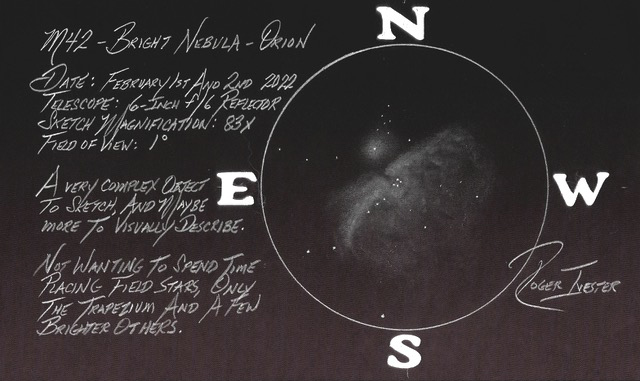
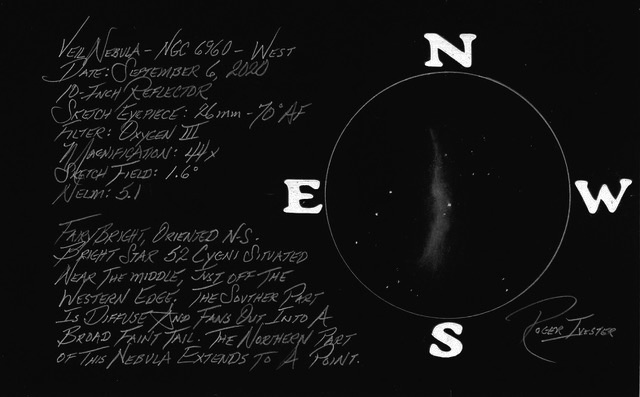
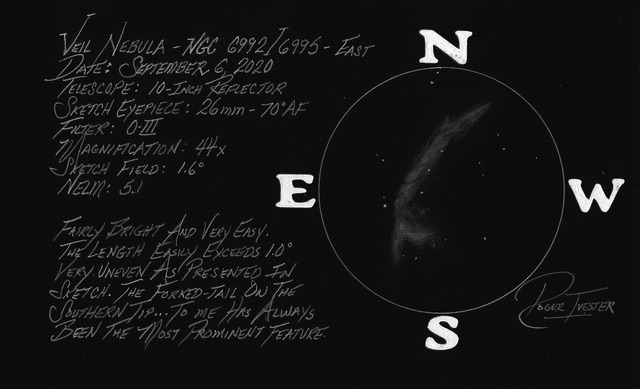
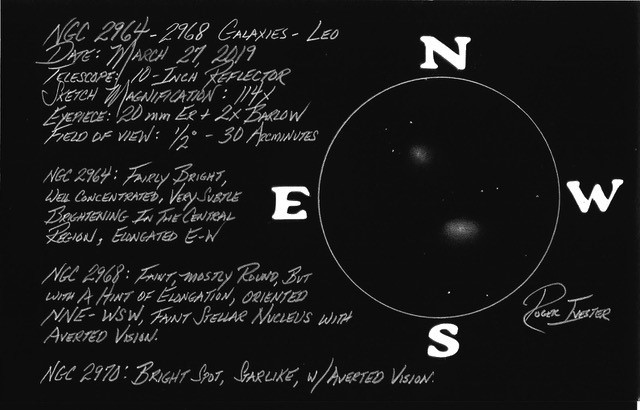
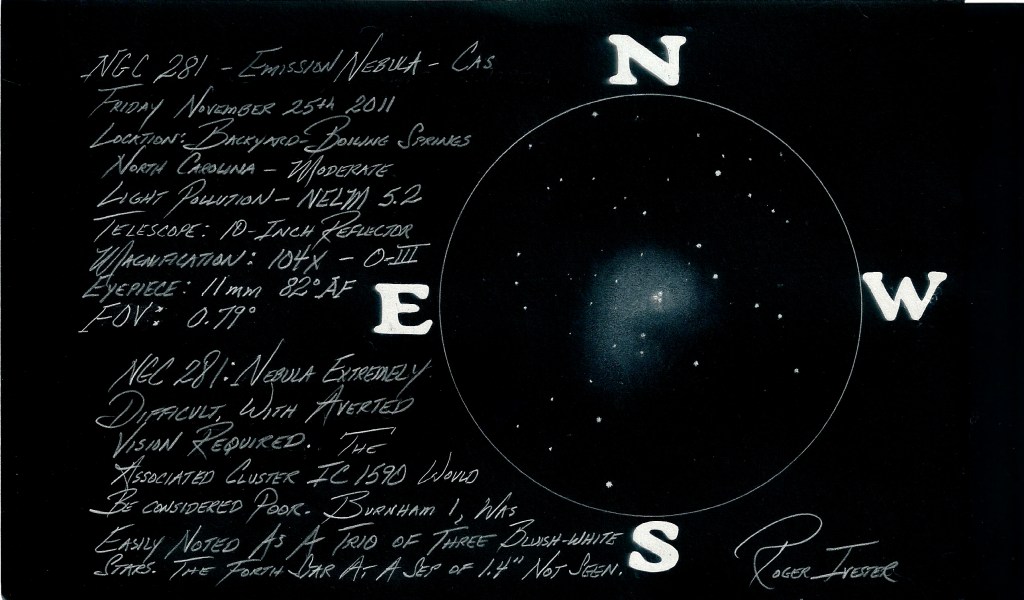
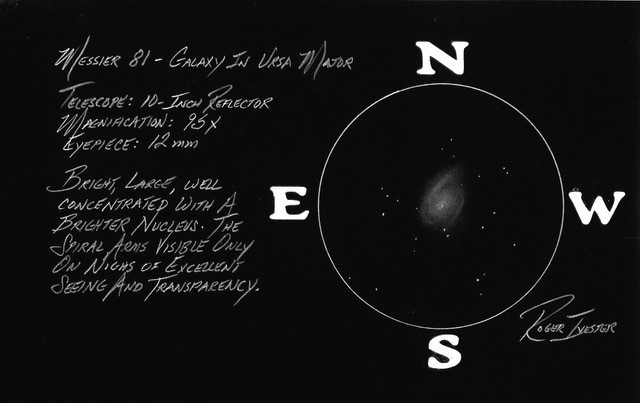
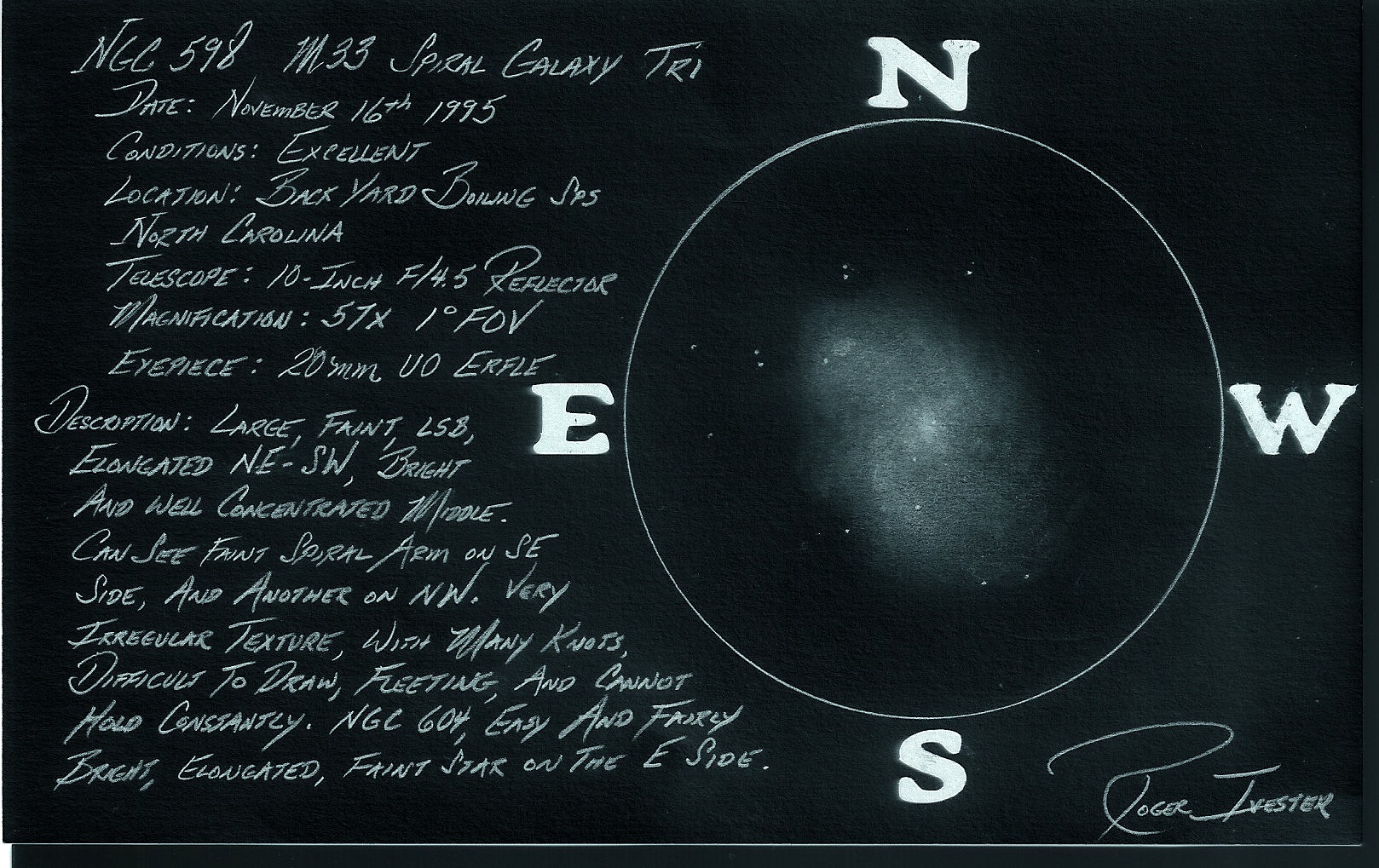
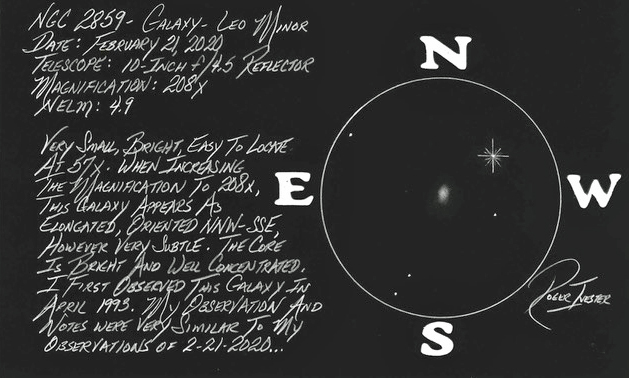
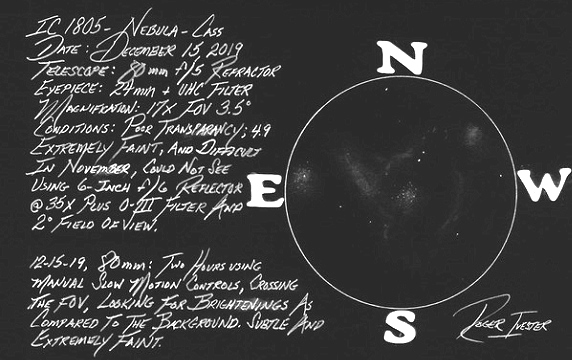
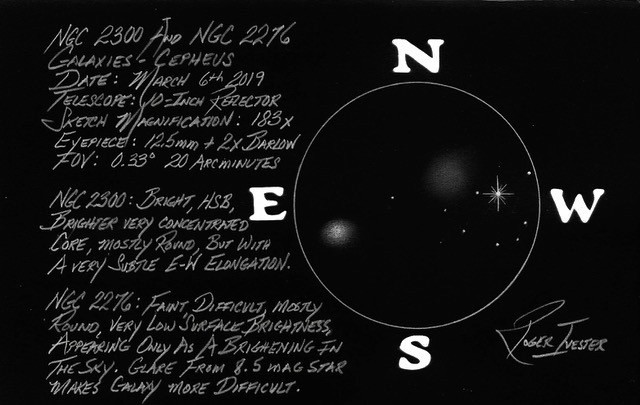
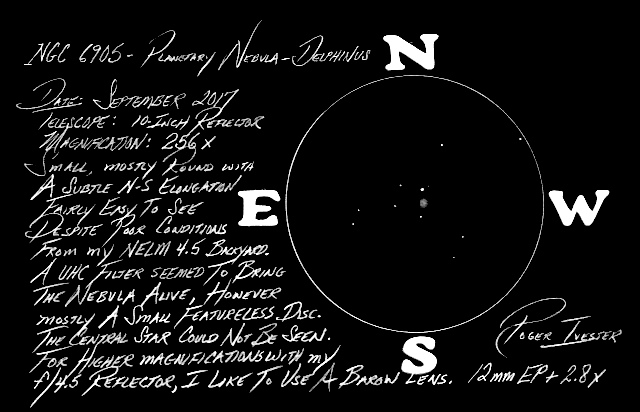
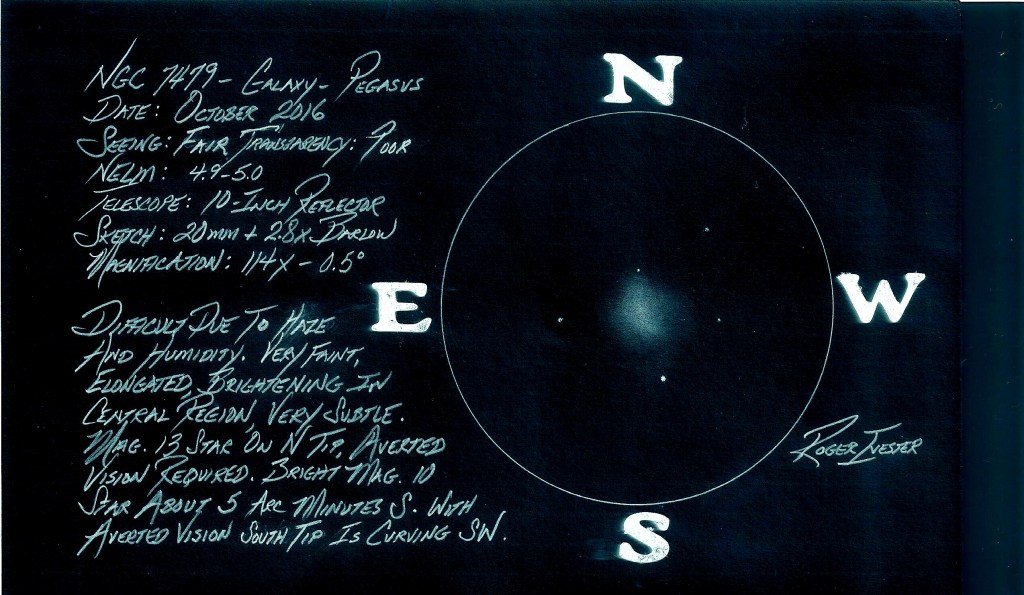
Comments:Comments Off on Visual Observing And “Keeping The Ancient Art Of Pencil Sketching Alive.” The Following Sketches Are A Sampling Of What’s Possible With Nothing More Than A Pencil And Pad
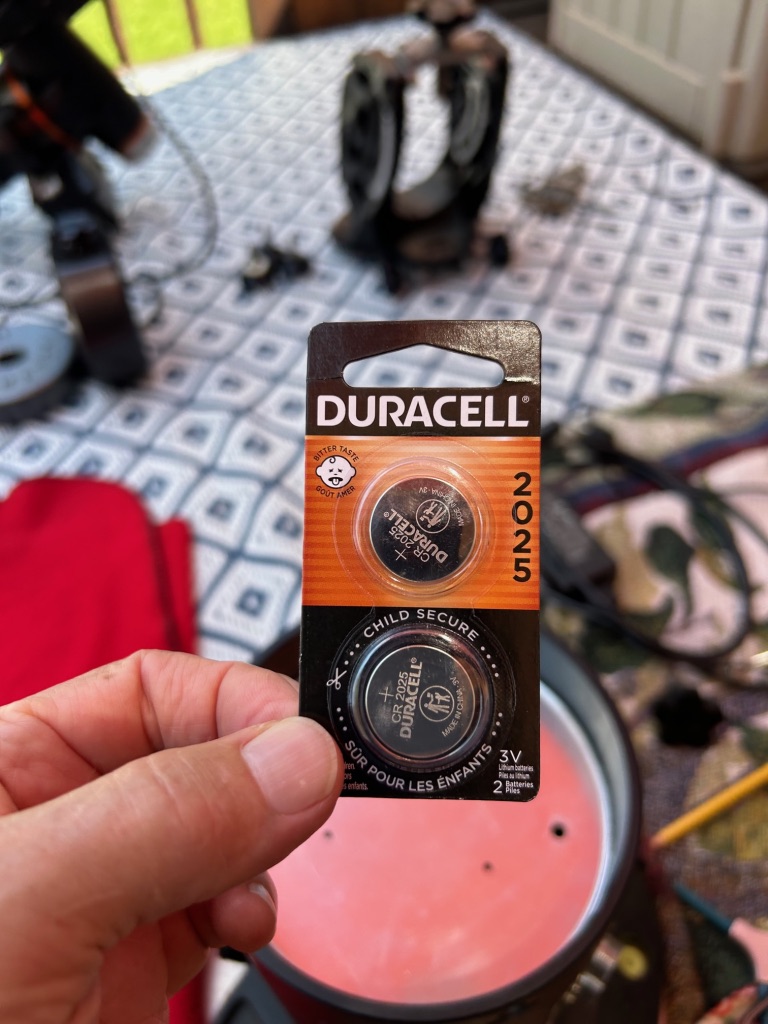
I’ve been having to reset the time or clock on my Celestron CGE-Pro equatorial mount before observing. I just recently found out from others, there is a CR2025 battery that requires changing from time to time.
Celestron calls for a CR2025 as a replacement battery.
Re: Replacing the internal battery in a Celestron CGE-Pro Equartorial Mountfrom Celestron online, as following:
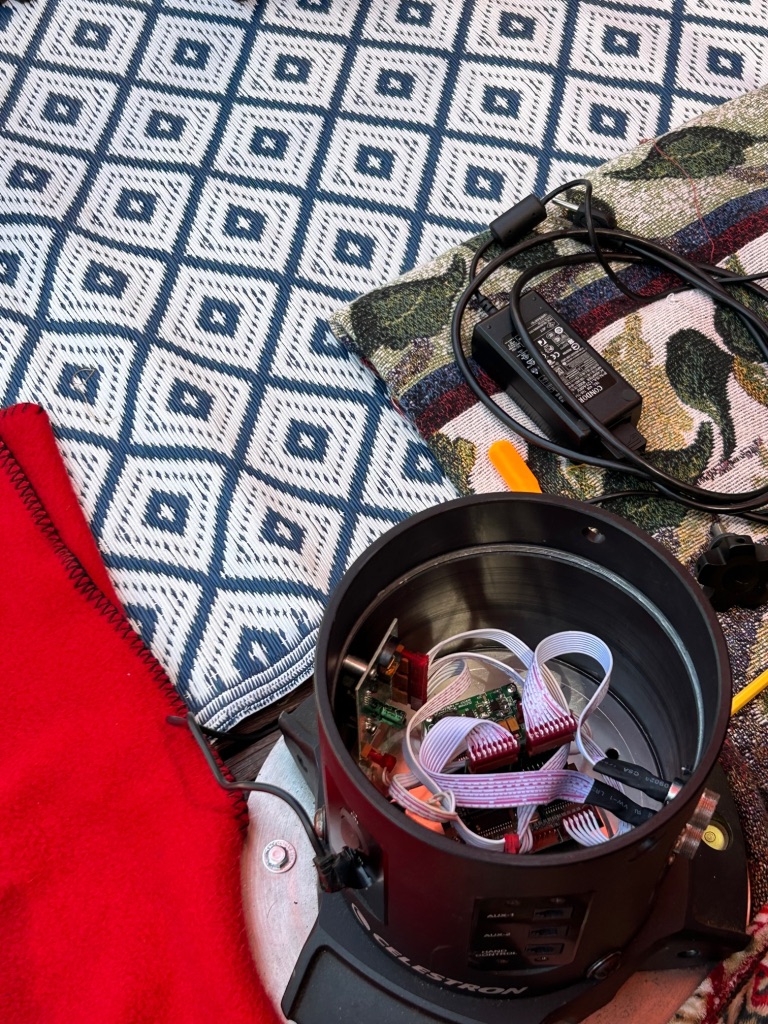
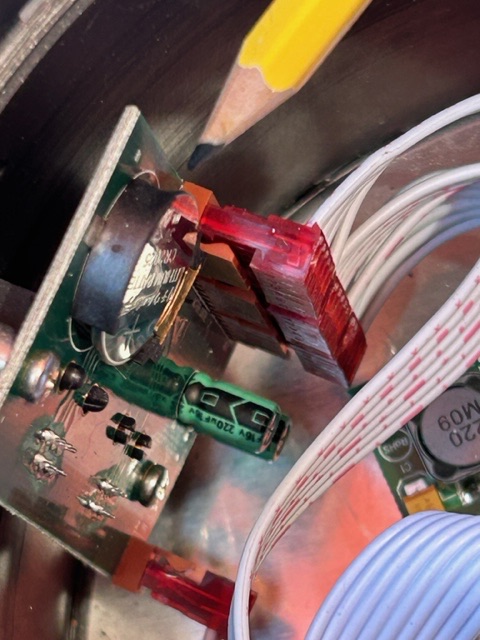
The battery is located under a clip on the PC > Autoguide > Power Cord board inside the pier. Replace with a 3-volt CR2025, available at many drug, photo, and hardware stores.
It’s actually a fairly straight forward process, but “can be” time consuming.
There are a lot of electronics surrounding this battery…so you don’t want to damage your mount electronics due to an inexpensive leaking battery.
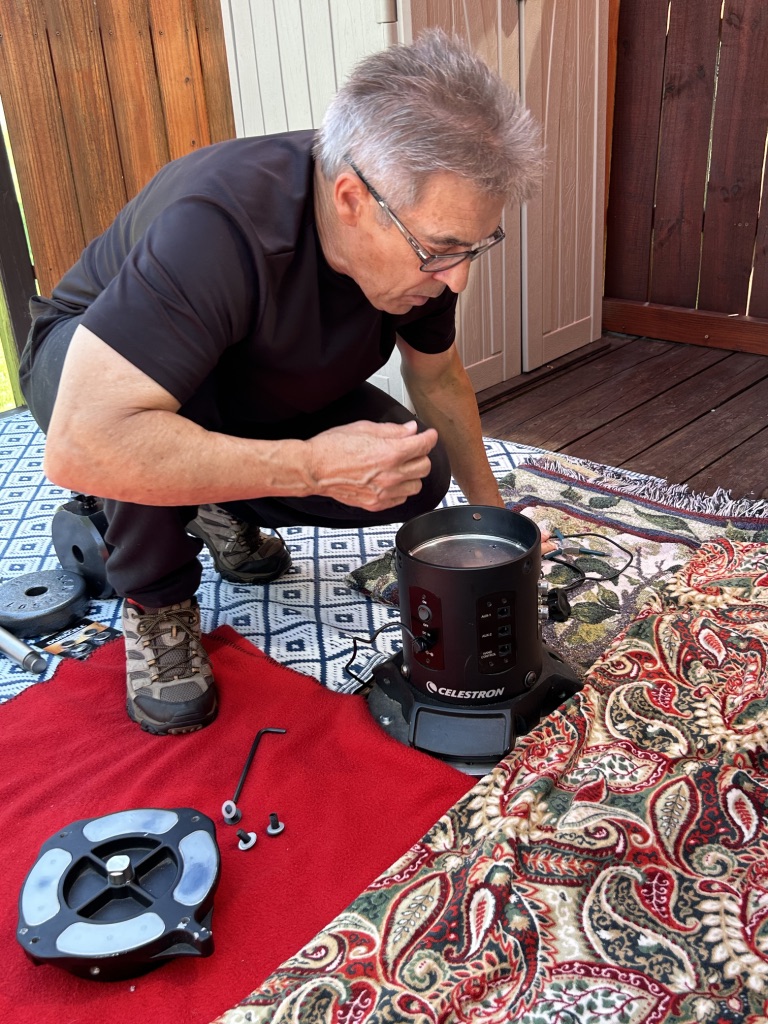
The bolts that hold this top cap are Allen heads requiring a 5.5 mm wrench.Seldom do I find any application, involving telescopes, high-end precision bicycles or other that require half sizes, but this is no problem.
The following plate was a bit difficult to remove. It was “stuck” and required attempting with several techniques before finally getting it out.It had drops of silicon in several places along the edge, which had to be removed and cleared before removing the aluminum plate.
I found that using Allen wrenches “to hook under the two larger holes” in conjunction, and then pulling upwas successful.
Use care as not to damage the plate, or some of the ribbon wires, located just underneath the plate.
When installing the new battery, I used “nitrile powder-free gloves” to avoid getting finger oil or grease on the battery.
Remove the old battery, insert the new one, and then reassemble the mount, connect the Dec and RA cables and you’re all finished.
However, everything related to time and dates will have to be changed via the hand controller.
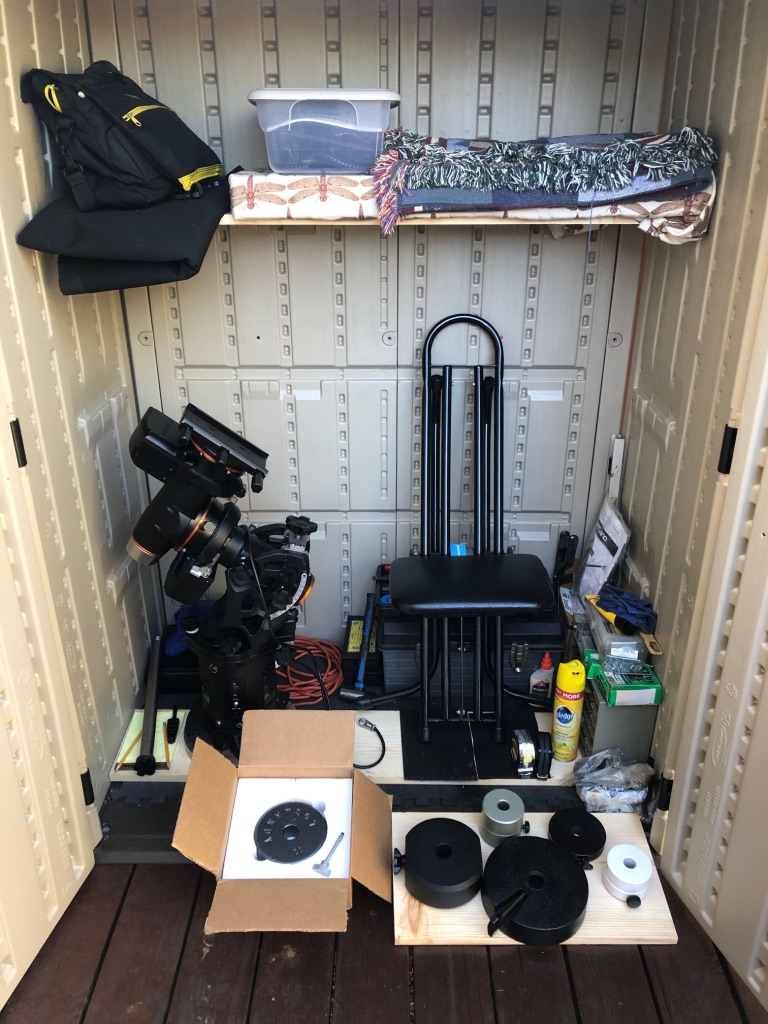
Storage:
I had set the clock, and checked all other specifications during this afternoon. However, last night when performing the alignment process, the mount couldn’t even find Vega, just overhead. And could not perform any two or three star alignment.
So finally, after at least an hour of frustration…I did a “complete factory reset” and reentered all necessary information which resolved the problem.
Note: After the battery change, the time is perfect, each and every time.
The story how a very small mountain town in western North Carolina became very important to the world of professional astronomy, with it’s contribution to the making of the first 200-inch Palomar Telescope Mirror. And most importantly, as of current all electronic devices use chips made from the ultra-pure quartz from Spruce Pine. Roger Ivester
I’m posting the following “brief excerpt” from a published article by David Biddix of Spruce Pine:
Description: Spruce Pine, North Carolina, a small town in the western part of the state, has a storied history related to astronomy instruments. The Spruce Pine Mining District, a geographical area that features significant deposits of mica, feldspar, and quartz, has played a significant role in astronomy for the past 80 years. The mirror in the 200 inch Hale Telescope at Palomar Mountain is made from quartz mined in the District in the 1930s. Today, all electronic devices including computers, televisions, cell phones, mp3 players, and other gadgets owe their existence to ultra-pure quartz mined near Spruce Pine. In this podcast, you’ll learn how this down-to-earth small town helps astronomers reach for the stars.
Bios: David Biddix is a local historian who has published two books in Arcadia Publishing’s Images of America series with co-author Chris Hollifield: one on Spruce Pine, North Carolina and one on Little Switzerland, North Carolina. He was born and currently lives in Spruce Pine. David’s interests include amateur radio, astronomy, and history.
Alex Glover…is the Director of Mining and Environment for Active Minerals International, LLC. He is a licensed professional geologist in nine southeastern states in the United States and has lived in the Spruce Pine area since 1997. He is interested both in the geology of the Spruce Pine Mining District and in its history, which goes back some 170 years.
….I’ve always wondered why ore from the Chestnut Flats Mine near Spruce Pine was chosen for the telescope’s mirror. Recently, I had a discussion with Alex Glover, a local geologist and mining historian who is very familiar with what is known as the Spruce Pine Mining District, a 10 mile-long, 5 mile-wide outcropping of rock from early in earth’s history that contains some of the purest minerals in the world and is the economic lifeblood of this region. This purity was the reason Corning Glass came to this region to find materials for the mirror. Alex speaks about what types of minerals are found in the district….
David Biddix: Spruce Pine, North Carolina
Note: The following photo of the (Chestnut Flats Mine) where the quartz for the 200-inch Palomar mirror was mined, is now closed and privately owned. Roger Ivester
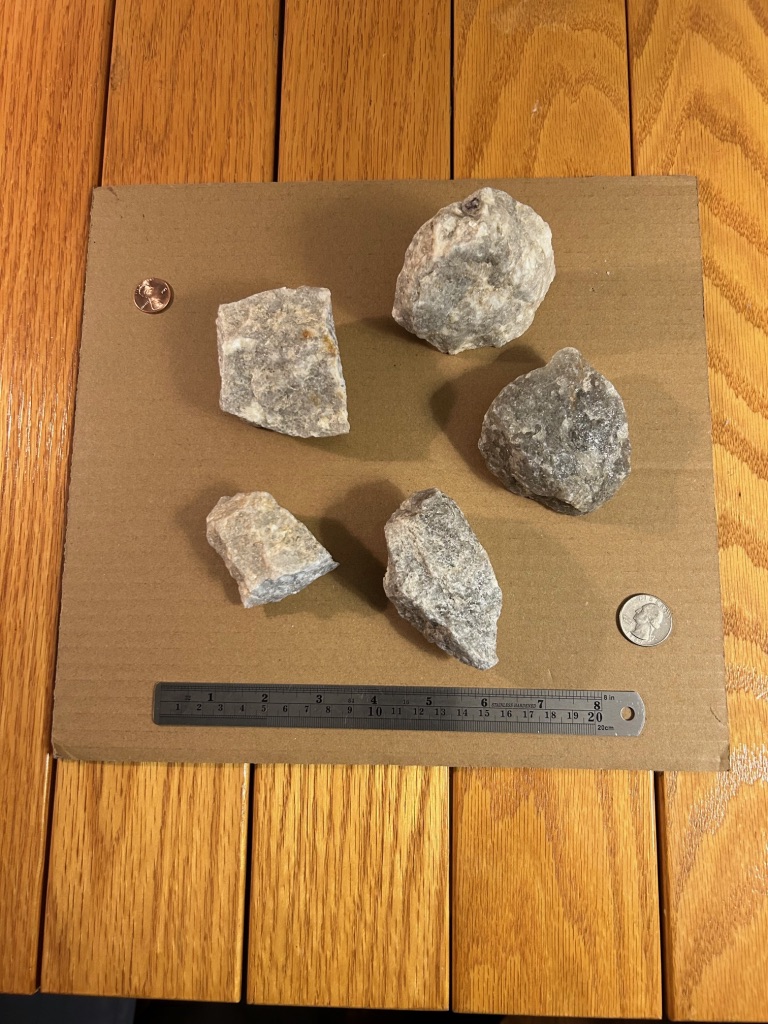
My personal quartz specimens as following from the Spruce Pine mining district:
Historic photo of the mine from days past. Photo credit: Mitchell County Historical Society
Comments:Comments Off on Spruce Pine, North Carolina: The Purist Quartz In The Entire World Comes From Spruce Pine And Used In The First 200-Inch Hale Telescope Mirror
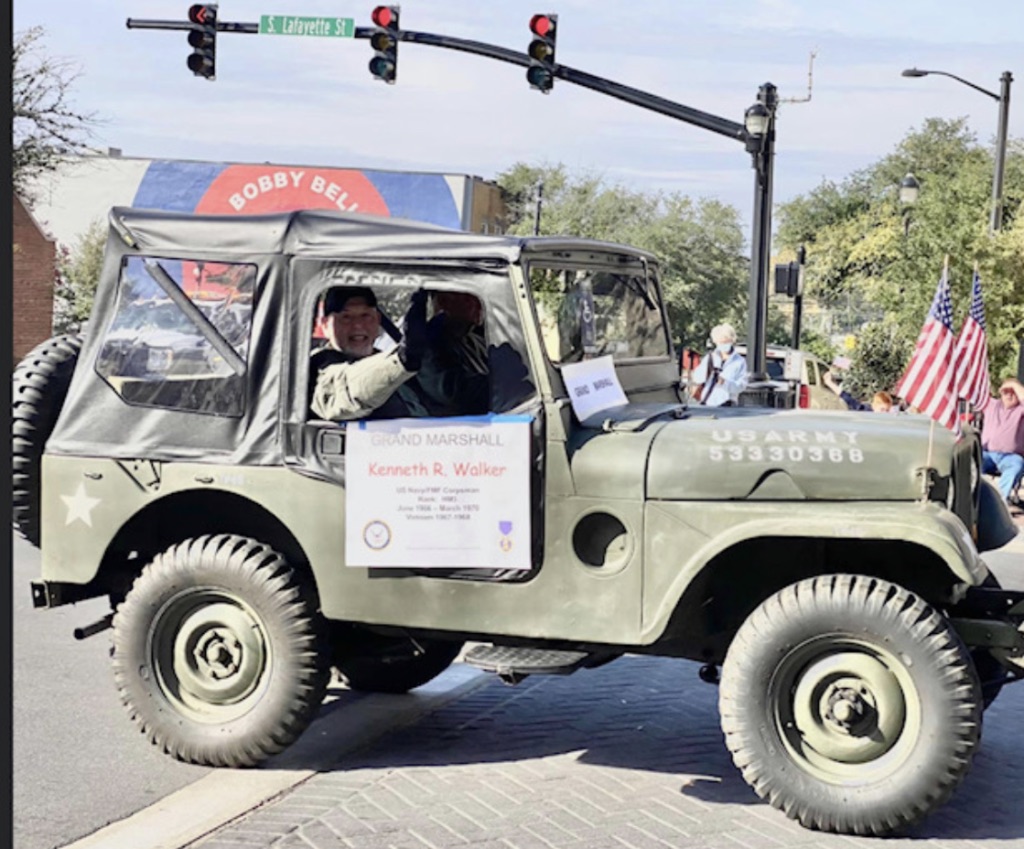
Kenneth was one of the most talented people I have ever known. He previously worked at the hospital as a pulmonary technologist, former music shop owner, a master carpenter and was a perfectionist in everything he did.
Ken could play musical instruments and write songs. He was a combat veteran in Vietnam, a battlefield medic…surviving explosions, bombs and bullets. He never told me what wounds he attended to, but I figured if he wanted me to know, he would have told me.
He will be missed by his family and all of his friends, and I’m so fortunate and privileged to have been able to call Ken, my friend.
We spent many Sunday’s in church together and afterwards shared lunch at KFC/Taco Bell, Ken & Mary’s, or Shelby Cafe with his wife, Bonnie and my wife, Debbie.
I’m also including a YouTube video of the Battle of Cam Lo, by Ken to honor Larry Maxam who was killed during this battle.
Kenneth wrote and sings the songin the following video.






















Recent Comments