Open clusters in Ophiuchus:
From “Deep-Sky Wonders” Walter Scott Houston: selections and commentary by Stephen James O’Meara:
“Many years ago Glen Chaple, Jr., of Townsend, Massachusetts, “discovered” a deep-sky object in Ophiuchus; he found about two dozen stars forming a group which could be glimpsed with the naked eye. He likened the cluster to the Praesepe in Cancer, but was not plotted on his copy of “Norton’s Star Atlas.” The object does, however, have a name. It is IC 4665 and is listed in the “Index Catalogue” to the NGC. In those days of stargazing, serious deep-sky observers soon learned that no single atlas can suit all their needs. Today, of course, IC 4665 is plotted on most modern star charts.” WSH
“Deep-Sky Wonders” A Tour of the Universe With Sky & Telescope’s Sue French
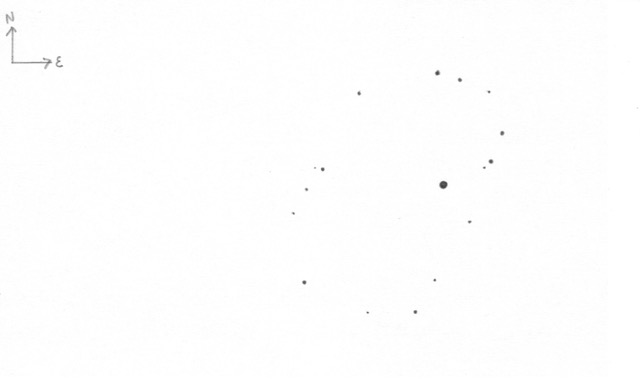
“The splashy open cluster IC 4665 is barely within the boundary of the Milky Way on the atlas. It’s easy to spot 1.3º north-northest of Beta Ophiuchi, which shares the field of view through binoculars or a finderscope. In my 15×45 image-stabilized binoculars, the cluster’s prominent core spans more sky than the full Moon, and loosely scattered outliers to 70′. Half its 40 stars outline a rough circlet with one star at its center and a stem that leads westward to a slightly wavy line tipped north-northwest. To me, it looks like a simplistic drawing of a flower springing up from a gently undulating patch of the ground. Finish amateur Jaakko Saloranta comes away with a different impression. Through his 80mm refractor, he sees the group as the Fish Spear of Poseidon. Sue French
A reply via Cloudy Nights as following from expert visual observer Tony Flanders:
Yes, it’s certainly a remarkable cluster. It’s one of the easiest clusters to see without optical aid, and one of the few clusters that can be fully resolved by hand-held binoculars. And obviously super-easy to locate, even if you can’t see it directly.However, what you see is what you get — about a dozen 7th- and 8th-magnitude stars. As far as I can judge by appearance, it has no faint stars at all. (Likely it really does have some, but they’re camouflaged by the Milky Way background.) So it’s much less interested than (say) the Pleiades, which has a wide range of star brightnesses.
I think of it as the least interesting of the three great open star clusters in the area, together with splendid NGC 6633 and super-rich IC 4756. Tony Flanders
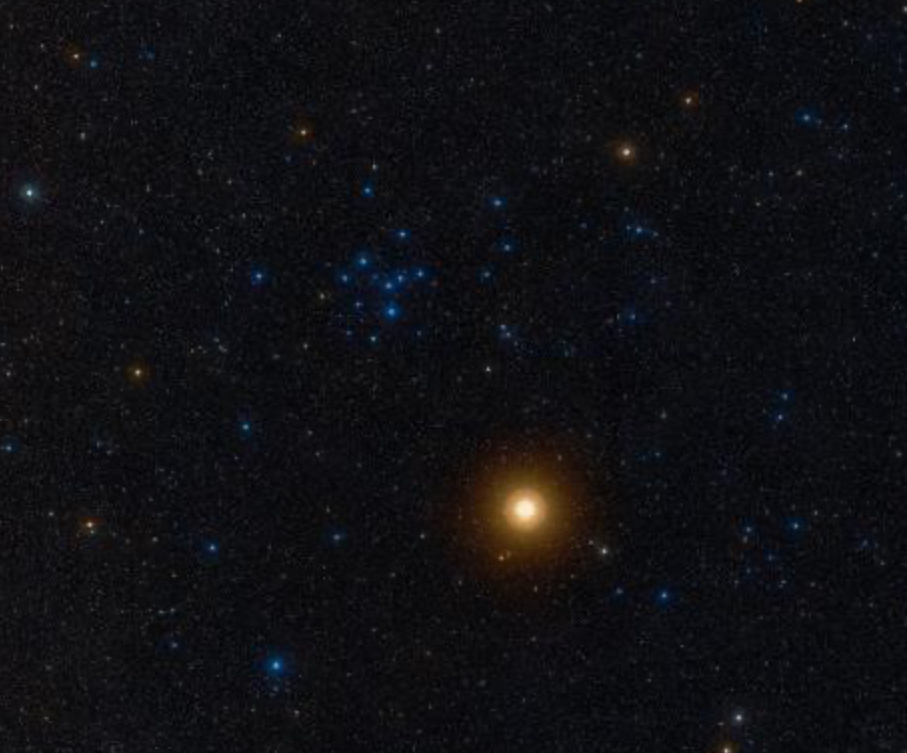
IC 4665: Excellent in my 80mm refractor: Roger Ivester
RA: 17h 46m Dec: +05º 45m
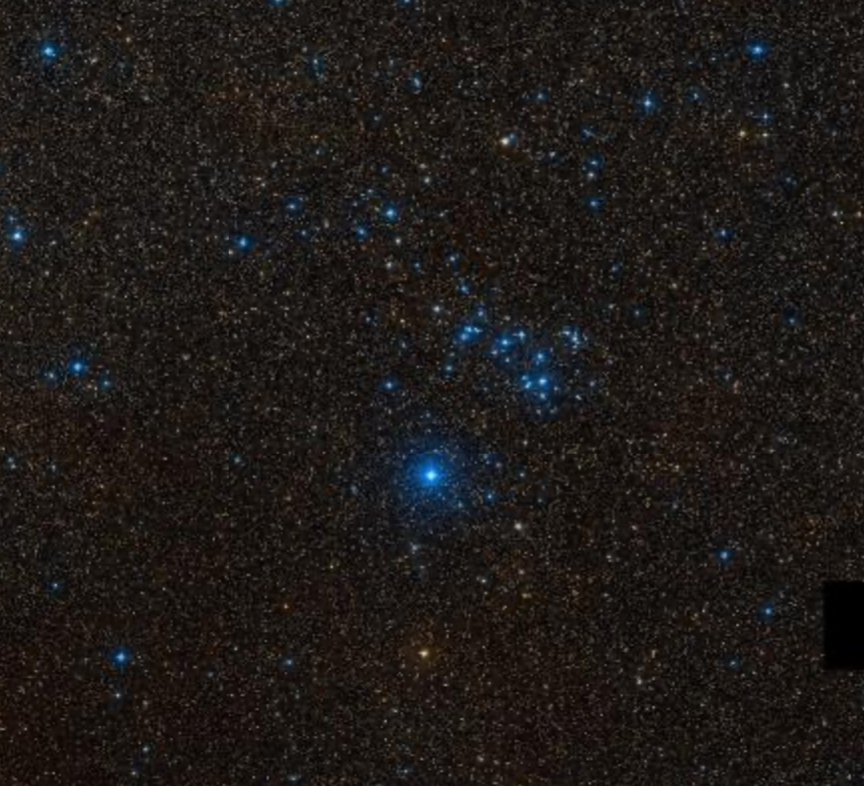
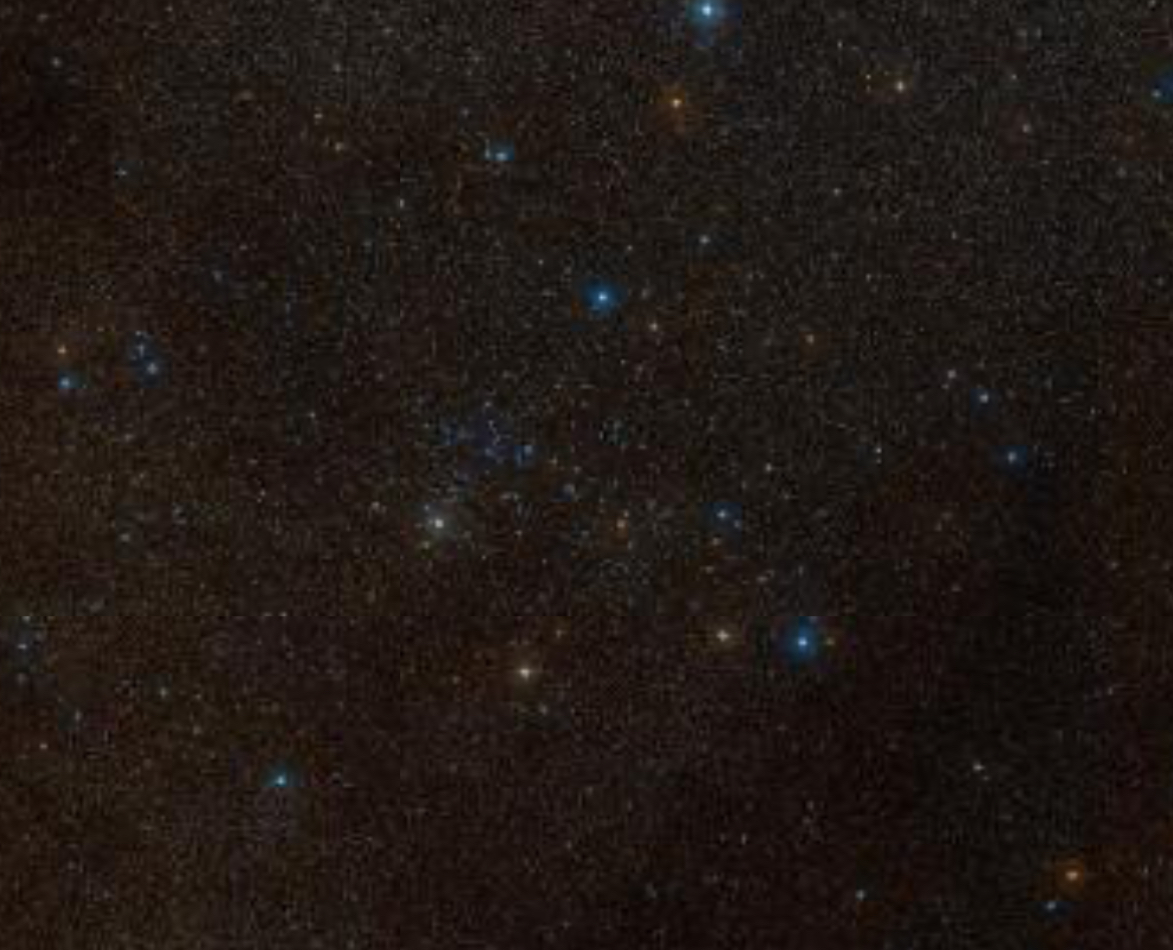
Photos as following from wikisky.org
NGC 6633: Rich and most interesting of the three in my 80mm refractor:
RA: 18h 27m Dec: +06º 34m
IC 4756: A four or six-inch telescope is needed to fully appreciate this cluster, however nice in my small refractor: Roger
RA: 18h 40m Dec. +05º 29m
I’m adding one of my favorite asterisms for the evening:
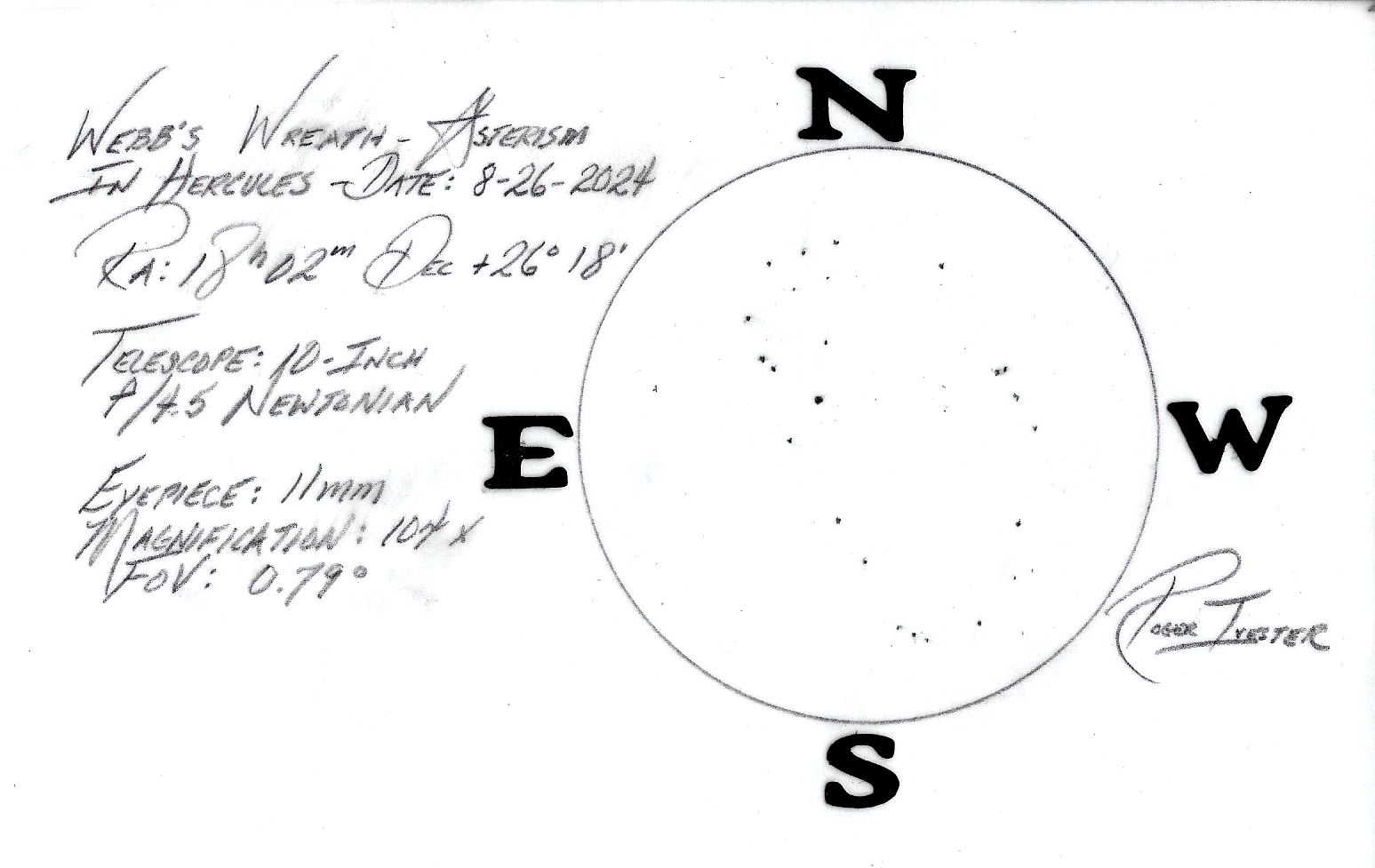
Sue French using a 105mm refractor with the employ of a mirror diagonal


Recent Comments