“Some deep-sky objects offer beautiful, breathtaking visual experiences. NGC 55 is one such object.” Walter Scott Houston (Note: WSW’s observations of this galaxy were from Mexico)
RA: 00 h 15 m Dec. -39º 13 m
My image was Lum from Gloucester with my 32-inch, combined with RGB from Florida to make a color image. It’s low to get color channels. So, the detail is from the 32-inch combined with color from Florida using a C14. Mario Motta
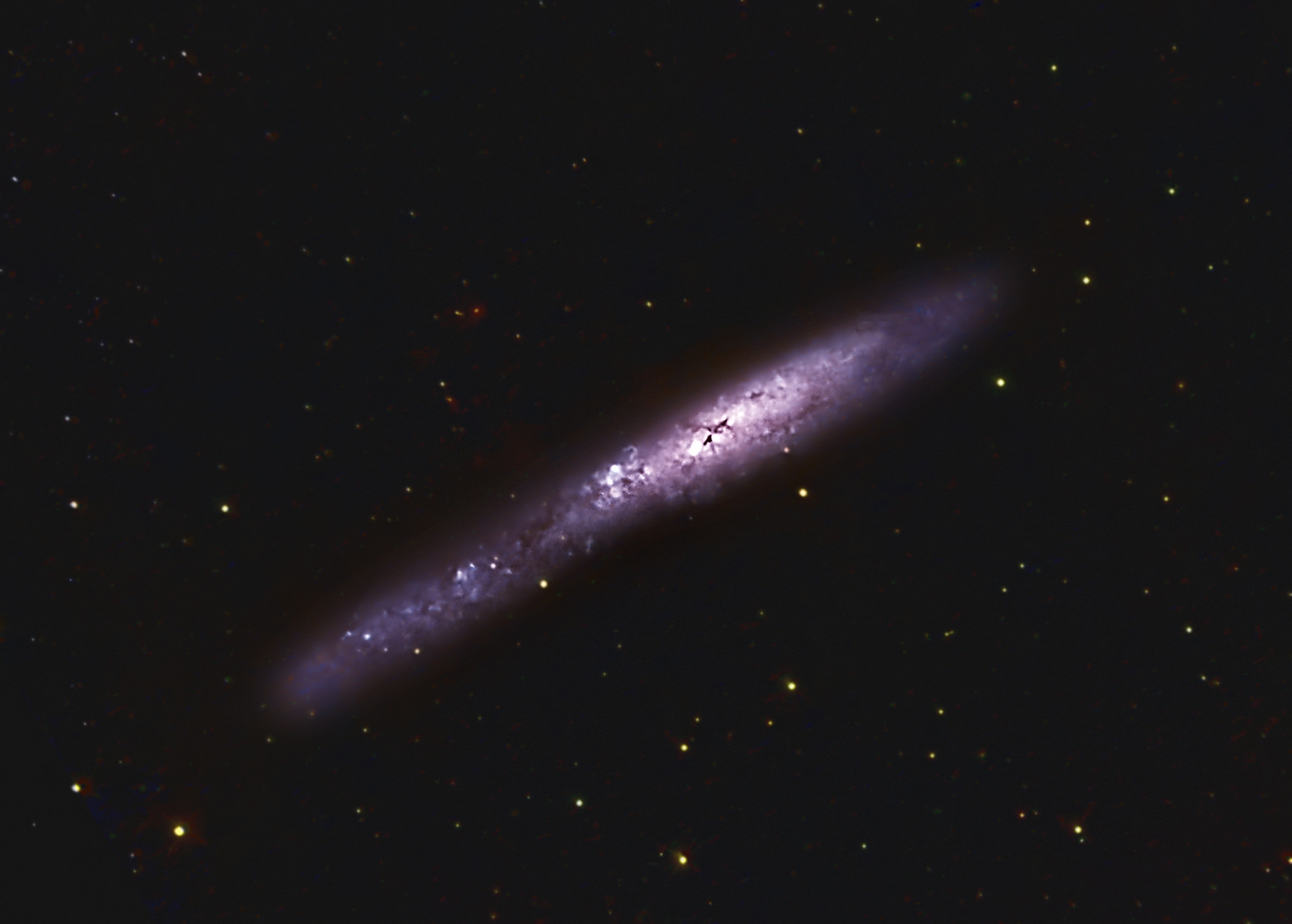
My long journey toward “visually observing” this challenging southern hemisphere galaxy…a pursuit that began with the first attempts as far back as November 2009. Roger Ivester
The galaxy itself, at magnitude 7.9 would not seem to be a particularly difficult object with a telescope aperture of 4-inches or larger. However, its far southern declination makes it a very challenging object at best for many observers across the continental United States.
Note: Even though the magnitude is listed at 7.9 the surface brightness is fairly low at mag *13.5 which adds to the difficulty factor of being so low in the southern sky.
*Mag 13.5: “surface brightness” taken into consideration from the “Observing Handbook and Catalog of Deep-Sky Objects” by Luginbuhl & Skiff
My backyard offers a limited view of the southern sky, so in December 2009 I set out to find a site that would allow me observe this far-southern galaxy from my latitude of +35° which presents a challenge: an exceptionally clear, unobstructed southern horizon is essential.
Even the slightest skyglow near the horizon can wash out the galaxy entirely, making it virtually impossible to see.
Another attempt: There is an observing site less than a couple of miles from my home, where light pollution is minimal. From there, I could easily identify my starting star, Alpha Phoenicis, shining just above the tree line. I used my star atlas and moved the telescope to the galaxy position, but it remained invisible. A faint skyglow extended roughly 10º above the horizon, which eliminated the contrast, needed to see this galaxy. Then after more than an hour, without success, I packed up and left.
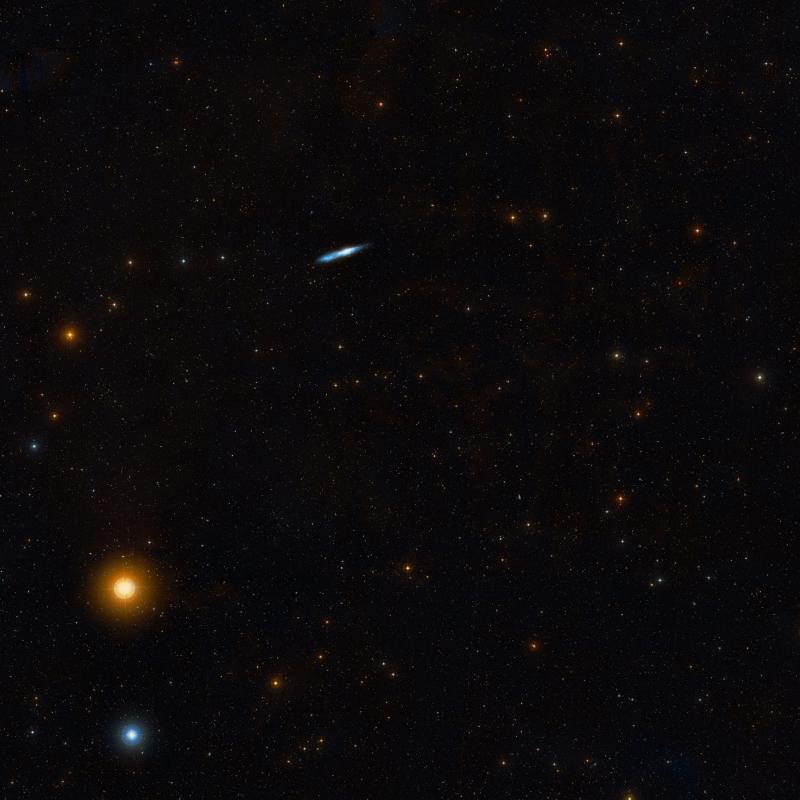
For a wide-field image of galaxy NGC 55 I’ve included the following from: www.wikisky.org
The alternate site was reasonably good, although there was skyglow again extending well above the horizon. After more than an hour of searching without success, I finally gave up.
I have attempted to see this galaxy on numerous occasions over the years, including several attempts in November and December of both 2024 and 2025 from various locations, and as late as November 2026.
There is a small mountain peak along the edge of the South Mountains that would make an ideal observing site, for this far south galaxy, but…
Located only 30 minutes from my home (Moore Mountain) is a location where I observed and sketched both Centaurus A and Omega Centauri. Unfortunately, about five years ago, a large electronic iron gate was installed, effectively restricting access to the property. I’ve made several attempts to contact someone who might be able to help me regain access, but I’ve never received a response.
Today (November 11th 2026) Debbie, Sophie, and I made the drive to a location that has given amateur astronomers throughout the region countless memorable nights under the stars. It’s been several years since I last observed from Lost Arrow Ranch, but returning today brought back good memories. I have a feeling this just might be the very place I’ve been searching for! And it was good to see Jackie Price, which was the first time in five years.
I’d just been hoping to find a location a little closer to home, but I think the extra drive is worth it. In recent times…I’ve noticed that driving at night isn’t quite as easy as it once was.
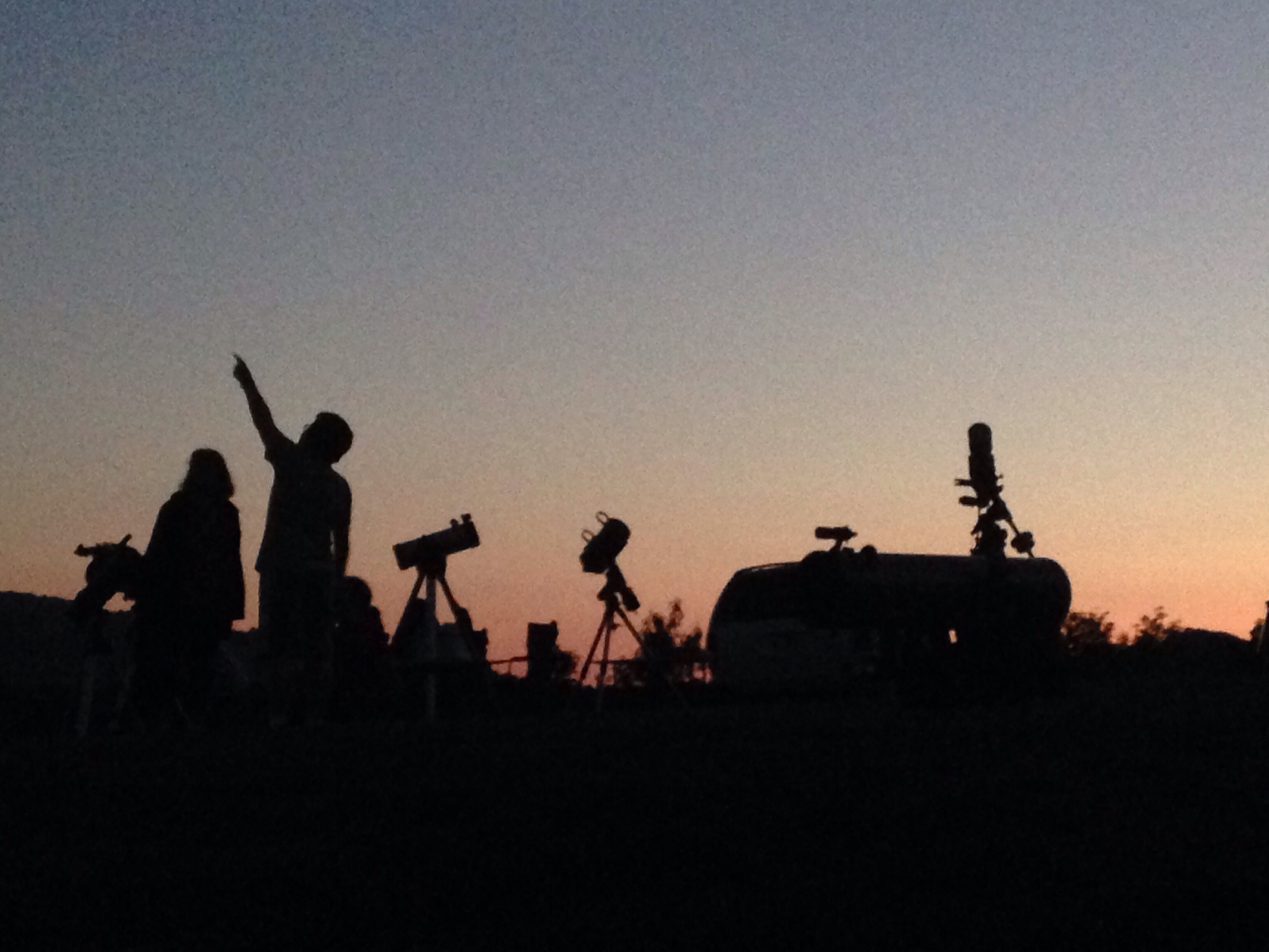
Jackie’s late husband, Mike Price, was a lifetime member of the Cleveland County Astronomical Society, a club I helped establish around the time of Halley’s Comet’s last appearance. It was also good to see Jackie again, and taking a look around the dark-sky observing site, where I had spent so nights so many years ago. Some of those nights were bitterly cold, but the chill never seemed to matter when there was a faint, distant deep-sky object waiting to be found in the eyepiece.
I remember when packing up my telescope and equipment, and having frost on my toboggan (what folks in the northern states might call a ski cap or knitted hat). Those were special nights, and returning to the site today (Wednesday, November 11th 2026) brought back fond memories.
Mike Price was a man with many talents, one of which was being an acrobatic pilot. I’ll never forget the evening he treated us all to an unforgettable demonstration of his flying skills, performing right over our observing site. To stall a plane in a vertical position, then letting it fall backyards takes nerves of steel. Then before it hits the ground in a death-spiral dive, he pulls the plane up just above the treetops. It was pretty incredible to say the least.
Lost Arrow Ranch encompasses approximately 1,500 acres and adjoins the South Mountain State Park! In an age when light pollution makes truly dark skies increasingly rare, this place is an astronomer’s dream. I’m excited to be returning, and I have a feeling this may be the perfect location to finally catch a glimpse of the elusive southern hemisphere galaxy, NGC 55.
November 16th 2026: I missed the opportunity to attempt during this month, and will have to wait till the first week of December 2026, allowing the moon to give me time before rising.
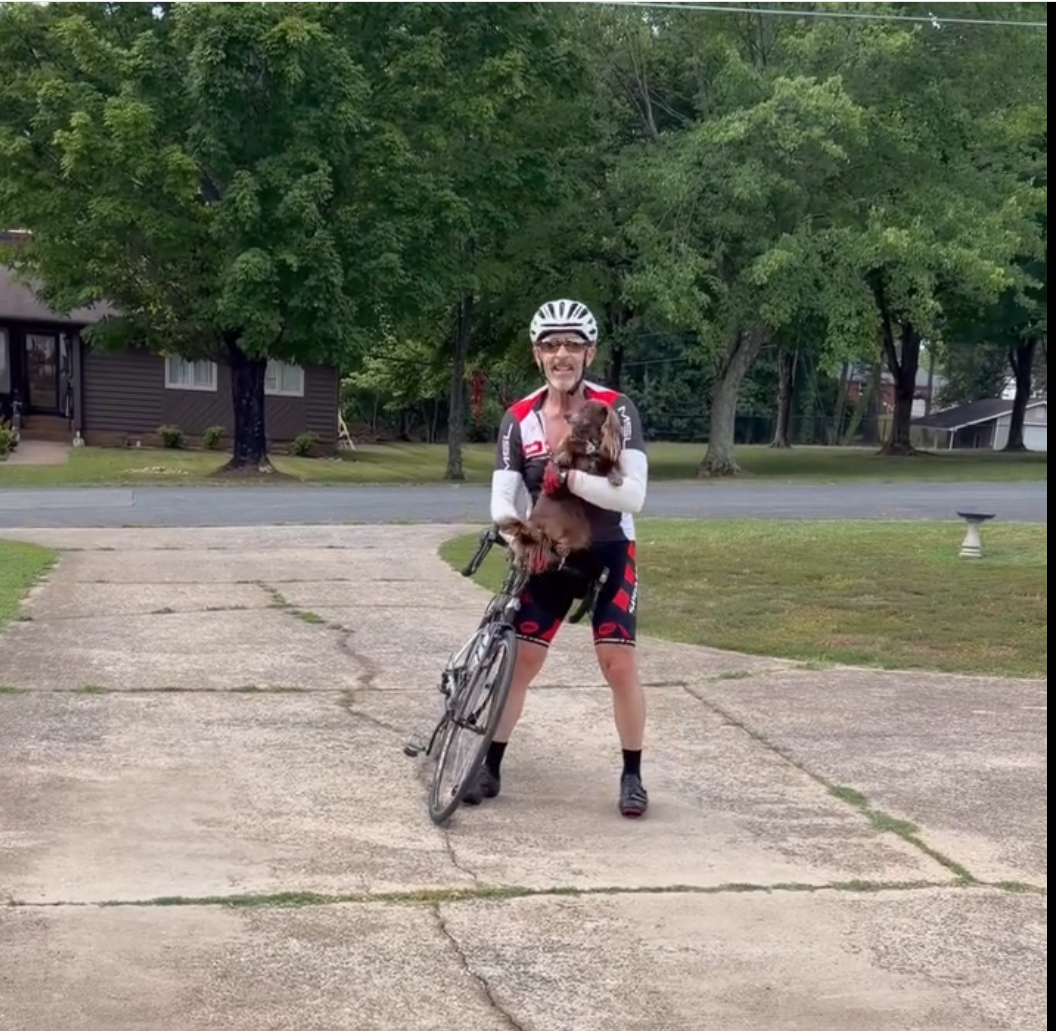
The late Mike Price pictured below:
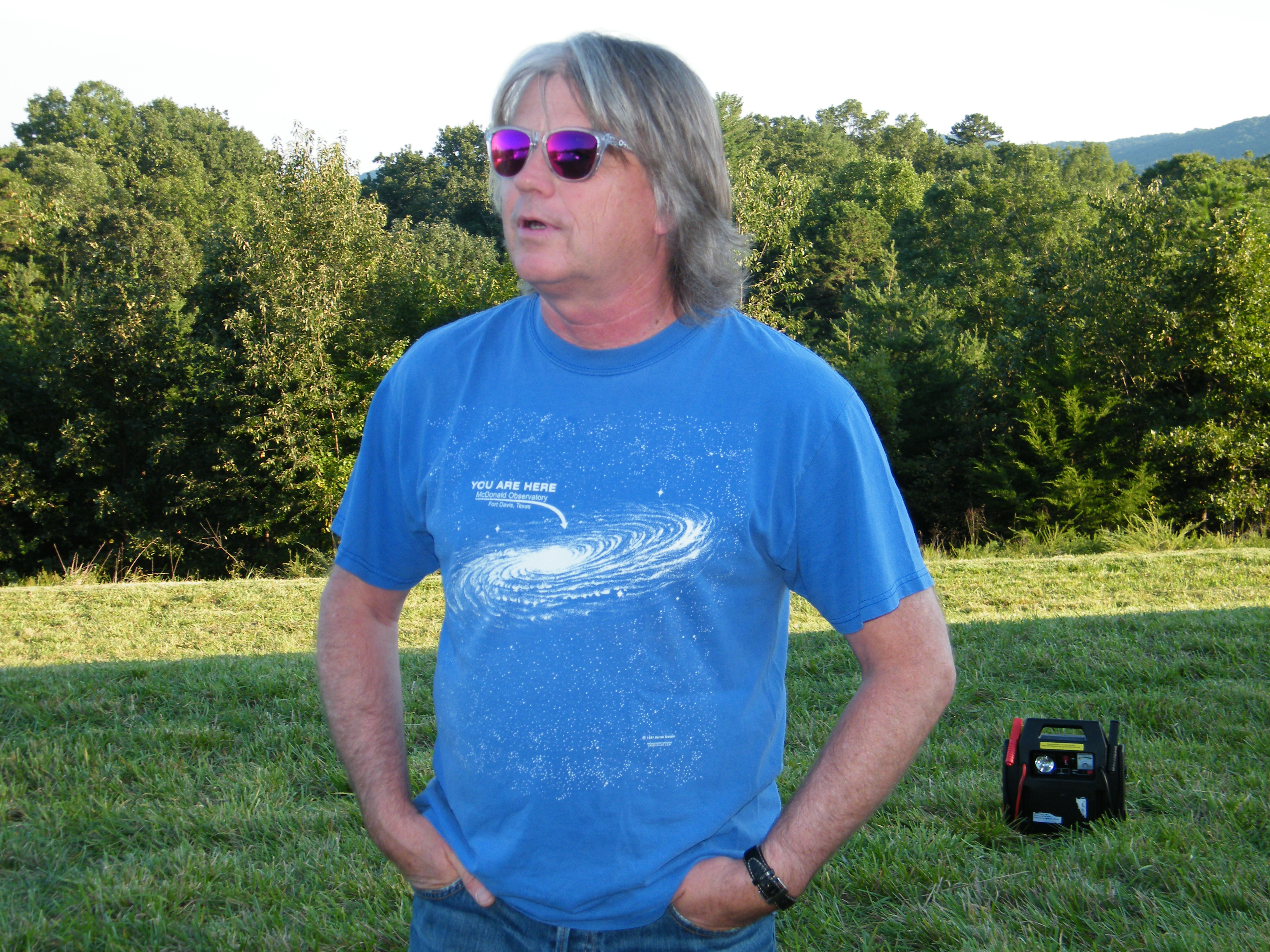
Jackie Price at one of our occasional cook-outs at Lost Arrow Ranch and long-time local amateur astronomer, Bob Eskridge, standing behind.

“The Slab” known for a large rectangular section of concrete, which at one time was the foundation for an old house or building. In earlier times, most observers would set up their equipment on this platform, but in later years, the hill proved to be better choice.
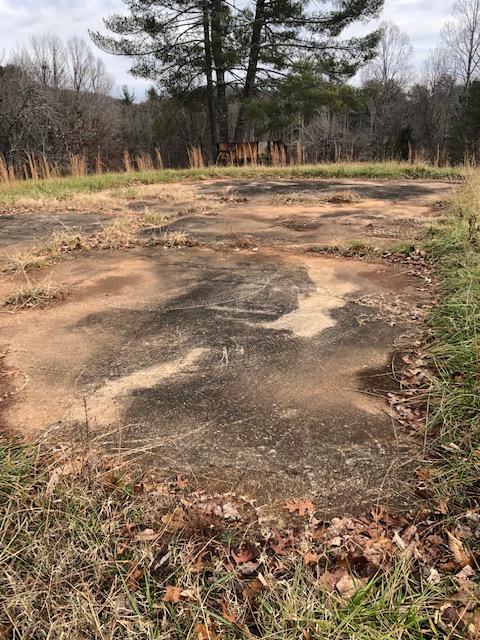
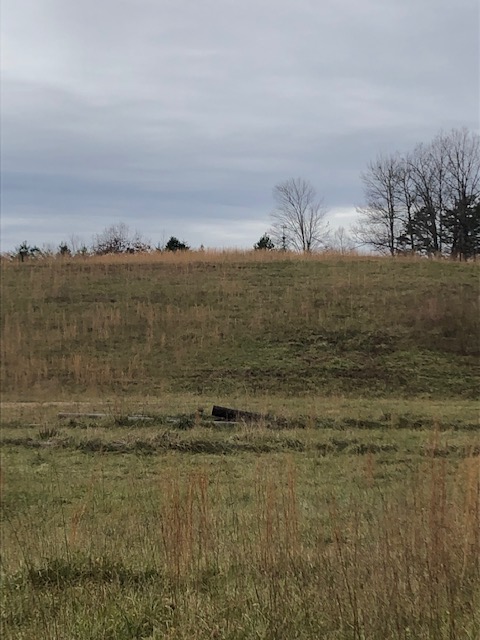
The Hill….which in latter years became the preferred location to set-up.
More important things taking place…
Sunday, November 8th 2026
October 2026:



Recent Comments