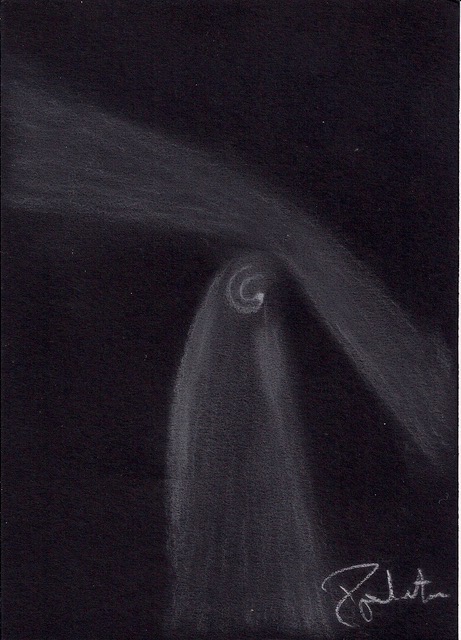
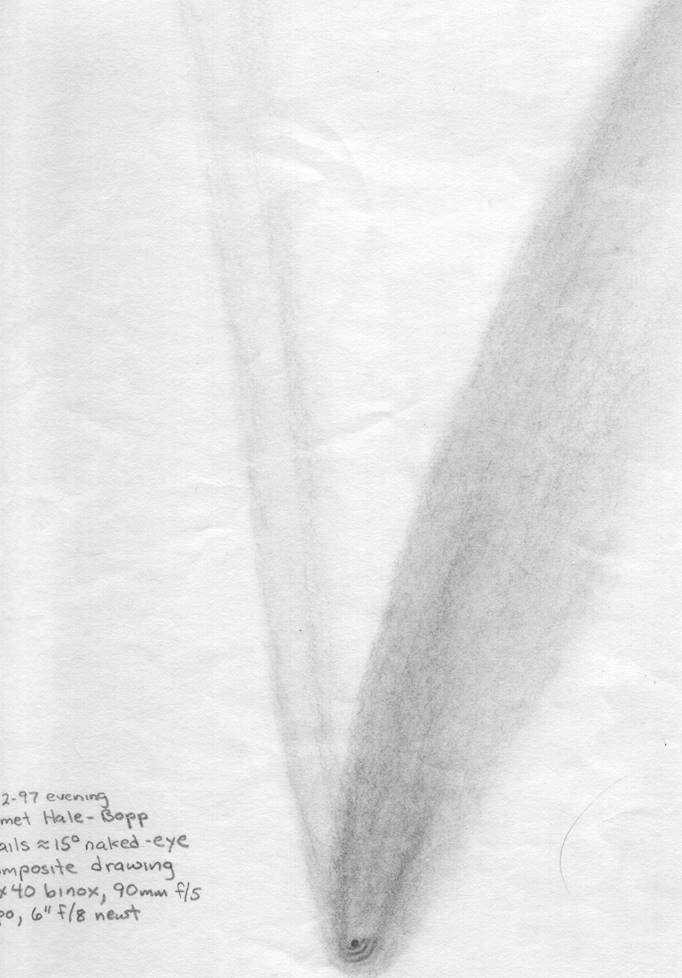
White charcoal pencil sketch as following on black card stock. The three tails are visible: The anti-tail, the ion or gas tail and the dust tail are clearly visible. Roger Ivester (North Carolina)
The following sketch by Sue French: New York
Unfortunately, the sketch is actually larger than our scanner can copy, so some of the comet is cut off. The sketch was made on 4/2/1997. The tail was about 15° long to the naked eye. To get the tail and the core detail in the same sketch, I used three different instruments: 8×40 binoculars, a 90mm refractor, and a 6-inch reflector.
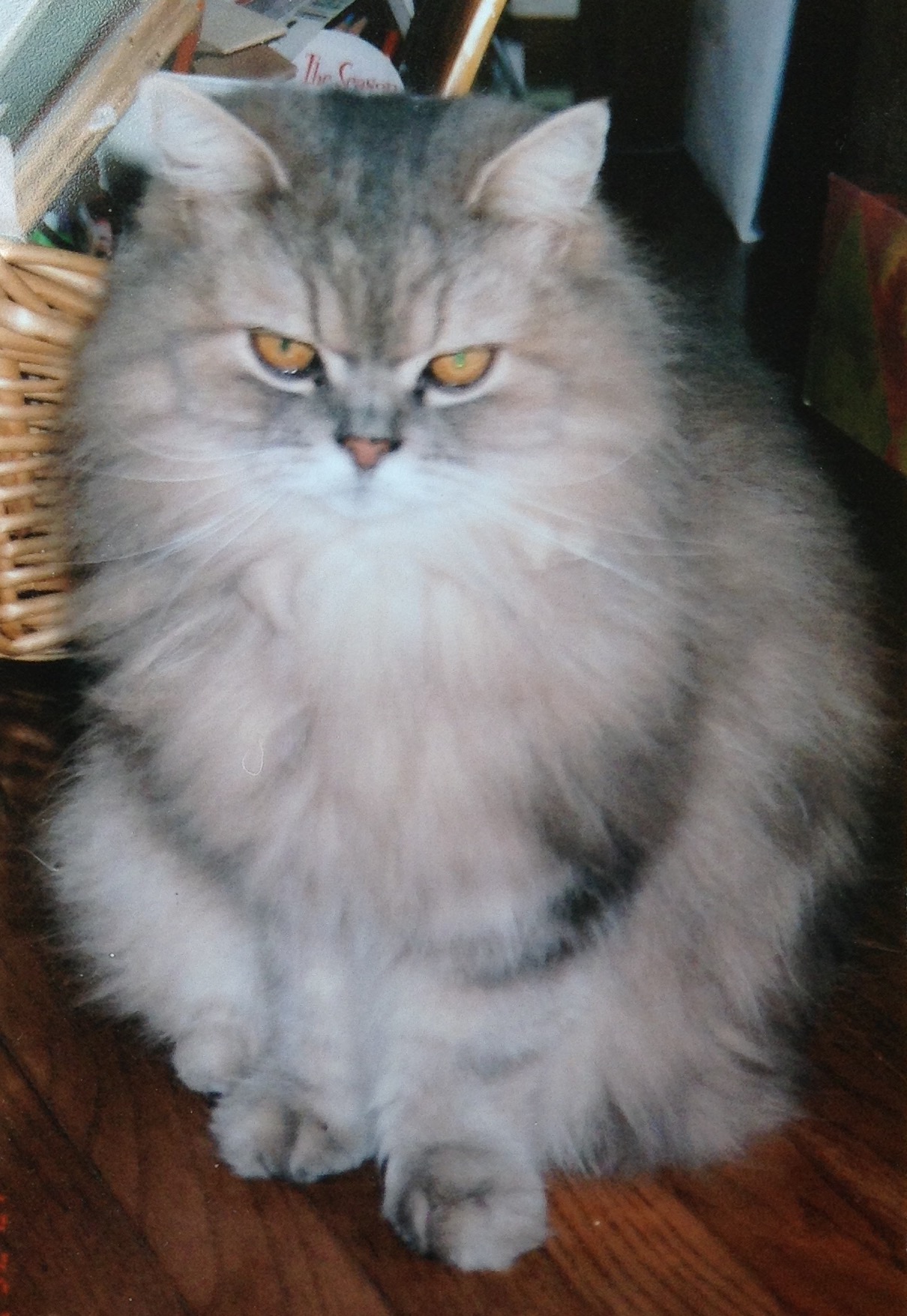
I can still see CJ, our Persian Cat, waiting anxiously at the back door to go outside, while I’d be setting up my telescope on the deck or in the backyard.
She would walk around, climb the deck, play like she was catching something….pouncing and clawing the ground. However, after a short while, she’d end up on my lap, either due to being cold, or to just feel safe.
CJ was going to stay with me for only a couple weeks, and then would be moving to California, but that two weeks ended up being almost 17 years. I’m really glad the move didn’t work out.
Astronomy from my backyard will never be the same.
Debbie and I held her in our arms from 11:30 AM till 8:15 PM. I had my hand on her chest when her little heart beat the last time, after 19 years. It was a very sad day.
CJ had a wonderful life. We treated her like a Princess!
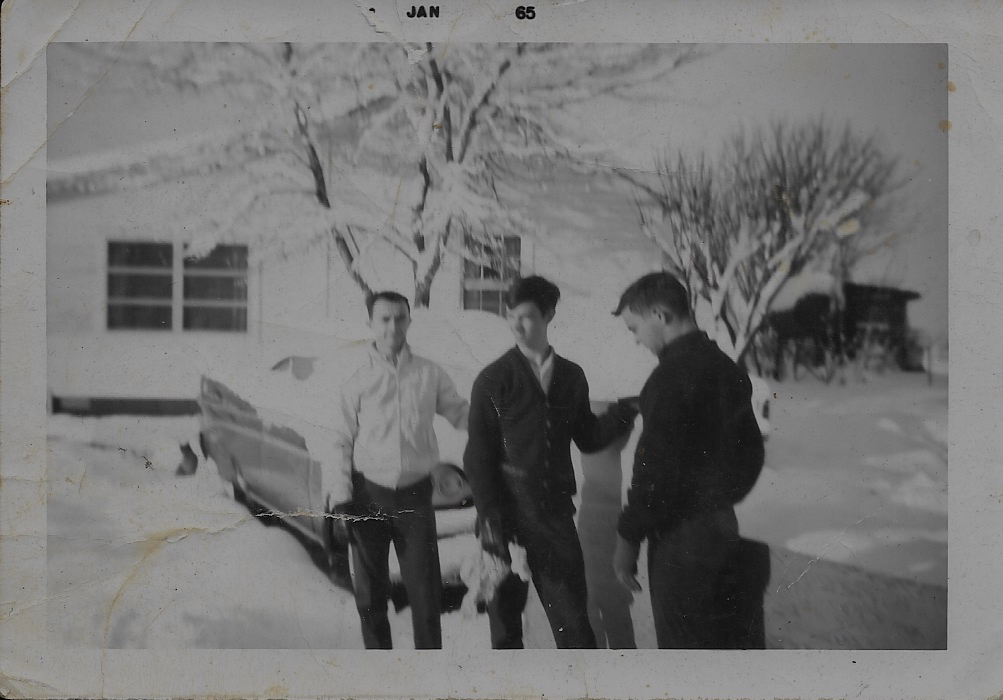
The following photo at the bottom of this post was made in January 1965:
A cold month with a lot of snow and school days missed. During this particular snow, there was more than 12-inches of snow on the ground at one time with extremely low temperatures.
Temperatures dropped into single digits for several days, which caused havoc on plumbing for many, and to make matters worse, deep-snow and ice persisted.
During January of this year, the First Broad River froze solid, something I’d never seen before or since.
This was just one of several snow falls that would occur….extending into the months of February and March of 1965.
In the following photo, L-R, are three of my brothers: Ronny, Phillip and Jimmy who are clearing snow with a 4 x 8 sheet of plywood.
Observing with a purpose for me, is having an objective or agenda for observing. This might be to observe the Messier catalog, the Herschel-400 list or even some personal lists of objects. If you can’t decide what to observe: The Astronomical League has plenty to consider.
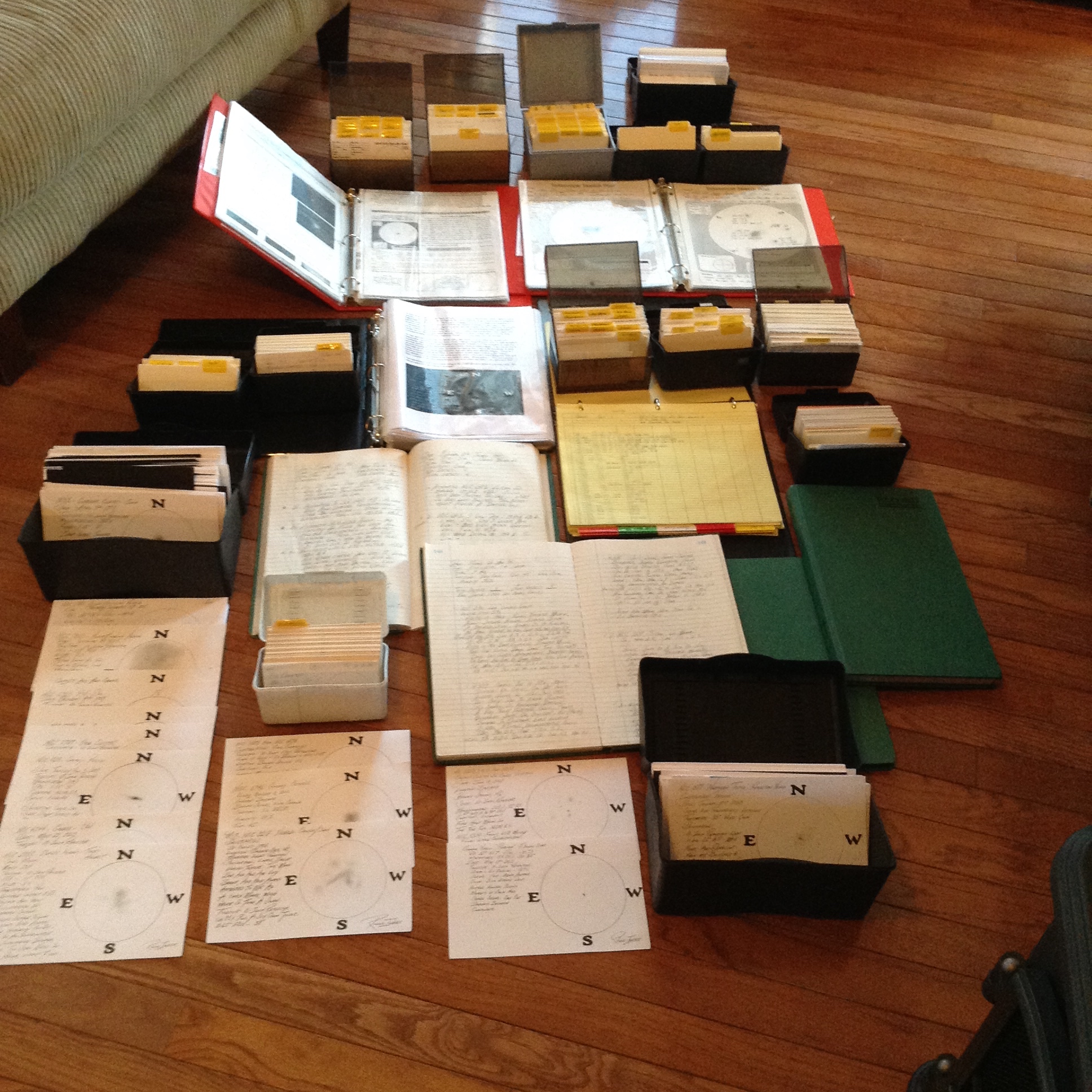
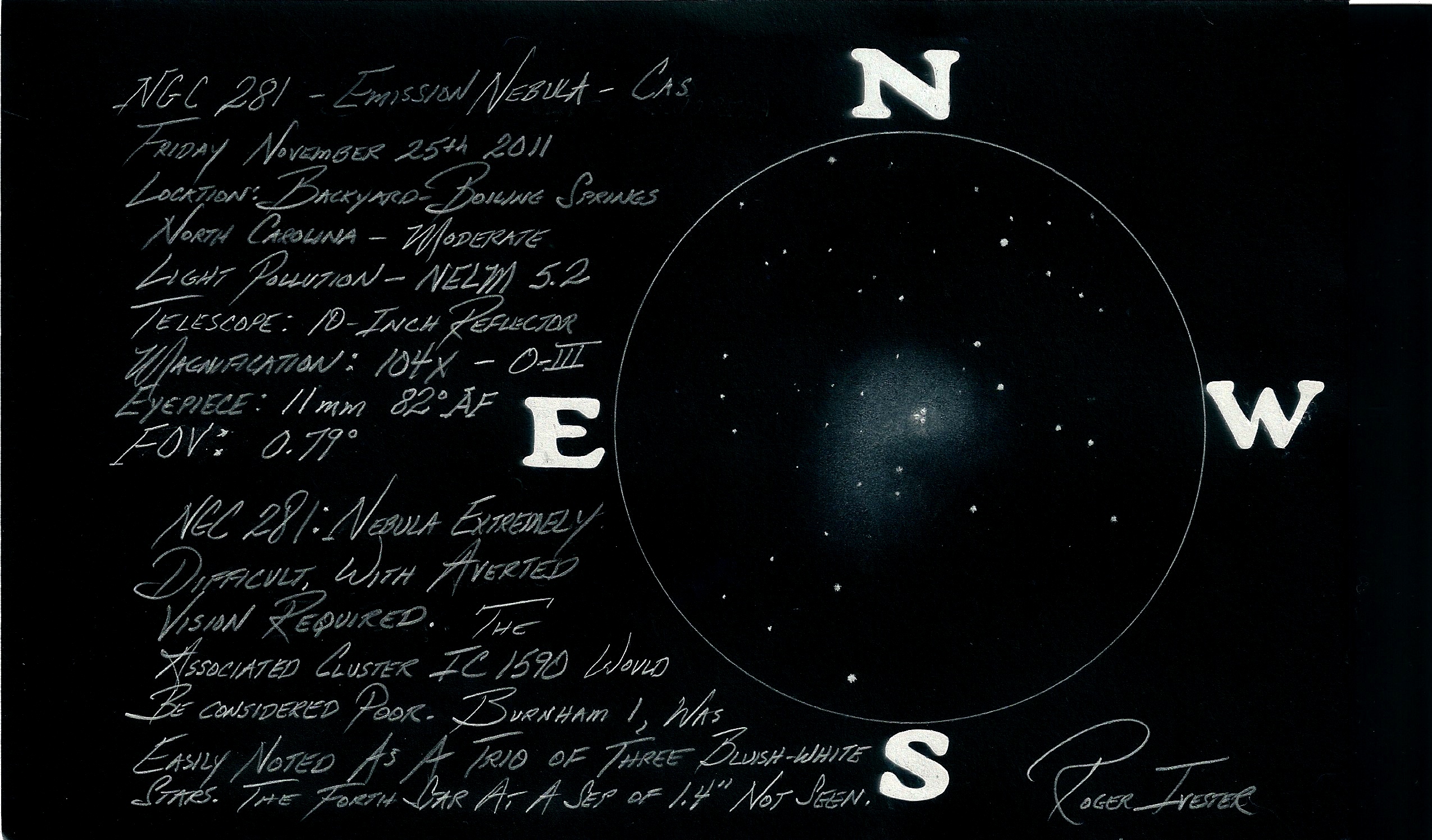
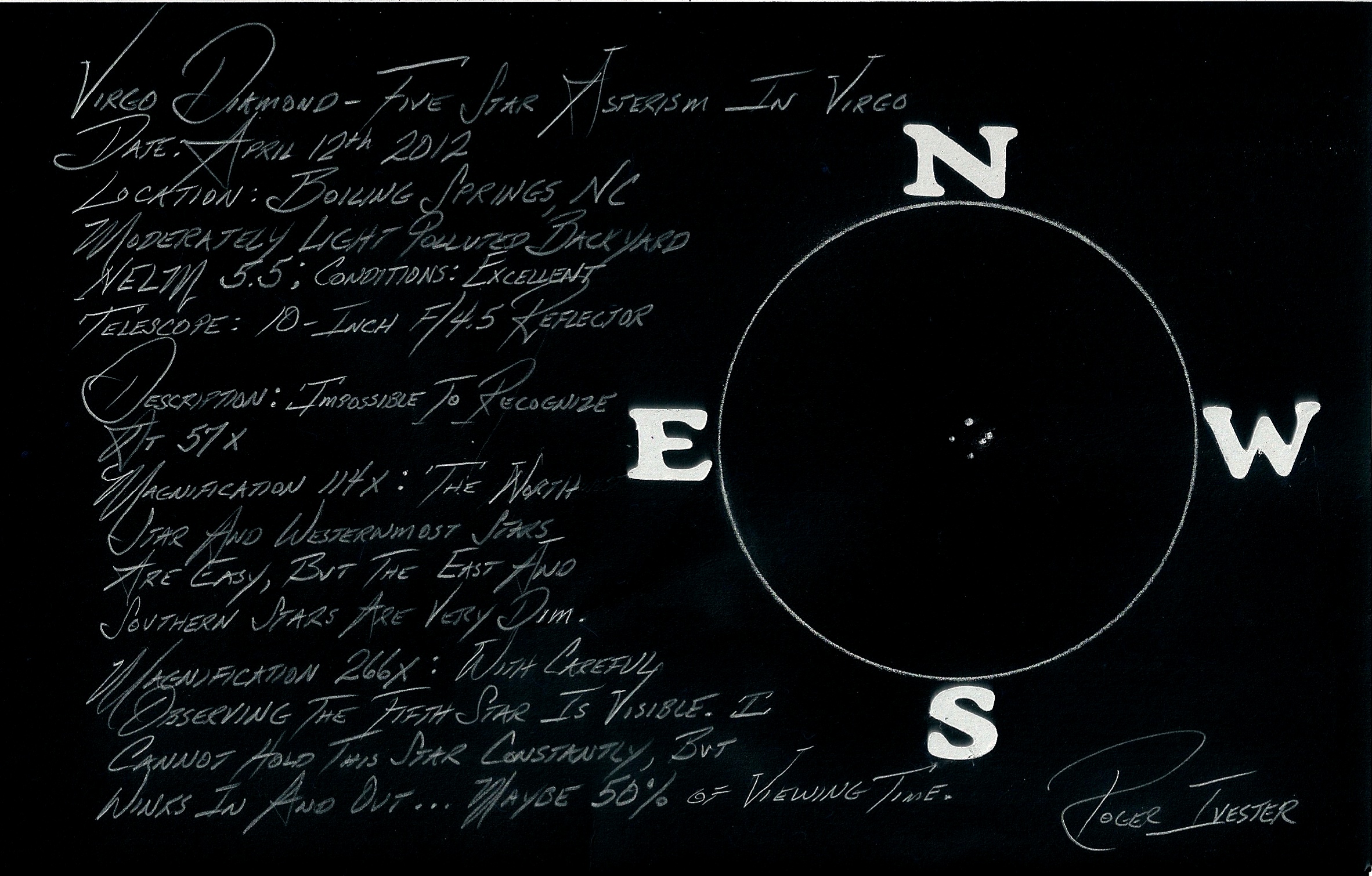
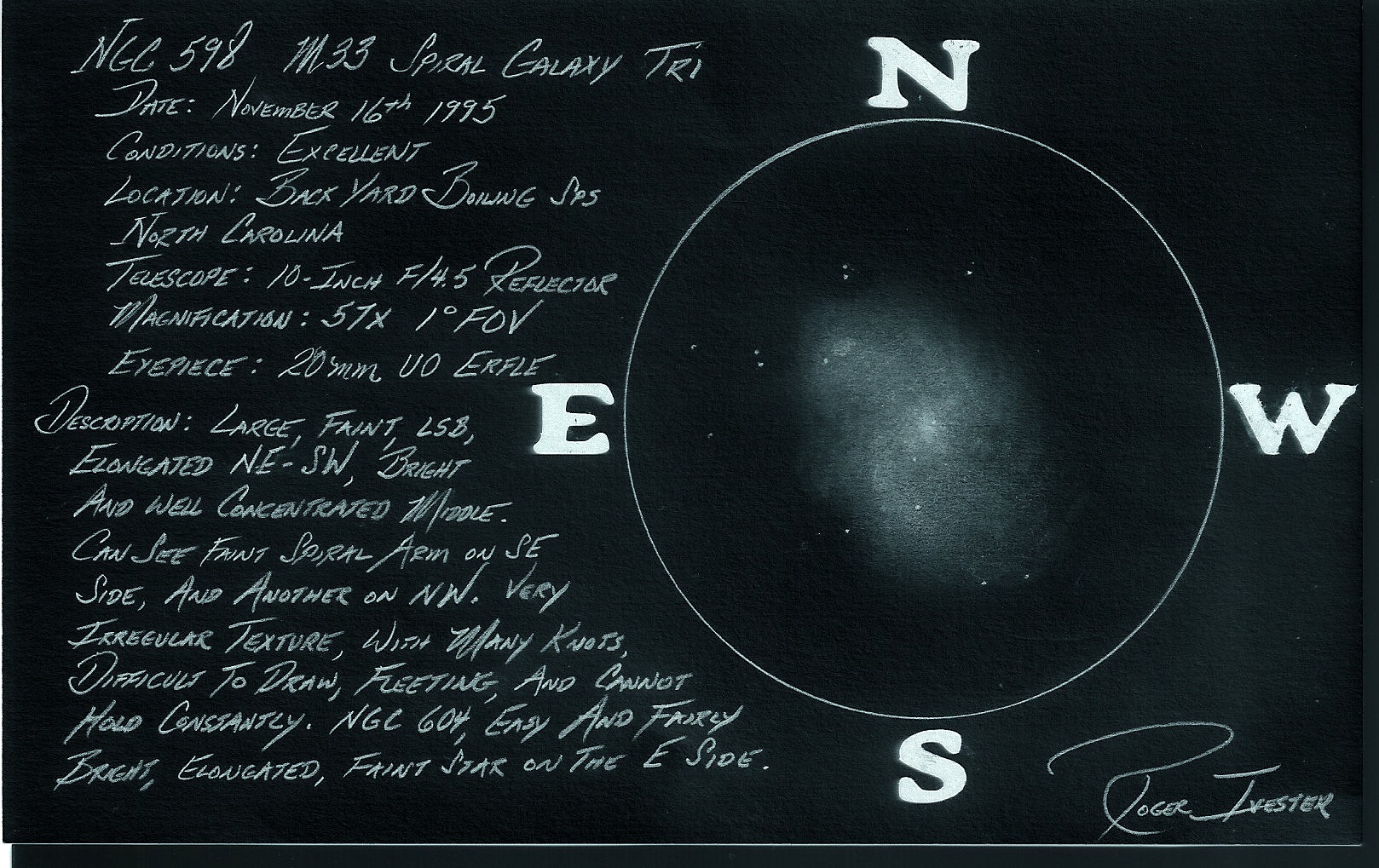
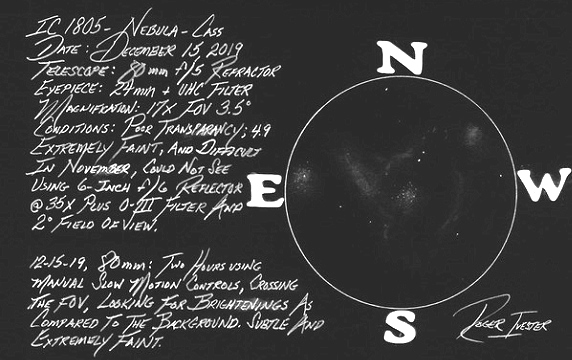
Some of my observing notes, pencil sketches and deep-sky articles as following:
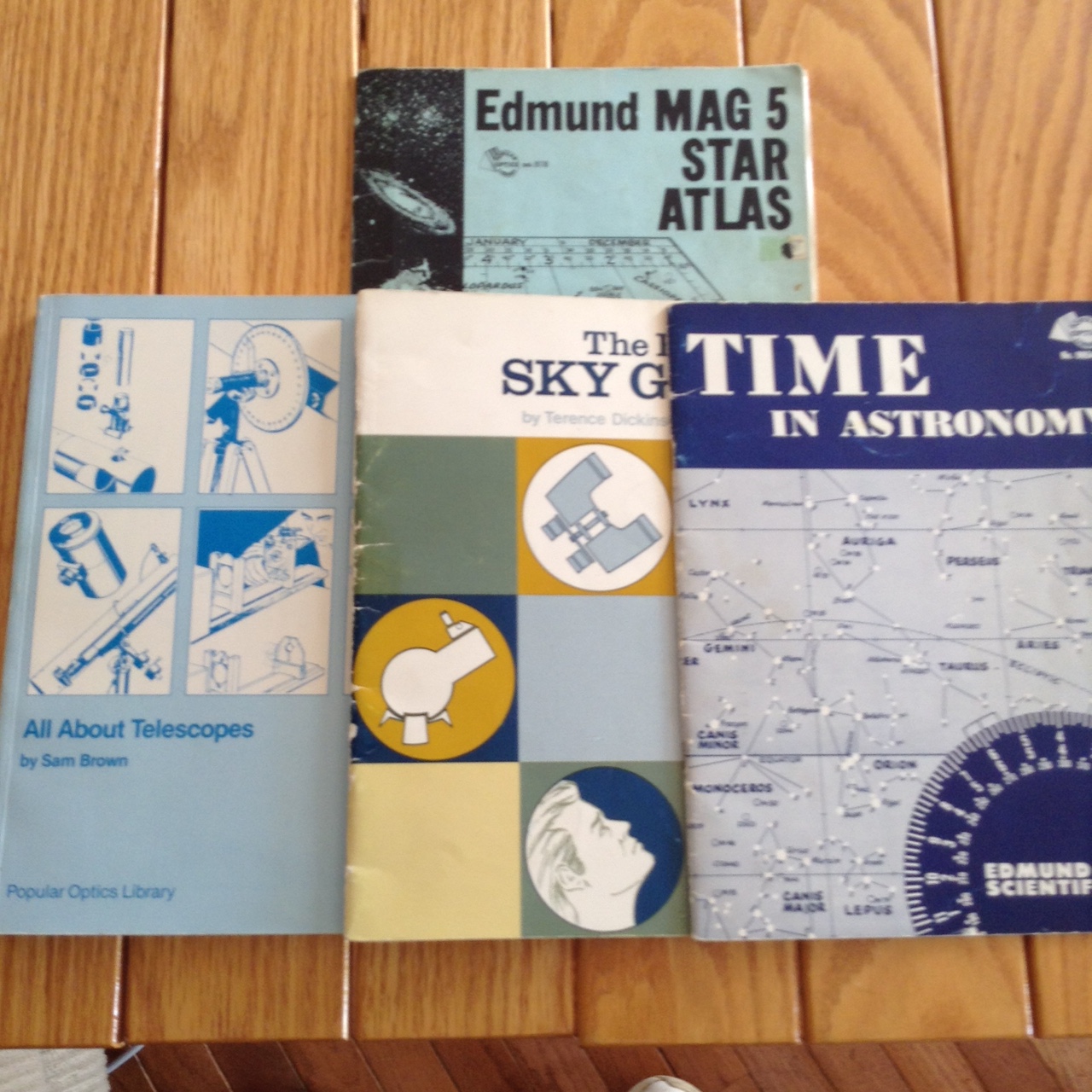
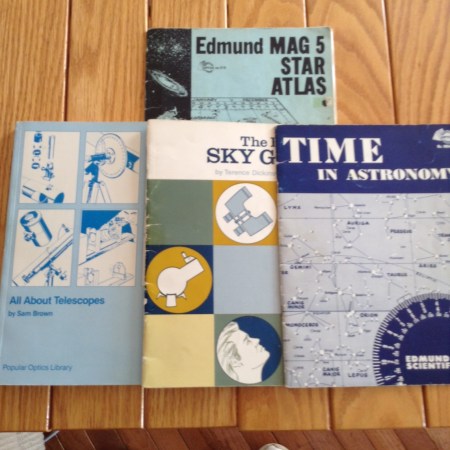
When I purchased my first serious telescope in March 1977, one of first observing reference books was “The Finest Deep-Sky Objects” by James Mullaney and Wallace McCall. This book featured observing notes for double stars, galaxies, nebulae, star clusters, and a few prominent red stars.
“1,000+ The Amateur Astronomer’s Field Guide to Deep-Sky Observing” by Tom Lorenzin:
In the early 90’s I began using “1000+” almost exclusively. I really liked how Tom documented his observations, which were relatively brief, but saying so much.
Visual observing for me is attempting to see the faintest of detail in deep-sky objects, then recording in words, and for some objects, making a pencil sketch.
Roger Ivester
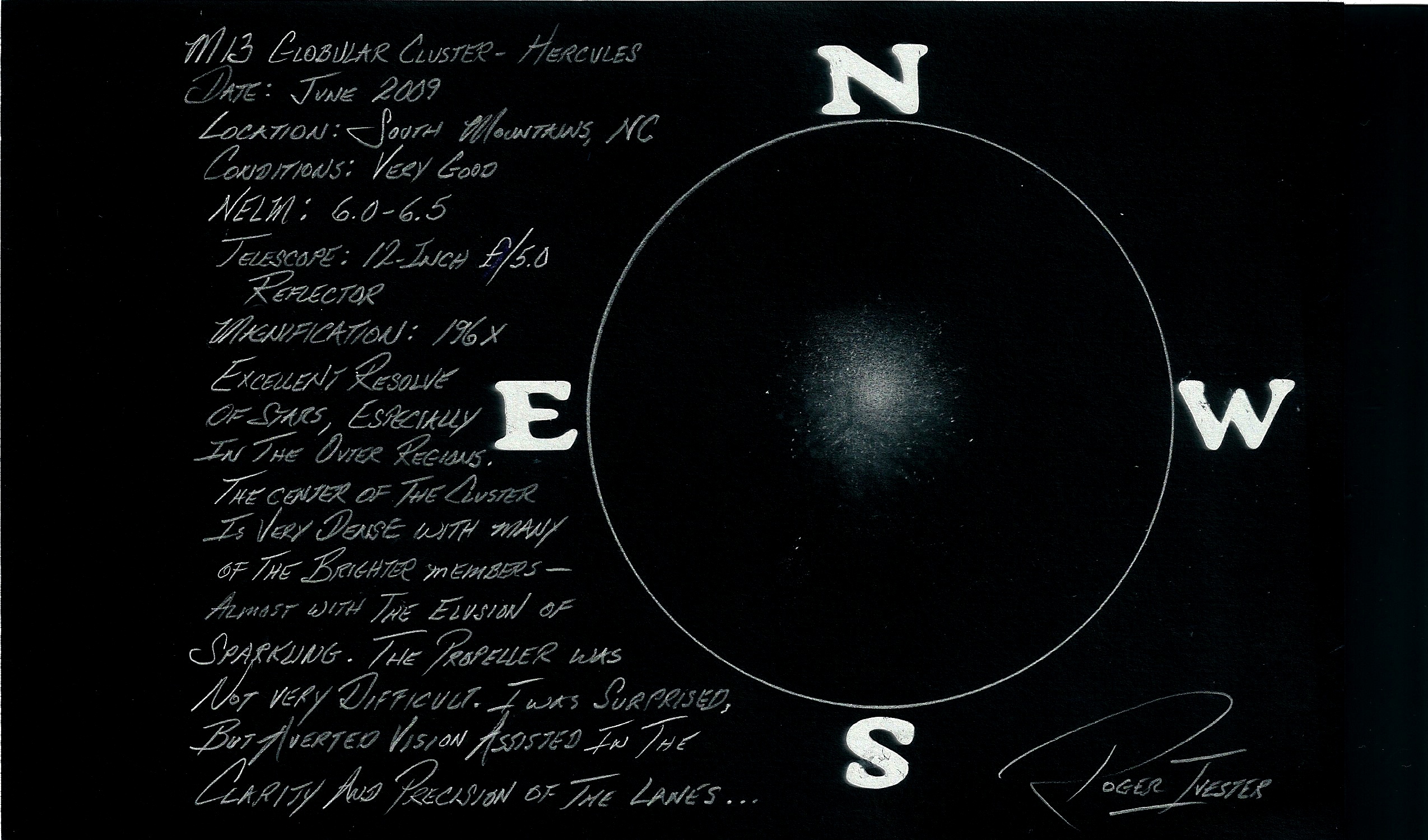
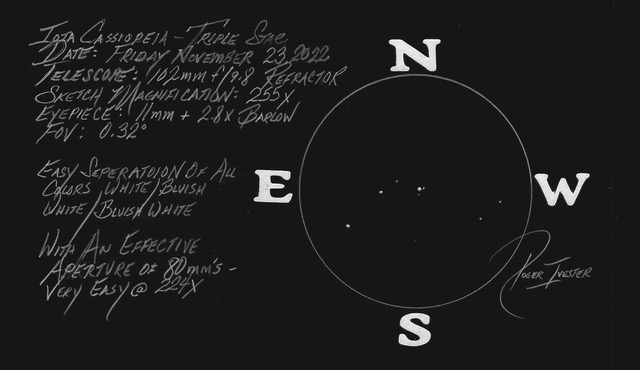
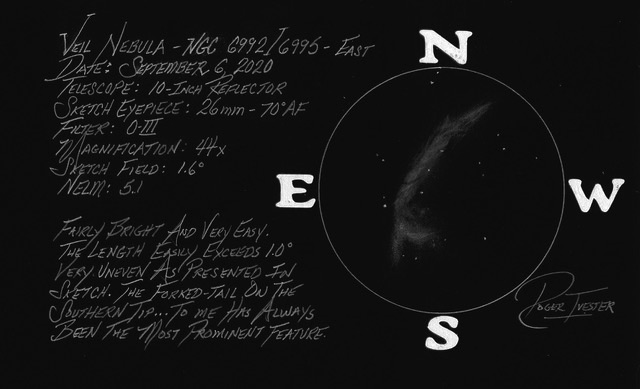
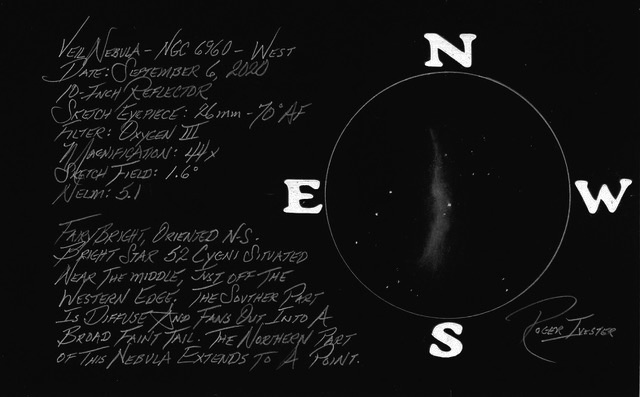
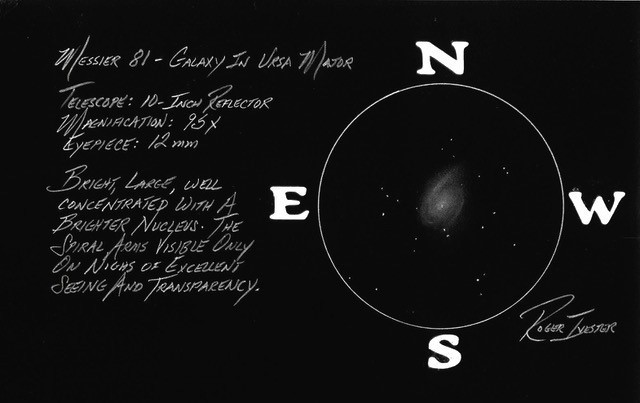
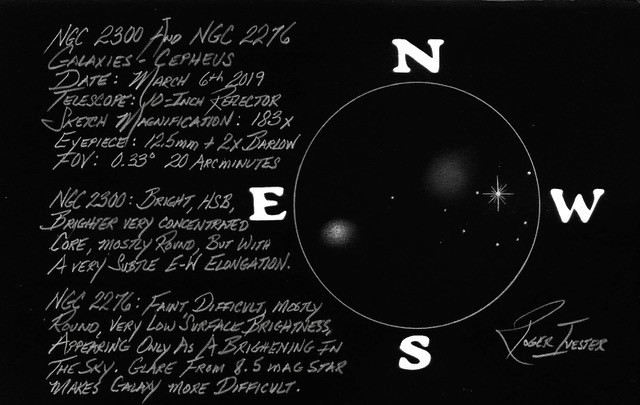
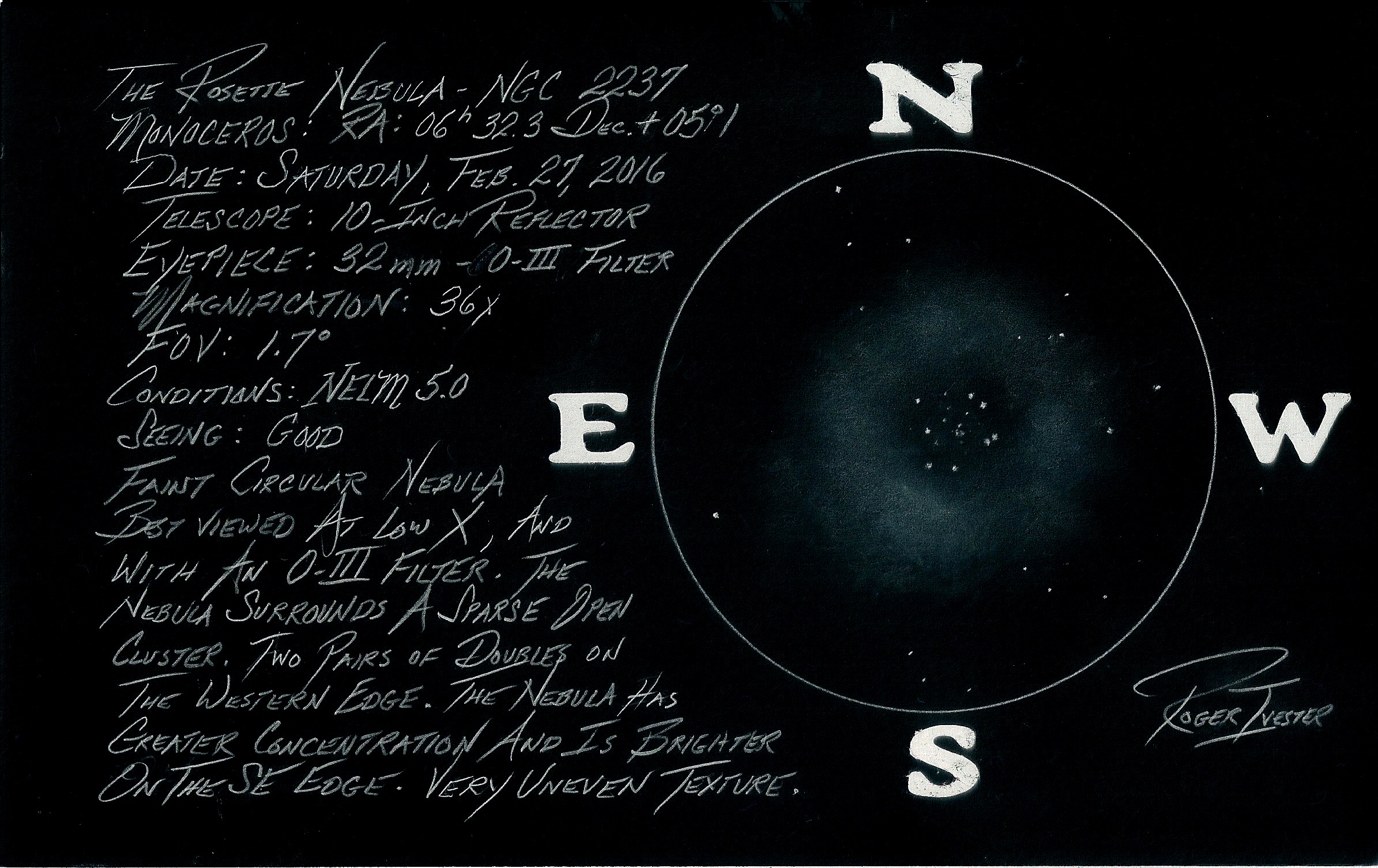
An few examples as following of my pencil sketches and observing notes:
The late Al Nagler (optical engineeer, founder and owner of Televue Optics) and myself at the 2017 Southern Star Astronomy Convention in Little Switzerland, North Carolina.
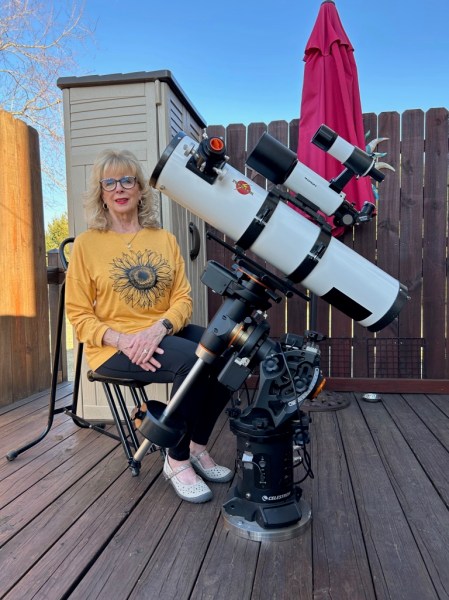
The 6-inch f/6 Newtonian pictured below is now my largest telescope. The time had come (March 2026) for me to sell my very heavy 10-inch f/4.5 EQ Newtonian.
After 34 years and more than 1,500 hours under a night sky, my 10-inch Newtonian became just too large and heavy for regular use.
The Observer’s Challenge report has received over 150,000 world-wide .pdf downloads (to-date) as of April 2026. The following link is still available for all to use as a reference for ~250 deep-sky objects.
My other hobby is cycling, with approximately 135,000 miles logged to date as of August 2026. I began riding in June 1979, never imagining—or even considering how many miles I might eventually accumulate.
It wasn’t until I reached 60,000 miles, as I turned into my driveway one day, that the thought occurred to me: 100,000 miles might actually be possible. I would eventually reach that milestone, but it took another 29 years. In October 2009, I finally logged my 100,000th mile.
A few examples of my deep-sky pencil sketches. I don’t embellish or use computer enhancements.
Phillip Ivester has had excellent success in drag racing, winning “an amazing” 164 events. He has also built many race engines and helped others into the world of drag racing. It’s been more than five years now when he began working with Dr. James Caserio, MD from Hendersonville.
Dr C. as he’s known by had been racing for years earlier, and now no one can drive his 1350 horsepower Hellcat Challenger as well as he can. His fastest time has been 6.00 seconds at 120 miles per hour in only 1/8 mile, or 660 feet. The car with driver and fuel weighs in at a very heavy, 4650 pounds!With this amount of horsepower and weight, breakage of critical parts have and are bound to happen on occasion.
It should be noted that Dr. Caserio has “most likely” saved the lives of at least two Pro Motorcyclist, at Shady Side Drag Strip. This drag strip is located only a few miles south of Boiling Springs, North Carolina.
Back to the motorcyclists crashes:
Dr. C. knew exactly how to best treat the traumatic injuries sustained by the crashes at well over 100 MPH. His many years as a doctor and emergency room physician, served him well for these two horrific and critical injuries. And this was on site at the drag strip, providing life saving treatment on the ground…not in an emergency room!
Following photo: This is not just a Hellcat, but a (Demonized Hellcat) which indicates the car has received performance modifications, and now has well over 1,140 horsepower (at the rear wheels). Theengine has 1,350 HP!
Below photo: Whipple Supercharger….not your standard supercharger!
Thursday night, March 31st 2022 at Shady Side Dragway in Boiling Springs, North Carolina:
Dr. C. ran his fastest E.T. (elapsed time) and miles per hour with at an incredible 6.00 flat, at 120 in 1/8 mile or only 660 feet.Again, keep in mind, this car weights over 4,600 pounds with driver and fuel.
Dr. C and Phillip work together to insure that the Hellcat is always ready to race…
Phillip Ivester
Below:Dr. C in his life as a doctor of internal medicine, or his day job and sometimes night job.
Dr. C and his Hellcat with Phillip and both of his race cars.
My west coast granddaughter, Zoe with her 76mm Orion Telescope.
My son, Chad, daughter-in-law, Tina, and grandkids. Zoe is below, visiting a beauty Salon.
Zoe and her Dad in California after a bit of face painting.
East Coast grandkids: L-R: Anna-Grace, John-Winston, Isaac, and Elisha…
My wife Debbie, with a 1997 Orion/Vixen 102mm refractor, which allowed me to see Sirius B
This is one of my favorite pictures from 2011. Zoe and I were at the Red Rock Canyon visitors center, just outside of Las Vegas.
“A moment in time” when I was able to have all of my grandkids together in South Carolina. The vintage 60mm refractor telescope shown was a gift to the kids by a good friend.
My two sons, Roger Chadwick (L) and Bradley Jason. I’m really fortunate to have sons like these guys. It’s difficult for them to get together as Chad lives on the East Coast and Brad on the West Coast. A very special photo to me…
Hey…this is me, working on an astronomy article at the coffee shop on a cold day with light snow.
Anna-Grace…aggravating one of her brothers, John-Winston.
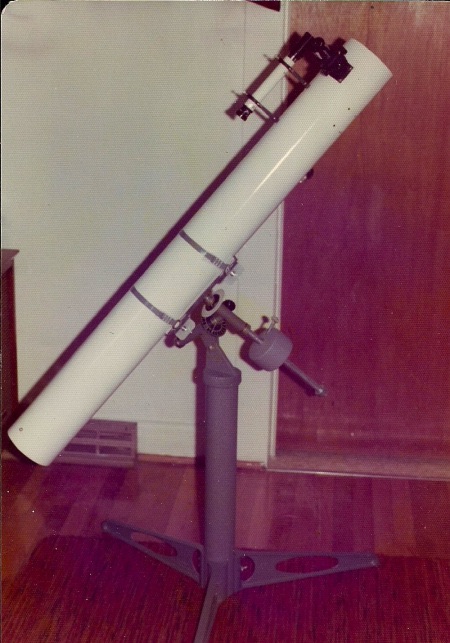
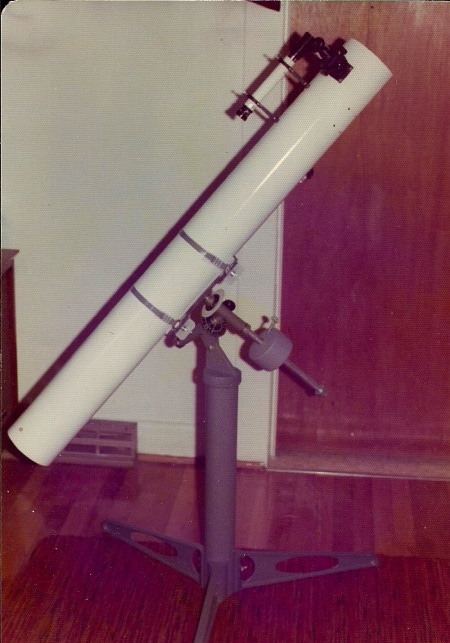
The telescope to the right is my first serious telescope which I purchased in March of 1977, an Edmund Scientific 4.25-inch f/10 reflector.
Realizing the need for more aperture, I purchased a 6-inch Criterion RV-6 a year or so later. My oldest son standing beside both telescopes, in 1978 and 1979 respectively…
Recent Comments