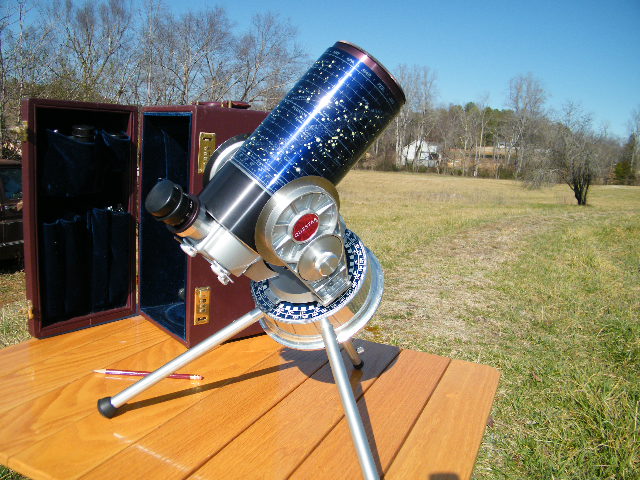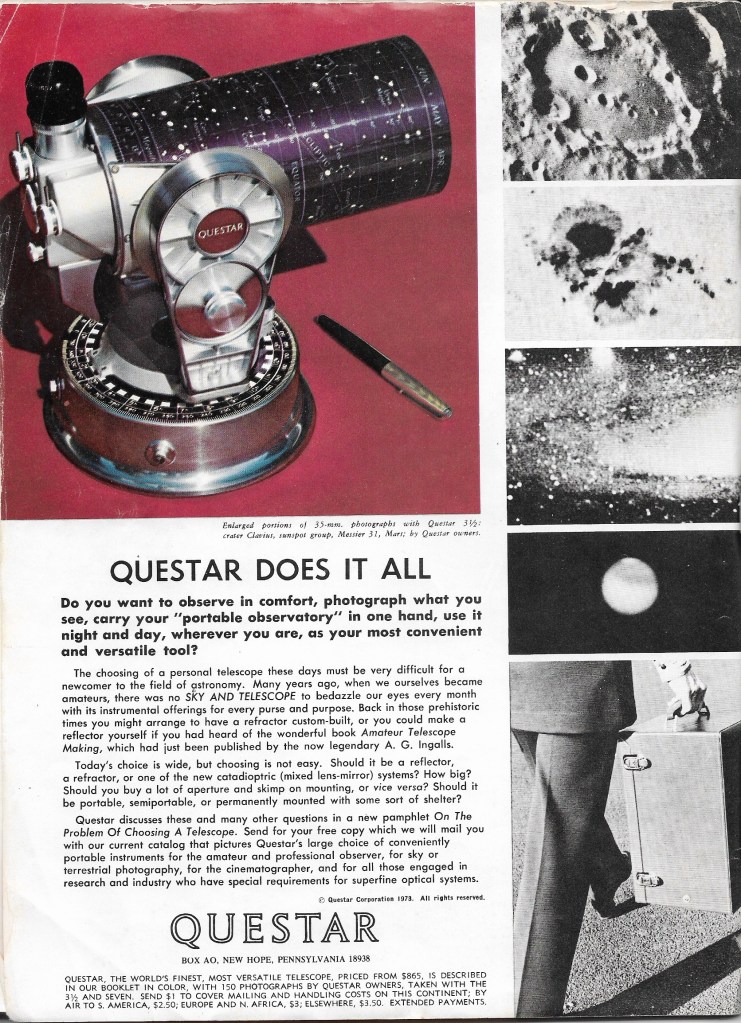
Questar was founded in 1950 by Lawrence Braymer, who set up Questar to develop and market Maksutov telescopes and other optical devices for the consumer, industrial, and government customers. The Questar Standard telescope has been in production since 1954.
Questar closed its doors for business on May 4 2026 and the three long-time employees were terminated. Very sad!
The following are some photographs of a friends 3.5-inch Duplex.
During the early 50’s, Cave Optical in Long Beach, California, manufactured the 3.5-inch mirrors.
Questar graced the back of the front cover of “Sky & Telescope Magazine” for decades!
A challenge to Questar?
In 1996, Meade Instruments Corporation, introduced the Meade ETX 90mm astro.This telescope wasdesigned to be an economy Questar, mostly constructed of plastic, but with all the emphasis on the optics.
At that time, Meade was manufacturing the ETX, and all their higher-end telescopes in Irvine, California. This included all facets of manufacturing of their many models of Schmidt-Cassegrains, apochromatic refractors and even a 7-inch Maksutov.
I purchased an ETX 90 the following year (1997) for use as a very portable telescope, to observe deep-sky objects within its grasp. It served that purpose well. The telescope had very good optics and would easily exceed “Dawes’ Limit” with good to excellent seeing.
Dawes Limit: 4.56/A (A is aperture in inches) for two equal stars of about 6thmagnitude.
However, when considering fit, finish, cosmetics and ease of use, the ETX cannot compare to the “much more” expensive and precision Questar.
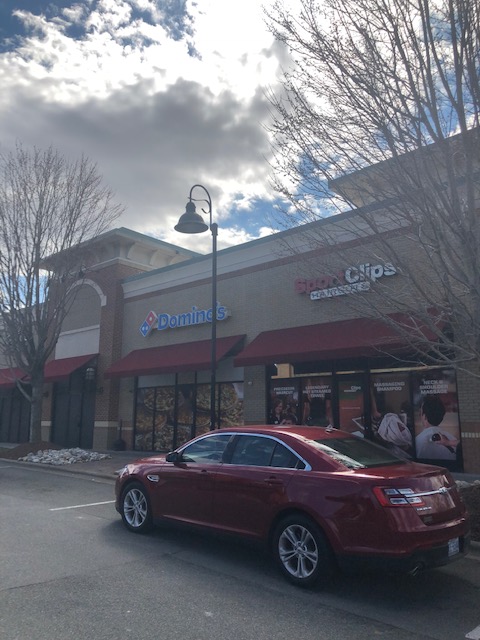
Since late summer 2019, my wife and I have had regular business in Matthews, North Carolina, which is a town on the outskirts of Charlotte. Our Dachshund needed eye surgery, and we take her for regular visits to the Animal Eye Clinic even to this day. (July 2025)
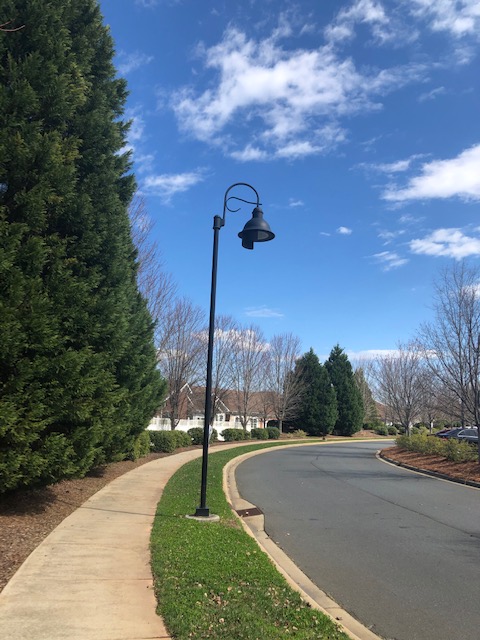
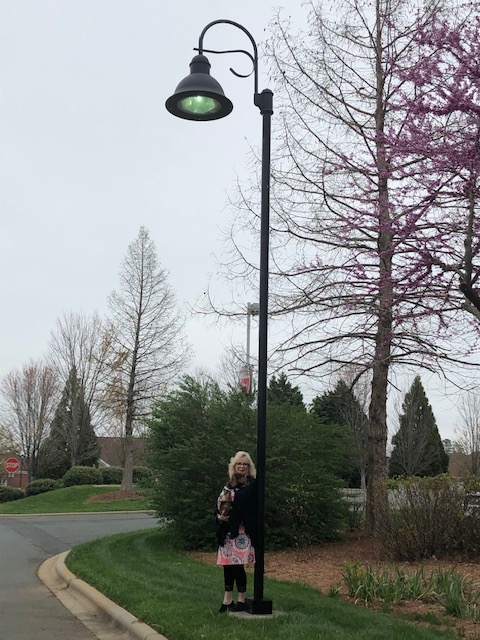
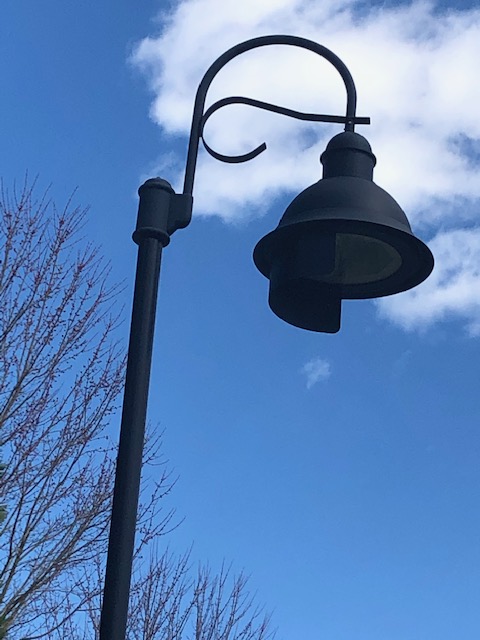
Matthews has some excellent and very attractive, full cut-off lighting fixtures. Lighting should be “fully-shielded” and directed downward to avoid glare and excessive light pollution, as the following photos show. However, I can’t be for sure of the temperature….hopefully 3,000k or less?
No one wants, or should want a bright “unnatural” daytime appearing light, which is that of a 4,000k LED light. Unfortunately, most all of the new LED lights installed these days are 4,000k or even brighter, which is damaging to human health, wildlife and the natural world. Unfortunately this light has now become the standard for lighting not only cities, but also for rural and even quiet residential streets.
Back to the lighting in Matthews: Many of the lights have back-shields which eliminate unnecessary light shining into house windows. This is a great feature. Proper outdoor lighting should direct light where it’s needed only, downward and with a shield to avoid excess glare.
The lights in Matthews, which I’m discussing are in a “seemingly” newer business and residential area. An example below:
Currently, the trend is to light residential areas and sidewalks in cities are the “short pole” colonial style fixture with 360º of 100 watt and 4,000k LED’s.
No, I’m not suggesting that lighting is bad, but lighting should be of “intelligent” design, and used only where necessary. And that would be using lighting of an “acceptable” wattage and with a temperature of (3,000k or less) and with “full shielding” to prevent glare and unnecessary and “excessive” light pollution! You may try, but seems that few cities are willing to go less than 3,000K for city streets.
High-intensity LED lighting and all other “excessive” light pollution is proven to damage or injure wildlife, insects, and also increases the risk of cancer (especially) hormonal cancer(s) in both men and women, being prostate and breast cancer.
Exposure to Artificial Light at Night Can Harm Your Health!
Humans evolved to the rhythms of the natural light-dark cycle of day and night. The spread of artificial lighting means most of us no longer experience truly dark nights.
Research suggests that artificial light at night can negatively affect human health, increasing risks for obesity, depression, sleep disorders, diabetes, breast cancer, and more.
Like most life on Earth, humans adhere to a circadian rhythm — our biological clock — a sleep-wake pattern governed by the day-night cycle. Artificial light at night can disrupt that cycle.
Our bodies produce the hormone melatonin in response to circadian rhythm. Melatonin helps keep us healthy. It has antioxidant properties, induces sleep, boosts the immune system, lowers cholesterol, and helps the functioning of the thyroid, pancreas, ovaries, testes, and adrenal glands. Nighttime exposure to artificial light suppresses melatonin production.
An expressed concern about exposure to blue light from outdoor lighting and recommends shielding all light fixtures and only using lighting with 2700K color temperature and below.
Some more excellent examples of proper lighting fixtures….
This article or post is featured on my site: www.rogerivester.com and listed under the title of “light pollution issues.”
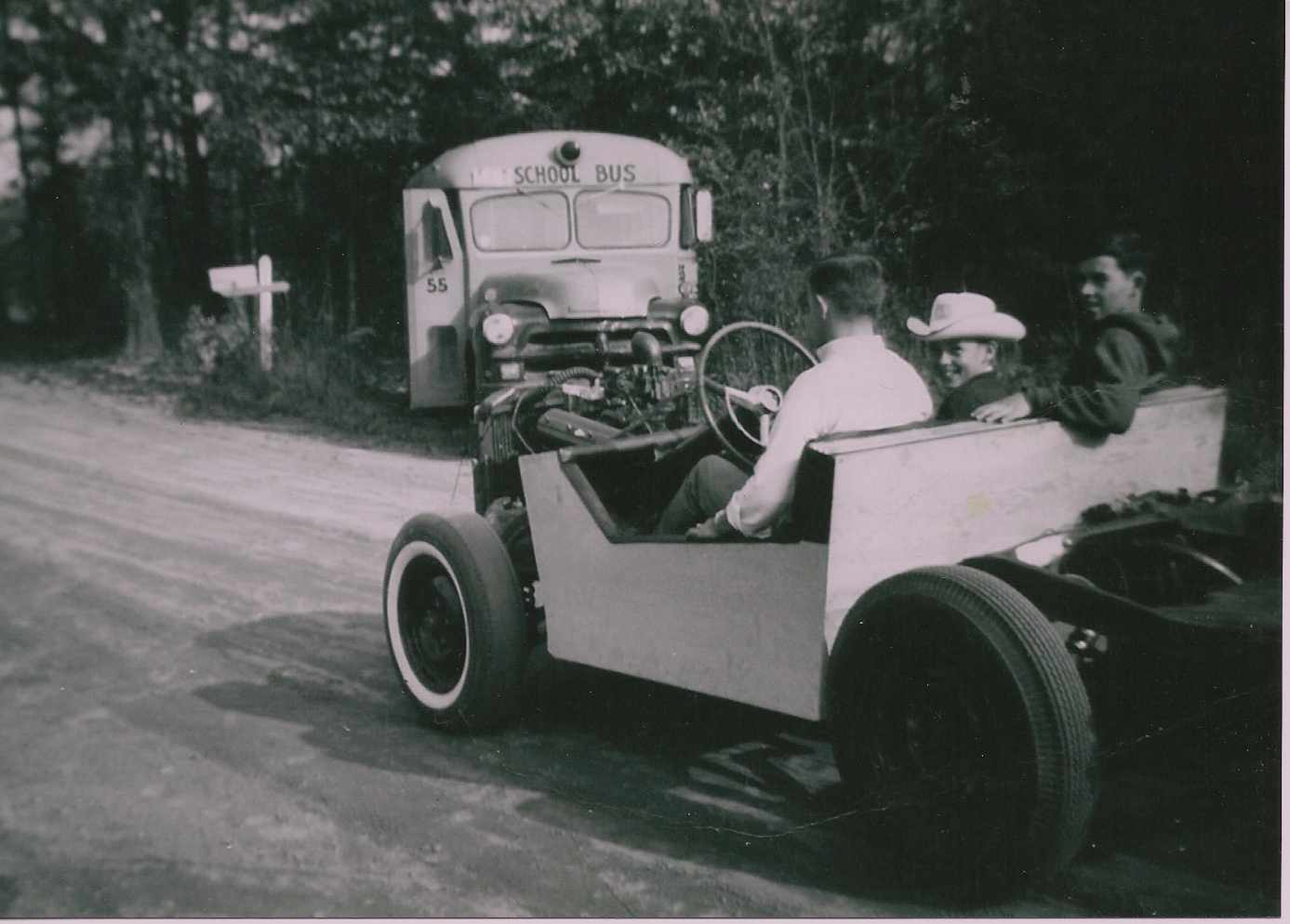
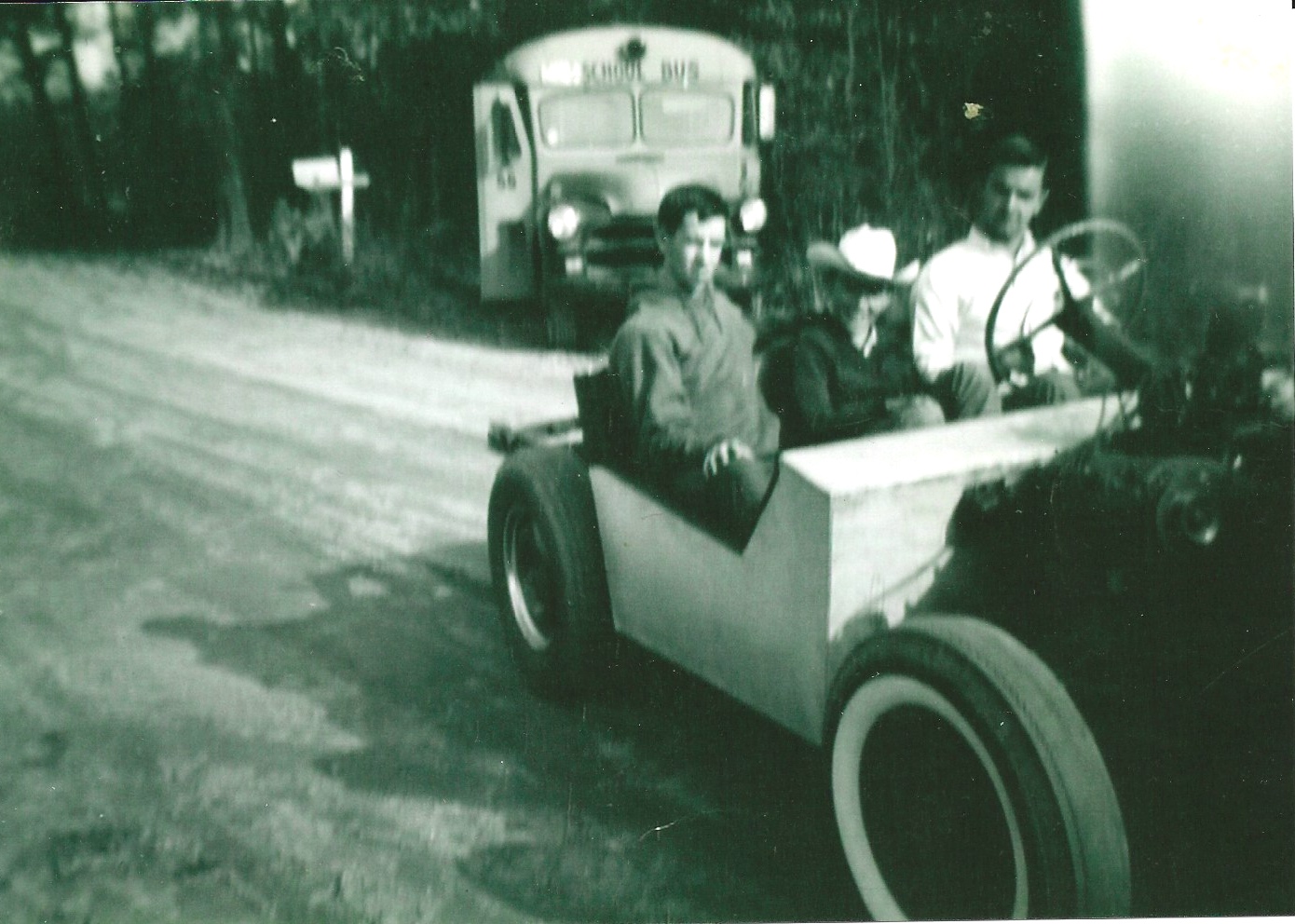
My five older brothers built something similar or akin to what might be called a “Rat Rod” today. The origin was a 1951 Studebaker…using the frame, which had been shortened by three feet, the original engine and transmission.
In the following photos are my brother Jimmy, who was driving, I’m in the middle with the “cool” cowboy hat, and my brother, Phillip.
My older brothers, Richard, Jimmy, Ronny, Donnie and Phillip, worked on fabricating “The Bug” as it was called. I was a bit too young, and mostly just enjoyed watching. Sometimes I would assist by handing them wrenches or anything else they might need.
Improvements were made over the next year with the installation of a mid-50’s Chrysler Hemi engine, which had much more horsepower than the Studebaker.
The sad looking tires, especially the front white-walls would eventually be changed out with some better looking wheels. Additions would also be made to the body, however, still constructed of wood panels. With a larger budget, many improvements could have been made, but….
My brother, Donnie, being in high school drove the school bus in the background, which was an early 1950’s model Chevrolet.
An astronomical telescope purchase in 1963:
It was my brother Jimmy, who had already purchased (at the time of the photo) a 60mm f/15 equatorially mounted refractor from Sears, at a cost of $100. This would be the equivalent of $835 in 2019. An expensive telescope for sure.
Two years later, I would begin using this telescope to observe deep-sky objects (galaxies, nebulae and star clusters) and a lifelong interest in astronomy would follow, even to this day.
Roger Ivester
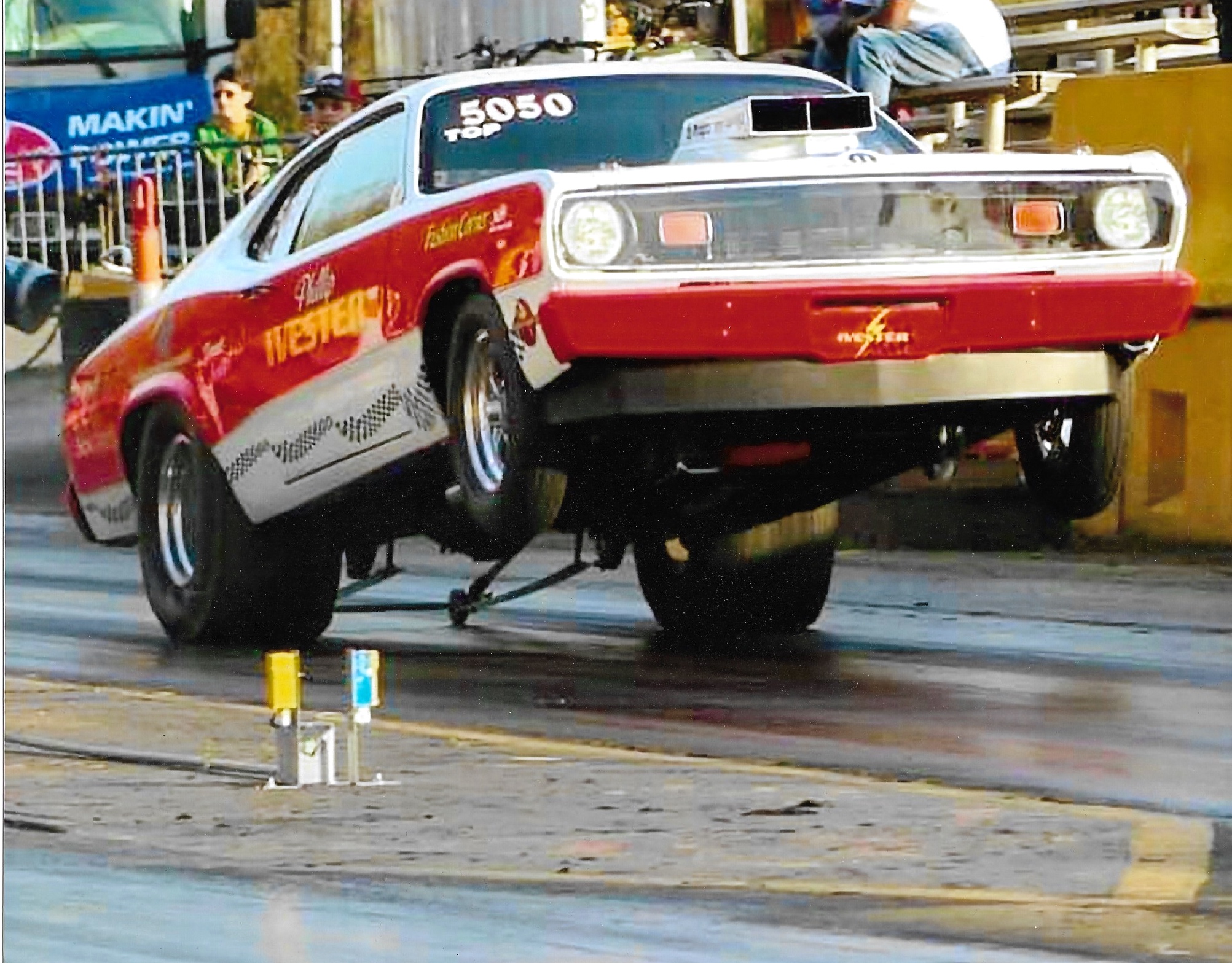
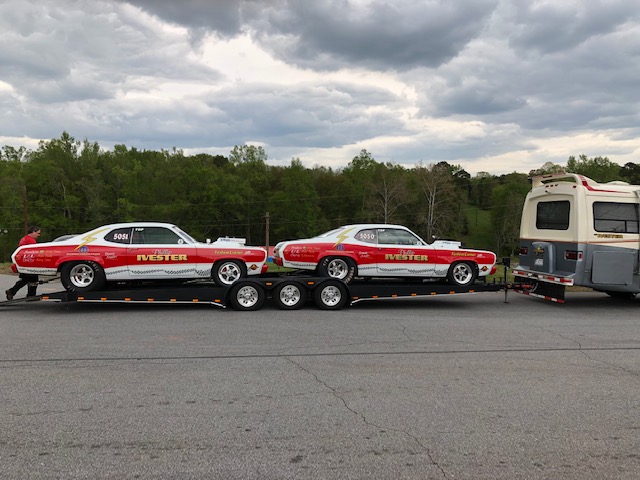
Improved budget, greater skills and abilities, my brother Phillip would become a race car and engine builder. He would also go on to win an incredible 164 drag racing events. with multiple drag cars.
Comments:Comments Off on Building a Hot Rod in November 1964: The Beatles Came to America in February of That Year, Cassius Clay Wins the Heavy-Weight Boxing Championship Over Sonny Liston. And I was Eleven Years Old…
Cloudy skies and rain have prevailed for the past few days, but what a nice day it was on Christmas Day to get outside. While relaxing shortly after lunch, I received a message from Mike Ribadeneyra, wanting to go for a bicycle ride. I was actually thinking about a nap, but as a cyclist, when someone offers an opportunity to ride, the guilt can be a bit overwhelming should I decline…and especially for NO good reason.
So, after answering the message, I got up and began to get dressed and checked my bike. It might not be fun preparing to ride, especially when it’s cold outside, being relaxed as I was finishing a good cup of coffee. However, it’s a great feeling of accomplishment when the ride is complete and riding back into my driveway. And this is especially true on Christmas Day when my wife and dachshund are anxiously waiting my return!!
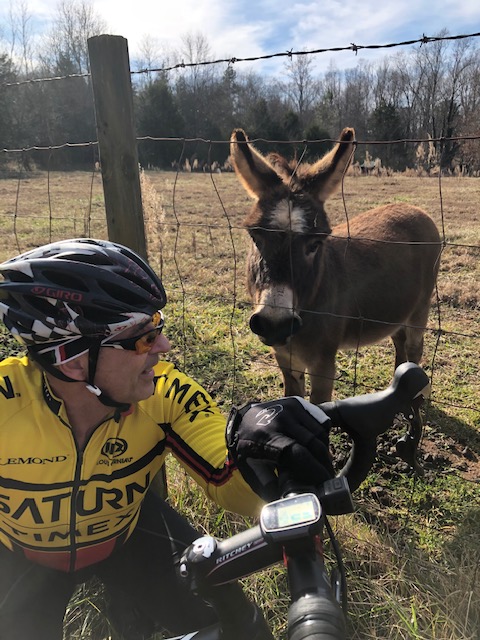
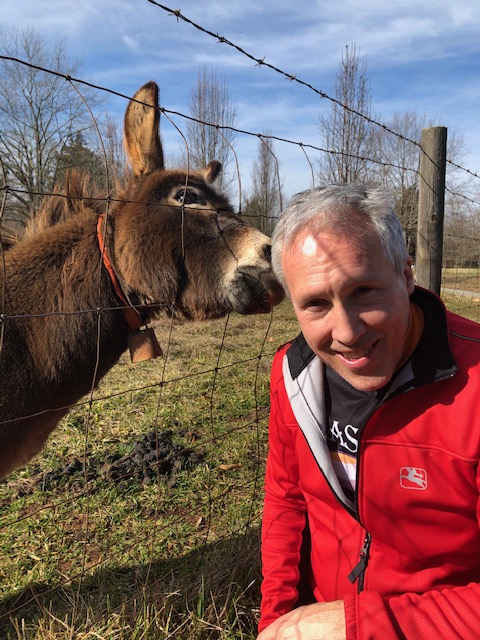
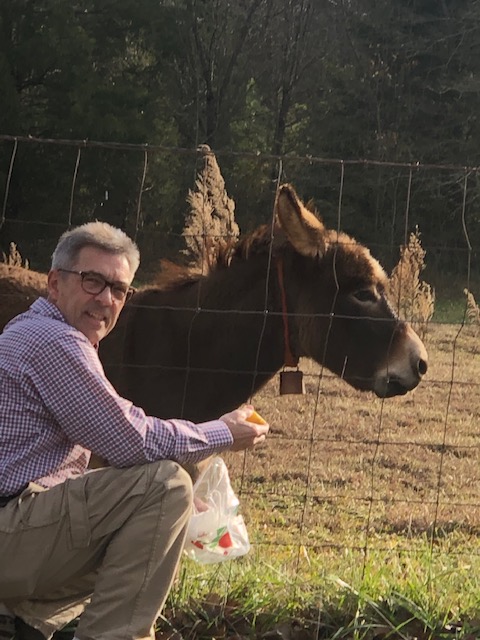
When headed home, we stopped to visit “Albert” the donkey who loves to see us ride by, behind his pasture fence. It’s always great to hear him running…fast as he can, from the bottom of the pasture with his collar bell jingling.
Albert loves for me to bring him an apple, but it has to be quartered. He will chew each piece individually. If a piece falls on the ground, he won’t eat it until I pick it up and offer it to him again. Albert is a bit finicky, but loves the attention…and especially an apple.
Albert is glad to see both Mike and I.
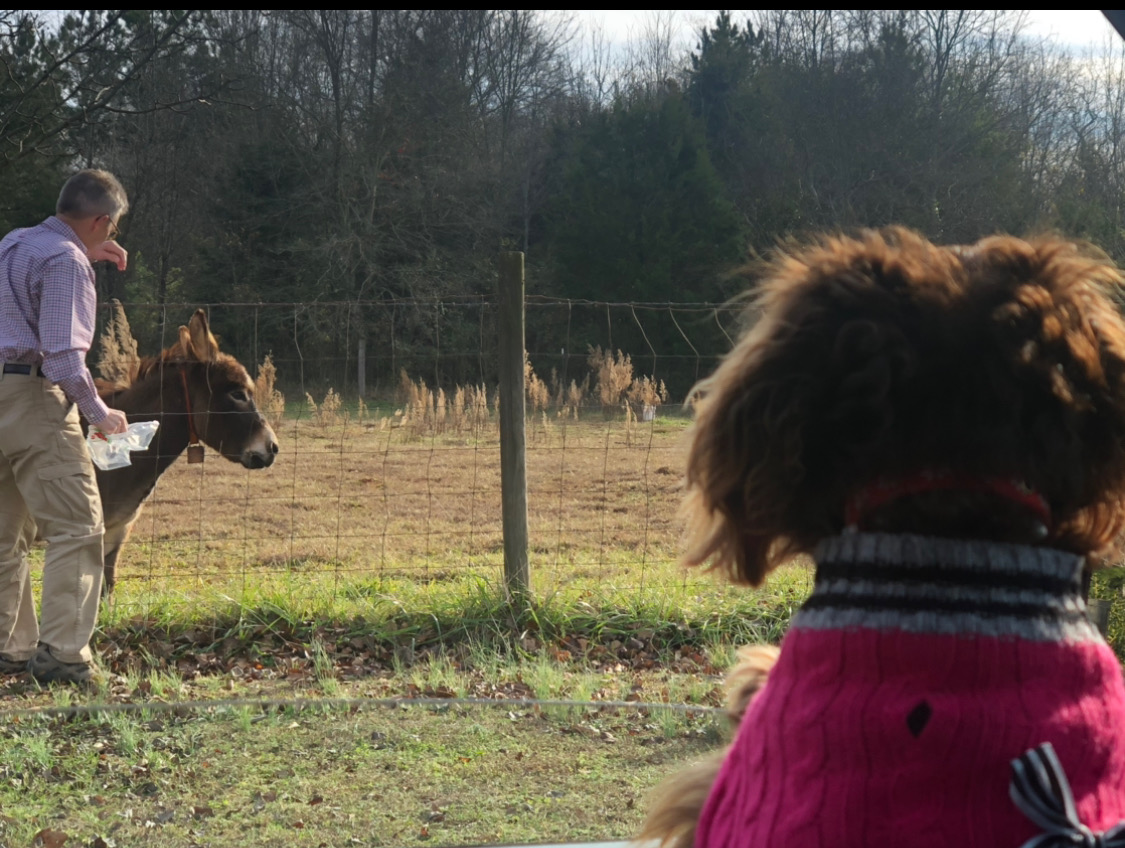
Photo below: Saturday, December 28th, after another ride: Sophie (our Dachshund) enjoys watching me feed Albert.
While visiting our family in Mullins, South Carolina over the past few years, we have enjoyed finding some very interesting things.
Only a few miles outside the city limits, there are country roads, agriculture fields, and no houses or lights for miles and miles, and virtually no light pollution.
The next morning….Tuesday August 14th 2018.
When driving in a secluded area, via unfamiliar country roads, you never know what you may find:
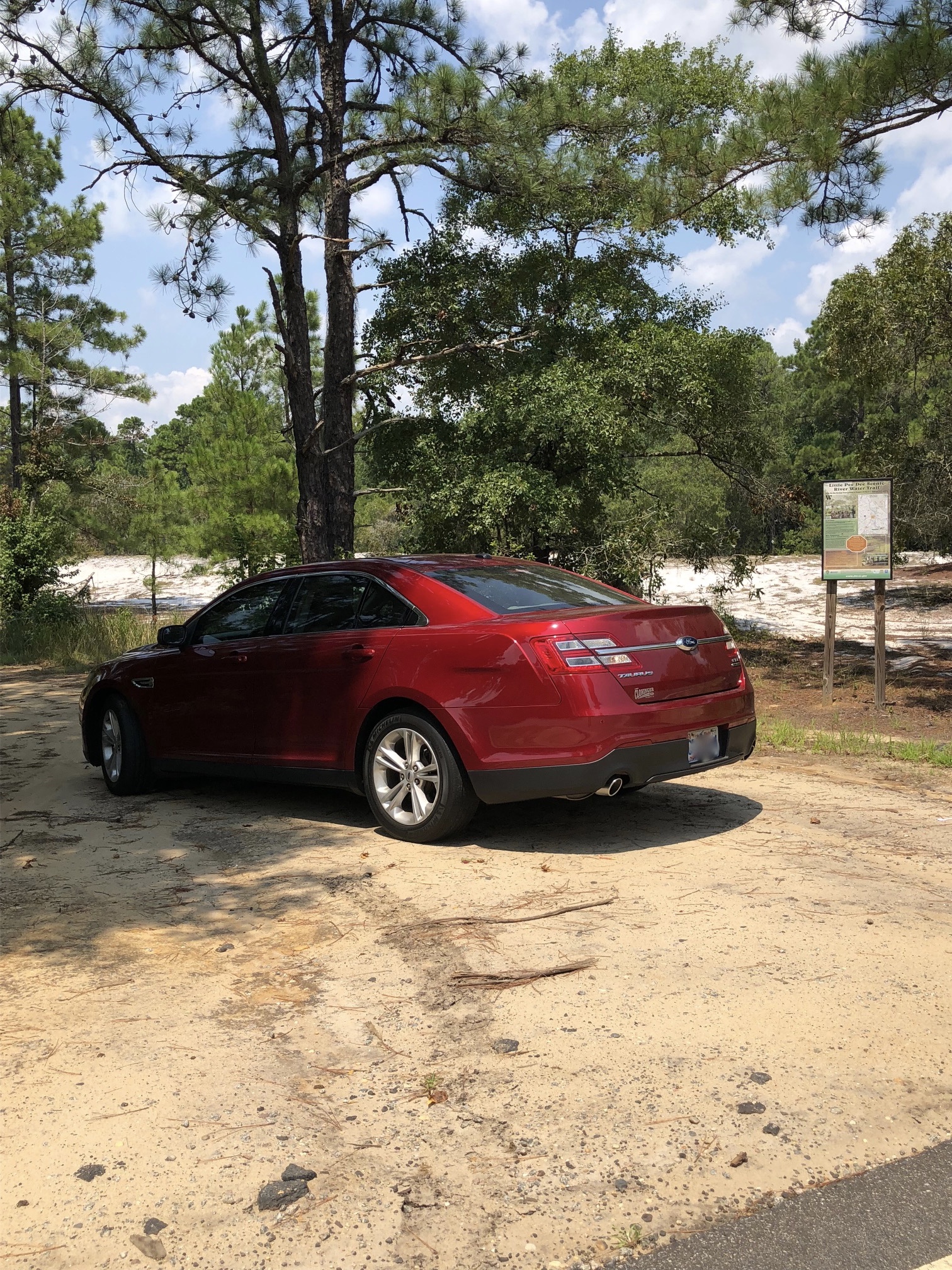
While riding around with my oldest grandson, John-Winston, who just received his learners permit, and I was sharing my wisdom, on how to be a safe driver. During our leisure drive, we found sand dunes, in the middle of a swamp!
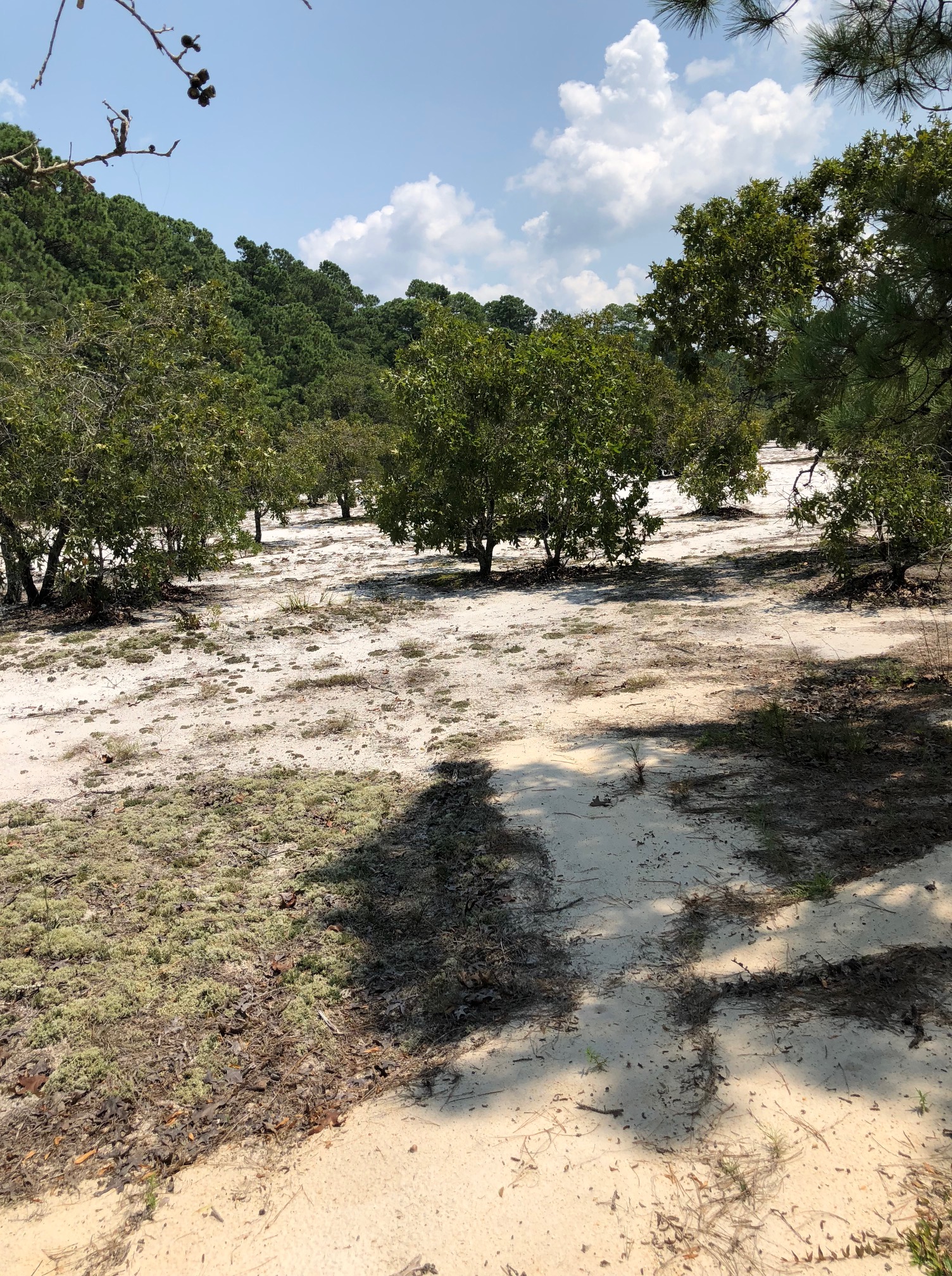
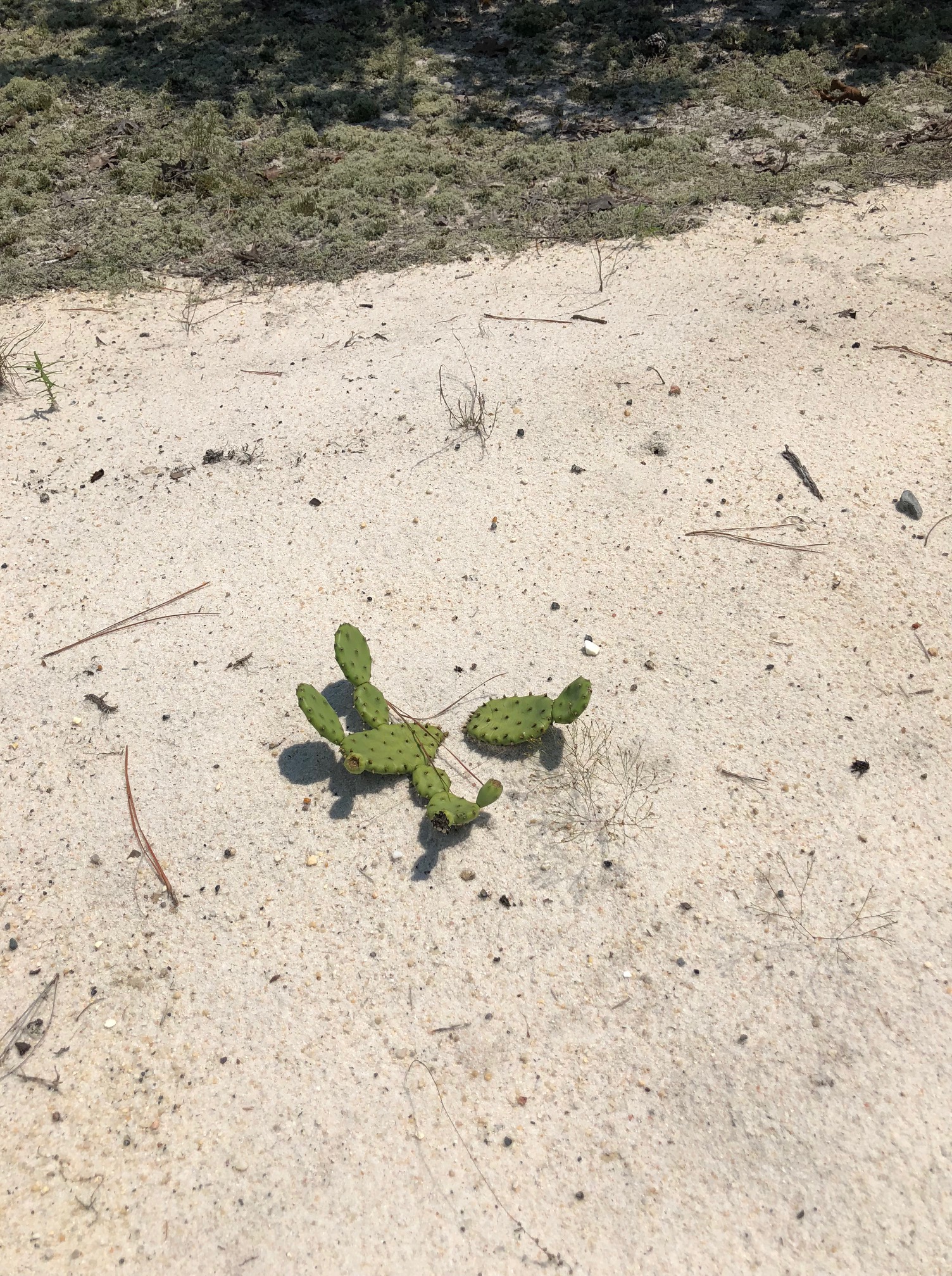
Sand dunes, and a very sandy area….at first resembling snow, all in the middle of a dense forest and surrounded by swamp land.
There were Bald Cypress trees growing out of the black murky water, Spanish moss hanging from the trees, and who knows, maybe even an alligator or two in that dark water!
Note: This very remote small sandy area is a protected site. I took some pictures as following, but somehow missed the eerie swamp.
Roger
Stopped and using the car as a size reference, to a part of the protected site:
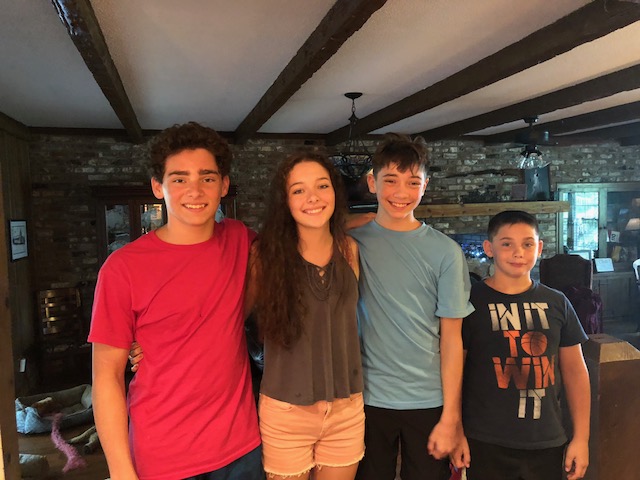
South Carolina Grandkids
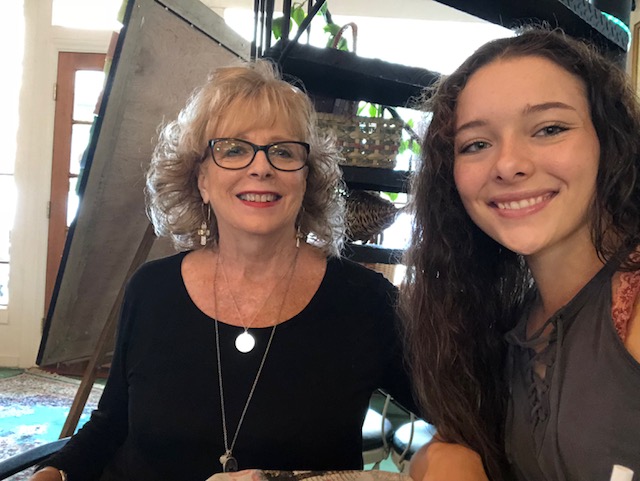
Debbie (Grammy) with granddaughter Gracie
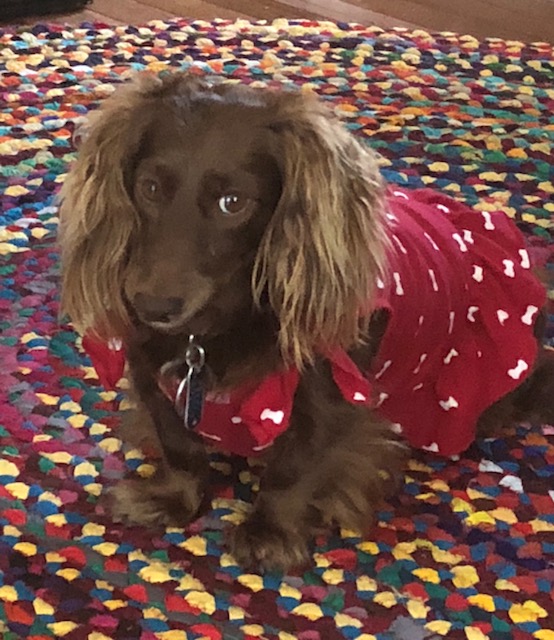
Couldn’t leave our Sophie behind! She’s ready to go anytime we are!
Comments:Comments Off on Sand Dunes In The Northeastern Corner Of South Carolina, 50 Miles From The Atlantic Ocean, Swamps, With Virtually No Light Pollution
Tom English has put together an excellent list of twenty-five doubles and five multiple stars, which at first glance would seem to be compiled for only those new to this facet of amateur astronomy. However, for those of us who have enjoyed double star observing for decades, we know there is no such thing as a beginners list.
Double star lists may be compiled of the most difficult pairs due to their close separations and sometimes with unequal magnitudes, or those with wide separations and beautiful contrasting colors. It was the latter which coined the name: “The jewels of the night sky.”
This list contains some beautiful and interesting doubles, all of which can be observed with a small telescope.
The famous double star, Epsilon Bootis is probably the most difficult double on the list, which has always required at least a 4-inch refractor for me. Many observers have reported seeing the companion to Epsilon with a 3-inch aperture.
Are you stressed, too tired to take out that big telescope, but would like to enjoy an hour or so of relaxation under the night sky? So….why not a 60 mm refractor or a 3-inch reflector? And you don’t have to worry too much about a bright moon or ambient lights as both have little effect on “most” double or multiple stars.
Want to become a better double star observer? I’ve listed a few things as following which have helped me over the years:
I’ve never been able to observe through a telescope eyepiece and stand at the same time, much less attempt to separate a very close pair.
And for those extremely close and difficult doubles, an eyepatch is necessary for the non-observing eye.
It’s important to relax the facial muscles and “absolutely” essential to hold the observing eye very still and on-axis….hence the need to be seated.
A good quality astro-chair, as pictured below is a must when observing double stars.
Edmund Scientific was the company that really fueled my interest in amateur astronomy. From their telescopes and accessories to their many beginners books. My first telescope was an Edmund 4.25-inch f/10 reflector, with an equatorial mount. Not my first choice, but the best my budget would allow at that time. Prior to this, I used my older brother’s 60 mm f/15 EQ refractor. (Photo at the bottom, in an old rented house on a textile mill village, with a street light in the backyard!)
I was just getting started with my first real job, but most all of my money was required for the essentials of life, with little left for a telescope and astronomy equipment.
My first telescope was an Edmund 4.25-inch Newtonian, which allowed me to see many of the Messier objects. I was living in a highly light polluted area at that time, so finding deep-sky objects with setting circles was like magic. Star-hoping to locate faint objects can be almost impossible with severe light pollution.
Not only did Edmund Scientific have telescopes and astronomy equipment, but also plenty of resources to learn how to use a telescope. The following books from Edmund taught me so much about amateur astronomy, and I still reference them even to this day…more than 50 years later.
During those early years it was my goal to see the entire Messier catalog, which I would eventually accomplish, and received my Astronomical League award certificate. but would eventually see over 2,000 more deep-sky objects, complete with notes and pencil sketches.
I’m glad I didn’t quit during those early years, despite all of my obstacles, and regardless of the amount of light pollution, there are always deep-sky objects that can be observed. So, don’t give up!
I’m a bit late in finding out (January 2018) but University Optics closed its doors in ~June 2017. I was saddened to hear this.
I purchased all of the original UO Konig’s over 30 years ago: A 12mm, 16mm, 24mm in a 1.25-inch format, and a 32mm 2-inch…also a 20mm UO Erfle, and a 2.8x three-element apochromatic Barlow. I have, or have had many other eyepieces over the years, including Televue, Celestron, Meade and others. But I still use my Konig’s quite often, even to this day. As a visual observer, I love eyepieces. However, my last eyepiece purchase was over ten years ago…an 11mm Explore Scientific 82º AF bought in-person, from the Park’s Optical store in Las Vegas.
It’s very sad to see a company that supplied mirror making kits, mirror cells, diagonal holders, and many other low profit items, now out of business after more than 50 years.
University also sold a 6-inch f/8 Newtonian and an 80mm f/5 achromatic refractor in kit forms. The refractor required both assembly and paint. The Newtonian only required assembly. The 80mm was an air-spaced achromat which received many excellent reviews.
University Optic’s will be missed by the amateur astronomy community. So many great “made in America” astronomy companies are no more.
My University Optics eyepiece collection as following, and all still in pristine condition.
My first telescope purchase (1977) and my last eyepiece purchase (to-date) were from brick and mortar astronomy stores, but like most other full service astronomy stores…are no more.
I will always remember my excitement on that late Friday evening, walking in Science Hobbies and purchasing a 4.25-inch Edmund EQ reflector. I really wanted the 6-inch f/8 Super Space Conqueror, but I’d just began my first serious job and money was a bit tight. I’d been looking at telescopes in those little Edmund Scientific catalogs for the longest time.
Science Hobbies was a small family owned hobby store that sold products mostly from Edmund Scientific. For many years they had a big 8-inch Edmund f/6 Newtonian Reflector on a massive equatorial mount sitting in the front window.
Throughout the years, I always enjoyed going to Science Hobbies. It was fun to be able to see and feel many of the products from Edmund. Other than my telescope, I bought a few eyepieces, a pedestal mounted eyepiece holder, books and too many other astronomy related products to list.
My last trip to Science Hobbies:
It was a Saturday afternoon in the mid-90’s, when I decided to visit Science Hobbies, which I’d done so many times before. I got out of the car and went to the front door only to find it locked, and the store was empty. Somehow, I had missed not seeing the rusty sign that hung over the door for so many years and the large 8-inch Newtonian, was not in the front window. The store had closed, and at that moment, a bit of sadness came over me. This would be my last visit to the location that was the former…Science Hobbies.
Now to Scope City in Las Vegas:
When visiting family in Las Vegas on at least a couple trips, one in 2008 and then again in December 2010, I visited the Las Vegas Scope City store. However, I was sorry I didn’t purchase an 11mm Explore Scientific 82º eyepiece while being in the store. When I got home I called back, and placed an order over the phone for the eyepiece. So, to-date, this has been my last eyepiece purchase. I also purchased some very nice engraved 6-inch aluminum setting circles from Scope City, which was the only company that still sold them.
I had always enjoyed seeing the Scope City advertisements in the magazines, showing those big Parks Optical Newtonian’s with massive equatorial mounts.
It was great to be able to visit the Scope City Store, but unfortunately, not very long after my last visit and purchase, Scope City also went out of business.
I have often wondered what happened to the 8-inch Parks Optical Newtonian, on a very heavy duty equatorial mount that was sitting in a corner of the Las Vegas store.
My first telescope was purchased from Science Hobbies in Charlotte, or a retail (brick and mortar) store and later went out of business. And my last eyepiece (to-date) purchase was from a brick and mortar store, being Scope City in Las Vegas, also later to go out of business.
After the demise of Cave Optical in Long Beach, it was Parks Optical that took their place with large equatorial Newtonian reflectors, on a large scale production basis.
Science Hobbies, Scope City, Cave and Parks Optical are all missed, especially by those like myself that have been serious students of amateur astronomy for 40 or more years.
My first telescope purchased from Science Hobbies in Charlotte: A 4.25-inch f/10 reflector which I purchased in March 1977. The following photo was made in a rented hours: An old (built in 1927) mill village house which was incredibly cold during the winters.
My first observation using this telescope was Jupiter from the side yard from that house. And It was using this telescope during the fall of that year from the light polluted backyard that I first observed galaxies M81/82. This was a defining moment for me, as in my mind on that night…I became a real amateur astronomer.
I purchased the following books from Science Hobbies, that taught me so much about amateur astronomy.
Comments:Comments Off on Science Hobbies-Charlotte And Scope City-Las Vegas: My First Telescope And Last Eyepiece Purchase (To-Date) Were From Brick And Mortar Astronomy Stores, But Both Are No More…
Image of the eclipse, the diamond ring, and Bailey’s beads provided by Barre Spencer and Patrick White using a Canon Rebel with a 200 mm zoom lens. Location of photo: Columbia, SC
A group of folks from various places met outside of an Italian restaurant to enjoy the solar eclipse together. We were all surprised how few came to this quaint little town to observe this historic event. The totality duration was ~ 2 mins 34 seconds, and with perfect weather!
Very comfortable weather, with very low humidity. Yes…a perfect day, and only 40 miles away from our house. We drove some back roads, and crossed over I-85, that was bumper-to-bumper. It actually looked like a parking lot for as far as the eye could see.
The I-85 event reminded me of the day that Deb and I tried to get on the Santa Monica Freeway, in California. We actually had to pull an illegal turn at the top of the ramp!
During totality the sky darkened to a surprising level, but not as dark as a clear full moon night. Venus appeared very bright in the western sky and Jupiter in the southeast. I could not see any stars….naked eye.
Both Debbie and I were amazed at the sudden flash of the diamond ring. (See the image above)
The temperature drop was very significant. A weather bureau report from Newberry, SC, only 30 miles away, also in the line of totality, had a temperature drop of 11º Fahrenheit .
I had always wondered what the temperature drop could be during a total solar eclipse, so now I know.
When the sun began to reemerge, we noticed a shimmering of light waves on the pavement under our feet and all around us, known as shadow bands. A very interesting phenomenon, that I was hoping we’d see, and we did!
I’m just sorry that I didn’t video a few seconds of the shadow bands, however, they are forever stored in my mind. I can just see them now!
We drove back through country roads and were home in less than 45 minutes. What an incredible and memorable day.
And thanks to John Goss, President of the Astronomical League at that time, sent both Debbie and myself, a very nice and high quality lapel pin.I wear it often to this day.
Regarding the 2017 Total Solar Eclipse: We enjoyed the moment, and the events taking place all around us.
2017 Astronomical League Total Solar Eclipse Lapel Pin:
Recent Comments