Roger Ivester: Christian; Amateur Astronomer; Cyclist; Freelance Writer And Blogger

Posted December 15, 2015 by rogerivester
Categories: Roger's Articles

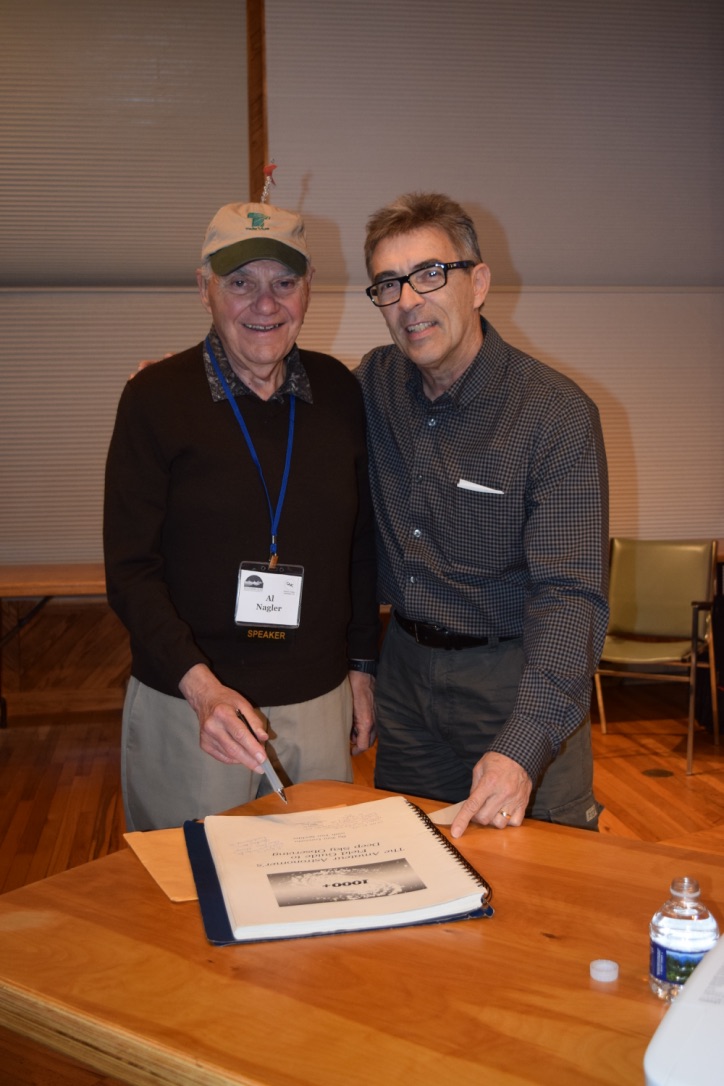
The late Al Nagler (optical engineeer, founder and owner of Televue Optics) and myself at the 2017 Southern Star Astronomy Convention in Little Switzerland, North Carolina.

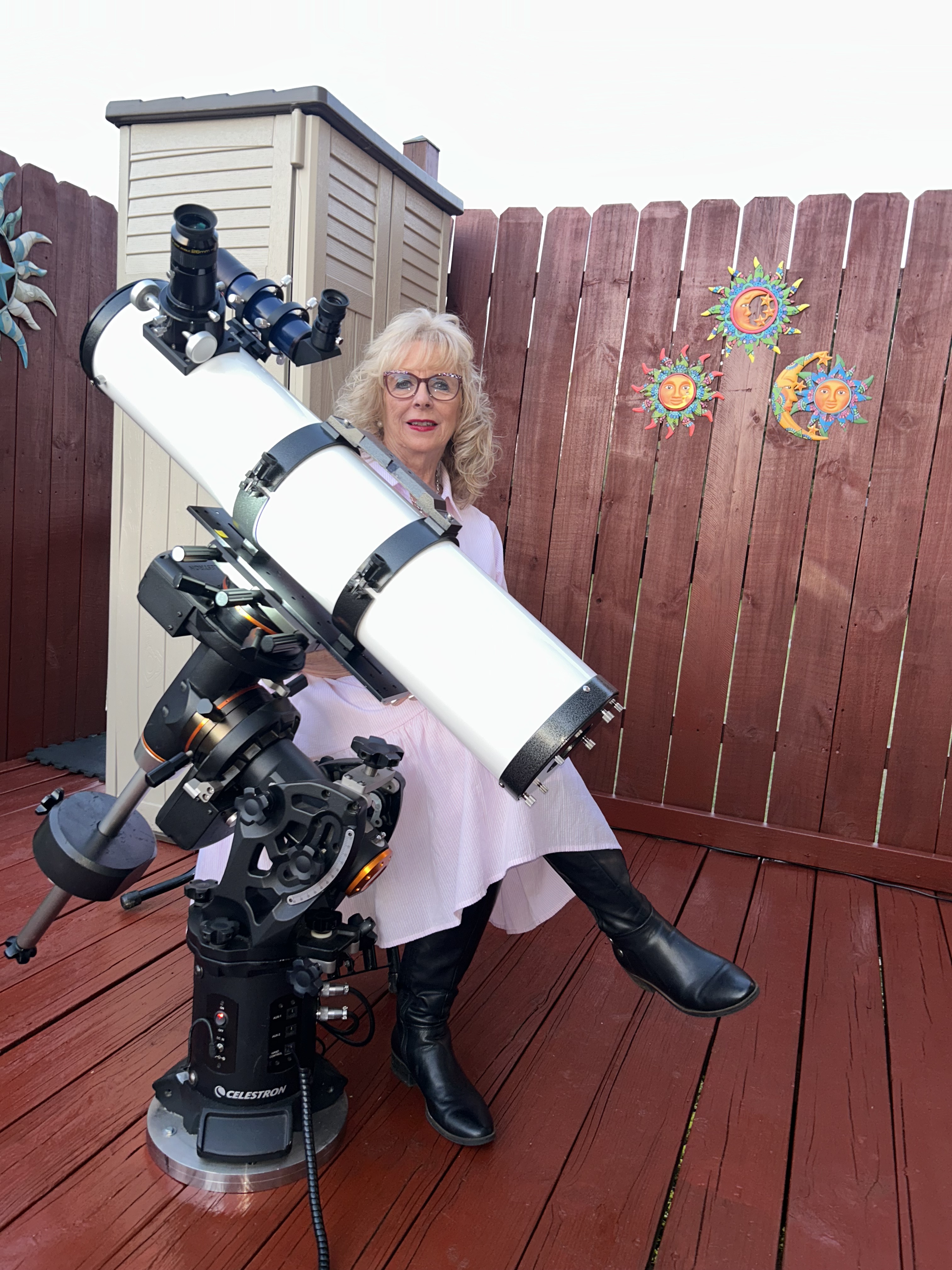
The 6-inch f/6 Newtonian, pictured below is now my largest telescope. The time had come (March 2026) for me to sell my very heavy 10-inch f/4.5 EQ Newtonian.

The Observer’s Challenge report has received over 150,000 world-wide .pdf downloads (to-date) as of April 2026. The following link is still available for all to use as a reference for ~250 deep-sky objects.

https://rogerivester.com/category/observers-challenge-reports-complete/

My other hobby is cycling, with about 135,000 miles to-date. I began riding in June 1979, but never thought or even considered the number of miles I’d one day ride.

The day I logged 60,000 miles (when turning into my driveway) for the very first time, it occurred to me that I should try for 100,000 miles. However, from my very first ride in June 1979, it would take me 29 years to achieve this feat, which occurred in October 2009.

Observer’s Challenge Reports For The Years 2009-2024: All 185 Monthly Reports Are Included For Future Reference Use.

Posted November 6, 2015 by rogerivester
Categories: Observer's Challenge Reports Complete

Tags:

During the winter of 2007, while visiting family in Las Vegas, I became a member of the Las Vegas Astronomical Society.Fellow member, Fred Rayworth and I often talked about starting a monthly observing report.

So, in February 2009, we issued the first Las Vegas Astronomical Society Observer’s Challenge Report. The many reports to follow would include galaxies, nebulae, star clusters and multiple stars However, in the recent years the name was changed to just “The Observer’s Challenge Report.”

We designed the report primarily to promote visual observing, while allowing amateurs the opportunity to share their observations and work. The report has since become quite popular and includes participants from all across the country and beyond.

We are also attempting to keep the ancient art of pencil sketching alive.  A facet of astronomy that was employed by Messier, the Herschel’s and so many others over the past 200 years.

I think we can all agree that interest in serious visual observing and pencil sketching has declined significantly, especially in the past 25 years.  

And the challenge report has inspired me to take my telescope outside, even when I would much rather have stayed inside…and others have told me the same.

As of October 2019, Sue French, former editor at Sky & Telescope Magazine became part of the administration of the report, after being a participant for many years.

Official statement regarding the final Observer’s Challenge report:

Sue French and myself have decided this month (June 2024) will be the last and final Observer’s Challenge report.  

This is for many reasons, which includes the time required each and every month.  And it often interferes with personal time, such as vacations, especially during the summer months, and just having the burden to compile a monthly report.

I would like to thank Fred Rayworth, who in 2009, with myself established the report from Las Vegas.  It was originally designed to promote visual observing.  Fred resigned from the report in 2019, due in-part for his time required to write and promote his book novels.  His books can be found and ordered from a variety of locations. After years of being a part and participate of the report, Sue French graciously assumed Fred’s place, upon his leaving.  

The report has had readership in most all US states, and more than 100 foreign countries in the past 15 plus years.  

As of today (March 28th 2026) the Observer’s Challenge report has had more than 150,000 worldwide .Pdf downloads.

There has never been anything like the Observer’s Challenge, lasting 185 consecutive months.  And not likely will there be anything like it in the future. 

During this 15 plus years period, there have been participants summiting observing reports from the following states:

North Carolina, Nevada, New York, Texas, South Carolina, Massachusetts, Maine, Virginia, Pennsylvania, Delaware, Arizona, Florida, Alabama, Oklahoma and possibly a few others that I might have missed.

And then there were entries from the following countries: France, Italy, South Africa, Romania, Jordan, Lebanon, England and a few others.

It’s my hope that amateurs will use the following 185 Observer’s Challenge reports for personal reference and sharing with others…

Roger Ivester

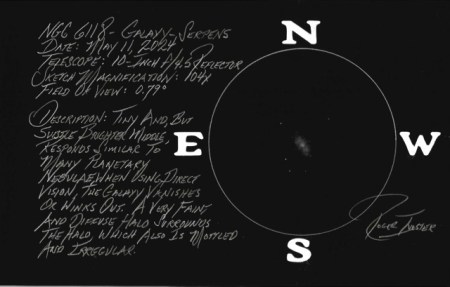
NGC 6118 Galaxy In Serpens 6

may-2024-observers-challenge-hickson-68b

april-2024-observers-challenge-hickson-44-b

march-2024-observers-challenge-ngc-2440c-4

february-observers-challenge-ngc-1579a

2024-observers-challange-ngc-936-and-ngc-941

december-2023-observers-challenge-_ic-1848-2

november-2023-observers-challenge-_ic-10-1

october-2023-observers-challenge-_ngc-7027-3

september-2023-observers-challenge-_ngc-6891

august-2023-observers-challenge-_m56

july-2023-observers-challenge-_ngc-6217

june-2023-observers-challenge-_ngc-5774-and-5775

may-2023-observers-challenge-_ngc-4088

april-2023-observers-challenge-_ngc-3044b

march-2023-observers-challenge-_ngc-2841d

february-2023-observers-challenge-_ngc-2024

january-2023-observers-challenge-_ngc-1245b

december-2022-observers-challenge-_iota-cas-b

november-2022-observers-challenge-_ngc-7184b-1

October 2022 OBSERVERS CHALLENGE _M39 b

September 2022 OBSERVERS CHALLENGE _NGC 6751b

August 2022 OBSERVERS CHALLENGE _NGC 6772

July 2022 OBSERVERS CHALLENGE _NGC 6210b

June 2022 OBSERVERS CHALLENGE _NGC5474b

May 2022 OBSERVERS CHALLENGE _M106c

April 2022 OBSERVERS CHALLENGE _NGC 3079 c

march-2022-observers-challenge-_the-medusa-nebula

February 2022 OBSERVERS CHALLENGE _M42 & M43 PDF

january-2022-observers-challenge-_ngc-1501

December 2021 OBSERVERS CHALLENGE _NGC 16

November 2021 OBSERVERS CHALLENGE _NGC 7662 b

october-2021-observers-challenge-_ngc-6857-1

September 2021 OBSERVERS CHALLENGE _NGC 6823 & Sh 2-86

august-2021-observers-challenge-_m57

july-2021-observers-challenge-_ngc-6572-1

june-2021-observers-challenge-_ngc-5746

may-2021-observers-challenge-_m3-2

April 2021 OBSERVERS CHALLENGE _NGC 3226_NGC 3227

march-2021-observers-challenge-_ngc-2685-2

February 2021 OBSERVERS CHALLENGE _NGC 1893 and IC 410

january-2021-observers-challenge-_ic-348

December 2020 OBSERVERS CHALLENGE _M76

November 2020 OBSERVERS CHALLENGE _NGC 278

october-2020-observers-challenge-_ngc-7332-39

September 2020 OBSERVERS CHALLENGE _Veil Nebula

August 2020 OBSERVERS CHALLENGE _M20

July 2020 OBSERVERS CHALLENGE _M8 

June 2020 OBSERVERS CHALLENGE _NGC 5689

May 2020 OBSERVERS CHALLENGE _M85 and NGC 4394

April 2020 OBSERVERS CHALLENGE _ NGC 3877

March 2020 OBSERVERS CHALLENGE _ NGC 2859

February 2020 OBSERVERS CHALLENGE _ NGC 1931

JANUARY 2020 OBSERVERS CHALLENGE _ NGC 1999

DECEMBER 2019 OBSERVERS CHALLENGE – IC-1805

NOVEMBER 2019 OBSERVERS CHALLENGE – NGC-246

OCTOBER 2019 OBSERVERS CHALLENGE – NGC-7448

SEPTEMBER 2019 OBSERVERS CHALLENGE – M-071

AUGUST 2019 OBSERVERS CHALLENGE – M-011

JULY 2019 OBSERVERS CHALLENGE – NGC-6482

JUNE 2019 OBSERVERS CHALLENGE – NGC-5377

MAY 2019 OBSERVERS CHALLENGE – NGC-4036-41

APRIL 2019 OBSERVERS CHALLENGE – NGC-2964-68

MARCH 2019 OBSERVERS CHALLENGE – NGC-2300

FEBRUARY 2019 OBSERVERS CHALLENGE – NGC-2175

JANUARY 2019 OBSERVERS CHALLENGE – NGC-1514

DECEMBER 2018 OBSERVERS CHALLENGE – NGC-1003

NOVEMBER 2018 OBSERVERS CHALLENGE – NGC-147

OCTOBER 2018 OBSERVERS CHALLENGE – NGC-7129

SEPTEMBER 2018 OBSERVERS CHALLENGE – NGC-6818

AUGUST 2018 OBSERVERS CHALLENGE – IC-1295

JULY 2018 OBSERVERS CHALLENGE – M-004

JUNE 2018 OBSERVERS CHALLENGE – M-051

MAY 2018 OBSERVERS CHALLENGE – NGC-4236

APRIL 2018 OBSERVERS CHALLENGE – M-081-82

MARCH 2018 OBSERVERS CHALLENGE – NGC-2371-72

FEBRUARY 2018 OBSERVERS CHALLENGE – M-041

JANUARY 2018 OBSERVERS CHALLENGE – NGC-1624

DECEMBER 2017 OBSERVERS CHALLENGE – NGC-0925

NOVEMBER 2017 OBSERVERS CHALLENGE – NGC-0772

OCTOBER 2017 OBSERVERS CHALLENGE – M-015

SEPTEMBER 2017 OBSERVERS CHALLENGE – NGC-6905

AUGUST 2017 OBSERVERS CHALLENGE – M-024

JULY 2017 OBSERVERS CHALLENGE – M-014

JUNE 2017 OBSERVERS CHALLENGE – NGC-6015

MAY 2017 OBSERVERS CHALLENGE – M-098

APRIL 2017 OBSERVERS CHALLENGE – NGC-3395-96

MARCH 2017 OBSERVERS CHALLENGE – M-067

FEBRUARY 2017 OBSERVERS CHALLENGE – WINTER ALBIREO

JANUARY-2017-OBSERVERS-CHALLENGE-NGC-1545

DECEMBER-2016-OBSERVERS-CHALLENGE-M-74

NOVEMBER-2016-OBSERVERS-CHALLENGE-NGC-0206

OCTOBER-2016-OBSERVERS-CHALLENGE-NGC-7479

SEPTEMBER-2016-OBSERVERS-CHALLENGE-NGC-7009

AUGUST-2016-OBSERVERS-CHALLENGE-CHAPLES-ARC

JULY 2016 OBSERVERS CHALLENGE – M-092

JUNE 2016 OBSERVERS CHALLENGE – M-005

MAY 2016 OBSERVERS CHALLENGE – M-100

APRIL 2016 OBSERVERS CHALLENGE – NGC-3077

MARCH 2016 OBSERVERS CHALLENGE – NGC-2392

FEBRUARY 2016 OBSERVERS CHALLENGE – NGC-2237

JANUARY 2016 OBSERVERS CHALLENGE – M-078

DECEMBER 2015 OBSERVERS CHALLENGE – NGC-1023

NOVEMBER 2015 OBSERVERS CHALLENGE – NGC-7789

OCTOBER 2015 OBSERVERS CHALLENGE – NGC-7128

SEPTEMBER 2015 OBSERVERS CHALLENGE – NGC-7000

AUGUST 2015 OBSERVERS CHALLENGE – M-016

JULY 2015 OBSERVERS CHALLENGE – NGC-6503

JUNE 2015 OBSERVERS CHALLENGE – M-083

MAY 2015 OBSERVERS CHALLENGE – NGC-4244

APRIL 2015 OBSERVERS CHALLENGE – NGC-3184

MARCH 2015 OBSERVERS CHALLENGE – NGC-2683

FEBRUARY 2015 OBSERVERS CHALLENGE – NGC-2158

JANUARY 2015 OBSERVERS CHALLENGE – NGC-1569

DECEMBER 2014 OBSERVERS CHALLENGE – NGC-0672

NOVEMBER 2014 OBSERVERS CHALLENGE – NGC-0404

OCTOBER 2014 OBSERVERS CHALLENGE – NGC-7640

SEPTEMBER 2014 OBSERVERS CHALLENGE – M-030

AUGUST 2014 OBSERVERS CHALLENGE – NGC-6822

JULY 2014 OBSERVERS CHALLENGE – M-101 NGC 5457

JUNE 2014 OBSERVERS CHALLENGE – M-53 NGC – 5053

MAY 2014 OBSERVERS CHALLENGE – NGC- 4284 – 4290

APRIL 2014 OBSERVERS CHALLENGE – NGC-3893-3896

MARCH 2014 OBSERVERS CHALLENGE – NGC-2359

FEBRUARY 2014 OBSERVERS CHALLENGE – NGC-1664

JANUARY 2014 OBSERVERS CHALLENGE – NGC-1491

DECEMBER 2013 OBSERVERS CHALLENGE – NGC-40

NOVEMBER 2013 OBSERVERS CHALLENGE – IC-1747

OCTOBER 2013 OBSERVERS CHALLENGE – IC-5146

SEPTEMBER 2013 OBSERVERS CHALLENGE – NGC-7044

AUGUST 2013 OBSERVERS CHALLENGE – NGC-6791

JULY 2013 OBSERVERS CHALLENGE – NGC-5981 5982 5985

JUNE 2013 OBSERVERS CHALLENGE – NGC-5466

MAY 2013 OBSERVERS CHALLENGE – PORRIMA

APRIL 2013 OBSERVERS CHALLENGE – NGC-2672

MARCH 2013 OBSERVERS CHALLENGE – M-46 NGC-2438

FEBRUARY 2013 OBSERVERS CHALLENGE – MEL-71

JANUARY 2013 OBSERVERS CHALLENGE – NGC-1579

DECEMBER 2012 OBSERVERS CHALLENGE – NGC-457

NOVEMBER 2012 OBSERVERS CHALLENGE – NGC-55

OCTOBER 2012 OBSERVERS CHALLENGE – NGC-7023

SEPTEMBER 2012 OBSERVERS CHALLENGE – NGC-6826

AUGUST 2012 OBSERVERS CHALLENGE – M-22

JULY 2012 OBSERVERS CHALLENGE – M-17

JUNE 2012 OBSERVERS CHALLENGE – NGC-5353

MAY 2012 OBSERVERS CHALLENGE – M-64

APRIL 2012 OBSERVERS CHALLENGE – NGC-3115

MARCH 2012 OBSERVERS CHALLENGE – NGC-2362

FEBRUARY 2012 OBSERVERS CHALLENGE – THETA ORIONIS

JANUARY 2012 OBSERVERS CHALLENGE – NGC-1502

DECEMBER 2011 OBSERVERS CHALLENGE – M-33

NOVEMBER 2011 OBSERVERS CHALLENGE – NGC-281

OCTOBER 2011 OBSERVERS CHALLENGE – NGC-7380

SEPTEMBER 2011 OBSERVERS CHALLENGE – NGC-6946

AUGUST 2011 OBSERVERS CHALLENGE – NGC-6819

JULY 2011 OBSERVERS CHALLENGE – NGC-6645

JUNE 2011 OBSERVERS CHALLENGE – M-102

MAY 2011 OBSERVERS CHALLENGE – M-97

APRIL 2011 OBSERVERS CHALLENGE – NGC-3190

MARCH 2011 OBSERVERS CHALLENGE – NGC-2419

FEBRUARY 2011 OBSERVERS CHALLENGE – NGC-2261

JANUARY 2011 OBSERVERS CHALLENGE – NGC-1333

DECEMBER 2010 OBSERVERS CHALLENGE – M-77

NOVEMBER 2010 OBSERVERS CHALLENGE – IC-342

OCTOBER 2010 OBSERVERS CHALLENGE – NGC-6888

SEPTEMBER 2010 OBSERVERS CHALLENGE – NGC-7331

AUGUST 2010 OBSERVERS CHALLENGE – NGC-188

JULY 2010 OBSERVERS CHALLENGE – NGC-6543

SUMMER 2010 SUPPLEMENTAL OBSERVERS CHALLENGE – NGC-6826

JUNE 2010 OBSERVERS CHALLENGE – NGC-5907

MAY 2010 OBSERVERS CHALLENGE – NGC-4631

APRIL 2010 OBSERVERS CHALLENGE – NGC-4889

SPRING 2010 SUPPLEMENTAL OBSERVERS CHALLENGE – M-51

MARCH 2010 OBSERVERS CHALLENGE – IC-405 IC-410 NGC 1893a

FEBRUARY 2010 OBSERVERS CHALLENGE – NGC-2903 and SUPPLEMENTAL

JANUARY 2010 OBSERVERS CHALLENGE – NGC-2264

DECEMBER 2009 OBSERVERS CHALLENGE – NGC-474

NOVEMBER 2009 OBSERVERS CHALLENGE – NGC-891

OCTOBER 2009 OBSERVERS CHALLENGE – NGC-253

SEPTEMBER 2009 OBSERVERS CHALLENGE NGC-7293

AUGUST 2009 MONTHLY OBSERVERS CHALLENGE – M-002

JULY 2009 OBSERVERS CHALLENGE – M-27

JUNE 2009 MONTHLY OBSERVERS CHALLENGE – M-13

MAY 2009 OBSERVERS CHALLENGE – LEO TRIO

APRIL 2009 OBSERVERS CHALLENGE – MARKHARIANS CHAIN

SPRING 2009 OBSERVERS CHALLENGE SUPPLEMENTAL – VIRGO DIAMOND

MARCH 2009 OBSERVERS CHALLENGE NGC-2403

FEBRUARY 2009 OBSERVERS CHALLENGE M-1
Chaple’s Arc and the Cygnus Fairy Ring

Posted August 14, 2015 by rogerivester
Categories: Roger's Articles

  • Date of observation:  August 13th 2015
  • Transparency:  Poor – Very high humidity  
  • Seeing:  Excellent
  • Telescope:  10-Inch f/4.5 Reflector

I located and recognized immediately using a 32mm eyepiece @ 36x with a 1.8º FOV.  The first star I noticed was double star h1470, with the primary being a ruddy or rust color.  

When increasing the magnification, using a 20 mm eyepiece @ 57x with a 1º FOV, at least eight or more pairs of double stars, making a circle could be seen and separated.  This beautiful ring of doubles are framed very nicely within the 1º field.  A fabulous and most interesting asterism. Dimensions: 40 x 40 arc minutes.    

A pencil sketch by the writer using a blank 5 x 8 notecard with the colors inverted using a scanner.

Scanned Image 160890002

Now for the complete story of Chaple’s Arc, and how the Cygnus Fairy Ring came to being…

The following is an excerpt from an article by Glenn Chaple and posted by “Skyscrapers, Inc.” 

“Forgive me for the apparent ego trip, but this month I’m going to introduce you to an amazing little asterism called “Chaple’s Arc.” I stumbled upon the Arc in the mid-1970s while looking for the double star h1470. Instead of one double, I found four arranged in an arc 1/2° across. So smitten was I by its extraordinary appearance that I eventually wrote about it in the September 1980 issue of Deep Sky Monthly. New York amateur astronomer John Pazmino viewed the group and dubbed it “Chaple’s Arc.”

A quarter century later, I decided to introduce the Arc to a much larger audience by featuring it in my “Observing Basics” column in Astronomy. To my amazement, I saw the same group described in the British magazine Sky at Night. The writer called it the “Fairy Ring.” Uh-oh! Had I missed something?

After a little detective work and an assist from Sky and Telescope’s Sue French, I learned that the Arc had been seen by Utah amateur astronomer Kim Hyatt in the early 1990s. Like me, he found it during a search for h1470. Because he was using a larger telescope than I had, he was able to view some faint pairs that, along with my four, formed a ring of double stars. Not knowing about Chaple’s Arc, he and a friend christened it the Fairy Ring.”   Glenn Chaple/Skyscrapers, Inc. 


Phillip Ivester and James Caserio Drag Racing: By Roger Ivester

Posted July 25, 2015 by rogerivester
Categories: Roger's Articles

Phillip Ivester has had excellent success in drag racing, winning “an amazing” 164 events.  He has also built many race engines and helped others into the world of drag racing.  It’s been more than five years now when he began working with Dr. James Caserio, MD from Hendersonville.

Dr C. as he’s known by had been racing for years earlier, and now no one can drive his 1350 horsepower Hellcat Challenger as well as he can. His fastest time has been 6.00 seconds at 120 miles per hour in only 1/8 mile, or 660 feet. The car with driver and fuel weighs in at a very heavy, 4650 pounds! With this amount of horsepower and weight, breakage of critical parts have and are bound to happen on occasion.

It should be noted that Dr. Caserio has “most likely” saved the lives of at least two Pro Motorcyclist, at Shady Side Drag Strip. This drag strip is located only a few miles south of Boiling Springs, North Carolina.

Back to the motorcyclists crashes:

Dr. C. knew exactly how to best treat the traumatic injuries sustained by the crashes at well over 100 MPH. His many years as a doctor and emergency room physician, served him well for these two horrific and critical injuries. And this was on site at the drag strip, providing life saving treatment on the ground…not in an emergency room!

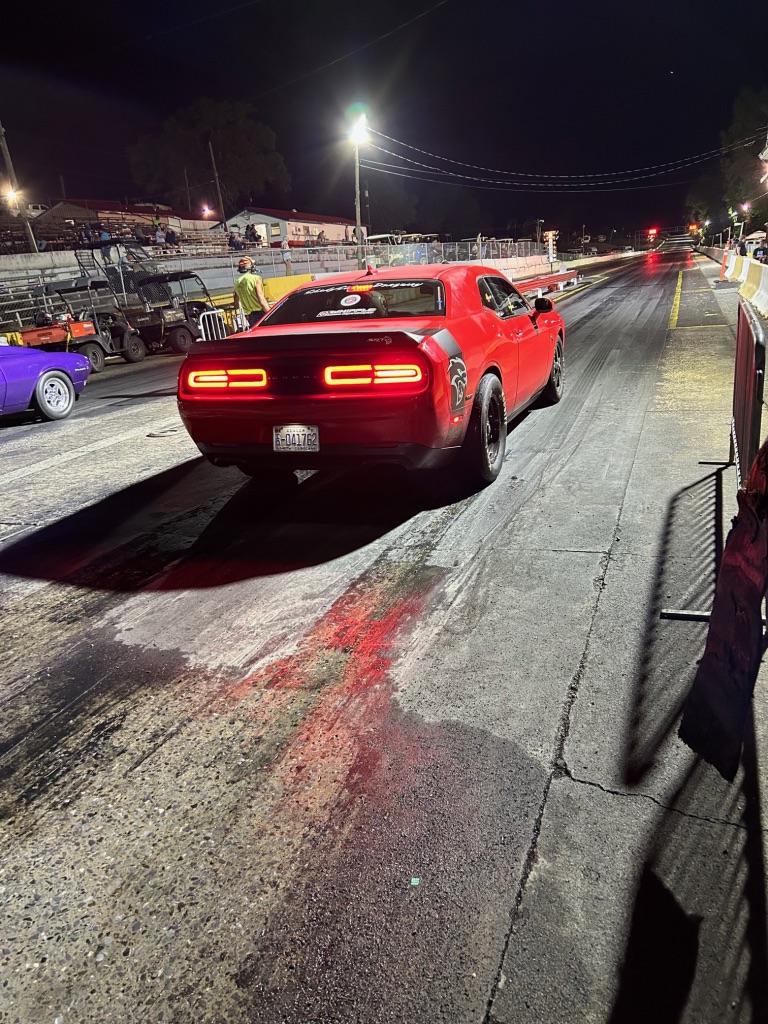
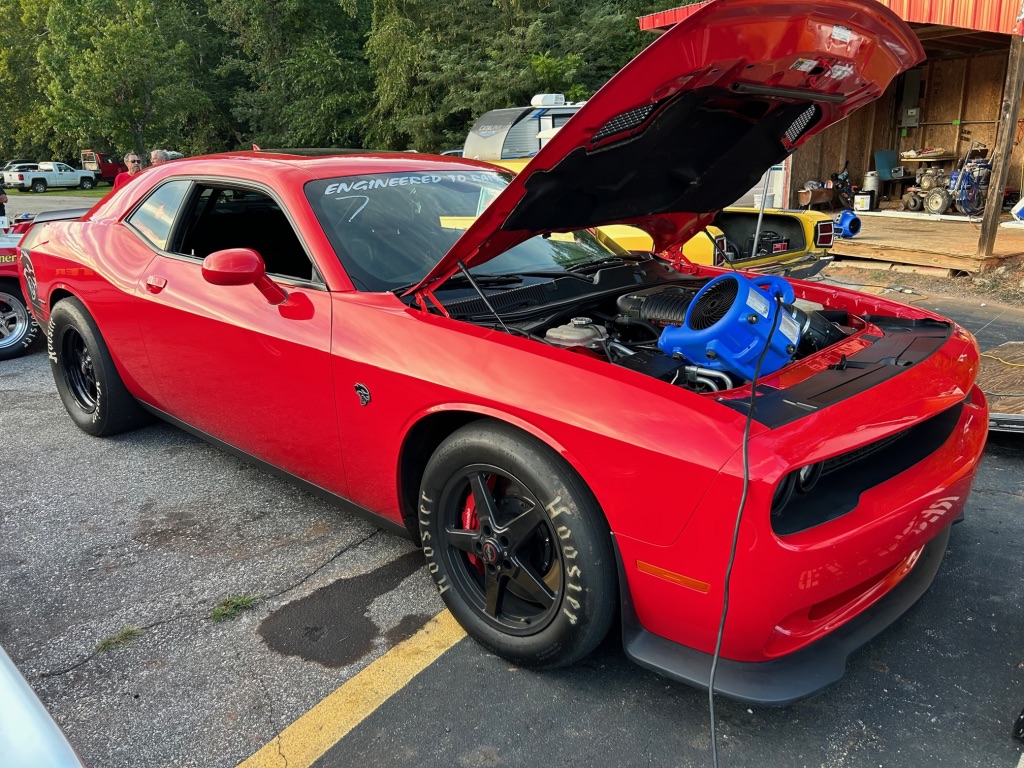
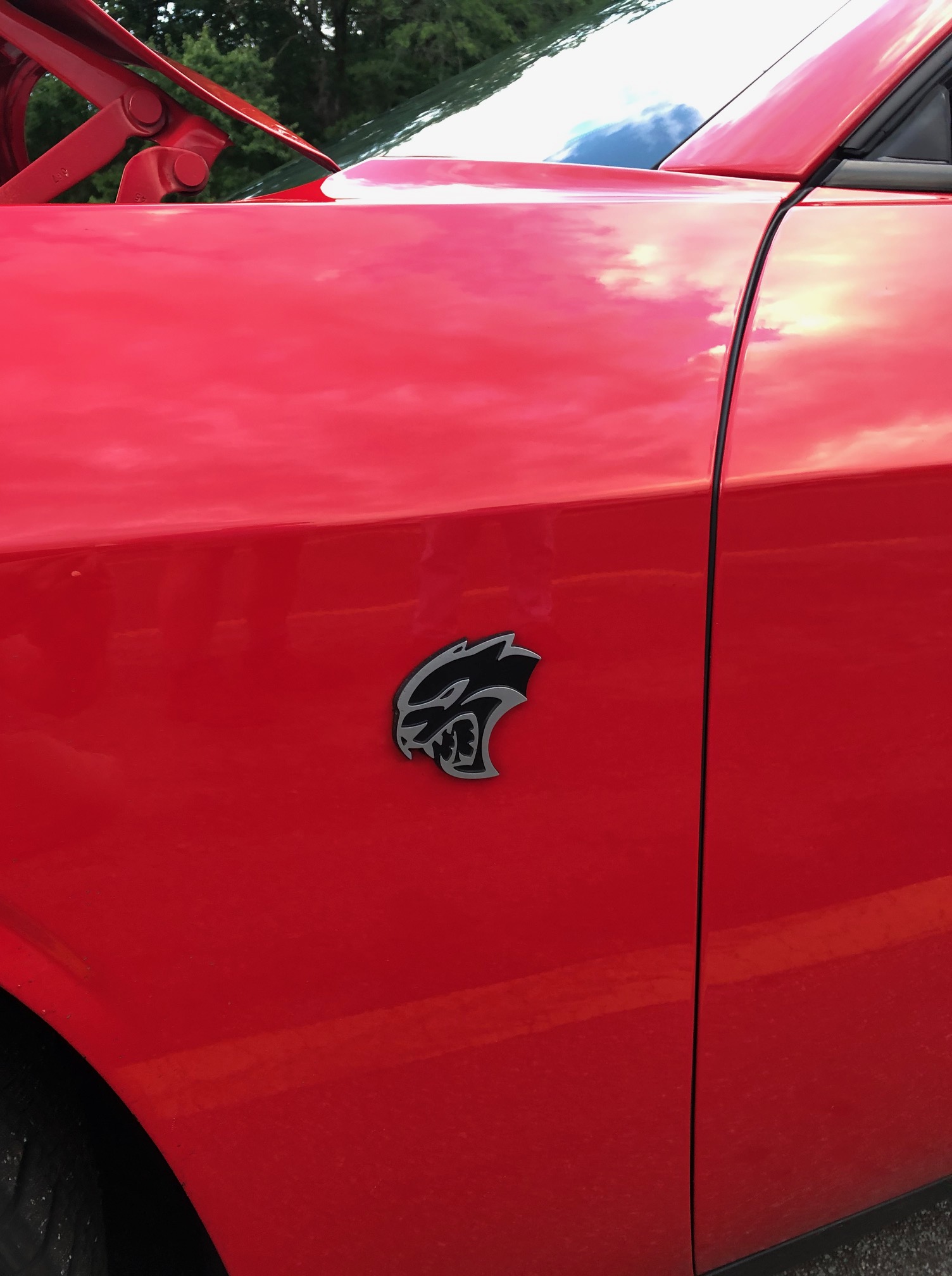
Following photo: This is not just a Hellcat, but a (Demonized Hellcat) which indicates the car has received  performance modifications, and now has well over 1,140 horsepower (at the rear wheels). The engine has 1,350 HP!    

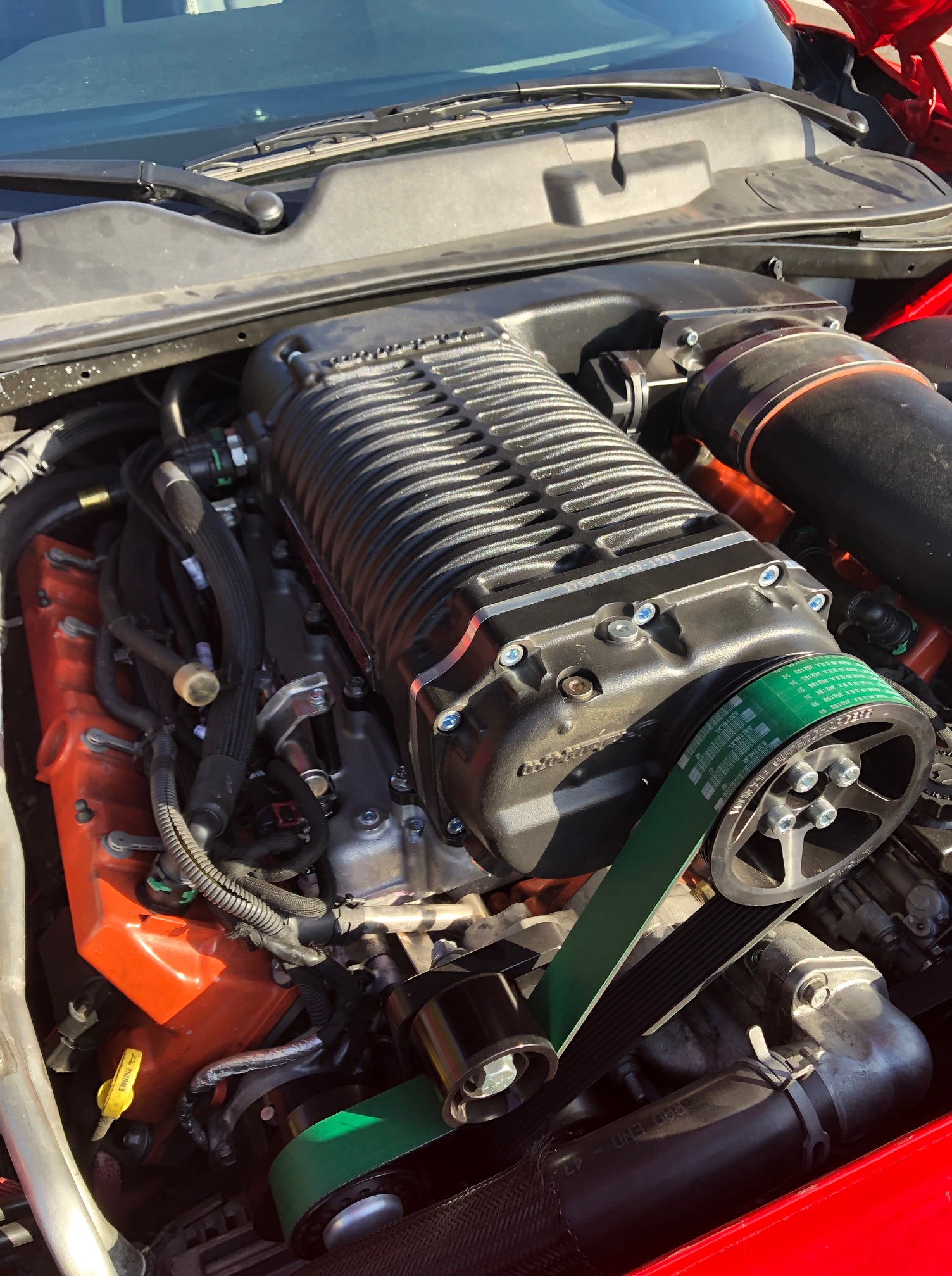
Below photo:  Whipple Supercharger….not your standard supercharger!   

IMG_4343
IMG_1693

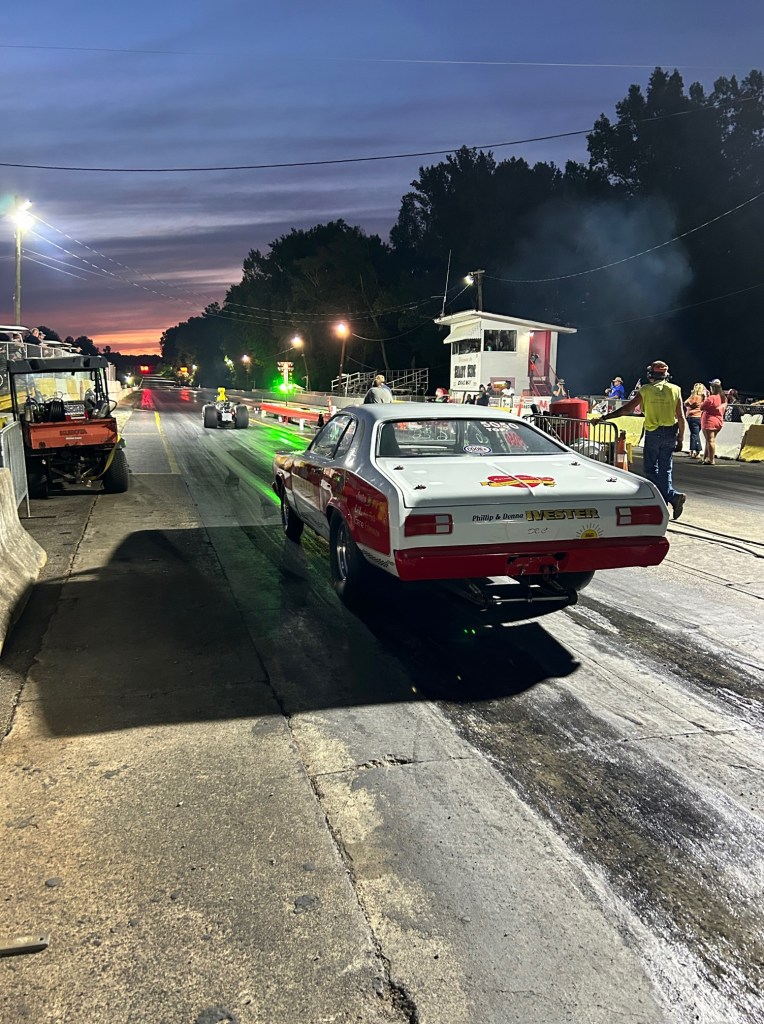
Thursday night, March 31st 2022 at Shady Side Dragway in Boiling Springs, North Carolina:

Dr. C and Phillip work together to insure that the Hellcat is always ready to race…  

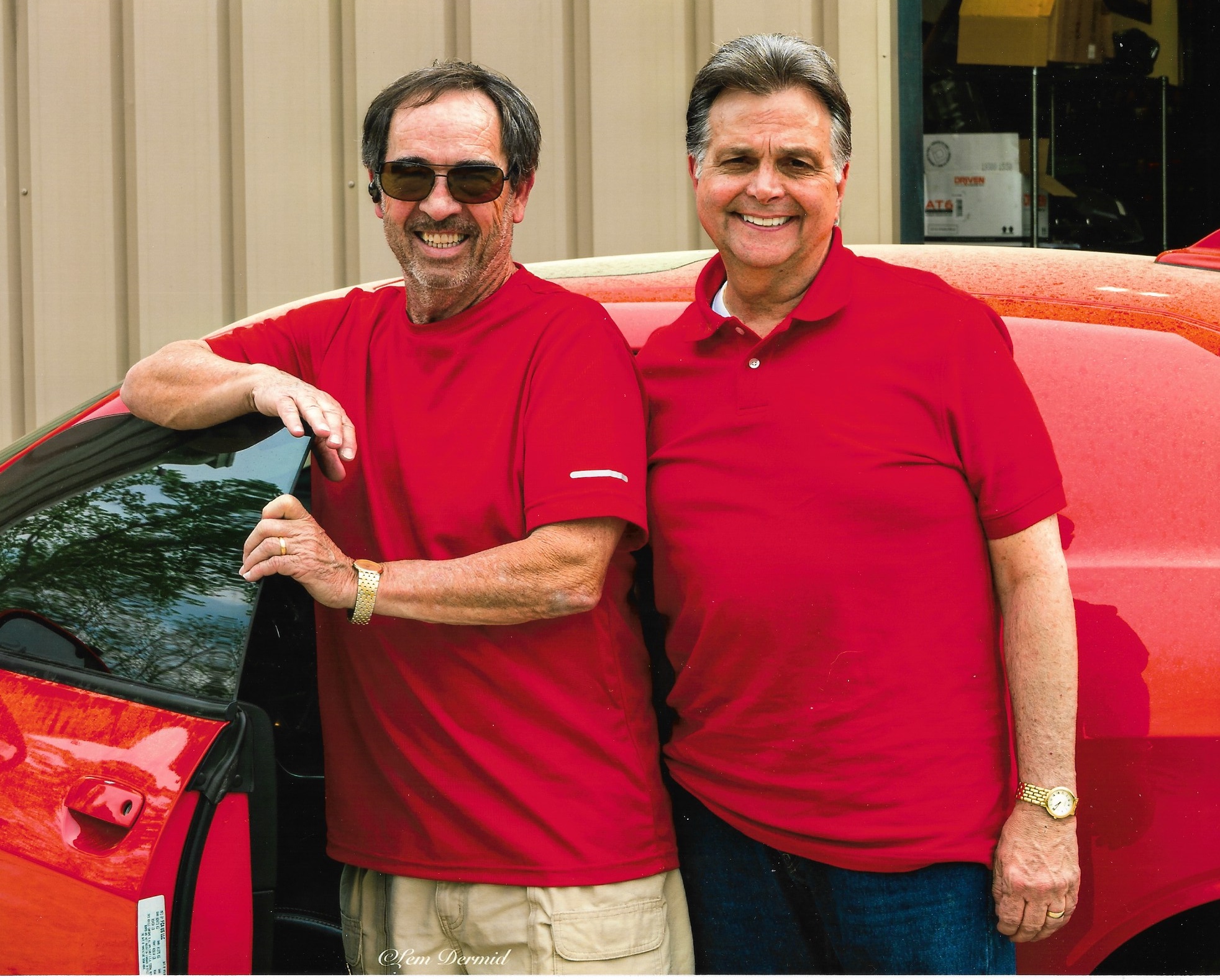
Phillip and Dr. C

Phillip Ivester

Phillip Photo

Dr. C with white-coat

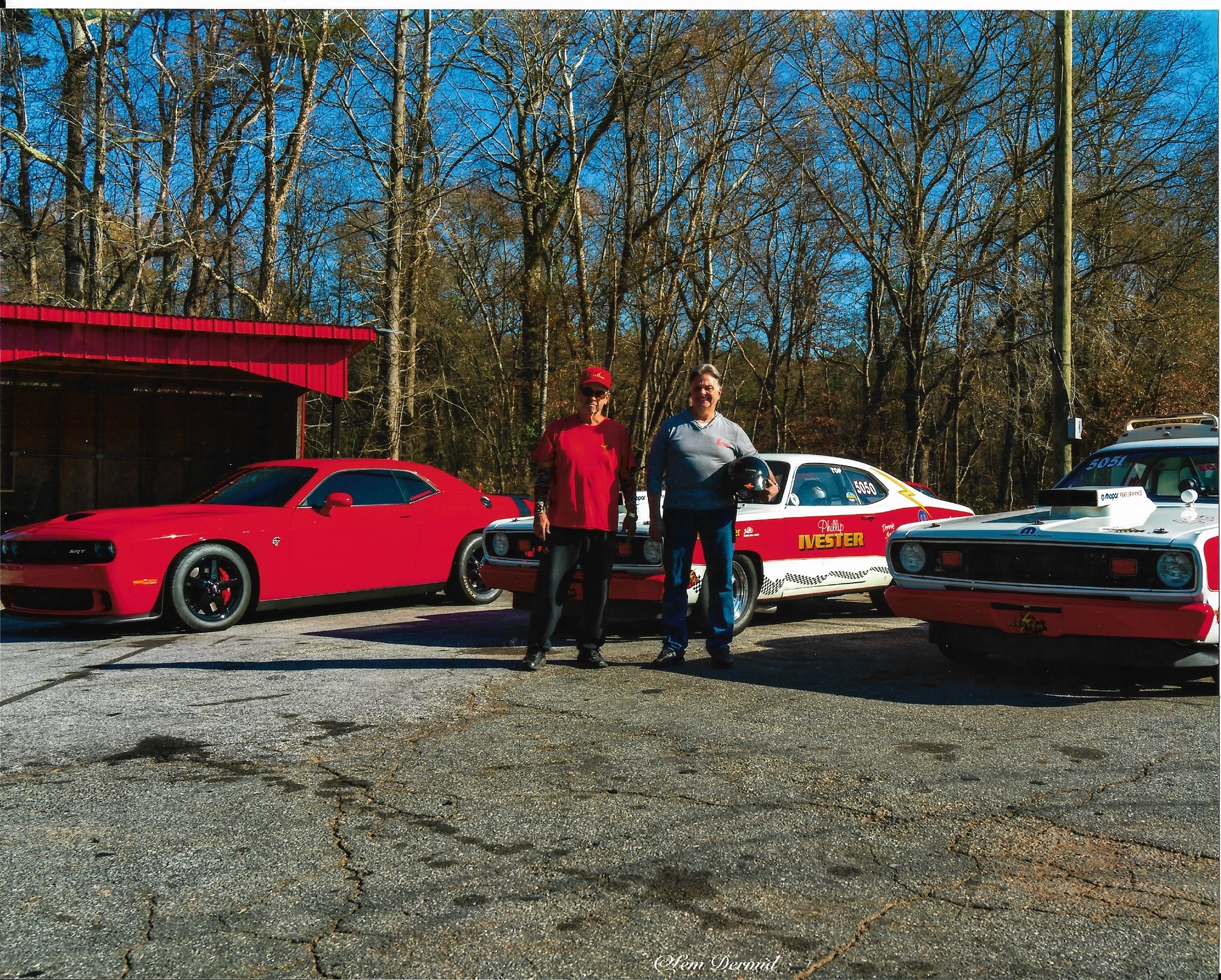
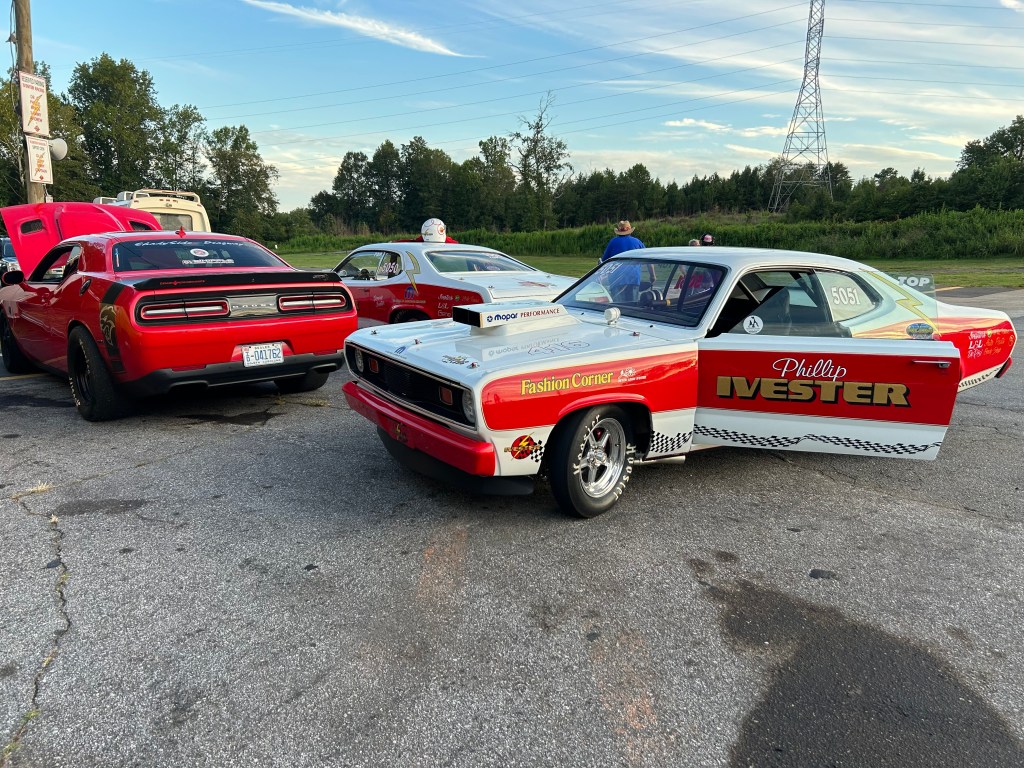
Dr. C and his Hellcat with Phillip and both of his race cars.

Three Cars
Screenshot 2020-07-08 at 5.27.40 PM

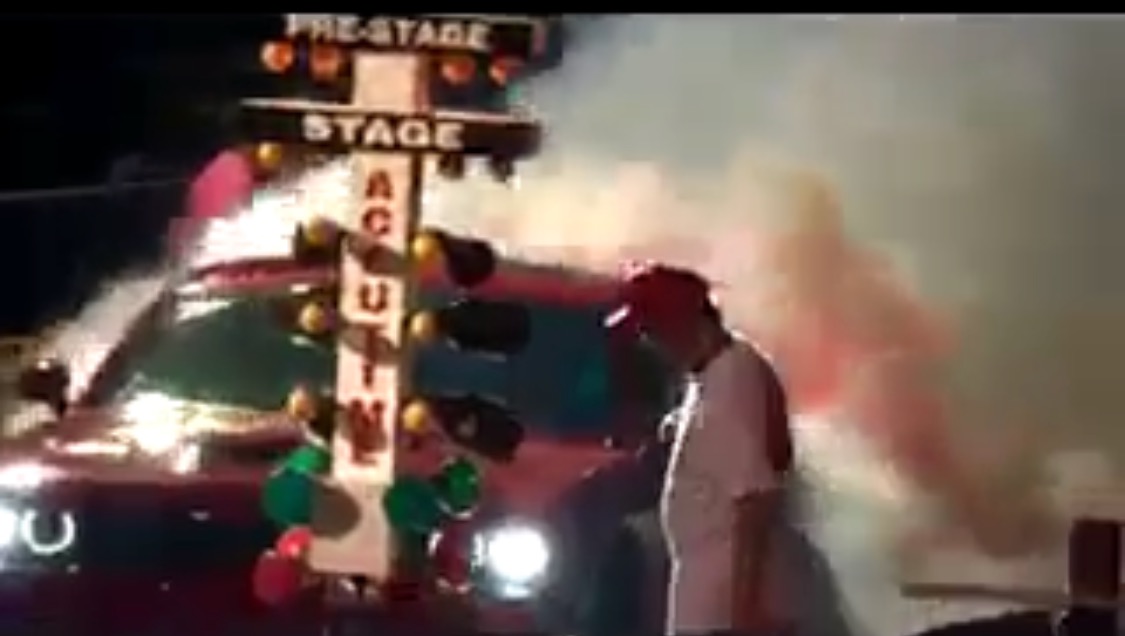
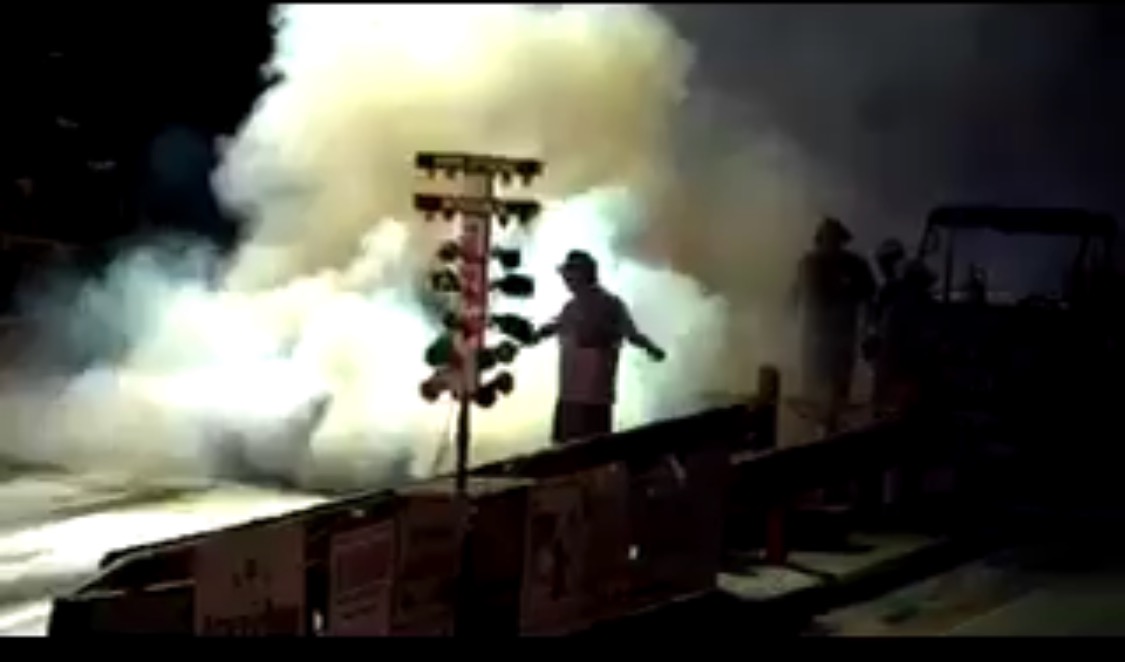
Heating up the rear tires for better traction…

Screenshot 2020-07-08 at 5.33.23 PM

A few snapshots of family and other.

Posted May 28, 2015 by rogerivester
Categories: Roger's Articles

IMG_4192

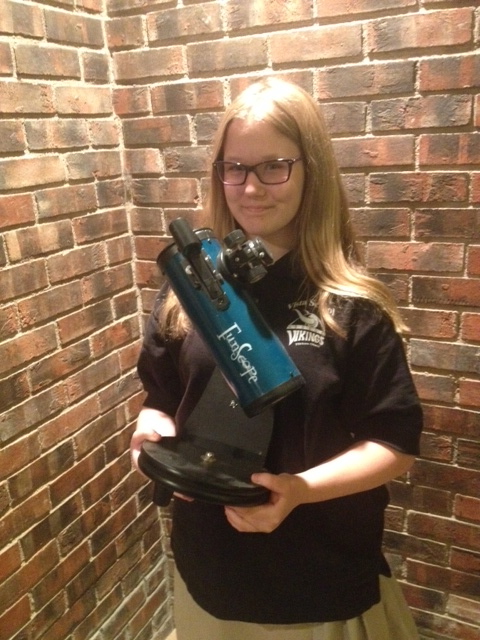
My west coast granddaughter, Zoe with her 76mm Orion Telescope.  

IMG_7279 

My son, Chad, daughter-in-law, Tina, and grandkids.  Zoe is below, visiting a beauty Salon. 

IMG_1294

IMG_9059

Zoe and her Dad in California after a bit of face painting. 

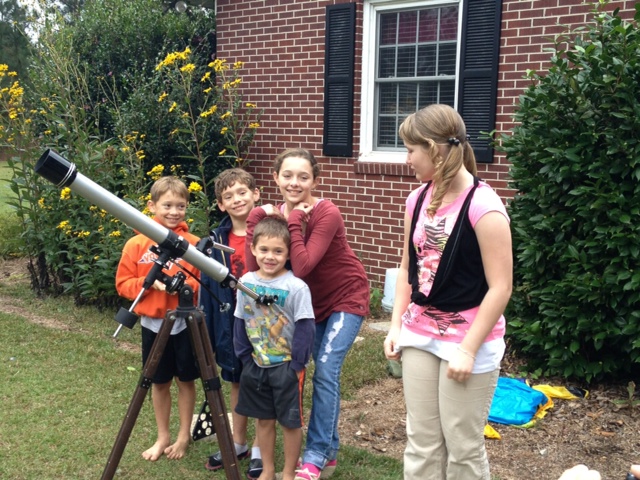
East Coast grandkids:  L-R:  Anna-Grace, John-Winston, Isaac, and Elisha…

IMG_5911

photo

My wife Debbie, with a 1997 Orion/Vixen 102mm refractor, which allowed me to  see Sirius B 

Roger Ivester And Zoe

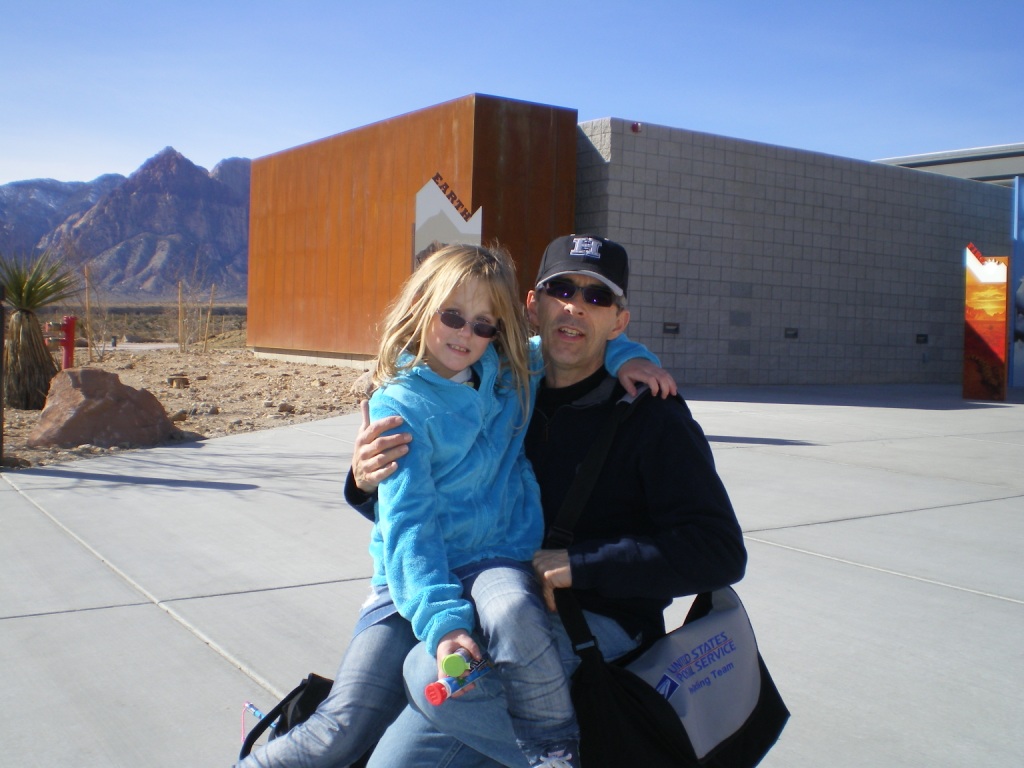
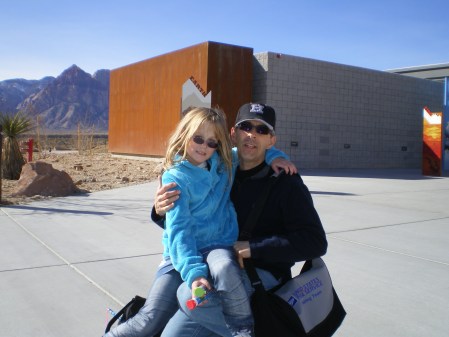
This is one of my favorite pictures from 2011.  Zoe and I were at the Red Rock Canyon visitors center, just outside of Las Vegas. 

photo

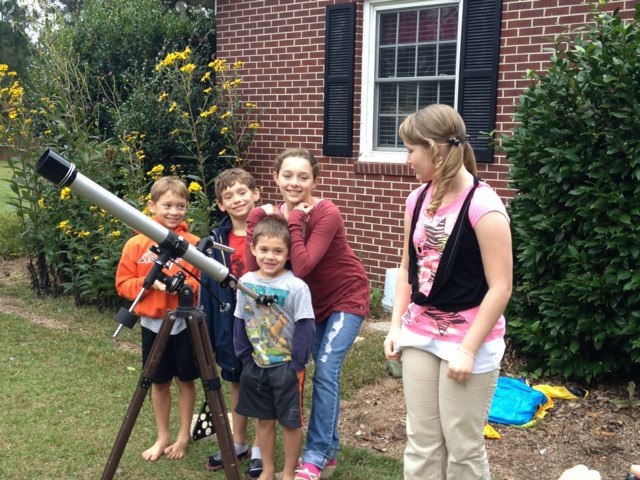
“A moment in time” when I was able to have all of my grandkids together in South Carolina.  The vintage 60mm refractor telescope shown was a gift to the kids by a good friend.  

DSCF5032

My two sons, Roger Chadwick (L) and Bradley Jason.  I’m really fortunate to have sons like these guys.  It’s difficult for them to get together as Chad lives on the East Coast and Brad on the West Coast.  A very special photo to me…

IMG_0652

Hey…this is me, working on an astronomy article at the coffee shop on a cold day with light snow.     

FullSizeRenderAnna-Grace…aggravating one of her brothers, John-Winston.

DSCF5130

Our Dachshund, Nova Sophia.

My First and Second Telescopes From The 1970’s

Posted February 3, 2015 by rogerivester
Categories: Roger's Articles

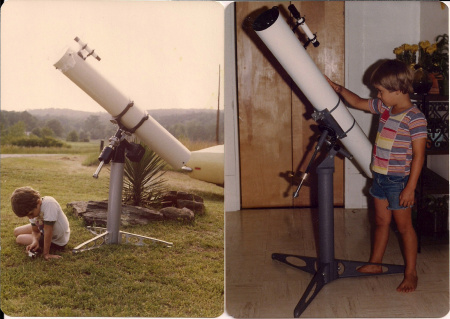
The telescope to the right is my first serious telescope which I purchased in March of 1977, an Edmund Scientific 4.25-inch f/10 reflector.  

Realizing the need for more aperture, I purchased a 6-inch Criterion RV-6 a year or so later.  My oldest son standing beside both telescopes, in 1978 and 1979 respectively…  

favorite-telescopes-from-the-past

Double Star M40 and Galaxies NGC 4284 and NGC 4290

Posted June 24, 2014 by rogerivester
Categories: Work File Only - Observer's Challenge Reports

Observers Challenge report:  MAY 2014 OBSERVERS CHALLENGE – NGC- 4284 – 4290

10-inch reflector from my moderately light polluted backyard with a 5.2 NELM. It was an especially good night with excellent transparency and seeing. 

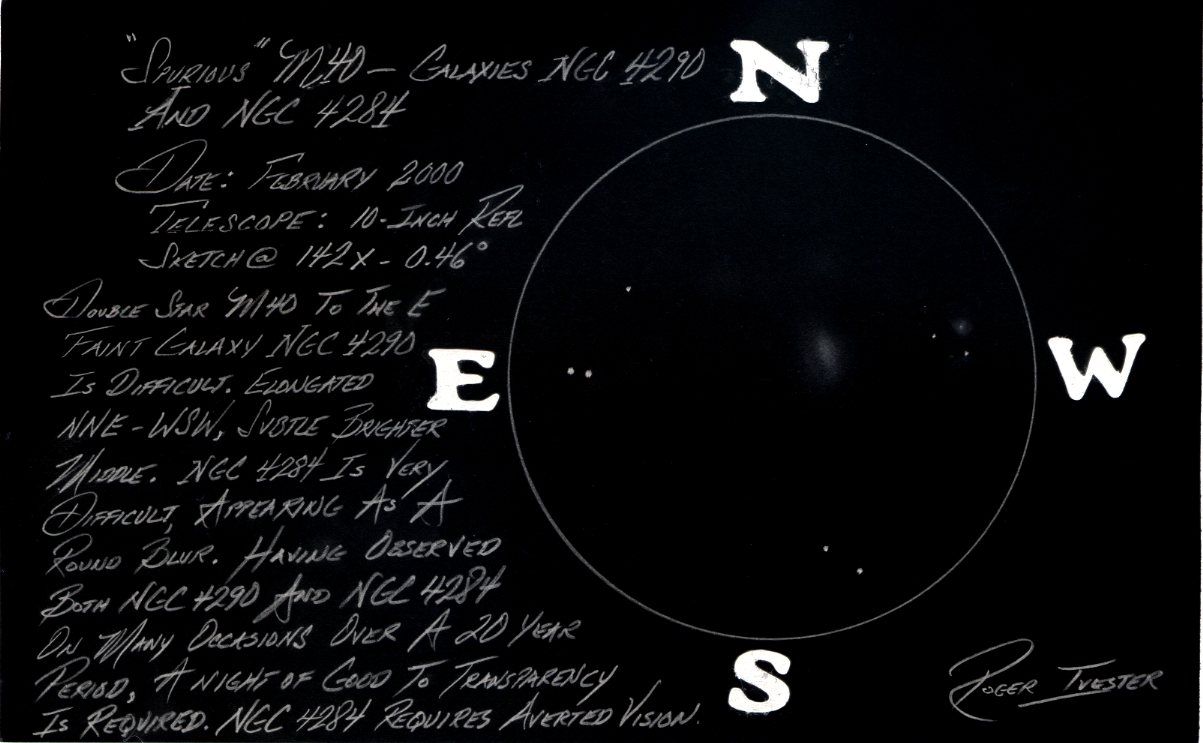
M40, a pair of 10th magnitude stars, also known as Winnecke 4 is very easy with a wide separation of about 50 seconds of arc. The pair is oriented mostly east-west and both appear as whitish-yellow in color.

Two faint galaxies are located very close to M40.  All three objects (M40, NGC 4284 and NGC 4290) are located within a 1/2º field-of-view.  

I first observed this galaxy pair on March 31, 1994 with visual notes, and many times afterwards, however, it would be February 2000, before I would make my first pencil sketch.  

Just to the west of double star, M40, lies faint galaxy NGC 4290 @ mag. (12.6 and sfc. br. 14.1) elongated NNE-WSW.  A very subtle brightness could be seen in the central region. 

In the “Messier Album” by Mallas and Kreimer:   Expert visual observer “the late” John Mallas, could not see NGC 4290, using a 4-inch f/15 Unitron Refractor.  

Very close and to the west of NGC 4290 is very faint galaxy NGC 4284 mag. (sfc. 14.7) 

Averted vision was required with the 10-inch to see NGC 4284…appearing as a faint, mostly round blur.   Roger Ivester

10-inch f/4.5 Newtonian reflector and 8-inch Schmidt-Cassegrain test comparison:   

During a previous observation from the same location and in a side-by-side comparison with the 10-inch reflector, NGC 4284 could be seen, but only with averted vision.  

However, this galaxy (NGC 4284) was not visible in an 8-inch Schmidt-Cassegrain telescope.

The following sketch was made using a 10-inch reflector @ 142x, pencil and a blank 5 x 8 notecard with the colors inverted using a scanner. 

Sketch:  Very faint galaxy, NGC 4284 is on the western edge and makes a triangle with two faint stars.  Brighter galaxy, NGC 4290 is just to the east from NGC 4284.   Roger Ivester

Spurious M40 and NGC 4290 and 4284 -negative

The following image by Jeff Schilling from Kingwood, Texas (2020)   

8-inch Newtonian reflector.  Orientation of the following image.  Double star M40 is the east, and NGC 4284 is toward the west. I took around 30 subs at 60 seconds each on each R,G,B filter back in February.  Camera: ZWO ASI 1600 mm    

m40_2020_ver3_a

Observing notes and technical information as following by Sue French:  

Our next object is M40, a double star near Delta (d) Ursae Majoris or Megrez.  Oddly, M40 was once considered a non-existent Messier object.  In his 1784 catalogue, Charles Messier described his 40th object as: “Two stars very close to one another and very small, placed at the root of the great Bear’s tail.”  Precessing Messier’s coordinates to equinox 2000 takes us right to such a star pair.  Messier noted this double while searching for a “nebulous star” reported by Johannes Hevelius.  Messier assumed that Hevelius mistook these two stars for a nebula, but the latter was actually referring to a different pair of stars – also without nebulosity.

 To locate M40, start at Megrez and hop 1.1º northeast to 5.5-magnitude 70 Ursae Majoris.  Continue that line for ¼º to arrive at M40.  My 4.1-inch scope at 28´ reveals an east-west pair of 10th-magnitude stars, with the western one slightly brighter.  Through my 10-inch scope, I see the primary as yellow-orange and its companion as yellow-white.  Two galaxies share the field at 118´.  NGC 4290 is a small northeast-southwest oval, and NGC 4284 is a tiny faint spot forming a 1½’ triangle with two 13th-magnitude stars.  The galaxies are about 140 and 190 million light-years away.  Although the distances to its stars are poorly known, M40 is probably an optical (unrelated) pair.

 Independently discovered in 1863 by the German astronomer Friedrich August Theodor Winnecke, M40 carries the double star designation Winnecke 4.  Winnecke is also the original discoverer of eight NGC objects, and ten comets bear his name.  Periodic Comet 7P/Pons-Winnecke is the parent comet supplying the debris for the June Boötids, a highly unpredictable meteor shower with peak rates ranging from 0 to 100 meteors per hour.    Sue French 


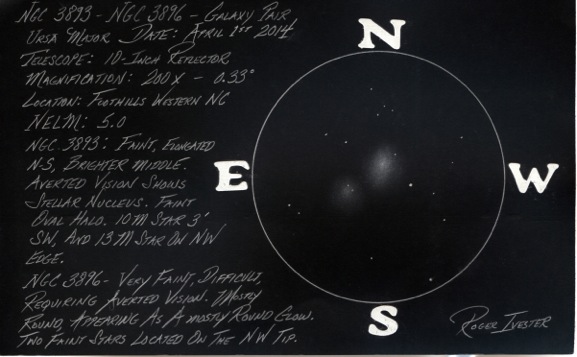
Galaxies NGC 3893 and Faint Companion NGC 3896 In Ursa Major

Posted May 29, 2014 by rogerivester
Categories: Work File Only - Observer's Challenge Reports

2014-04-08- 001


To read the full report:  Click on the following link.

APRIL 2014 OBSERVERS CHALLENGE – NGC-3893-3896


Some of my favorite snapshots From Years Past

Posted February 13, 2014 by rogerivester
Categories: Roger's Articles

Granddaughter in Red Rock Canyon, Nevada

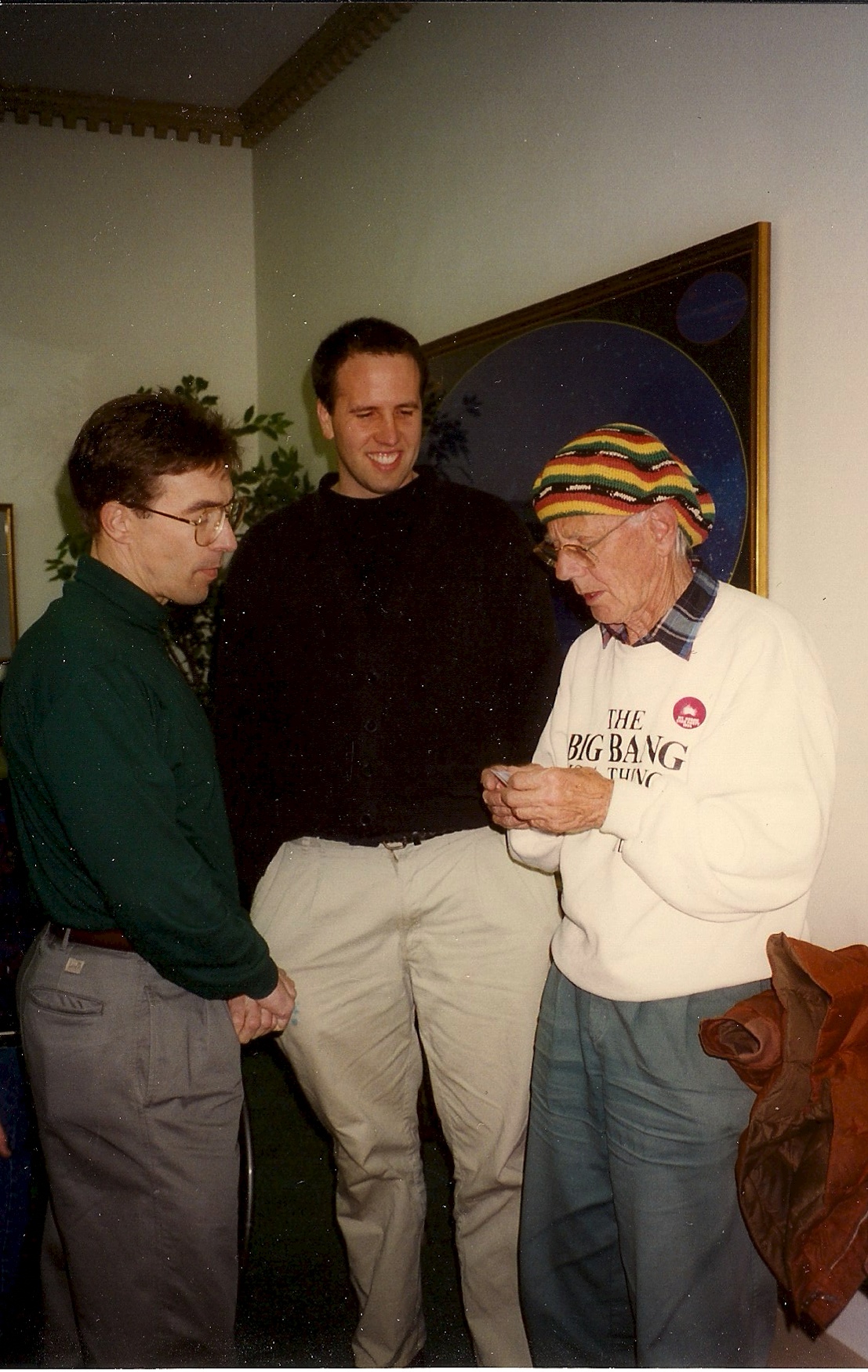
A memorable meeting with John Dobson: 

John Dobson


photo


Supernova in Galaxy M82 – Magnitude Estimates

Posted January 23, 2014 by rogerivester
Categories: Roger's Articles

Over the past…almost thirty years, I’ve always enjoyed attempting to estimate the magnitude of any supernova within reach of a moderate backyard telescope.

The following are my estimates of the most recent M82 SN: 

  • Date:  January 22nd 2014:  Telescope:  10-inch f/4.5 reflector  =  11.6 M
  • Date:  January 24th 2014:  Telescope:     3-inch f/4.0 reflector  =  11.0 M
  • Date:  January 29th 2014:  Telescope:     3-inch f/4.0 reflector  =  10.6 M
  • Date:  January 30th 2014:  Telescope:    10-inch f/4.5 reflector =  10.3 M

It was not the best of conditions, but I was able to easily observe the latest SN in galaxy, M82, in Ursa Major.  Telescopes used:  A vintage Meade 10-inch (model DS-10a) and an Orion 102mm Orion/Vixen f/9.8 refractor.   

The SN could easily be seen in the small refractor (102mm) even at low magnification, however, the best view came at 166x.  

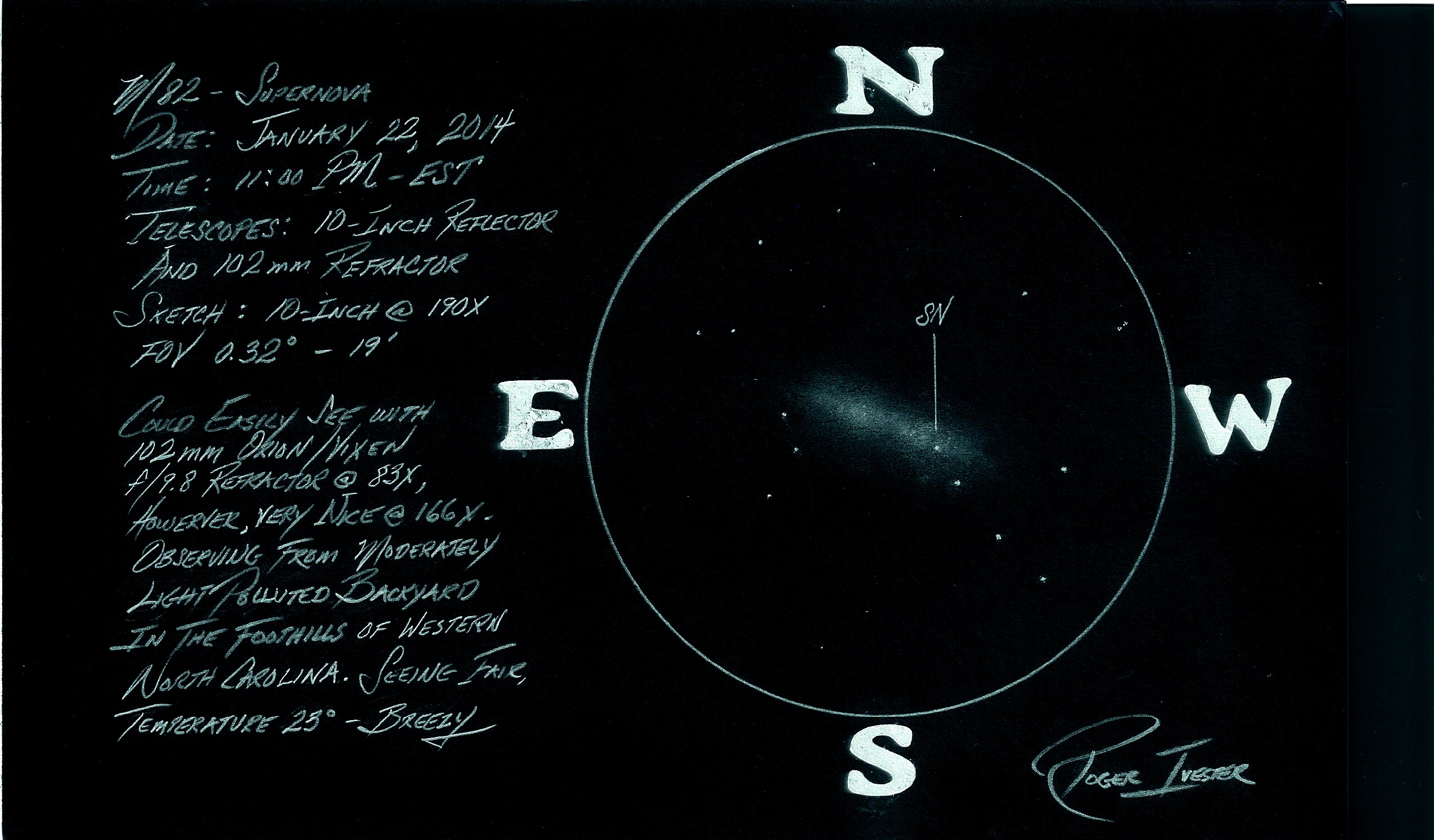
I made the following pencil sketch, using the 10-inch reflector at 190x.  Both seeing and transparency were a bit lacking, however, I was very surprised to see so much mottling in galaxy, M82.  

The following pencil sketch was made using a 10-inch reflector, on a blank 5 x 8 note card, with the colors inverted using a scanner.  

Date:  January 22nd 2014

SN in M82 Revised -1