Archive for the ‘Roger’s Articles’ category

Criterium Bike Race Brings Cyclings Best To Shelby, North Carolina

October 24, 2011

I found this picture of an annual cycling event that took place in Shelby, North Carolina from 1996 to about 2000.  It was “The Shelby Criterium” a closed looped course in the uptown area.  Mike Keeley served as director.  

The above picture is Pro Elite Cyclist, Eric Wohlberg who was riding for Saturn/Timex at the time, my wife, Debbie and myself.  Wohlberg finished second during the year pictured. His career spanned at least 20 years, and here are a only a few of his many accomplishments.  He was a three time Olympian, winner of the Tour of Gila (a stage race held in New Mexico) and eight time Canadian National Time Trial Champion.  

Eric became good friends with Mike Keeley, and would stay at Mike and Rhonda’s house when racing in the criterium.  I also became friends with Eric and would share an occasional email with him over the years.  Being a car person myself, Eric would often share photos of his progress on the restoration of a 1965 Mustang, and later a Sunbeam Tiger. 

If you’re old enough, and remember the TV series “Get Smart” you’ve probably seen a Sunbeam, as Maxwell Smart drives one up to his office, each and every episode. 

The Sunbeam Tiger was produced in England from 1964 through 1967, using a 289 cubic-inch Ford engine, and a 4-speed Ford transmission.  A very rare and desirable car for the astute and serious car collector, for sure.    

Mike Keeley and I were fortunate to have been able to take enjoyable and casual bike rides with Eric, and also share some good conversations, both on the road and off.     

Eric Wohlberg has been inducted into the Canadian Cycling Hall of Fame. 

Eddy Merckx from Belgium attended as a spectator…at least one of the Shelby Criterions: 

Merckx is considered to be the most famous cyclist of all time. He was the winner of the Tour de France five times, five Tours of Italy, one Tour of Spain, three world championships, and every major one-day race.  He also set the “one hour record” in 1972 in Mexico City.  Due to the 7,300 elevation and low oxygen content, he slept for months at night using the same level of oxygen as that of Mexico City. This was Merckx’s attempt to acclimate himself to the thin air he would encounter for his attempt at the one hour record, which he achieved.    
Beech Mountain, North Carolina: A Challenging Ride On a Bicycle

October 19, 2011

During the 1990’s:  The Tour du Pont finished two stages at the top of Beech Mountain…different years of course, with Lance Armstrong winning one of them.  This was before his cancer diagnosis, while riding for Motorola.   

Note: Later Armstrong would win the Tour de France seven consecutive times from 1999 to 2005, but was later stripped of his titles after admitting his use of performance enhancing drugs. 

Beech is the highest incorporated town east of the Mississippi at 5,500 feet and not very far from Boone and Blowing Rock, North Carolina. 

I’ve ridden my bike to the top of Beech at least fifteen or more times over the years.  The last time was 2010 with my good friend and cycling partner Mike Keeley.  

It was a late October day, and we began our ride from the Mask General Store in Valle Crucis, then taking highway 194 to Banner Elk.

While climbing the mountain the weather changed suddenly…becoming cloudy, windy and cold!   However, we were fortunate to get to the top and back down without encountering rain.

It can be difficult in selecting a day to climb Beech Mountain, especially this late in the year, as within minutes it can begin to rain, sleet or even snow.   

(Supplemental)  October 20th 2011 @ 7:41 PM:  It snowed today on Beech, and the forecast is for snow showers tonight.   roger

A New Astronomy Club Is Founded: The Cleveland County Astronomical Society, Boiling Springs, NC

October 14, 2011

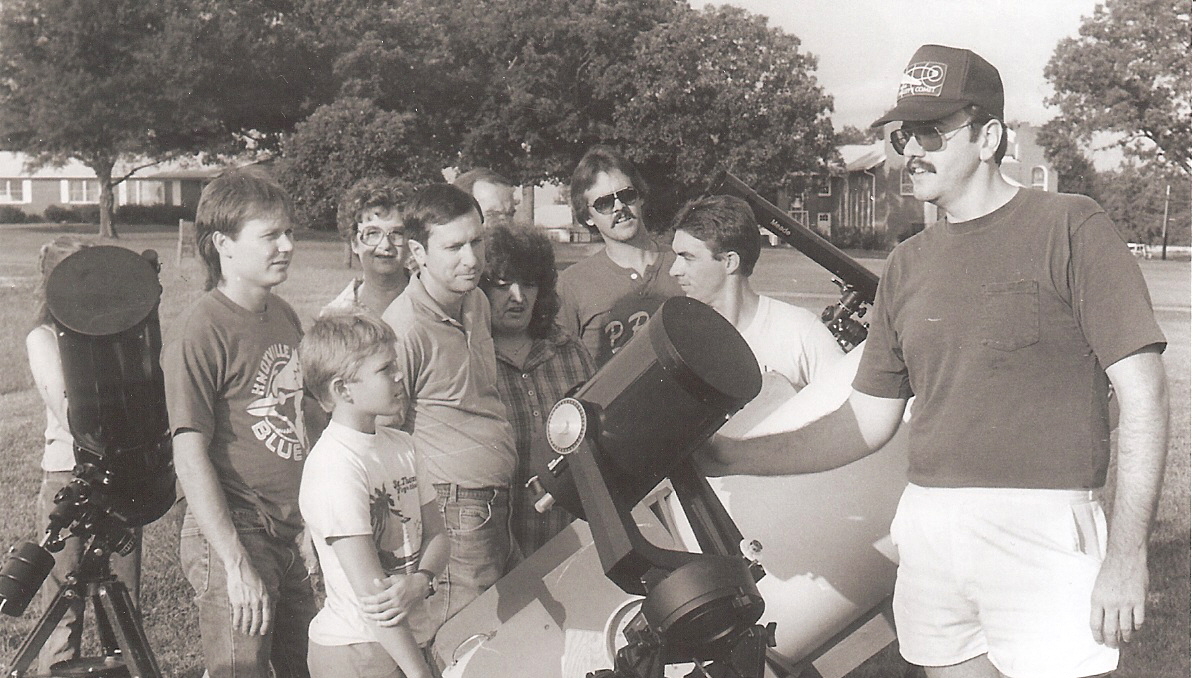
This picture was made on a weekday afternoon in the summer of 1987 at Simmons Air Field, located a few miles south of Polkville, North Carolina. The grass landing strip provided the first dark-site for club observing.

We had our meetings at that time in the basement of the Lutheran Church in Shelby, then we moved to the old courthouse, now known as the Earl Scruggs Center. 

At about this time, we had a raffle to purchase a 16-inch Meade model DS-16A Newtonian, which had been converted by the owner to a Dobsonian mount. 

I speculate that the person the club bought this telescope from…sold the massive and heavy equatorial mount, and then built a Dobsonian mount. They would then have sold the massive and heavy EQ mount, as the telescope could not be purchased as an optical tube assembly only.  And this person used the money to defray the cost of the purchase of the telescope.  (?) 

The CCAS would later sell the 16-inch OTA and Dobson mount. The story of the Meade Deep-Space series of telescopes story in the following link:

Meade Deep-Space Telescopes Manufactured From The 80’s Through The Early 1990’s

In the early 90’s, we would begin having our meetings at the Williams Observatory, on campus of Gardner-Webb University.

hpqscan0001

That’s me in the right-center, not looking at the camera.  I rode my bicycle with a T-shirt tucked in my cycling jersey back-pocket for the photo.   

The youngest guy in the picture, is my son, Brad.  He is now in his mid-40’s (2021) and lives in Nevada.   

The following photo:

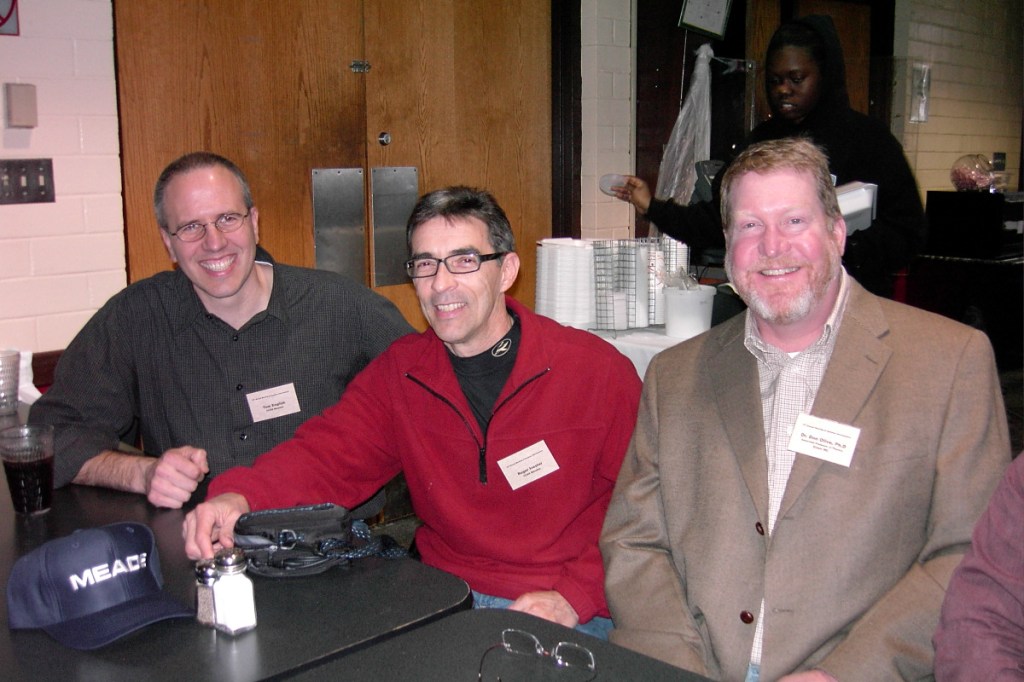
Tom English (L) myself (center) and Don Olive during one the Regional Meetings of Amateur Astronomer’s at Gardner-Webb University.  The club hosted this event for almost 25 years.


More information concerning the astronomy club as provided by Tom English: 

My first introduction to the CCAS was shortly after I was hired at Gardner-Webb College in fall 1989 (it became a University later) when G-W Biology/Geology Professor Les Brown told me that Ken Vassy had contacted him and asked him to relay to the new astronomer(me) that Ken was reviving the club and holding meetings in his classroom at Cleveland Community College.  So sometime in the fall of 1989, I went over there to meet him before I actually attended a meeting.  Ken was quite a character, and he was excited about getting the club back in business.

The original CCAS followed in the wake of Comet Halley, as did so many astronomy clubs in the U.S. in the 1980s. Paul Webb was the driving force behind the club.  When Paul moved to South Carolina, the CCAS lost its impetus, and quickly ceased operations.  With plans underway to build a campus observatory at Gardner-Webb, Ken saw an opportunity to resurrect the club. 

CCAS past presidents and officers:  (photo taken in about the mid 90’s) 

Back row left to right:  Brett Clapper, Tom English, Paul Webb:   Front row left to right:  BoB Eskridge, Ken Vassy, Roger Ivester, Tom Lorenzin, Steve Davis

Noted amateur astronomer, author of “1000 + Sky Atlas” was an honorary lifetime member of the CCAS.  Tom gained much world-wide notoriety, for recognizing Ted Komorowski, and Komorowski”s Comet, which I would later turn into a blog/site post as following:  

The Ted Komorowski Story: North Carolina Amateur Astronomer 1940-1969

And Lorenzin also coined the name the “Deer Lick Galaxy Group” recognized by both professional and amateur astronomers world-wide also: 

The Deer Lick Galaxy Group and Deerlick Gap Overlook Near Little Switzerland, North Carolina

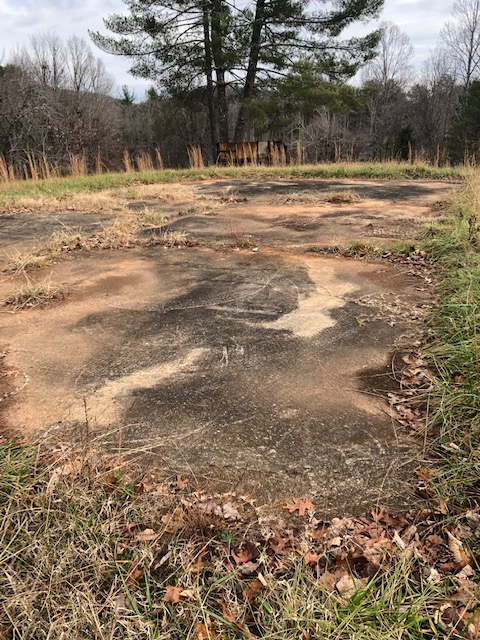
The CCAS also had a dark-site in Rutherford County in later years. It was known as the “Slab” to the astronomy community, named so, for a concrete patio…apparently from an old house, that occupied the location at one time.

Mike Price, was the owner of this property, who passed away, Friday (December 17th 2021)

Mike considered himself only the caretaker of more than 1,500 beautiful and mostly untouched acres, given the name “Lost Arrow Ranch.” It is a truly a dark-site, perfect for astronomical observations and for those seeking quiet and refuge from the modern day world.

An observing event at “Lost Arrow Ranchin 2016: Barre Spencer and myself. Barre has since passed away.

Jackie Price and Bob Eskridge

Brett Clapper, and others eating at the pavillion at “Lost Arrow Ranch”

The concrete “Slab” where we once observed from, but later moved a few hundred yards to the “Hill” which allowed for a better view of the East and Western sky.

The First “Regional Meeting Of Amateur Astronomers” Aka “BoBfest”

October 13, 2011

The first event was held on January 23rd 1993 in the Ritch Banquet Hall, on campus of Gardner-Webb University in Boiling Springs, North Carolina. There was approximately 75 amateurs attending, from local, to as far away as Tennessee, South Carolina, and Virginia. The following is a brief description of how the event got started:  

The Carolina Skygazers of Rock Hill, South Carolina held an annual astronomy event.  The purpose of this event was to allow anyone who had received a new telescope, or other astronomy equipment for Christmas, the opportunity to “show and tell.” 

Due to conflicting events, the normal meeting room at the York County Museum would not allow the regular scheduled astronomy program to take place and had to be cancelled.  

The telephone call that started it all:  

After finishing the CCAS monthly newsletter together one night, Tom English received a call from Bob Eskridge, who would inform him that the Rock Hill event was being cancelled.  There was a discussion between Tom and Bob about the possibility of the Cleveland County Astronomical Society taking over this event.  It was agreed by all concerned that the CCAS, would host a new event, titled “The Regional Meeting of Amateur Astronomers,”  also to be known as, “BoBfest.”  The meeting would include, astronomy speakers, vendors, solar observing, a swap table, and most importantly the opportunity for amateurs in the region to just get together and have a good time. 

Shortly thereafter, plans were already being made to host the “Regional Meeting  of Amateur Astronomers” at the Ritch Banquet Hall, on campus of GWU. The date was set, Saturday, January 23rd 1993, and the rest is history.  

Why “BoBfest?” (we always use an extra capital B)  Was it called “BoBfest” to honor BoB Eskridge?  (then and now, known as “The Ambassador of Astronomy” of the Southeast)…. or was it  just because Tom English and Chris Glaves liked the sound?  The truth is that they thought BoBfest sounded a bit more relaxed and fun than “The Regional Meeting.” 

Tom English did not feel like he should serve as president, but was the catalyst of the club in many ways, for a lot of years. However, Tom did become the newsletter editor.  If not for Tom, who was Professor of Astronomy and Physics at GWU at the time, we would not have had access to the Williams Observatory for our home and meetings. This allowed for stability of the club, which was critical for it’s survival in the early years.

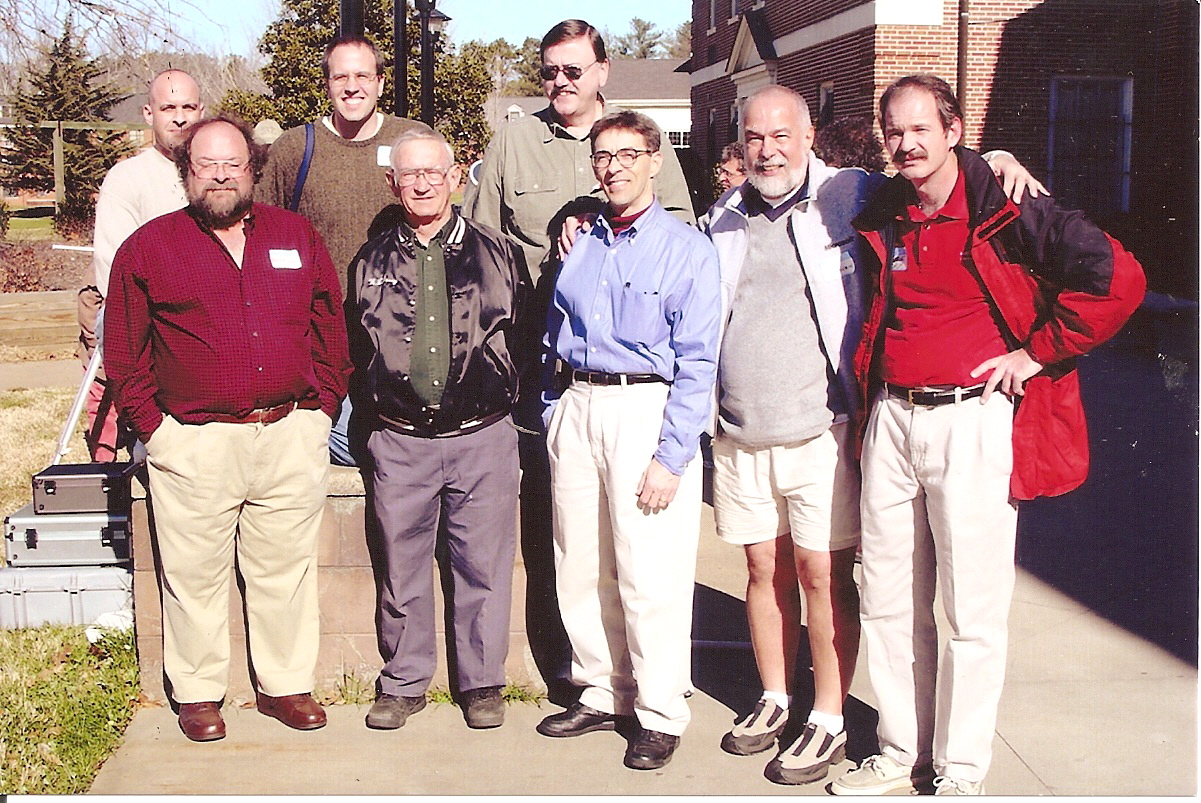
I found this nice photo of former presidents and officers of the CCAS, also Tom Lorenzin, author of 1000+ The Amateur Astronomer’s Field Guide to Deep-Sky Observing.  The picture was made in January of 2003 outside the Ritch Banquet Hall.

Back row, left to right: Brett Clapper, Tom English, Paul Webb

Front row, left to right: Bob Eskridge, Ken Vassey, Roger Ivester, Tom Lorenzin, and Steve Davis 

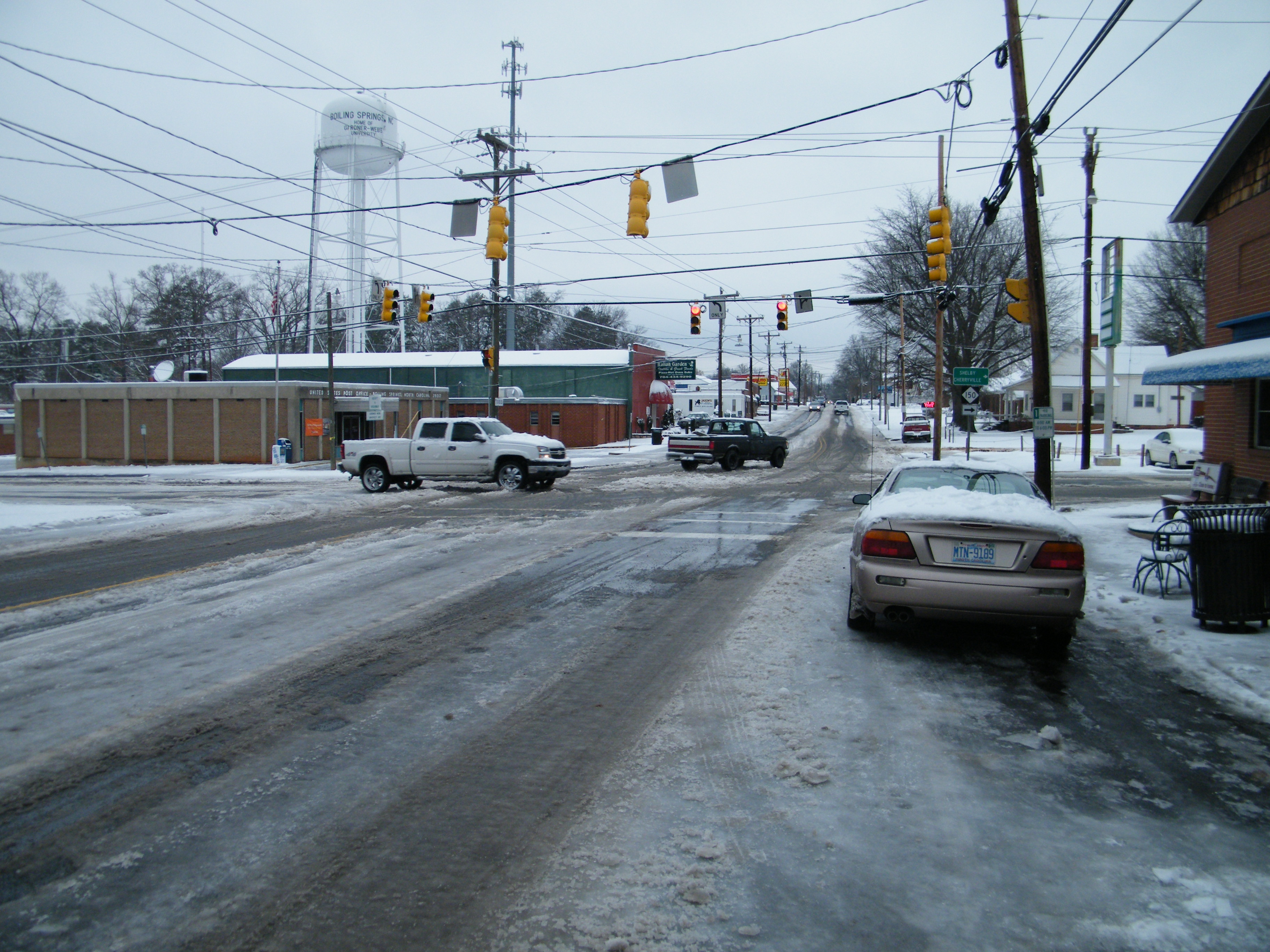
Downtown Boiling Springs, North Carolina

October 9, 2011

Click on photos to enlarge: 

DSCF0305

IMG_5015

IMG_5008


Helping Granddaughter Zoe, Drive Her Dad’s 870 John Deere Tractor in Las Vegas

October 9, 2011

Las Vegas Jan 2010 046

Zoe is a pretty good tractor driver!

A 4-Inch (102mm) Refractor Can Be An Excellent Deep-Sky Telescope And Finally Sirius B

May 23, 2010

      Walter Scott Houston, most often used a 4-inch Clark refractor for his observations of deep-sky objects while writing the monthly “Deep-Sky Wonder’s” column in “Sky & Telescope” magazine for 46 years until his death in December, 1993.    

      When Sue French picked up DSW’s, she mostly used a 105mm refractor for her deep-sky observations over her twenty years writing the column.    

        In 1992, I purchased a copy of “The Messier Album” by John Mallas and Evered Kreimer.  This book continues to be one of my favorite references concerning the Messier objects.   

       I would later purchase a copy of the “The Messier Objects” (first edition) by Stephen O’Meara, also using a 4-inch f/5 (500 mm) Genesis Televue refractor.   

      October 1997, I would purchase the 4-inch (102 mm f/9.8) refractor as following. The telescope was made in Japan by Vixen with excellent quality.  I have used the scope for double-star work, also planetary, however, it would be used mostly for galaxies, nebula and star clusters. The telescope provides for a nice velvety background with excellent contrast of faint deep-sky objects, and on nights of good seeing it will easily perform at Dawes Limit. 

photo


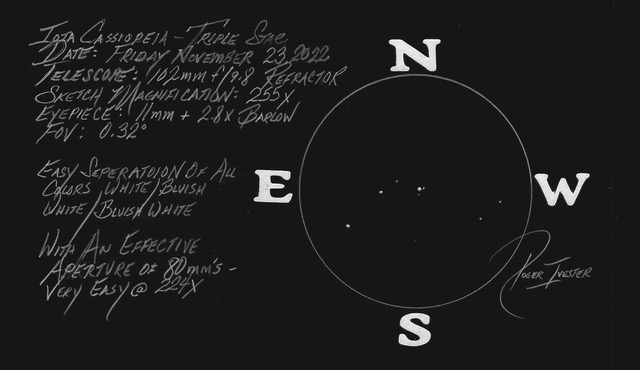
     An example of my pencil sketches as following, and seeing the beautiful triple star, Iota Cassiopeia.   

Iota Cas Roger inv


      “Finally, after more than 40 years, I was able to see Sirius B, better known as the “Pup.”  Date of observation:  March 14th 2012     

      When Sirius B was at a relatively wide separation during the 70’s, I was using a spherical mirror, 4 1/4-inch f/10 Edmund reflector.   

March 14th 2012, and using the 102mm refractor: 

      After letting the telescope cool down for at least an hour and making a few visual test…the seeing appeared very good. An attempt to see Sirius B requires being seated, at least for me.

      I adjusted my astro-chair and removed the diagonal, and started with a magnification of 83x, but to no avail.  I increased the magnification to 232x, keeping my eye perfectly still, and looking very carefully for more than an hour.  Then suddenly, a very faint speck appeared so very close to Sirius, but winking in-and-out.   

      Knowing the position-angle really helped.  However, I could not hold the companion, or Sirius B constantly.  It was extremely difficult, but after 40 years, I had finally seen the companion to Sirius.                 


My Hand-Made “Brown Betty” Teapots From England Since 1695: By Debbie Ivester

May 23, 2010

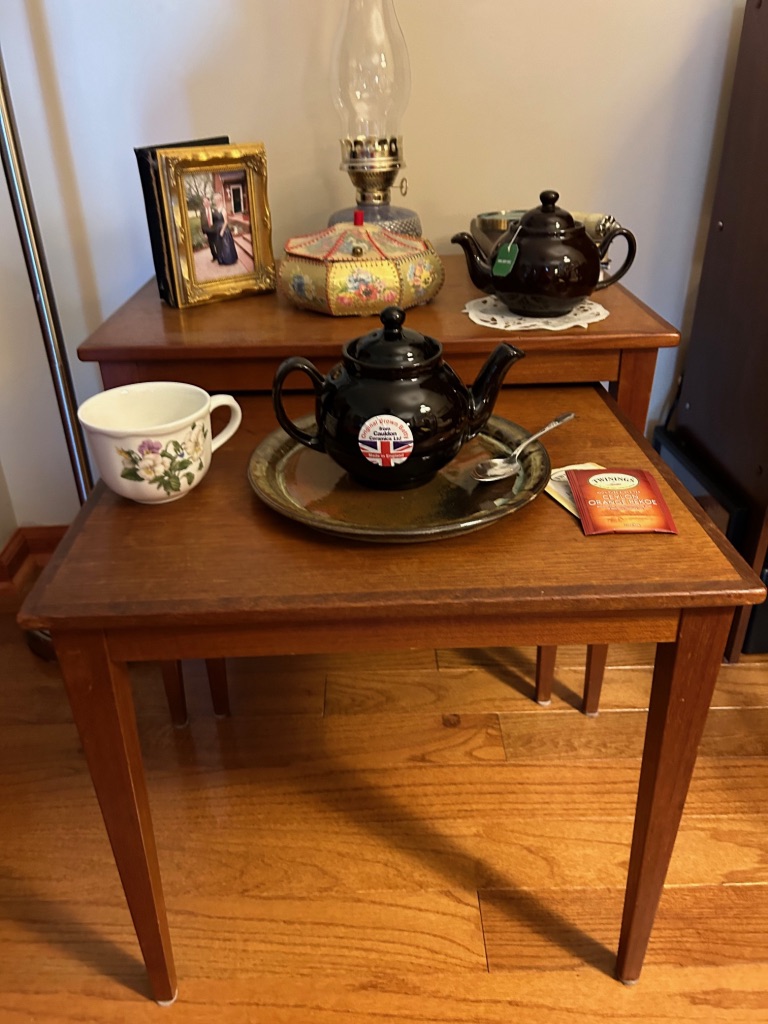
A few years ago Roger went to see our son who lives in Las Vegas, but I was not able to go. When he came home he had me a surprise…a Brown Betty Teapot. I fell in love with it, as I have always had a love for teapots. But this one is really special because I neither picked it out nor asked for it. An absolute total surprise!

This past January I began to have problems with my stomach. After awhile, I noticed it was mostly in the mornings and after I had drank my coffee. So, one day I decided I was going to have to change something in my diet so I gave up coffee and dairy products and it really helped. However, I sure missed my morning coffee so I decided to try hot tea.

And after several months, I learned to love hot tea and my stomach has really improved. I drink Arbonne Clean Tox tea with local honey and it’s delicious. Now I drink lots of different teas. On some mornings I drink tea with caffeine. But at night, Roger and I drink “Camomile, Honey and Vanilla Tea” or “Celestrial Seasonings Sleepytime” with some honey. Camomile tea has been used for thousands of years throughout the world for relaxation, sleep, upset stomach and so many other heath benefits.

I hope those of you who read my story and looked at the photos and information as following…will consider hot tea, and maybe even a “Brown Betty” teapot. Debbie Ivester

Brown Betty Facts:

Made from a special red clay found only in Staffordshire, and made exclusively in Staffordshire.

The teapot is made in a globe shape for excellent infusing of loose tea leaves.

The Rockingham glaze is lead-free.

A “Real Brown Betty Teapot” will say “Made in England” on the base. However, my newest one has it imprinted on the side also.

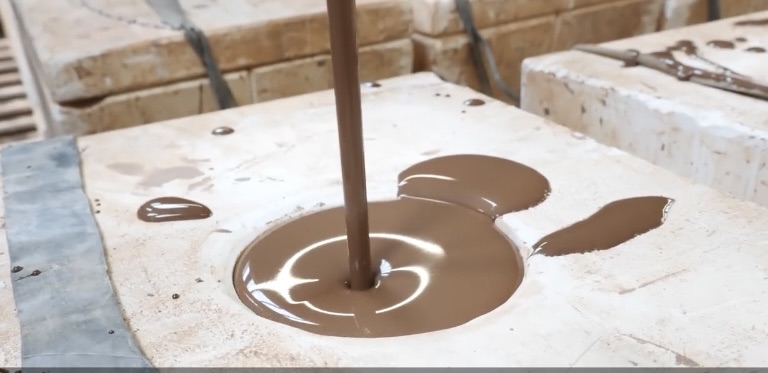
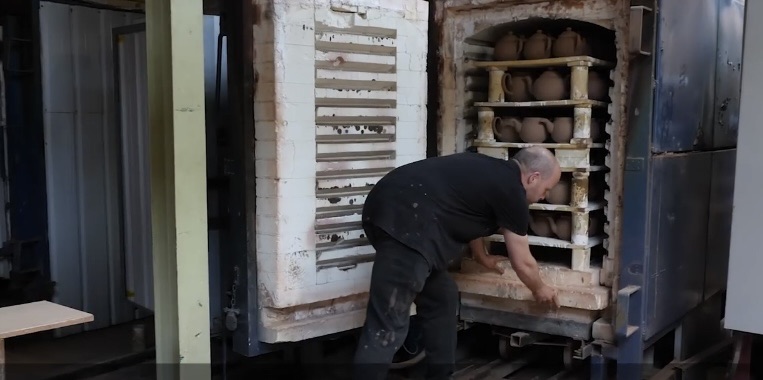
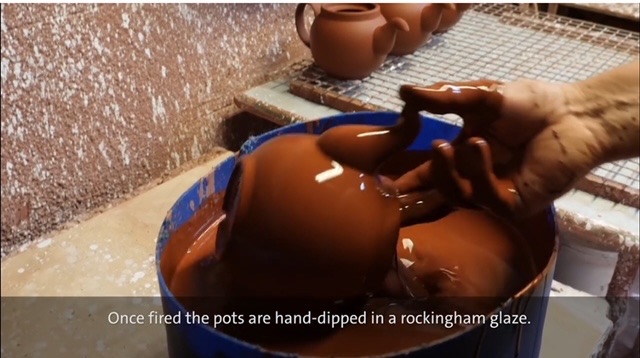
A few photos of the manufacturing process. Credit to “Victoria and Albert Museum”.

Mining the special red clay in Staffordshire, England.

Pouring in molds:

Molds are removed and left to dry, before firing:

Firing the teapots:

Hand dipped in Rockingham Glaze:

Stock Photo: Traditional Hand-Made Brown Betty Tea Pot by Cauldon Ceramics of Staffordshire, England. Exactly like my newest teapot!

Debbie Ivester