The following solar project was suggested by Tom English:
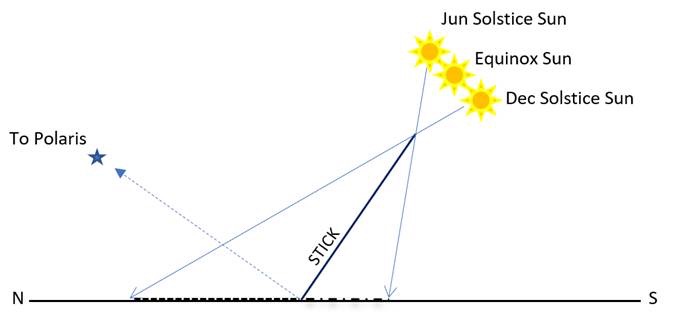
Place a straight pole into the ground, facing due south, and at an angle of 55 degrees:
Then on the two equinoxes (the first day of spring, and the first day of fall) the sun will cast no shadow, as the sun will be shining directly down the steel rod.
Note: Tom was formerly an astronomy and physics professor at Gardner-Webb University for many years, but now teaches in Greensboro. However, we still stay in touch.
During more than a decade, we spent many nights in my backyard with telescopes, enjoying observing galaxies, nebulae and star clusters. Tom would often bring an 8-inch Celestron Orange-Tube SC telescope, and we’d compare views with my 10-inch Newtonian.
The Celestron Story: https://rogerivester.com/2022/09/26/the-8-inch-orange-tube-schmidt-cassegrain-f-10-telescope-founder-tom-johnson-and-other/
So, on June 21st, 2023 (Summer Solstice) the shadow will cast its greatest extent southward, and on the Winter Solstice (December 22nd 2023) the shadow will cast its greatest extent northward on the stick.
My latitude in North Carolina: The Latitude is 35º 15 mins
So a simple calculation to determine the angle of the rod.
(90º – 35º) = 55º
Debbie using an angle finder to determine 55º.
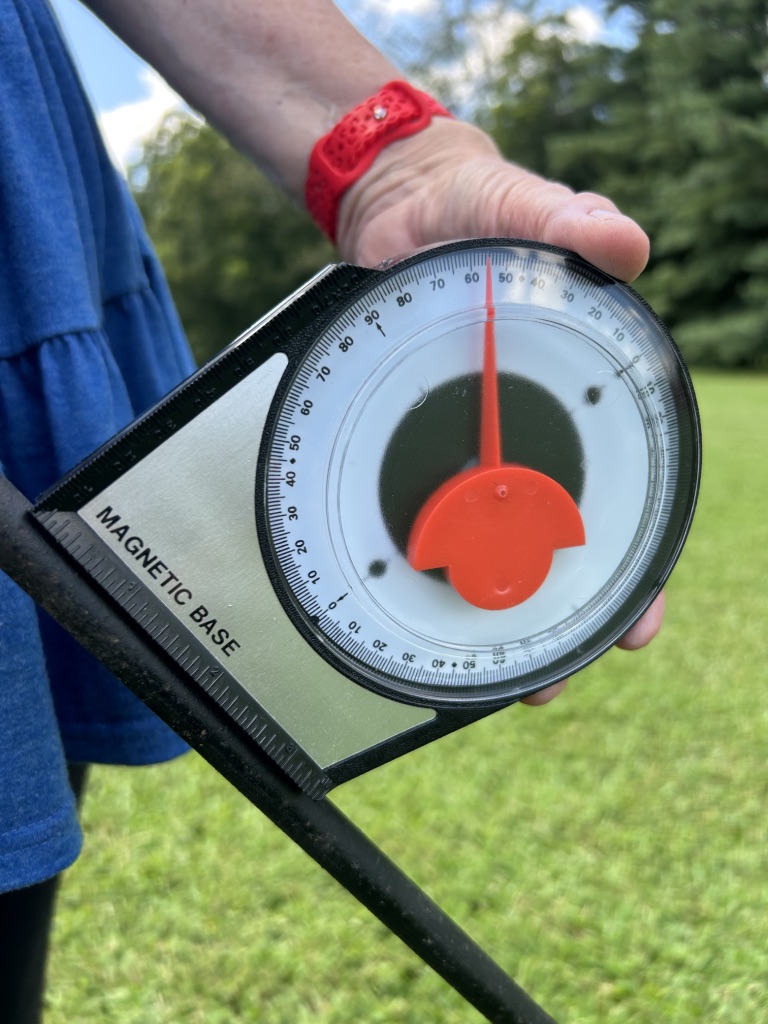
The angle of the rod is toward the South at 55º. So draw a line, with the post, going South to North.
Note the shadow: It will be increasing, each day, and getting shorter, until September 23rd, when there will be no shadow, as the sun will be “pointing directly down” the rod.
At 1:00 PM EDT, today (September 22nd) a photo was made, and indeed showing no shadow, as the sun was shining directly down the steel rod. September 22nd or 23rd…close enough.
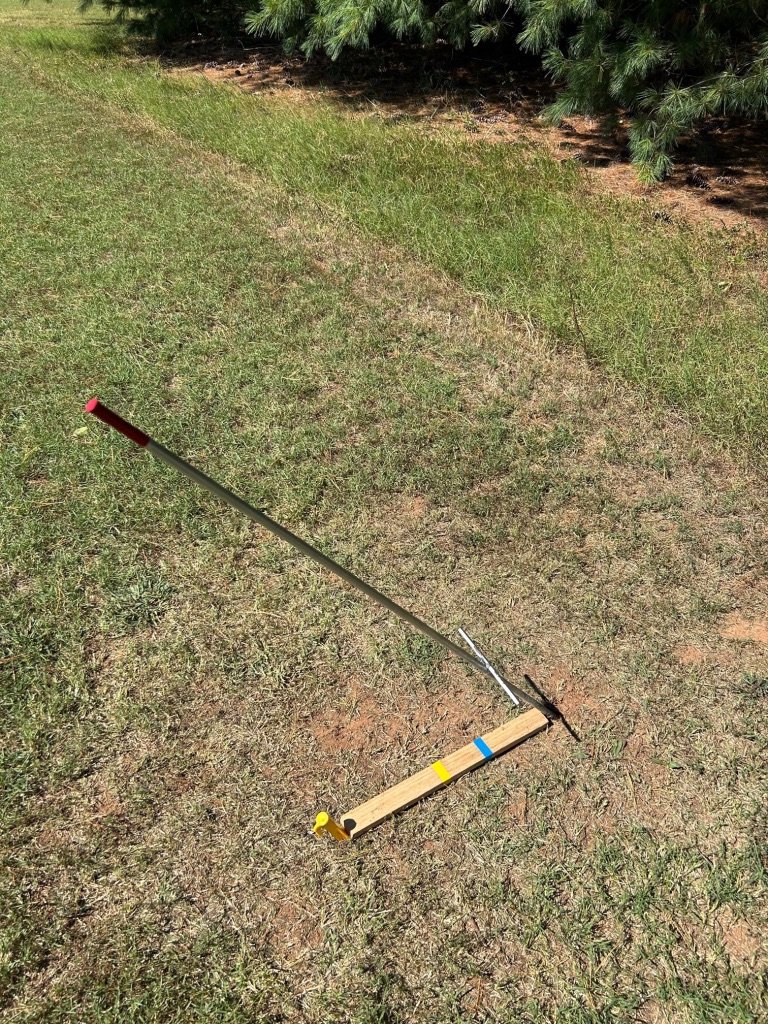
The following photo:
The yellow mark indicated the sun shadow on August 24th, and the position of the sun shadows on different days following.
The red mark was made on October 4th.
The black mark was made on October 13th 2023. Note the rapid movement of the sun heading south in less than two weeks!
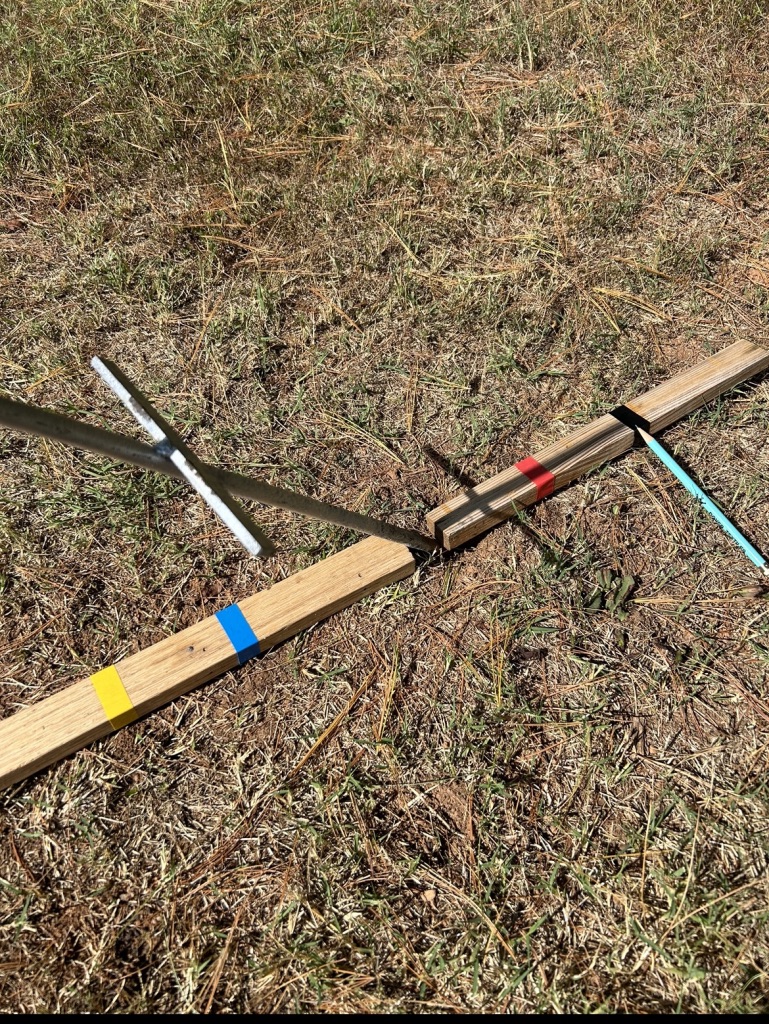
Note: The crossbar on the rod is for pushing in the ground with my foot, and nothing more.





 rogerivester.com
Recent Comments