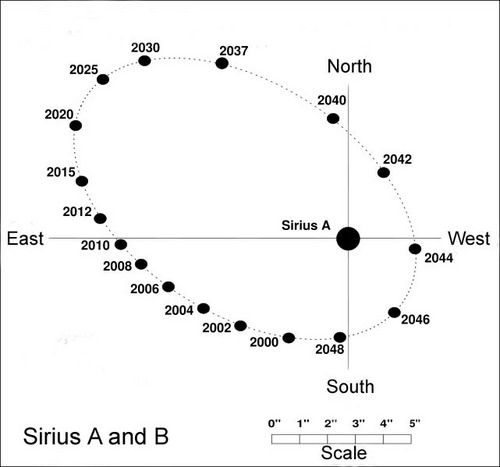
Now is the perfect time “to attempt” Sirius B: It might be easier than you think. (?)
Why an off-axis stop-down mask?
“Often the effects of poor sky stability can be countered to a certain degree. Larger aperture scopes are adversely affected by atmospheric turbulence more than smaller scopes. The cylinder of light of parallel light rays collected by an 8-inch object is subject to a larger cross section of the atmosphere than is that of a 3-inch. The greater the amplitude of of variation in air parcel boundary layers perceived by the system, the more this refractive aberration manifests itself as image wavering. “For certain deep-sky objects (notably double stars) one needs to trade light gathering ability for turbulence reduction. The aperture of the telescope can be reduced by employing a mask over the light gathering end…..” by TL
Tom Lorenzin “1000+ The Amateur Astronomer’s Field Guide to Deep-Sky Observing”
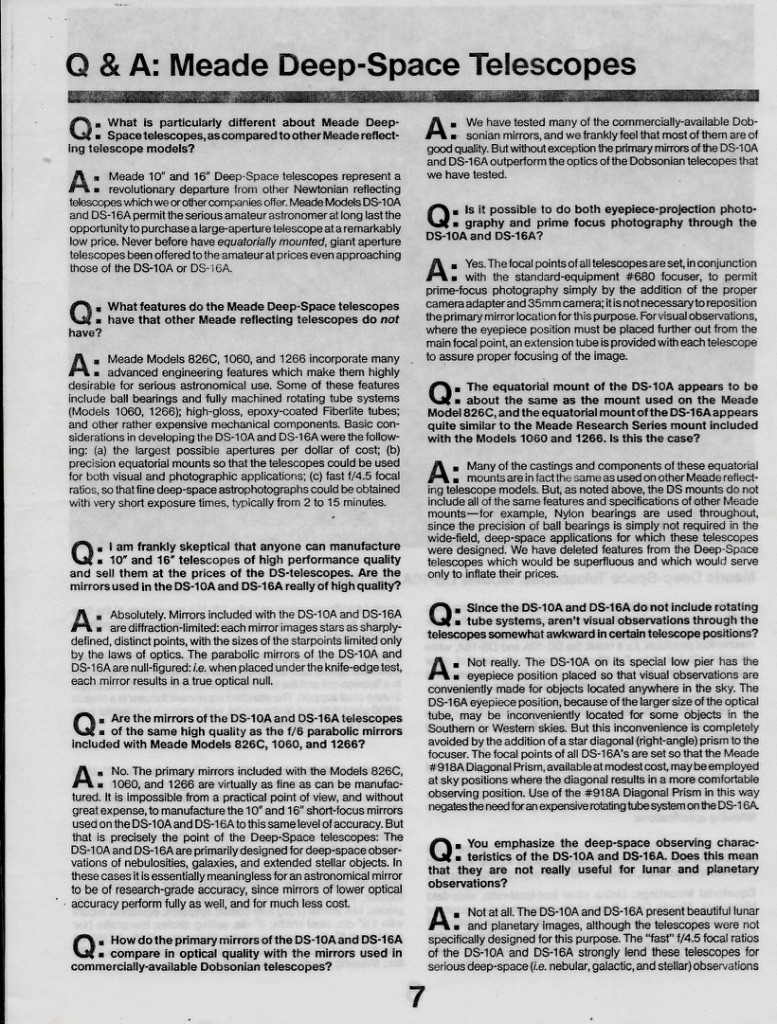
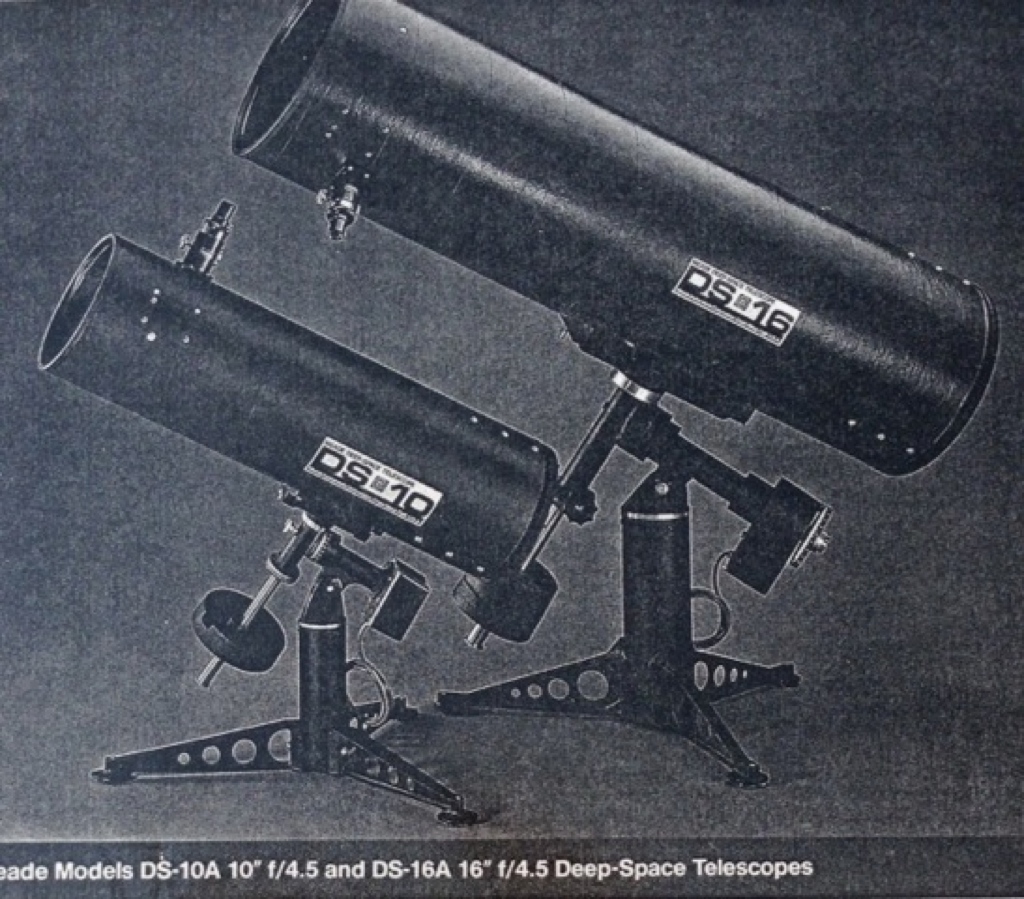
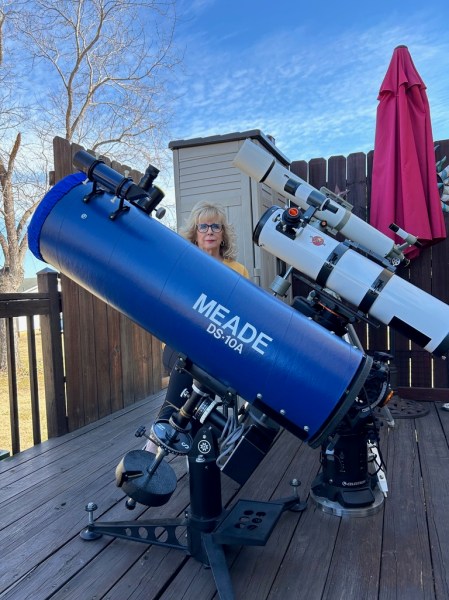
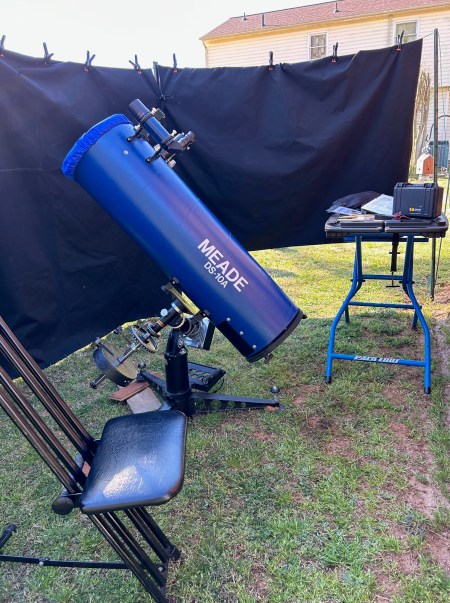
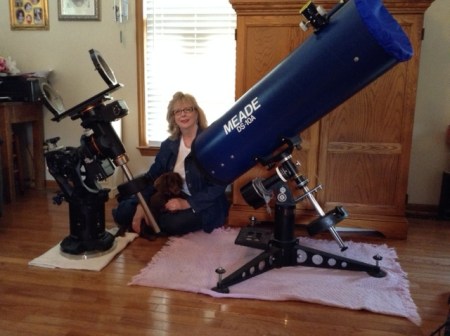
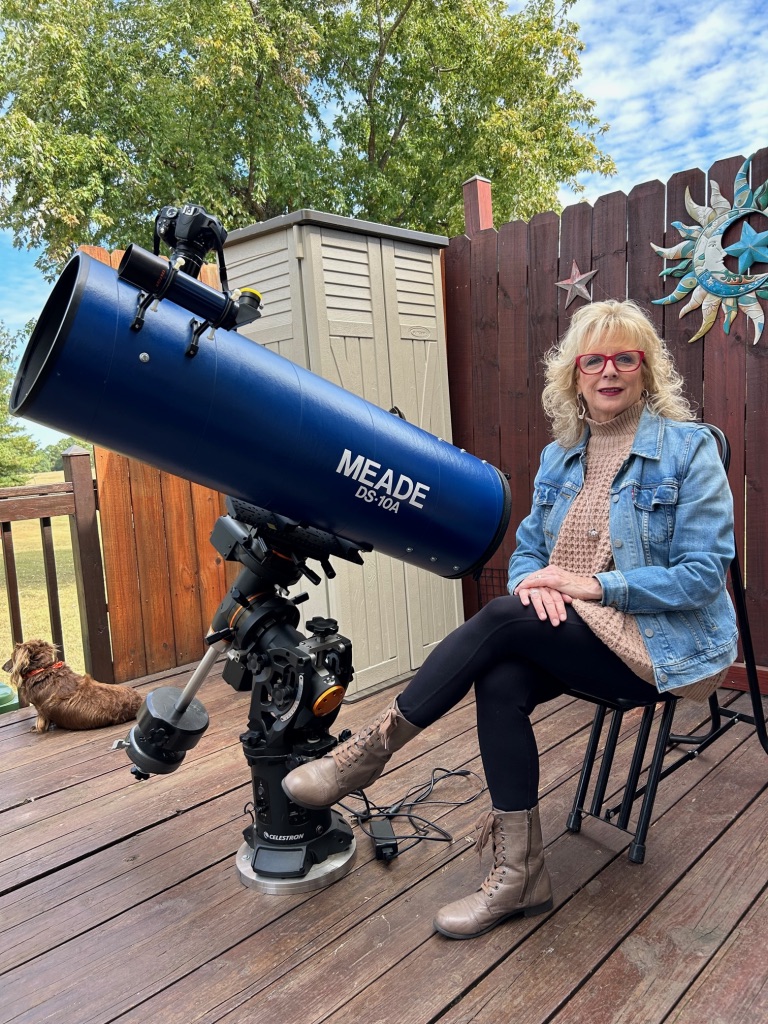
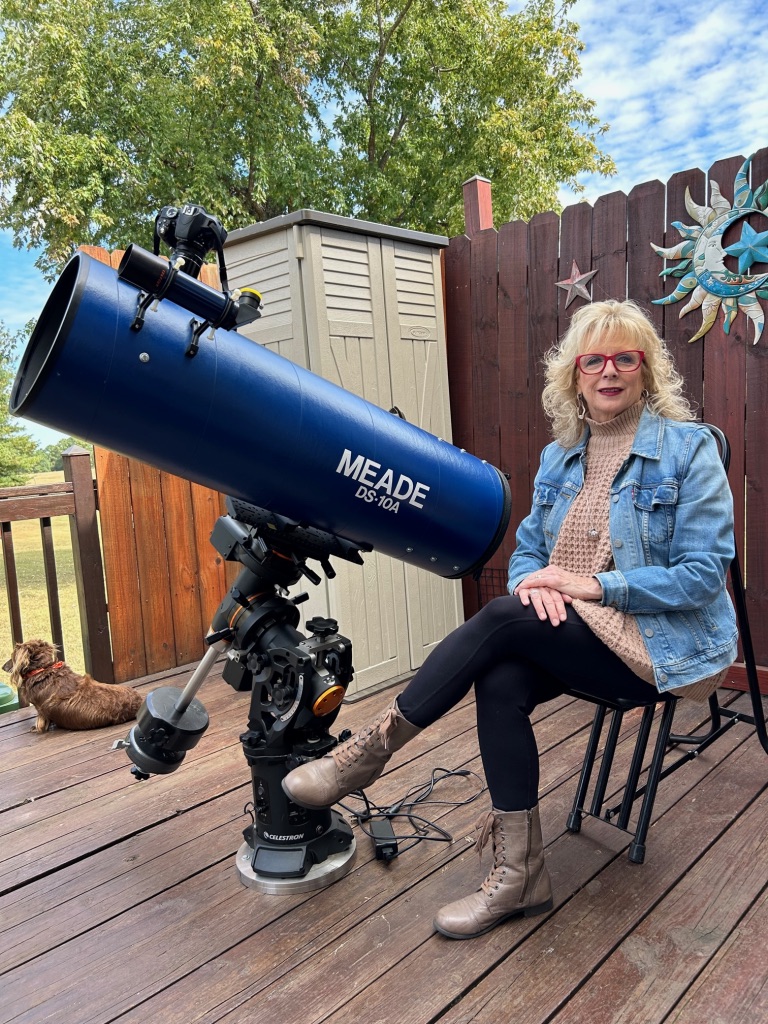
I’ve never tried or attempted to see Sirius B with a Newtonian. I was anxious to give it a try with my 10-inch f/4.5 using an off-axis stop-down mask with an effective aperture of 5.25-inches.
November 2nd 2023:
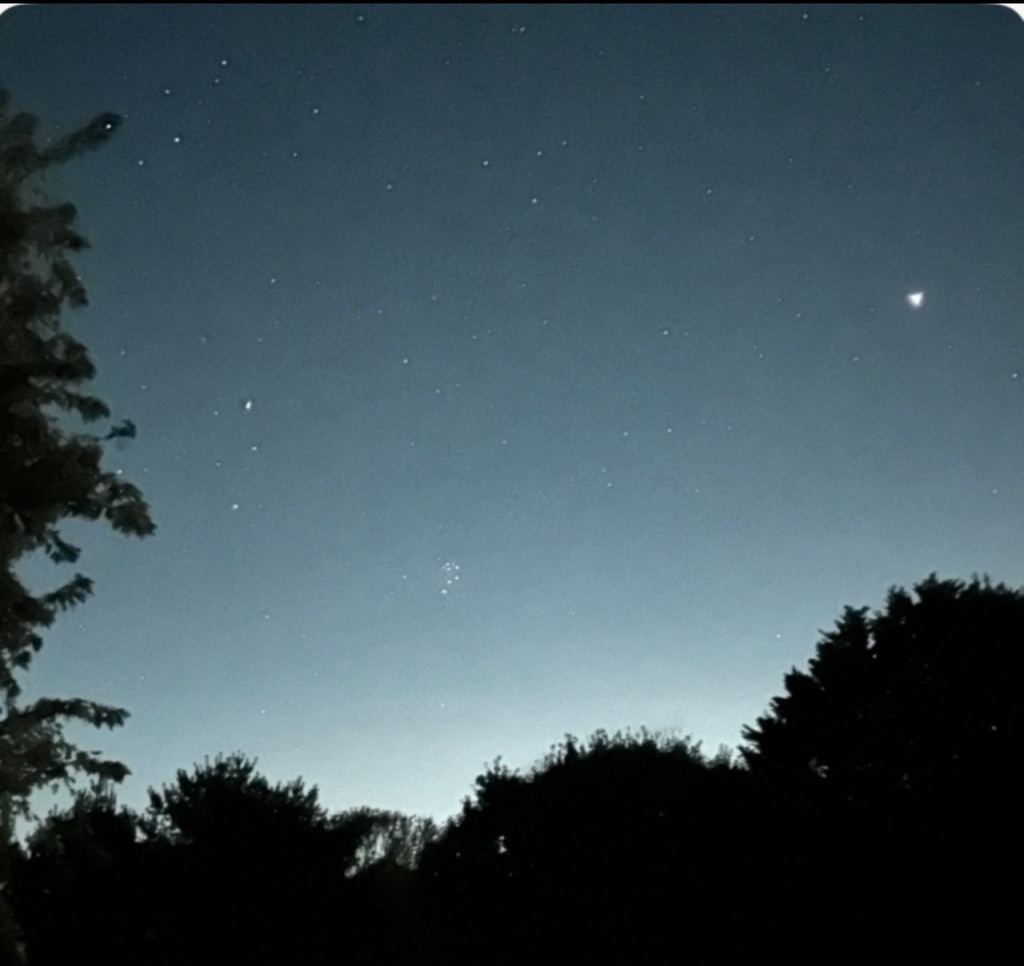
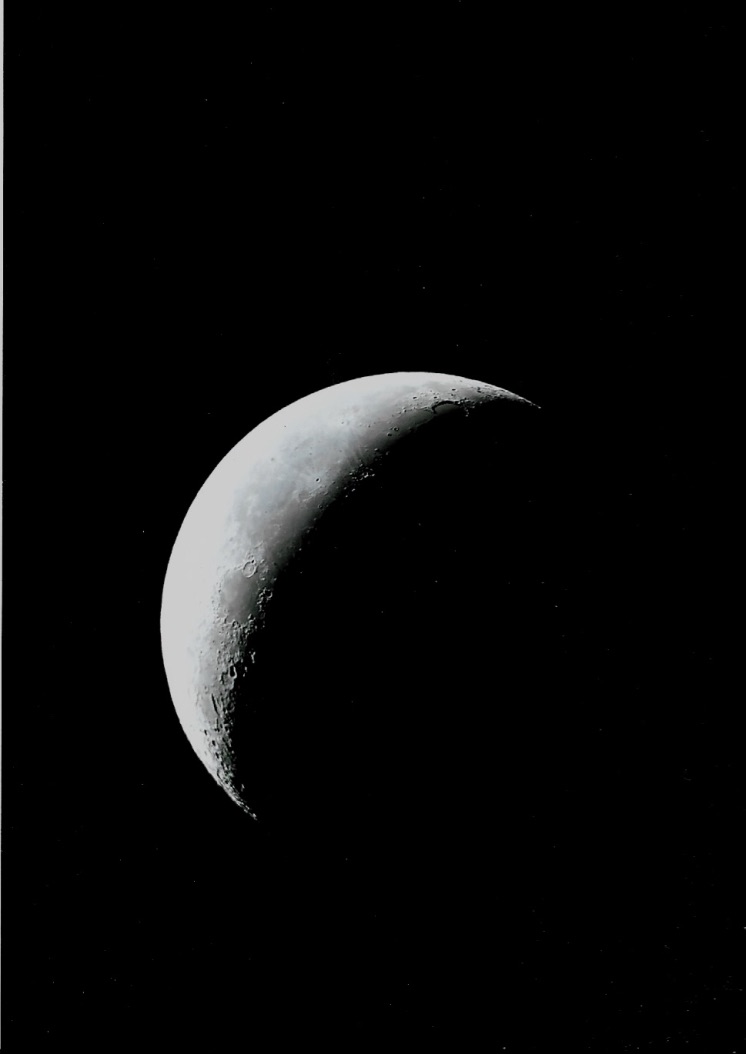
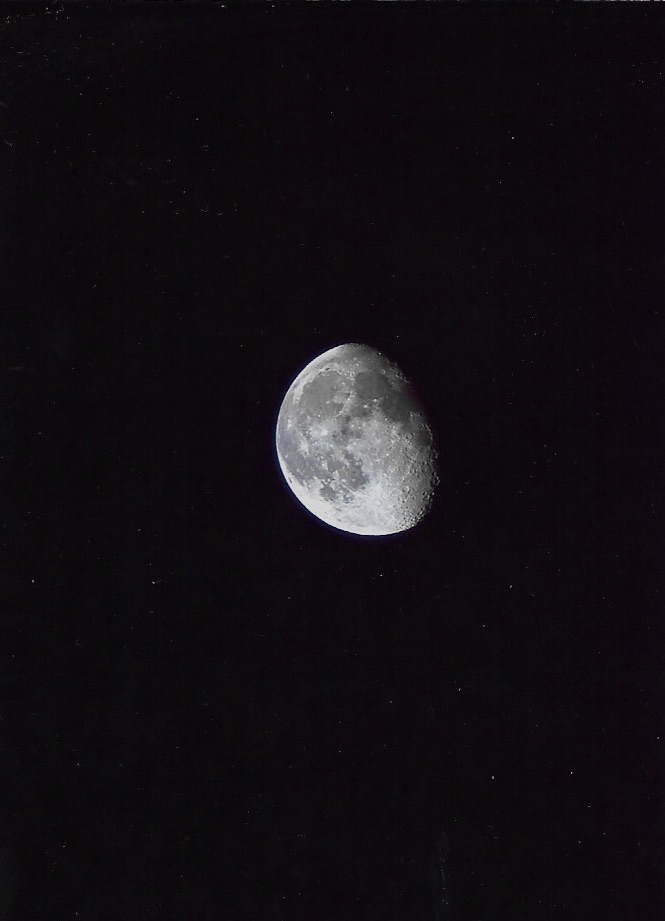
Beginning at 5:30 AM with a 3rd quarter moon and really bright. I concluded my session at 7:20; approximately 30 minutes before sunrise. I was still able to see Sirius B!
Surprisingly, I could still see the companion just as well at 7:20 AM in very “dim daylight” and still with a fairly bright moon, as when I began almost two hours earlier. This would show and prove that double stars can be enjoyed with a moon and light pollution.
I used a small plastic protractor to help me determine the position angle of Sirius B, and where to look.

My first time seeing Sirius B occurred in 2016, using a 102 mm f/8 FS fluorite Takahashi refractor in March 2016, from Lost Arrow Ranch. My good friend and astronomy associate Don Brooks of many years owns this telescope.
It was actually very easy with this telescope using direct vision. A group of six amateurs took the test.
Using the face of a clock, and all without sharing their perceived position of the companion until everyone had the opportunity to observe. When the last person completed their observation, all correctly identified the position of Sirius B.
Some were very skilled observers, but a couple or more were not, however, all could easily locate and see the companion.

Roger, thanks so much for the off-axis mask idea….wonderful.
Sirius B:
After several or should say “many” attempts I spotted Sirius B in May 2020, using averted vision. My eyes were tearing, cloth over my head and let Sirius pass through the eyepiece. However, after 45 minutes of struggle, I saw the companion.
To-Date: I have now found and seen the companion, also known as Sirius B several times, but it’s still never an easy. It is important to have a stable and clear sky, and good seeing is “absolutely critical” if you are considering taking on this task.
Interesting; I found if Sirius is in the west and after sunrise, seeing Sirius B is actually easier, which might be surprising to many. Roger Ivester, mentioned the same in his report. Magda


























 rogerivester.com
Recent Comments