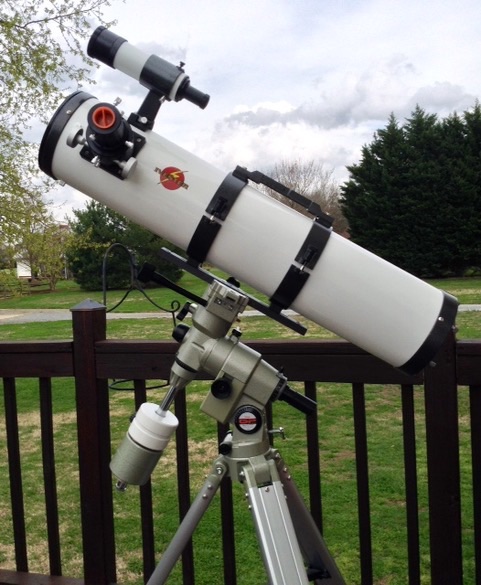
Yes, the 6-inch f/6 Newtonian in my opinion, just might be the perfect telescope for the dedicated visual observer. It’s both compact and lightweight, and even with an equatorial mount is easily manageable, and has twice the light gathering power of a 4-inch refractor.
I had a 6-inch Criterion RV-6 almost 50 years ago, but life got busy and sold it. However, I have always regretted selling that telescope. So, in 2018, I bought another 6-inch, but this time with an f/6 focal ratio. The Criterion RV-6 was an f/8. I like the f/6 much better as the optical tube is not as long, and the shorter focal length allows for wider fields of view. When emplying a 2x Barlow, the f/6 becomes an f/12 focal ratio.
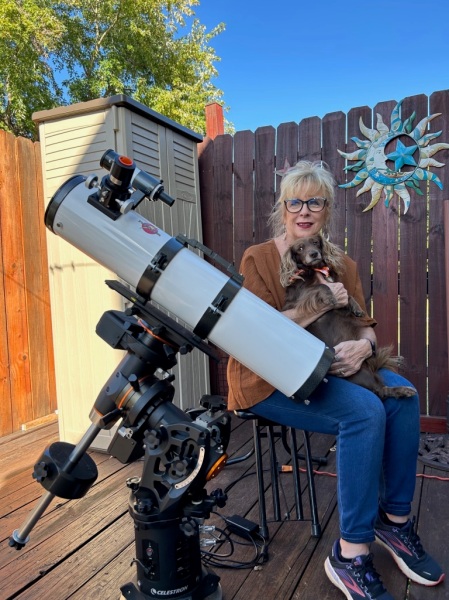
I also have a 4.5-inch f/8 Newtonian that was given to me last year (March 2025) by a friend. I like this telescope as when using, reminds me of my 4.25-inch f/10 EQ Edmund reflector. This was my first “very own” telescope, which opened the world of (serious) amateur astronomy to me in the spring of 1977.
After being a serious “visual” observer for at least 40 years and having had more than 12 telescopes, I’ve come to the conclusion: A 6-inch f/6 Newtonian just might just be the perfect amateur telescope by offering enough aperture to see thousands of deep-sky objects and with reasonable portability.
Comments:Comments Off on A 6-Inch f/6 Newtonian Just Might Be The Perfect Telescope For Visual Observing With 2x The Light Gathering Power Of A 4-Inch Refractor But Still Very Portable
Recently, we had a good friend to lose their father. I wanted to say something meaningful and not just “I’m very sorry” and nothing more. So, quite a few years ago, I had read a poem by James S. Tippett, and thought it would be very good to share with anyone who had just lost a loved one. This poem also has great meaning for all of us…to think about and contemplate from time to time. Roger Ivester
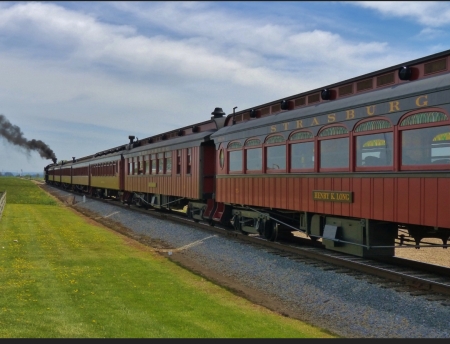
The train photo from Public Domain: Strasburg Railroad of Lancaster, Pennsylvania. And “The Train of Life” by James S. Tippett.
At birth, we board the train and meet our parents, and we believe they will always travel by our side.
As time goes by, other people will board the train; and they will be significant i.e. our siblings, friends, children, and even the love of your life.
However, at some station our parents will step down from the train, leaving us on this journey alone.
Others will step down over time and leave a permanent vacuum. Some, however, will go so unnoticed that we don’t realize they vacated their seats.
This train ride will be full of joy, sorrow, fantasy, expectations, hellos, goodbyes, and farewells.
Success consists of having a good relationship with all passengers requiring that we give the best of ourselves.
The mystery to everyone is: We do not know at which station we ourselves will step down.
So, we must live in the best way, love, forgive, and offer the best of who we are.
It is important to do this because when the time comes for us to step down and leave our seat empty, we should leave behind beautiful memories for those who will continue to travel on the train of life.
This poem was written “again” by James S. Tippett, but you might find a similar poem with variations via online.Roger Ivester
For those waiting and watching for the predicted outburst of recurrent novae star, T Corona Borealis, the excitement is building, but no one knows when the event will happen.
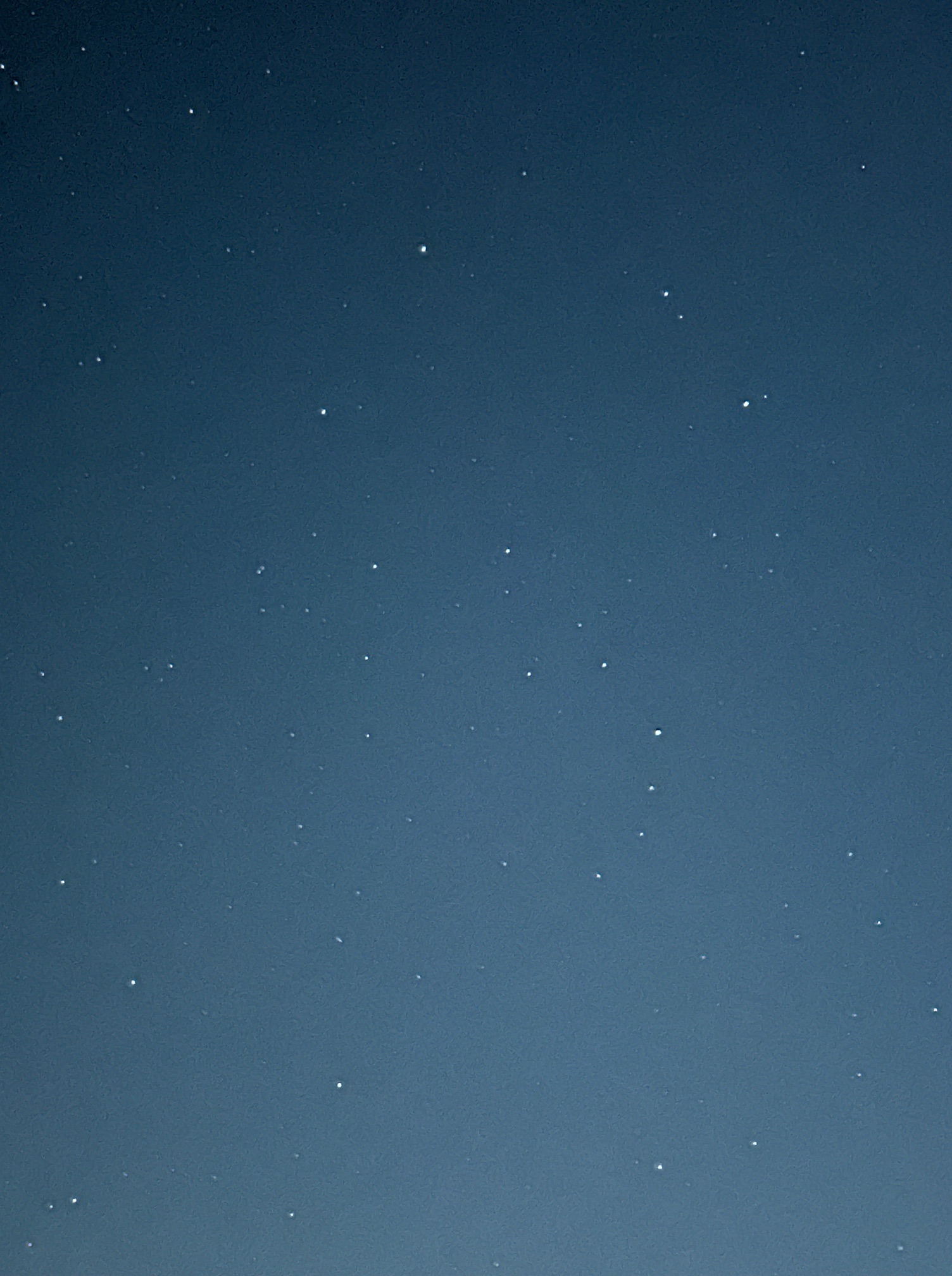
I’ve been making photos of the constellation Corona Borealis as often as possible since March (2025) using my cellphone with 3-second exposures. When the outburst “finally” occurs, there will be the appearance of a “new star” in the constellation and visible without optical aid. The outburst could become the brightest star in the constellation, possibly reach a magnitude of 2.0 or even brighter.
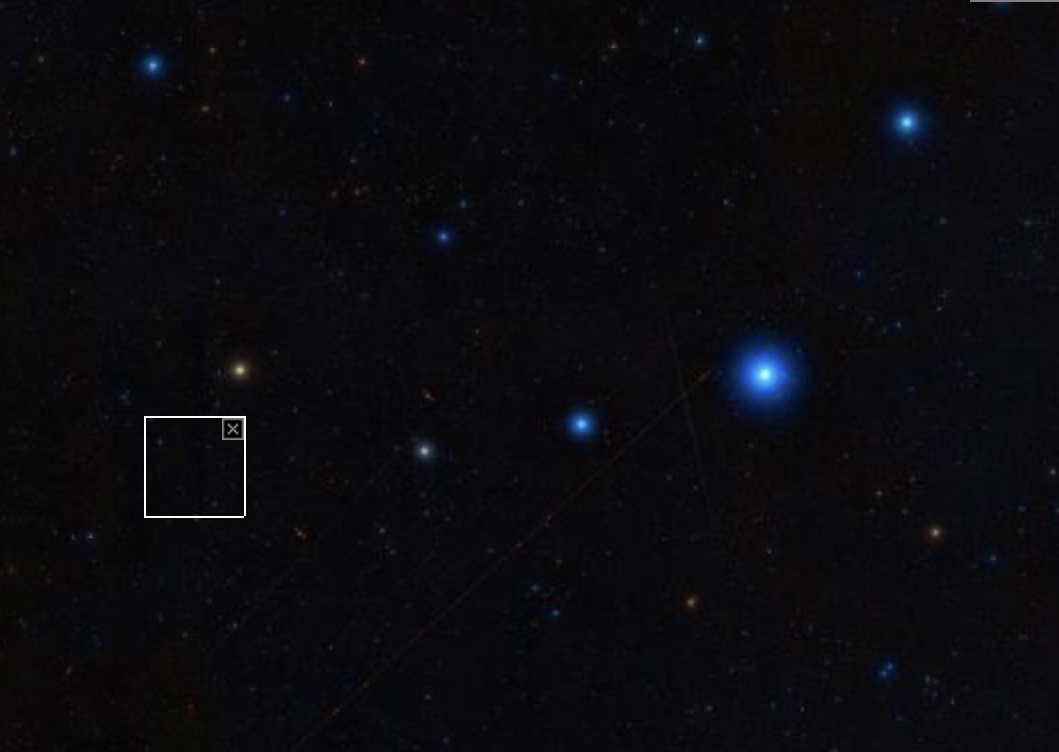
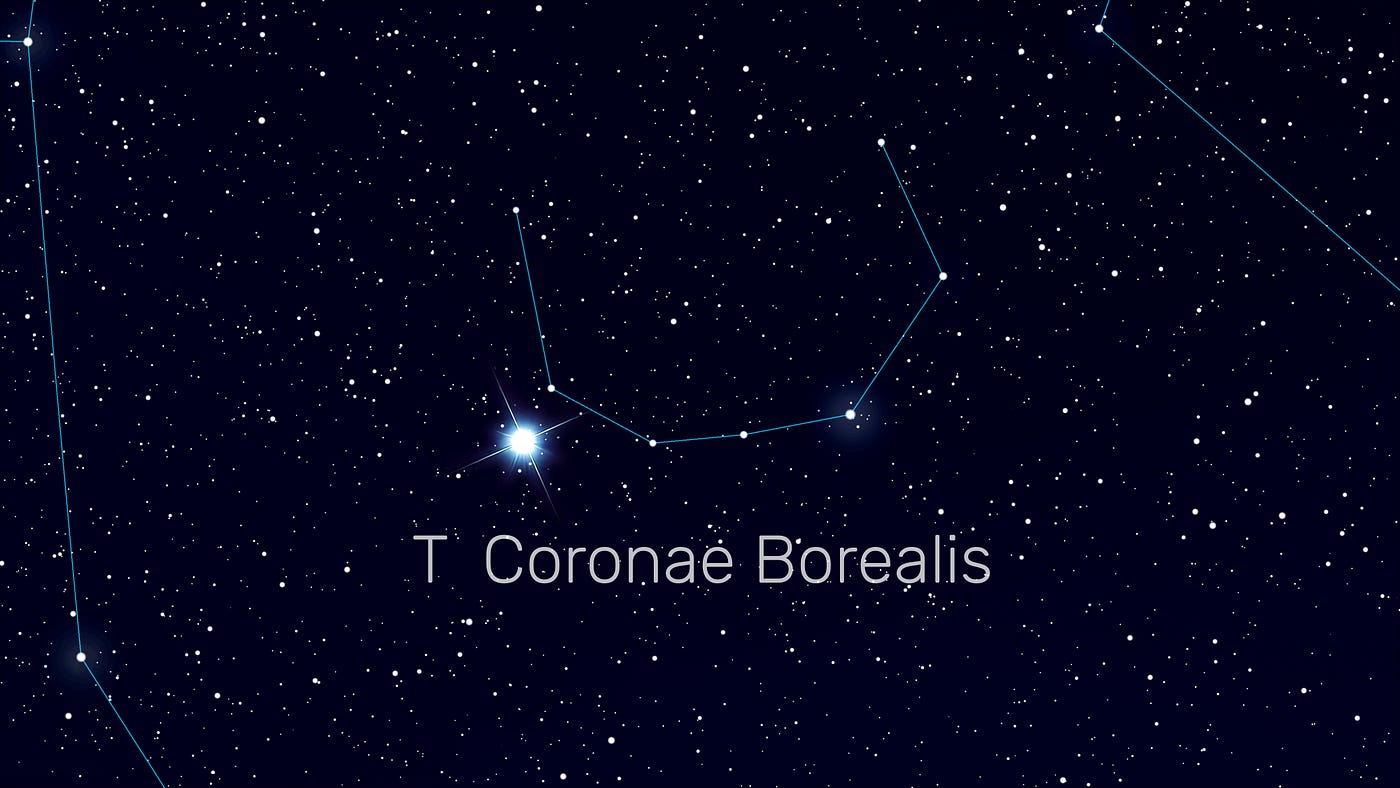
For the location of T, see the (X) inside the box, which at current or before the outburst is shinning at ~10, which is much fainter than can be seen without optical aid. Image as following and credit to wikisky.org
The following photo was made this morning…Saturday February 7th 2026 @ 2:56 AM: Corona Borealis is in perfect sky position, high in the east. The bright moon made the constellation difficult to see without optical aid.
“I alone am to blame for being remiss in my duties, nevertheless, I still have the feeling that T could have shown me more consideration. We had been friends for many years; on thousands of nights I had watched over it as it slept, and then it arose in my hour of weakness as I nodded at my post. I still am watching it but now it is with a wary eye. There is no warmth between us any more.” Leslie Peltier
The following picture is provided just for reference as to the location of T, however, not likely will it be this bright as related to other stars in the constellation, but lets keep watch.
The following excerpts are from a “Sky & Telescope” online article.
Take T Coronae Borealis (T CrB). It’s one of only about 10 stars in the entire sky classified as a recurrent nova, with two recorded outbursts to its name. Normally, the star slumbers at 10th magnitude, but on May 12, 1866, it hit the roof, reaching magnitude +2.0 and outshining every star in Corona Borealis before quickly fading back to obscurity. Eighty years later, on February 9, 1946, it sprang back to life, topping out at magnitude +3.0.
“I alone am to blame for being remiss in my duties, nevertheless, I still have the feeling that T could have shown me more consideration. We had been friends for many years; on thousands of nights I had watched over it as it slept, and then it arose in my hour of weakness as I nodded at my post. I still am watching it but now it is with a wary eye. There is no warmth between us any more.”
T stayed under the radar for the next 69 years, holding steady around magnitude +10.2–10.3. That began to change in February 2015, when it inched up to +10.0 and remained there until early February this year. That’s when things kicked into high gear with the star steadily growing brighter from late winter through early spring to reach its current magnitude of ~9.2.
Alongside the brightening trend, T’s become bluer as well. Astronomers describe its recent unprecedented activity as a star entering a “super active” state. This last happened in 1938, eight years before its last great outburst.
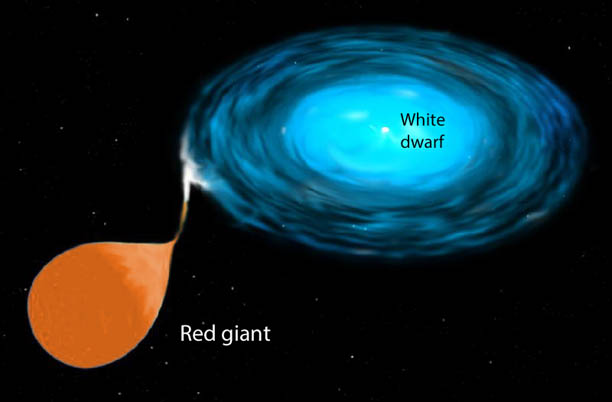
Stars like T CrB involve a red giant closely paired with a white dwarf. The giant feeds hydrogen gas into a swirling accretion disk around a massive, compact white dwarf at a rate a million times greater than the solar wind. Material funnels from the disk onto the dwarf’s surface until it ignites in a thermonuclear explosion similar to a nova. NASA

 rogerivester.com
Recent Comments