Archive for November 2025

Advantage Of A 90º RACI Telescope Finder Scope: My Favorite Is An Antares 7.5 x 50 With A Replaceable Eyepiece

November 29, 2025

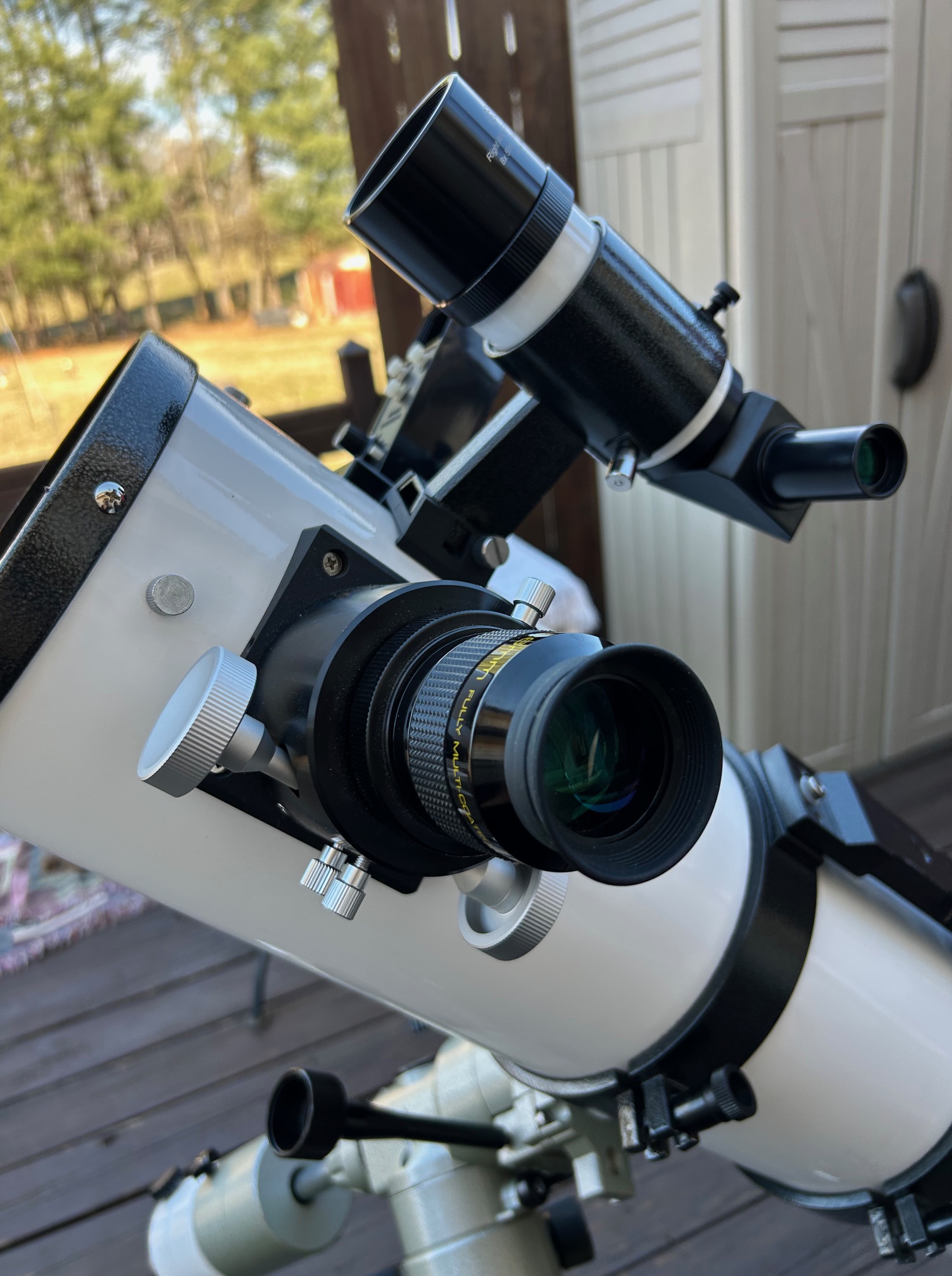
It has become almost impossible for me to now use a standard straight-through finder scope, due to the pain in my neck. Getting under a standard finder and in all types of contorted positions is just too uncomfortable. So, a 90º RACI (right angle correct image) finder is now essential.

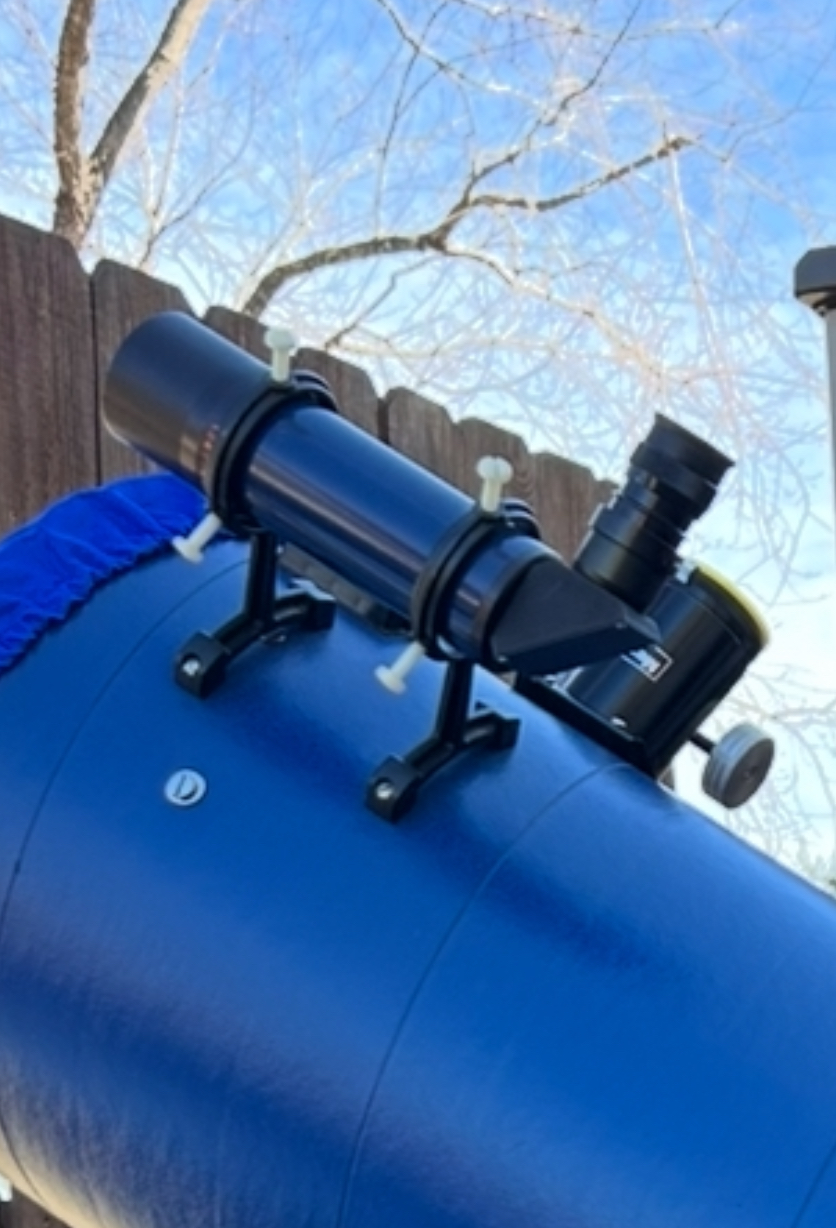
I have one 90º Antares 7.5 x 50 correct image finder (as pictured below) used with my 10-inch Newtonian, but on other telescopes I still use a standard finder.

The Antares finders have a removable eyepiece. I often replace the standard finder eyepiece with a vintage 20mm University Optics Erfle for use as a 50mm wide-field telescope.

I use a “Rigel QuikFinder” in conjunction with my magnified finders:

The Rigel makes for an excellent pointer for the telescope, as it’s much better and easier than attempting to sight along the optical tube. I have two Quikfinders and a standard base on my all my telescopes.

The Rigel finders are fairly small and lightweight…better suited for smaller telescopes than the much larger and heavier Telrad. I also like the “higher profile” of the Rigel for greater ease to sight.
Rigel QuikFinder from Agena Astro as following:

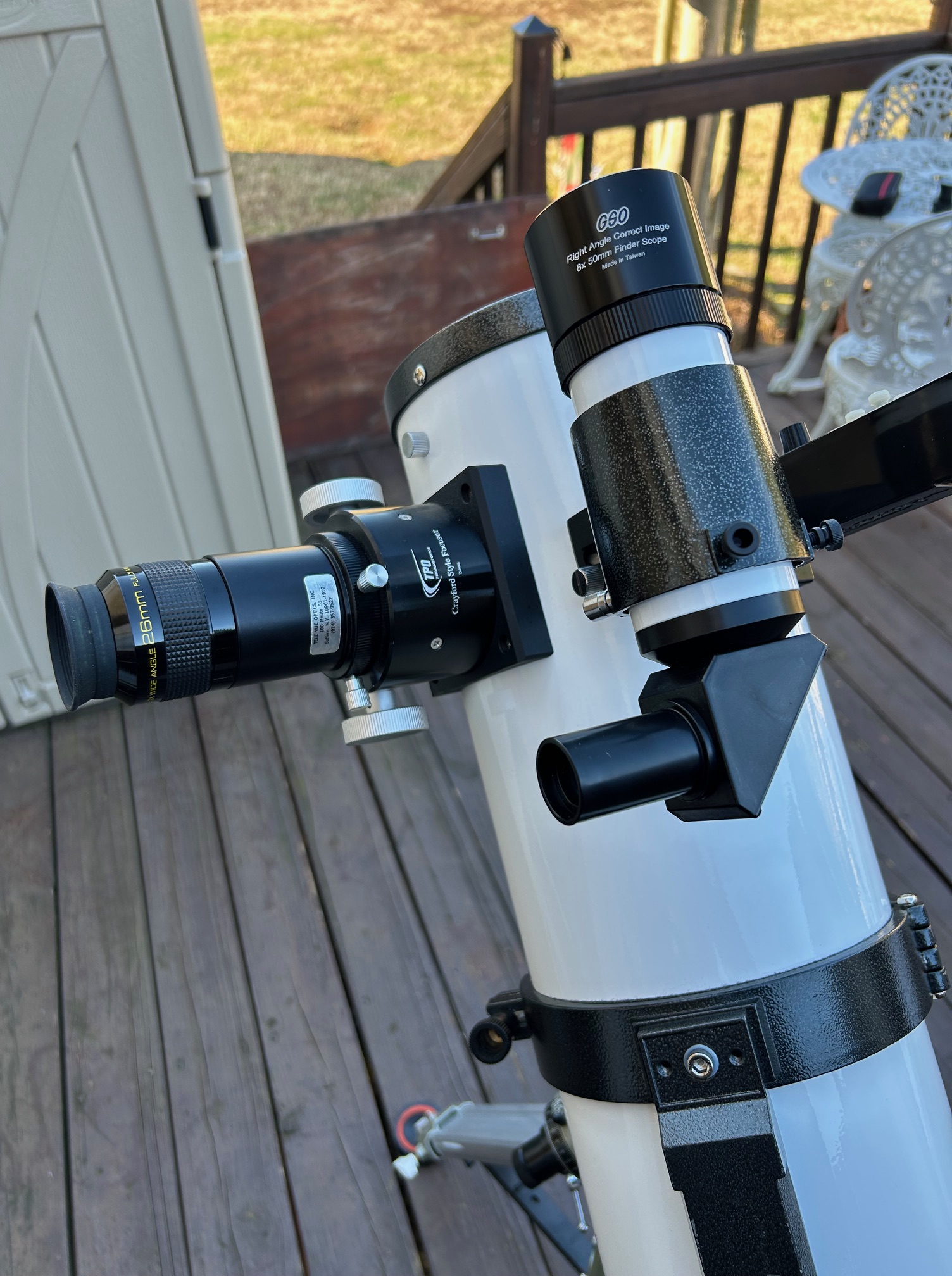
A new GSO (8 x 50 RACI finder) arrives on December 9th 2025:

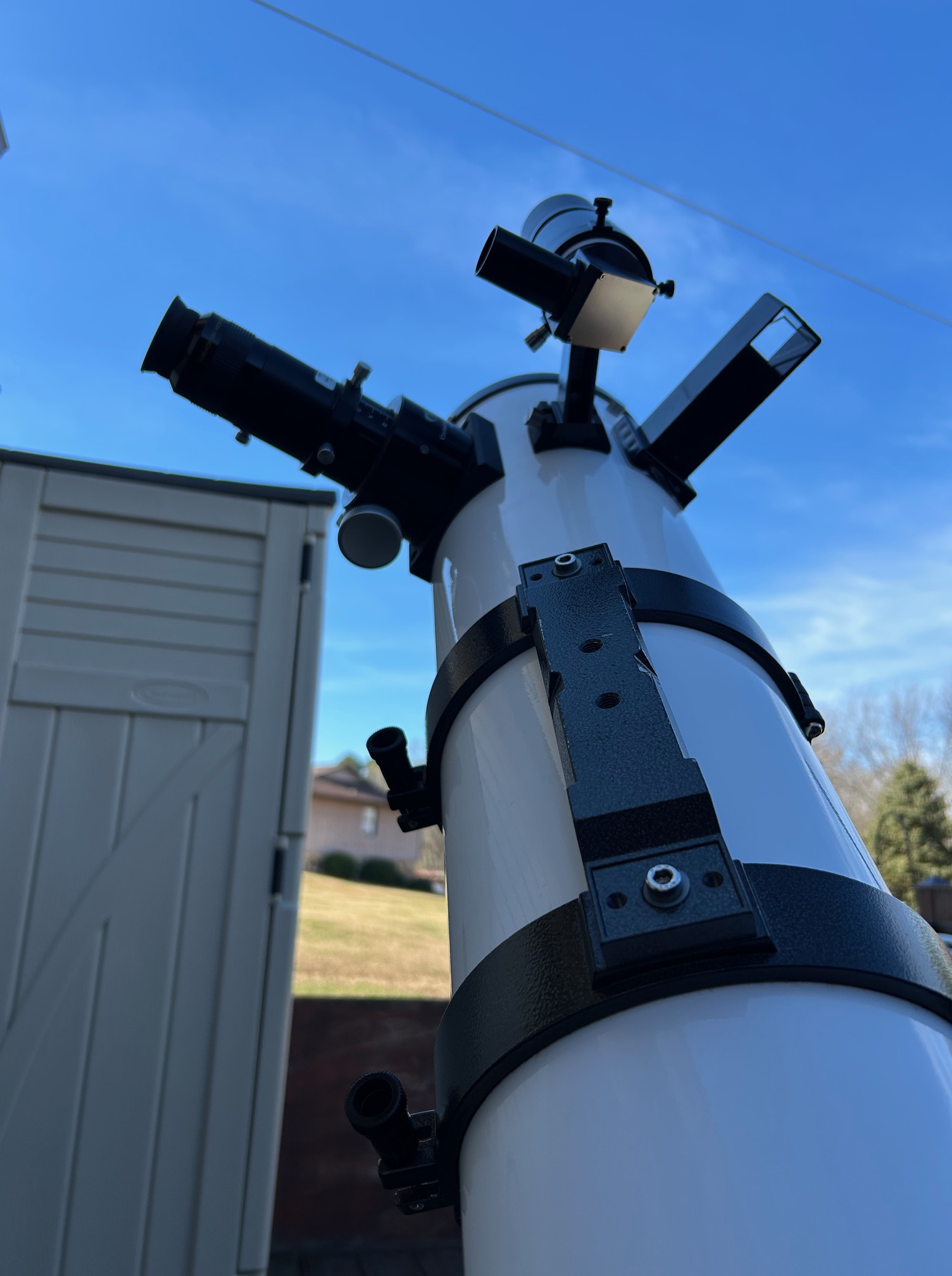
I purchased and received a 90º right angle correct image finder to replace an 8 x 50 straight-through finder.

I would have purchased another Antares finder with a removable eyepiece, but unfortunately several astronomy vendors were out of stock. And this is the time and season to observe with cold, clear and transparent nights…so no time to waste!

The quality of the Antares is superior to the GSO, but this finder is fine and will also work with my 102mm refractor or my 4.5-inch reflector. The focus must to be adjusted via the objective lens. The Antares is also adjusted with the objective lens, but the eyepiece can also be used to focus by pulling up or down for greater precision.

So, if you can wait…get the Antares finder, but a dovetail holder or (Schmidt-Cassegrain holder) must be purchased separately. (December 16, 2025)

For extremely faint deep-sky objects, of whichever telescope I’m using; a magnified finder is essential.

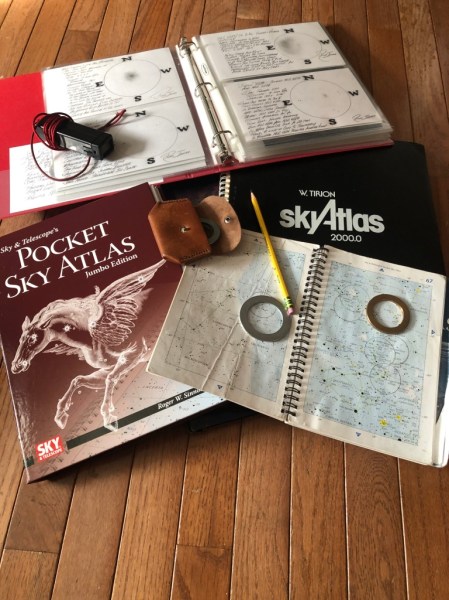
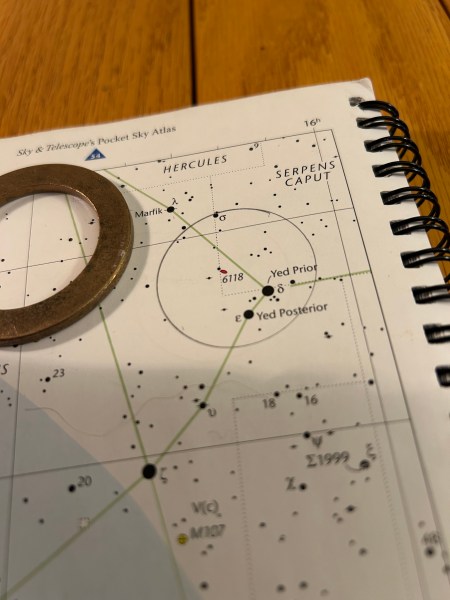
I first draw a circle on my atlas before going out with the same degree field as my finder. I then attempt to point the magnified finder to match that of my star atlas, with the deep-sky object in the center of the circle.

If the desired object is a very faint low-surface-brightness, such as galaxy NGC 6118…it can be very difficult using a star atlas and comfort is important.

Consider the following atlas page and circle, despite being so close to bright stars: Yed Prior and Yed Posterior the galaxy was invisible. I used the faint single star just to the north of the galaxy and it could not be seen. I spent hours on this galaxy over many observing sessions and seasons, attempting to see the galaxy. However, during moments of perfect seeing “I saw the galaxy” with averted vision, but not constant and only intermittently.

NGC 6118 is considered by most all amateur astronomers to be the most difficult object in the Herschel-400 list.
My suburban backyard is now averaging a naked-eye limiting magnitude of ~4.8 on my best nights, which is pretty bright; making very faint deep-sky objects difficult to find.

Patience and comfort is important when star-hoping to those very faint deep-sky objects…and as for me, a 90º RACI finder is now essential.

December 14, 2025

An Excellent Telescope For Beginners Or The Most Experienced With Portability And A GoTo Mount: I’ve Also Included A Couple Excellent Dobsonian’s

November 26, 2025

I’ve always liked or preferred a Newtonian for their simplicity and without the “mirror image” eyepiece view, as compared to a Schmidt-Cassegrain or Maksutov. I’m a visual observer and pencil sketcher, so I want my notes and sketches to present deep-sky objects with the ‘”cardinal points being scientifically correct” as they truly appear in the sky.

However, I use an amici diagonal (for a correct view) with my 102mm refractor and can use it with a Schmidt-Cassegrain also.

A 130mm (5.1-inch) Celestron Newtonian telescope with a computerized mount is capable of showing many deep-sky objects the first night out. No experience required…only reading the instruction manual and entering some basic information into the hand controller.

This telescope can be purchased from a variety of vendors for about $600, and is also sold under different names.

Newsflash! After careful review of other telescopes, I’ve picked a better value telescope for only $269 more than the 130mm 5.1-inch.

A much more professional quality telescope, mount and computer. This is a “lifetime” worthy telescope! So read on…

For those wanting a more precision mount with a higher quality telescope: The (NexStar 5SE) is a good deal; or a better deal. Yes, this is a lifetime “keeper” telescope for only $269 more than the 130mm Newtonian.

This telescope (Celestron NexStar) has a heavier and better quality mount and computer drive, which is the same as used on their 8-inch SC scope. After careful consideration, I now believe that the NexStar 5SE is a much better buy than the 130mm Newtonian.

Many say a 6 or 8-inch Dobsonian would be a better buy, but they require knowledge of the night sky. A telescope with a computerized mount allows the new amateur to see many deep-sky objects the very first night.

There is always time to purchase that 20-inch Dobsonian, but make sure you know just how large this telescope is before you make that purchase!

For those of us that have been amateurs for decades, we know that our “first telescope purchase” is just the beginning, with many more telescopes to follow. And if you decide that amateur astronomy is not your thing…there is always a need to have a telescope: This might include checking out a lunar eclipse, the rings of Saturn, Andromeda galaxy, the polar ice cap of Mars or even looking at the moon.

The value of a GoTo mount:

The most difficult part for the beginning amateur astronomer is locating and finding deep-sky objects, and I say this from experience. I remember being 12 years old, using my brothers 60mm refractor and wanting to see some of the beautiful and dazzling deep-sky objects, I’d seen in my 6th grade science book. I would have to settle for the moon, as it was pretty easy to find. 🙂

I didn’t have a star atlas at that time, but wouldn’t have known how to use it. I’m just glad I stuck with it as one day I would learn enough to become a real amateur astronomer. My “mostly astronomy” blog site as following:

https://rogerivester.com

By popular demand…I’ve included a 6-inch Dobsonian for $449.00 and an 8-inch for $629 as excellent first telescopes. The following telescopes are sold by Astronomics, but similar versions can be purchased from most any astronomy vendor.

The 61 Finest Double And Red Stars: From The Finest Deep-Sky Objects By James Mullaney And Wallace McCall

November 19, 2025

“On Public Nights at Allegheny Observatory, when the dome of the 13-inch refractor is crowded with visitors, all anxious to look at everything in the sky, a handy finding list of impressive objects is invaluable.”

” These words prefaced our short list of celestial showpieces published in the December, 1962, issue of “Sky and Telescope.” We now present an expanded version….” James Mullaney and Wallace McCall

I’ve been wanting to compile an observing list of “only double and red stars” using a 4-inch or smaller telescope. I wanted a fairly short list that would allow for a more casual approach and to bring back memories from my earlier days as an amateur. I’m also anxious to begin observing double and red stars again, which are perfect targets for suburban observers, as light pollution and a bright moon has little effect on these objects.

From February 2009 until June 2024, the Observer’s Challenge report consumed most of my time as related to observing. The report began in Las Vegas with Fred Rayworth, but the last five years were with Sue French.

The original objective was to promote visual observing, notes and pencil sketching, but with so few visual observers it became more imaging. It’s my opinion, based on my experiences, and with many astronomy clubs over the past 30 years, pencil sketching is “pretty much” nil or naught in amateur astronomy these days or currently.

The “Finest Deep-Sky Objects” was one of my very first deep-sky reference books, which makes this effort special. The FDSO’s contains 57 double and multiple stars, 4 red stars, 10 open and 11 globular clusters, 12 planetary nebulae, 3 diffuse nebulae, and 8 galaxies.

For this project, I will use only the 57 double/multiples and the 4 red stars listed in the book. The most difficult of the double stars is Sirius, but now (2026) with the wide separation is a great time to attempt this one really challenging double. I’ve seen Sirius B with a 102mm f/9.8 Vixen refractor, 102mm f/8 FS Takahashi, and a 10-inch f/4.5 Newtonian with a 5.25-inch effective aperture.

So, I am wanting to go back and “maybe feel” some of the excitement I had while using my first telescope: A 4.25-inch Edmund EQ reflector…when all deep-sky objects were new to me.

My 4.25-inch Edmund reflector is pictured below which I purchased in March 1977. I have so many fond memories using this telescope.

Since I no longer have the Edmund reflector, I’m planning to use a 4.5-inch f/8 reflector, which was given to me by a friend, earlier this year (2025). I thought oh no…I don’t need another telescope, but took it anyhow. I’m glad I did, and after center-marking the primary mirror and collimating, I was surprised how good it performed. And it’s also in pristine condition, with a really nice black/charcoal metallic paint job, with a clear coat! So, little did I know that six-months later I would attempt the “61 Finest Double and Red Stars” with this telescope.

I’m thinking that this telescope will or should perform similar to the Edmund reflector. Excellent collimation is essential for double stars. I’m anxious to get started and will begin the next clear night, but I’ll not be in any hurry, as the “fun is the journey, and not the destination.”

Note: There are a few of the double stars that have a separation too close to split with the 4.5-inch and will require that I use my 6-inch f/6 Newtonian or 102mm f/9.8 Vixen refractor. I will definitely leave out Sirius for obvious reasons.

The equatorial mount that came with this telescope was too lightweight and flimsy for serious deep-sky work. Fortunately I had a quality Vixen GP mount that works perfectly with this telescope. A simple sight-tube would have worked better than the original finder scope. Fortunately, I had an extra 8 x 50 quality finder. The quality of the optical tube assembly is actually pretty good, and I look forward to using this telescope.

I plan to use “only my vintage” University Optics Konig’s (pictured below) for my double star project. Since I’m trying to mimic my observations from more than 40 years ago, using a 4.25-inch Edmund reflector, these “less modern” but excellent quality eyepieces would seem more appropriate.

Beginning in August 1995, I began a comprehensive review of all 105 objects in the FDSO’s, but adding the Crab Nebula. Jim always said that M1 should have been included. So, I added and named my publication “The 105 (+1) Finest Deep-Sky Objects (Revisited)” and spent over 250 hours at the eyepiece. I finished or concluded my quest in May 1996, but then spending at least 50 or more hours to compile my notes for the self-published book. My goal was to complete the list within one year…which I achieved. I really underestimated just much time and effort this project would require.

My astronomy friend Tom English helped me compile and print the book. At one time, for about eight years we enjoyed many nights of observing together from my backyard. Tom, at that time was an astronomy professor at a local university and also enjoyed observing both double and red stars.

All of the 3 x 5 note cards, more than 400 of them contain notes and pencil sketches with all work being performed at the telescope eyepiece.

The FDSO’s list of double and red stars are as following:

  1. Eta Cas
  2. Gamma Ari
  3. Alpha Psc
  4. Gamma And
  5. Iota Cas
  6. Gamma Cet
  7. Theta Eri
  8. 32 Eri
  9. Beta Ori
  10. Eta Ori
  11. Lambda Ori
  12. Theta Ori
  13. Iota Ori
  14. Sigma Ori
  15. Zeta Ori
  16. Theta Aur
  17. Beta Mon
  18. UU Aur (Red Star)
  19. 12 Lyn
  20. Alpha CMa
  21. Deta Gem
  22. Alpha Gem
  23. Kappa Pup
  24. Zeta Cnc
  25. Iota Cnc
  26. Gamma Leo
  27. Xi UMa
  28. Delta Crv
  29. 24 Com
  30. Gamma Vir
  31. Y CVn (Red Star)
  32. Alpha CVn
  33. Zeta UMa
  34. Epsilon Boo
  35. Xi Boo
  36. Mu Boo
  37. Delta Ser
  38. Zeta Crv
  39. Xi Sco
  40. Beta Sco
  41. Nu Sco
  42. Alpha Sco
  43. 16-17 Dra
  44. Alpha Her
  45. Delta Her
  46. Rho Her
  47. Nu Dra
  48. 95 Her
  49. 70 Oph
  50. Alpha Lyr
  51. Epsilon Lyr
  52. Theta Ser
  53. Beta Cyg
  54. Delta Cyg
  55. Gamma Del
  56. 61 Cyg
  57. Beta Cep
  58. Mu Cep (Red Star)
  59. Zeta Aqr
  60. Delta Cep
  61. 19 (TX) Psc (Red Star)

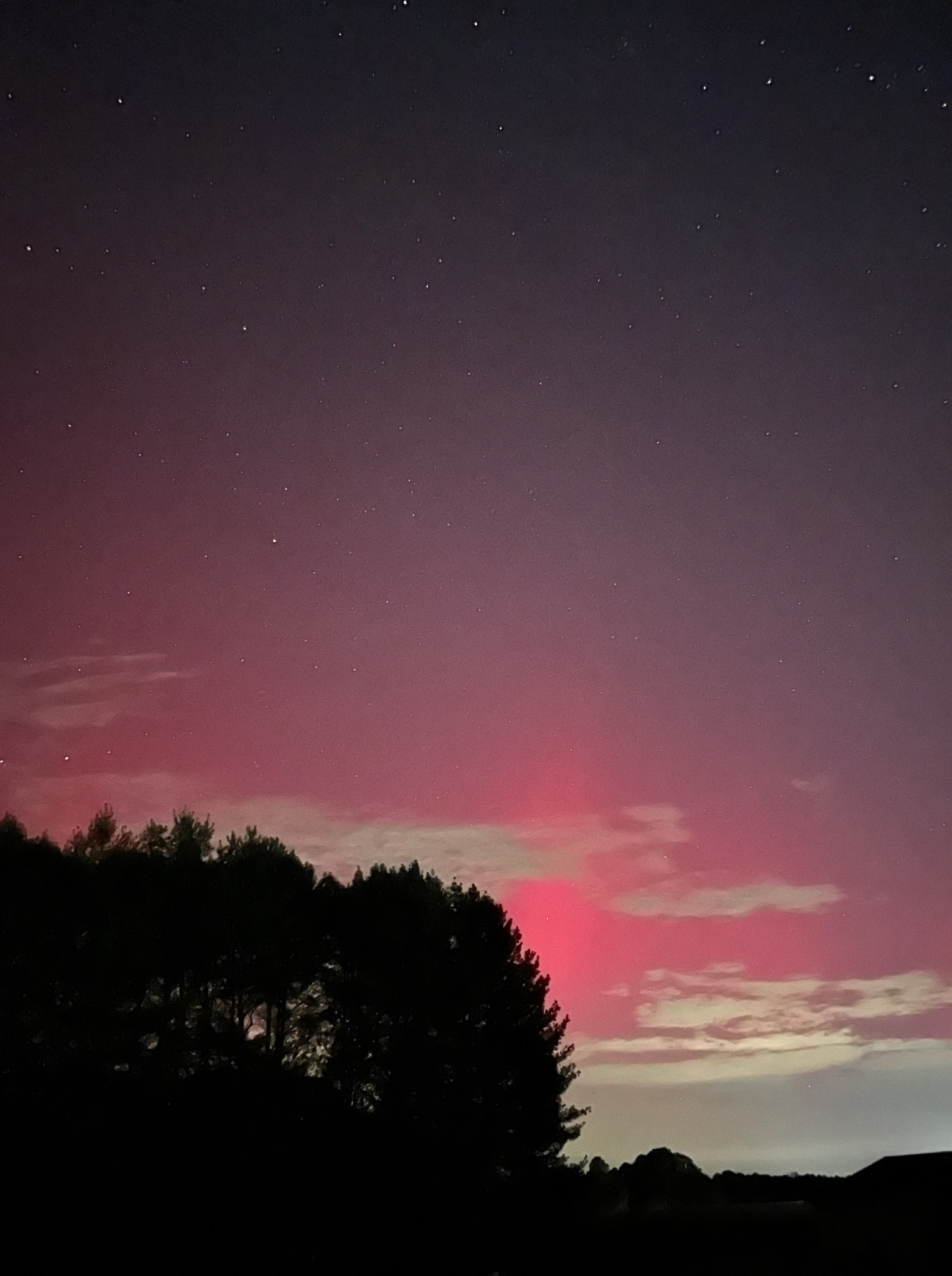
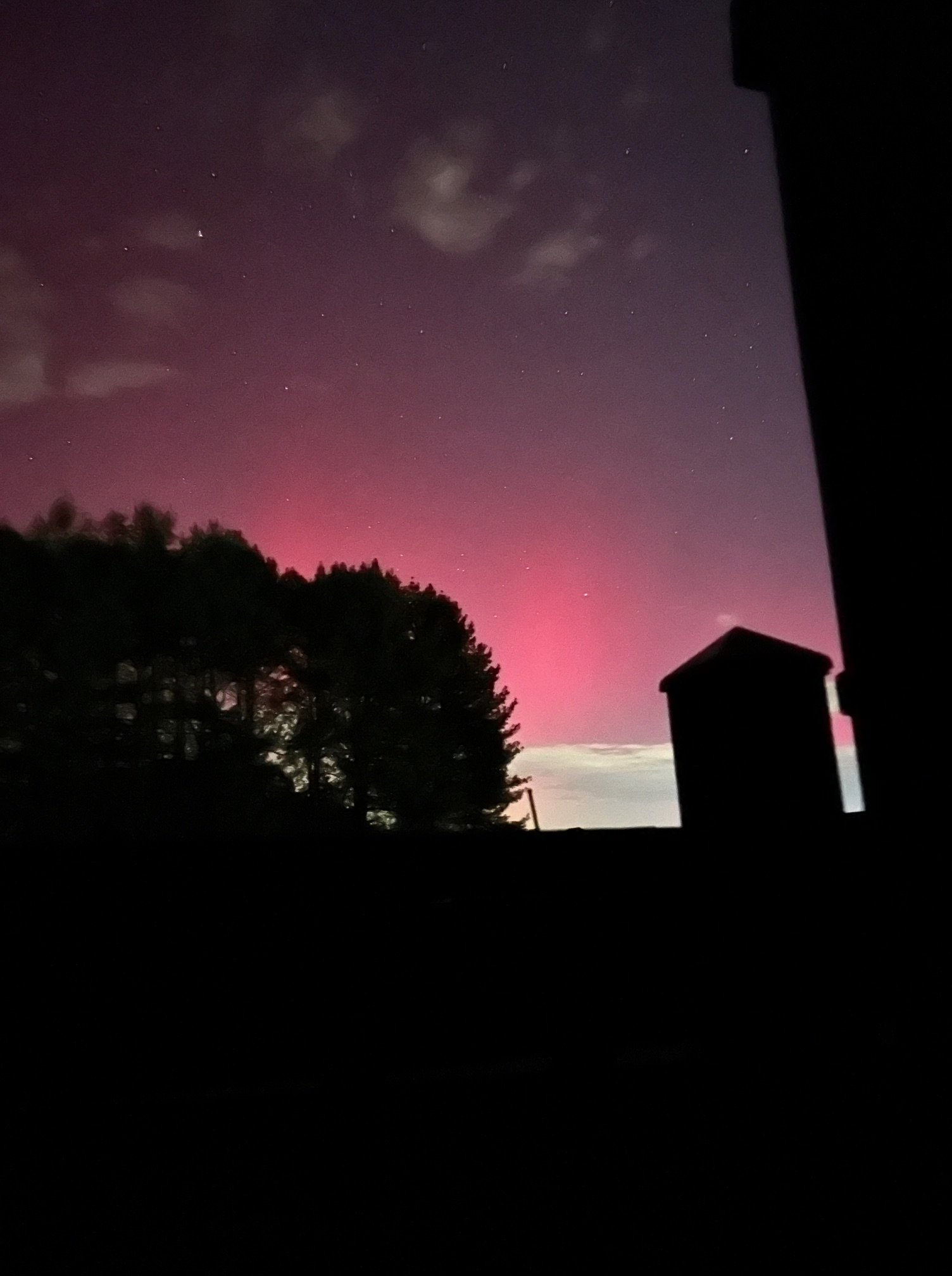
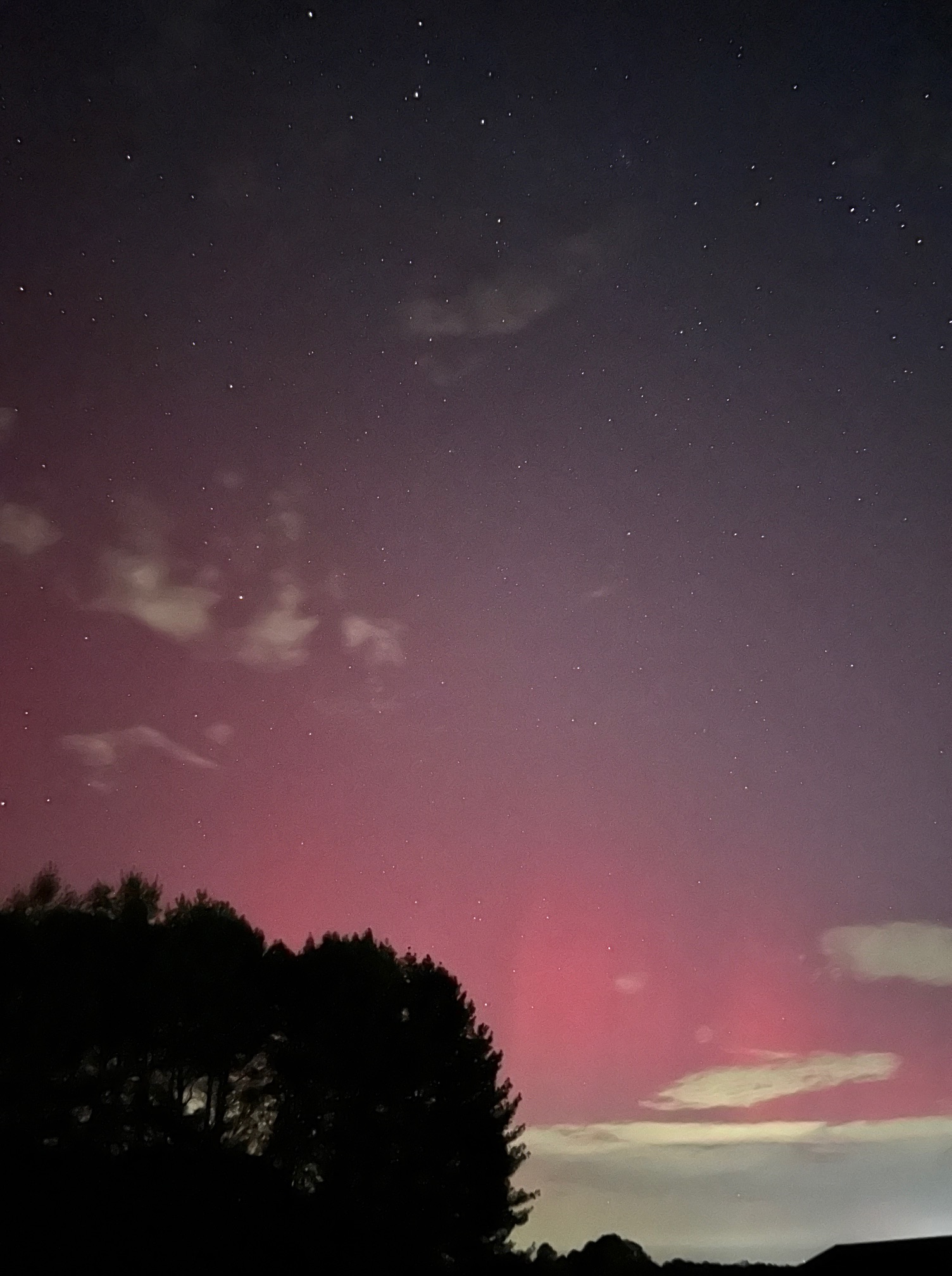
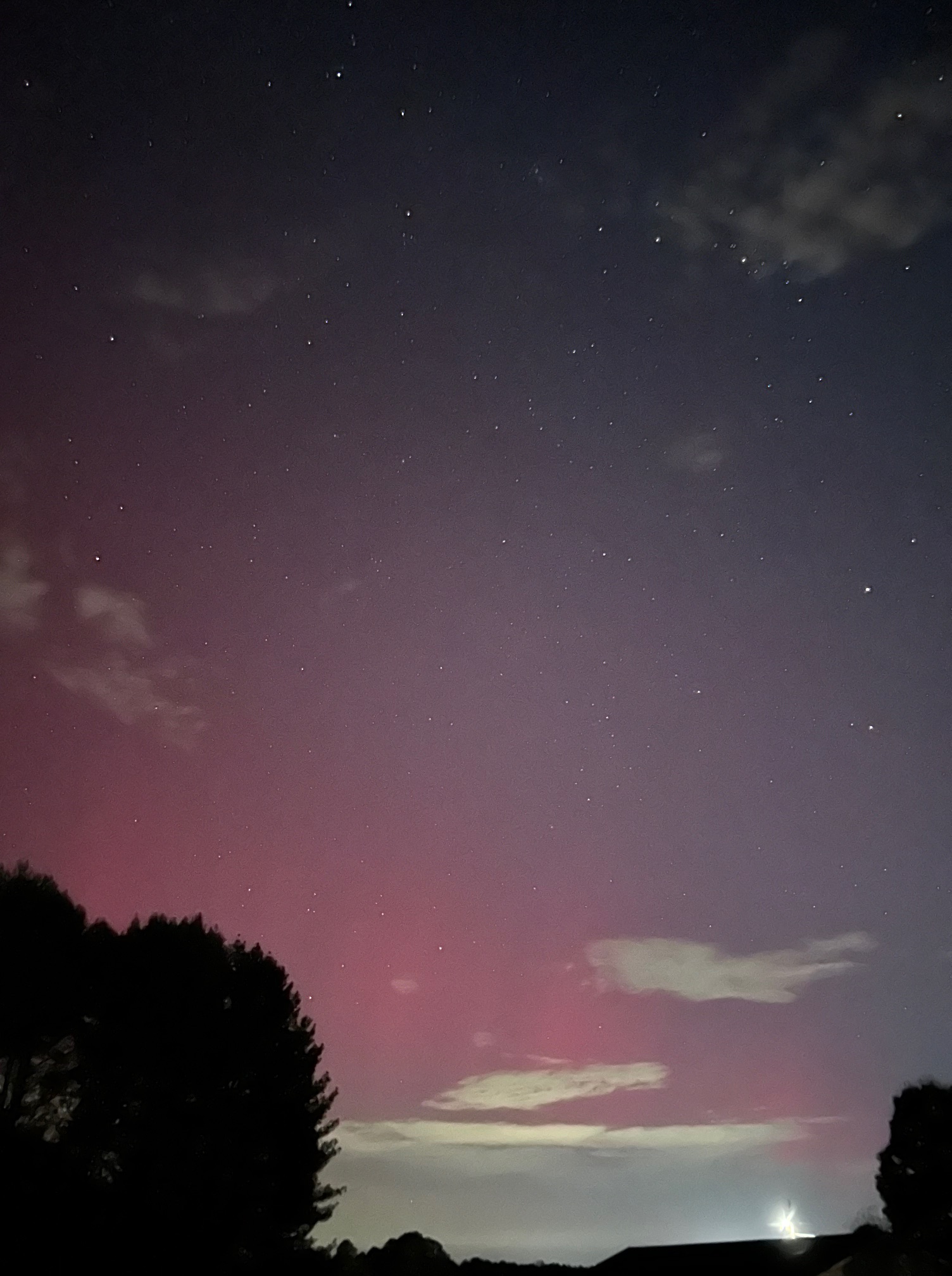
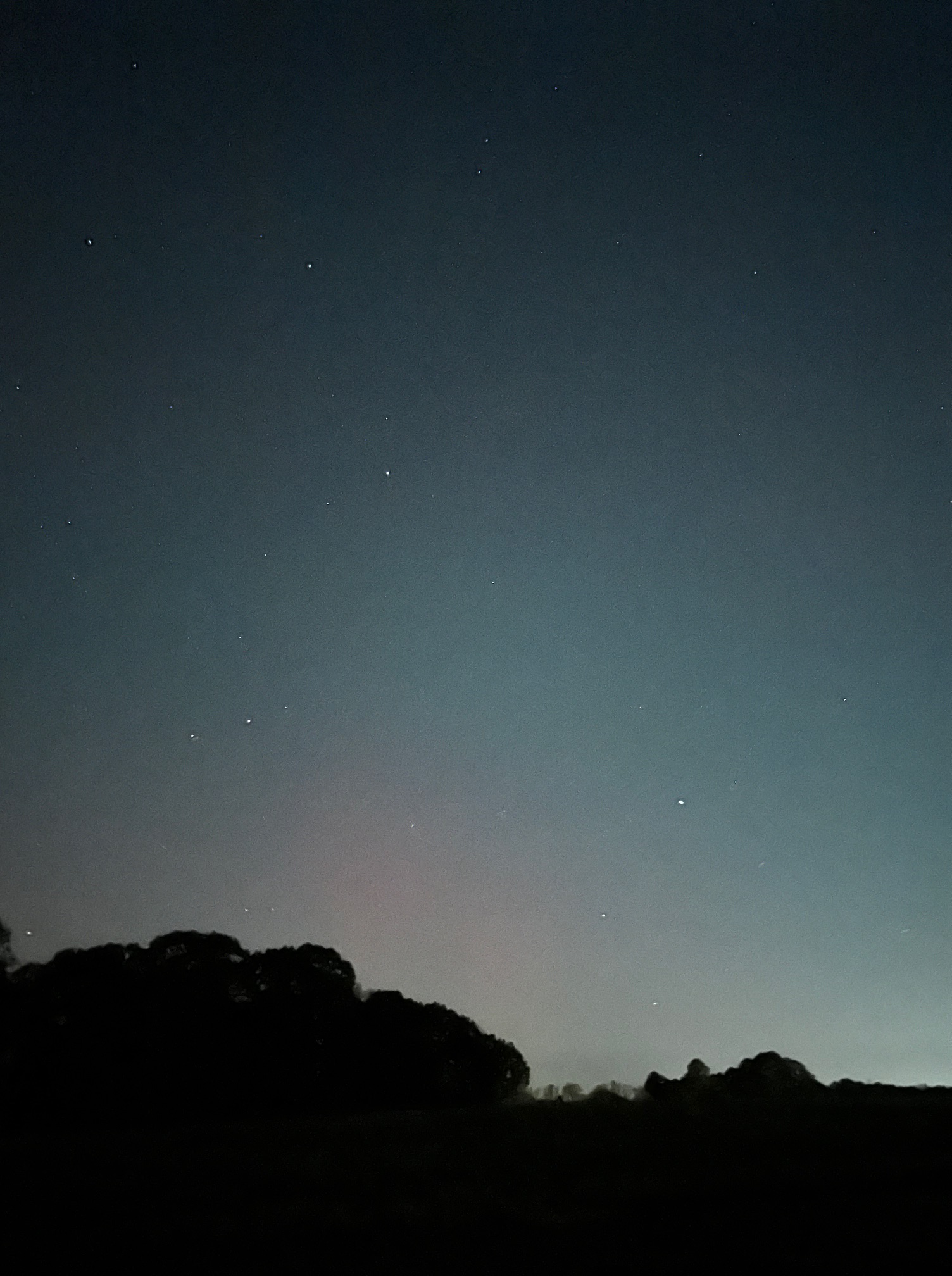
Aurora From My NC Backyard: November 11th And 12th 2025: iPhone 14 With A Three Second Exposure: Visible Naked Eye But Not The Following Night (12th): Latitude +35º 15′

November 12, 2025

Latitude: +35º 15′ Time: 9:00 PM

Time: 9:12 PM

Time: 9:13 PM

Time: 9:14 PM

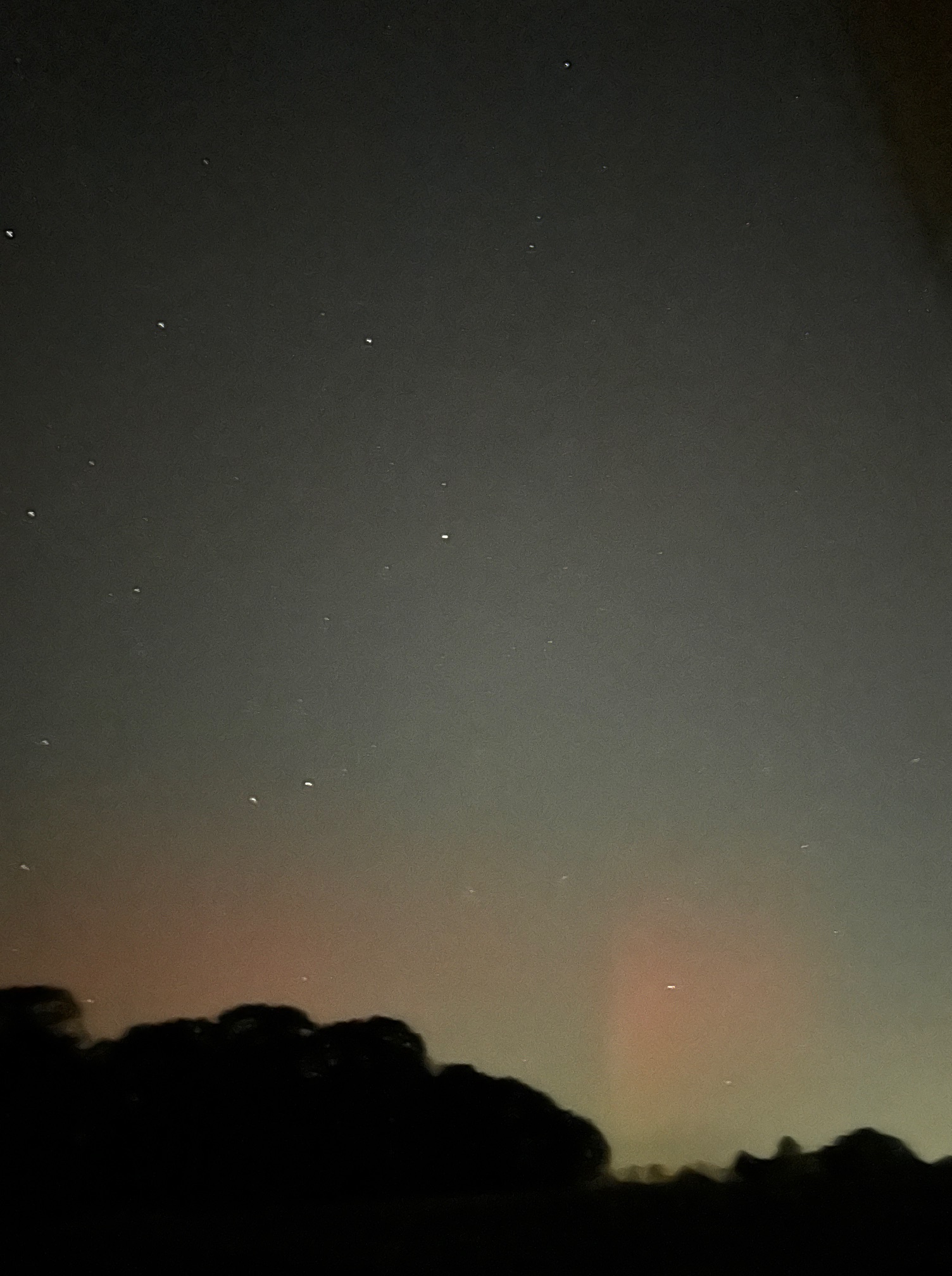
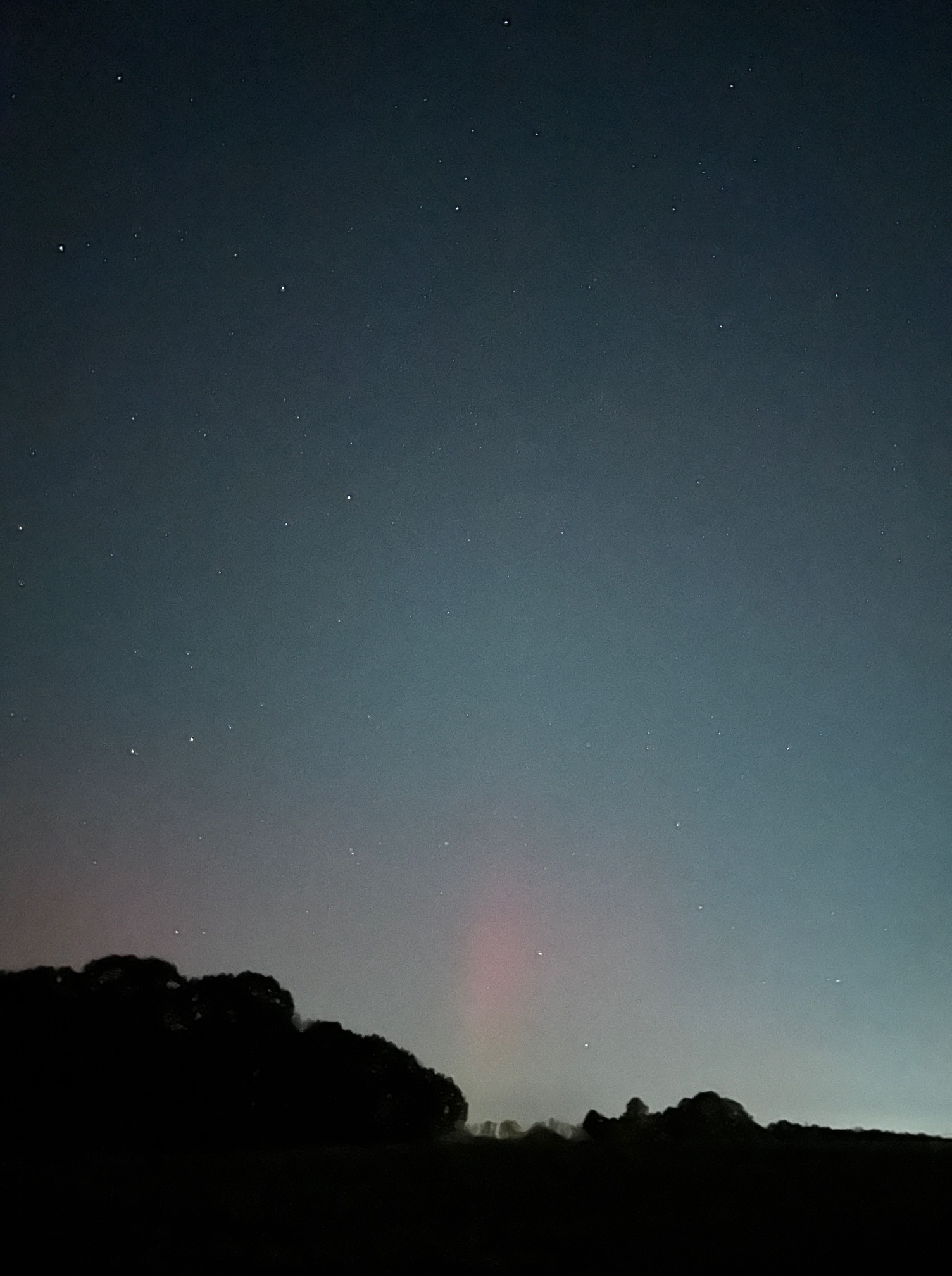
I was surprised to get a phone call at about at 9:45 last night (November 13th) from a long-time friend and amateur, Don Books. He told me that he was seeing some color from his home in South Carolina. I jumped out of bed, got dressed and ran outside, but visually couldn’t see anything from my suburban backyard. However, with a 3-second exposure, again from my iPhone 14, and some color began to appear. It was nothing like the previous but an aurora display none the less. I’m glad Don called, and I share three of those photos as following:

Time 9:56 PM:

Time: 9:57 PM

Time: 10:00 PM and the aurora was already beginning to fade:

January 2026 S&T Magazine Article: “A Tricky Blue Snowball” By Stephen O’Meara: Planetary Nebula NGC 7662 In Andromeda

November 11, 2025

A really good article in the January 2026 S&T Magazine P-12 (planetary nebula NGC 7662) by Stephen O’Meara.

I especially like this article due to Stephen using and referencing visual observations of this object by many of the great observers of the past.  This would include John Herschel, William Huggins, E.E Barnard, and then S&T columnist Leland S. Copeland. He then shares the observation by contemporary French amateur and “visual observer” Bertrand Laville using a 25-inch telescope.

I was introduced to this planetary through my first deep-sky reference book: “The Finest Deep-Sky Objects” by James Mullaney and Wallace McCall in the late 70’s.  However, my serious observations of this planetary did not occur until November 1992 using my “then new” 10-inch f/4.5 Newtonian.  I have made many observations of the planetary from that time. A 4-inch telescope will pretty much present the same view as a much larger amateur telescope…appearing only a small bluish disk.

#104. NGC 7662 is a small blue dot in a 6-inch, a bright blue perforated disk with the 13-inch at 290x, and a fine object in both 30-inch telescopes.  It has a 12th-magnitude central star whose seemingly variability has been explained as a seeing effect.  We have sometimes recognized the star in the 13-inch.  Mullaney and McCall 

It was Sue French invited and brought Bertrand to the Observer’s Challenge as well as many other international visual observers.  This report (November 2021) was one of the best and finest of the 185 monthly challenge reports, as following:

https://rogerivester.com/wp-content/uploads/2021/11/november-2021-observers-challenge-_ngc-7662-b.pdf