It has become almost impossible for me to now use a standard straight-through finder scope, due to the pain in my neck. Getting under a standard finder and in all types of contorted positions is just now too uncomfortable. So, a 90º RACI (right angle correct image) finder is now essential.
After too many years to many years to count, I’ve always used a straight-through finder, but in recent years, my neck has become the limiting factor, due in-part to growing older.
I have one 90º Antares 7.5 x 50 correct image finder (as pictured below) used with my 10-inch Newtonian, but on other telescopes I still use a standard straight-through finder.
It should be noted that a good quality straight-through finder will present brighter stars, due to the unobstructed light path. However, for me, with neck issues, the RACI finder allows me a view without pain.
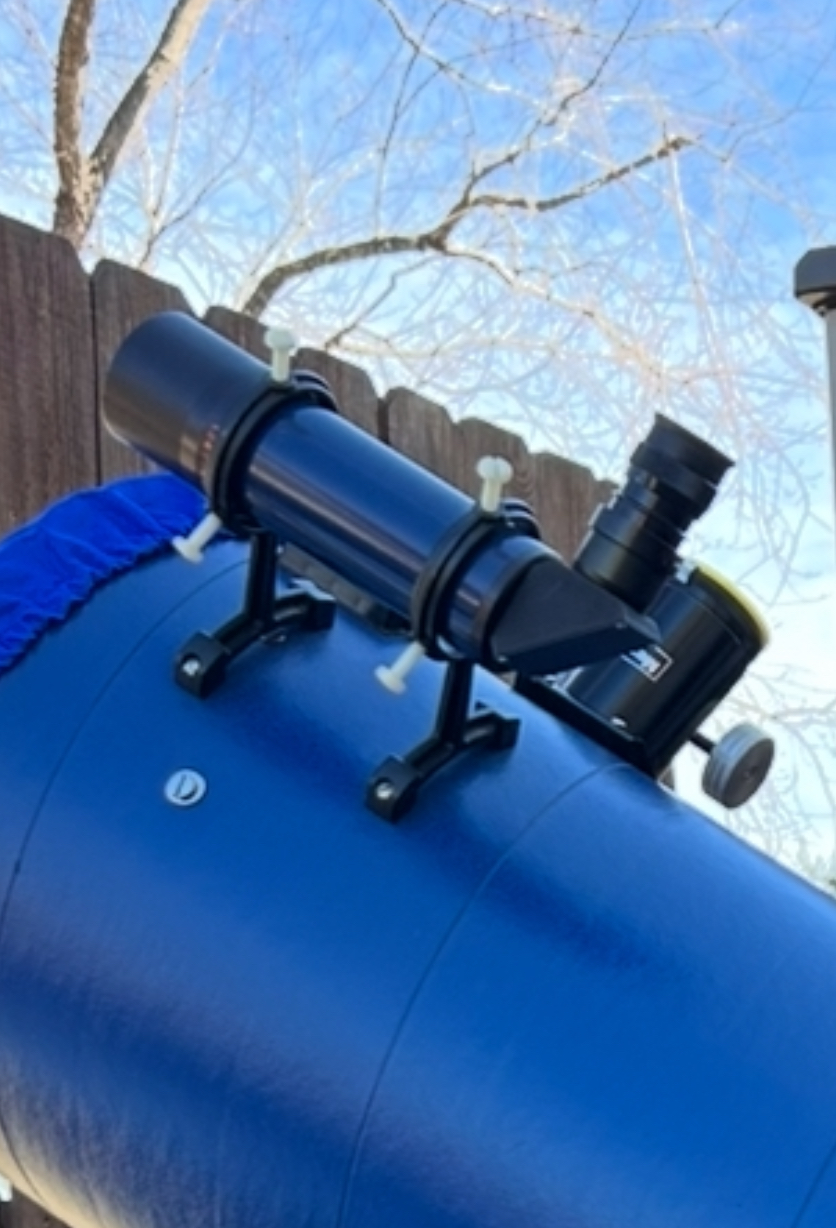
I use a “Rigel QuikFinder” in conjunction with my magnified finders:
The Rigel makes for an excellent pointer for the telescope, as it’s much better and easier than attempting to sight along the optical tube. I have two Quikfinders and a QF base on my all my telescopes.
The Rigel finders are fairly small and lightweight…better suited for smaller telescopes than the much larger and heavier Telrad. I also like the “higher profile” of the Rigel for greater ease to sight.
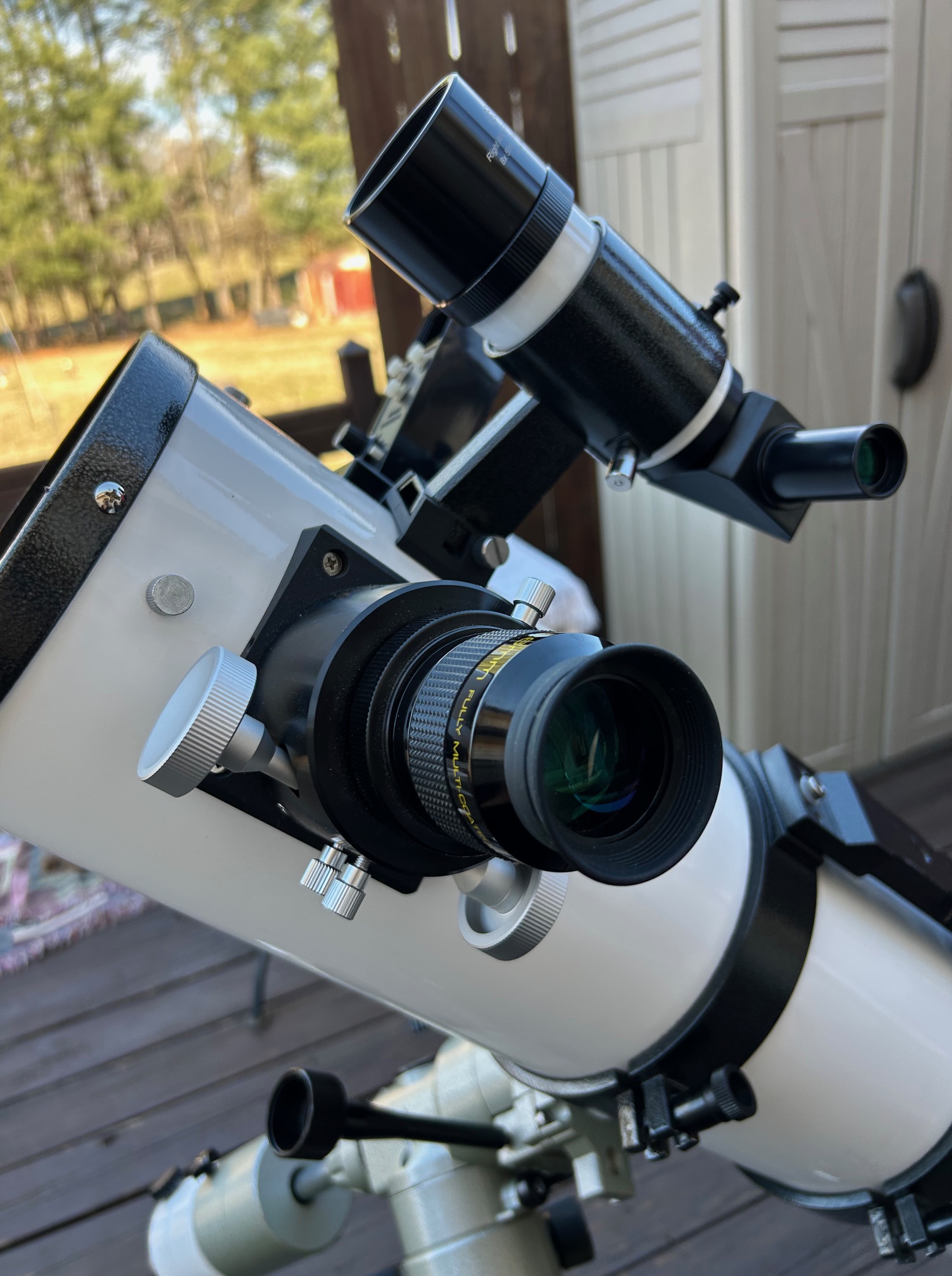
I use a magnified finder in conjunction with my Rigel QuikFinder.
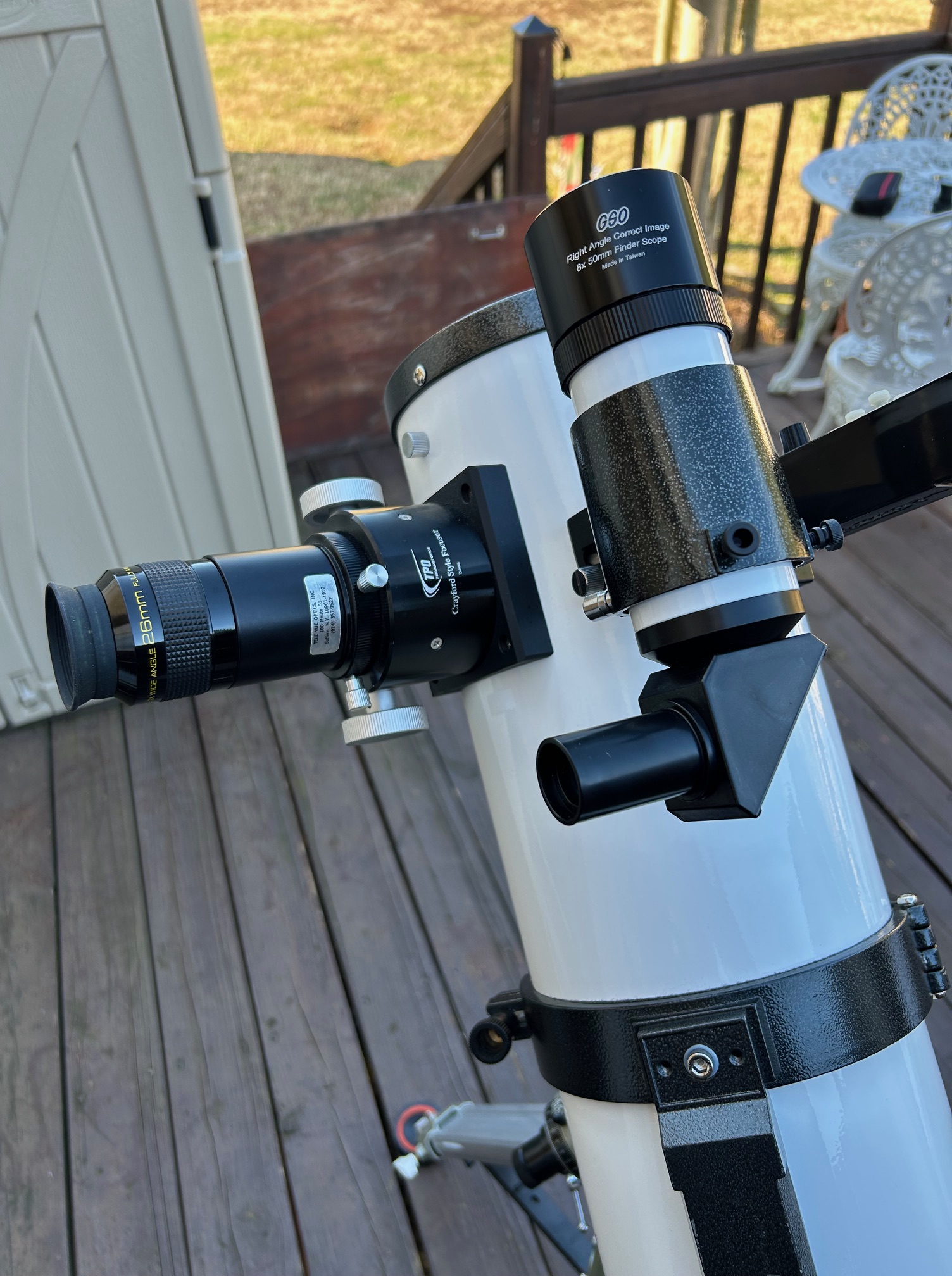
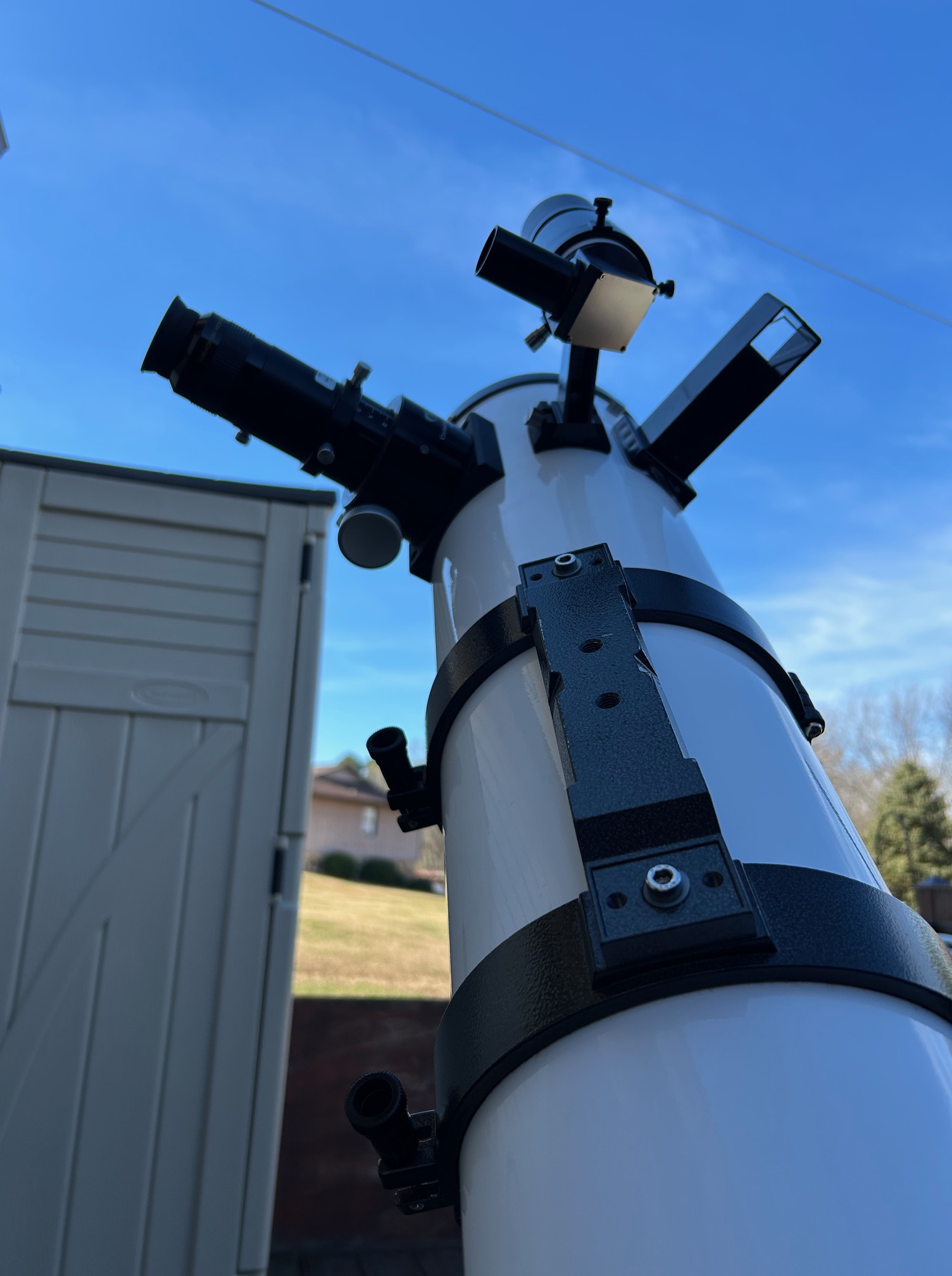
For extremely faint deep-sky objects, of whichever telescope I’m using; a magnified finder is essential.
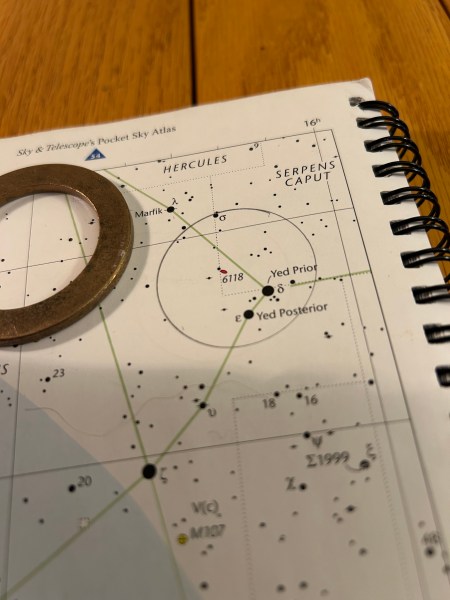
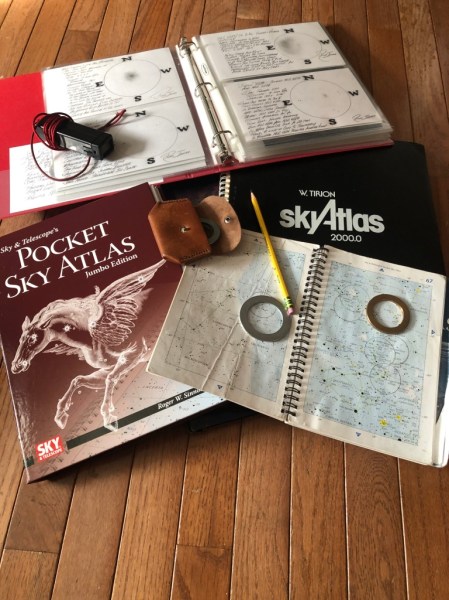
I first draw a circle on my atlas before going out with the same degree field as my finder. I then attempt to point the magnified finder to match that of my star atlas, with the deep-sky object in the center of the circle.
Consider the following atlas page and circle, despite being so close to bright stars: Yed Prior and Yed Posterior the galaxy was invisible. I used the faint single star just to the north of the galaxy and it could not be seen. I spent hours on this galaxy over many observing sessions and seasons, attempting to see the galaxy. However, during moments of perfect seeing “I saw the galaxy” with averted vision, but not constant and only intermittently.
NGC 6118 is considered by most all amateur astronomers to be the most difficult object in the Herschel-400 list.
My suburban backyard is now averaging a naked-eye limiting magnitude of ~4.8 on my best nights, which indicates my sky is pretty bright; making very faint deep-sky objects very difficult.
 rogerivester.com
Recent Comments