The 80 mm f/5 refractor has a fully coated objective lens with one baffle to reduce reflections. A small telescope that has really surprised me with its excellent performance when observing galaxies, nebulae, star clusters and even double stars.
The telescope reviewed and discussed here is an Orion 80 mm achromatic refractor telescope, model CT-80. However, this telescope is no longer available since the closure of Orion Telescope and Binoculars in June 2024. There are many other 80 mm refractors available, including apochromatic or ED, which are designed primarily for astrophotography.
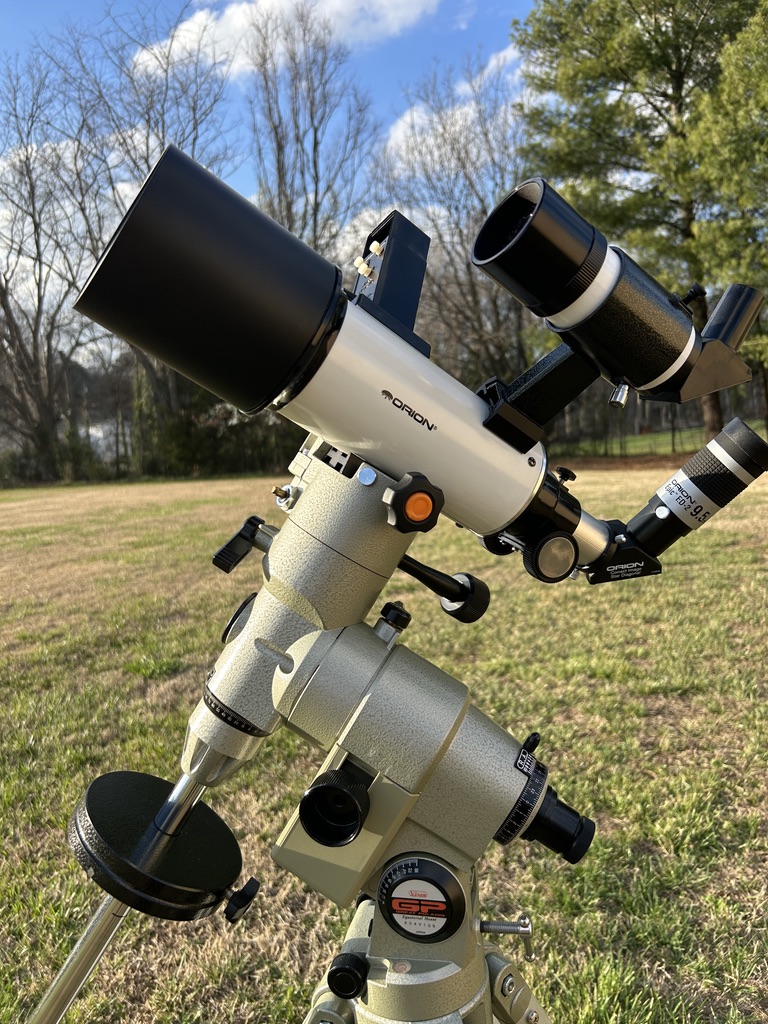
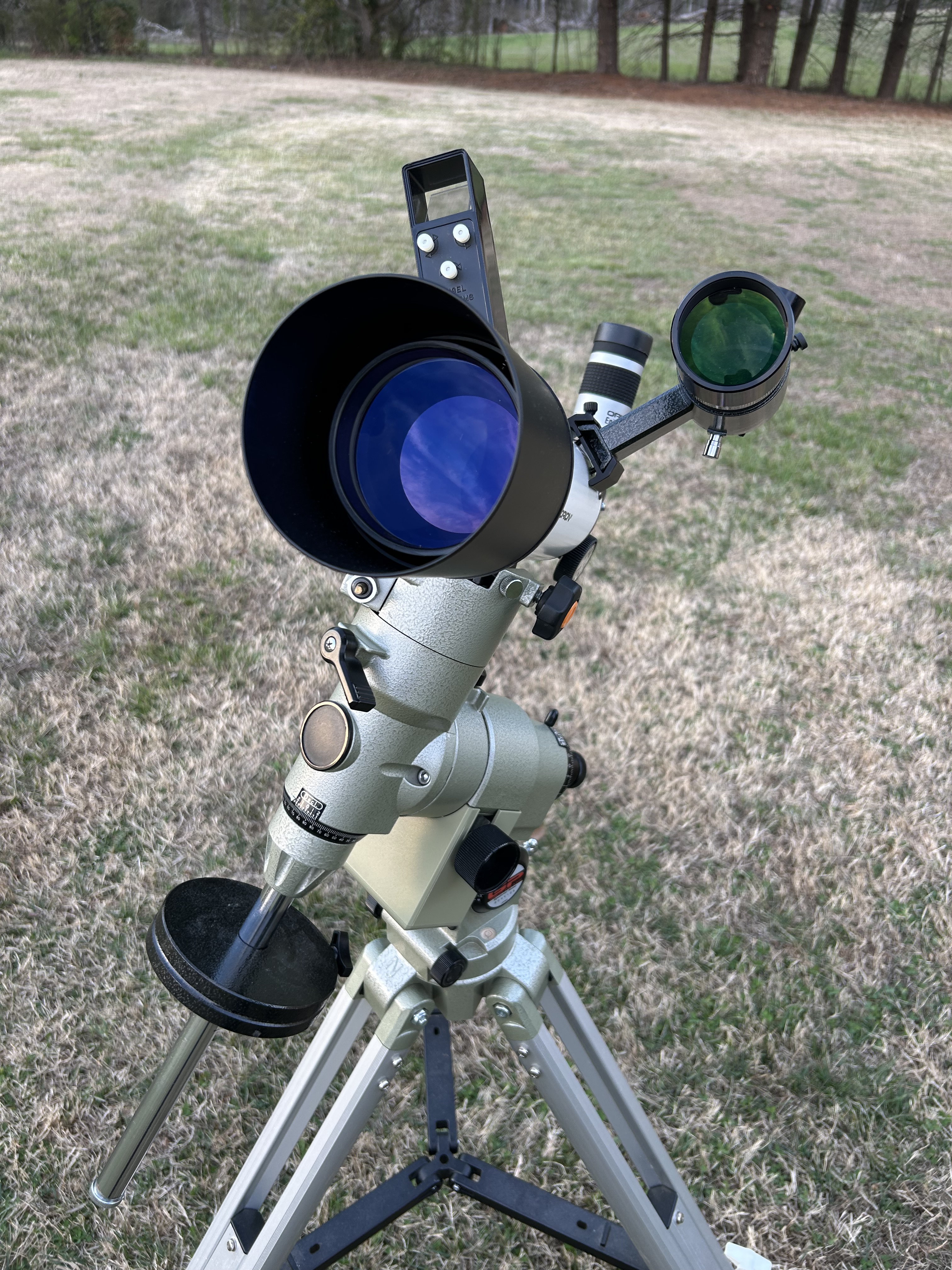
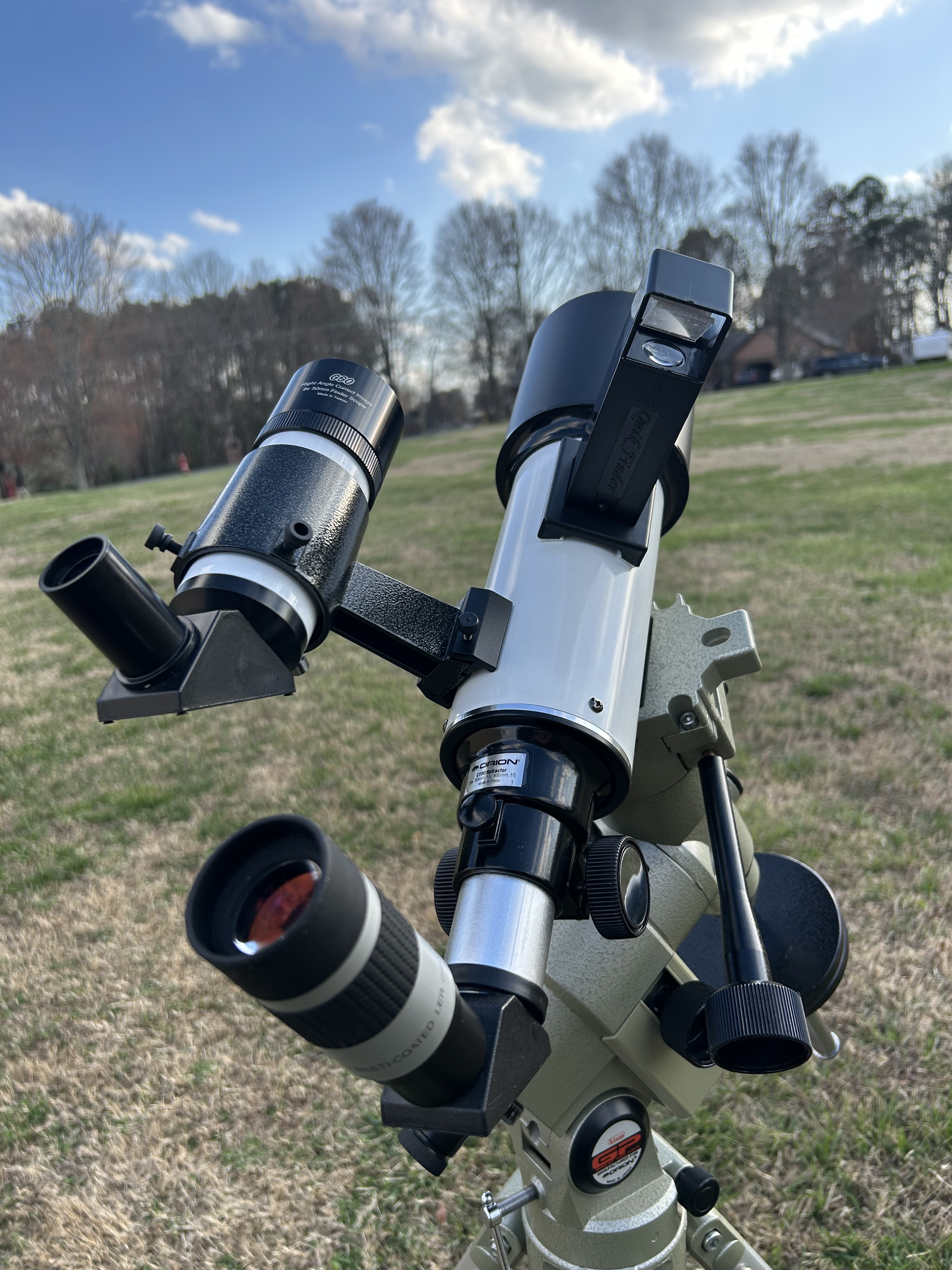
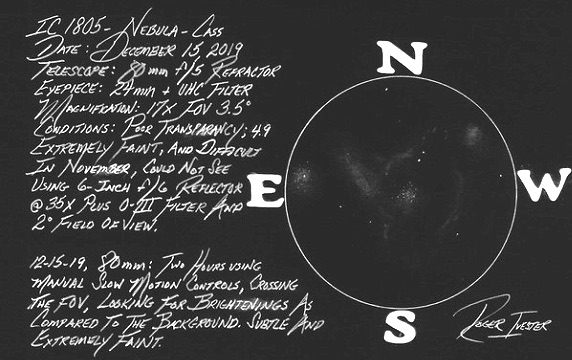
This telescope was sold as an optical tube assembly only, without any accessories. I have always used an amici diagonal for use with refractors primarily for sketching deep-sky objects, scientifically correct. A refractor with the employ of a standard diagonal or either Schmidt-Cassegrain or Maksutov’s present a mirror image reversed view. This is due to the uneven number of mirrors in the system.
An example of a correct oriented pencil sketch, indicating the cardinal points.
This 80 mm refractor telescope was a surprise birthday gift to me a few years ago from my son, Brad. So this is a special telescope to me, with no desire to have any other small refractor.
The Orion CT-80 has a beautiful pearl-white clear coated paint job and was ready to use out of the box. The scope works extremely well with a Vixen GP equatorial mount. The telescope and mount, including a three-pound counterweight can all be carried outside in one trip. A good quality equatorial mount is just as important as the telescope.
From the “Observing Handbook and Catalog of Deep-Sky Objects” by Luginbuhl and Skiff regarding using a couple of 60mm refractors in the survey for the handbook.
“Despite its comparatively small size, this sort of instrument is quite useful for deep-sky observing. From a dark site all of the objects in Messier’s list are visible, and some of the best views of galactic nebulae are obtained with these telescopes at very low power.” Luginbuhl and Skiff
When focusing the telescope on planetary features or double stars, they would “snap into focus” which is an indicator of good optics.
My first target was the beautiful double star, Castor in Gemini. I started with 33x, but this was not enough magnification, but with the employ of a 2.8x Barlow and a magnification of 93x the double was cleanly separated.
The next object was the Trapezium in Orion. The four primary components were crisp and clean even at 33x. When increasing the magnification to 93x, the four primary stars were a beautiful sight indeed. The Orion Nebula appeared very bright with excellent contrast.
Galaxies M81 and M82, located in Ursa Major, have always been two of my favorite galaxies. Both galaxies fit nicely within a large 1.8º field of view at a 33x magnification. A beautiful sight! This took me back more than forty years (1977) when I first observed this galaxy pair with a 4.25-inch f/10 EQ Edmund Newtonian. The portability of this telescope and mount will likely improve my number of deep-sky observations…now and in the future.
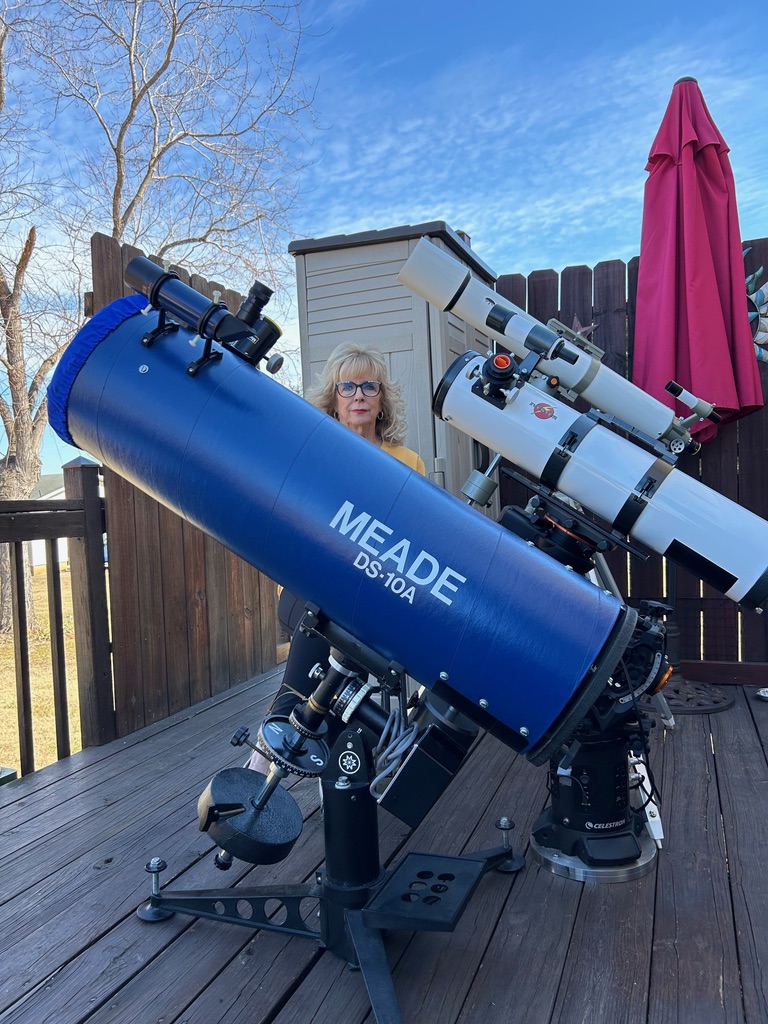
After 34 years (and more than 2,000 hours under a night sky) I sold my 10-inch f/4.5 EQ Newtonian (February 2026) which had just become too heavy and difficult to set up and take down on a regular basis. This was actually a hard decision to make, but now I realize it was the perfect decision. I also sold my 102mm Vixen refractor (January 2026) after almost 30 years. My largest telescope now is a 6-inch f/6 EQ Newtonian, which offers an excellent aperture with good portability.
And if needed, I can take the 6-inch to a dark site using the same Vixen GP mount that is also used with the 80 mm refractor. It’s also great to be able to “minimize”on the number of equatorial mounts needed. This is maximum utilization of storage space and maximum utilization of equatorial mounts or astronomy equipment.
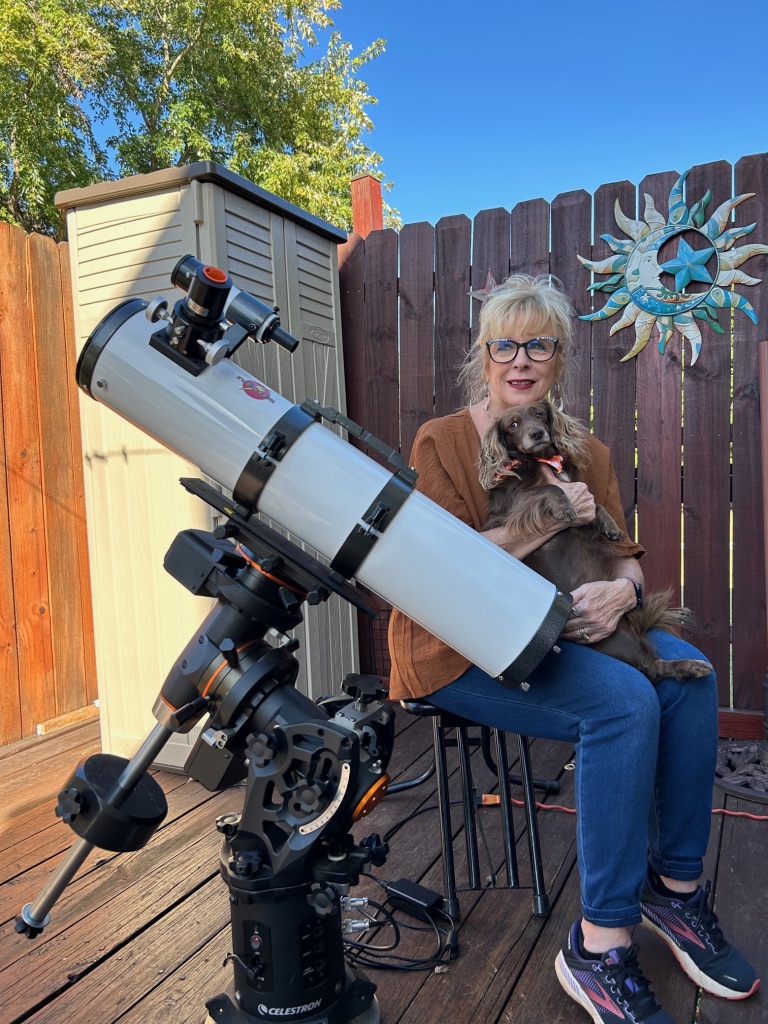
So, now my primary telescopes are now a 6-inch f/6 Newtonian and the 80 mm f/5 refractor. The sale of the 10-inch and 102mm telescopes has opened up so much space in two closets. The 10-inch was a really heavy and large telescope as can be seen in the following photo.
 rogerivester.com
Recent Comments