Meade introduced their Deep-Space telescopes in about the early 1980’s which caught my attention in magazine advertisements.
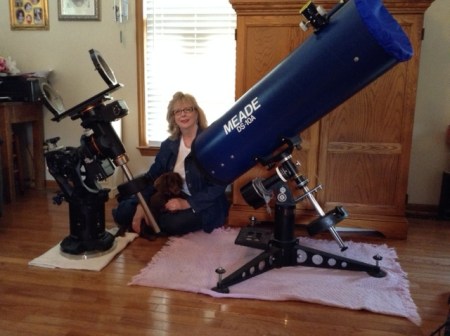
In about 1991, I was began looking for something larger than my 4.5-inch reflector which I was using at that time. The Meade Deep-Space series Newtonian’s consisted of two telescopes: A 10-inch and 16-inch f/4.5 telescopes with equatorial mounts.
This was at a time when Meade was building their serious Newtonian’s in their Costa Mesa, facility, which included grinding and polishing mirrors. All of the hardware, bolts and allen heads on these telescopes and mounts are SAE. (Society of Automotive Engineers)
The following is a Meade Deep-Space magazine advertisement from the 1980’s:
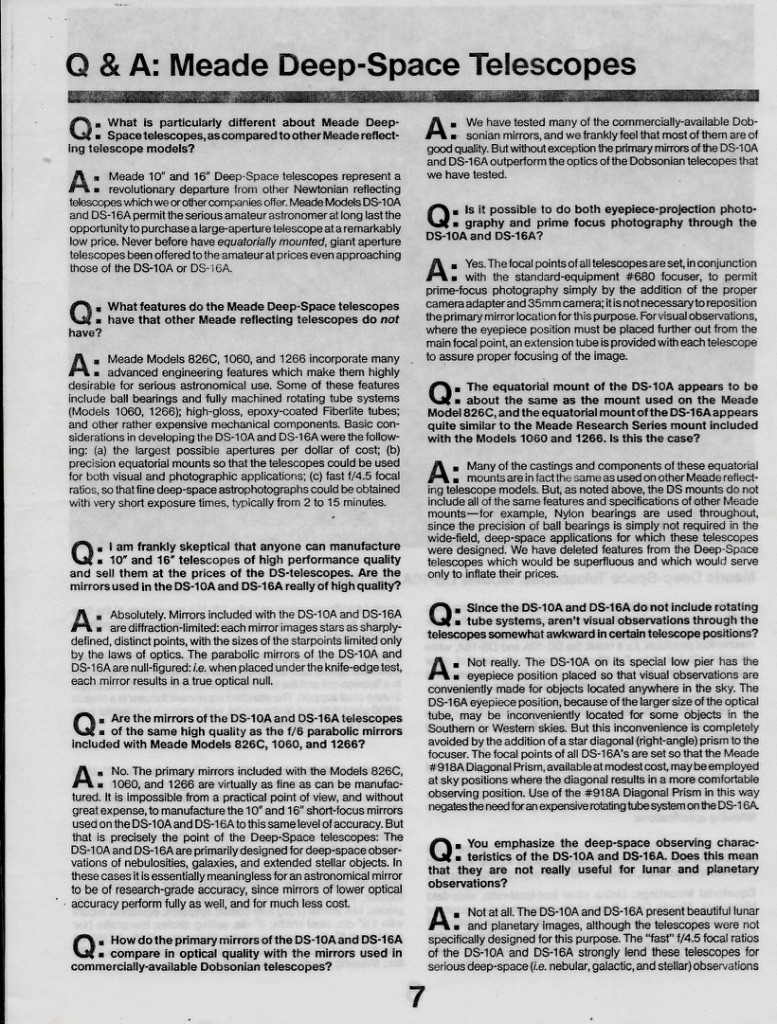
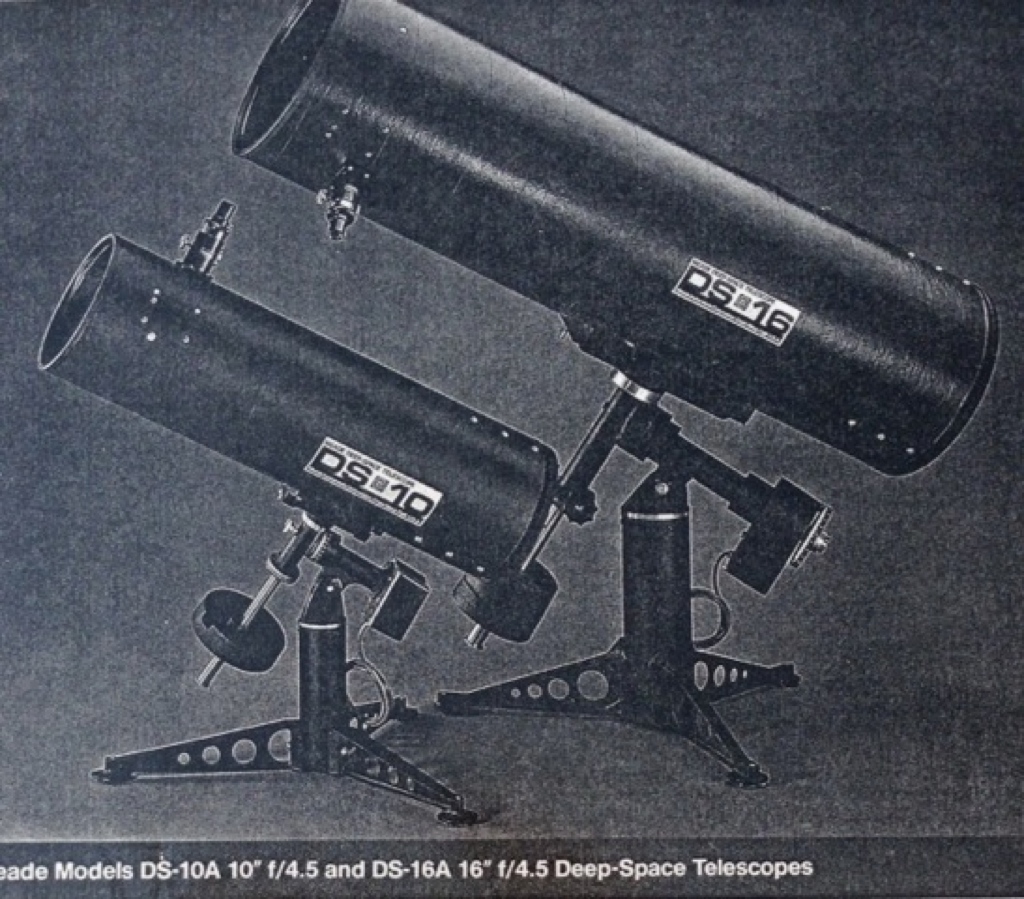
My local astronomy club (at that time) had a DS-16 which was a two-person job to set up. I could take the 16-inch and use at any time. However, this thing was a monster, and where would I store this behemoth of a telescope? I didn’t and still don’t have a permanent observatory, and how would I set it up by myself? The 16-inch was definitely not for me! The 10-inch seemed to be the perfect larger aperture telescope and with an equatorial mount. I had always liked the simplicity of a Newtonian, and an equatorial mount was a must.
Astronomy Magazine test and evaluation:
Astronomy Magazine tested a 10-inch DS-10A (The 10A was an updated version with a 2-inch focuser, setting circles and RA drive) with the magazine giving the test mirror a rating of a B+.
So, in February 1992, I purchased the 10-inch from Pauli’s Wholesale Optics, in Danbury Connecticut. It was Fred (the owner of Pauli’s) that recommended this telescope. And after more than 1,500 deep-sky pencil sketches and thousands of observing notes, so obviously I picked the perfect telescope.
The low pedestal mount is ideal for use with an astro-chair, when making observing notes and pencil sketches at the eyepiece. As for me, it’s impossible to observe and sketch while standing.
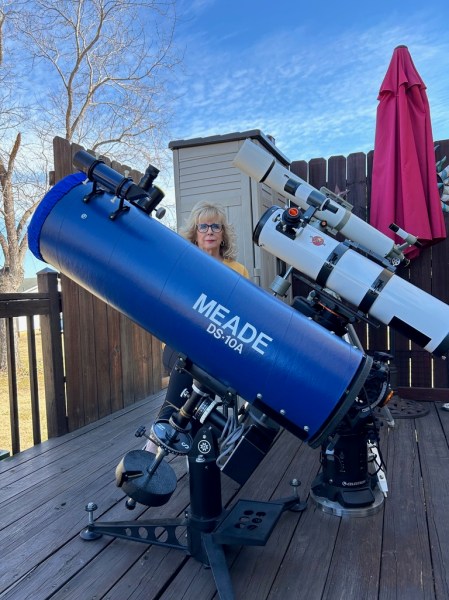
Note: This is the telescope I used for most all of the ~250 deep-sky objects, as featured in the 185 months of the observer’s Challenge report. And for the last five years I co-authored the report with Sue French who gained astronomy notoriety and fame with S&T and her “Deep-Sky Wonders.” After more than 15 years…the last report was issued in June 2024…
https://rogerivester.com/category/observers-challenge-reports-complete/
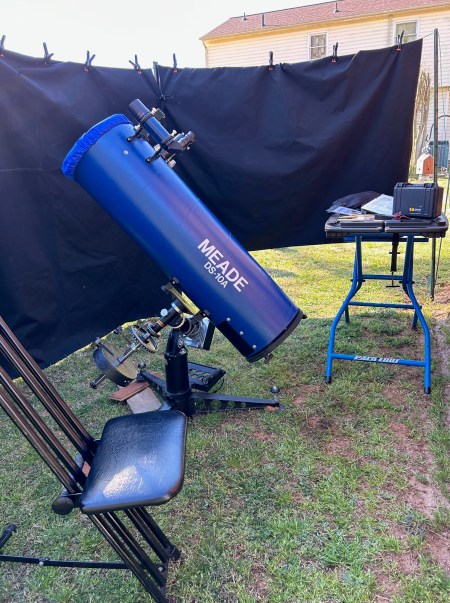
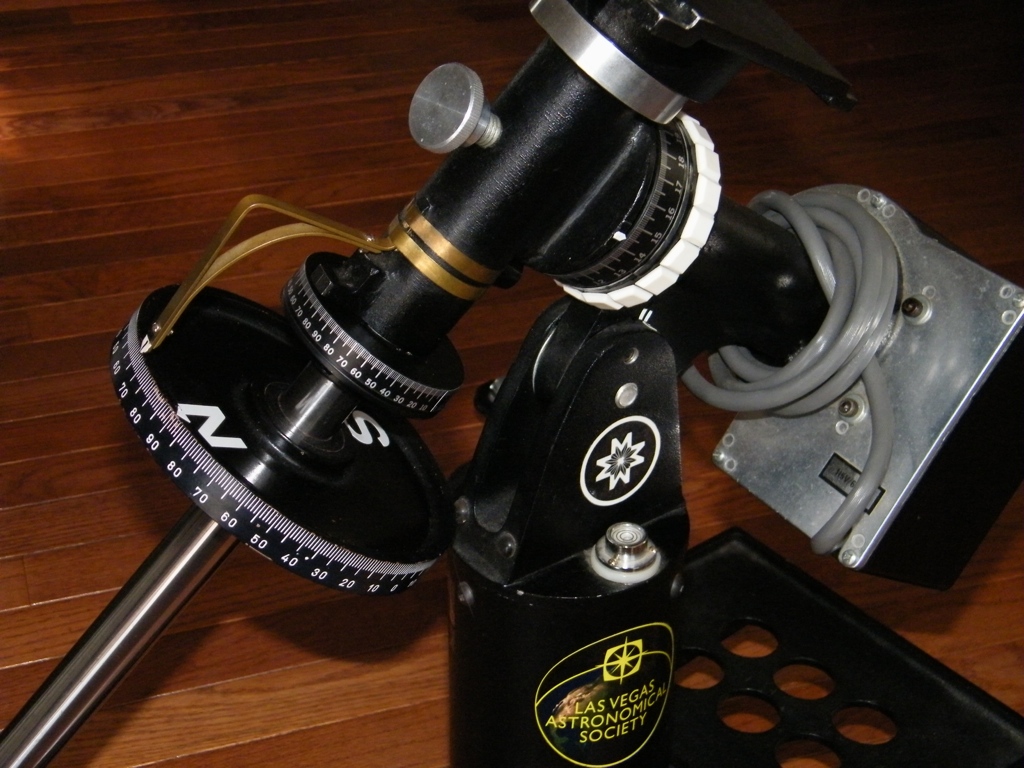
I fabricated the brass declination index-pointer (without making any permanent modifications) to use with the 6-inch Parks circle. With a reasonable polar alignment, the setting circles are very accurate, and perfect for locating deep-sky objects from a light-polluted suburban backyard.
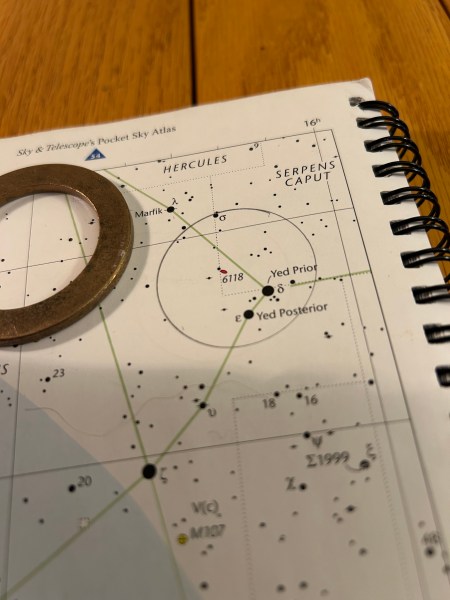
For the faintest of deep-sky objects, I assist the setting circles with a star atlas:
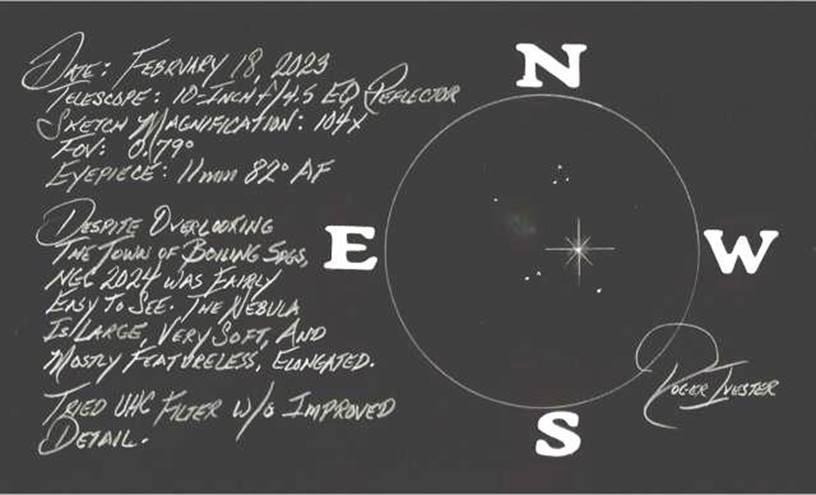
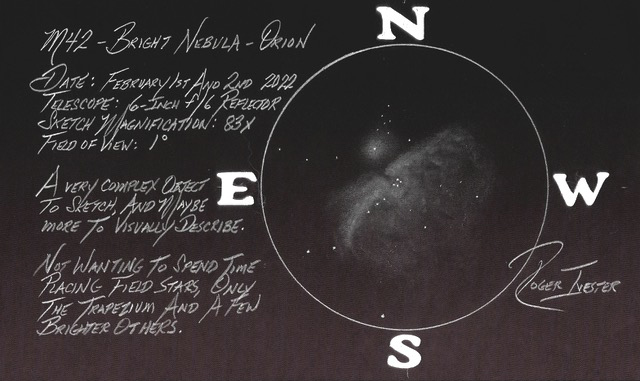
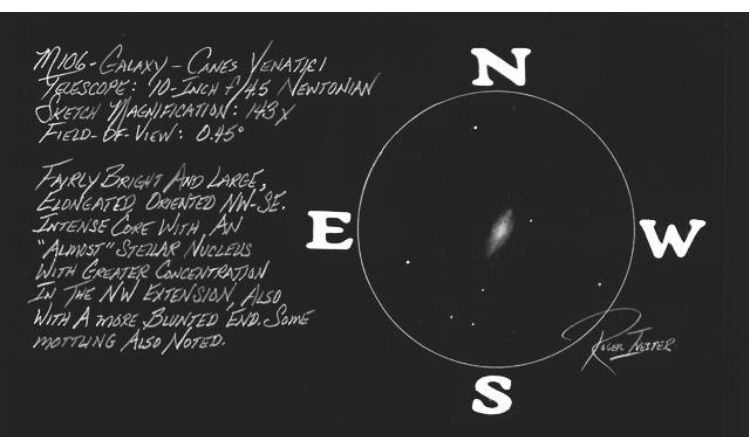
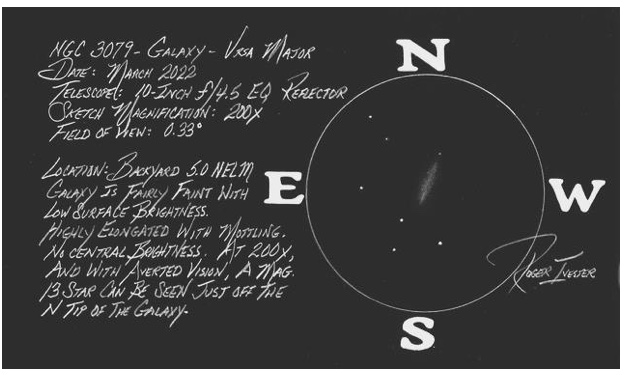
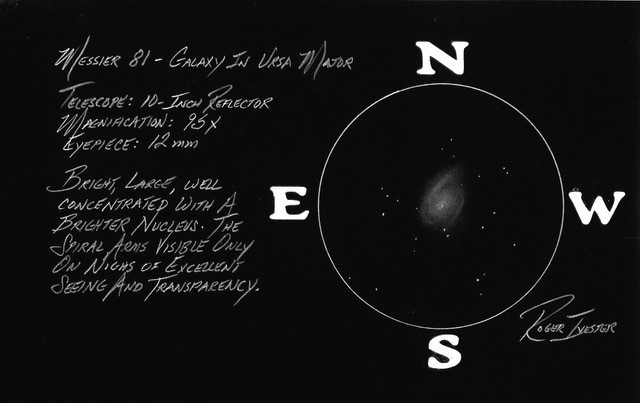
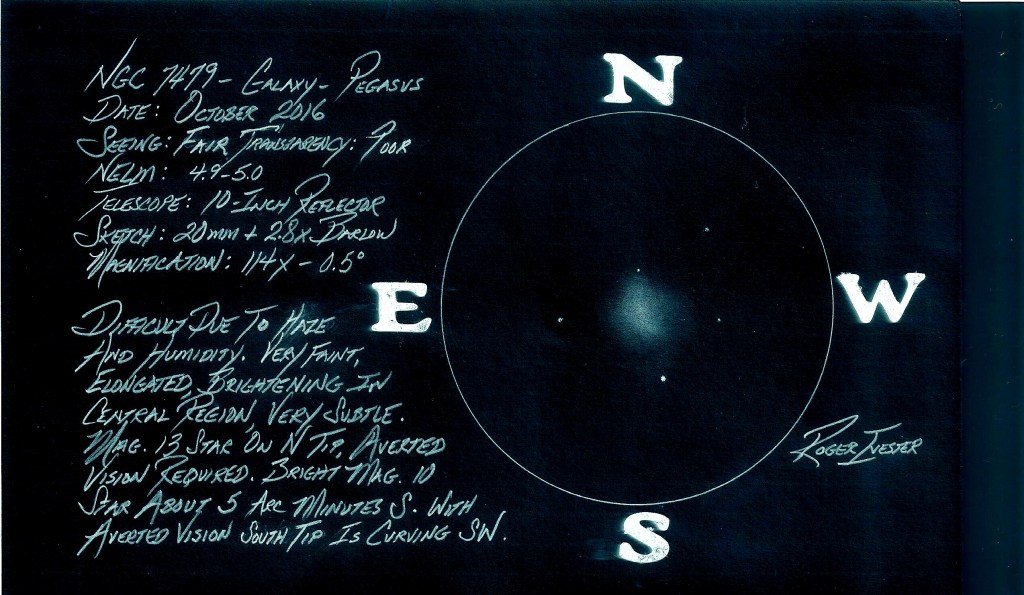
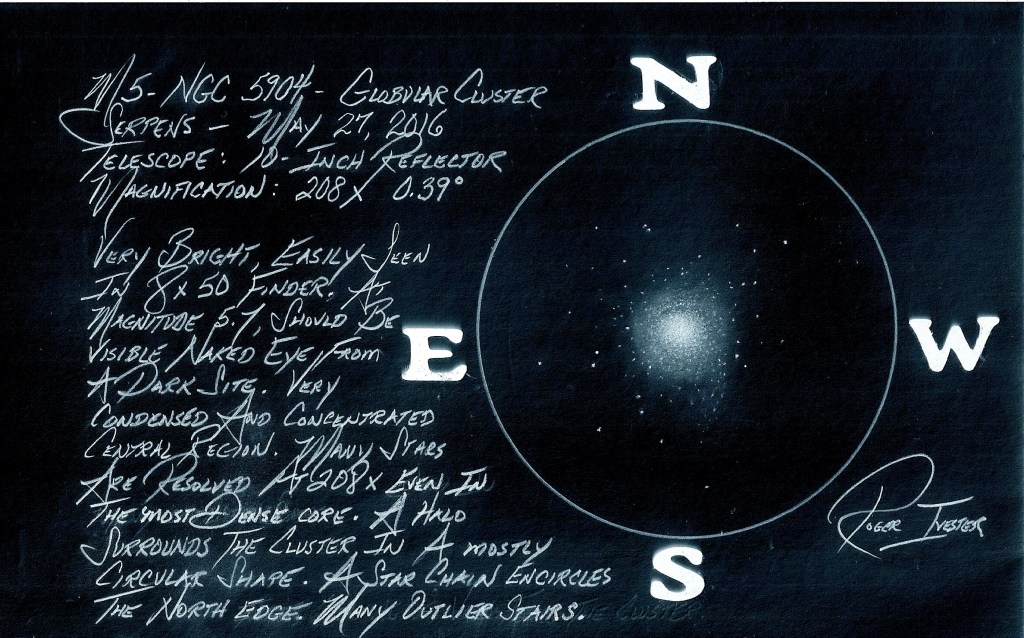
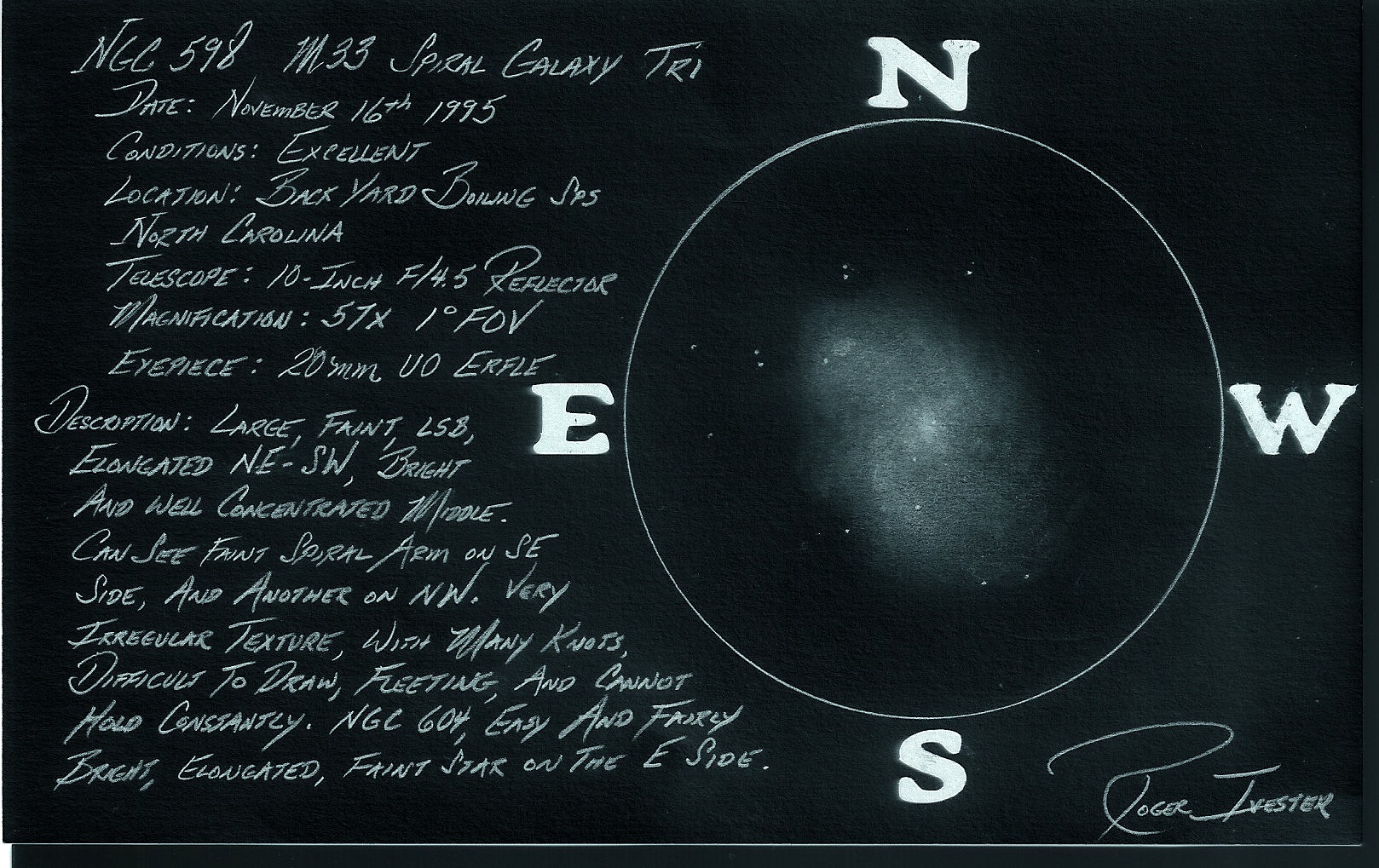
A sample of my sketches, using only a pencil, and a 5 x 8 blank notecard. My “humble sketches” are all raw sketches, as they appear to me through the eyepiece, without any computer enhancements. I try to make my sketches as accurate as possible, without any embellishments.
IC 5146 “The Cocoon Nebula” In Cygnus:

NGC 2024 Nebula in Orion
M42: Orion Nebula Complex
M106 Galaxy in Canes Venatici
NGC 3079 Galaxy in Ursa Major

Messier 85 and NGC 4394

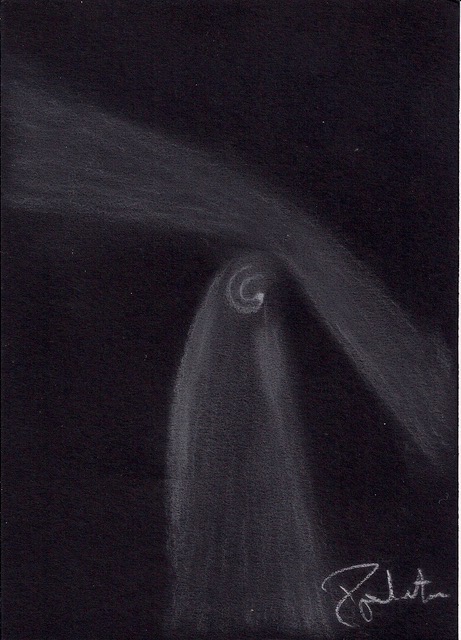
Comet Hale-Bopp: Charcoal pencil on black card stock, showing all three-tales; the gas tail, dust and anti-tail. April 1997
Messier 81 with spiral arms
NGC 7479 Galaxy in Pegasus
The Rosette Nebula


Messier 33
 rogerivester.com
Recent Comments