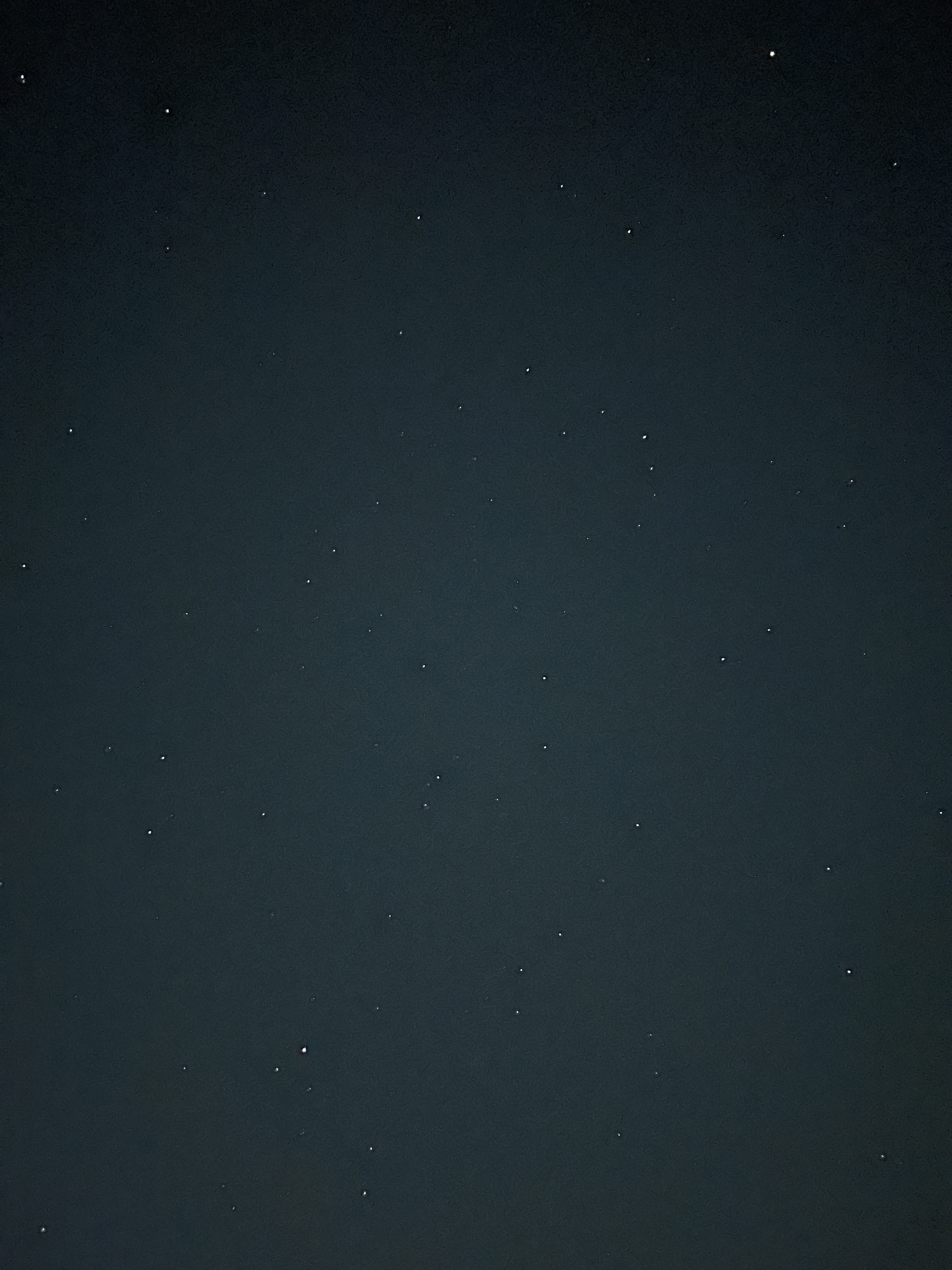
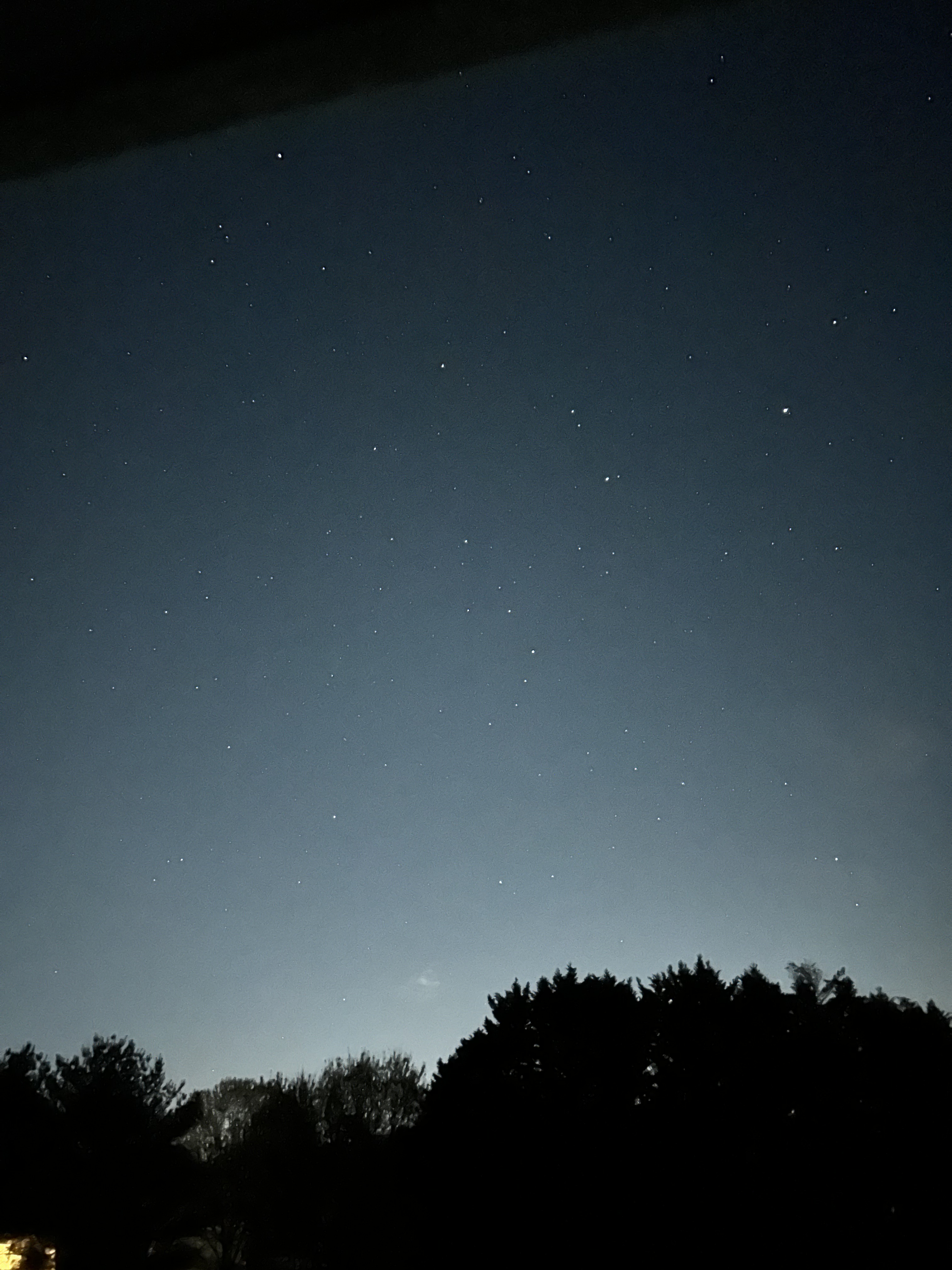
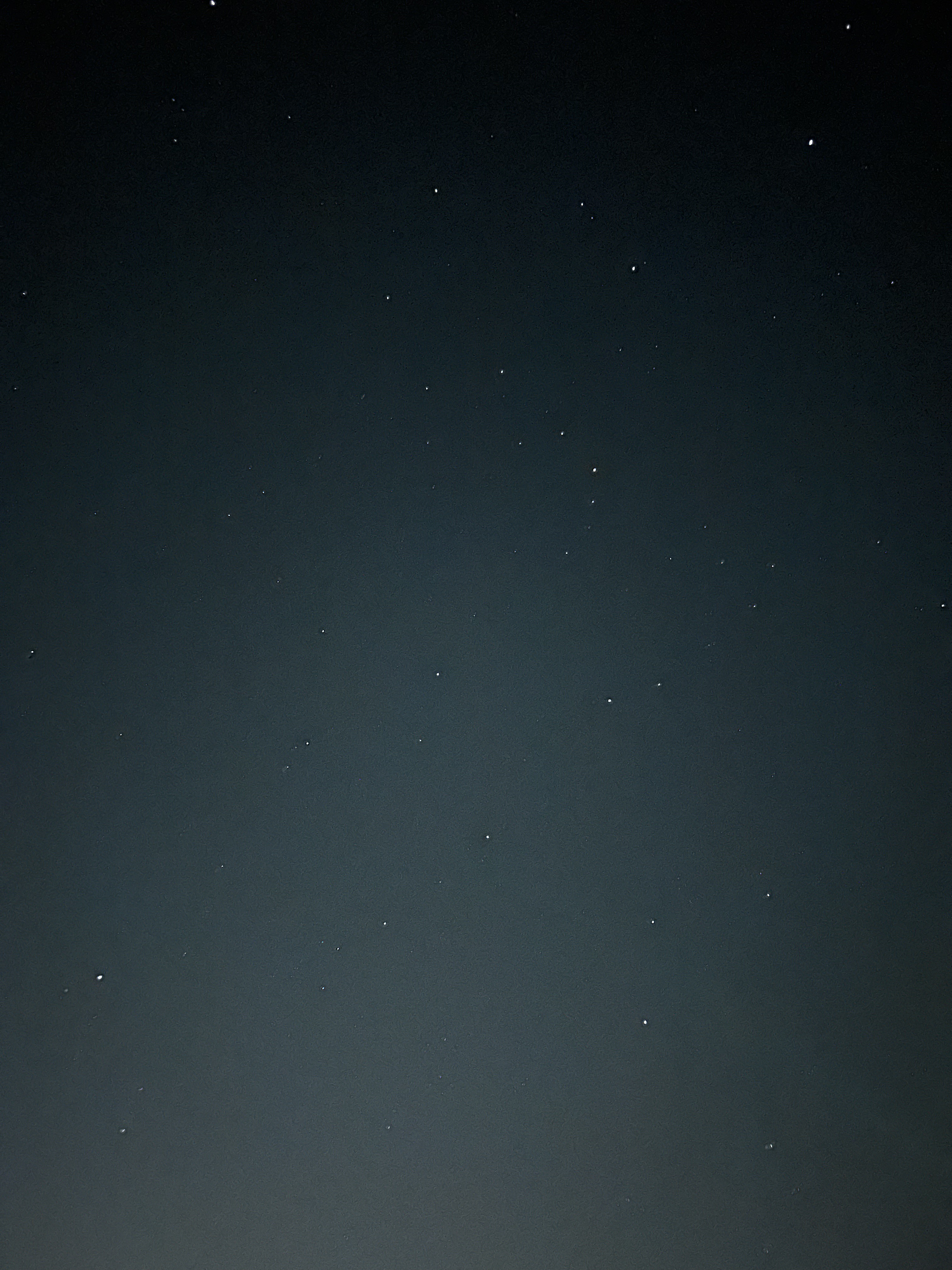
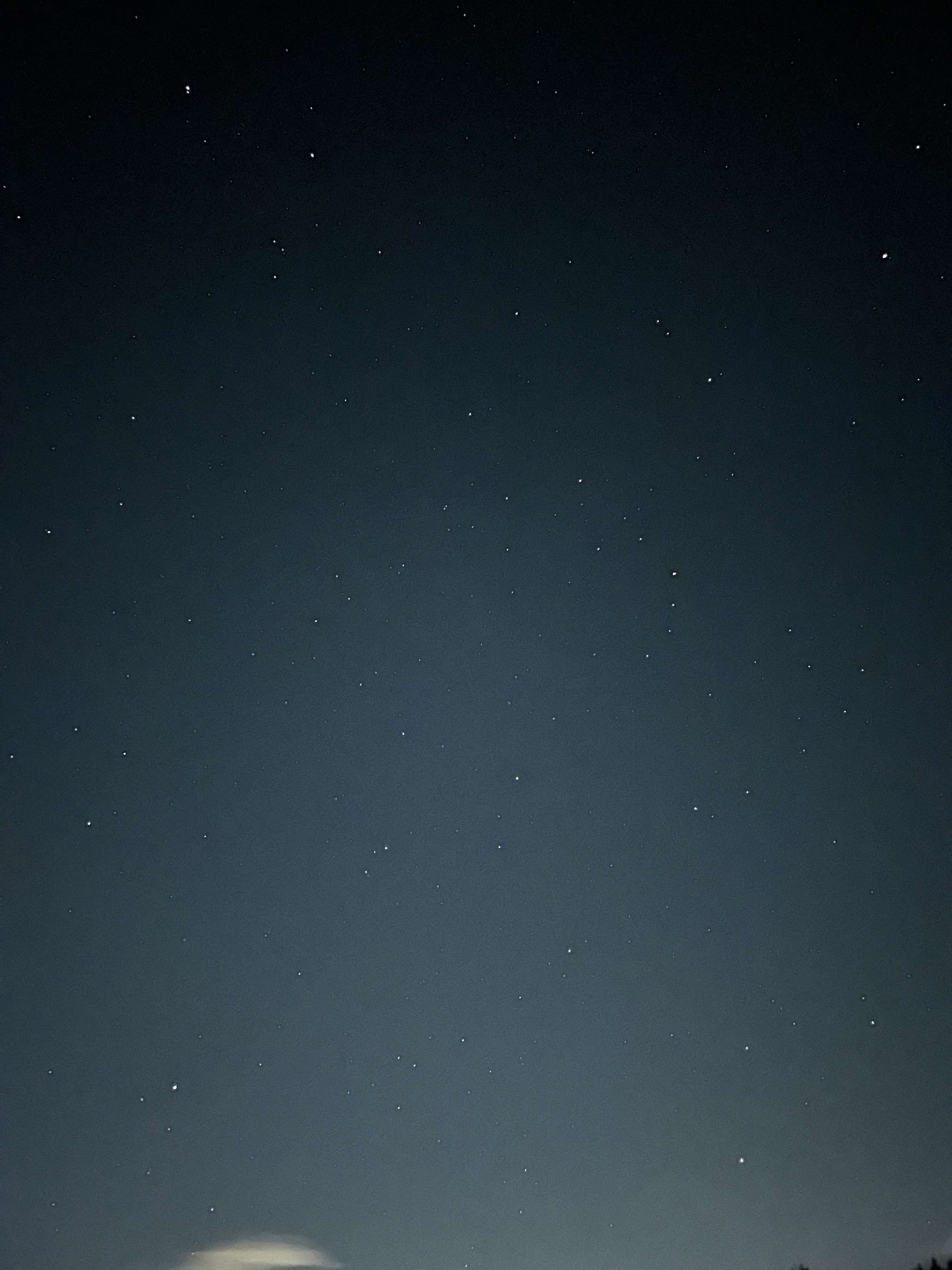
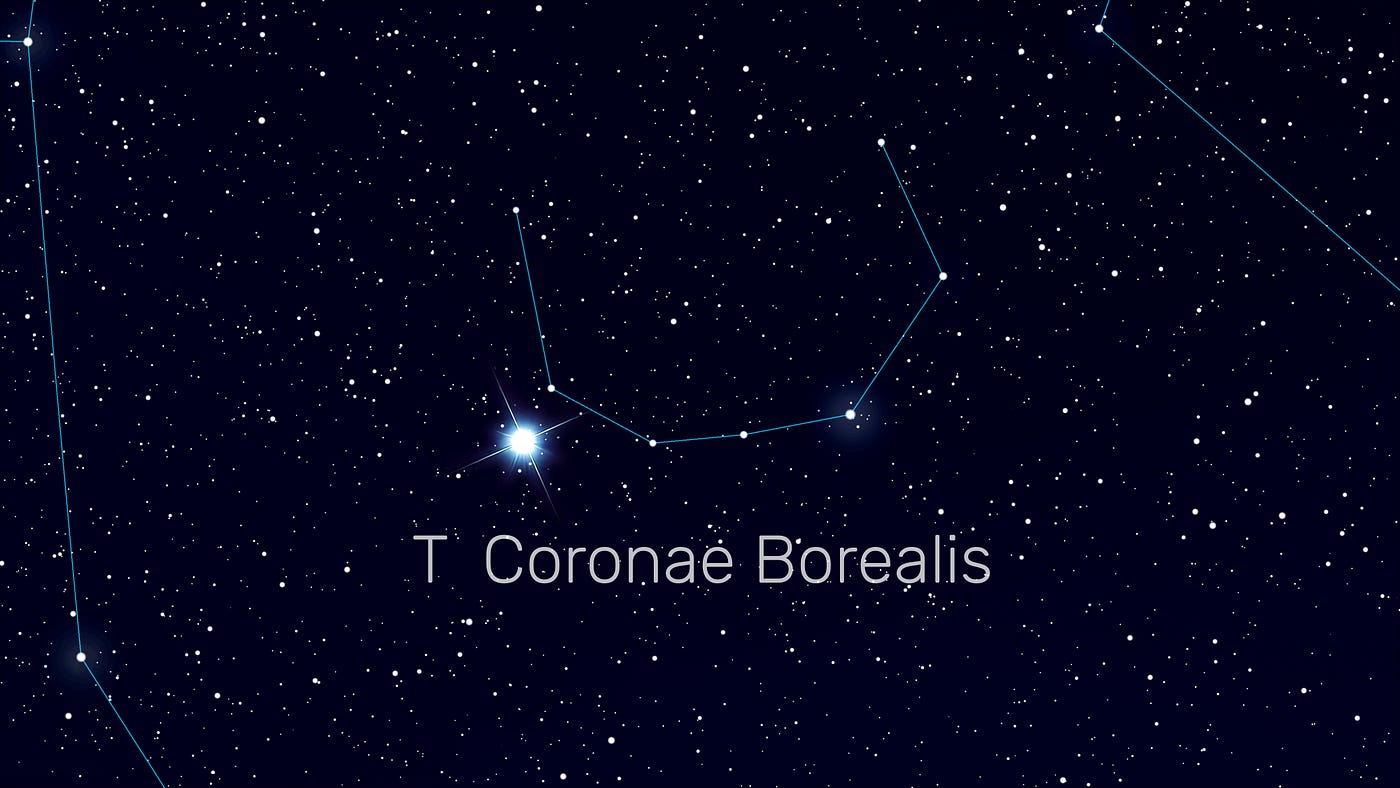
The last outburst of T was February 9th 1946, 80 years ago. Renowned variable star observer, Leslie Peltier missed the event due to an illness and went back to bed, which was a mistake. He had planned his observation for 2:30 AM.
To celebrate Peltier’s 80th anniversary of T’s outburst (and Peltier missing it) on February 9th, I had planned to make a cellphone photo at precisely 2:30 AM on the morning of the 9th. Unfortunately, it was completely cloudy.
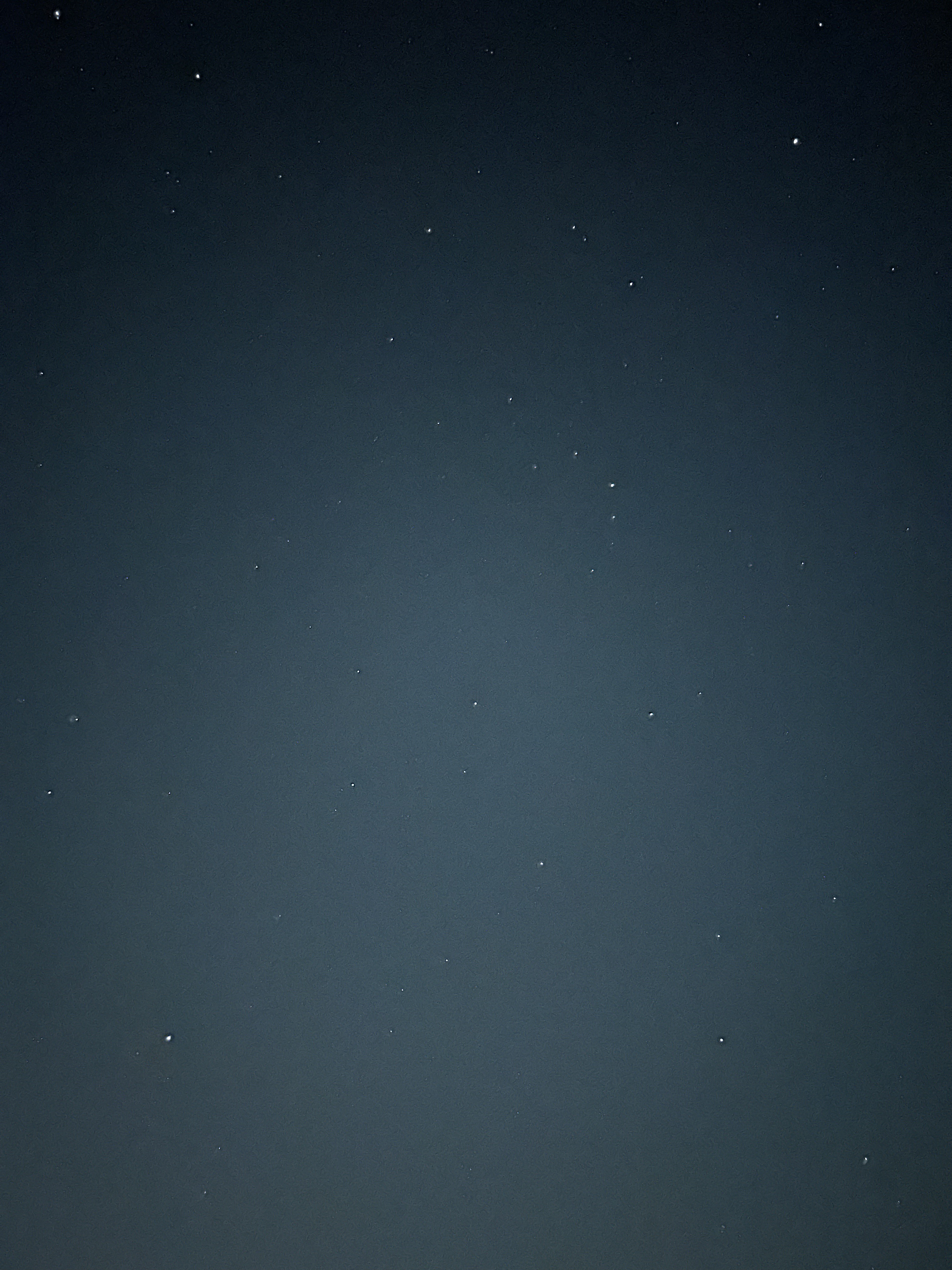
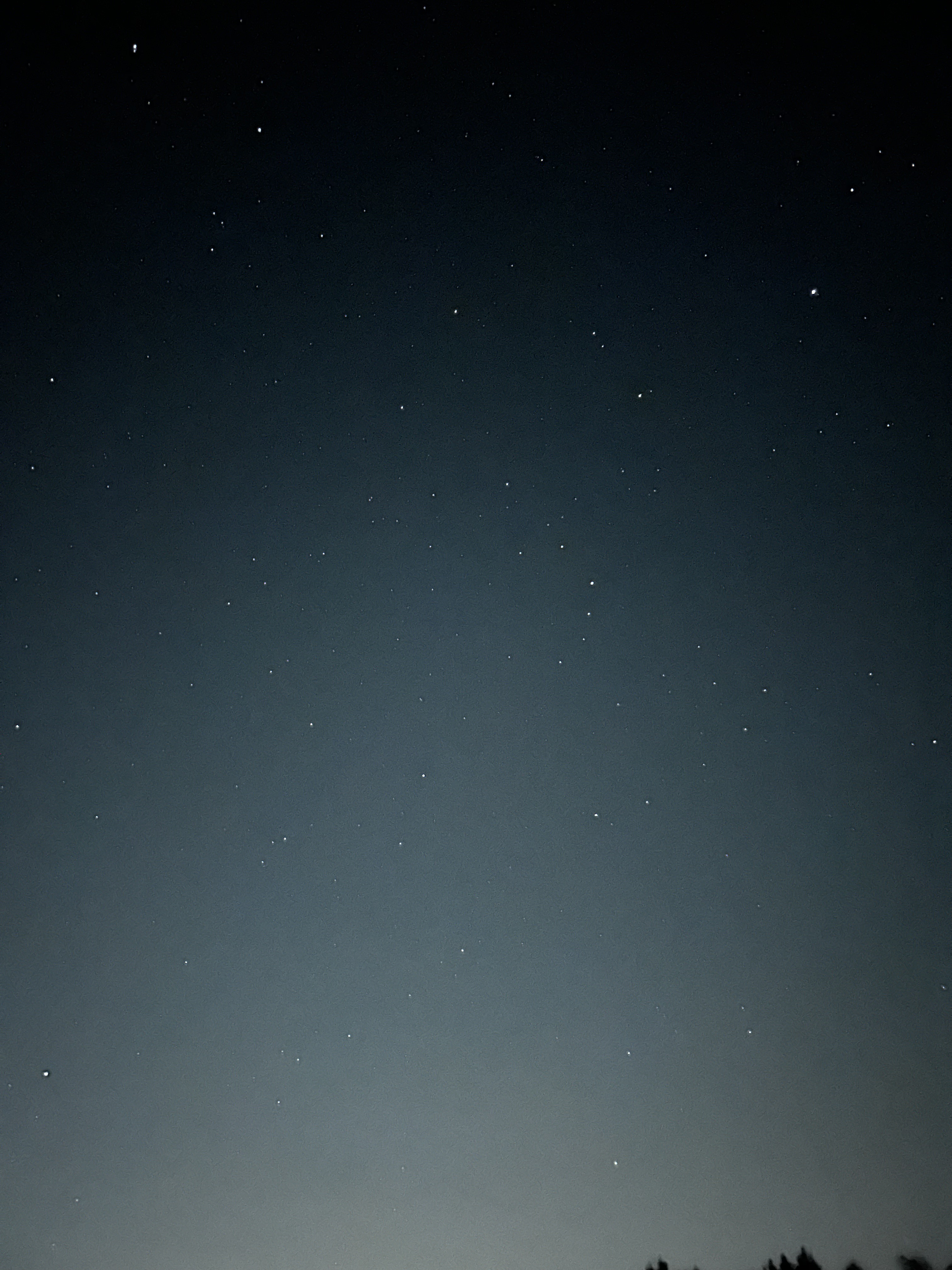
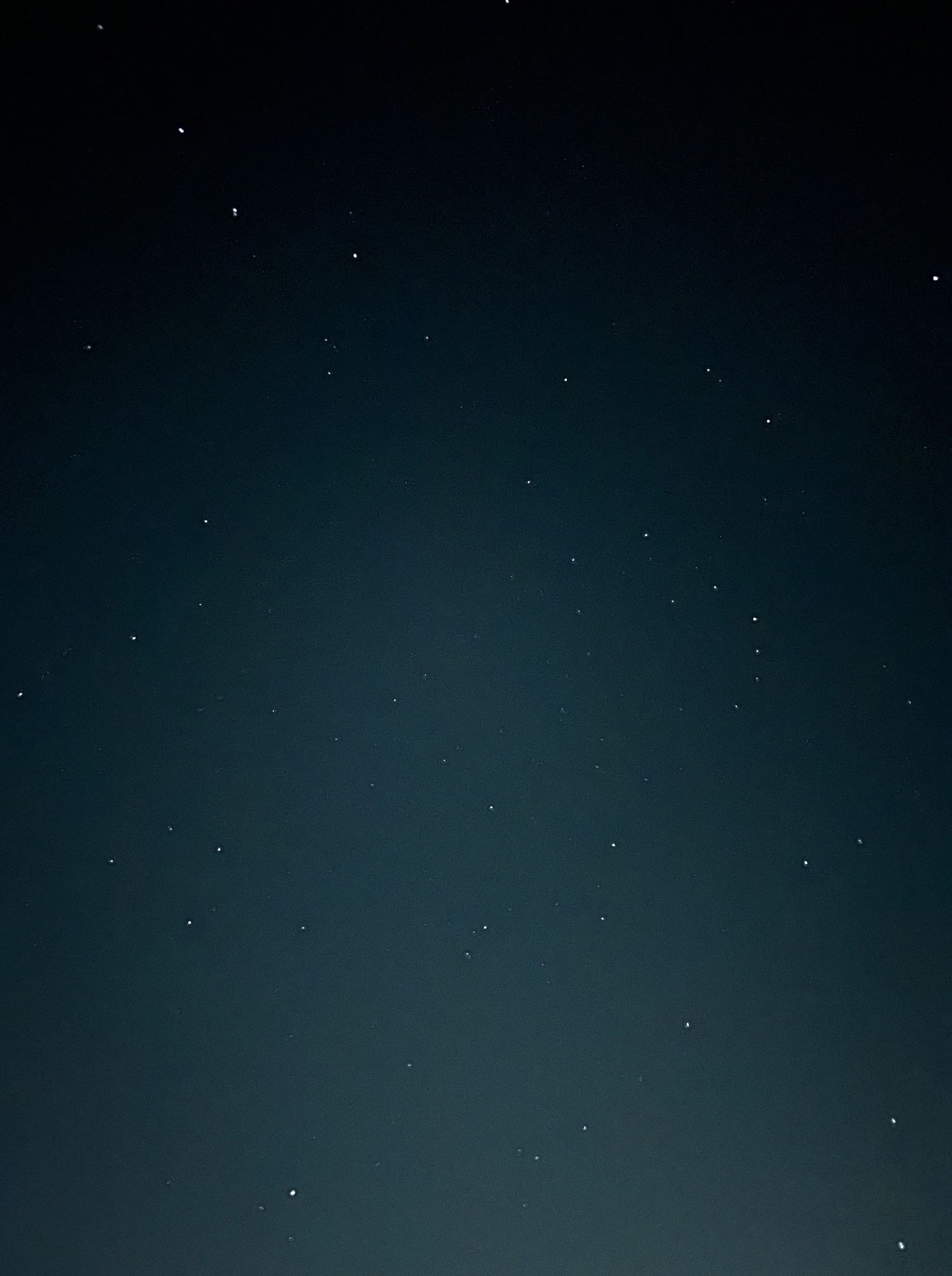
My “latest” cell photos as following: I hope to keep this effort up, but at the moment…only if I wake up in the early AM. It will be quite a while before Corona Borealis becomes an evening constellation. For those with an interest in keeping up with T, it is in excellent sky position at about 3:00 AM and later.
Following photos: I’ll post the most current or recent first, and drop off the last…maintaining about ten photos or nights for review via this post.
Roger Ivester
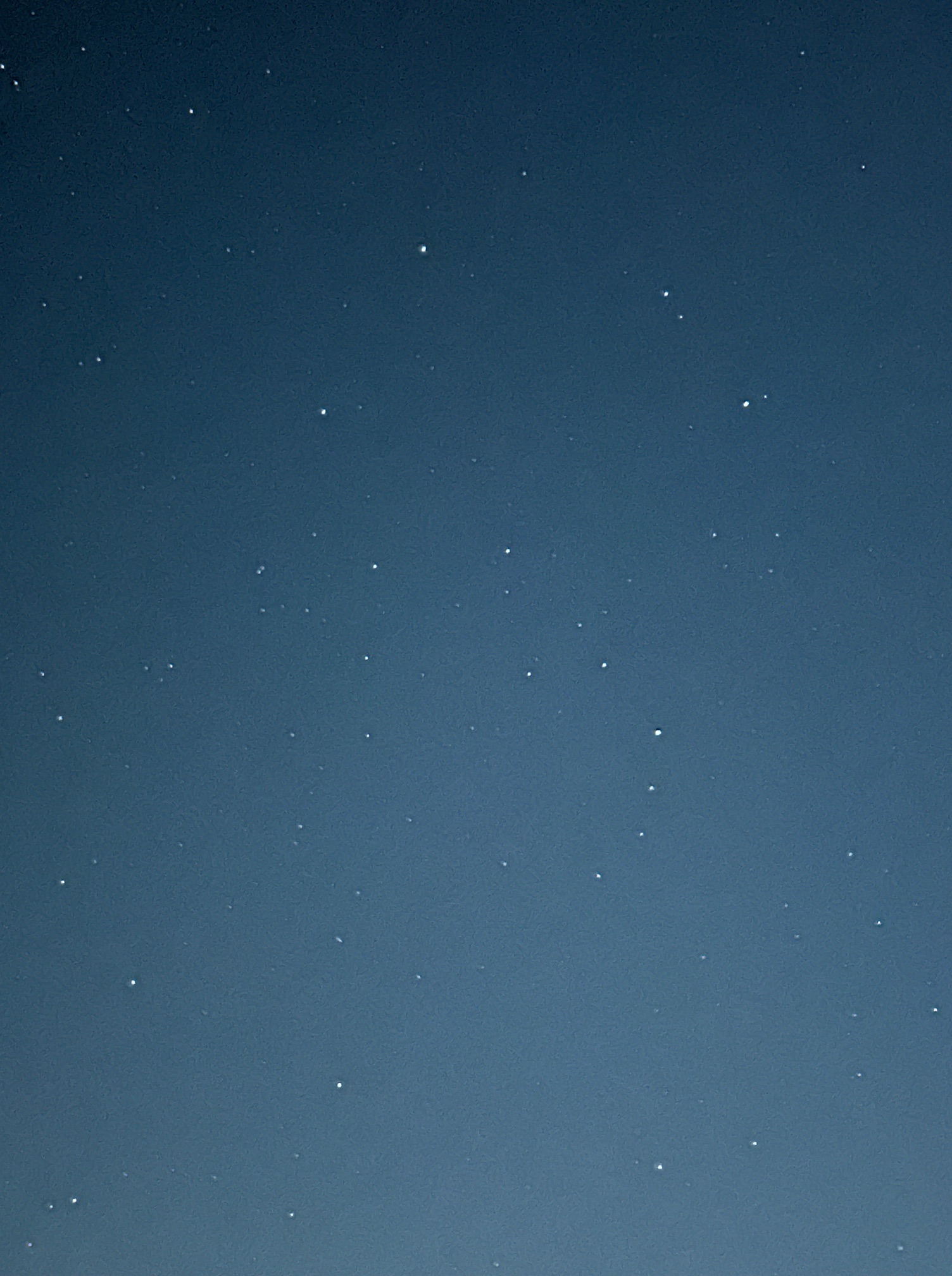
Tuesday February 17th 2026 @ 5:28 AM
Monday February 16th 2026 @ 2:31AM
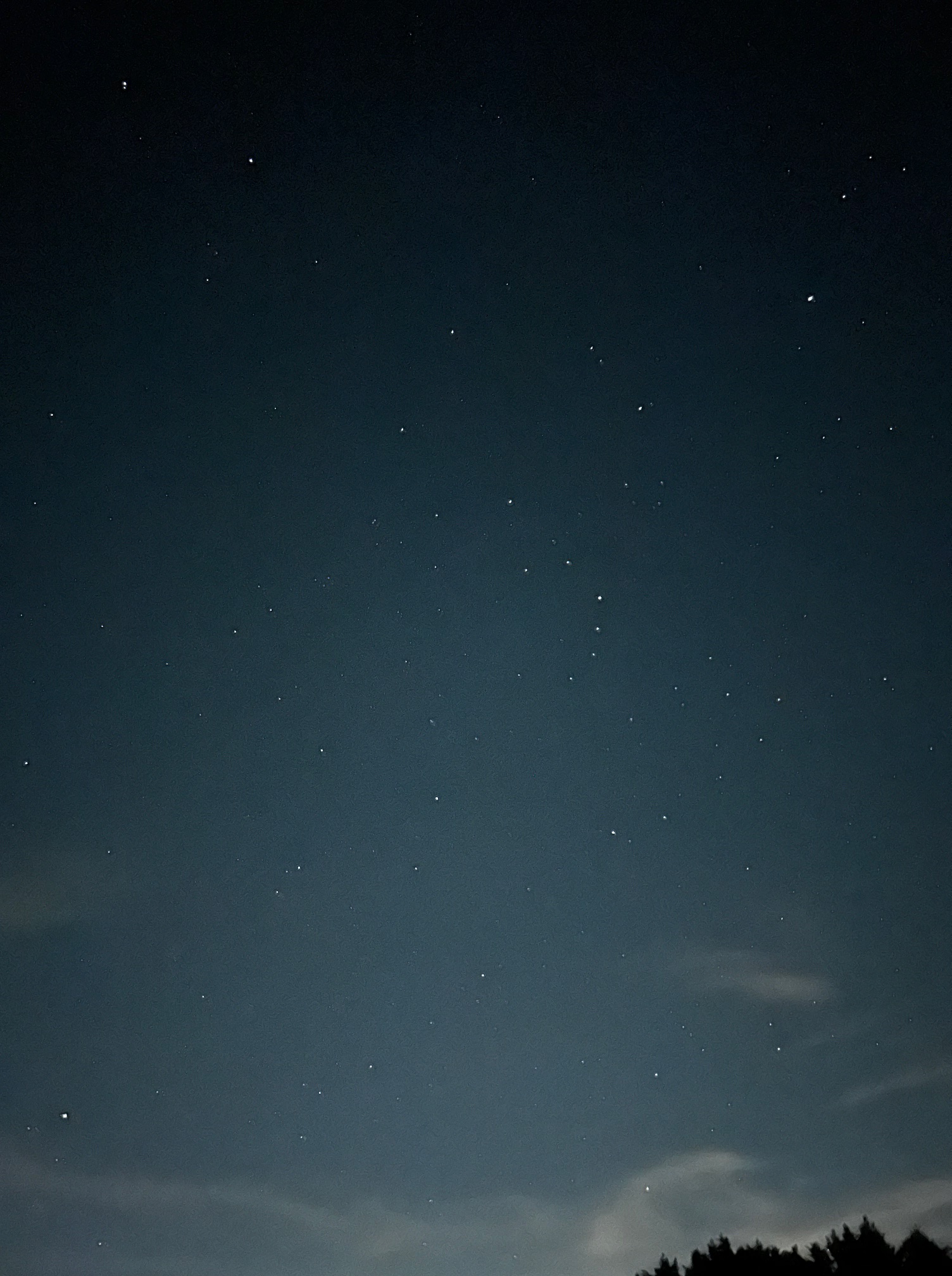
Monday: February 16th @ 2:32 AM
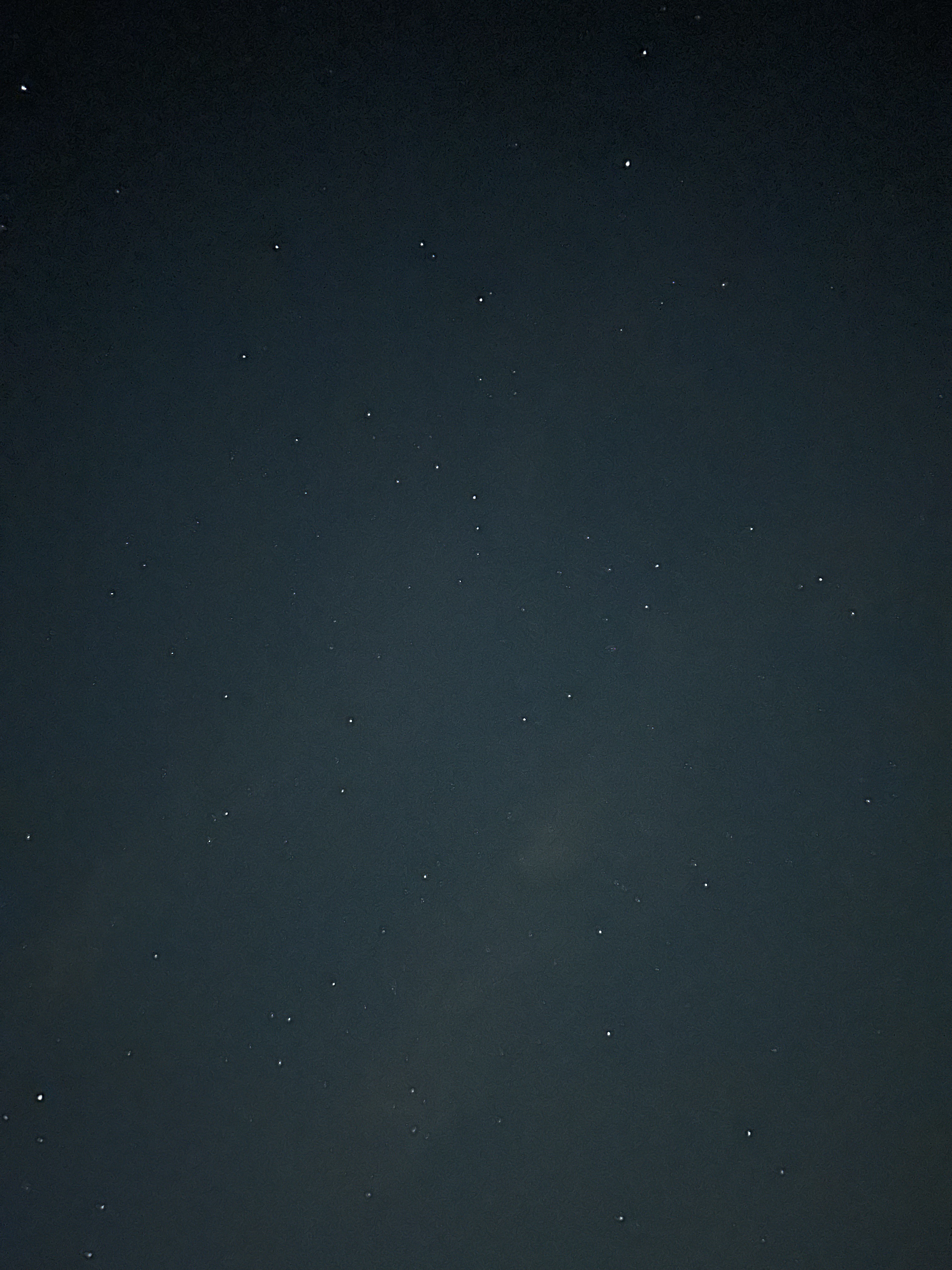
Saturday: February 14th 2026 @ 4:56 AM
Saturday: February 14th 2026
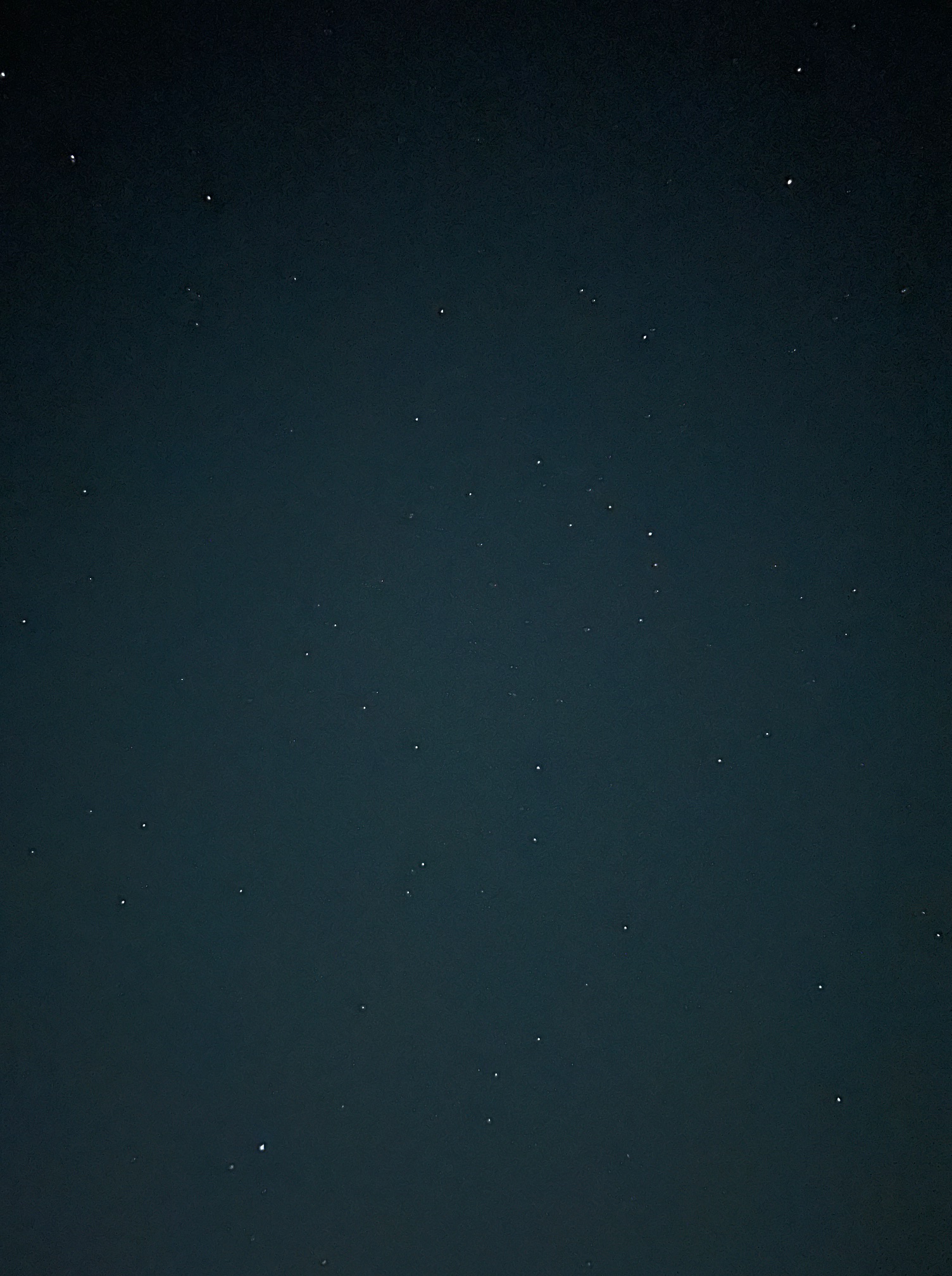
February 13th 2026 @ 4:48AM: Two cellphone photos as following. I woke up late. Corona Borealis is really high in the sky at this time…but in excellent position and above the light dome of Shelby.
4:49 AM February 13th 2026: Magnified photo…
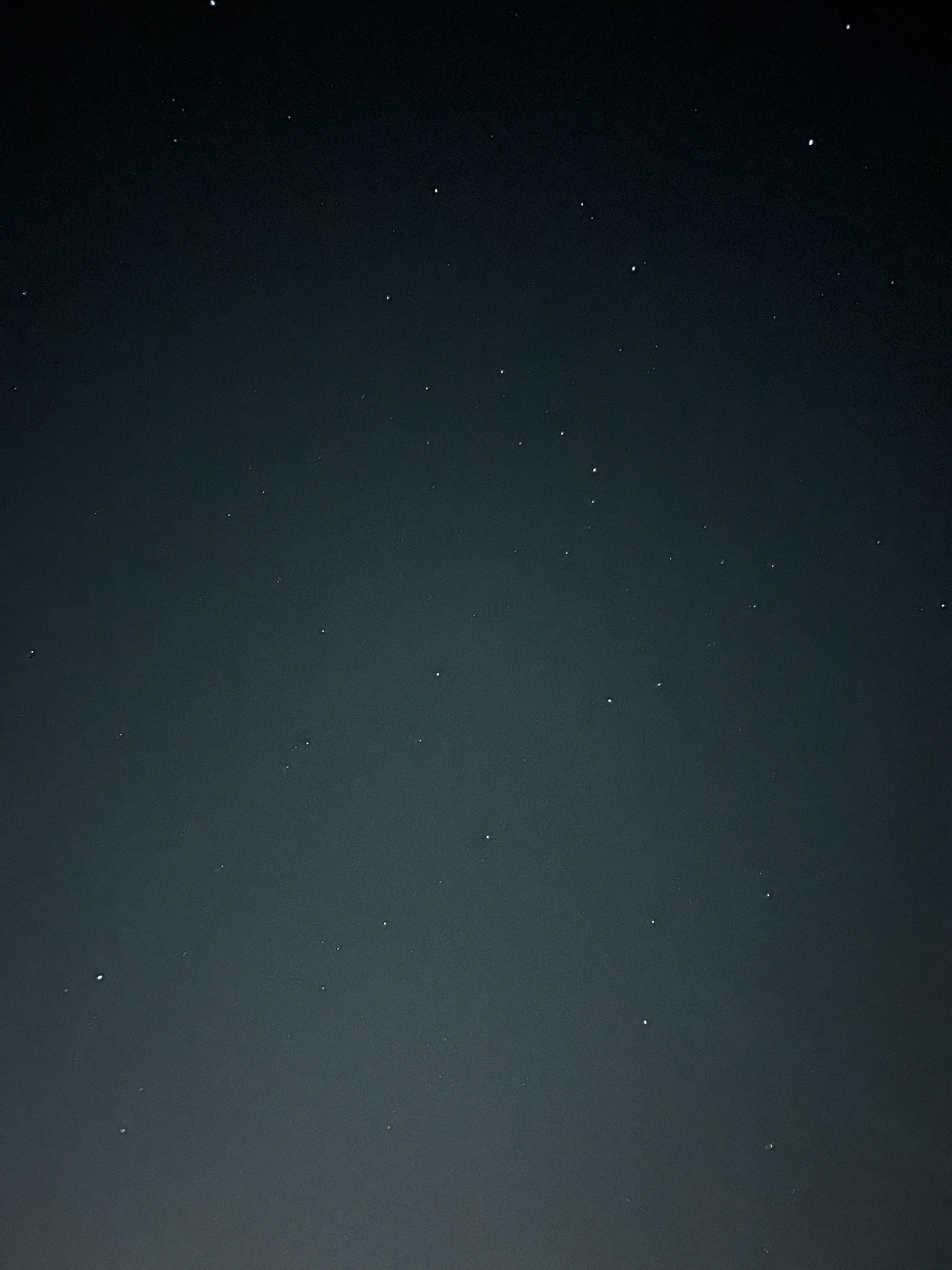
Thursday, February 12th @ 3:15 AM (The handle of Ursa Major in the upper left and Arcturus to the right)
For those waiting and watching for the predicted outburst of recurrent novae star, T Corona Borealis, the excitement is building, but no one knows when the event will happen.
I’ve been making photos of the constellation Corona Borealis as often as possible since last summer (2025) using my cellphone with 3-second exposures. And after the outburst, there will be the appearance of a “new star” in the constellation and visible without optical aid.
February 7th 2026: Update to this post: The last outburst of T was February 9th 1946, 80 years ago. Renowned variable star observer, Leslie Peltier missed the event due to an illness and went back to bed.
The following photo was made this morning…Saturday February 7th 2026 @ 2:56 AM: Corona Borealis is in perfect sky position, high in the east. The bright moon made the constellation difficult to see without optical aid.
“I alone am to blame for being remiss in my duties, nevertheless, I still have the feeling that T could have shown me more consideration. We had been friends for many years; on thousands of nights I had watched over it as it slept, and then it arose in my hour of weakness as I nodded at my post. I still am watching it but now it is with a wary eye. There is no warmth between us any more.” Leslie Peltier
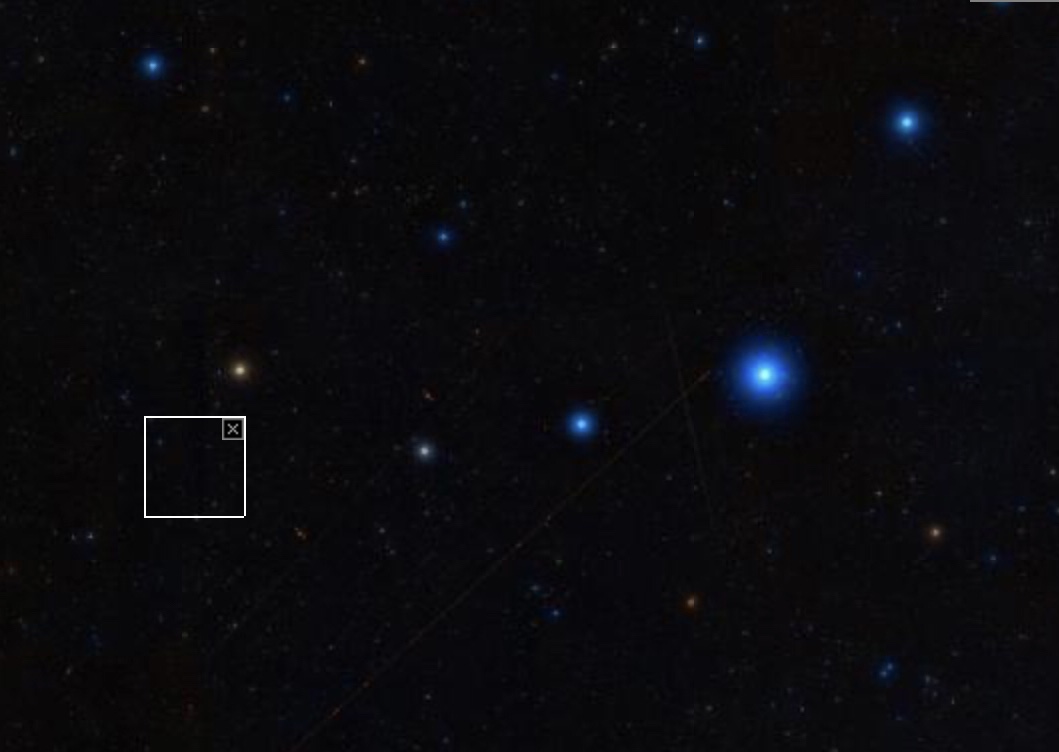
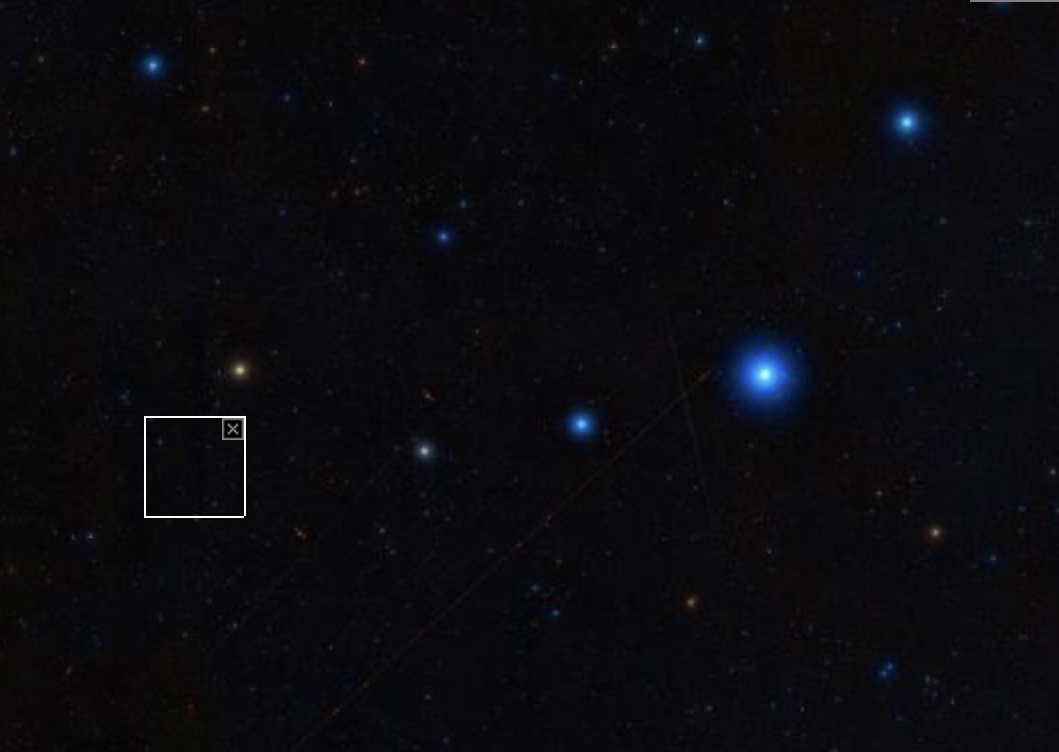
The following picture is provided just for reference as to the location of T, however, not likely will it be this bright as related to other stars in the constellation, but lets keep watch.
The following excerpts are from a “Sky & Telescope” online article.
Take T Coronae Borealis (T CrB). It’s one of only about 10 stars in the entire sky classified as a recurrent nova, with two recorded outbursts to its name. Normally, the star slumbers at 10th magnitude, but on May 12, 1866, it hit the roof, reaching magnitude +2.0 and outshining every star in Corona Borealis before quickly fading back to obscurity. Eighty years later, on February 9, 1946, it sprang back to life, topping out at magnitude +3.0.
“I alone am to blame for being remiss in my duties, nevertheless, I still have the feeling that T could have shown me more consideration. We had been friends for many years; on thousands of nights I had watched over it as it slept, and then it arose in my hour of weakness as I nodded at my post. I still am watching it but now it is with a wary eye. There is no warmth between us any more.”
T stayed under the radar for the next 69 years, holding steady around magnitude +10.2–10.3. That began to change in February 2015, when it inched up to +10.0 and remained there until early February this year. That’s when things kicked into high gear with the star steadily growing brighter from late winter through early spring to reach its current magnitude of ~9.2.
Alongside the brightening trend, T’s become bluer as well. Astronomers describe its recent unprecedented activity as a star entering a “super active” state. This last happened in 1938, eight years before its last great outburst.
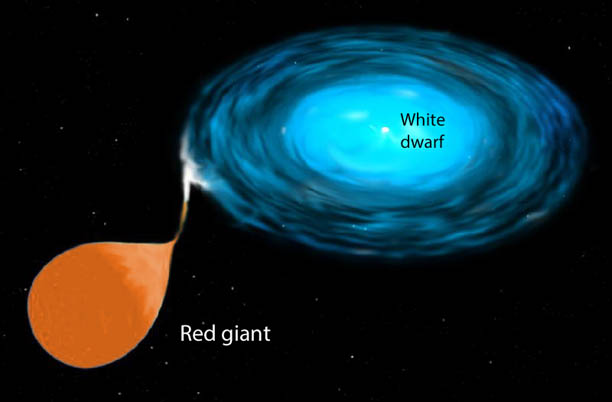
Stars like T CrB involve a red giant closely paired with a white dwarf. The giant feeds hydrogen gas into a swirling accretion disk around a massive, compact white dwarf at a rate a million times greater than the solar wind. Material funnels from the disk onto the dwarf’s surface until it ignites in a thermonuclear explosion similar to a nova. NASA
Recent Comments