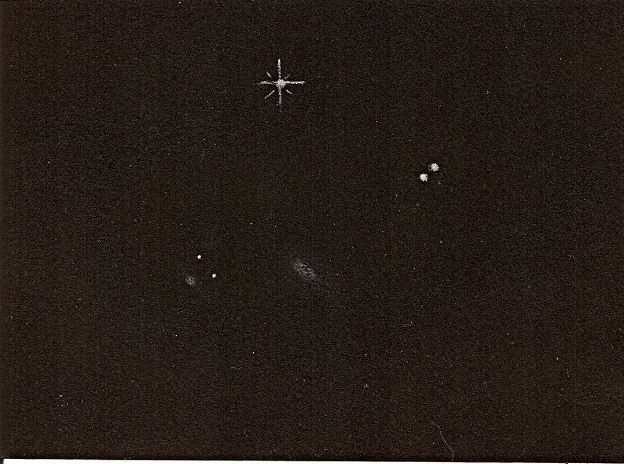
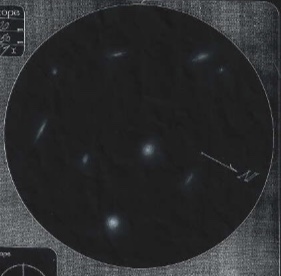
NGC 5689 and Optional Galaxy NGC 5676 In Bootes – June 2020 Observer’s Challenge Report #137

Posted May 20, 2020 by rogerivester
Categories: Work File Only - Observer's Challenge Reports

MONTHLY OBSERVER’S CHALLENGE

Compiled by:

Roger Ivester, North Carolina

&

Sue French, New York

June 2020

Report #137

Galaxy NGC 5689 in Boötes

Complete Report 

June 2020 OBSERVERS CHALLENGE _NGC 5689

NGC 188 – A Very Faint and Difficult Open Cluster, and so Close to Polaris

Posted April 30, 2020 by rogerivester
Categories: Work File Only - Observer's Challenge Reports

AUGUST 2010 OBSERVERS CHALLENGE – NGC-188 


The Questar 3.5-Inch Telescope Story, Vernonscope/Brandon Eyepieces and a Meade ETX 90 Astro

Posted April 25, 2020 by rogerivester
Categories: Roger's Articles

     Questar Telescopes (Maksutov-Cassegrain) have been built in New Hope, Pennsylvania since 1950.  Questar has chosen Brandon eyepieces for many years, which are also made in the USA. https://www.questar-corp.com/ 

     Brandon eyepieces are optimized for telescopes with a focal ratio of f/7 or greater.   https://043a19c.netsolhost.com/

     The following are some photographs of a friends 3.5-inch Duplex.    

DSCF5015

DSCF5012    

     During the early 50’s, Cave Optical in Long Beach, California, manufactured the 3.5-inch mirrors.

    Questar graced the back of the front cover of “Sky & Telescope Magazine” for decades!


A challenge to Questar?   

     In 1996, Meade Instruments Corporation, introduced the Meade ETX 90mm Astro.  This telescope was designed to be an economy Questar.  Mostly constructed of plastic, but with all the emphasis on the optics.   

     At that time, Meade was manufacturing the ETX, as well as most all of their higher-end telescopes in Irvine, California.     

     I purchased an ETX 90 the following year (1997) for use as a very portable telescope, to observe deep-sky objects within its grasp.  It served that purpose well.  The telescope had very good optics and would easily exceed Dawes’ Limit on double stars on a night with good to excellent seeing. 

     Dawes Limit:  4.56/A (A is aperture in inches) for two equal stars of about 6th magnitude.   

https://www.astronomics.com/info-library/astronomical-terms/dawes-limit/                                                                                                                                                                                                

     However, when considering fit, finish, cosmetics and ease of use, the ETX cannot compare to the “much” more expensive and precision Questar.  

     The 3.5-inch Questar continues to have its place in astronomy, despite most amateurs of today wanting larger and larger telescopes, but how many telescope companies do you know that have been in business since 1950?

      And from their longtime advertisement in “S&T” the following was said:   “Questar, The World’s Finest, Most Versatile Telescope”

     This must be true, to have survived in the ever-changing world of amateur astronomy equipment for 72 years.  (1950 – 2022)  

https://rogerivester.com/2012/02/02/questar-a-high-precision-3-5-inch-telescope/

M85 and NGC 4394: Galaxies in Coma Berenices: Observer’s Challenge Report for May 2020: #136

Posted April 22, 2020 by rogerivester
Categories: Work File Only - Observer's Challenge Reports

MONTHLY OBSERVER’S CHALLENGE

Compiled by:

Roger Ivester, North Carolina

&

Sue French, New York

May 2020

Report #136 

M85 and NGC 4394:  Galaxies in Coma Berenices 

May 2020 OBSERVERS CHALLENGE _M85 and NGC 4394

Full Cut-Off Lighting Fixtures In Matthews, NC: And The Health Hazards Of Light Pollution

Posted March 7, 2020 by rogerivester
Categories: Roger's Articles

     Since late summer 2019, my wife and I have had regular business in Matthews, North Carolina, which is a town on the outskirts of Charlotte.  Our Dachshund needed eye surgery, and we take her for regular visits to the Animal Eye Clinic even to this day. (July 2025)   

     Matthews has some excellent and very attractive, full cut-off lighting fixtures.  Lighting should be “fully-shielded” and directed downward to avoid glare and excessive light pollution, as the following photos show.  However, I can’t be for sure of the temperature….hopefully 3,000k or less?  

     No one wants, or should want a bright “unnatural” daytime appearing light, which is that of a 4,000k LED light.  Unfortunately, most all of the new LED lights installed these days are 4,000k or even brighter, which is damaging to human health, wildlife and the natural world.  Unfortunately this light has now become the standard for lighting not only cities, but also for rural and even quiet residential streets. 

     Back to the lighting in Matthews:  Many of the lights have back-shields which eliminate unnecessary light shining into house windows.  This is a great feature.  Proper outdoor lighting should direct light where it’s needed only, downward and with a shield to avoid excess glare.     

     The lights in Matthews, which I’m discussing are in a “seemingly” newer business and residential area.  An example below:   

IMG_1418

      Currently, the trend is to light residential areas and sidewalks in cities are the “short pole” colonial style fixture with 360º of 100 watt and 4,000k LED’s.

     No, I’m not suggesting that lighting is bad, but lighting should be of “intelligent” design, and used only where necessary.   And that would be using lighting of an “acceptable” wattage and with a temperature of (3,000k or less) and with “full shielding” to prevent glare and unnecessary and “excessive” light pollution!   You may try, but seems that few cities are willing to go less than 3,000K for city streets.  

     High-intensity LED lighting and all other “excessive” light pollution is proven to damage or injure wildlife, insects, and also increases the risk of cancer (especially) hormonal cancer(s) in both men and women, being prostate and breast cancer.  

Exposure to Artificial Light at Night Can Harm Your Health!

     Humans evolved to the rhythms of the natural light-dark cycle of day and night. The spread of artificial lighting means most of us no longer experience truly dark nights.

     Research suggests that artificial light at night can negatively affect human health, increasing risks for obesity, depression, sleep disorders, diabetes, breast cancer, and more.

     Like most life on Earth, humans adhere to a circadian rhythm — our biological clock — a sleep-wake pattern governed by the day-night cycle.  Artificial light at night can disrupt that cycle.

     Our bodies produce the hormone melatonin in response to circadian rhythm.  Melatonin helps keep us healthy.  It has antioxidant properties, induces sleep, boosts the immune system, lowers cholesterol, and helps the functioning of the thyroid, pancreas, ovaries, testes, and adrenal glands. Nighttime exposure to artificial light suppresses melatonin production.

     An expressed concern about exposure to blue light from outdoor lighting and recommends shielding all light fixtures and only using lighting with 2700K color temperature and below.   

Some more excellent examples of proper lighting fixtures….  

This article or post is featured on my site:  www.rogerivester.com  and listed under the title of “light pollution issues.”  

IMG_1498

A report worthy to read, which I took from Dr. Mario Motta’s diverse site https://www.mariomottamd.com/ which includes light pollution issues as related to human health problems.  Rather than inserting a link, I chose to just copy and paste for easy reading…as following.   Dr. Motta is world renowned for his work, and dedication to the importance of proper lighting.   RI 

REPORT 4 OF THE COUNCIL ON SCIENCE AND PUBLIC HEALTH (A-12) Light Pollution: Adverse Health Effects of Nighttime Lighting Authors: David Blask, PhD, MD (Tulane University School of Medicine); George Brainard, PhD (Jefferson Medical College); Ronald Gibbons, PhD (Virginia Tech); Steven Lockley, PhD (Brigham and Women’s Hospital, Harvard Medical School); Richard Stevens, PhD (University Connecticut Health Center); and Mario Motta, MD (CSAPH, Tufts Medical School).

EXECUTIVE SUMMARY Objective. To evaluate the impact of artificial lighting on human health, primarily through disruption of circadian biological rhythms or sleep, as well as the impact of headlamps, nighttime lighting schemes, and glare on driving safety. Concerns related to energy cost, effects on wildlife and vegetation, and esthetics also are briefly noted. Methods. English-language reports in humans were selected from a PubMed search of the literature from 1995 to March 2012 using the MeSH terms “circadian/biological clocks/rhythm,” “chronobiology/disorders,” “photoperiod,” “light/lighting” “sleep,” “work schedule,” or “adaptation,” combined with the terms “physiology,” “melatonin,” “adverse effects/toxicity,” “pathophysiology,” “neoplasm,” “epidemiology/etiology,” “mental disorders,” “energy metabolism,” and “gene expression.”

Additional articles were identified by manual review of the references cited in these publications; others were supplied by experts in the field who contributed to this report (see Acknowledgement). Results. Biological adaptation to the sun has evolved over billions of years. The power to artificially override the natural cycle of light and dark is a recent event and represents a man-made self-experiment on the effects of exposure to increasingly bright light during the night as human societies acquire technology and expand industry.

In addition to resetting the circadian pacemaker, light also stimulates additional neuroendocrine and neurobehavioral responses including suppression of melatonin release from the pineal gland improving alertness and performance. Low levels of illuminance in the blue or white fluorescent spectrum disrupt melatonin secretion.

The primary human concerns with nighttime lighting include disability glare (which affects driving and pedestrian safety) and various health effects. Among the latter are potential carcinogenic effects related to melatonin suppression, especially breast cancer. Other diseases that may be exacerbated by circadian disruption include obesity, diabetes, depression and mood disorders, and reproductive problems. Conclusion. The natural 24-hour cycle of light and dark helps maintain precise alignment of circadian biological rhythms, the general activation of the central nervous system and various biological and cellular processes, and entrainment of melatonin release from the pineal gland.

Pervasive use of nighttime lighting disrupts these endogenous processes and creates potentially harmful health effects and/or hazardous situations with varying degrees of harm. The latter includes the generation of glare from roadway, property, and other artificial lighting sources that can create unsafe driving conditions, especially for older drivers. More direct health effects of nighttime lighting may be attributable to disruption of the sleep-wake cycle and suppression of melatonin release.

Even low intensity nighttime light has the capability of suppressing melatonin release. In various laboratory models of cancer, melatonin serves as a circulating anticancer signal and suppresses tumor growth.

Limited epidemiological studies support the hypothesis that nighttime lighting and/or repetitive disruption of circadian rhythms increases cancer risk; most attention in this arena has been devoted to breast cancer. Further information is required to CSAPH Rep. 4-A-12 — page 2 of 25 evaluate the relative role of sleep versus the period of darkness in certain diseases or on mediators of certain chronic diseases or conditions including obesity.

Due to the nearly ubiquitous exposure to light at inappropriate times relative to endogenous circadian rhythms, a need exists for further multidisciplinary research on occupational and environmental exposure to light-at-night, the risk of cancer, and effects on various chronic disease


NGC 3877 – Galaxy In Ursa Major: April 2020 Observer’s Challenge Report #135

Posted February 28, 2020 by rogerivester
Categories: Work File Only - Observer's Challenge Reports


MONTHLY OBSERVER’S CHALLENGE

Compiled by:

Roger Ivester, North Carolina

&

Sue French, New York 

April 2020

Report #135

NGC 3877 Galaxy in Ursa Major  

April Observer’s Challenge Report:

April 2020 OBSERVERS CHALLENGE _ NGC 3877


NGC 2859 – Galaxy in Leo Minor: March 2020 Observer’s Challenge Report

Posted February 27, 2020 by rogerivester
Categories: Work File Only - Observer's Challenge Reports

MONTHLY OBSERVER’S CHALLENGE

Compiled by:

Roger Ivester, North Carolina

&

Sue French, New York

March 2020

Report #134

NGC 2859 Galaxy in Leo Minor

Complete Observer’s Challenge Report Link as following:

March 2020 OBSERVERS CHALLENGE _ NGC 2859

NGC 1931 – Bright Nebula and Cluster in Auriga: February 2020 Observer’s Challenge Report

Posted January 23, 2020 by rogerivester
Categories: Work File Only - Observer's Challenge Reports

MONTHLY OBSERVER’S CHALLENGE

Compiled by:

Roger Ivester, North Carolina

&

Sue French, New York

February 2020

Report #133

NGC 1931 Bright Nebula and Cluster in Auriga 

Complete Report:

February 2020 OBSERVERS CHALLENGE _ NGC 1931


Building a Hot Rod in November 1964: The Beatles Came to America in February of That Year, Cassius Clay Wins the Heavy-Weight Boxing Championship Over Sonny Liston. And I was Eleven Years Old…

Posted January 15, 2020 by rogerivester
Categories: Roger's Articles

Date:  November 1964  

     My five older brothers built something similar or akin to what might be called a “Rat Rod” today.  The origin was a 1951 Studebaker…using the frame, which had been shortened by three feet, the original engine and transmission.  

       In the following photos are my brother Jimmy, who was driving, I’m in the middle with the “cool” cowboy hat, and my brother, Phillip.

     My older brothers, Richard, Jimmy, Ronny, Donnie and Phillip, worked on fabricating “The Bug” as it was called.   I was a bit too young, and mostly just enjoyed watching.  Sometimes I would assist by handing them wrenches or anything else they might need.   

     Improvements were made over the next year with the installation of a mid-50’s Chrysler Hemi engine, which had much more horsepower than the Studebaker.     

     The sad looking tires, especially the front white-walls would eventually be changed out with some better looking wheels.  Additions would also be made to the body, however, still constructed of wood panels.  With a larger budget, many improvements could have been made, but….

     My brother, Donnie, being in high school drove the school bus in the background, which was an early 1950’s model Chevrolet.  

An astronomical telescope purchase in 1963:    

     It was my brother Jimmy, who had already purchased (at the time of the photo) a 60mm f/15 equatorially mounted refractor from Sears, at a cost of $100.  This would be the equivalent of $835 in 2019.  An expensive telescope for sure.

     Two years later, I would begin using this telescope to observe deep-sky objects (galaxies, nebulae and star clusters) and a lifelong interest in astronomy would follow, even to this day.

Roger Ivester   

The Beginning of a Hot Rod

The Beginning of a Hot Rod - 2


 Improved budget, greater skills and abilities, my brother Phillip would become a race car and engine builder.  He would also go on to win an incredible 164 drag racing events. with multiple drag cars.    

The following photo was made in September 2019:     

Race Car Wheeley


IMG_0031

Today, April 12th 2025 We Celebrate Our 25th Wedding Anniversary: I Write This To Insure Our Love Story Never Becomes Lost To Time…

Posted January 5, 2020 by rogerivester
Categories: On April 12th 2025 We Will Celebrate Our 25th Wedding Anniversary

Debbie and I celebrate our 25th Wedding Anniversary today, Saturday, April 12th 2025.

I’ve been wanting to write “Our Story” for quite a few years now. However, I wanted it to be permanent and sharable, so naturally I chose my blog site. It is not only a story, but a love story and the importance of having patience and waiting for God, in His perfect timing, and not our own. Our story would actually cover decades while in the making. But before I can begin, I have to share what would “seemingly be insignificant events” in my life, beginning at sixteen. Every event is so very important, and would happen for a reason, and those reasons would be to eventually bring us together.

Our story will encompass, but touch lightly on the dissolution of both our families, which was sad at the time for all. Unfortunately, divorce happens, but it’s important to accept the ending of a marriage and concentrate on moving forward in a positive way. The best way I can describe this event in our lives would be to quote Psalm 30:5 “…weeping may endure for a night, but joy cometh in the morning.”

We have faced obstacles, such as me losing two jobs, but nothing compares to the loss of Butch, which was devastating to all. Debbie finds this just too painful to discuss, but it had to be included. However, Debbie and I have always had each other for solace, during life’s trials.

The following story should not be considered the definitive story of our life together, but it’s a beginning. I truly believe I could write a book about our love story that is real, unlike a silly love novel, fabricated in someone’s mind.

The first time I saw Debbie was in 1970, while I was working after school at a local textile plant. I had no idea who she was, not even her name. She was not even aware of this until I began writing…and only this week!

I was 16 years old and needed an after school job. My brother, Phillip was working at Dover Mill during this time and helped me. But the job was only to last for two weeks. I would first need a car. I noticed a 1966 Dodge Dart at Dale Costner’s Car Lot in Lawndale. Everything was good, with the exception that someone had taken out the AM radio, and the gas gauge didn’t work. It was definitely not the car I wanted, but was the only car that I could afford, at that time.

I financed the car through Union Trust Company, a local bank in Lawndale, but only after my Dad co-signed the $500 loan. It was actually pretty strange that I’d enter into such an agreement and with a job that would last only two weeks. But I would have to have this car if I was going to meet “or should I say” see Debbie for the first time.

Please keep reading, as again, all of these “seemingly” insignificant things will soon be understood and everything will come together, like pieces of a puzzle.

First day on the job:

On the following Monday afternoon at precisely 3:02 PM, I would leave Burns High School for my first day on the job. I was shown around my work area for a couple of days by the high school guy that would soon be gone for two weeks. After a few days of happy thoughts, I began to wonder what I was going to do after the two weeks were complete. I just put this out of my mind, as God would take care of this, or maybe, I was a bit like Alfred E. Neuman: “What, Me Worry?

The beautiful girl in a red Camaro:

I had to go outside the plant for something one afternoon, but little did I know this was a divine event, as God showed me the girl I would one day marry. So, while I was outside the plant, I saw a really great looking girl driving a beautiful 1968 red Camaro, with a Poodle on her lap. She drove out from Randolph Road, and onto highway 226. I had a strange feeling in my stomach when seeing this girl, which left me a bit unsettled. However, I would go back into the plant and resume my job, and the girl in the red Camaro, was now just a memory, but a memory that would be long lasting.

I was now into my second and final week of work and my time was running out. But on Thursday of my last week, my supervisor asked me if I’d like to have the job for the remainder of the school year. I said yes. What a great feeling it was to know that my job would last through the rest of the school year, and into the summer, if I so desired.

Paying off my debt and having the title to my car:

I would work another job for a short period on Saturday mornings at Kendall Elastics. This job was working with a few other school kids on Saturday mornings, cleaning up the weave room and other areas of the plant. I would then work my regular job at Dover Mill, from 12:00 noon till 6:00 PM.

I was able to make all of my monthly car payments by carefully budgeting my earnings. And, in less than a year, I would go to Union Trust Company for the last time to make my final payment. I made my payments in person, despite having a checking account. But this time, I would receive the title to my car. It was a happy day for sure and a long time in coming.

But what about the beautiful girl in the red Camaro? Please be patient…

Two families would soon be no more…

Time passed, and both Debbie and myself lived our lives, totally unaware of what each other was doing. We were two families living our separate lives, raising our boys, going on vacations and all the other things that families do. However, neither family and all involved realized that their time as a family would soon be coming to an end, and “strangely” both families at almost the same time.

A chance meeting many years earlier on a cold and wintry evening at a local drug store, would one day be the catalyst for a phone call…

It was a cold, wintry and dark evening after work in the early 80’s. I went into a local drug store and Debbie was there also. At this time, I now knew who she was, as I would meet her at a previous event. Debbie was dressed incredibly nice, with a short dress and high-heel shoes. She had the most beautiful blue eyes I’d ever seen. Her eyes were not only beautiful, but so very kind.

I would never forget this chance meeting. However, I now know this was not just a chance meeting, but I’ll share more about this toward the end of our story. More years would come and go, and both Debbie and myself would continue living our lives and never seeing each other for years. However, during the summers of 1988 and 1989 respectively, our paths would cross again on two different baseball fields. During the end of the summer in 1989, we would find out that we were both divorced.

The memory of seeing Debbie in a drug store on a winter evening, so many years earlier would continually be in the back of my mind. This was actually like a small glowing ember, but many years later would begin to grow. From that chance meeting, I would remember my thoughts and feelings, which would inspire me to call Debbie on a stormy Saturday night in September, 1989.

On September 22nd 1989, Hugo would cause significant amounts of damage in the county. The eye of the hurricane would actually travel over Shelby, which was very unusual for a hurricane, this far inland. The next weekend, I would call Debbie for the first time on a rainy Saturday night (September 30th 1989) and ask her for a date. We decided or agreed on Friday, October 6th, and on our first date we went to Nakato’s Japanese Restaurant in Charlotte.

However, our time was still not yet to be...

Unfortunately, there were times we would go our separate ways and even date other people, but we would always find our way back to each other. However, in the winter of 1994, I was driving home from work one afternoon with the sun almost setting below the horizon, but for some reason…

….and for some strange reason, I turned onto a road that I’d never driven on before. I could see a lone cyclist in the distance, all bundled up with extra clothes. I thought it was getting a bit too late and dim for someone to be riding. So, I would pull up beside the cyclist and was taken aback when I saw….it was Debbie!

And from that day or evening, we have been a couple, and would never part again. The past 13 years, since the time of our retirement, we have been almost inseparable, and have enjoyed every minute of it. I’d say probably the only times we are apart would be when I’m riding my bicycle and I can hardly wait to get back home. She and Sophie are always waiting for my return….really!

Our time would finally come….

So meeting Debbie on a road…a road I’d never taken before, caused me to think about a quote I’d once read, so many years ago.

“We often meet our destiny on the road we took to avoid it” and so on April 12th 2000, we were married. And that was 25 years ago today: Saturday, April 12th 2025.

April 2025: