The Passing Of Al Nagler: 1935-October 27, 2025

Posted October 30, 2025 by rogerivester
Categories: Roger's Articles

Who is Al Nagler?

What does “artificial intelligence” have to say about Al Nagler?

Albert “Al” Nagler was a highly influential optical engineer, entrepreneur, and amateur astronomer who founded Tele Vue Optics. The company, which he started in 1977, became a globally recognized producer of high-quality eyepieces and telescopes. Nagler passed away on October 27, 2025, at the age of 90. 
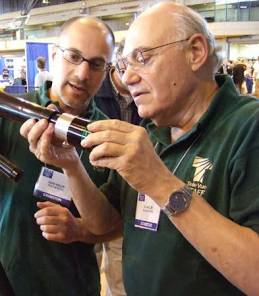
Key details about Al Nagler and his career:

  • Nagler designed the wide-field “Nagler eyepiece” in the early 1980s. These eyepieces provided a larger, more immersive, and sharper field of view. His work is considered to have elevated the entire eyepiece industry.
  • Nagler designed optical systems for astronaut visual simulators for the Gemini and Apollo Lunar Module programs.
  • Nagler was an active member of the amateur astronomy community. An asteroid was named 10715 Nagler in his honor in 1999.
  • Tele Vue Optics was co-founded with his wife, Judi, and later became a family-run business involving their son, David.
  • Nagler held patents for several inventions, including optical products and safety brakes for electric motors.
  • Nagler received a Lifetime Achievement Award from the Astronomical League in July 2025. 

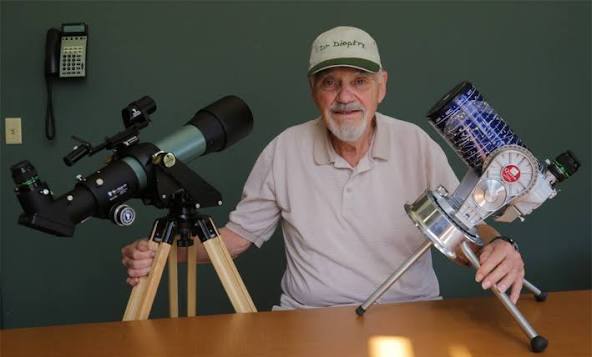
I had the honor to meet both Al Nagler and his wife at the 2017 Southern Star Astronomy conference in April of 2017:

Al Nagler: 2017 Southern Star Astronomy Convention: Little Switzerland, North Carolina

I was so sorry to hear about Al Nagler’s passing:

It was the April 2017 Southern Star Astronomy Convention sponsored by the Charlotte Amateur Astronomers Club, when a scheduled speaker for the convention cancelled at the last minute.

I’m not a member of the Charlotte Club, but had helped them over a few years to fill speaker positions at Southern Star.

A new speaker was needed…and really quick!

The Charlotte club officer in charge of Southern Star contacted me about finding a new speaker and asked if I could help in finding “the perfect” person to fill this now vacant position.

A solution, as I already had someone in mind:

I knew that Sue and Alan French were attending NEAF at that time. So, I called Sue via cell phone, and asked if she would talk to Al Nagler and see if he was interested in being a speaker at Southern Star.

Al was indeed interested and both he and his wife, accepted the invitation. 

Al gave a fabulous presentation concerning “everything anyone would want to know” about eyepieces. I don’t think anyone would know more about the science of eyepieces than Al NaglerThe presentation, to say the least was excellent…so much so, I even took notes.

Al Nagler and his wife Judi…two great people!

I was able to talk with Al and his wife for extended periods during the event, and also enjoyed having lunch with them in the Wild Acres cafeteria.

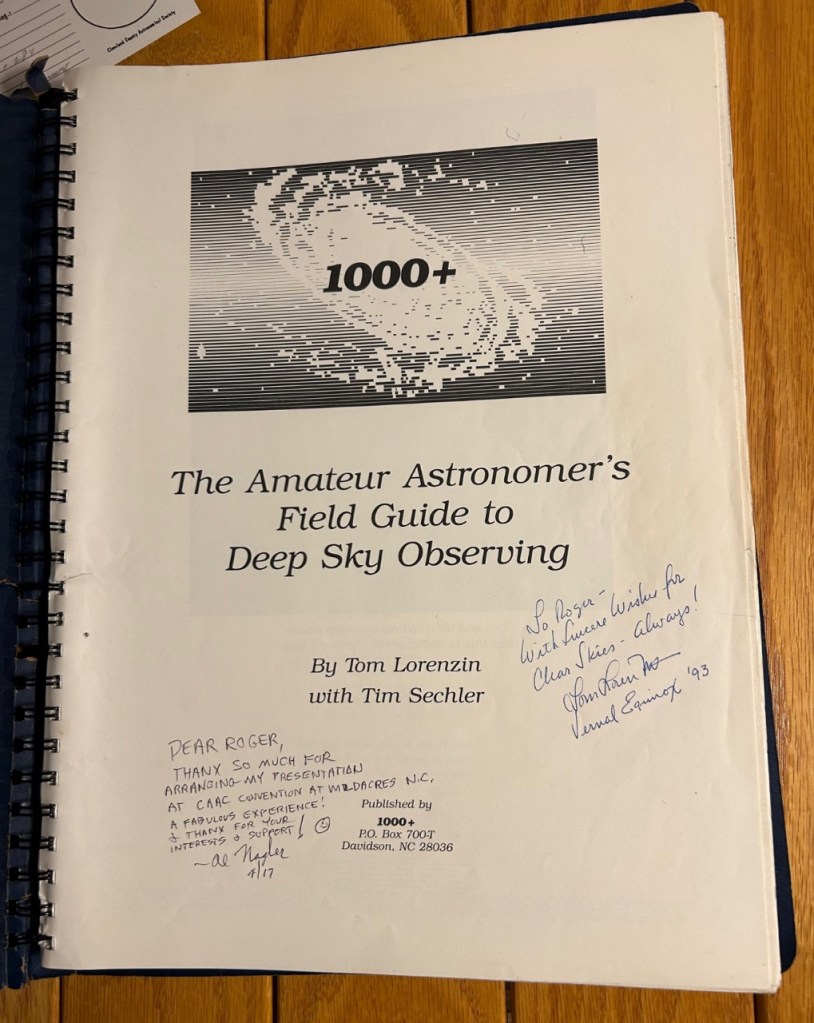
Photo as following: Al signing my “1000+ The Amateur Astronomer’s Field Guide to Deep Sky Observing” by Tom Lorenzin at the April 2017 Southern Star Astronomy Convention in Little Switzerland, North Carolina.
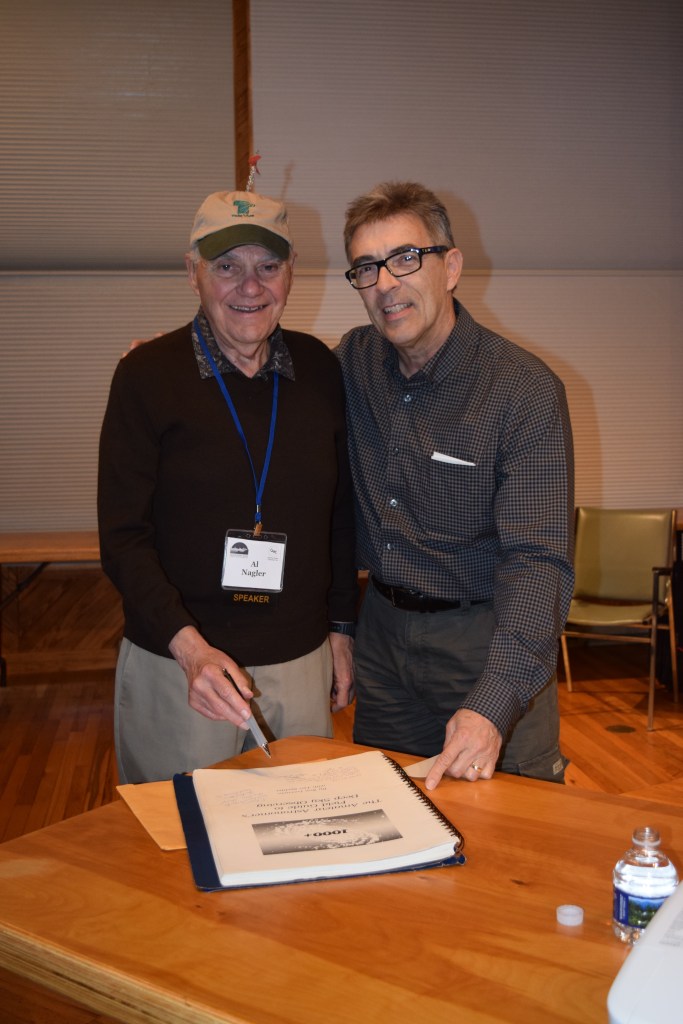
My signed 1000+ by Al Nagler and the late Tom Lorenzin pictured below:
James Mullaney Honored With The Naming Of An Asteroid: All Due To The Efforts Of His Long-Time Friend Glenn Chaple
Posted October 25, 2025 by rogerivester
Categories: Roger's Articles

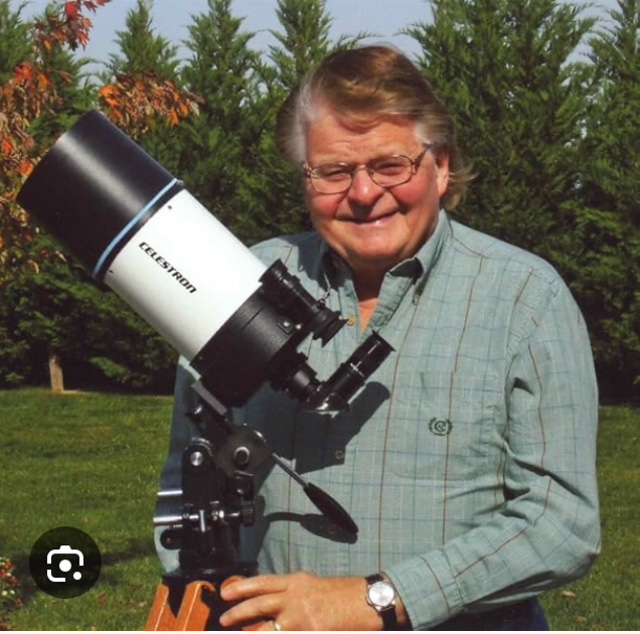
(310120) Mullaney = 2011 DR25 Discovery: 2005-12-01 / L. H. Wasserman, R. L. Millis / Kitt Peak / 695 James Mullaney (b. 1940) is an American astronomy popularizer who has written about observing the night sky with naked eye, binoculars, and telescope. A former Curator of the Buhl Planetarium, staff astronomer at Allegheny Observatory, and an editor for Sky & Telescope and Astronomy, he contributed to Carl Sagan’s Cosmos TV series.

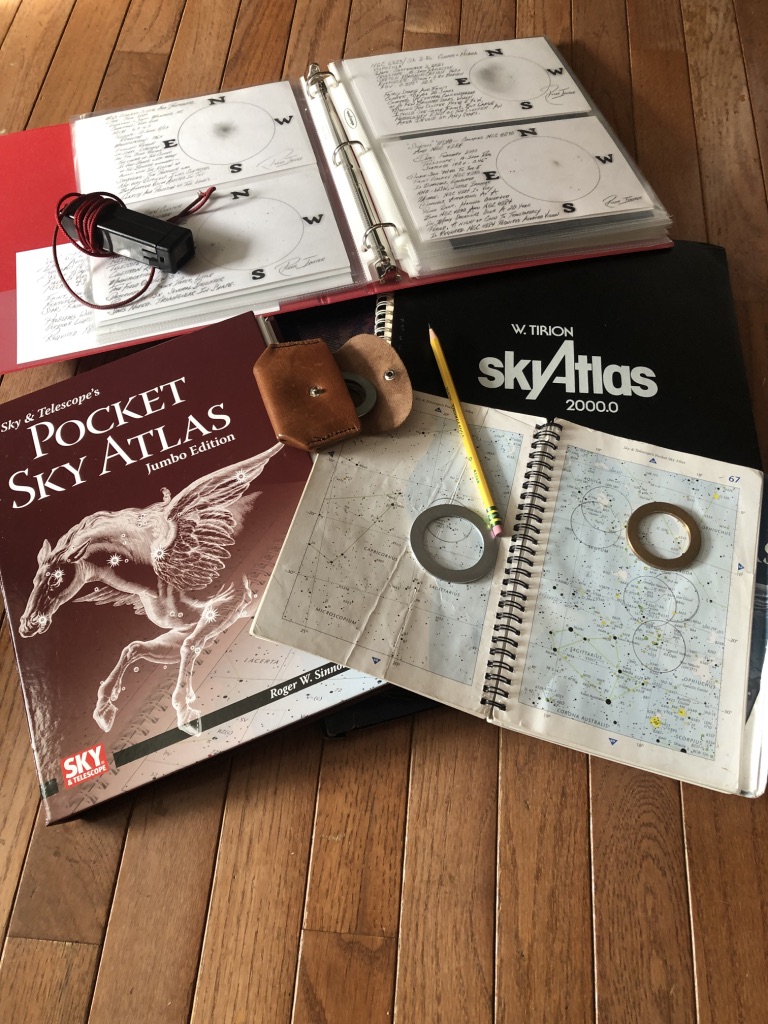
Old Fashioned Visual Observing And Pencil Sketching…The Only Tools Required Are A Telescope, EP, Red Light, Sky Atlas, Pencil, 5 x 8 Note Card With A Drawn Circle. Simple And Fun!

Posted October 22, 2025 by rogerivester
Categories: Roger's Articles

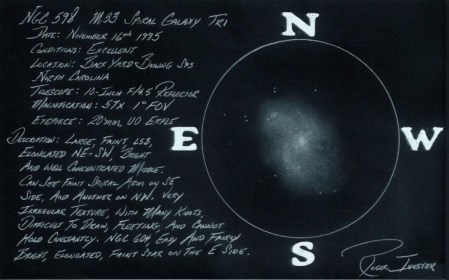
Visual observing and locating deep-sky objects manually, making notes and drawing what I see via the eyepiece is fun. I don’t embellish my drawings, but only what I see and with no computer enhancements.

To locate my selected deep-sky objects, for the evening, I just match up my finder view with the atlas and attempt to point the scope at the exact spot.

I use different sizes of brass and steel rings to match my finder(s) field of view. My choice for the last 15 years plus have been the S&T Pocket Sky Atlas’ which are compact and easy to use in the field. The black stars are so much easier to use as compared to atlas’ with white stars on black backgrounds. Plus, I like the larger format pages of the Pocket Sky Atlas’.

If you will notice, I draw circles (on the atlas pages) are for my “selected” objects. I don’t mind all of the drawn circles, soaked pages from dew, which shows the atlas’ have been well used.

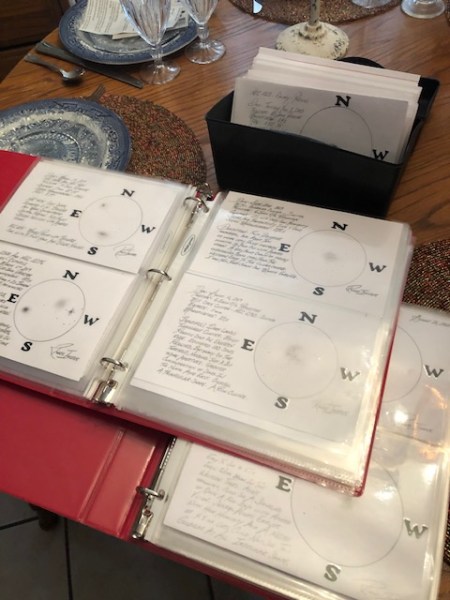
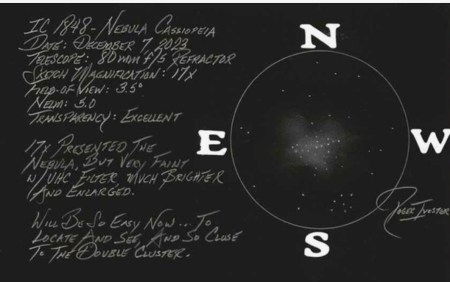
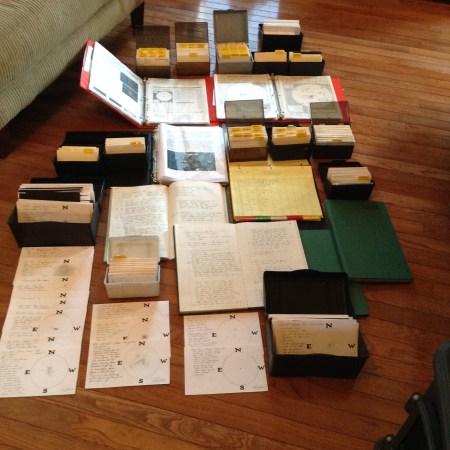
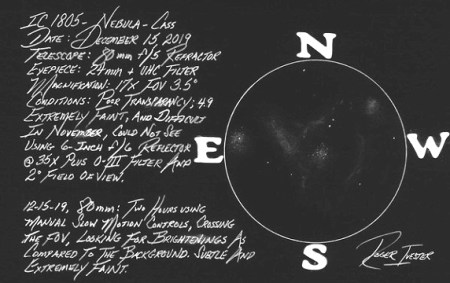
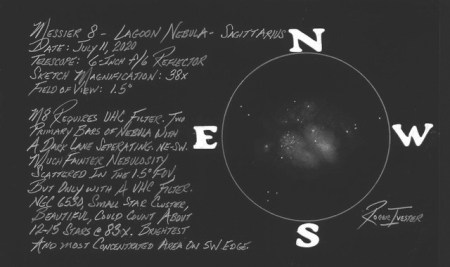
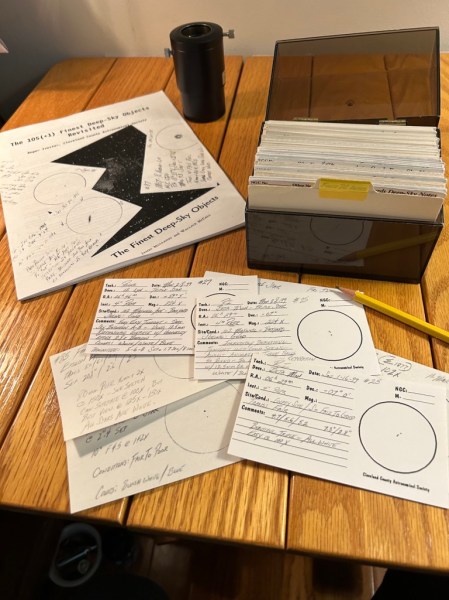
A few examples of my humble pencil sketches. I have more than 200 sketches using this format (5 x 8) and about 1,500 using much smaller 3 x 5 cards.

Galaxy NGC 55 In Sculptor: Difficult For Many Observers Due Only To Its Southern Sky Location

Posted October 17, 2025 by rogerivester
Categories: Roger's Articles

NGC 55 coordinates: RA: 00h 14m 54 Dec. -39º 12m

Galaxy NGC 55 is the only deep-sky object that I was not able to locate and see of the entire 185 Observer’s Challenge reports. This was due to the low southerly sky position, and not being able to find an observing location without light glow.

I’m hopeful that I can again attempt to see this galaxy, but from another dark-site, which I’ve already selected. For convenience, light weight and ease of handling, I’m planning to use a 4.5-inch f/8 Newtonian. Update: Wednesday, November 12th: Too much sky glow overlooking a small town about five miles away. I spent about an hour…but no luck. Another disappointment.

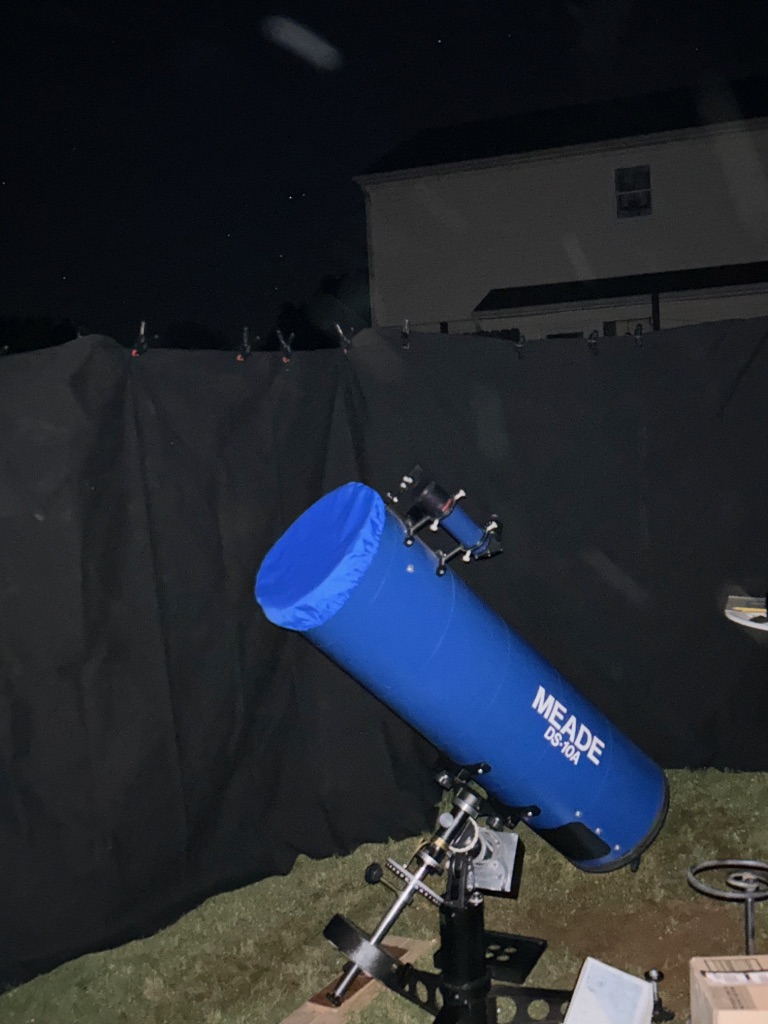
November 14th 2025: I attempted from my backyard, and with a lightblock curtain, using my 10-inch, but unfortunately the galaxy was in the trees. It seems that I’m just not suppose to see this galaxy. I’ve just got to find that “perfect site” and I’m not giving up yet, as there is still time this month!

Sue French observing from the Little Caymen Island:

November 30, 2005, Little Cayman Island. 10:10 PM EST. 113/450mm (4 ½-inch f/4)
reflector. Seeing: good, transparency good, sky, very dark. Scope not collimated.
At 14X, easily visible, highly elongated, bright galaxy with brighter elongated core.
Runs ESE-WNW. At 34X, very pretty. Large mottled core. Faint star south edge, west side.
Galaxy extends farther east than west of core. About 28’ X 2 1/2’. Star mentioned above plus
three others cradled south side. At 64X, mottling much more evident. Many faint field stars
visible. Skinny brighter triangle southwest.

October 2, 2010, 9:15 pm EDT, with a 130/819mm (5.1-inch f/6.3) apochromat. The
seeing and transparency were fair. At 23X there was a bright glow around a fairly bright star.
At 37X, the star was in the southern part of a 1¾ arcminute glow. A fainter, 1-arcminute glow
continued south from the brighter one. UHC or O-III filter not helpful. At 63X, the southern
part showed nicely, and there was a faint star in it. At 102X, the southern part was curved
concave west so the whole thing looked like a fat comma in my mirror-reversed view.

October 6, 2010, PSSG. 10:30 PM EDT. 130/819mm (5.1-inch f/6.3) APO. Seeing fairpoor, transparency good. At 37X, although the sky was milky down there, this large galaxy was
visible as ~26”ESE – WNW elongated galaxy. The western half was generally brighter. Mag.
10 star ~5’ SE of eastern tip and mag. 12 star S X E of western tip. ~ 4’ wide. At 63X, showed
up nicely and was quite uneven in brightness. The bright western area broadly brighter toward
the long axis. Eastern had a weaker brightening toward the east end. Three faint stars along
south flank: The brightest one mentioned above, the second brightest was south of the middle of
the western bright patch, the faintest star was on the galaxy’s edge between the two bright
patches. Another star hugged the south side of the west tip.

November 10, 2007, 8:15 pm EST with a 254/1494mm (10-inch f/5.9) Newtonian. The
seeing and transparency were fair. At 43X, this bright nebula spanned about ¼º and was
brightest around a mag. 7½ star in the center. At 68X, the bright central region of the nebula was
elongated north-south, 3 arcminutes tall, with pinched sides and a faint star off the southeastern
edge. At 213X, the pinch was prominent south of the mag. 7½ star, and the nebula section south
of the pinch was fainter than the northern part.

November 2, 2010. 9:30 pm EDT

I’m afraid my description of that observation was just the sketch. The only details were:
254/1494mm (10-inch f/5.9) Newtonian, 67X. Seeing and transparency, fair.

Jaakko Saloranta from Finland: Observing notes for NGC 55, are from the Canary Islands:

As can be suspected of the low declination, this object never rises above the horizon here
in Finland. My latest observation of NGC 55 was made in November last year from the Canary
Islands and specifically from the biggest island, Tenerife. I was observing within the Las
Cañadas caldera at an altitude of 6,670 feet (2,034 meters) with fairly good observing conditions:
naked eye limiting magnitude (NELM) near zenith of 7.1 with SQM-L measurements in the high
21.20s. What makes this observing site pretty good is the high altitude (above the clouds), low
humidity and excellent seeing. They don’t have observatories in here for nothing! My notes
with the 4.7-inch refractor using several different magnifications read as follows:

A gorgeous sight. Huge, WNW-ESE elongated galaxy with a mottled appearance. NW
part of the galaxy contained a bright, elongated nucleus with somewhat mottled appearance.
Two brightenings visible within the halo. Larger and brighter knot appeared as slightly NW-SE
elongated. The smaller and fainter knot appeared as a nearly stellar, roundish spot in the E side
of the galaxy’s halo with a faint mag. 14 star just W of it. A darker void seemed to separate these
two possible H-II regions from each other. Several mag. 10-14 stars in vicinity, within the halo.

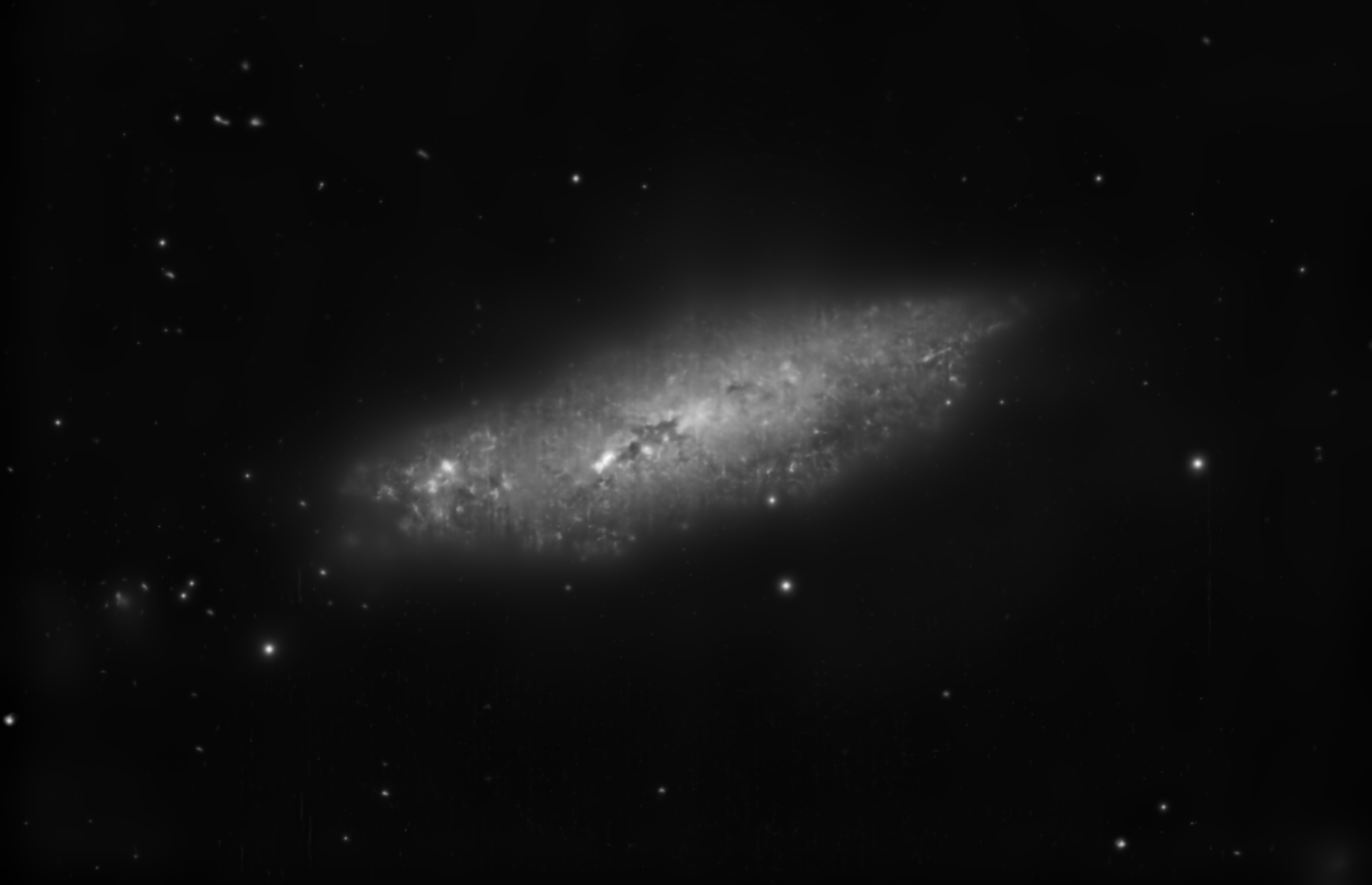
My image as following was taken with a 102mm (4-inch) apochromatic refractor at f/6.4 with a SBIG ST2000XCM CCD camera. Note the dark “eye” in the galactic core, with the dark lane angled 60º to the disk superimposed over this.

The following image by Mario Motta at (+42º 36′) from Massachusetts with the galaxy being only 6º’s above the horizon!

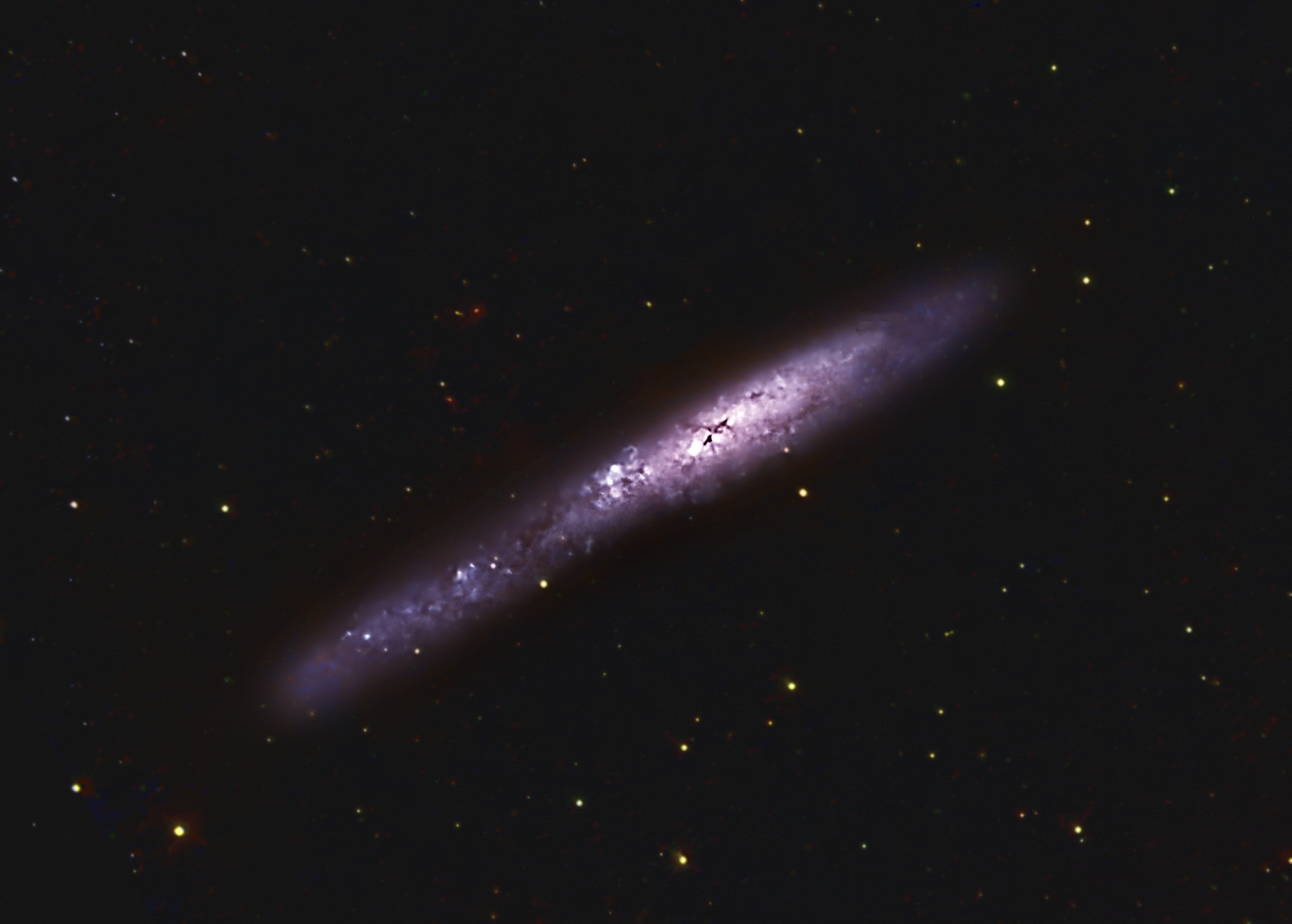
This one is really tough being so low in the southern sky, but last night (October 18th 2025) I was able to make the following image. The galaxy was 6º above the horizon when I started and ended. It peaked at 8º at the transit of the meridian. The imagine required two hours of 5 minute subs with my 32-inch f/6.5 reflector telescope, and ZWO6200 camera, processed in Pix. 

I did not attempt color, as it was so low in the sky and have limited time between rising and setting. NGC 55 is actually close at 6.5 MLY in the constellation of Sculptor.

Now I have never tried this before, but decided to experiment, and somehow it worked out.

My 32-inch scope image of NGC 55 was only 6º above the horizon, so I got the brighter central region with detail, but the fainter outer region, especially lower left, was lost in the background glow. I’d made an image from Florida two years ago, and got the entire galaxy, but lacked detail, and did not capture the fainter region (C14)

Adrien Barrajon’s image (which I processed) from New Zealand had color but missing detail, and was taken with an 8-inch telescope.

So, I attempted to combine all images…taking some time, but took the detail of the center, overlapped that on the full image from my C14 from Florida, and then overlaid the color from the New Zealand color data.

The result is the combined data of three different telescopes, of vastly different sizes, and got this combined image. There are many hidden tricks in pixinsight, and I used up quite a few of them to get the following image. 🙂

Mario Motta

A Problem Tree That Has Hindered My Backyard Astronomy, And Also A Falling Hazard To Our House: Now Resolved!

Posted October 6, 2025 by rogerivester
Categories: Roger's Articles

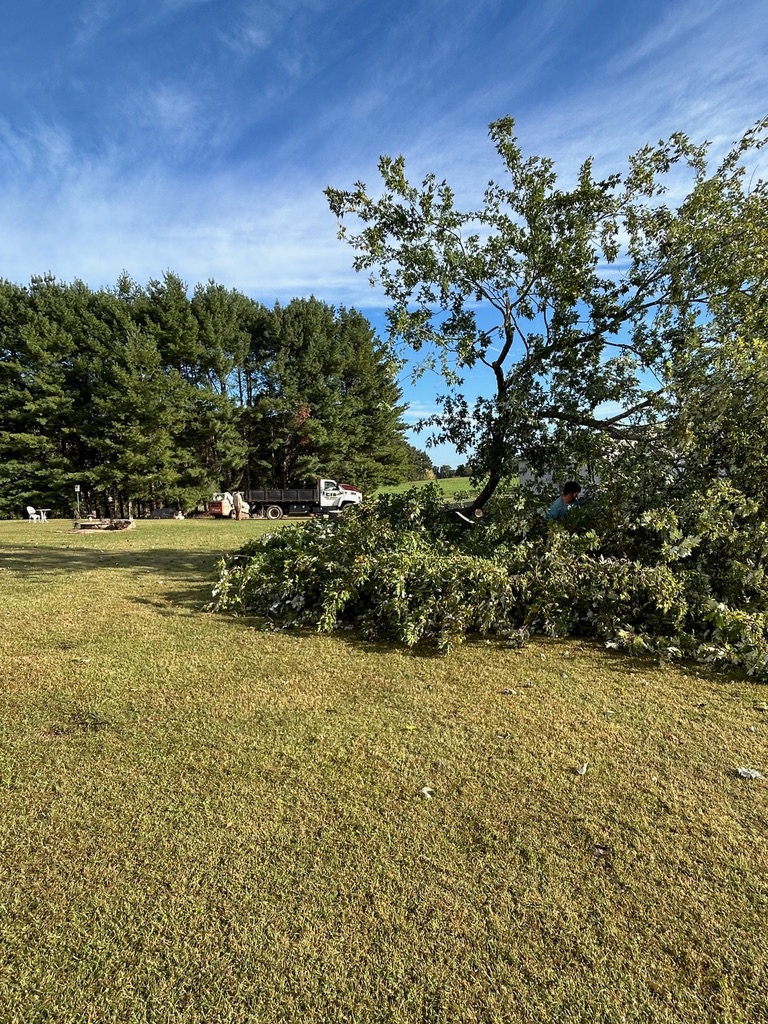
Two really “big and full” truck loads! I was so happy watching the trucks leaving with the tree!

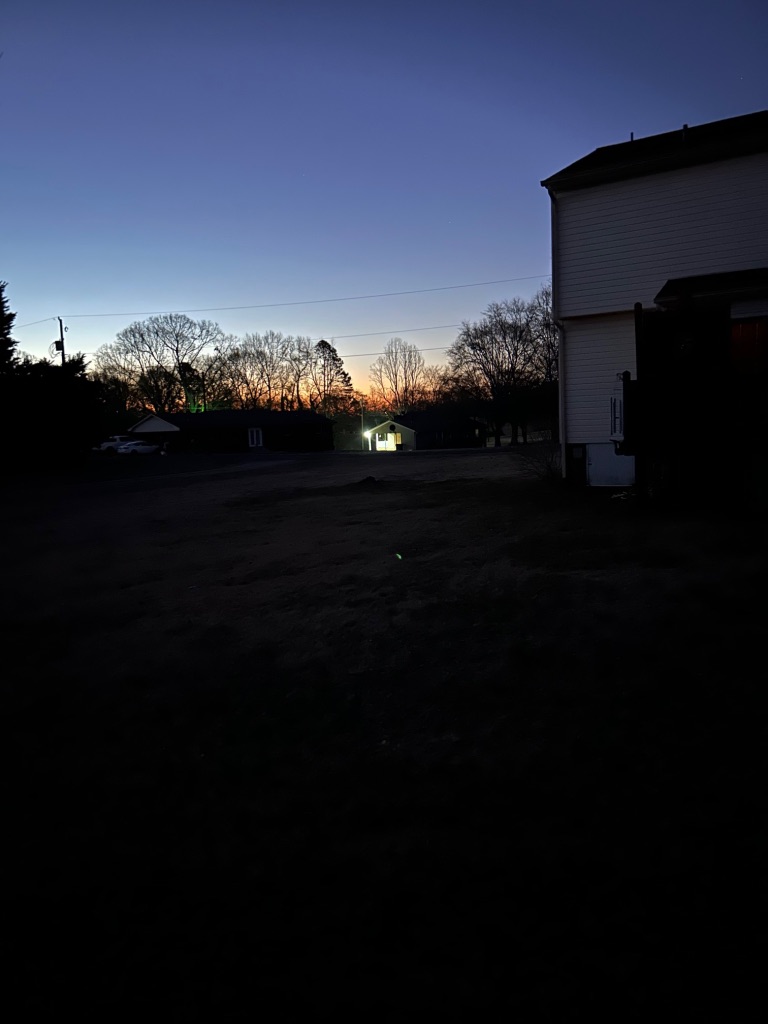
Note the “too close” to the house problem tree in the background. If this tree would fall it could hit the house. Photo taken January 2025:

The following photo: October 5th @ 1:30 AM: Note the tree is missing, and now with an unobstructed view of the entire northeastern sky.

NGC 6118: Galaxy In Serpens Caput The Most Difficult Object In The Herschel 400 List – Update: July 17th 2025

Posted July 17, 2025 by rogerivester
Categories: Roger's Articles

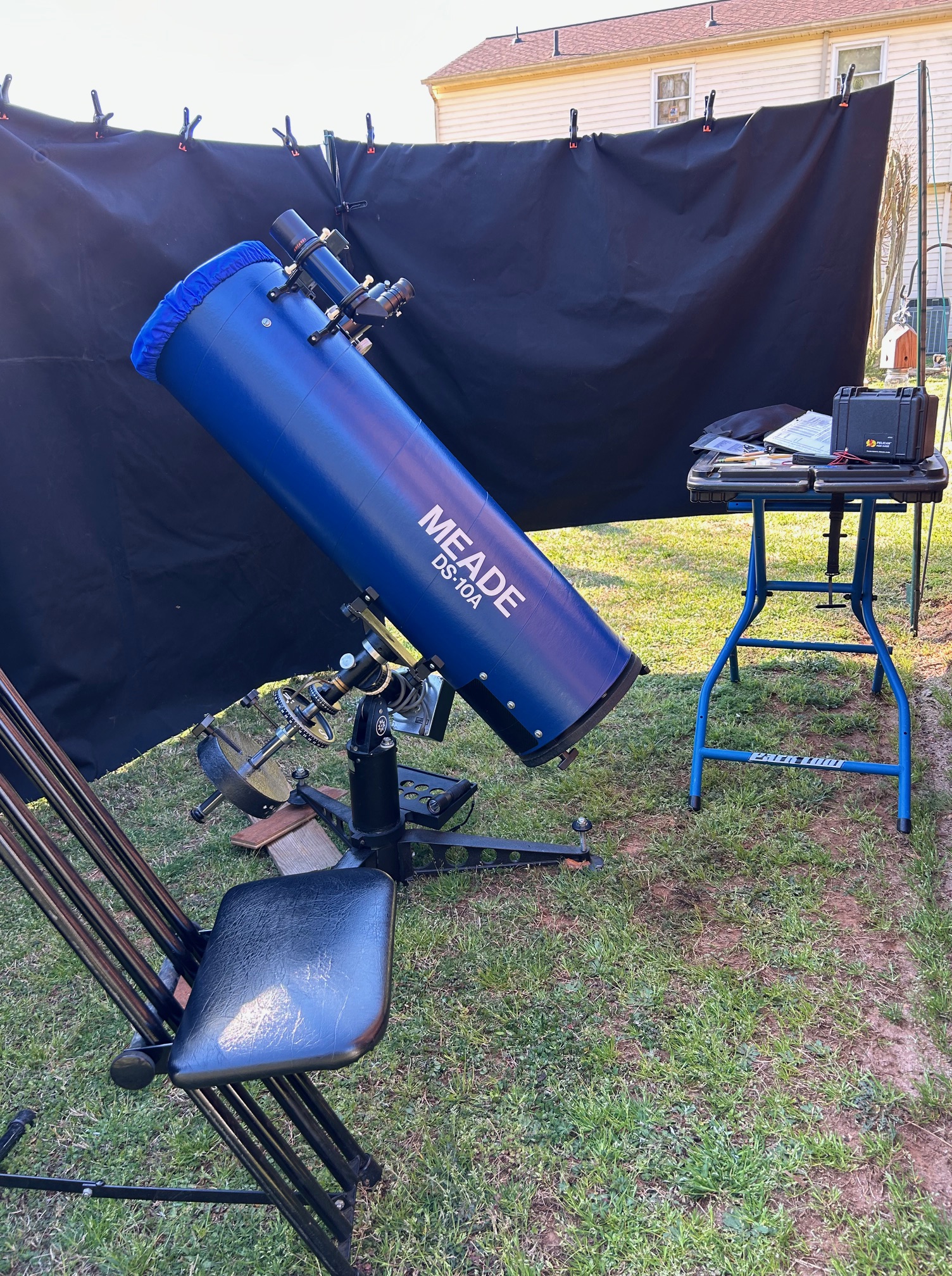
March 26th 2025: After the problems I’ve had over a couple of years I just had to observe galaxy NGC 6118, again in 2025. So, during the late afternoon of March 26th, I set my mount up and pinned my auto-marine fabric to wires to create my light block system in my backyard.

I need or require this (wires and cloth) and in this part of my backyard for southern hemisphere objects only.

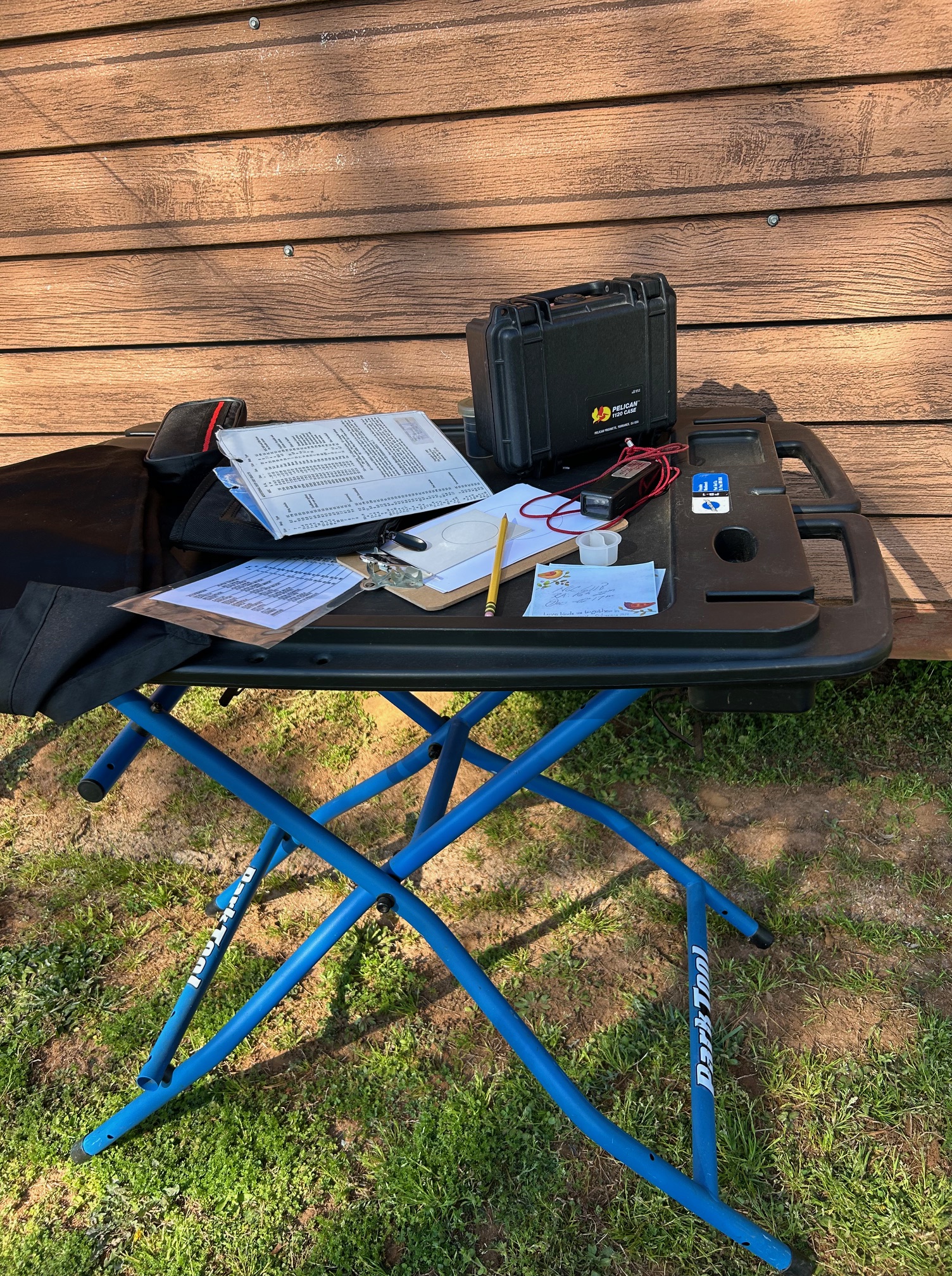
3:45 AM: I minimized everything I’d require for an early morning observing session. I included three selected eyepieces in my small Pelican box, not wanting to bring a large box. And I brought all of my necessary items or tools in a small zipper bag: This included pencils, sketch cards, set-up stars, red lights, the large S&T Pocket Alas and other.

When making an early morning observation, it’s important to have everything ready, without the need to run back inside for necessary tools and items forgotten.

4:15 AM: I was looking in the eyepiece and in the area of the galaxy using an 11mm 82º apparent field eyepiece, for a magnification of 104x and a 0.79º true field. I began using field motion and then letting the galaxy drift back into the eyepiece field, and could see a faint elongated blur, with averted vision, but not constantly.

4:45 AM: Increasing the magnification, so I used 2.8x University Optics Klee Barlow, for a magnification of 291x and with a 0.28º true field, but the view was no better. And still only an intermittent blur, but this time more elongated. The galaxy was at such an altitude it was mostly above the light dome. However, there was another problem going on: A wildfire of over over 3,000 acres was raging in Polk County, which is only about 35 miles away. I’m not sure if smoke was an issue or not, but the sky had a reddish look along the horizon. So, probably likely.

5:14 AM: I lifted my eye from the eyepiece and “Gave Up The Ghost” as related to this galaxy for the final time, not likely to return. This galaxy has acted like a ghost for me, now going on two years.

My quest began in the later summer of 2023, and ended on March 27th 2025, but never being able to see the galaxy to a level I would like. Sometimes it’s important to know when good is enough, and time to quit. I made no new sketches or written notes…

This recording and post update @ 4:28 PM (EDT) on March 27th 2025. It was my plans or hope to attempt this galaxy again in the spring of 2025, however, I have not been able to do so. I’d say, most likely….I’ve made my last observation of NGC 6118 known as “The Blinking Galaxy.”

Roger Ivester

Previous observations as following:

I attempted two very early morning observing sessions in March and April of 2024 from my suburban backyard, but again without success. A dark site is really needed to observe any low-surface-brightness galaxy, especially one as dim and faint as NGC 6118.

However, traveling to a dark-site has been over for me now, for many years. The disassembly of a heavy equatorial mount and handling a large solid-tube Newtonian, loading, driving, unloading, reassembly, and then having to do it all again, became just too much. I will just continue to do my best from the backyard.

Light pollution will only get worse, so maybe the following inexpensive “light-block” system might work for you also.

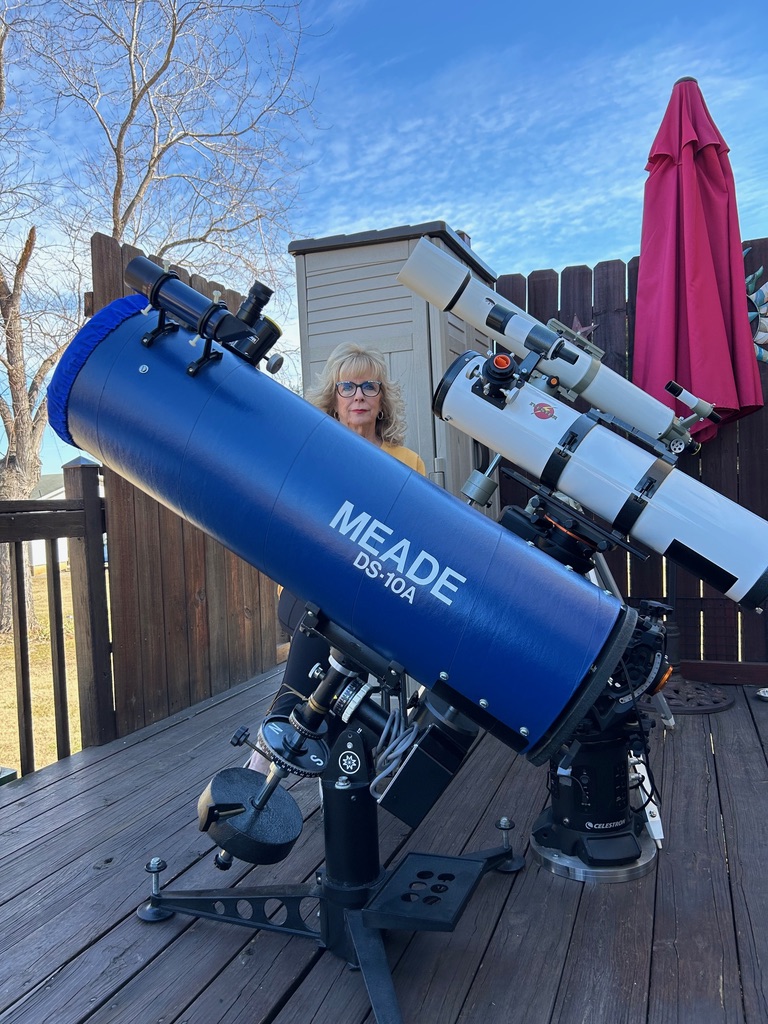
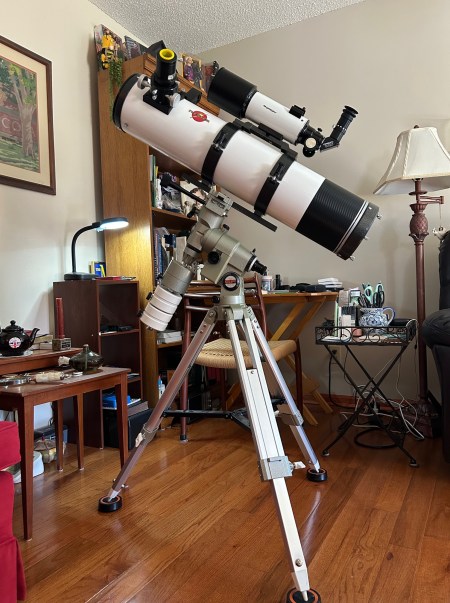
I use a medium-duty, lighter weight equatorial mount when observing from my backyard which requires star-hopping….not my GoTo mount from my back deck.

Darker skies from my back deck…

Fortunate for me, I was able to get a problem streetlight in front of my house, changed from a 4,000K LED unshielded light to a 3,000K light with a shield, and with optimum orientation away from my house.

A 5,000K multiple-bulb “residential carport light” is now my greatest problem when observing more southerly deep-sky objects. I have to move from my back-deck to my backyard for all deep-sky objects that are less than “about” +15º north declination.

Good news! The above light has been adjusted as following: February 21st 2025

My plans are now to re-observe NGC 6118 at about 1:00 AM, early May 2025, in an attempt to duplicate my 2024 observation. Will the “Blinking Galaxy” be easier with the now “redirected” 5,000K carport light?

The house is now vacant, waiting for a new owner, and still shines from sunset to sunrise, but now, not toward my house.

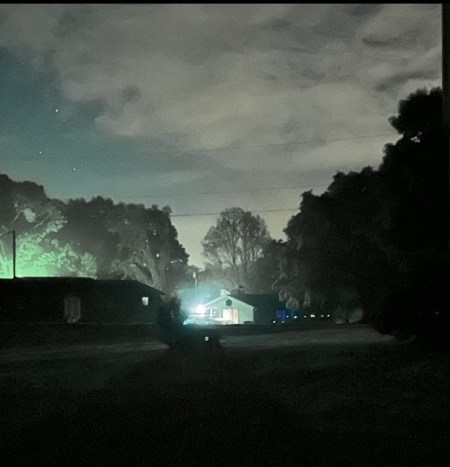
Date: May 11th 2024 (early AM observation and seeing NGC 6118) despite looking over the town of Boiling Springs, and the terrible “carport” light

Saturday morning: May 11th 2024 @ 1:00 AM, with a 5.0 NELM overhead, but far less in the location of NGC 6118, due to overlooking the town of Boiling Springs, and the problem “carport light” pictured above.

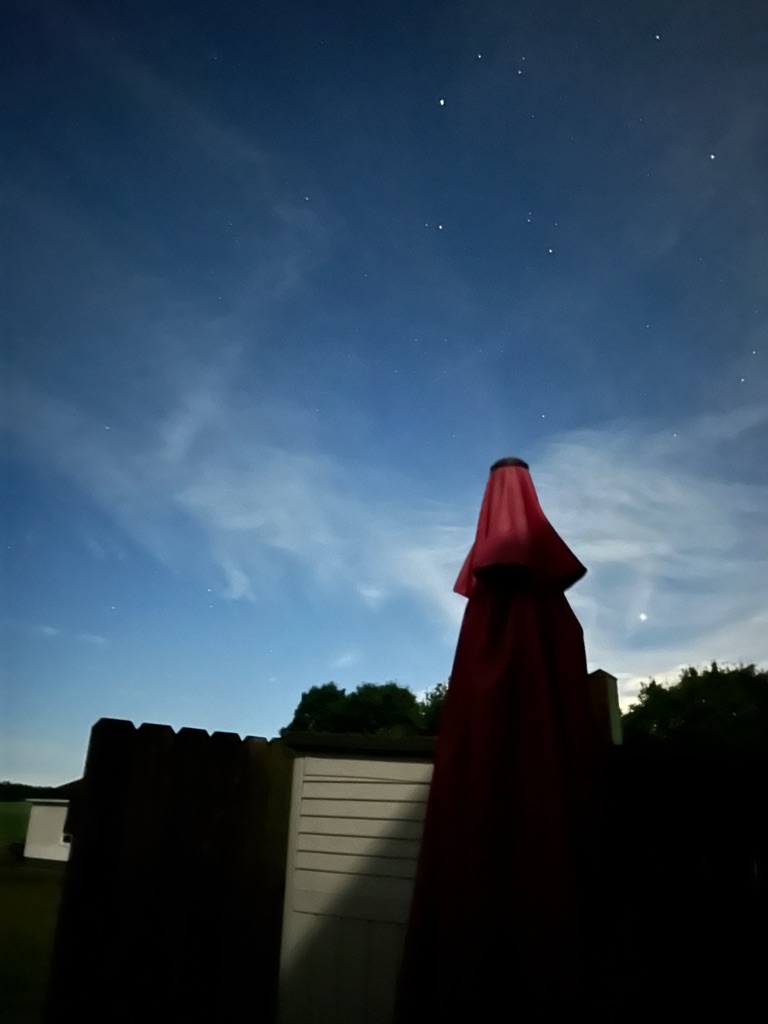
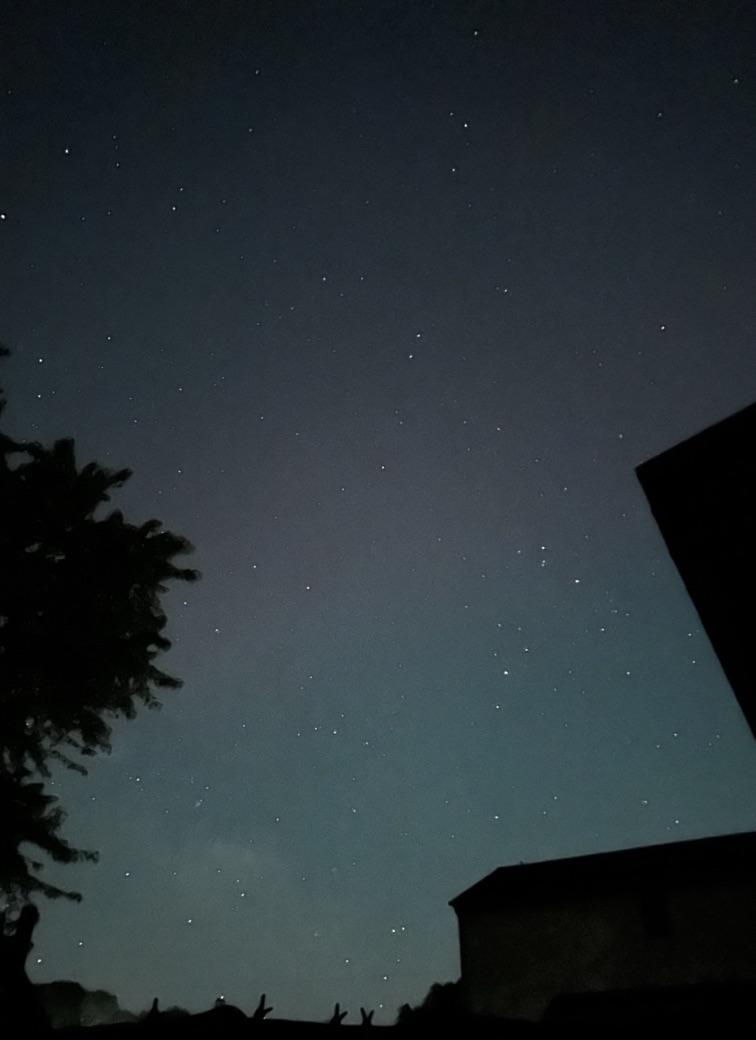
The following cellphone photo is from that night (May 11th) and beside my telescope. Note the constellation Scorpius toward the right lower corner. Now see the brighter pair of stars, almost in the center of the photo, above or north of Scorpius.

The most northern star, is known as “Yed Prior” at mag. 2.7. The second star toward the south or closest to Scorpius is “Yed Posterior” at mag. 3.2. Now move your telescope slightly to the NE of “Yed Prior” and use your star atlas to dead center, where NGC 6118 should be.

With a bit of difficulty and after almost an hour, I was finally able to see the galaxy. One of my greatest problems had been a pesky LED streetlight in close proximity, shinning directly into my backyard. My portable “make-shift” observatory was the answer to this.

Description: A tiny and subtle brighter middle, which resembles that of a planetary nebula. And like so many planetary nebulae, when using direct vision, vanishes or winks out. The galaxy has a very faint and diffuse irregular halo, which is oriented NE-SW. After observing NGC 6118, it’s easy to understand why its named “The Blinking Galaxy.”

Webb’s Wreath: Asterism In Hercules

Posted July 17, 2025 by rogerivester
Categories: Uncategorized

Posted July 17th 2025

From “Deep-Sky Wonder’s” By Sue French:

“Moving back to Omicron and dropping 2.7º south-southwest takes you to a golden 7th magnitude star. It ornaments the eastern side of Webb’s Wreath, a little-known asterism first mentioned in the 4th edition (1881) of Thomas Webb’s observing guide “Celestial Objects for Common Telescopes.”

My 105mm scope at 68x reveals 13 additional stars, magnitudes 11 and 12, outlining 11′ x 7′ oval leans northeast and is dented inwards at the bright star.”

RA: 18h 02m Dec. +26 18m

6-09-01: Telescope 105 mm Apochromatic refractor; 610 mm focal length, and a 9 mm Nagler eyepiece for a magnification of 68x.

Pencil Sketch by Sue French as following: The following sketch was made using my 105 mm refractor with the employ of a diagonal.

Images by Mario Motta:

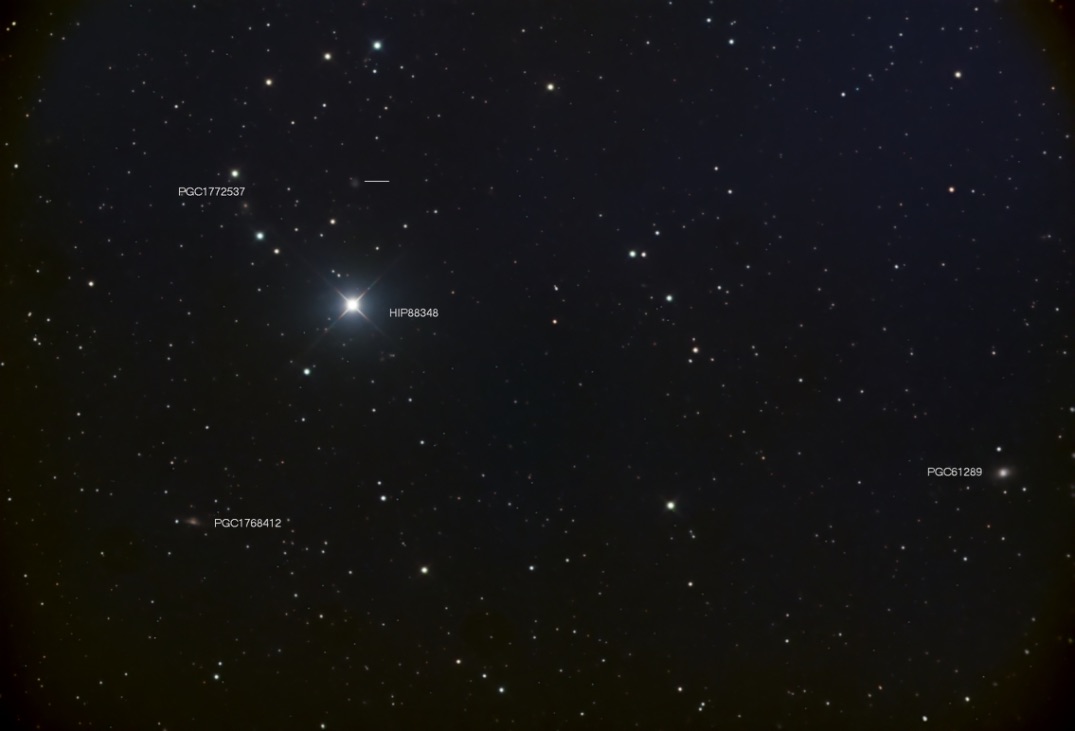
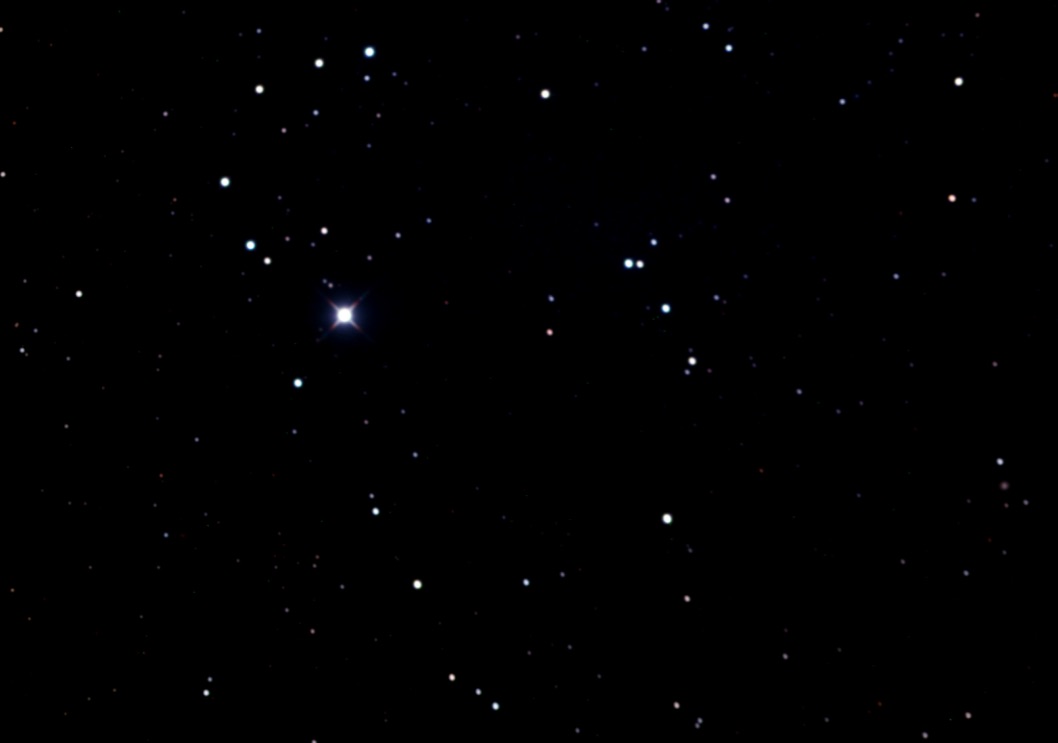
Using my 32-inch telescope, I imaged Webb’s Wreath in RGB and Lum, subtle colors. The images as following present the Wreath with north is at the top and west to the right.

The following image identifies very faint galaxies inside and around the wreath.

Can you still spot the galaxies in the following image?

Observer’s: Keith Rivich and Larry Mitchell

Location: ~10 miles SE of Leakey, Texas

Telescope:  25-inch f/5 Newtonian

SQM-L:   21.3

Seeing:  4 of 10  (Seeing pretty much was limited to around 300x, however, could occasionally go higher.)

Transparency:   10 of 10   

Webb’s Wreath itself is a worthy target. My 20 mm Nagler eyepiece framed the wreath quite nicely looking a bit like a lop-sided potato. Larry was going to check GAIA to see if any of these stars may be related. Except for the 7th mag star the rest look suspiciously similar. 

UGC 11097: 

This galaxy was just out of the frame in the (Mario Motta’s image) but I used it as my star hop base, so I will go ahead and mention the observation. Easy to see at mag. 14.5 with a pretty high surface brightness. Its 1.2′ x .3′ nearly N-S elongation was obvious being brighter in the center and tapering off towards the ends of the arms. A couple of 15th mag stars bracket the galaxy.

PGC 61289 (MCG +4-42-22)

This is the brightest of the galaxies in the Motta image. As suspected at mag 14.6 it was quite easy to see, appearing as a very small oval glow. A mag 14 star sits just off the galaxies northern edge.

2MFGC 14178 (in the image as PGC 1768412)

As suspected this one was tough and fun. When the field first slid into view I strongly suspected I could see some elongation at the right spot. Looking at images there is a 15th mag star just 20″ east of the core of the galaxy, which is depicted as a 14th magnitude “non-star” in Megastar. These two “stars” could easily mimic the elongation I was seeing. I bumped up power to 650x and during moments of good seeing I could distinctly see the arm of the galaxy opposite the 15th mag field star. I called Larry over to take a look and he was seeing what I was seeing. As a bonus he knew nothing about the galaxy before looking. 

For the fun part of the observation we put Larry’s NVD into the scope. He had it mated to a 27mm eyepiece so the magnification was quite low. We suspected the NVD devise should work as the galaxy is infrared bright, and we were right. The 15th mag field star was dramatically reduced in brightness so the galaxy, though tiny, was just visible as a complete edge on spiral. The dark lane visible in high res images was not visible to us. 

LEDA 1772537 (in the image is listed as a PGC):

As suspected nothing. Nada. Not even a sparkle!

UN-NAMED FACE ON SPIRAL:

We couldn’t see anything of the galaxy, no surprise there, but we could see the 17.5 mag star that sits on the NE edge of the spiral. 

Observer: Roger Ivester (North Carolina)

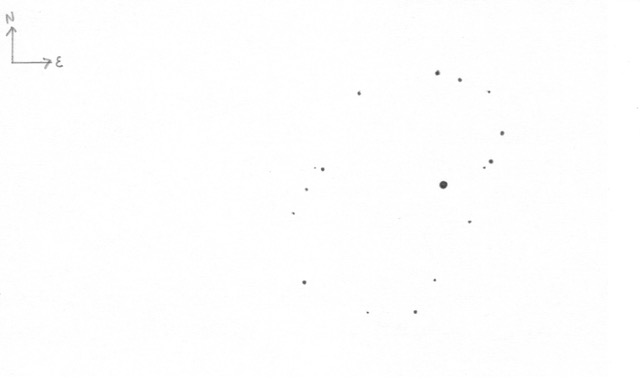
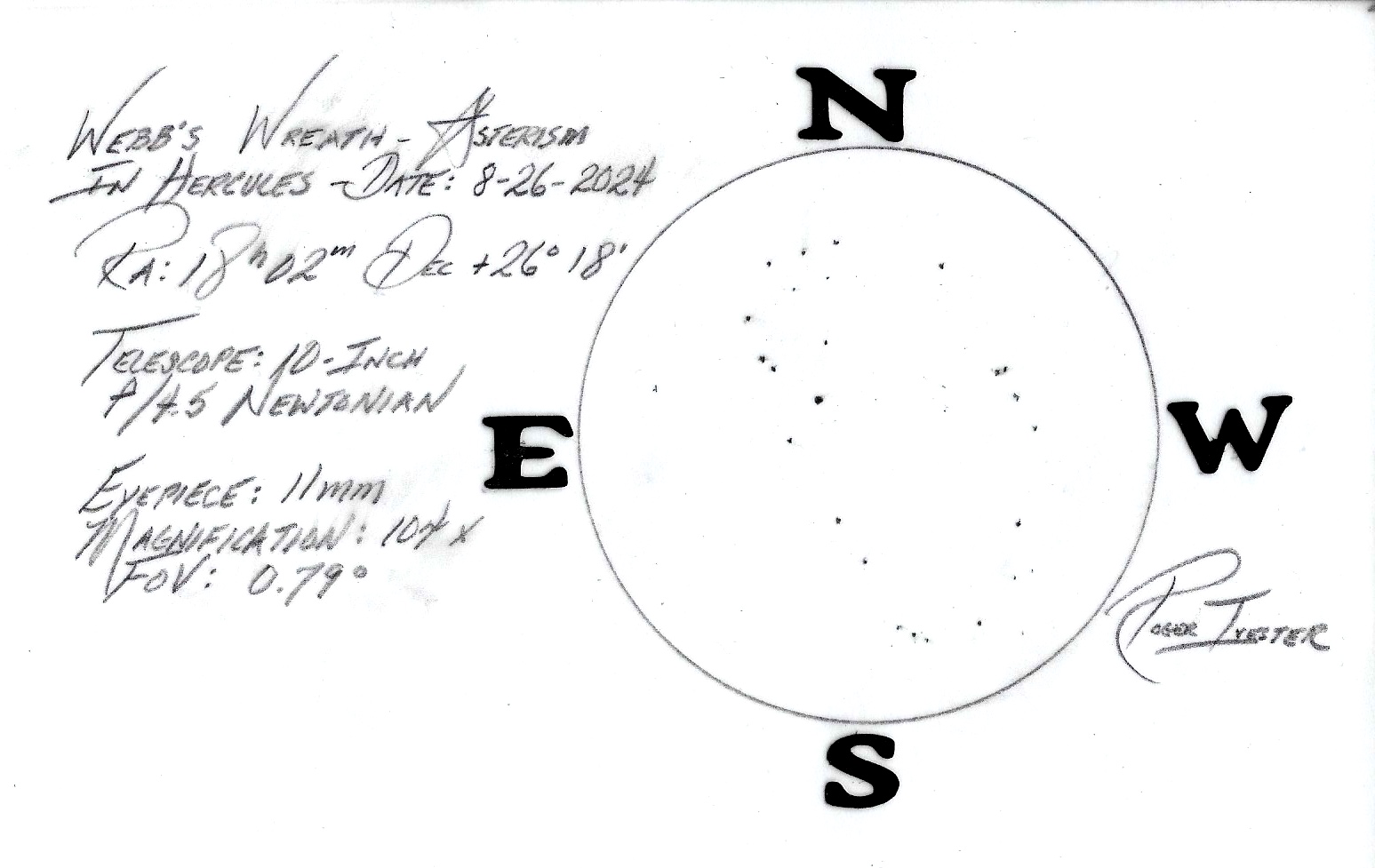
The following pencil sketch was made using a 10-inch f/4.5 EQ Newtonian with an 11mm eyepiece, apparent field of 82º. Magnification: 104x and field-of-view of 0.79º which was a perfect framing for the asterism.

As a follow-up on the four galaxies in and about Webb’s Wreath, they were partially featured in Stephen O’Meara’s column in the May issue of Sky & Telescope (p. 12).  Keith’s and Larry Mitchell’s earlier observations of PGC 61289 and PGC 1768412 with Keith’s 25″ were discussed in the article.  O’Meara also mentioned the two fainter galaxies within the Wreath itself “most likely require even larger apertures to detect.”  One of these is PGC 1772537, an E- or S0-type, and the other is a spiral not catalogued in LEDA (PGC).

Webb's Wreath.jpg

The following is a Cloudy Nights post by expert big scope “visual” observer, Steve Gottlieb

Larry Mitchell also included Webb’s Wreath and its galaxies in the Texas Star Party’s “Advanced Observing” list, just a week ago.  When Larry came over last Thursday to observe on Jimi Lowrey’s 48″ f/4.0, he requested to look at Webb’s Wreath again to search for the two dim galaxies within the Wreath.  Also observing with Jimi and I were Stephen O’Meara, Brent Archinal (from Lowell Observatory), and Doug McCormick (from Houston).

When we observed these galaxies at the end of the observing session, the background sky was jet black in the eyepiece (excellent contrast) and the stars pinpoint at 610x. The unnamed face-on spiral (NED lists the infrared designation WISEA J180231.28+262057.6) was immediately seen as a faint, very small glow, perhaps 10″ in diameter.  Although it was fairly easy to see, the visibility may have been enhanced by a faint star at the NE edge.

PGC or LEDA 1772537 was easy to pinpoint, as it lies at the midpoint of a mag 10.8 star 40″ SW and a similar star 40″ NE (two of the main stars in the Wreath).  At 610x it was very faint and quite small, perhaps 5″ diameter, but definitely non-stellar. I may have just been seeing the core region of this galaxy.  Checking later, I noticed that HyperLeda lists a B magnitude of 17.93 ± 0.50 and NED list a single redshift at z = 0.192.

So, there’s two things interesting about LEDA 1772537.  It lies precisely along the Wreath, and if the redshift is accurate, the light of this E or S0-type galaxy has been traveling for 2.4 billion years! (using H0 = 70).  

Steve Gottlieb

Galaxy NGC 5958 In Corona Borealis: Visible With A 10-Inch Telescope, But What About From A~4.7 NELM Suburban Backyard? June 17th 2025

Posted June 7, 2025 by rogerivester
Categories: Roger's Articles

For the past few months while watching T Corona Borealis, I didn’t realize there was a potential “observable galaxy” using a 10-inch telescope” and fairly close to the novae star:  But, what about a 10-inch from a magnitude ~4.7 NELM location. (?)  However, due to the “high-surface brightness” it just might be possible, but very doubtful.  

The following information from the “Observing Handbook and Catalog of Deep-Sky Objects” by Christian Luginbuhl and Brian Skiff:  

“…galaxy is very small and unconcentrated, but of high surface brightness.  In 25 cm it is circular, about 35 arc second diameter, with a faintly granular texture.” L&S

Interesting to note: This galaxy is not listed in either the Herschel-400 or the H-2 lists.  I’m wondering if it would be more difficult than galaxy NGC 6118: Which is considered by “most all” amateurs to be the most difficult object in the Herschel-400 list. This galaxy (NGC 6118) was “very, very difficult” for me from my suburban backyard, taking me several observing sessions over a couple years.

Note: For those with a 12-inch telescope, galaxy NGC 5961 can be observed using a 12-inch telescope. This is the second of only two deep-sky objects listed in the Luginbuhl and Skiff Observing Handbook.

Galaxy NGC 5961: “Though it is a small moderately faint object for 30 cm, this galaxy has a high surface brightness.” L&S

If I have a very clear night with excellent transparency, I might give NGC 5958 a try with my 10-inch f/4.5 EQ Newtonian. A clear and transparent night during the summer months is very rare for me, observing from the foothills of North Carolina. Due to increasing light pollution and glow on my best nights I can hardly achieve ~4.7 in a winter sky!

What is a magnitude ~4.7 NELM (naked eye limiting magnitude) and how was it derived?

This is the longtime system used by many “mostly” visual observers, using the stars of the little dipper to determine the faintest star that can be seen naked eye.

I learned this from an Edmund Scientific (Sam Brown books) many years ago, and have been using the NELM system for more than 40 years. However, since the sky glow from the horizons is growing from light pollution, I sometimes (on nights) for reasons might add 1/2 magnitude to my NELM near the zenith.

My backyard Bortle scale number is ~6.5-7.0 which has increased over the past 40 years, as most all backyards in America.

The Bortle scale puts my (NELM) naked eye limiting magnitude at about 4.7-4.8 on a good night, which corresponds pretty close to the Bortle scale.

However, during the summer months, with high-humidity, heat and haze, my NELM sometimes will hover around 4.0 or even less! Defintely not good nights to attempt faint galaxies or nebulae, but can be excellent nights for viewing double and multiple stars.

I’ll never forget the days of growing up in the country and seeing the Milky Way glowing overhead, and extending “seemingly” almost to the southern horizon.

A 6-Inch f/6 Newtonian Just Might Be The Perfect Telescope For Visual Observing With 2x The Light Gathering Power Of A 4-Inch Refractor

Posted April 26, 2025 by rogerivester
Categories: Uncategorized

Yes, the 6-inch f/6 Newtonian in my opinion, just might be the perfect telescope for the dedicated visual observer. It’s both compact and lightweight, and even with an equatorial mount is easily manageable, and has twice the light gathering power of a 4-inch refractor.

I had a 6-inch Criterion RV-6 almost 50 years ago, but life got busy and sold it. However, I always regretted selling that telescope. So, in about 2017 I bought another 6-inch, but this time with an f/6 focal ratio. The Criterion RV-6 was an f/8. I like the f/6 much better as it’s a bit more versitile, for a wider field of view, and a 2x Barlow can make the f/6, an f/12. And the f/6 is more portable due to the shorter OTA.

I also have a 4.5-inch f/8 Newtonian that was given to me a few months ago, that I plan to use tonight to observe T Corona Borealis field.  

After being a serious “visual” observer for at least 40 years and having more than 10 telescopes, I’ve come to the conclusion:  A 6-inch f/6 Newtonian (my opinion) might just be the perfect transportable “visual” telescope.   

I can also use a GoTo mount with this telescope.

The Train of Life By James S. Tippett (1885-1958)

Posted April 20, 2025 by rogerivester
Categories: Roger's Articles

Recently, we had a good friend to lose their father. I wanted to say something meaningful and not just “I’m very sorry” and nothing more. So, quite a few years ago, I read this poem by James S. Tippett and thought it to be something very good to share with anyone who had just lost a loved one. And it has great meaning for all of us to think about from time to time.

The train photo from Public Domain: Strasburg Railroad of Lancaster, Pennsylvania. And “The Train of Life” by James S. Tippett

At birth, we board the train and meet our parents, and we believe they will always travel by our side.

As time goes by, other people will board the train; and they will be significant i.e. our siblings, friends, children, and even the love of your life.

However, at some station our parents will step down from the train, leaving us on this journey alone.

Others will step down over time and leave a permanent vacuum. Some, however, will go so unnoticed that we don’t realize they vacated their seats.

This train ride will be full of joy, sorrow, fantasy, expectations, hellos, goodbyes, and farewells.

Success consists of having a good relationship with all passengers requiring that we give the best of ourselves.

The mystery to everyone is: We do not know at which station we ourselves will step down.

So, we must live in the best way, love, forgive, and offer the best of who we are.

It is important to do this because when the time comes for us to step down and leave our seat empty, we should leave behind beautiful memories for those who will continue to travel on the train of life.

This poem was written “again” by James S. Tippett, but you might find a similar poem with variations via online.

April (2025) photo