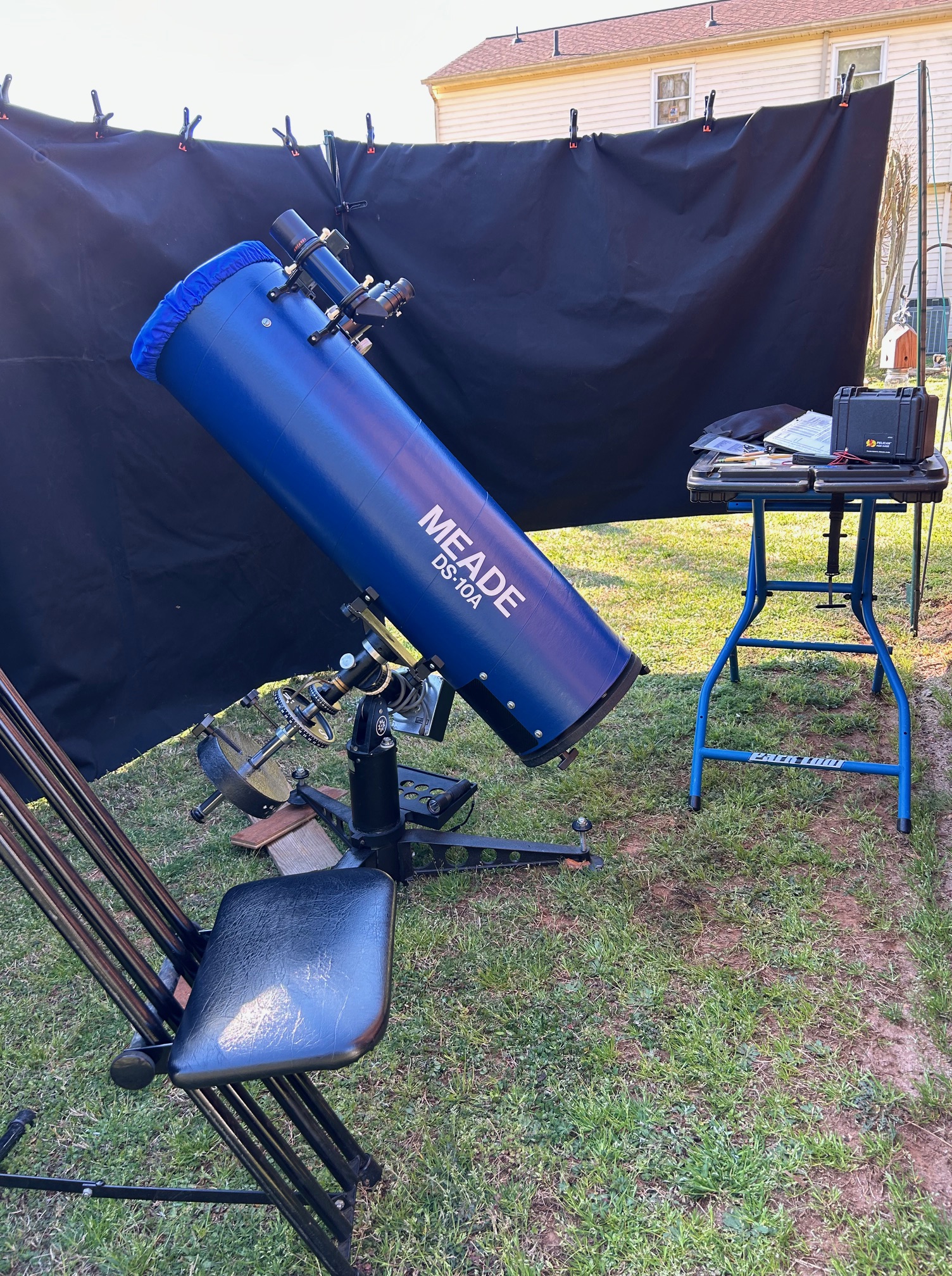
March 26th 2025: After the problems I’ve had over a couple of years I just had to observe galaxy NGC 6118, again in 2025. So, during the late afternoon of March 26th, I set my mount up and pinned my auto-marine fabric to wires to create my light block system in my backyard.
I need or require this (wires and cloth) and in this part of my backyard for southern hemisphere objects only.
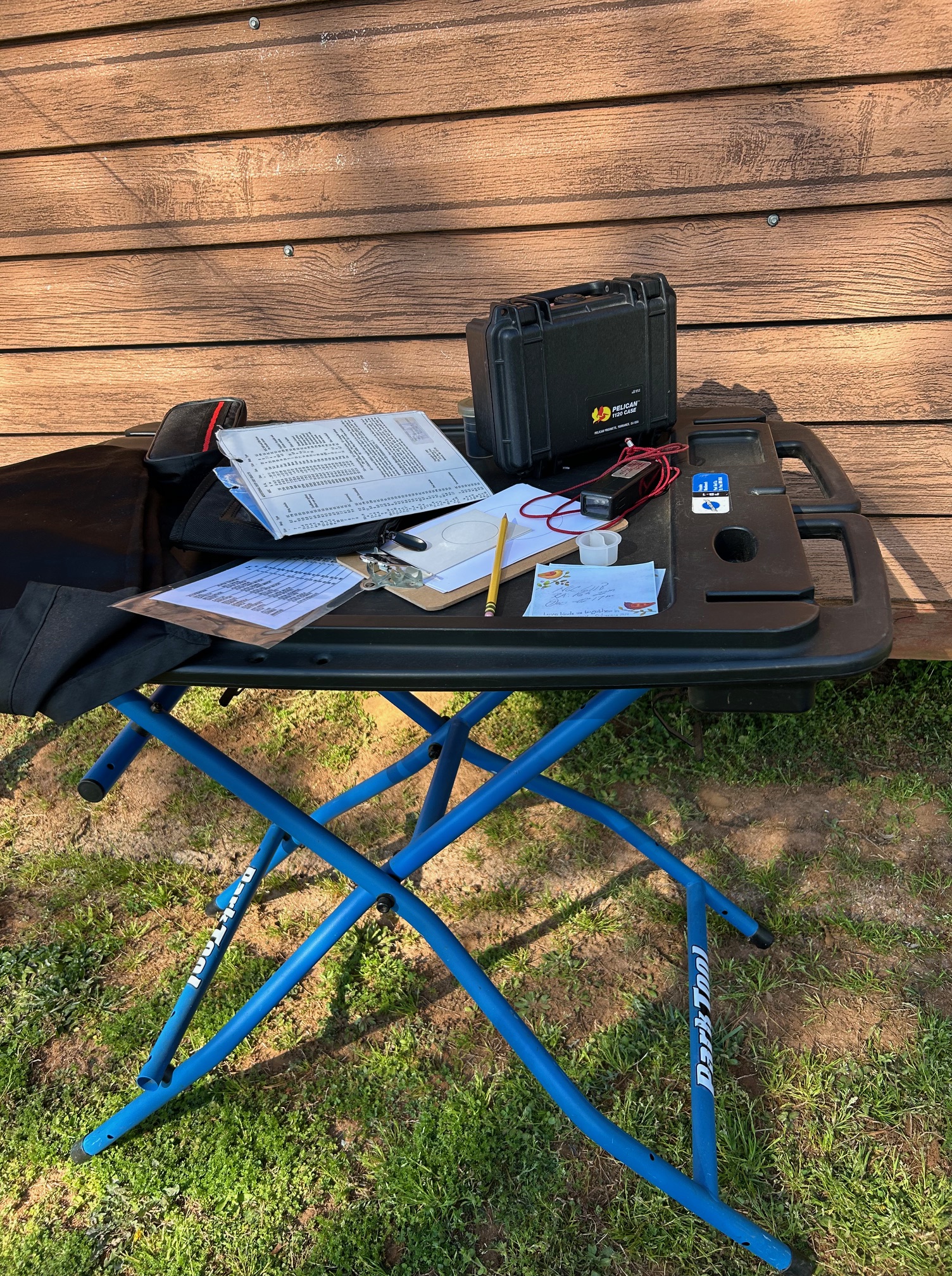
3:45 AM: I minimized everything I’d require for an early morning observing session. I included three selected eyepieces in my small Pelican box, not wanting to bring a large box. And I brought all of my necessary items or tools in a small zipper bag: This included pencils, sketch cards, set-up stars, red lights, the large S&T Pocket Alas and other.
When making an early morning observation, it’s important to have everything ready, without the need to run back inside for necessary tools and items forgotten.
4:15 AM: I was looking in the eyepiece and in the area of the galaxy using an 11mm 82º apparent field eyepiece, for a magnification of 104x and a 0.79º true field. I began using field motion and then letting the galaxy drift back into the eyepiece field, and could see a faint elongated blur, with averted vision, but not constantly.
4:45 AM: Increasing the magnification, so I used 2.8x University Optics Klee Barlow, for a magnification of 291x and with a 0.28º true field, but the view was no better. And still only an intermittent blur, but this time more elongated. The galaxy was at such an altitude it was mostly above the light dome. However, there was another problem going on: A wildfire of over over 3,000 acres was raging in Polk County, which is only about 35 miles away. I’m not sure if smoke was an issue or not, but the sky had a reddish look along the horizon. So, probably likely.
5:14 AM: I lifted my eye from the eyepiece and “Gave Up The Ghost” as related to this galaxy for the final time, not likely to return. This galaxy has acted like a ghost for me, now going on two years.
My quest began in the later summer of 2023, and ended on March 27th 2025, but never being able to see the galaxy to a level I would like. Sometimes it’s important to know when good is enough, and time to quit. I made no new sketches or written notes…
This recording and post update @ 4:28 PM (EDT) on March 27th 2025. It was my plans or hope to attempt this galaxy again in the spring of 2025, however, I have not been able to do so. I’d say, most likely….I’ve made my last observation of NGC 6118 known as “The Blinking Galaxy.”
Roger Ivester
Previous observations as following:
I attempted two very early morning observing sessions in March and April of 2024 from my suburban backyard, but again without success. A dark site is really needed to observe any low-surface-brightness galaxy, especially one as dim and faint as NGC 6118.
However, traveling to a dark-site has been over for me now, for many years. The disassembly of a heavy equatorial mount and handling a large solid-tube Newtonian, loading, driving, unloading, reassembly, and then having to do it all again, became just too much. I will just continue to do my best from the backyard.
Almost thirty years ago, I fabricated a humble fabric light-block system (as pictured below) which has helped me many times over the years to see difficult and faint galaxies. It’s easy to set up and take down.
Light pollution will only get worse, so maybe the following inexpensive “light-block” system might work for you also.
I use a medium-duty, lighter weight equatorial mount when observing from my backyard which requires star-hopping….not my GoTo mount from my back deck.
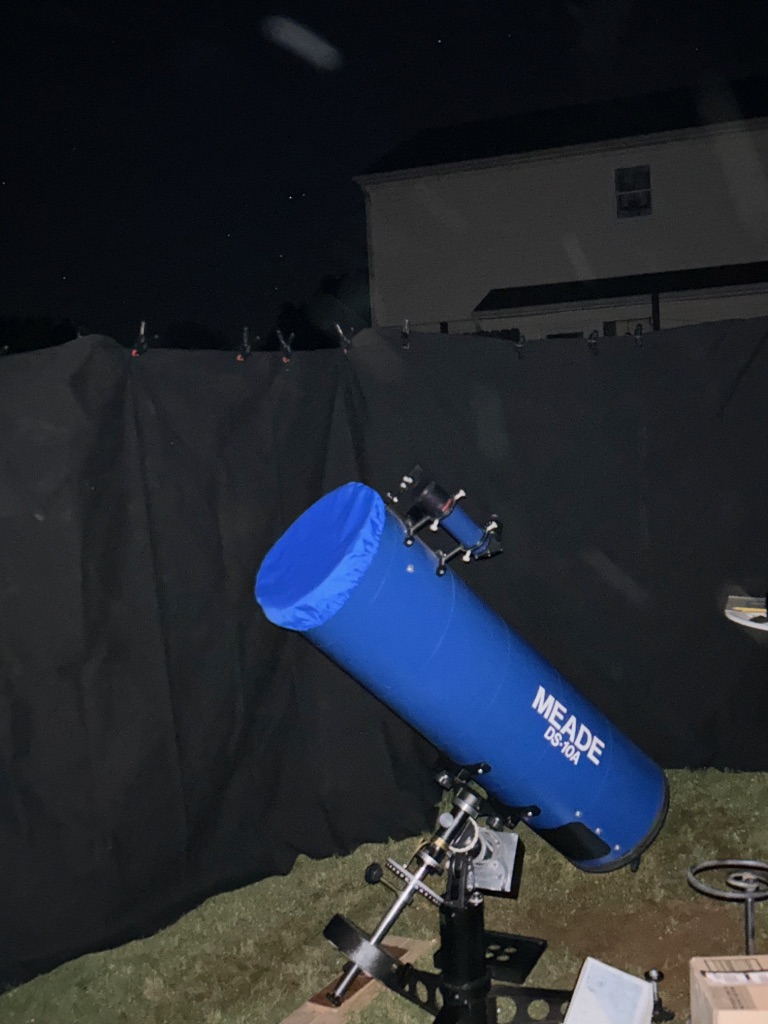
Darker skies from my back deck…
Fortunate for me, I was able to get a problem streetlight in front of my house, changed from a 4,000K LED unshielded light to a 3,000K light with a shield, and with optimum orientation away from my house.
A 5,000K multiple-bulb “residential carport light” is now my greatest problem when observing more southerly deep-sky objects. I have to move from my back-deck to my backyard for all deep-sky objects that are less than “about” +15º north declination.
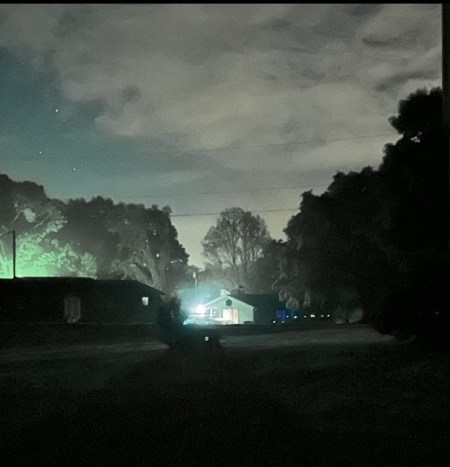
Good news! The above light has been adjusted as following: February 21st 2025
My plans are now to re-observe NGC 6118 at about 1:00 AM, early May 2025, in an attempt to duplicate my 2024 observation. Will the “Blinking Galaxy” be easier with the now “redirected” 5,000K carport light?
The house is now vacant, waiting for a new owner, and still shines from sunset to sunrise, but now, not toward my house.
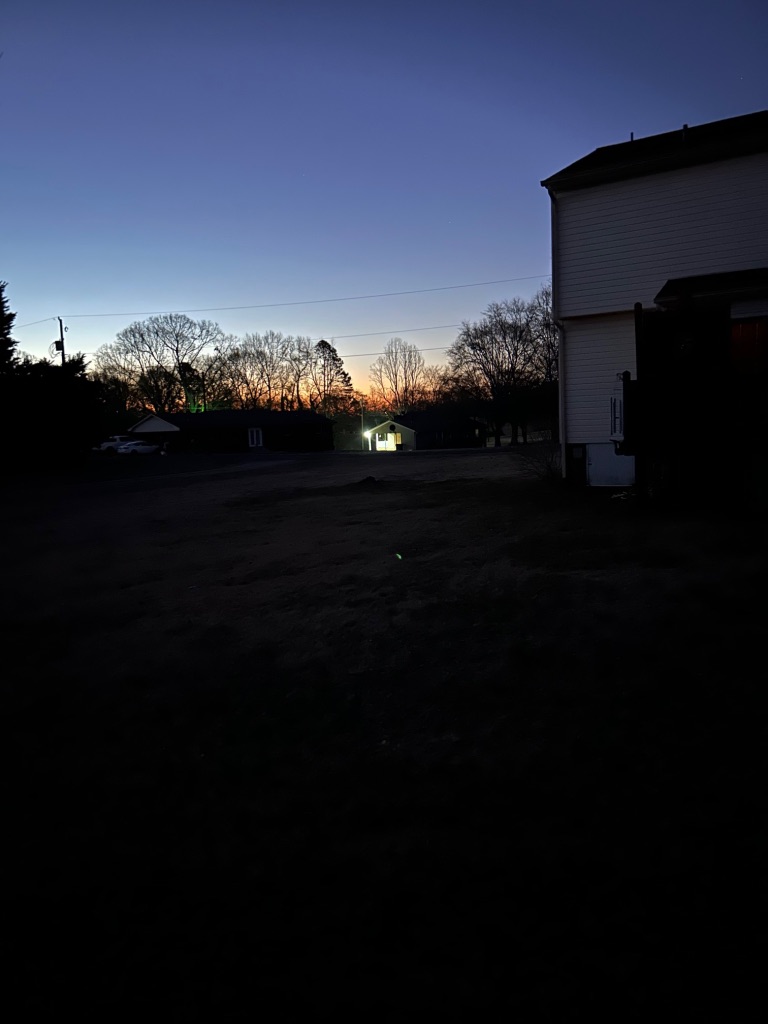
Date: May 11th 2024 (early AM observation and seeing NGC 6118) despite looking over the town of Boiling Springs, and the terrible “carport” light
Saturday morning: May 11th 2024 @ 1:00 AM, with a 5.0 NELM overhead, but far less in the location of NGC 6118, due to overlooking the town of Boiling Springs, and the problem “carport light” pictured above.
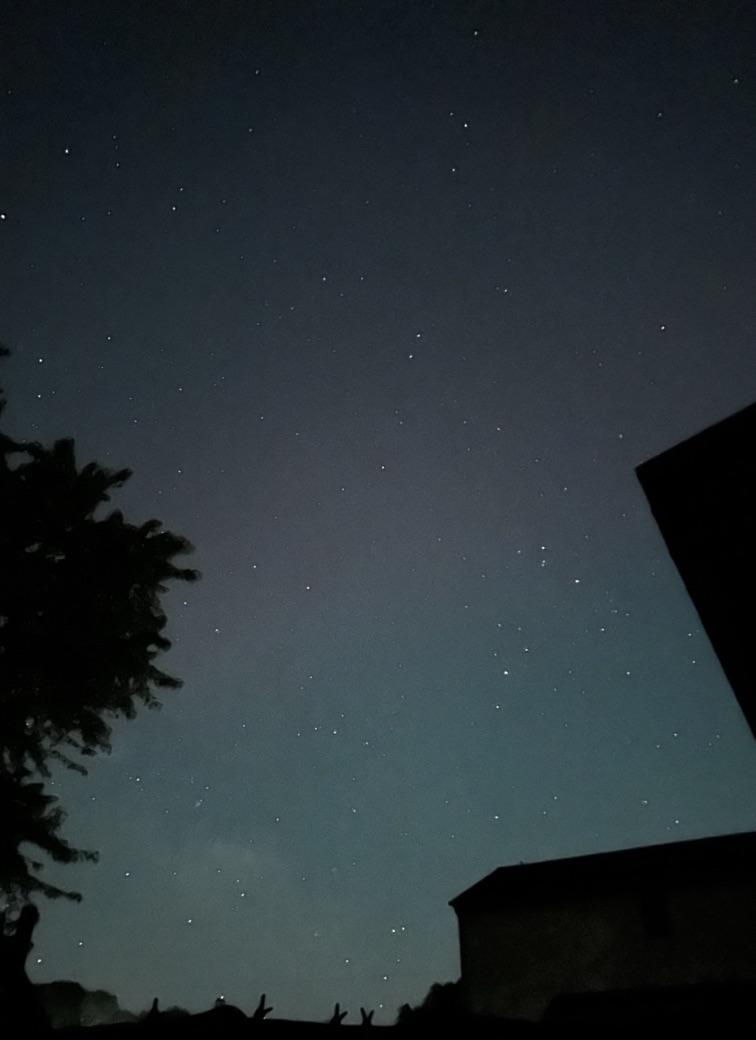
The following cellphone photo is from that night (May 11th) and beside my telescope. Note the constellation Scorpius toward the right lower corner. Now see the brighter pair of stars, almost in the center of the photo, above or north of Scorpius.
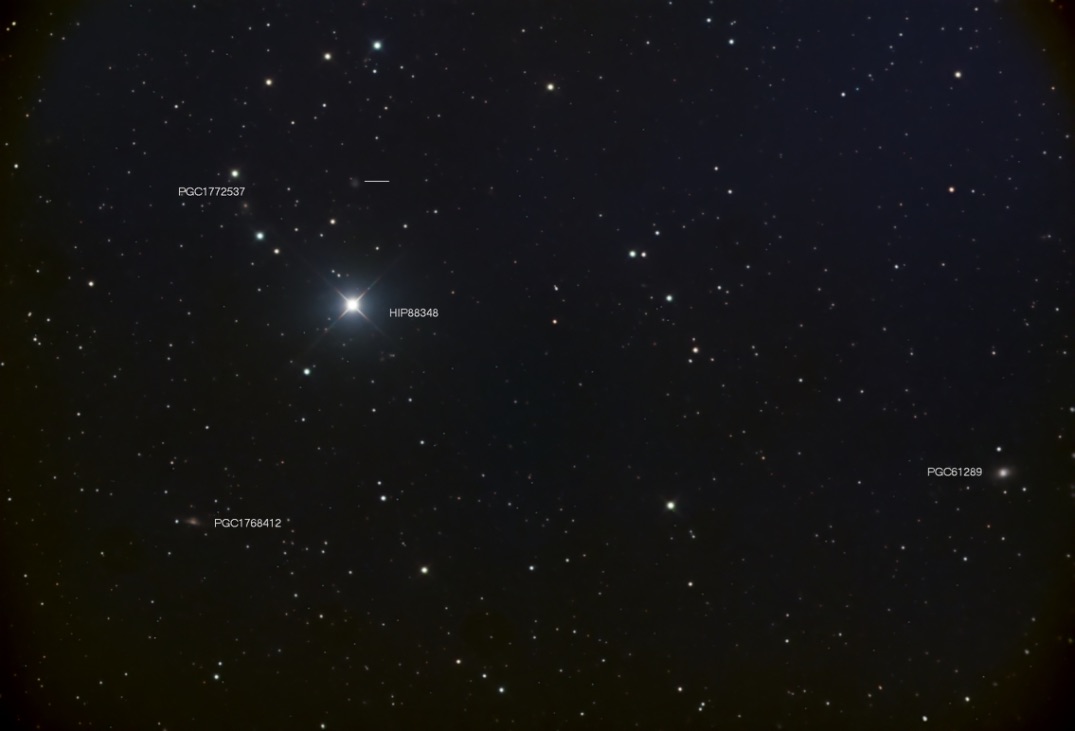
The most northern star, is known as “Yed Prior” at mag. 2.7. The second star toward the south or closest to Scorpius is “Yed Posterior” at mag. 3.2. Now move your telescope slightly to the NE of “Yed Prior” and use your star atlas to dead center, where NGC 6118 should be.
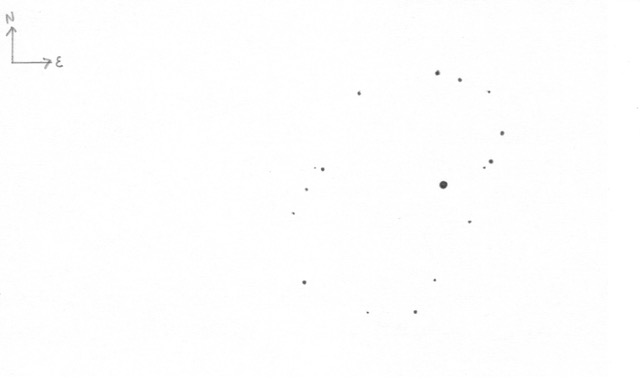
With a bit of difficulty and after almost an hour, I was finally able to see the galaxy. One of my greatest problems had been a pesky LED streetlight in close proximity, shinning directly into my backyard. My portable “make-shift” observatory was the answer to this.

Telescope: 10-inch f/4.5 EQ Newtonian observing notes:
Description: A tiny and subtle brighter middle, which resembles that of a planetary nebula. And like so many planetary nebulae, when using direct vision, vanishes or winks out. The galaxy has a very faint and diffuse irregular halo, which is oriented NE-SW. After observing NGC 6118, it’s easy to understand why its named “The Blinking Galaxy.”

 rogerivester.com
Recent Comments