Archive for the ‘Roger’s Articles’ category

Edmund Scientific of Years Past, And My Beginning As An Amateur Astronomer, And Other

February 21, 2018

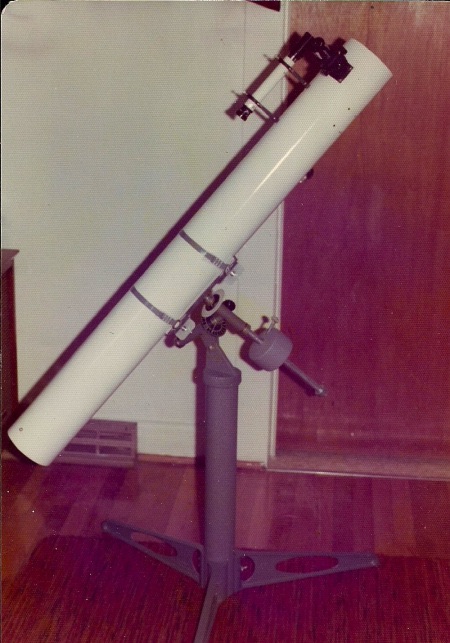
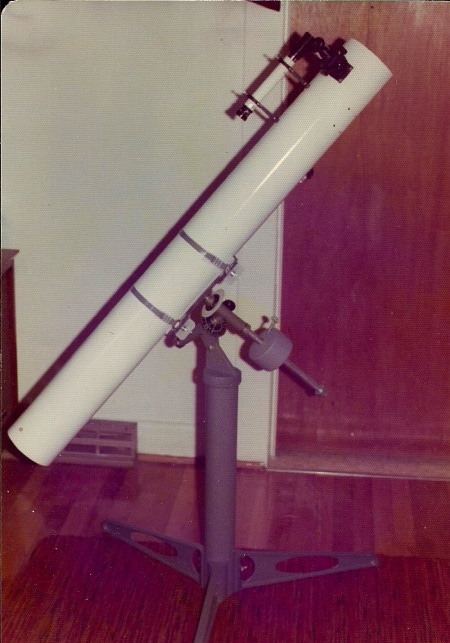
Edmund Scientific was the company that really fueled my interest in amateur astronomy.  From their telescopes and accessories to their many beginners books.  My first telescope was an Edmund 4.25-inch f/10 reflector, with an equatorial mount.  Not my first choice, but the best my budget would allow at that time.  Prior to this, I used my older brother’s 60 mm f/15 EQ refractor.  (Photo at the bottom, in an old rented house on a textile mill village, with a street light in the backyard!)   However, life would begin to improve.   

I was just getting started in my working career or first real job, and most all of my money was required for the essentials of life, with little left over for a telescope and astronomy equipment. 

The small Edmund 4.25-inch Newtonian allowed me to see many of the Messier objects to a level I’d never seen before.  And at that time, I was living in a highly light polluted area, so the setting circles were like magic. Star-hoping to locate faint deep-sky objects is “almost impossible” with severe light pollution. 

I later purchased a larger set of setting circles, also from Edmund, which greatly improved my direct-indexing accuracy and ability to locate fainter deep-sky objects.

I also replaced the “blunted nails” by Edmund, used as index pointers for the setting-circles with machined brass welding rods, with needle-like points for greater accuracy. 

Since that early time, I’ve had or owned about twelve other telescopes.  Most serious and long-term amateurs will agree; the first telescope of the amateur is only the beginning, with many more telescopes to follow.  

I learned quite a bit by reading the many books by Edmund Scientific, and taking my telescope out into my back yard, night after night. 

1910322_1_IMG_2476 

During those early years, it was my desire or goal to see the entire Messier Catalog, which I have completed many times since, but would eventually see over 2,000 more deep-sky objects, complete with notes and pencil sketches.  

I’m glad I didn’t quit during those early years, despite all of my obstacles, and regardless of the amount of light pollution, there are always deep-sky objects that can be observed.  So, don’t give up!   

University Optics Closes Doors After 50+ Years

December 3, 2017

I’m a bit late in finding out (January 2018) but University Optics closed its doors in ~June 2017.  I was saddened to hear this.     

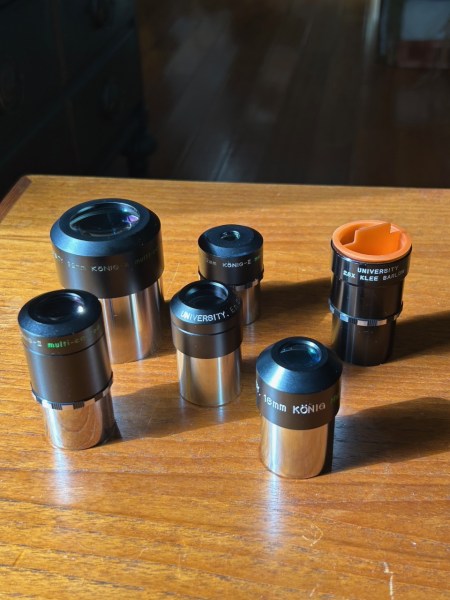
I purchased all of the original UO Konig’s over 30 years ago:  A 12mm, 16mm, 24mm in a 1.25-inch format, and a 32mm 2-inch…also a 20mm UO Erfle, and a 2.8x three-element apochromatic Barlow.  I have, or have had many other eyepieces over the years, including Televue, Celestron, Meade and others.  But I still use my Konig’s quite often, even to this day.  As a visual observer, I love eyepieces.  However, my last eyepiece purchase was over ten years ago…an 11mm Explore Scientific 82º AF bought in-person, from the Park’s Optical store in Las Vegas.   

It’s very sad to see a company that supplied mirror making kits, mirror cells, diagonal holders, and many other low profit items, now out of business after more than 50 years.  

University also sold a 6-inch f/8 Newtonian and an 80mm f/5 achromatic refractor in kit forms.  The refractor required both assembly and paint. The Newtonian only required assembly.  The 80mm was an air-spaced achromat which received many excellent reviews.   

University Optic’s will be missed by the amateur astronomy community.  So many great “made in  America” astronomy companies are no more.     

My University Optics eyepiece collection as following, and all still in pristine condition.   

Science Hobbies-Charlotte And Scope City-Las Vegas: My First Telescope And Last Eyepiece Purchase (To-Date) Were From Brick And Mortar Astronomy Stores, But Both Are No More…

November 7, 2017
 
My first telescope purchase (1977) and my last eyepiece purchase (to-date) were from brick and mortar astronomy stores, but like most other full service astronomy stores…are no more. 

I will always remember my excitement on that late Friday evening, walking in Science Hobbies and purchasing a 4.25-inch Edmund EQ reflector.  I really wanted the 6-inch f/8 Super Space Conqueror, but I’d just began my first serious job and money was a bit tight.  I’d been looking at telescopes in those little Edmund Scientific catalogs for the longest time.    

Science Hobbies was a small family owned hobby store that sold products mostly from Edmund Scientific.  For many years they had a big 8-inch Edmund f/6 Newtonian Reflector on a massive equatorial mount sitting in the front window.

Throughout the years, I always enjoyed going to Science Hobbies.  It was fun to be able to see and feel many of the products from Edmund.  Other than my telescope, I bought a few eyepieces, a pedestal mounted eyepiece holder, books and too many other astronomy related products to list. 

My last trip to Science Hobbies:   

It was a Saturday afternoon in the mid-90’s, when I decided to visit Science Hobbies, which I’d done so many times before.  I got out of the car and went to the front door only to find it locked, and the store was empty.  Somehow, I had missed not seeing the rusty sign that hung over the door for so many years and the large 8-inch Newtonian, was not in the front window.  The store had closed, and at that moment, a bit of sadness came over me.  This would be my last visit to the location that was the former…Science Hobbies.  

Now to Scope City in Las Vegas: 

When visiting family in Las Vegas on at least a couple trips, one in 2008 and then again in December 2010, I visited the Las Vegas Scope City store.  However, I was sorry I didn’t purchase an 11mm Explore Scientific 82º eyepiece while being in the store.  When I got home I called back, and placed an order over the phone for the eyepiece.  So, to-date, this has been my last eyepiece purchase. I also purchased some very nice engraved 6-inch aluminum setting circles from Scope City, which was the only company that still sold them.  

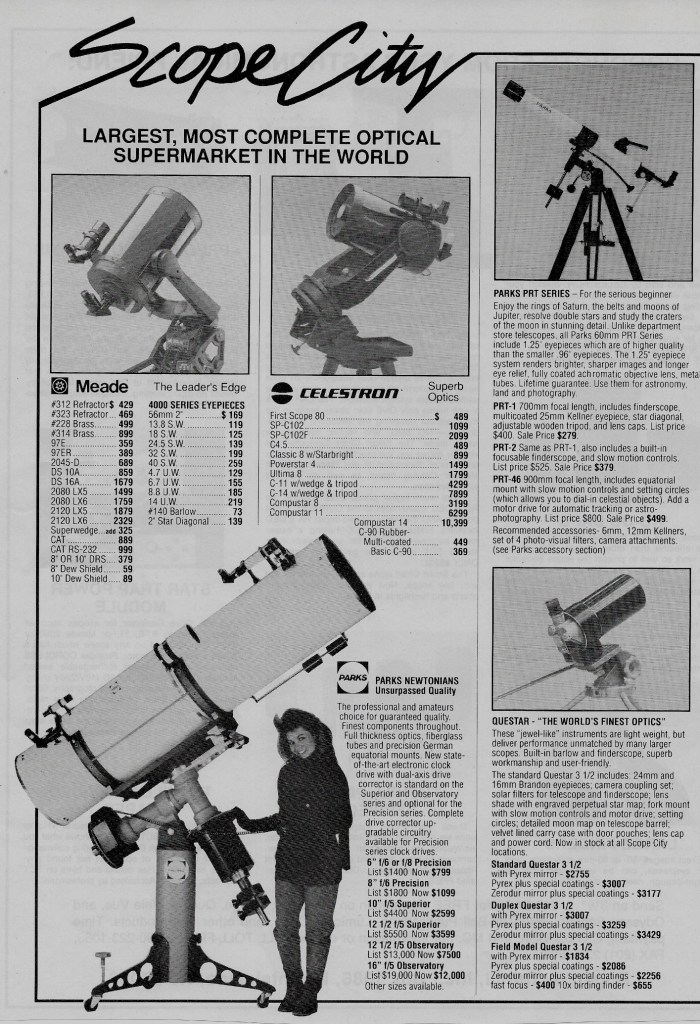
I had always enjoyed seeing the Scope City advertisements in the magazines, showing those big Parks Optical Newtonian’s with massive equatorial mounts. 

It was great to be able to visit the Scope City Store, but unfortunately, not very long after my last visit and purchase, Scope City also went out of business.  

I have often wondered what happened to the 8-inch Parks Optical Newtonian, on a very heavy duty equatorial mount that was sitting in a corner of the Las Vegas store. 

My first telescope was purchased from Science Hobbies in Charlotte, or a retail (brick and mortar) store and later went out of business.   And my last eyepiece (to-date) purchase was from a brick and mortar store, being  Scope City in Las Vegas, also later to go out of business.  

After the demise of Cave Optical in Long Beach, it was Parks Optical that took their place with  large equatorial Newtonian reflectors, on a large scale production basis.   

Science Hobbies, Scope City, Cave and Parks Optical are all missed, especially by those like myself that have been serious students of amateur astronomy for 40 or more years.    

My first telescope purchased from Science Hobbies in Charlotte: A 4.25-inch f/10 reflector which I purchased in March 1977. The following photo was made in a rented hours: An old (built in 1927) mill village house which was incredibly cold during the winters.

My first observation using this telescope was Jupiter from the side yard from that house. And It was using this telescope during the fall of that year from the light polluted backyard that I first observed galaxies M81/82. This was a defining moment for me, as in my mind on that night…I became a real amateur astronomer.

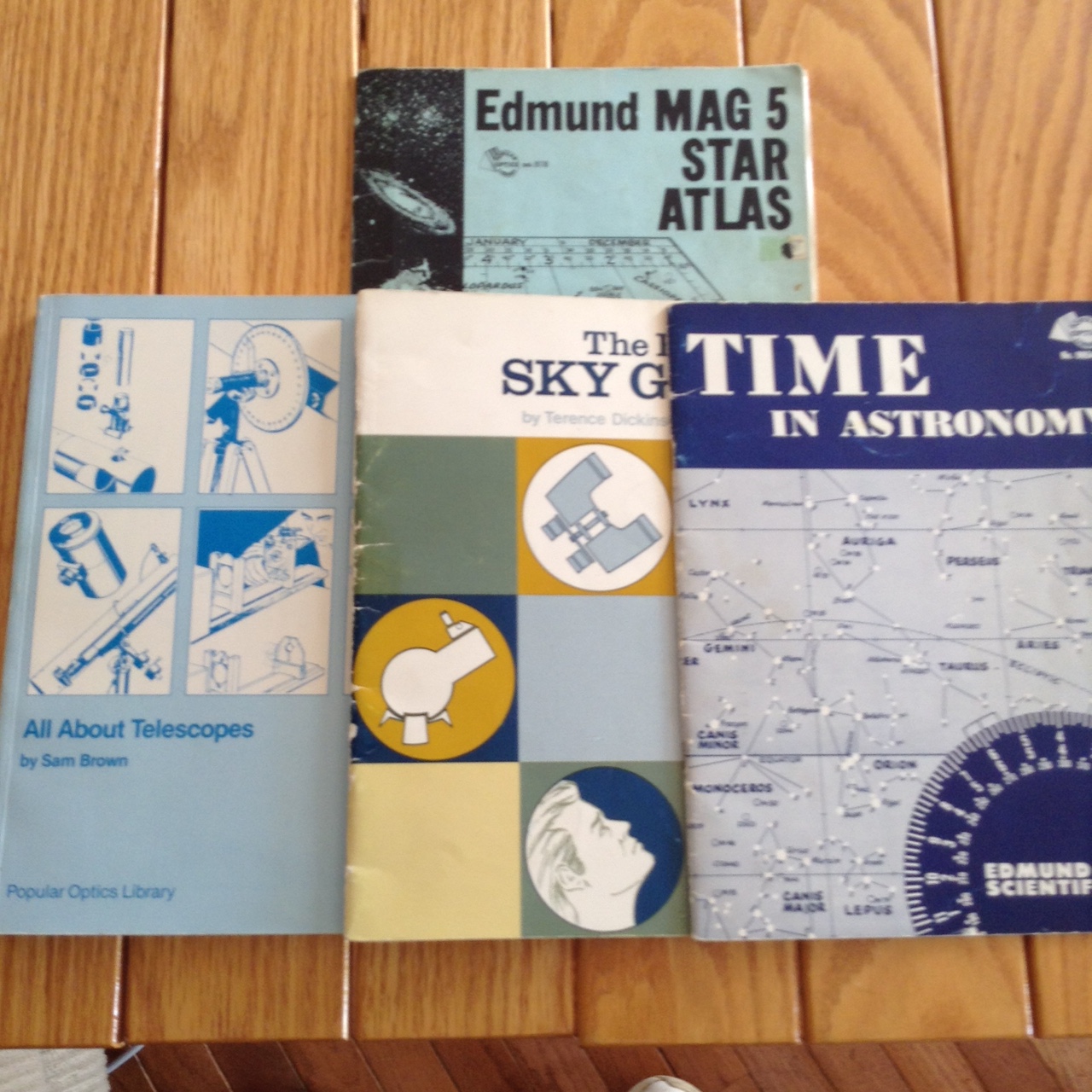
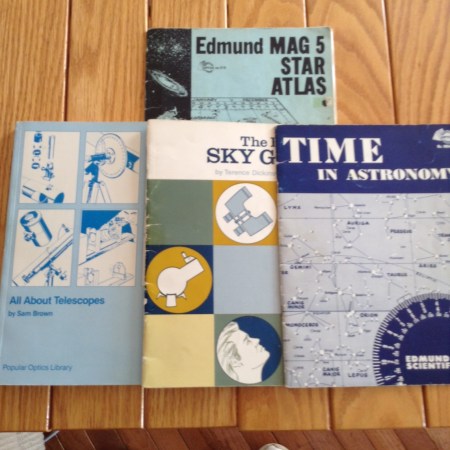
I purchased the following books from Science Hobbies, that taught me so much about amateur astronomy.

The 2017 Total Solar Eclipse from Laurens, South Carolina A Great And Memorable Day

August 26, 2017

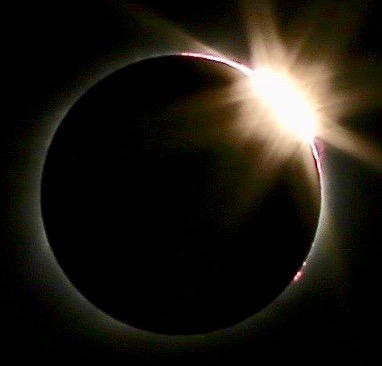
Image of the eclipse, the diamond ring, and Bailey’s beads provided by Barre Spencer and Patrick White using a Canon Rebel with a 200 mm zoom lens.  Location of photo:  Columbia, SC 

(s) Diamond / Baily's Beads 9

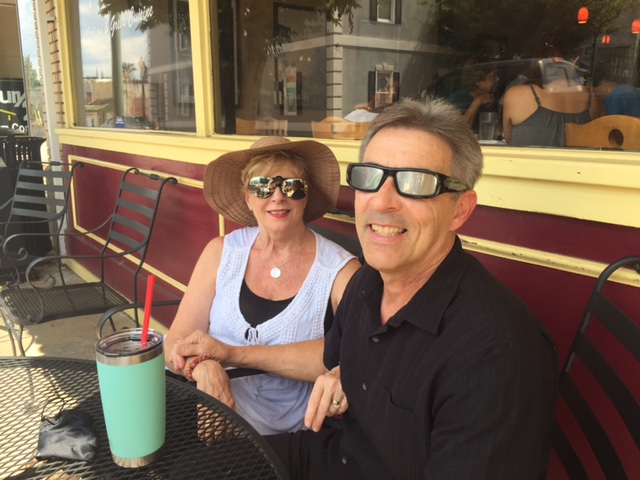
A group of folks from various places met outside of an Italian restaurant to enjoy the solar eclipse together.  We were all surprised how few came to this quaint little town to observe this historic event.  The totality duration was ~ 2 mins  34 seconds, and with perfect weather!    

Very comfortable weather, with very low humidity.  Yes…a perfect day, and only 40 miles away from our house.  We drove some back roads, and crossed over I-85, that was bumper-to-bumper.  It actually looked like a parking lot for as far as the eye could see.

The I-85 event reminded me of the day that Deb and I tried to get on the Santa Monica Freeway, in California.  We actually had to pull an illegal turn at the top of the ramp!  

During totality the sky darkened to a surprising level, but not as dark as a clear full moon night. Venus appeared very bright in the western sky and Jupiter in the southeast.  I could not see any stars….naked eye.  

Both Debbie and I were amazed at the sudden flash of the diamond ring.  (See the image above) 

The temperature drop was very significant.  A weather bureau report from Newberry, SC, only 30 miles away, also in the line of totality, had a temperature drop of 11º Fahrenheit .  

I had always wondered what the temperature drop could be during a total solar eclipse, so now I know.

When the sun began to reemerge, we noticed a shimmering of light waves on the pavement under our feet and all around us, known as shadow bands.  A very interesting phenomenon, that I was hoping we’d see, and we did! 

I’m just sorry that I didn’t video a few seconds of the shadow bands, however, they are forever  stored in my mind.  I can just see them now! 

We drove back through country roads and were home in less than 45 minutes.  What an incredible and memorable day.  

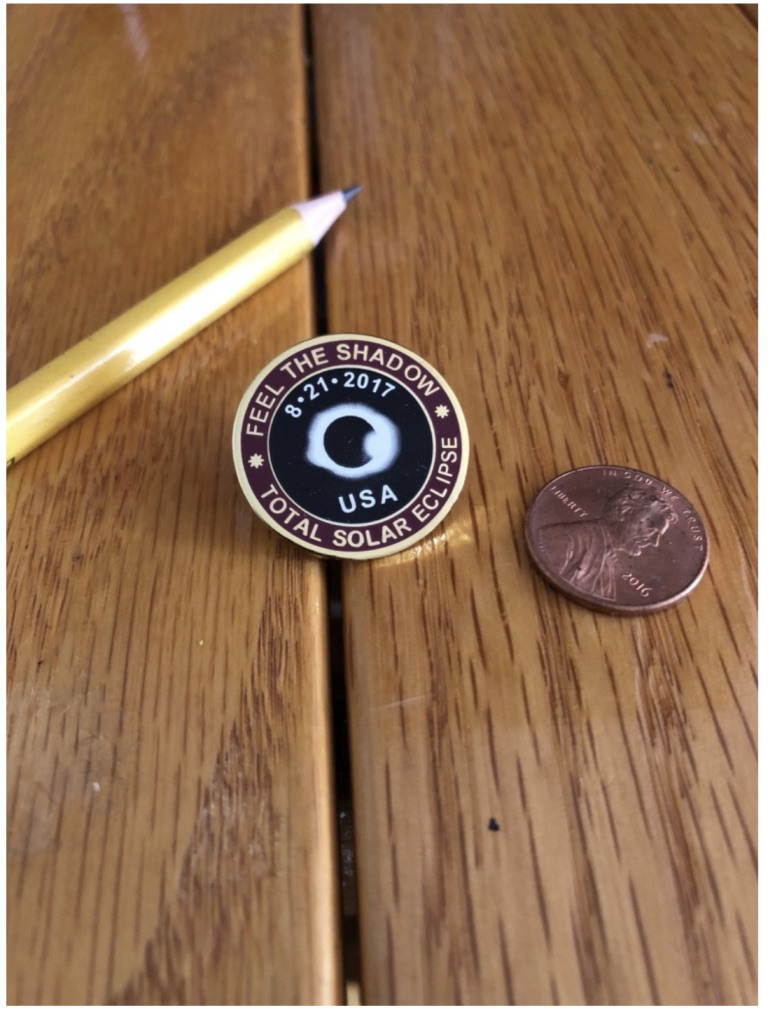
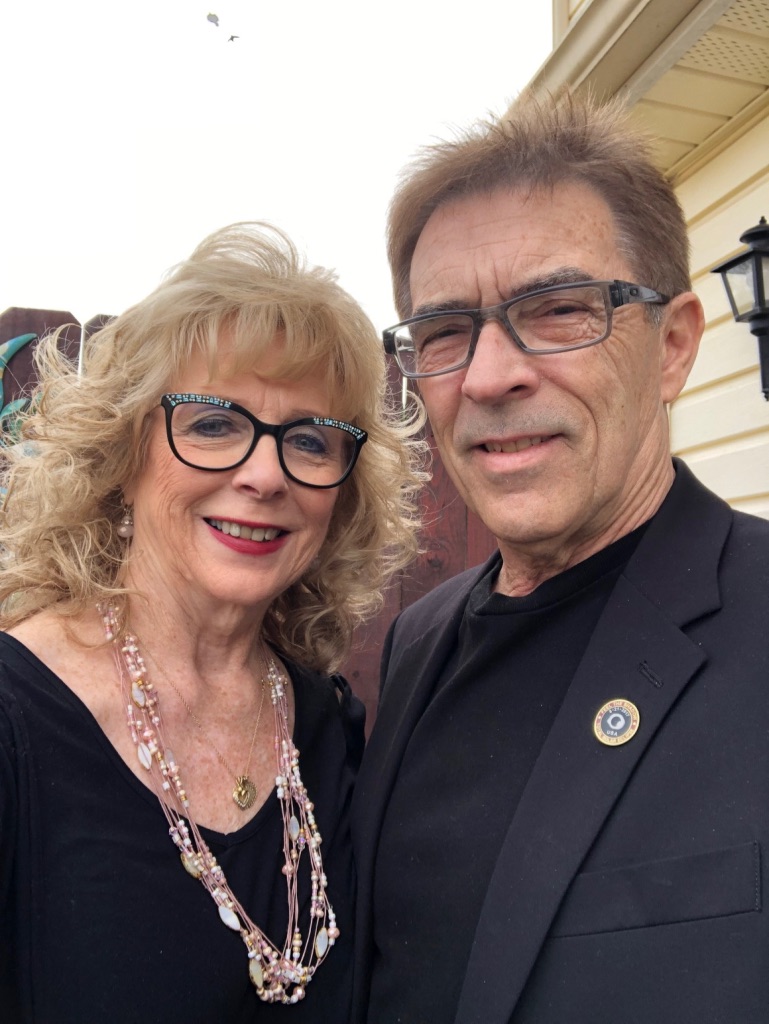
And thanks to John Goss, President of the Astronomical League at that time, sent both Debbie and myself, a very nice and high quality lapel pin.  I wear it often to this day. 

Regarding the 2017 Total Solar Eclipse:  We enjoyed the moment, and the events taking place all around us.

IMG_8976

2017 Astronomical League Total Solar Eclipse Lapel Pin:

Note my 2017 eclipse pin only recently.

Remembering Comet Hale-Bopp March 1997:

August 14, 2017
 

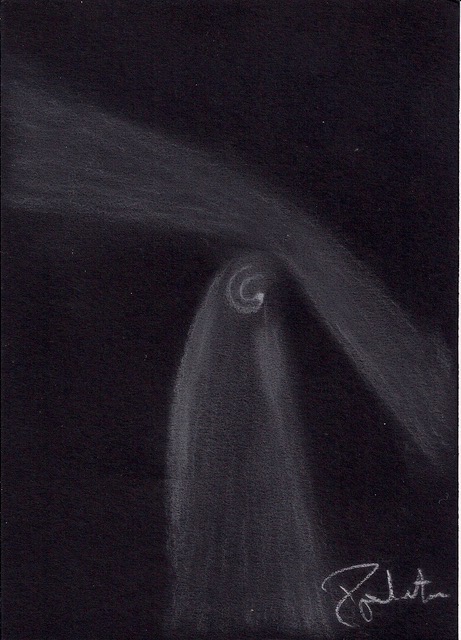
Comet Hale-Bopp  
March 1997
10-Inch Newtonian Reflector
Magnification: 160x
FOV: 0.38º

White charcoal pencil sketch as following on black card stock.  The three tails are visible:  The anti-tail, the ion or gas tail and the dust tail are clearly visible.   Roger Ivester (North Carolina)  

 
Image


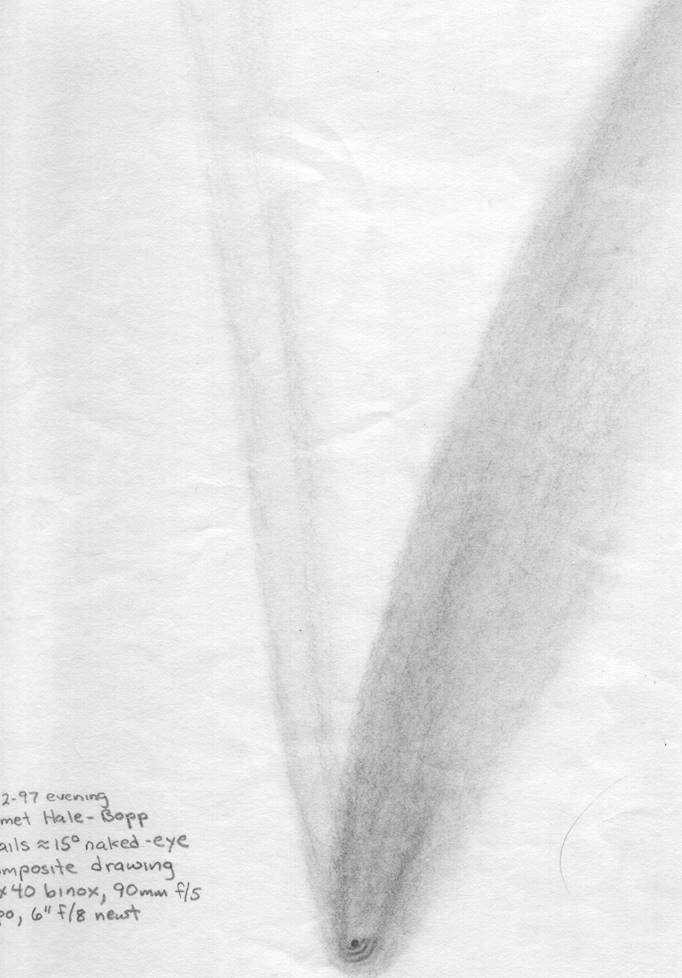
The following sketch by Sue French:  New York  

Unfortunately, the sketch is actually larger than our scanner can copy, so some of the comet is cut off.  The sketch was made on 4/2/1997.  The tail was about 15° long to the naked eye.  To get the tail and the core detail in the same sketch, I used three different instruments: 8×40 binoculars, a 90mm refractor, and a 6-inch reflector. 


After 17 years, my observing partner passed away. Her name was CJ, and Astronomy from my backyard will never be the same.

March 14, 2017

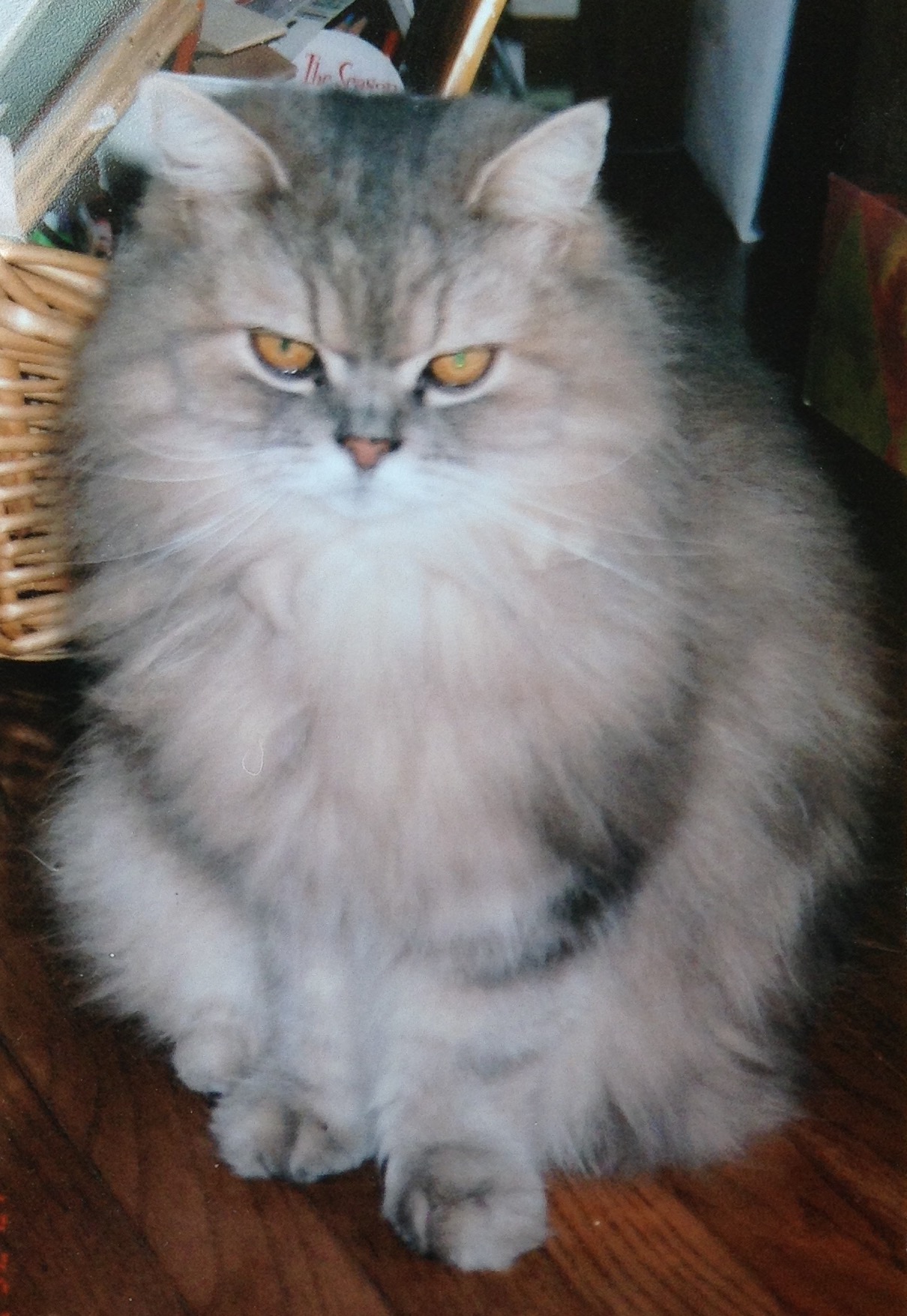
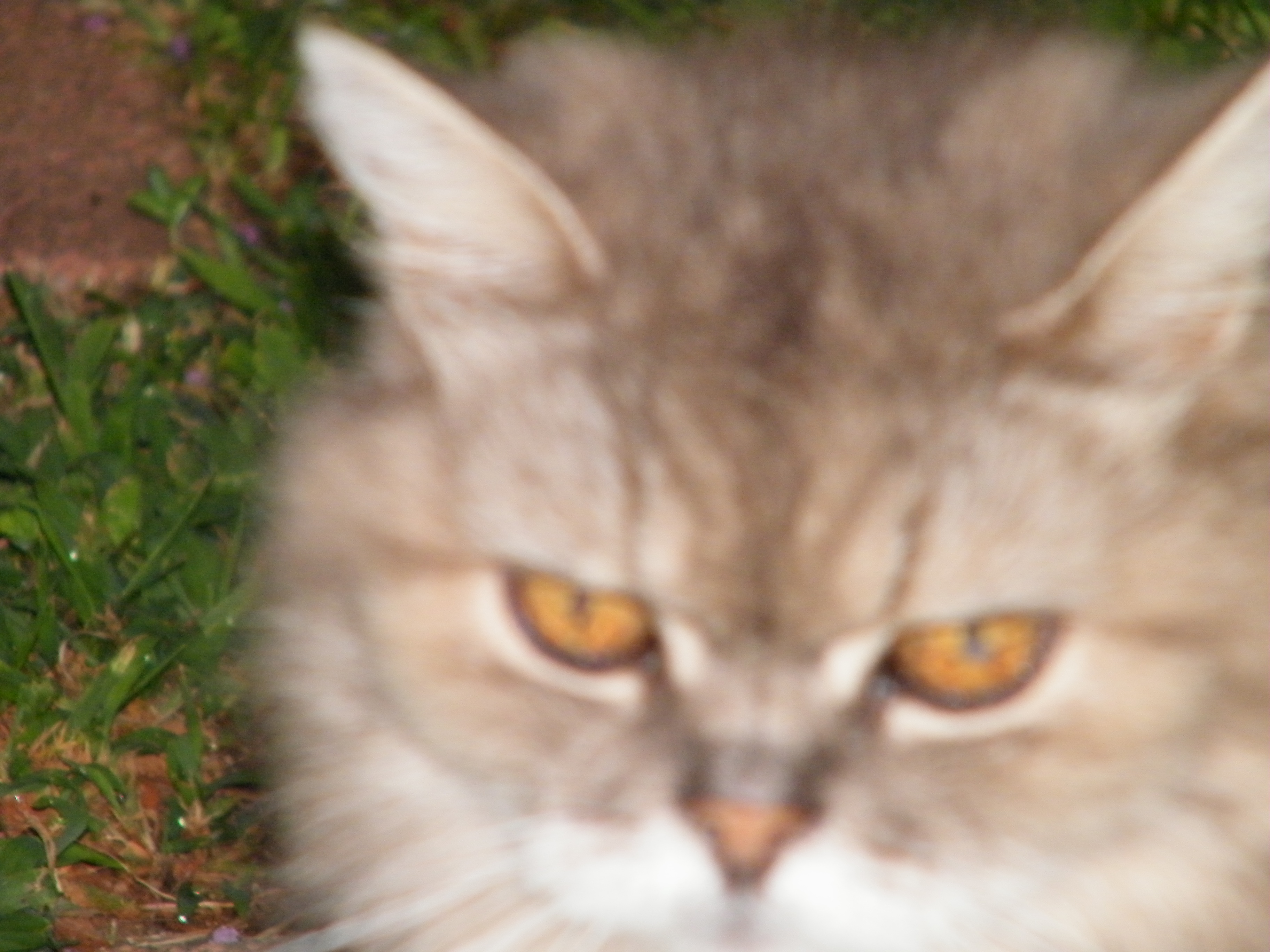
I can still see CJ, our Persian Cat, waiting anxiously at the back door to go outside, while I’d be setting up my telescope on the deck or in the backyard. 

She would walk around, climb the deck, play like she was catching something….pouncing and clawing the ground. However, after a short while, she’d end up on my lap, either due to being cold, or to just feel safe.  

CJ was going to stay with me for only a couple weeks, and then would be moving to California, but that two weeks ended up being almost 17 years.  I’m really glad the move didn’t work out.   

Astronomy from my backyard will never be the same.  

Debbie and I held her in our arms from 11:30 AM till 8:15 PM.  I had my hand on her chest when her little heart beat the last time, after 19 years.  It was a very sad day.  

CJ had a wonderful life.  We treated her like a Princess!    

FullSizeRender

DSCF5111

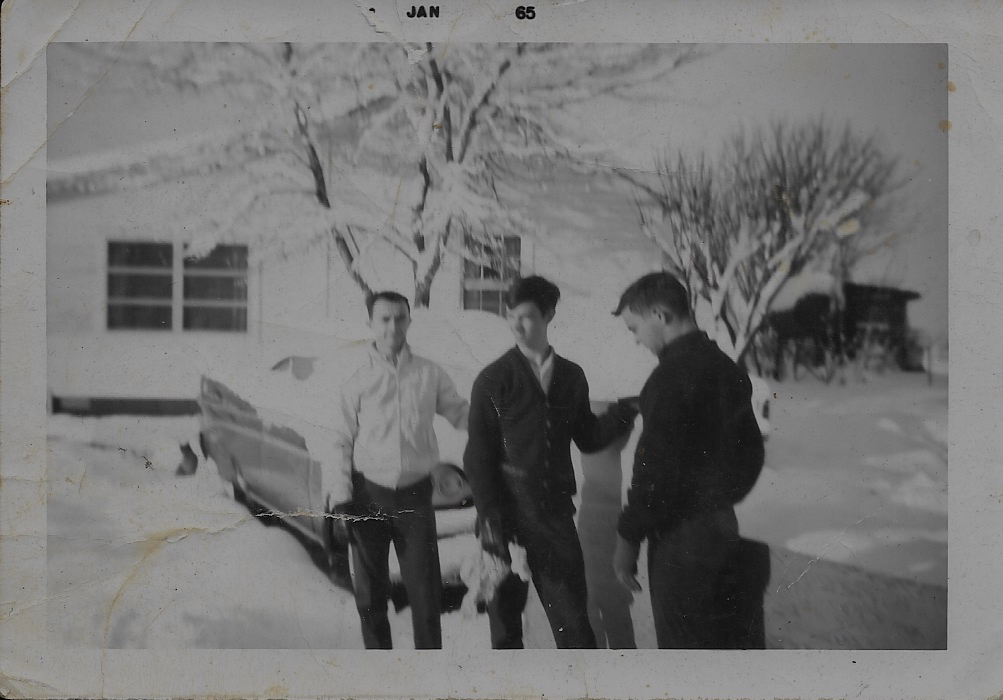
January 1965: A Very Cold Month With Snow And Many School Days Missed

March 12, 2017

A cold month with a lot of snow and school days missed. During this particular snow, there was more than 12-inches of snow on the ground at one time with extremely low temperatures.

Temperatures dropped into single digits for several days, which caused havoc on plumbing for many, and to make matters worse, deep-snow and ice persisted.

During January of this year, the First Broad River froze solid, something I’d never seen before or since.

This was just one of several snow falls that would occur….extending into the months of February and March of 1965.

In the following photo, L-R, are three of my brothers: Ronny, Phillip and Jimmy who are clearing snow with a 4 x 8 sheet of plywood.

Aerial View Of Meteor Crater Compliments of James Yeager, Pilot American Airlines

December 6, 2016

“Snow in Meteor Crater for an ice effect as the sun was starting to set.”  James Yeager 

image3

The Importance of Documenting Observations For Future Reference And Observing With A Purpose

February 5, 2016

     The following photo represents my past ~33 years (as of 2025) of observing, documenting, sketching and articles.  However, my first observations began in the mid to late sixties, but without notes or pencil sketches.   

IMG_1452  

     When I purchased my first serious telescope back in the mid-70’s, I also picked up a small astronomy reference book: “The Finest Deep-Sky Objects” by James Mullaney and Wallace McCall.  A small paperback with 31 pages, filled with an incredible amount of information, the majority being double stars.  

     This book also contained a number of galaxies, nebulae, star clusters, and even included several prominent red stars.  This would be my first list of objects to observe, and document.  

     My next list of objects to observe was the Messier catalog, which I’ve observed and documented multiple times, taking my time and being very patient.  

     This began my quest of making simple notes of all the objects I was observing.  However, my notes were pretty poor, mostly listing only the identification number and object.  However, I had to start somewhere, and this seems to be how many amateurs begin their documentation of observations….writing down nothing more than “I saw M37 and M42…etc.”

     The late Tom Lorenzin, author of “1000+ The Amateur Astronomer’s Field Guide to Deep-Sky Observing” shared the same.  This made me feel better, saying that he too, in his early days listed only the object identification, being the Messier number, NGC or IC.  

     In the early 90’s I began using “1000+” almost exclusively, at least for the following ten or more years.  I really liked the descriptions by Lorenzin, being relatively brief, but saying so much.  He was very effective with his use of words.  

     I was fortunate to have been able to meet Tom Lorenzin, on numerous occasions, and we became friends.  

     I patterned my descriptions to follow in Tom Lorenzin’s format…attempting to use as much precision as possible, but without being overly wordy.    

     My writing and observation notes both improved during this period, but I needed more than just notes.  I started pencil sketching.  It’s true…”a picture is worth a thousand words.”  

     It’s my opinion: visual observing is seeing the faintest of detail in each and every deep-sky object, then recording and/or sketching the object.     

     I continued to sketch and to-date have spent thousands of hours at the eyepiece, never wanting to be anything more than a visual backyard observer.    

     My only regret, I don’t have any notes or sketches from my earliest days.  Those days at thirteen years old with my brothers 60 mm refractor, from the weedy field beside my childhood home, in the foothills of North Carolina.  

Roger Ivester

     I started observing in the mid-60’s at about 13 years of age, but it’s been only in the past 30 years that I’ve become a very serious student of amateur astronomy.  Previous to that, I would just go outside, observe a few objects, and then come back into the house.  

     No notes, no sketches, no nothing.  What a waste of good observing time and years!  

     I just wish I had some notes from my first observations of the Andromeda Galaxy, the Ring Nebula, and many other deep-sky objects which I managed to stumble across as a 13 year old, using my brothers 60 mm refractor.  

     I can close my eyes even now, and see that vacant field beside my house with the Milky Way seemingly visible from horizon to horizon.  It was a great place for a young budding amateur astronomer to begin a lifelong trek into the depths of deep-space. 

     In the past I’ve made my sketches on 3 x 5 notecards, or larger scale 8.5 x 11 sketch pads.  However, for the past ten years, my favorite is 5 x 8 blank note cards with a 3-inch circle drawn on the right side.  It was Sue French who was using the 5 x 8 system, and gave me the idea to change. 

     It’s very important to me that my sketches be as accurate as possible, as seen through the eyepiece, without any embellishment.   Roger Ivester

Blank 5 x 8 note cards with the colors inverted:

Iota Cas Roger inv

unadjustednonraw_thumb_3b08

unadjustednonraw_thumb_3b07

Rogers M-081 Inverted

Rogers NGC-2300 Inverted

Scanned Image 160920001

Roger IC 1805

M13 And The Elusive Propeller

M13 And The Elusive Propeller

SN in M82 Revised -1

 M22 - August 2012 - Challenge

Pacman Nebula - NGC 281

Virgo Diamond - five stars

NGC 1502 & Kemble's Cascade-1

Scanned Image 120080000

Roger Ivester: Christian; Amateur Astronomer; Cyclist; Freelance Writer And Blogger

December 15, 2015

Thank you for visiting my site and I’m hopeful you’ll find it interesting.  

      DSCF5178 

6-inch f/6 Newtonian (below) which is now becoming my favorite telescope, due to the smaller size and weight, versus my 10-inch pictured above.   

The following Celestron 4.5-inch Newtonian was a gift to me by a friend. Libby called me one afternoon and asked if I could find a new home for this telescope. So, reluctantly, I went to pick it up and did a serious evaluation.

The telescope was in pristine condition, well-made and functioned perfectly, so how could I turn it down? And It’s compact, fairly light and very easy to set up on a Vixen GP mount. If I want to attempt to some very faint threshold deep-sky object (within the reach of this telescope) I can use the following GoTo mount. If I know a deep-sky object is in the center of the telescope field-of-view, it can most often be seen, however, faint.

The following 80mm f/5 refractor was a gift to me by my son, Brad. I enjoy using this telescope when time is limited and for brighter deep-sky objects.

My other hobby: Still riding a bicycle as of current with about 135,000 miles since June 1979. However, it would take me 29 years to log 100,000 miles in October 2009. I continue to ride even to this day, but not as fast or as many miles.

As following: A good illustration how faint the Helix Nebula appears via a 10-inch Newtonian with a nebulae filter. This planetary appears nothing like a beautiful time lapse, colorful filter enhanced digital image. I used chalk on black card stock to sketch the Helix which was best used to present the true eyepiece appearance.

I’ve never used a computer or any other electronic means to enhance or embellish my visual eyepiece sketches.

Orion nebula: I’ve always felt there is just too much fine detail to properly sketch this famous nebula. I made the following sketch pretty fast, attempted to only draw the most prominent features. Each and every time I’d turn my telescope(s) toward the nebulae to attempt my best ever sketch, I’d become overwhelmed, and would move on to other deep-sky objects.

Hale-Bopp with the anti-tail, gas and dust tails easily seen with a 10-inch Newtonian: Chalk on black card stock, worked best for the famous comet.