M40 is a double star near Megrez (Delta Ursae Majoris). Oddly, M40 was onceconsidered a non-existent Messier object. In his 1784 catalogue, Charles Messier described his40th object as: “Two stars very close to one another and very small, placed at the root of thegreat Bear’s tail.” Precessing Messier’s coordinates to equinox 2000 takes us right to such a starpair. Messier noted this double while searching for a “nebulous star” reported by JohannesHevelius. Messier assumed that Hevelius mistook these two stars for a nebula, but the latter wasactually referring to a different pair of stars – also without nebulosity.
To locate M40, start at Megrez and hop 1.1º northeast to mag. 5.5 70 Ursae Majoris.Continue that line for 1/4º to arrive at M40. My 4.1-inch scope at 28x reveals an east-west pairof mag. 10 stars, with the western one slightly brighter. Through my 10-inch scope, I see theprimary as yellow-orange and its companion as yellow-white.
Two galaxies share the field at 118x. NGC 4290 is a small northeast-southwest oval, and NGC 4284 is a tiny faint spotforming a 1½’ triangle with two mag. 13 stars.
The galaxies are about 140 and 190 million light- years away. Although the distances to its stars are poorly known, M40 is probably an optical(unrelated) pair. Independently discovered in 1863 by the German astronomer Friedrich August TheodorWinnecke, M40 carries the double-star designation Winnecke 4. Winnecke is also the originaldiscoverer of eight NGC objects, and ten comets that bear his name.
Roger Ivester: Observer from North Carolina
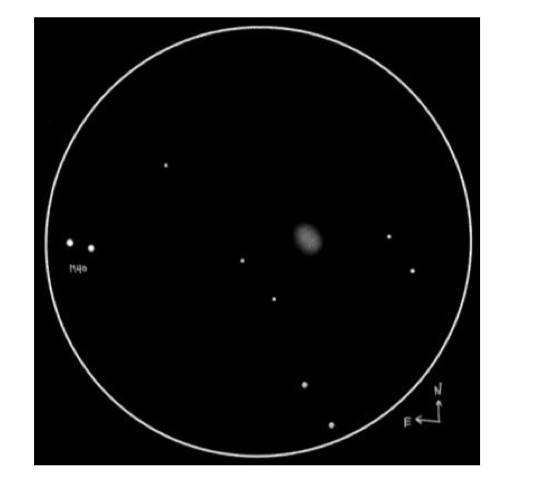
Due to our recent bad skies, I was unable to make a new observation of M40, andgalaxies NGC 4284 and NGC 4290. I was forced to use a sketch and notes from an earlymorning observation on February 25, 2000.
On that night, I was using a 10-inch reflector from my moderately light-polluted backyard with a 5.8 NELM. It was an especially good night withexcellent transparency.
M40, a pair of mag. 10 stars, also known as Winnecke 4, was very easy with a wideseparation of about 50 seconds of arc. The pair was oriented mostly east-west and both appearedas whitish-yellow in color.
Two faint galaxies were located very close to M40. All three objects were located withina 1/2º field-of-view. Just to the west of M40, lay faint galaxy NGC 4290 at mag. 12.0, elongated NNE-WSW.I saw a very subtle brightness in the central region. Very close and to the west of it was a veryfaint mag. 14 galaxy, NGC 4284, which was extremely difficult, appearing as a faint, mostlyround blur. And during a previous observation from the same location with a friend, and in a side-by-sidecomparison with the 10-inch reflector and an 8-inch Celestron Schmidt-Cassegrain. We couldn’t see NGC 4284 with the 8-inch SC telescope, but could in the 10-inch Newtonian.
The following pencil sketch was made using various graphite pencils and a blank 5 x 8notecard with the colors inverted using a scanner.
Jaakko Saloranta: Observer from Finland
Here’s all I’ve got: With a 4.5-inch reflector @ 152x (20′), the galaxy appeared as afairly faint, NE-SW elongated galaxy, without detail, close to double star M40. NGC 4284 wasinvisible. Altitude of the object was 74°.
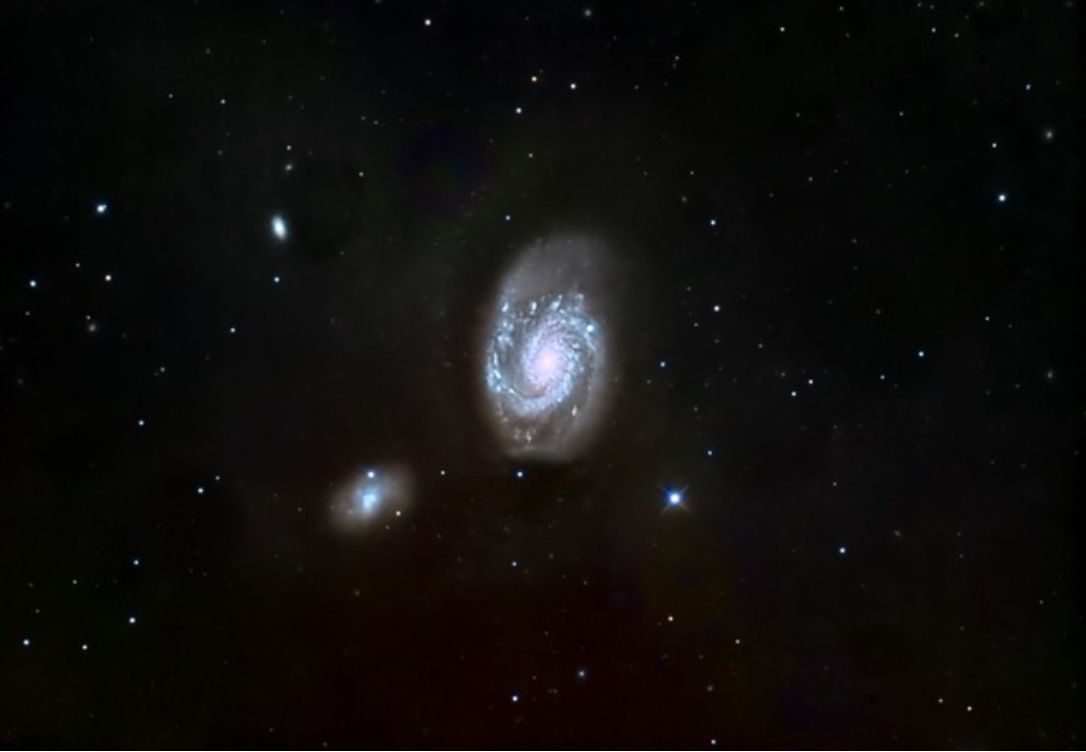
This image took some effort. I captured the galaxy in Lum with my 32-inch this past December from Gloucester, but did not have enough night to get it in color.
I tried in Florida, but it lacks the detail of the 32-inch as it is only 4.5 by 2,4 arc minutes, thus needs the larger telescope for detail. However, I then used a process in pixinsight to combine images from 2 different optical systems, and it worked. So…lum from the 32-inch scope with about 75 minutes lum ZWO 6200 camera.
Then RGB from C14 scope in Florida again ZWO 6200, (about 70 min total), processed then combined with dynamic alignment tool in Pixinsight. Note NGC 3896 close by to the immediate east.This worked, I may try for more such galaxies in color only to add to my 32 inch collection of galaxies in Lum only. Spring is so short a season for all the galaxies available.
Jaakko Saloranta: Observer from Finland
Back in March, the galaxy duo was visible in a good, high (77°) spot in the sky. Usinghigh magnification (304x) with a 4.5-inch reflector, I described the view as follows: Fairlybright, N-S elongated galaxy with a brighter nucleus. Faint mag. 13 star touched the halo inNW.
NGC 3896 appeared as a tiny, fairly faint and slightly SE-NW elongated galaxy just southof a mag. 13 star. Observing conditions were average: NELM around 6.0 with SQM-L readingsof 20.20 near the object. Temperatures still dropped well below zero Celsius on the night of 26March.
Roger Ivester: Observer from North Carolina
I wanted to share an article concerning an observation I made on April 20, 1993. It’s atestament that documenting and taking good notes is indeed a good thing!During some recent cloudy weather, while reviewing past logbook entries, I discoveredthat I had not followed up on an object viewed on 20 April, 1993. The main object was NGC3893, a mag. 11 galaxy in Ursa Major. While making my sketch of this excellent galaxy, Inoticed a smaller, very faint object, SE and very close. I noted this in my logbook as one to lookup later. It was almost ten months later, while browsing through the logbook, that I rememberedto follow up on this observation.
I checked Burnham’s Celestial Handbook, Tom Lorenzen’s 1000+, and the Tirion SkyAtlas 2000.0, only to find that none of these sources listed a companion galaxy. I then went tothe NGC 2000.0 Catalog by Roger Sinnott, and found the companion listed as NGC 3896, a 14thmagnitude galaxy. I was elated to find out this was a faint galaxy. It should also be noted thatmy observation was made from my back deck, with several unshielded streetlights nearby.
If I had not sketched NGC 3893, it’s possible that I would have missed NGC 3896. If Ihad not logged the mysterious companion, I probably would never have checked any referencematerial on a future date.
So, the moral of this story is: Keep a logbook, sketch yourobservations, and periodically review your notes. You never know what you might find. I was very excited about going back to NGC 3893 and NGC 3896 after twenty one years, and surprised that they appeared exactly as I remembered them.
It’s truly amazing how the brain can remember a faint galaxy pair after all this time.Using a 10-inch Newtonian reflector, I could easily see NGC 3893 at 57x, appearing as a faint oval, oriented NNW-SSE. When I increased the magnification to 200x, the halo becameenlarged and I saw a faint stellar nucleus. I also spotted a mag. 13 star on the NW tip.
The faint companion galaxy, NGC 3896, at mag. 14.0 was very difficult, especially whenobserved from my moderately light polluted backyard. Using 200x and averted vision, itappeared mostly round with low surface brightness. I noted little to no detail. With patience andcareful viewing, I saw two very faint stars on the NW tip.
I received an email Saturday morning (March 7th 2025) from expert visual observer, Jaakko Saloranta from Finland. He asked me if I’d ever seen Uranus without optical aid. Seems that Jaakko had a “lively” discussion with some reporters concerning the visibility of seeing Uranus naked eyes.
March 18th 2025: My observation to see Uranus was unsuccessful, as transparency was poor and my NELM was less than 4.8 at the zenith, and the planet has a magnitude of ~ 5.75. And unfortunately, Uranus was already getting into the light dome of Boiling Springs, North Carolina.
After more than an hour of careful observing with a small 6 x 30 finder (by design) then looking over the finder, I could not see the planet naked-eye. I’d suggest this technique is an advantage as opposed to attempting to find Uranus in a mostly blank area of the sky.I used a 4.5-inch f/8 Newtonian on a GoTo mount to locate Uranus. A planet…unlike a deep-sky object does not have a permanent sky address.
My observational attempts are now over until November 2025. The trees and plants (March 22nd) are showing new life and pollen is beginning to fill the sky and reduce the sky transpacy considerably. I’d suggest pollen is similar to snow covering reflection.
I made the following wide-field sky photos last night (March 18th) at 9:30 PM using my iPhone. Can you see Uranus?
March 8th 2025 Observation:
Despite a bright moon, I wanted to use a 4.5-inch Newtonian from my suburban backyard, just to observe the planet telescopically. I’ll then try the small 6 x 30 finder, and then my 7 x 21 Pentax mini-binoculars. I was successful in seeing the planet with all three, but never attempted naked eyes for obvious reasons. Roger
Reports as following…
Alan French (New York)
Long ago, it was the late 1980s or early 1990s, Sue and I made a point of catching Uranus by eye from the Texas Star Party. If I recall correctly, the folks at TSP suggested it because the planet was in a sparser star field than usual. It’s not something I could probably do today.
Observer 2: March 8th 2025 @ 8:30 PM EST
Roger Ivester (North Carolina)
March 8th 2025: 71% illuminated Moon, excellent seeing @ 50º
First let me say, I was using a Goto mount when attempting to see the planet Uranus. A GoTo system would give anyone an advantage. And a faint planet can be difficult to locate…unlike a deep-sky object that has a permanent sky address.
Yes, I know that the objective is to see Uranus without optical aid, but I just had to first see it with a 4.5-inch f/8 Newtonian. It was easy, appearing as a mostly white star using a magnification of 35x. When increasing the magnification to 128x, it still appeared as a star, but now with a greenish tint.
I could easily see with a small 6 x 30 finder scope, but a bit fainter through a pair of 7 x 21 Pentax binoculars. Then when looking over the finder, then alternately looking through the finder, I could not see Uranus without optical aid.
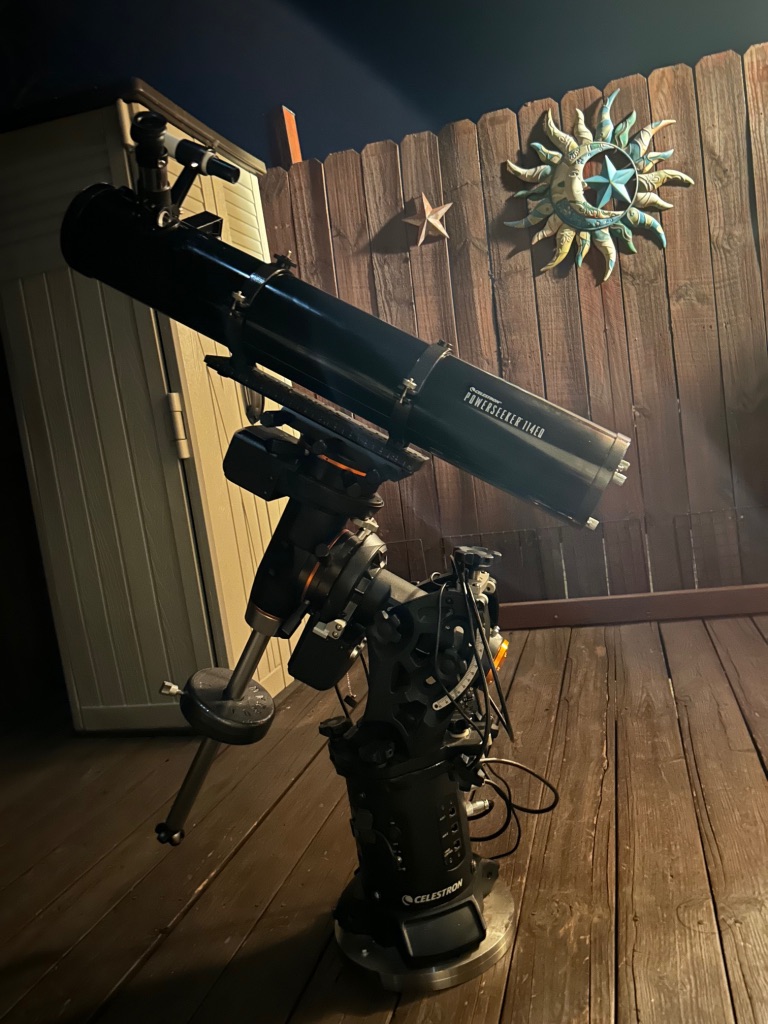
I wanted to document all things on this night, even with a photo of the telescope and mount used. This was a telescope given to me recently by a friend, and I’ve been spending a little time this week tuning it up. I was interested in seeing Uranus with the tiny 6 x 30 finder.
Observer Three: March 9th 2025
Mario Motta (Massachusetts)
Hi Roger,
As it turns out I have such an image, taken five years ago with my 32-inch telescope. The small planet size at such a great distance, does indeed has a slight greenish color, just like you mentioned in your post.
Taken with my 32-inch f/6 telescope, with ZWO asi 071 OSC camera, video the stacked and processed
The second image presents five of the planets moons…and very nicely!
Mario
Supplemental: Successful observation without optical aid by Mario Motta:
I once saw it naked eye from my place in New Hampshire, about 20 years ago with a mag. 6.5 sky.
Observer 4: Jaako Saloranta from Finland:
Hey Roger,
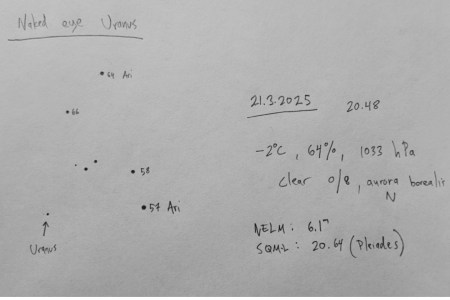
Here’s my sketch of Uranus – this is the original one I made at the site and as I no longer have a working scanner… this is all I could muster with my phone.
I rode my bicycle roughly 10 kilometers west from my house and found a decent, dark spot for myself. Temperature was roughly 27°F so it didn’t take too long for me to get cold after some sweaty cycling! While waiting for full night vision I could see M34, M35 and maybe M36 with the naked eye. Winter Milky Way was faintly visible from Perseus to Monoceros.
But Uranus itself… seeing it was quite difficult because of the low altitude (~30 degrees). I could see roughly down to magnitude 6.5 from the west/zenith but at the general region of the Pleiades I could barely make out 6 magnitude (I managed to saw 65 Arietis only a few times during the 30 minutes I was observing Uranus) stars. I could see Uranus only… maybe 30% of the time with optimal averted vision. See Uranus back in 2011 was a lot easier from Canary Islands (high altitude, higher object altitude, darker skies and younger observer).
After I was done observing, I noticed that green aurora borealis arc in the northern sky. When I eventually got back home, I could see faint aurora glow even at the zenith.
/Jaakko
Observer 5: Steve O’Meara (Tucson)
Hi Roger,
Sometime in the 1980’s, I was outside David Levy’s Tucson home, casually stargazing by eye with Steve O’Meara, when Steve noticed Uranus in the sky.
During the summer of 2023 while my wife, Debbie and I were in Gaffney, South Carolina, we stopped at a drive-thru restaurant. Upon leaving I noticed a person sitting at an outside table under an umbrella, shielding themselves from the sun. It appeared they might possibly have had all of their earthly possessions in a shopping cart. The contents in that cart were piled high and so much so, they were spilling over the sides.
However, when driving past, a strange feeling came over me, that I just had to stop and talk to this person. I stopped and asked If I could buy them something to eat. They hardly looked up, all the while continuing to write on a sheet of paper. They glanced up with an annoyed look and said: “I’m not here for you to buy me something to eat” I’m here to pray for you.” I was a bit taken aback, but said thank you.
This person continued writing almost fervently, and I asked: Could I have the prayer to take with me, and read later? The person said: “No…I’ll read it to you” but saying so with conviction.
The mysterious person began reading the prayer, but I could not seem to hear or understand anything they were saying. It was just unintelligible words, and I could not comprehend a single thing being said. After reading the prayer, the mysterious person put their pen and prayer away rather hurriedly.
There was something else, as strange as it sounds, but I could not seemingly see their face. Maybe I wasn’t suppose to and If asked later, what did they look like, I couldn’t say.
So, we drove away, but there was traffic in the parking lot of the restaurant and shopping center, and was forced to turn around only a few hundred yards away. This took, maybe a couple minutes or so, at most. I began thinking about the stranger and our encounter, and just had to go back to see them again. However, upon returning to the table and umbrella…neither the person nor the overflowing shopping cart were there. We drove around the restaurant, looking in all directions, but the person that just read a prayer to me, was nowhere to be seen.
It would have been impossible to simply leave this fast and with a grocery cart running over with bags of clothes and whatever. But yes, the person seemingly had just vanished into thin air! And why would this person…this apparition, after not willing to give me the written prayer, suddenly leave? And now after almost two years, I continue to think and wonder: Was this truly a supernatural event? Could it really have been something unworldly, maybe even an angel sent to me for a purpose? It could have been for many purposeful reasons, such as a delay to keep us from from leaving, and getting back on the highway. It could have been for countless other reasons, and one day, I believe this reason, or purpose will be manifested to me.
Angels are mentioned in the bible, almost 300 times. And if you believe in God, you also believe in angels. President George Washington experienced a vision, being described as an angel at Valley Forge, during the American Revolution. This event has been well documented by both Washington and others. And there are countless stories of angel encounters, but most of the time people ignore them, and most often, just don’t believe.
However, I cannot definitively prove anything in my story, and it’s just my own recording of a personal event, that happened almost two years ago, on a summer afternoon. If my wife, Debbie had not been with me, and also witnessed this incredible event, I would never have considered writing this story…
Roger Ivester (Boiling Springs, NC on March 16th @ 6:30 AM EDT, 2025)
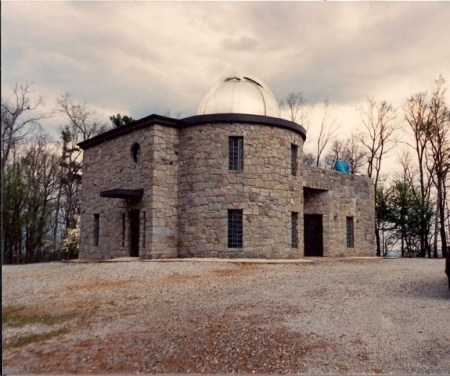
The following photo was made on (April 25th 1993) when Debbie and I made a trip to Bird Mountain Observatory, located in Landrum, SC.
The primary telescope in the dome is a 7-inch Astro-Physics refractor.The observatory has a meeting room, with a handicap ramp to access the telescope, and full living accommodations.
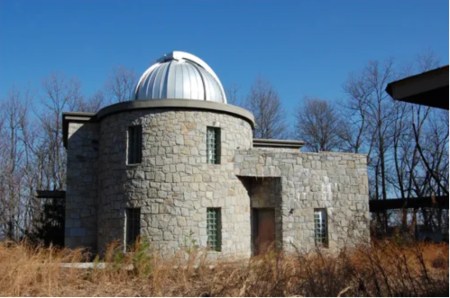
However today (April 15th 2025) I would “by-chance” see a photo online of the now deserted observatory and from 2009!
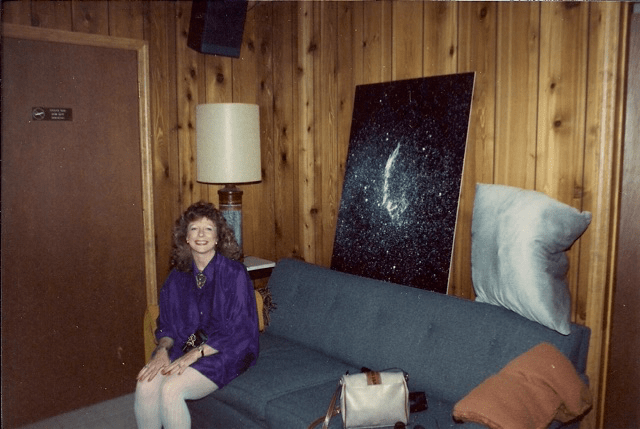
April 27th 1993: Debbie is sitting in front of an enlarged photo of the Veil Nebula East, using film. The telescope that was used for the photo was a Takahashi Epsilon 180 astrograph f/2.8 telescope.
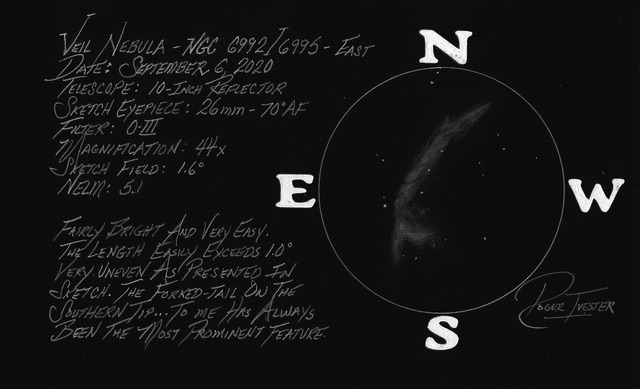
For comparison to the “film photo” behind the couch: My pencil sketch of the Veil Nebula East from my suburban backyard, using a 10-inch Newtonian. This is one of my favorite deep-sky objects!
An update from yesterday: April 16th 2025
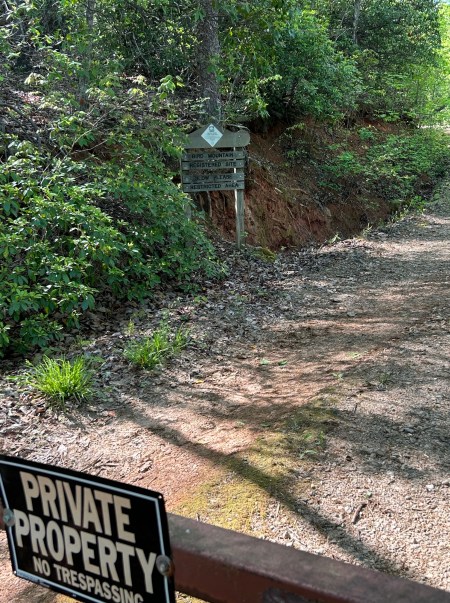
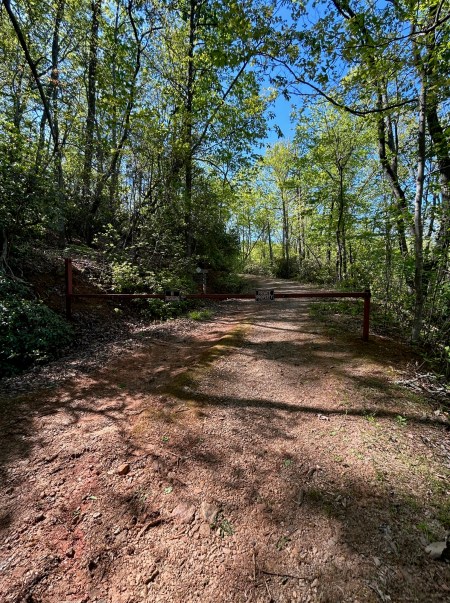
When Debbie, myself and Sophie drove to the entrance of the Bird Mountain Observatory we found the locked gate, but despite the locked gate, we had a fun day.
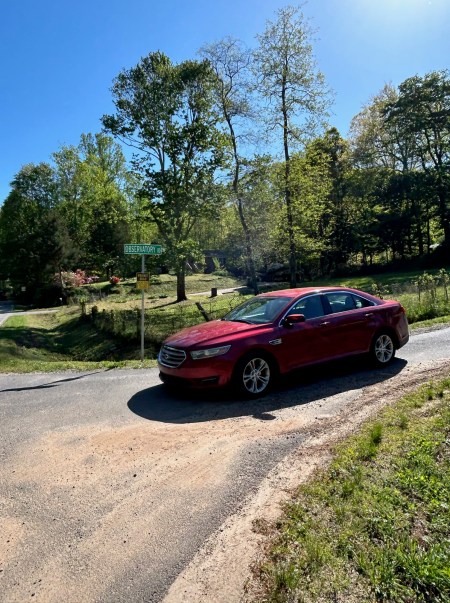
Leaving Observatory Road: April 16th 2025
The three of us still had fun, doing and seeing other things in and around the towns of Tryon, Saluda and Landrum: April 16th 2025
In 1967, Shelby Drag Strip was only “one of two quarter mile drag strips” located in North Carolina.I’m not sure of the other as Rockingham was not built until 1969, and did not open until the spring of 1970.
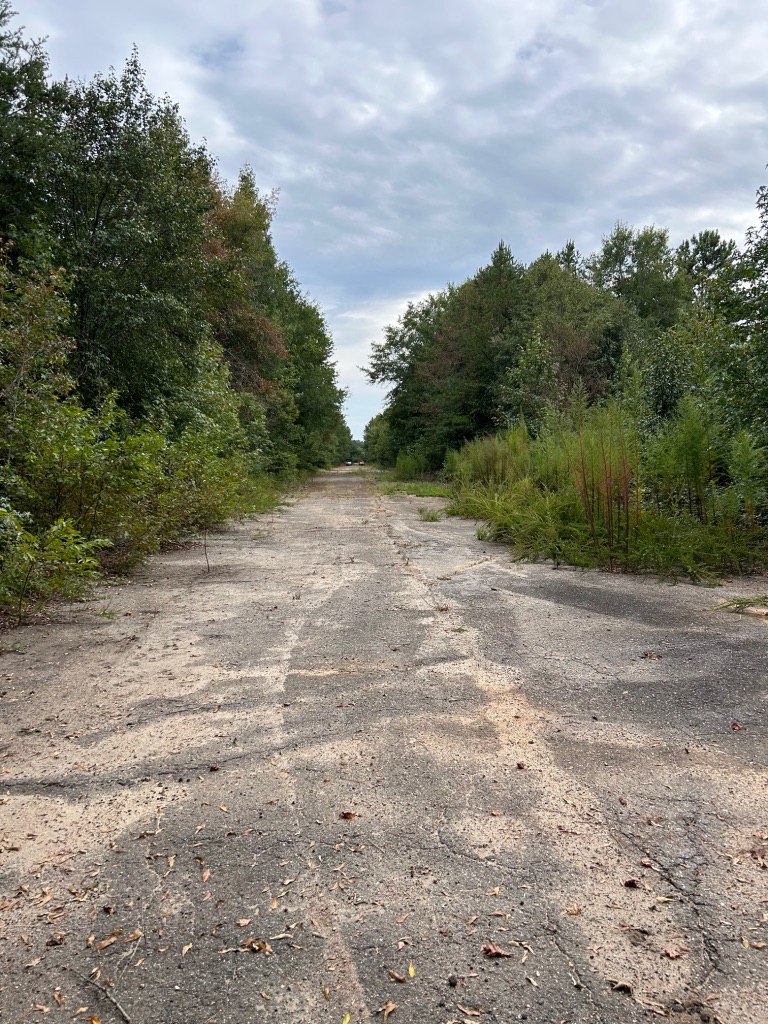
Remnants of the Shelby Drag Strip still exist at current (2023)
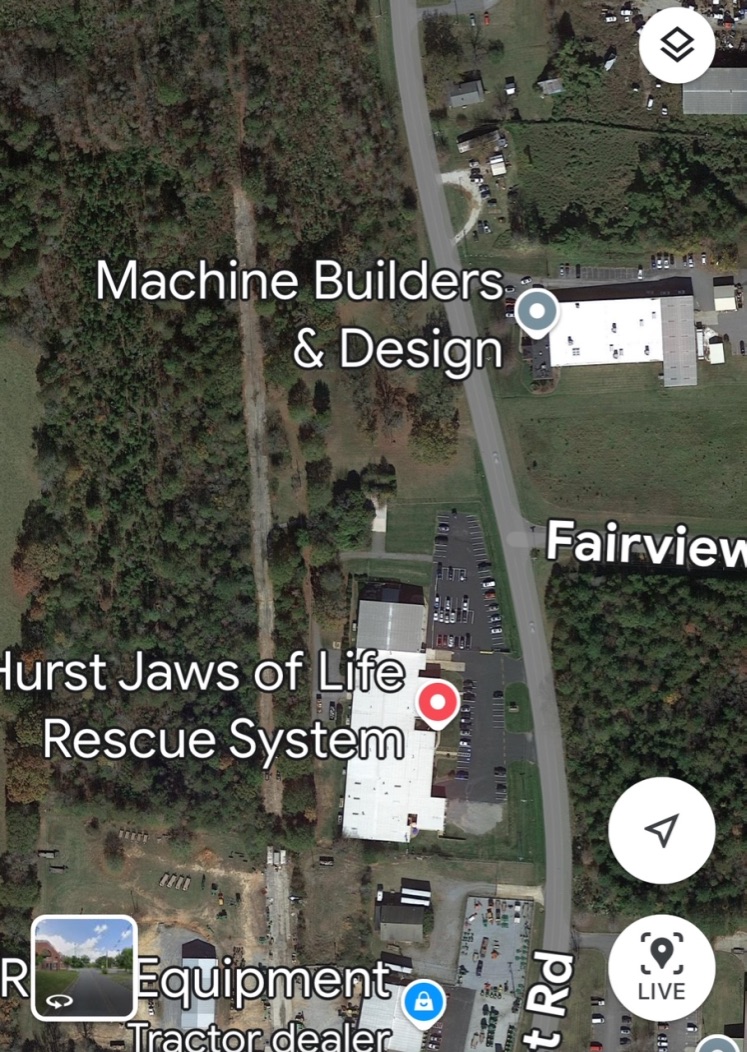
The following photograph is a Google Satellite image of what’s left of the Shelby Drag Strip, which is center-left and in the wooded area, behind the “Jaws of Life” facility.
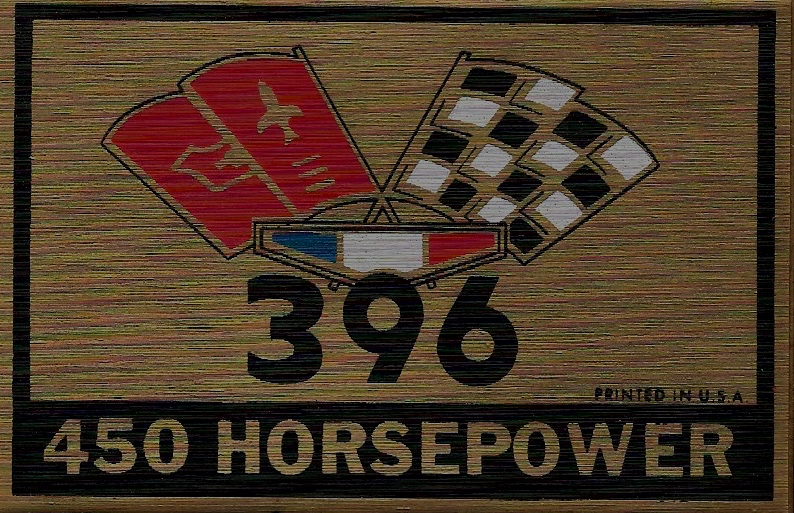
Local drag racer Butch Greene from Polkville, raced in the very first event at the Shelby Drag Strip, during the summer of 1967. Butch was driving a 1955 Chevrolet, with a special 396 cubic-inch “crate engine” and 450 horse power, but unfortunately broke an axle on that first night. However, after repairs, Butch came back in a week or so to beat Van Hatley in the modified class, who was also driving a 1955 Chevrolet, but with a small block.
The Shelby Drag Strip was an NHRA sanctioned track. I didn’t realize this, until reading an old newspaper clipping “saved ” by Butch Greene, as following…
Friday night drag races:
I’d go with my brother Phillip, sometimes to race our 1951 Henry J, but at times, we’d just go to watch. When Phillip was not able to go on occasion, I’d ride with Robert Miller, who was a French teacher at Burns High School. Robert raced most every week with his orange and white 1956 Oldsmobile. I was only 14 years old at the time, so I always needed a ride.
Remnants of the Shelby Drag Strip still exist today as shown in the following recent photos.
Walter McIntyre, was a regular who raced a 1967 Ford Fairlane with a 427 cubic-inch tunnel-port engine. This was a Ford factory drag race car.
Jim Bridges brought two 1966 Ford GT-350’s Mustangs with high-performance 289 engines.One was white (which he raced) and the other was red. He would drive the red one, and tow the white one behind. The stock GT-350 (289 engines) produced 306 horsepower and would run in the 12.40’s at Shelby.
In 1968, Bridges purchased a race engine from Bud Moore Racing with ~400 plus horsepower. He raced this car at both Bristol and Rockingham and others. His best times were in high ~11’s, in the quarter mile. (Bridges was a former Marine pilot, flying an A4 Skyhawk).
Below: Butch Greene and his 1955 Chevrolet with a 396-cubic inch “crate engine” with 450 horse power.
Butch Greene and his 1955 Chevrolet with the “special” 396 cubic-inch race engine at the Shelby Drag Strip. The date as shown on the following newspaper clipping is June 9th 1967.
A regular was Ralph Ledford with his 1962 white Plymouth Valiant, and a world record holder in its class. It was owned and driven by Ralph who I talked with via telephone this afternoon, while visiting Butch Greene. (Date: Wednesday, September 18th 2024)
The Plymouth Valiant had the special “Hyper-Pak” 6-cylinder engine. The Valiant’s best time in the 1/4 mile was in the high 13-seconds at about 98 mph.
Then there was Garland Buff from Casar, who would later own Shady Side Drag Strip, with his son Ronny. Garland raced an English Ford using two engines: One being a Chevrolet 409 stroker engine and at other times using a stroker Oldsmobile engine. He used the same transmission for both engines.
Shady Side Dragway is still owned by the Buff family, but both Garland and Ronnie are now deceased. Shady Side is now one of the most active drag strips in the country, with bracket racing, and hosting national gasser and pro-modified events. From starting out in the 50’s as a dirt strip to now an all concrete state of the art race track. Shady Side is well known throughout the southeast as a world class facility by top drag racers, and is currently in the process of becoming IHRA certified.
Back to the Shelby Drag Strip:
Garland Buff won the gasser class most every week at Shelby. One Friday night, my brother Phillip was runner-up in our 1951 Henry J. Garland took the winning purse of $50, but gave Phillip the trophy, which was really exciting to both Phillip and myself. Garland was very a kind, soft-spoken man, and was always willing to help anyone with his many years of drag racing experience.
When it came to engine building, Phillip always said Garland was a genius. He engineered and did the machining for the stroker kits for both the Oldsmobile and Chevrolet engines as mentioned above.
Phillip and myself would go to the Shelby drag strip on many Friday nights. We would also “again” compete in the gasser class on occasion with a 1951 Henry J. We used a tow-bar to pull the Henry J with our Dad’s 1956 Studebaker. Phillip was 17 and I was 14.
One night during a race, Phillip shifted the Henry J a bit too hard and locked up the transmission in high gear. We managed to hook it back up to the Studebaker, and leaving the engine running. I was able to drive the Henry J in high gear, and in tow, using the clutch and gas to balance the speed with the Studebaker. We were successful in getting home, and fixed the transmission the following day. We raced on what might be referred to as a “shoe-string” budget, with our stock 1951 Henry J.
I remember so well, Tommy Mauney driving his white 1965 GTO to the drag strip. He would jack up this car, remove his street tires and put on racing slicks which he’d brought in his trunk. Seems he would also disconnect the headers at the collector. (?)
Tommy never left drag racing and has become one of the “most renowned and successful professional drag racers” in the country today. Mauney was inducted into the North Carolina Motorsports Hall of Fame.
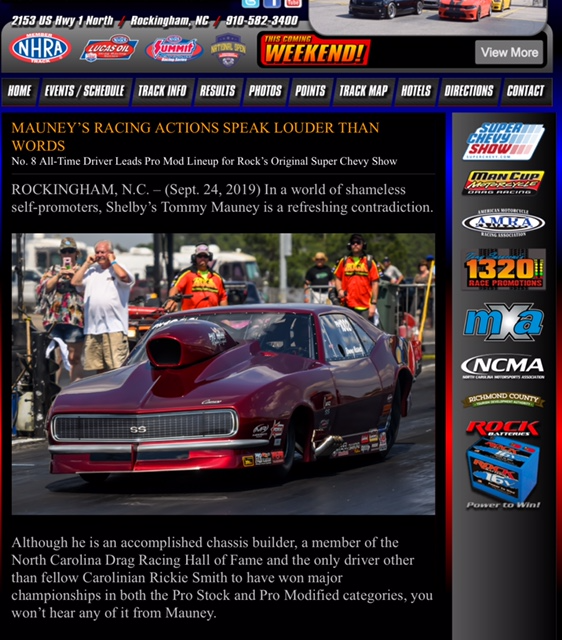
From the Shelby Drag Strip and a 1965 GTO to his current 200 mph plus, under 4-seconds Pro-Modified Camaro in the 1/8th mile. I like the following cover photo of Tommy’s Camaro from Rockingham Drag Way with credit to the same, and all sponsors listed, including the NHRA.
Photo credit Mecum Auctions: The last Ronnie Sox race car by Tommy Mauney.
Ronnie Sox and another Shelby native:
My first cousin, and famous world class drag racer Reid Whisnant, was born and raised in Shelby and bought race engines and even race cars from Sox and Martin.
Reid had a close professional relationship with Ronnie Sox for many years. Reid Whisnant passed away in December 2005, from complications from hip surgery, after falling in his race car shop.
Reid moved from Shelby to Atlanta, during the 50’s and founded “Atlanta Race Cars” some years later. I remember going with my older brothers to visit Reid, for a few times in about 1967 and 1968. We were amazed when touring his shop. It was filled with incredible amounts of racing equipment, including race engines on stands, race car chassis, and so much more…even a Sox & Martin Barracuda sitting in the corner.
Click on the following link to read about the restoration of Reid’s 1972 Pro Stock Plymouth Duster:
Reid never raced at Shelby, as he had moved to Atlanta during the mid-50’s, and began racing mostly in Georgia and South Carolina.
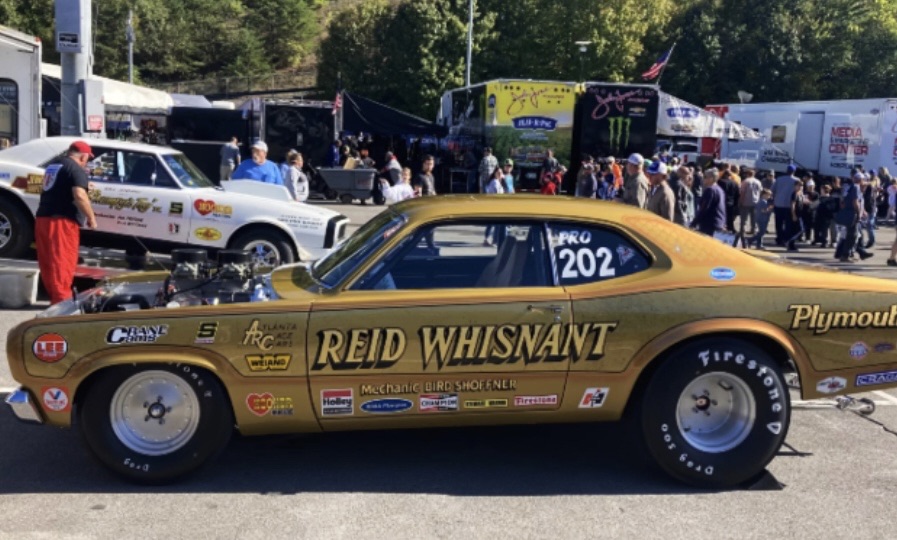
The following is one of Reid’s earlier Pro Stock Plymouth Dusters, which he raced at most all national events. Photo credit “hotcars.org“
Reid was involved in an “infamous event” with Frank Iaconio from New Jersey, at the 1983 World Championships. An event that is still talked about to this very day! Reid was driving a Dodge Charger at this time.
Click on the following link to read all about this drag racing historical event! Note the incredible “hole-shot” that Reid had over Iaconia, as can be seen in the following link!
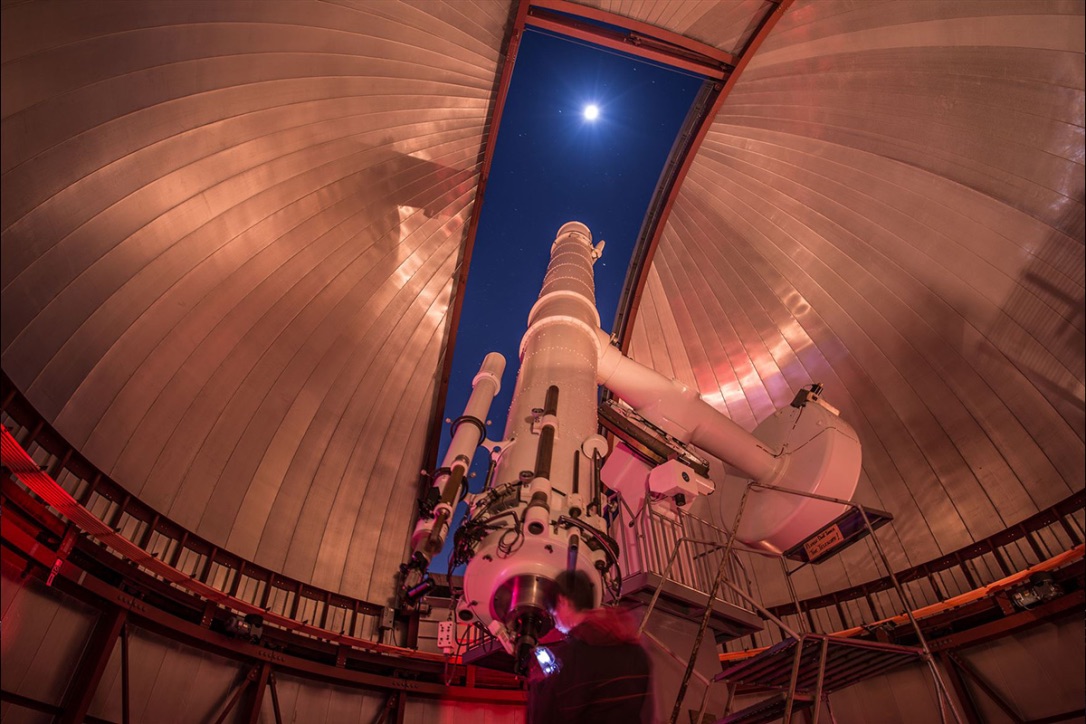
My wife, Debbie and I were in Greenville, South Carolina on August 17th 2024…meeting with some grandchildren at a mutual easy location. While driving by Roper Mountain, via I-85, I thought about the famous 23-inch (1882) refractor telescope on top of the mountain. At one time I was a member of the “Roper Mountain Astronomy Club.”
Now this is not just any antique 23-inch historical refractor telescope. This is the very one that was used by (Princeton Astronomer, Richard Pierson) to see the Martians coming to Grovers Mill, New Jersey, in “The War of the Worlds” based on an 1898 novel by H.G. Wells. This radio show was thought by many to be an actual invasion of the earth by Martians, with many thousands of listeners throughout the country being frightened to death!
Orson Welles (with his booming and dynamic voice) narrated the famous broadcast. Welles played the character of the Princeton Astronomer. This event brought world-wide fame to then 23-year-old Orson Welles.
Roger Ivester
Photo credit and information as following, of the 23-inch refractor telescope and observatory: Roper Mountain Science Center, And Charles E. Daniel Observatory.
The Daniel Observatory, Roper Mountain, South Carolina:
As a Greenville County Schools facility, the Daniel Observatory is open to the public only during special events.
The Charles E. Daniel Observatory features a very historic 23-inch refractor telescope, the eighth largest of its kind in the nation. The Great Refractor was completed in 1882 for Princeton University and was the main instrument in their Halsted Observatory. The lens was figured by Alvan Clark and Sons of Cambridge, Massachusetts. In 1933, the telescope was entirely rebuilt by J. W. Fecker Company. The U.S. Naval Observatory owned the telescope from 1964 until 1978, when it was offered to the School District of Greenville County.
Funds provided by the Charles E. Daniel Family Foundation were used in renovating the telescope and in constructing the observatory building to house the telescope. The telescope is used to educate, to inspire, and to entertain visitors. On select Friday evenings, the observatory is open for limited public observation, in conjunction with programs shown in the planetarium.
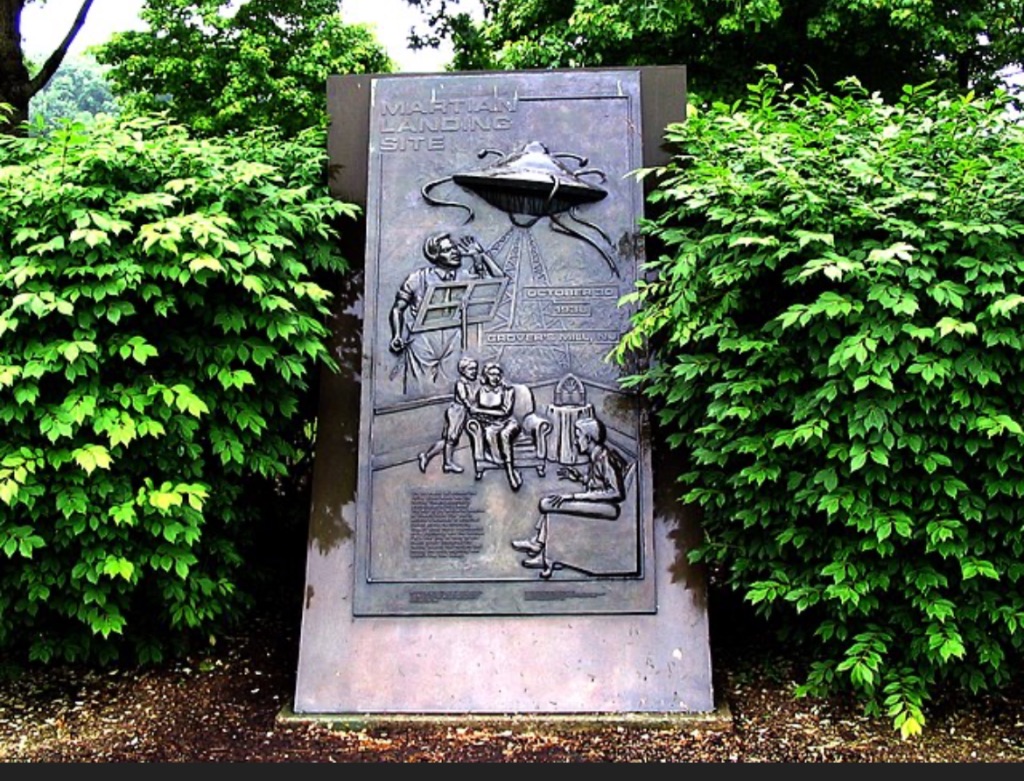
As following: Commemorative Plaque in Grovers Mill, New Jersey.
Famous landing site of the Martians to commemorate “The War of the Worlds” radio broadcast on October 30th 1938.
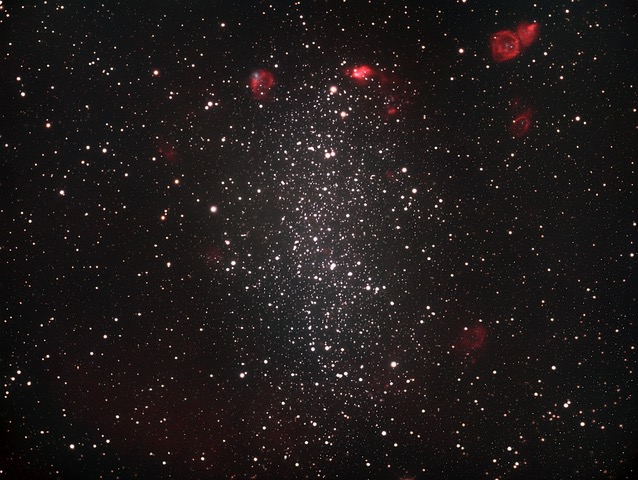
Discovered by E.E. Barnard using a 5-inch refractor in 1884.
Hubble found it “fairly conspicuous” in a short focus 4-inch finder with a low-power ocular, but “barely discernible” at the primary focus of the 100-inch. Source: “Burnham’s Celestial Handbook”
The following image by Mario Motta using a 32-inch f/6 “relay” telescope:
I took images in RGB, Lum and finally Ha filters, and stretched the Histogram to enhance the stars, then adding the Ha overlay. Total imaging time about three hours, then processed in PixInsight.
Jaakko Saloranto: Observer from Finland
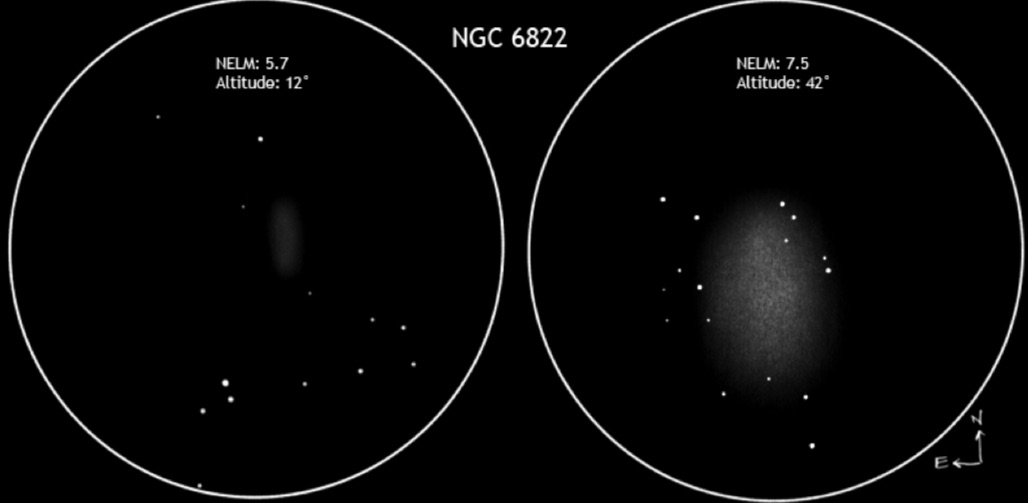
I was able to glimpse NGC 6822 on the night of August 23, 2014. During the day, it was mostly cloudy with constant showers. Eventually, it cleared up enough for me to head to my spot at around 23.30. I noticed right away that sky conditions weren’t as good as the night before, and conditions would be deteriorating fast as humidity was on the rise (~95%). I was also somewhat worried about aurora activity (didn’t notice any, but some were noted on the night before) as well as approaching clouds (which eventually came only in the morning).
After about 20 minutes in the general field of NGC 6822, I was ready to give up, but then suddenly, I got a few glimpses of an elongated, extremely faint patch of nebulosity at the NE edge of the field @ 46x (64′). I could only repeat this observation a few times afterward, but managed to sketch the object nonetheless.
I looked at the drawing immediately after I got back home at around 2:30 AM, and despite initially being quite skeptical of having actually drawn the object at the right place, it was obvious: I had sketched the galaxy perfectly at the right position! I took a SQM-L measurement from NGC-6822 and it showed 19.80 (20.50 at zenith) at an altitude of 12º. Without a doubt, it would’ve been quite a lot easier to see the galaxy if it was higher in the sky, but it doesn’t get much better than this up here in Finland.
The second drawing was made back in 2011 from GMARS, in Landers, California. Back then, I described the galaxy as follows: “Low surface brightness galaxy, but weakly visible even with direct vision. N-S elongated with a faint bar running in the middle and overall a slightly mottled structure. Several faint stars visible in the periphery, H-II regions not looked for. Both drawings were made using a 4.5-inch reflector.”
Observation notes and pencil sketch by Roger Ivester:
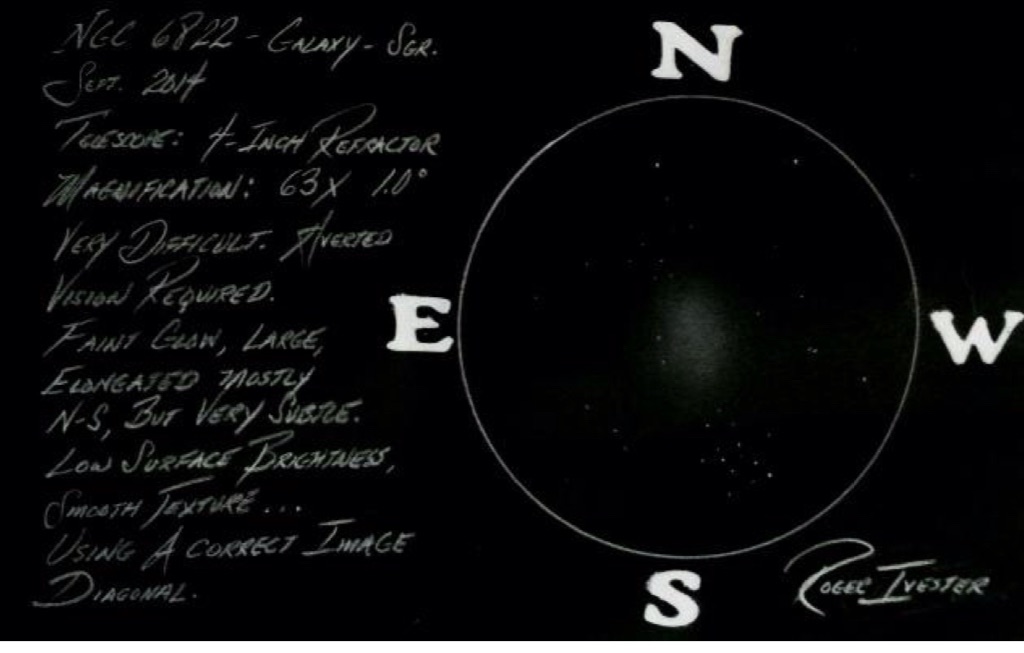
I have attempted to observe galaxy, NGC 6822 from my backyard since the early 90’s. My problem has been due in-part to a pesky unshielded street light in relative close proximity to my house. On the night of about September 14, 2014, using a utility building for a light block, I was surprised and elated to finally see this galaxy. I used a 102mm (4-inch) refractor with a magnification of 63x, and used a dark cloth to cover my head to reduce ambient lighting.
It was very difficult, and I would continue to check my atlas. After more than an hour, and using a variety of eyepieces…still no luck. I began to wonder if this was going to be another year of not seeing this illusive galaxy.
After another check of my atlas, taking a deep breath, and using a small amount of field motion, I could see a faint brightening…I knew this was it. Moving the telescope slightly back and forth ever so slightly, the faint glow or brightening became obvious. Once I had seen this brightening, I could move it out of the field of view and then find the glow again fairly easily.
I was finally able to make that long awaited sketch and some notes. I noticed a subtle N-S elongation. The size was fairly large with very low surface brightness. The night was Saturday, September 20th 2014:
Another observation of galaxy, NGC 6822:
Our local astronomy club met at Lost Arrow Ranch, nestled in the South Mountains for an observing session. This is a really good site and on occasion I’ve estimated the NELM (naked eye limiting magnitude) at mag. 6.5. However, on this occasion, the transparency was not good due to high moisture content in the air. The NELM was reduced to about mag. 5.3, which is not good when attempting to see a faint, low-surface brightness galaxy.
During the event, and using a friend’s 9.25-inch SCT telescope, I was able to see the galaxy, but with difficulty. Quite a few of the group observed it through this scope, but all, having difficulty.
Maybe one night I might attempt using my 6-inch f/6 Newtonian @ 29x, and from my backyard. However, this is contingent on having a clear and good night.
My rough field sketch using a 102 mm refractor from September 2014: This might even be a bit of exaggeration of what I saw.
Observing notes by Sue French:
Barnard’s Galaxy is a member of the Local Group, a small cluster of about 40 galaxies including our own. It was discovered by Edward Emerson Barnard in 1884, but not recognized as an extragalactic object until the 1920s.
Barnard described his discovery as “an excessively faint nebula” … very diffuse and even in its light. With 6-inch it is very difficult to see, and a 5-inch with a power of 30± with a field of about 1 1/4º it is quite distinct. This should be borne in mind in looking for it.”
Barnard’s advice is worth heeding. It is often easier to spot NGC 6822 in a small scope that allows a wide field than in a large scope with a more restricted field. While Barnard’s Galaxy has been seen in 7 x 35 binoculars, I recommend 2.4-inch (60-millimeter) or larger scopes under moderately dark skies. I can see the galaxy with my 4.1-inch refractor at 17x from my semi-rural home where the southern sky is awash with the glow from a nearby city. It is elusive and appears very faint and oblong. The long dimension measures about 11′ and runs north-south. Sue French
I’m sharing the story of British Airways Flight 009, callsign Speedbird 9, that departed from London Heathrow to Auckland. I’ve compiled the following information primarily from Wikipedia. The plane was a Boeing 747-236B. Photo credit also Wikipedia: Roger Ivester
Actual plane photo as following:
On 24 June 1982, the aircraft flew into a cloud of volcanic dust by the eruption of Mount Galunggung, SE of Jakarta, Indonesia. A catastrophic event occurred….all four engines shutdown.
Selected information as following from Wikipedia:
On 24 June 1982, the route was flown by the City of Edinburgh, a Boeing 747-236B registered as G-BDXH. The aircraft flew into a cloud of volcanic ash thrown up by the eruption of Mount Galunggung around 110 miles (180 km) south-east of Jakarta, Indonesia, resulting in the failure of all four engines.
Partly because the event occurred at night, obscuring the cloud, the reason for the failure was not immediately apparent to the crew or air traffic control. The aircraft was diverted to Jakarta in the hope that enough engines could be restarted to allow it to land there. The aircraft glided out of the ash cloud, and all engines were restarted (although one started vibrating and the crew had to shut it down soon after), allowing the aircraft to land safely at Halim Perdanakusuma Airport in Jakarta.
The crew members of the accident segment had boarded the aircraft in Kuala Lumpur, while many of the passengers had been aboard since the flight began in London.
Incident or event:
At the time of the incident, the flight crew consisted of 32-year-old Senior First Officer Roger Greaves, 40-year-old Senior Engineer Officer Barry Townley-Freeman, and 41-year-old Captain Eric Henry Moody. The flight crew members had boarded the aircraft at Sultan Abdul Aziz Shah Airport in Kuala Lumpur and were due to pilot the 747-200 for the Malaysia to Perth Airport leg.[4]
Shortly after 13:40 UTC (20:40 Jakarta time) above the Indian Ocean, south of Java, the crew first noticed an unusual effect on the windscreen similar to St. Elmo’s fire. Despite the weather radar showing clear skies, the crew switched on engine anti-ice and the passenger seat belt signs as a precaution.
As the flight progressed, smoke began to accumulate in the passenger cabin of the aircraft. Passengers who had a view of the aircraft’s engines through the window noted that they were unusually bright blue, with light shining forward through the fan blades and producing a stroboscopic effect.
Around 13:42 UTC (20:42 Jakarta time), the number-four Rolls-Royce RB211 engine began surging and soon flamed out. The flight crew immediately performed the engine shutdown drill, quickly cutting off fuel supply and arming the fire extinguishers. Less than a minute later, at 13:43 UTC (20:43 Jakarta time), engine two surged and flamed out.
Within seconds, and almost simultaneously, engines one and three flamed out, prompting the flight engineer to exclaim, “I don’t believe it—all four engines have failed!”
Without engine thrust, a 747-200 has a glide ratio of roughly 15:1, meaning it can glide forward 15 (about 9 miles) for every 0.62 miles it drops.
The flight crew quickly determined that the aircraft was capable of gliding for 23 minutes and covering 91 nautical miles from its flight level of 37,000 feet.
At 13:44 UTC (20:44 Jakarta time), Greaves broadcast a Mayday to the local air traffic control authority, stating that all four engines had failed. However, Jakarta Area Control misunderstood the message, interpreting the call as meaning that only engine number four had shut down.
After a nearbyIndonesia flight relayed the message to them, air traffic control correctly understood the urgent message. Despite the crew emergency transponder setting of 7700, air traffic control could not locate the 747 on their radar screens.
Many passengers, fearing for their lives, wrote notes to relatives.
Reports from another source say passengers were in awe of an electrical light storm outside the plane, as the engines glowed white and then stopped.
Owing to the high Indonesian mountains on the south coast of the island of Java, an altitude of at least 11,500 feet was required to cross the coast safely.
The crew decided that if the aircraft was unable to maintain altitude by the time they reached 12,000 feet they would turn back out to sea and attempt to ditch into the Indian Ocean.
The crew began engine restart drills, despite being well outside the recommended maximum engine in-flight start envelope altitude of 28,000 feet. The restart attempts failed.
Despite the lack of time, Moody made an announcement to the passengers that has been described as “a masterpiece of understatement.”
“Ladies and gentlemen, this is your captain speaking. We have a small problem. All four engines have stopped. We are doing our damnedest to get them going again. I trust you are not in too much distress.”
As pressure within the cabin fell, oxygen masks dropped from the ceiling – an automatic emergency measure to make up for the lack of air. On the flight deck, however, Greaves’s mask was broken; the delivery tube had detached from the rest of the mask. Moody swiftly decided to descend at 1,800 m per minute to an altitude where there was enough pressure in the outside atmosphere to breathe almost normally.
At 13,500 feet (4,100 m), the crew was approaching the altitude at which they would have to turn over the ocean and attempt a risky ditching. Although the crew had guidelines for the water landing procedure, no one had ever tried it in a Boeing 747.
As they performed the engine restart procedure, engine number four finally started, and at 13:56 UTC (20:56 Jakarta time), Moody used its power to reduce the rate of descent. Shortly thereafter, engine three restarted, allowing him to climb slowly. Shortly after that, engines one and two successfully restarted, as well.The crew subsequently requested and expedited an increase in altitude to clear the high mountains of Indonesia.
As the aircraft approached its target altitude, the St. Elmo’s fire effect on the windscreen returned. Moody throttled back, but engine number two surged again and was shut down. The crew immediately descended and held 12,000 feet (3,700 m).
As Flight 009 approached Jakarta’s Halim Perdanakusuma International Airport, the crew found seeing anything through the windscreen difficult, and made the approach almost entirely on instruments, despite reports of good visibility.
The crew decided to fly the instrument landing system, but the vertical guidance system was inoperative, so they were forced to fly with only the lateral guidance as the first officer monitored the airport’s distance-measuring equipment (DME). He then called out how high they should be at each DME step along the final approach to the runway, creating a virtual glide slope for them to follow.
Although the runway lights could be made out through a small strip of the windscreen, the landing lights on the aircraft seemed to be inoperable. After landing, the flight crew found taxiing impossible, due to glare from apron floodlights, which made the already sandblasted windscreen opaque. Upon disembarking, the flight engineer knelt at the bottom of the steps and kissed the ground.
It must have been quite a feeling for the captain, flight crew and all passengers to be able to plant their feet on the ground, and think how close they all came to dying.
Captain Moody who was credited with saving the lives of 263 people on that fateful day, 24 June 1982, and passed away peacefully in his sleep on March 19th 2024 at the age of 82. Roger Ivester
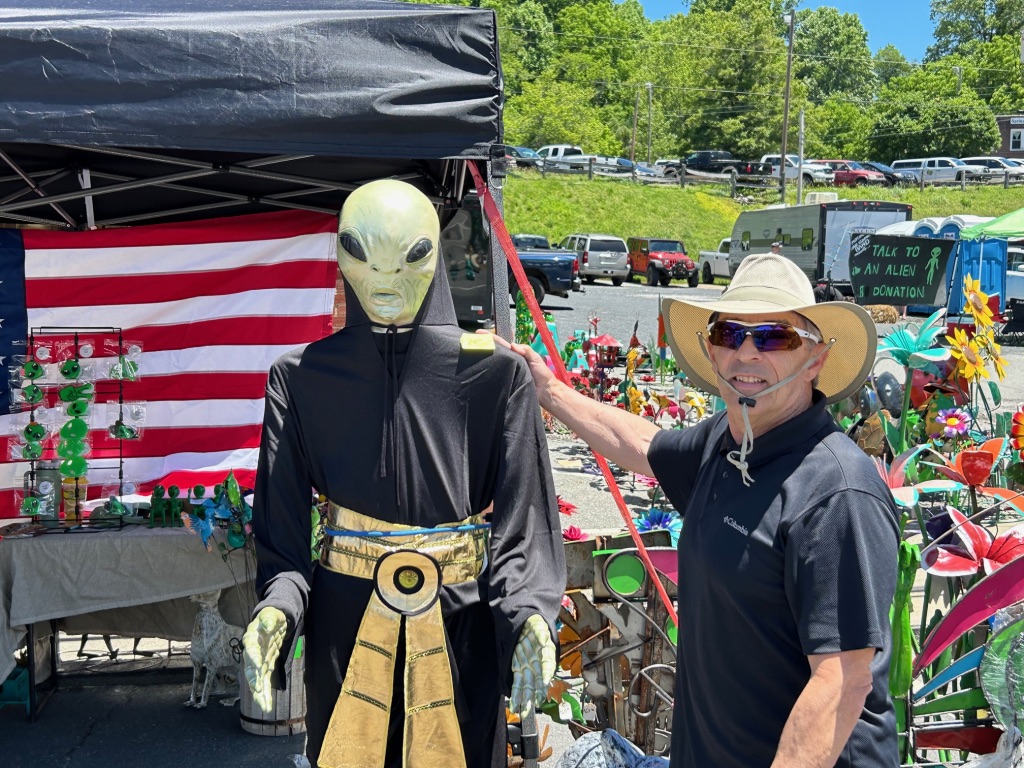
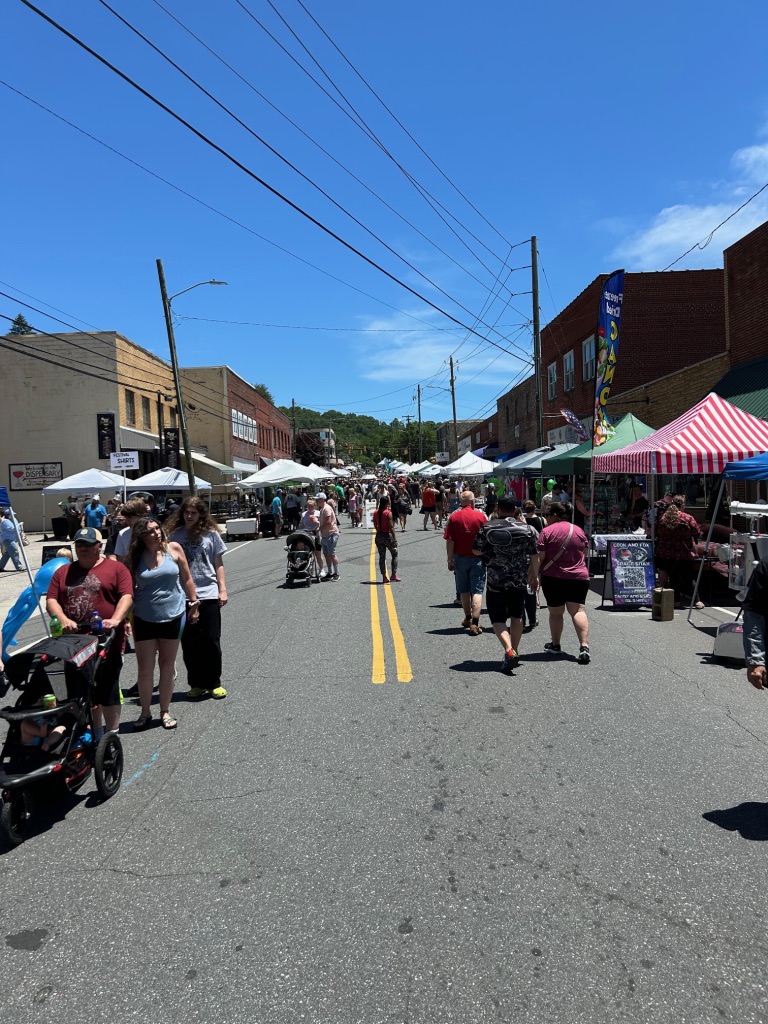
This was my first time to attend the “Spruce Pine Alien Festival” and so glad I was able to go. What a day it was! I was probably passed by many “Real Space Aliens” but was just unaware at the time.
So here are some photos from the day:
26,000 people attended this one day event last year, and I feel sure there were more or at least as many this year. I had to park at least 1/2 mile away and walk to the downtown area, however, I didn’t mind this at all.
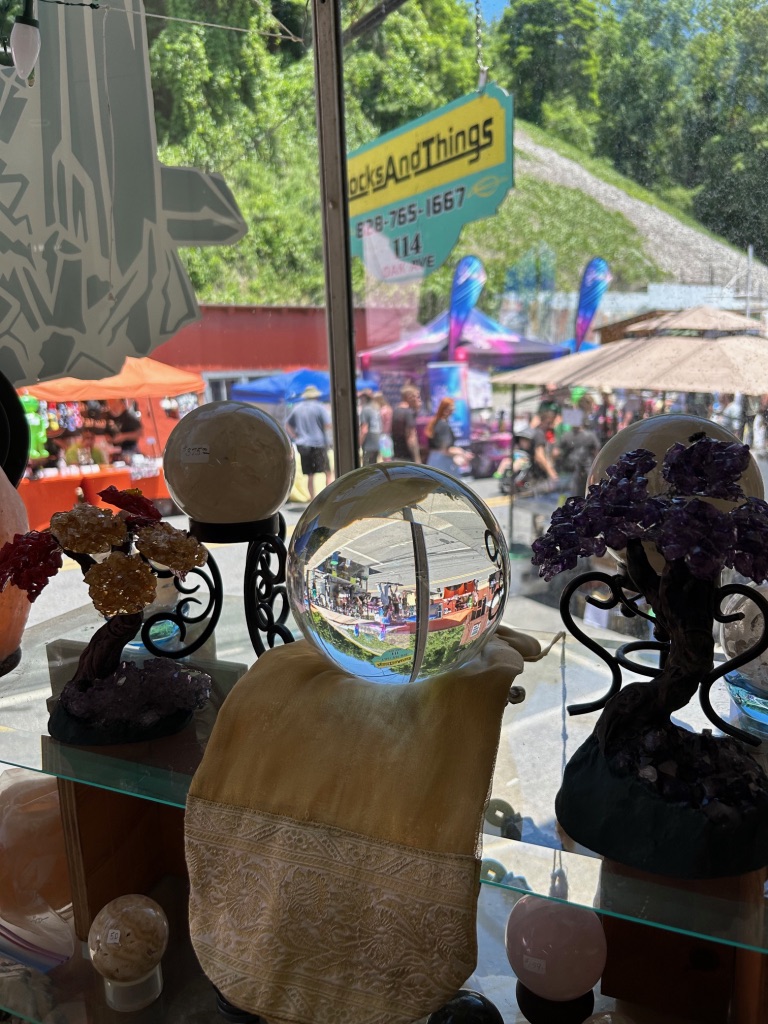
Pictured below: A beautiful Pure Crystal Ball made from Spruce Pine Quartz. Absolutely incredible, and amazing. The finest Quartz in the world comes from Spruce Pine. Computer chips for cars, computers and anything where they are used are made from Spruce Pine quartz.
And also the first mirror that was manufactured for the 200-inch Hale Telescope was made from this quartz. Unfortunately the mirror cracked during the process before completion and another one was made from a new process or material at that time, known as Pyrex. This glass was better able to handle the incredibly heat needed during the manufacturing process.
“Rocks And Things” have an unbelievable stock of collectable rocks, minerals, fossils and anything you can imagine. They have a brick and mortar store and been in business for many years in Spruce Pine.
This incredible quartz ball can be purchased from “Rocks And Things” at (828-765-1667). This is a one of kind item, so consider purchasing while it’s still available. I just didn’t seem to have enough cash in my pocket today. 🙂
Spruce Pine, North Carolina: How It became a part of astronomy history via The Chestnut Flats Mine, due to the incredibly pure Quartz which was used in the manufacture of the first 200-Inch Hale Telescope mirror. As mentioned previously (above) unfortunately that first mirror cracked during the manufacturing process.
Historic photo from days past of the Chestnut Flats mine as following: Photo credit: Mitchell County Historical Society
I found the following article by David Biddix, a Spruce Pine native, who shares some very interesting information. This is not the complete article.
Alex Glover…is the Director of Mining and Environment for Active Minerals International, LLC. He is a licensed professional geologist in nine southeastern states in the United States and has lived in the Spruce Pine area since 1997. He is interested both in the geology of the Spruce Pine Mining District and in its history, which goes back some 170 years.
….I’ve always wondered why ore from the Chestnut Flats Mine near Spruce Pine was chosen for the telescope’s mirror. Recently, I had a discussion with Alex Glover, a local geologist and mining historian who is very familiar with what is known as the Spruce Pine Mining District, a 10 mile-long, 5 mile-wide outcropping of rock from early in earth’s history that contains some of the purest minerals in the world and is the economic lifeblood of this region. This purity was the reason Corning Glass came to this region to find materials for the mirror. Alex speaks about what types of minerals are found in the district….
David Biddix: Spruce Pine, North Carolina
Now for the complete article by David Biddix as following: Click on the following link…
I purchased the following quartz specimens, pictured on the table below from “Rocks And Things.” Possibly even from the famous Chestnut Flats Mine, or for sure from the same vein of quartz rock. Roger Ivester
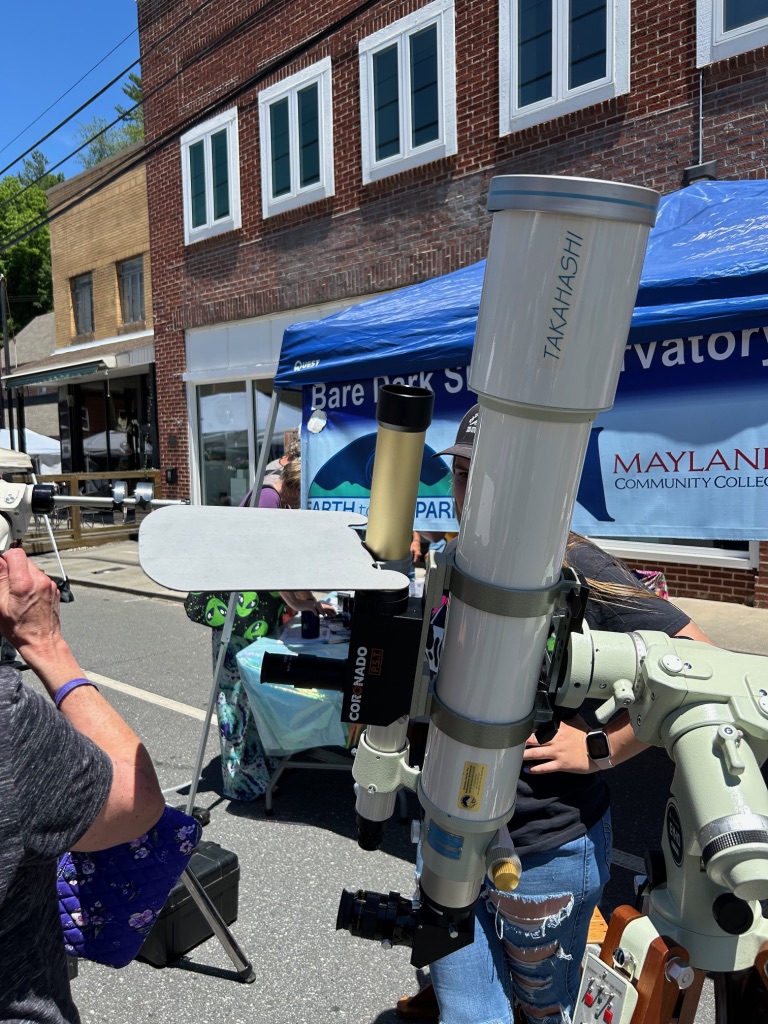
Solar telescopes provided by North Carolina Amateur Astronomers, and friends of mine for many years. Steve Davis and Don Brooks.
After not eating anything all day, I decided to stop at Western Sizzlin’ Steak House in Spruce Pine, for a delicious meal. Despite a large and overflowing crowd, I was able to be seated quickly and with excellent service. I could for sure recommend the Western Sizzlin’ Steak House, for great food and service.
Comments:Comments Off on Alien Convention In Spruce Pine, North Carolina: Saturday, June 8th 2024: It Was A Great And Fun Day…Can’t Hardly Wait For June 14th 2025!












 rogerivester.com
Recent Comments