Posted July 17th 2025
From “Deep-Sky Wonder’s” By Sue French:
“Moving back to Omicron and dropping 2.7º south-southwest takes you to a golden 7th magnitude star. It ornaments the eastern side of Webb’s Wreath, a little-known asterism first mentioned in the 4th edition (1881) of Thomas Webb’s observing guide “Celestial Objects for Common Telescopes.”
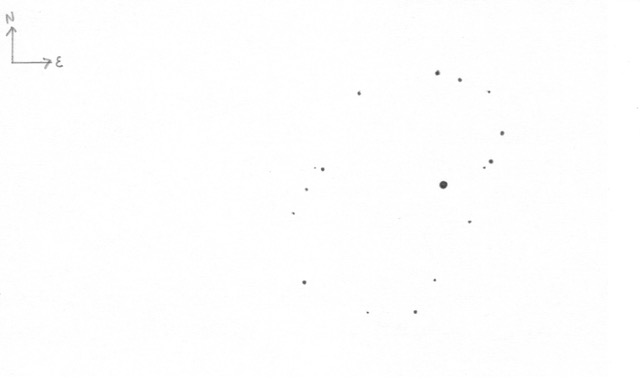
My 105mm scope at 68x reveals 13 additional stars, magnitudes 11 and 12, outlining 11′ x 7′ oval leans northeast and is dented inwards at the bright star.”
RA: 18h 02m Dec. +26 18m
6-09-01: Telescope 105 mm Apochromatic refractor; 610 mm focal length, and a 9 mm Nagler eyepiece for a magnification of 68x.
Pencil Sketch by Sue French as following: The following sketch was made using my 105 mm refractor with the employ of a diagonal.
Images by Mario Motta:
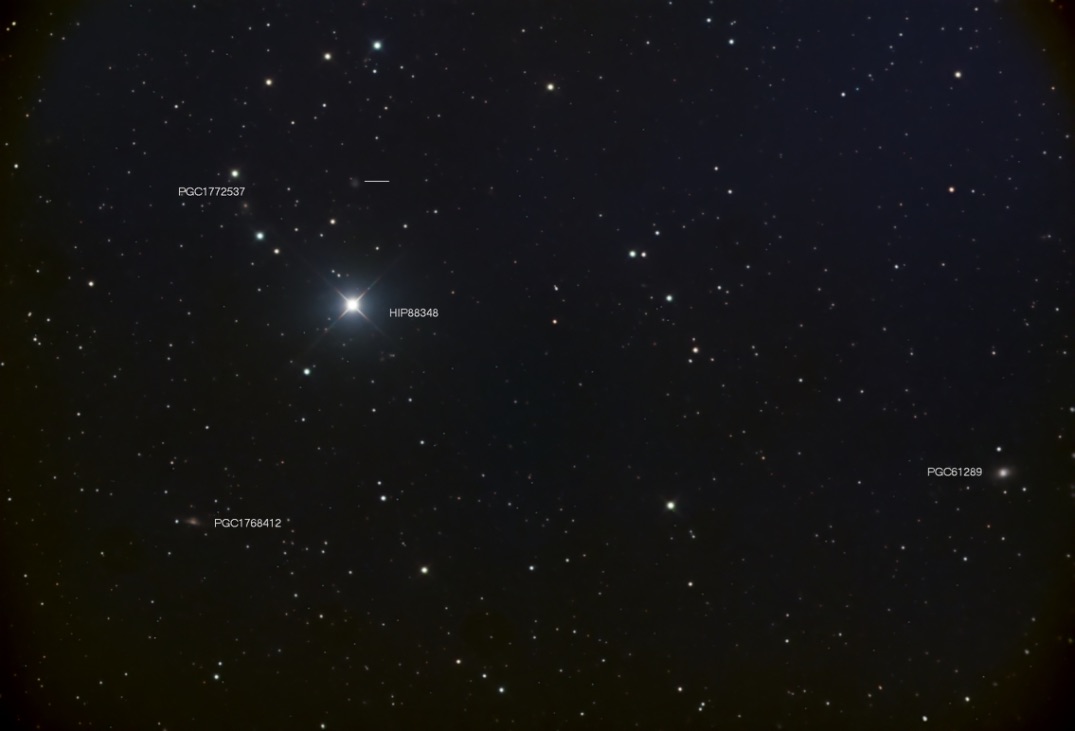
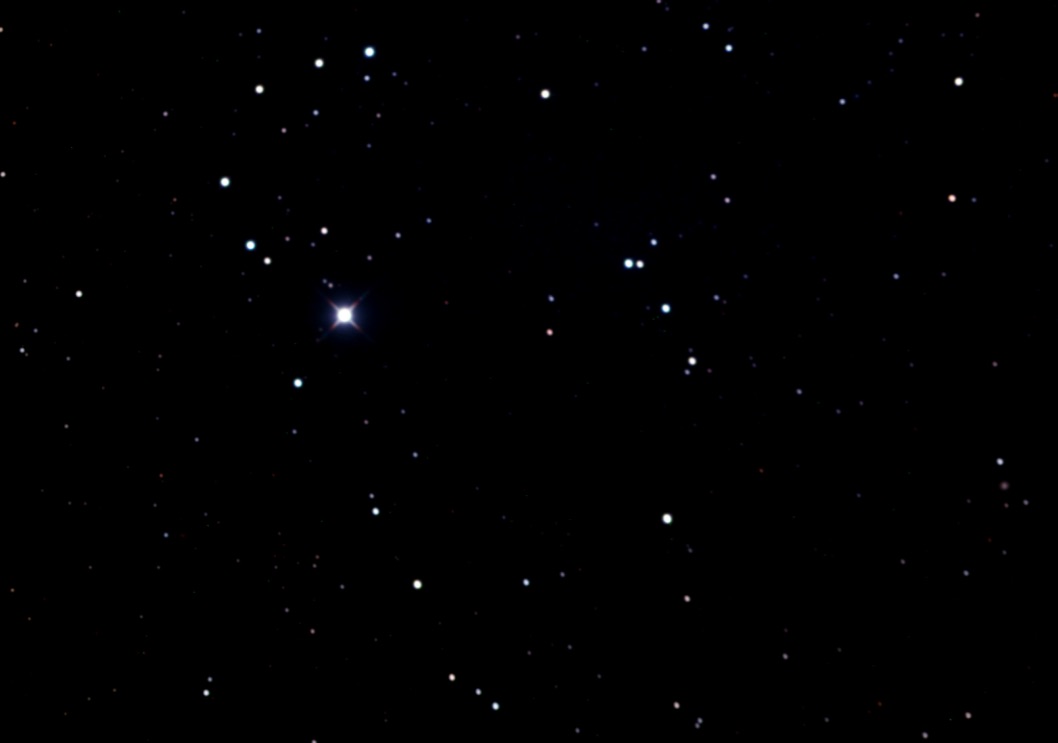
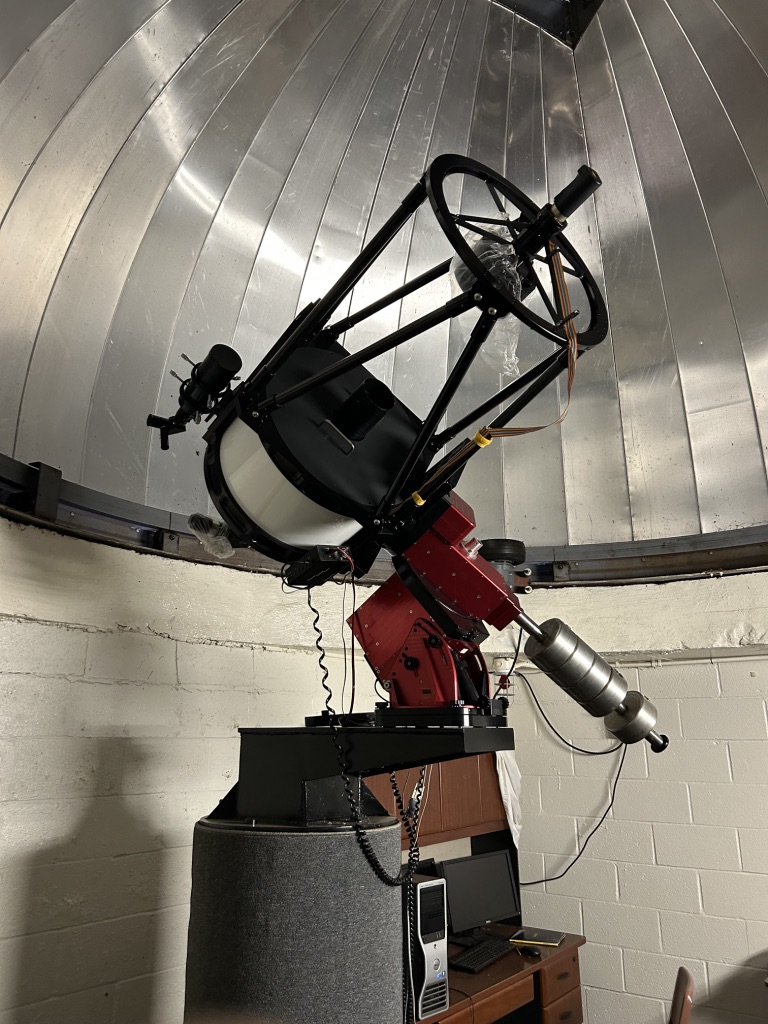
Using my 32-inch telescope, I imaged Webb’s Wreath in RGB and Lum, subtle colors. The images as following present the Wreath with north is at the top and west to the right.
The following image identifies very faint galaxies inside and around the wreath.
Can you still spot the galaxies in the following image?
Observer’s: Keith Rivich and Larry Mitchell
Location: ~10 miles SE of Leakey, Texas
Telescope: 25-inch f/5 Newtonian
SQM-L: 21.3
Seeing: 4 of 10 (Seeing pretty much was limited to around 300x, however, could occasionally go higher.)
Transparency: 10 of 10
Webb’s Wreath itself is a worthy target. My 20 mm Nagler eyepiece framed the wreath quite nicely looking a bit like a lop-sided potato. Larry was going to check GAIA to see if any of these stars may be related. Except for the 7th mag star the rest look suspiciously similar.
UGC 11097:
This galaxy was just out of the frame in the (Mario Motta’s image) but I used it as my star hop base, so I will go ahead and mention the observation. Easy to see at mag. 14.5 with a pretty high surface brightness. Its 1.2′ x .3′ nearly N-S elongation was obvious being brighter in the center and tapering off towards the ends of the arms. A couple of 15th mag stars bracket the galaxy.
PGC 61289 (MCG +4-42-22)
This is the brightest of the galaxies in the Motta image. As suspected at mag 14.6 it was quite easy to see, appearing as a very small oval glow. A mag 14 star sits just off the galaxies northern edge.
2MFGC 14178 (in the image as PGC 1768412)
As suspected this one was tough and fun. When the field first slid into view I strongly suspected I could see some elongation at the right spot. Looking at images there is a 15th mag star just 20″ east of the core of the galaxy, which is depicted as a 14th magnitude “non-star” in Megastar. These two “stars” could easily mimic the elongation I was seeing. I bumped up power to 650x and during moments of good seeing I could distinctly see the arm of the galaxy opposite the 15th mag field star. I called Larry over to take a look and he was seeing what I was seeing. As a bonus he knew nothing about the galaxy before looking.
For the fun part of the observation we put Larry’s NVD into the scope. He had it mated to a 27mm eyepiece so the magnification was quite low. We suspected the NVD devise should work as the galaxy is infrared bright, and we were right. The 15th mag field star was dramatically reduced in brightness so the galaxy, though tiny, was just visible as a complete edge on spiral. The dark lane visible in high res images was not visible to us.
LEDA 1772537 (in the image is listed as a PGC):
As suspected nothing. Nada. Not even a sparkle!
UN-NAMED FACE ON SPIRAL:
We couldn’t see anything of the galaxy, no surprise there, but we could see the 17.5 mag star that sits on the NE edge of the spiral.
Observer: Roger Ivester (North Carolina)
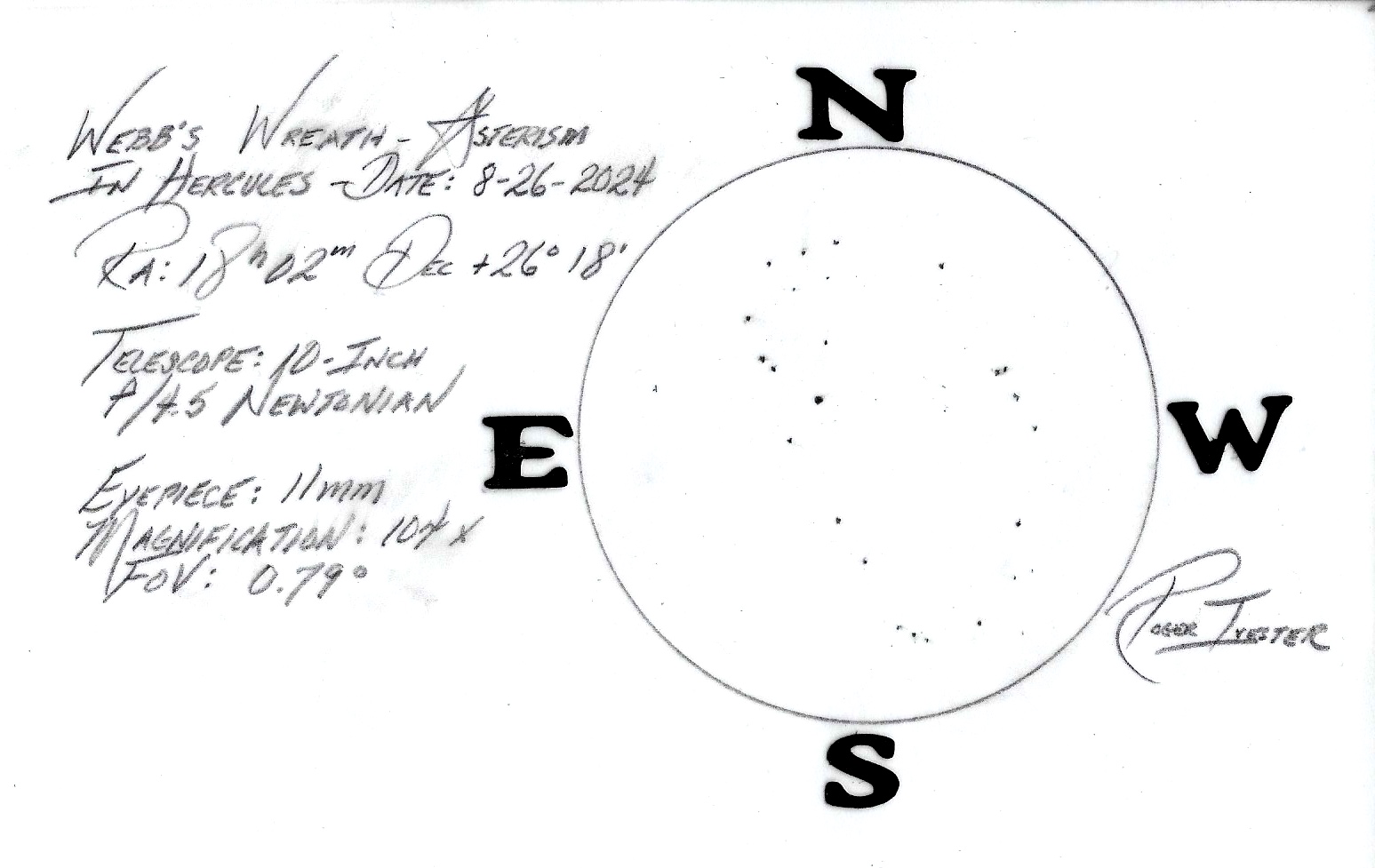
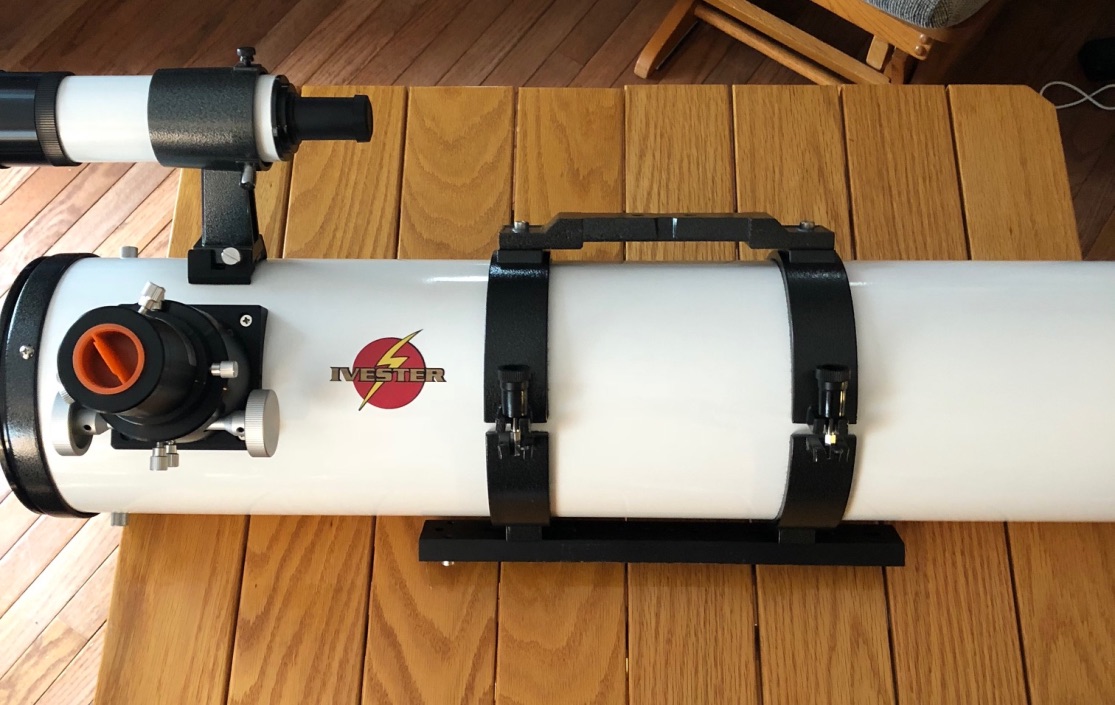
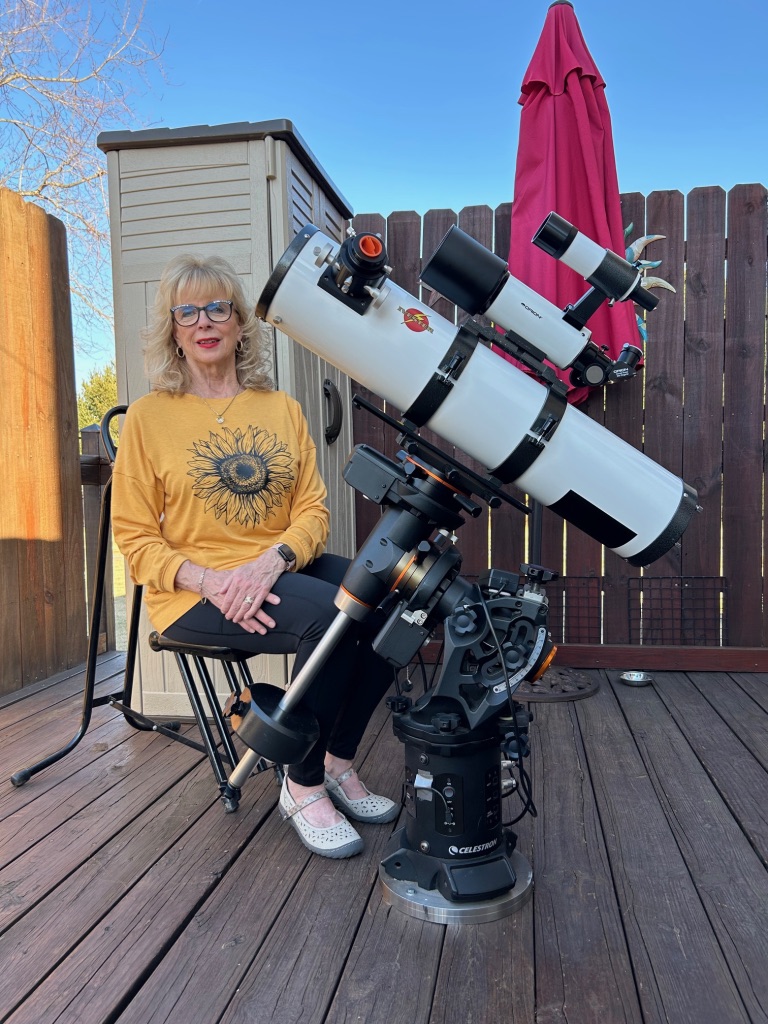
The following pencil sketch was made using a 10-inch f/4.5 EQ Newtonian with an 11mm eyepiece, apparent field of 82º. Magnification: 104x and field-of-view of 0.79º which was a perfect framing for the asterism.
As a follow-up on the four galaxies in and about Webb’s Wreath, they were partially featured in Stephen O’Meara’s column in the May issue of Sky & Telescope (p. 12). Keith’s and Larry Mitchell’s earlier observations of PGC 61289 and PGC 1768412 with Keith’s 25″ were discussed in the article. O’Meara also mentioned the two fainter galaxies within the Wreath itself “most likely require even larger apertures to detect.” One of these is PGC 1772537, an E- or S0-type, and the other is a spiral not catalogued in LEDA (PGC).

The following is a Cloudy Nights post by expert big scope “visual” observer, Steve Gottlieb
Larry Mitchell also included Webb’s Wreath and its galaxies in the Texas Star Party’s “Advanced Observing” list, just a week ago. When Larry came over last Thursday to observe on Jimi Lowrey’s 48″ f/4.0, he requested to look at Webb’s Wreath again to search for the two dim galaxies within the Wreath. Also observing with Jimi and I were Stephen O’Meara, Brent Archinal (from Lowell Observatory), and Doug McCormick (from Houston).
When we observed these galaxies at the end of the observing session, the background sky was jet black in the eyepiece (excellent contrast) and the stars pinpoint at 610x. The unnamed face-on spiral (NED lists the infrared designation WISEA J180231.28+262057.6) was immediately seen as a faint, very small glow, perhaps 10″ in diameter. Although it was fairly easy to see, the visibility may have been enhanced by a faint star at the NE edge.
PGC or LEDA 1772537 was easy to pinpoint, as it lies at the midpoint of a mag 10.8 star 40″ SW and a similar star 40″ NE (two of the main stars in the Wreath). At 610x it was very faint and quite small, perhaps 5″ diameter, but definitely non-stellar. I may have just been seeing the core region of this galaxy. Checking later, I noticed that HyperLeda lists a B magnitude of 17.93 ± 0.50 and NED list a single redshift at z = 0.192.
So, there’s two things interesting about LEDA 1772537. It lies precisely along the Wreath, and if the redshift is accurate, the light of this E or S0-type galaxy has been traveling for 2.4 billion years! (using H0 = 70).
Steve Gottlieb































 rogerivester.com
Recent Comments