Posted August 28, 2023 by rogerivester Categories:Uncategorized
If you’ve never attempted this faint galaxy cluster, give it a try this October or November. I’ve never been able to see this small group of galaxies from my suburban backyard, with a 10-inch Newtonian.
I’ve seen this galaxy group with a 14.5-inch from a dark-site, but unfortunately without observing notes or a pencil sketch. Unfortunately, on that night it was freezing cold with a 15 mph wind, and my hands were freezing!
Image credit: Mario Motta using a 32-inch telescope:
Comments:Comments Off on An Article From the Astronomical League, Reflector Magazine For September 2023: “The Deer Lick Galaxy Group” And How It Got its Name
Posted August 18, 2023 by rogerivester Categories:Roger's Articles
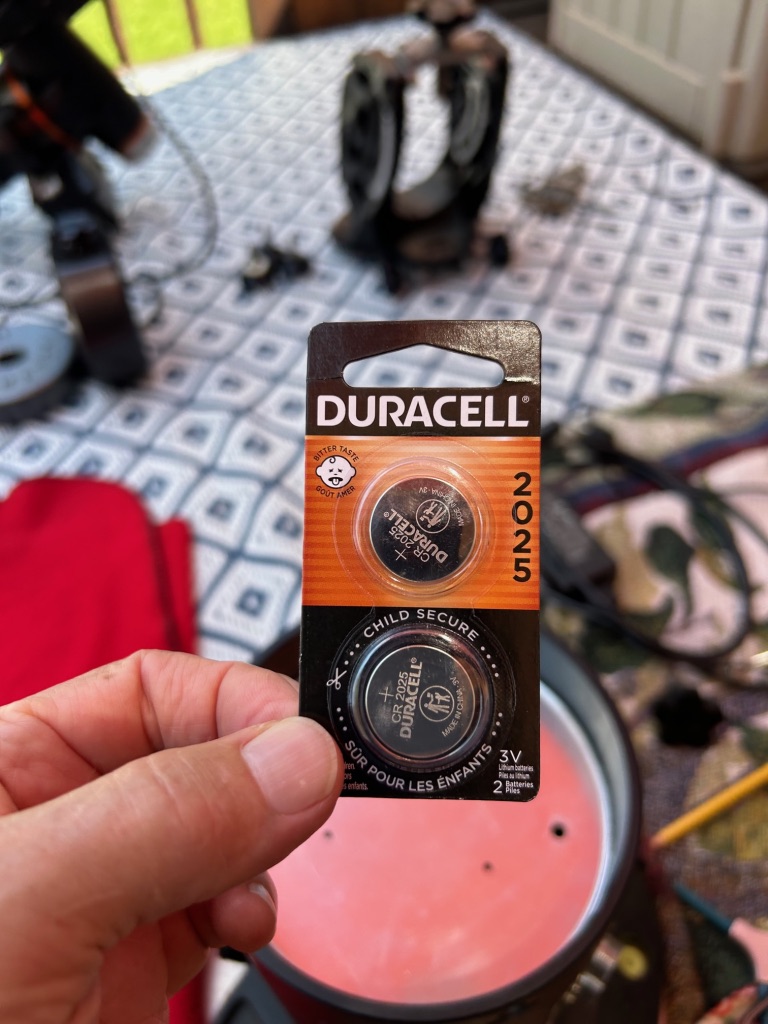
I’ve been having to reset the time or clock on my Celestron CGE-Pro equatorial mount before observing. I just recently found out from others, there is a CR2025 battery that requires changing from time to time.
Celestron calls for a CR2025 as a replacement battery.
Re: Replacing the internal battery in a Celestron CGE-Pro Equartorial Mountfrom Celestron online, as following:
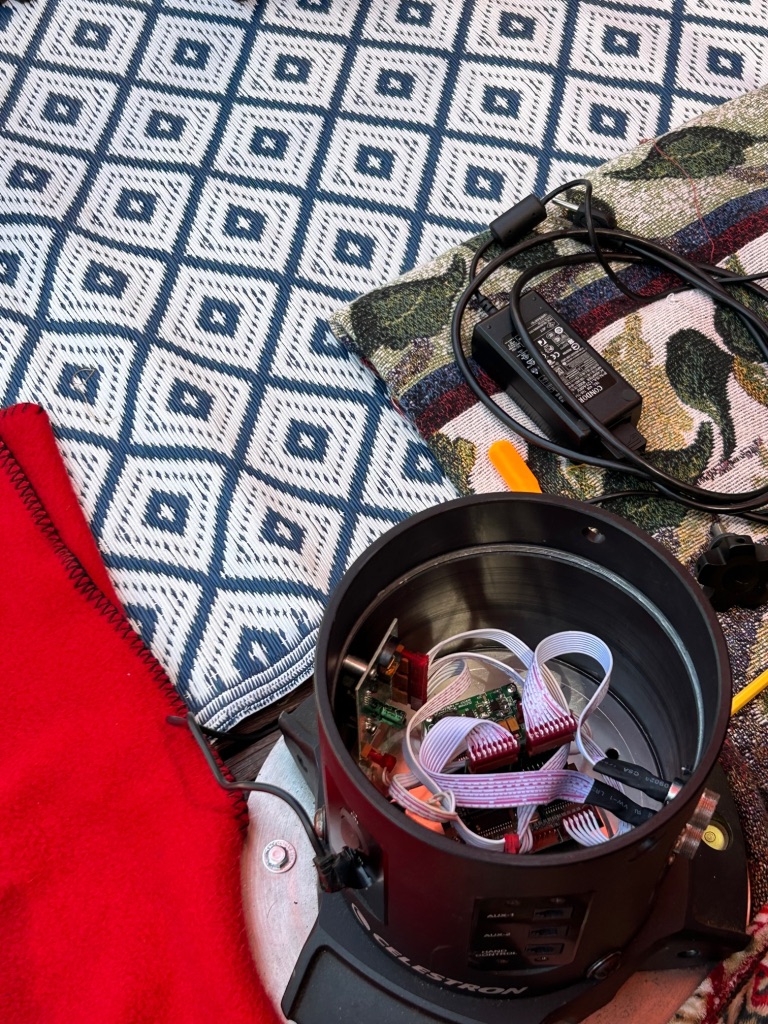
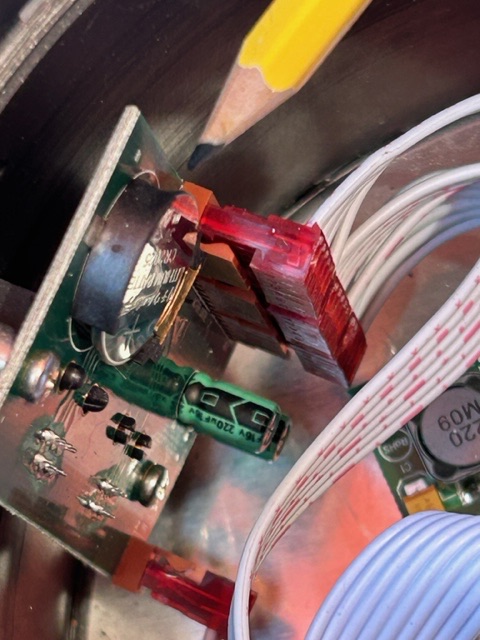
The battery is located under a clip on the PC > Autoguide > Power Cord board inside the pier. Replace with a 3-volt CR2025, available at many drug, photo, and hardware stores.
It’s actually a fairly straight forward process, but “can be” time consuming.
There are a lot of electronics surrounding this battery…so you don’t want to damage your mount electronics due to an inexpensive leaking battery.
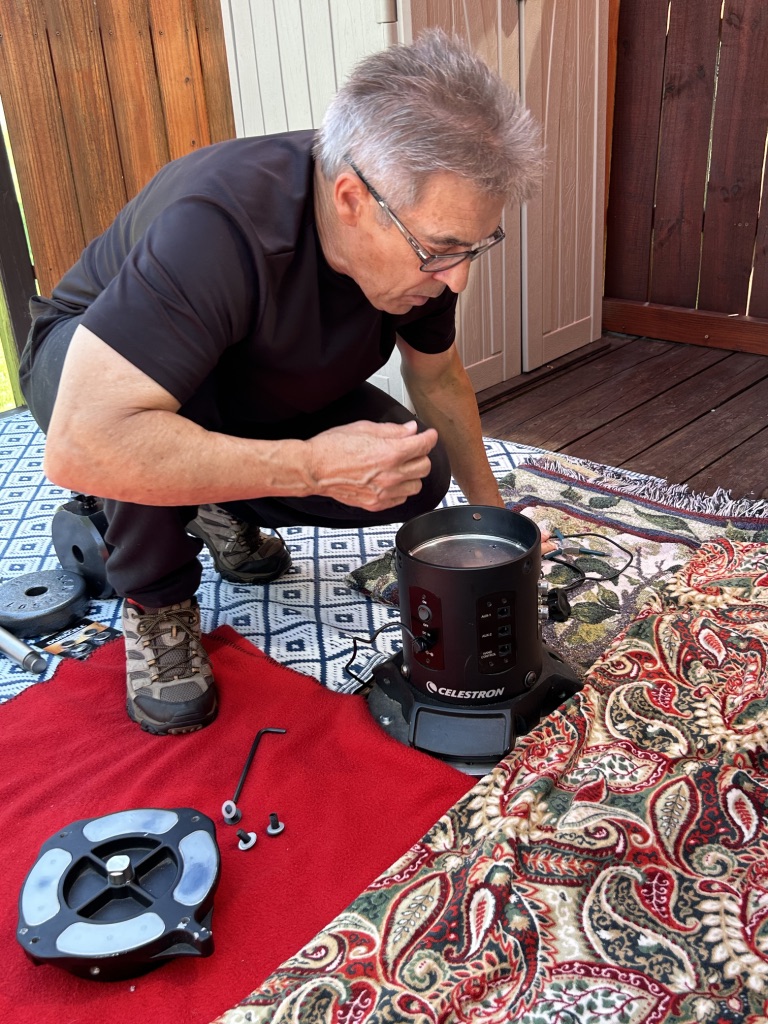
The bolts that hold this top cap are Allen heads requiring a 5.5 mm wrench.Seldom do I find any application, involving telescopes, high-end precision bicycles or other that require half sizes, but this is no problem.
The following plate was a bit difficult to remove. It was “stuck” and required attempting with several techniques before finally getting it out.It had drops of silicon in several places along the edge, which had to be removed and cleared before removing the aluminum plate.
I found that using Allen wrenches “to hook under the two larger holes” in conjunction, and then pulling upwas successful.
Use care as not to damage the plate, or some of the ribbon wires, located just underneath the plate.
When installing the new battery, I used “nitrile powder-free gloves” to avoid getting finger oil or grease on the battery.
Remove the old battery, insert the new one, and then reassemble the mount, connect the Dec and RA cables and you’re all finished.
However, everything related to time and dates will have to be changed via the hand controller.
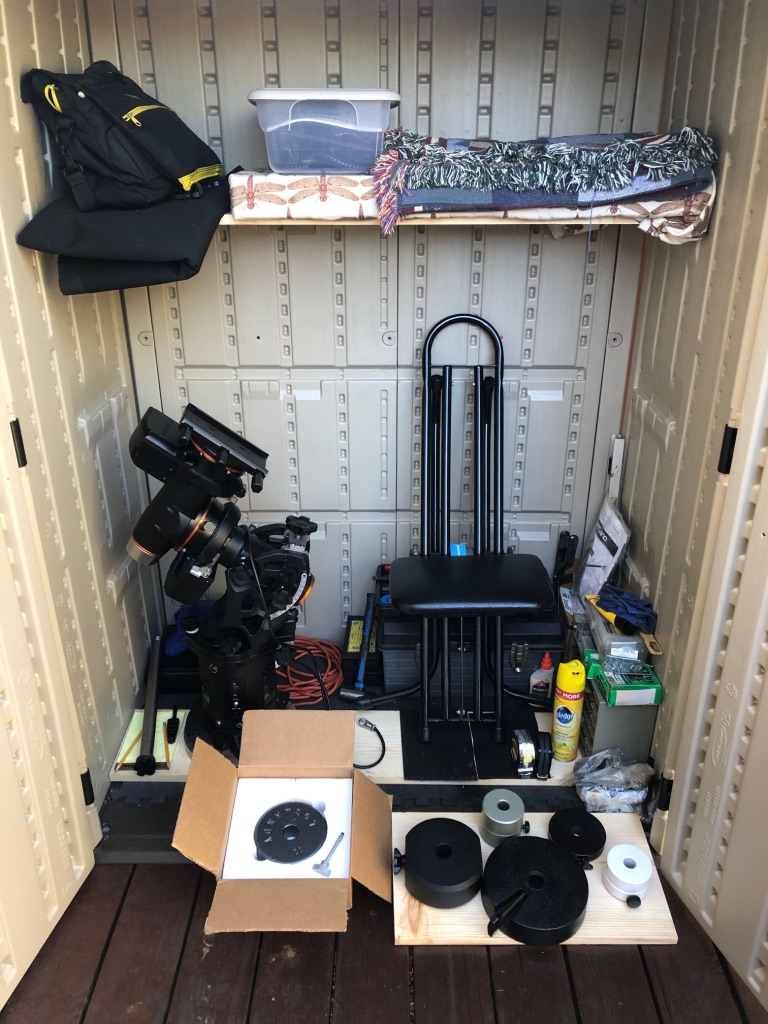
Storage:
I had set the clock, and checked all other specifications during this afternoon. However, last night when performing the alignment process, the mount couldn’t even find Vega, just overhead. And could not perform any two or three star alignment.
So finally, after at least an hour of frustration…I did a “complete factory reset” and reentered all necessary information which resolved the problem.
Note: After the battery change, the time is perfect, each and every time.
Comments:Comments Off on Celestron CGE Pro Equatorial Mount: Replacing The Internal Battery
Posted July 21, 2023 by rogerivester Categories:Roger's Articles
The story how a very small mountain town in western North Carolina became very important to the world of professional astronomy, with it’s contribution to the making of the first 200-inch Palomar Telescope Mirror. And most importantly, as of current all electronic devices use chips made from the ultra-pure quartz from Spruce Pine. Roger Ivester
I’m posting the following “brief excerpt” from a published article by David Biddix of Spruce Pine:
Description: Spruce Pine, North Carolina, a small town in the western part of the state, has a storied history related to astronomy instruments. The Spruce Pine Mining District, a geographical area that features significant deposits of mica, feldspar, and quartz, has played a significant role in astronomy for the past 80 years. The mirror in the 200 inch Hale Telescope at Palomar Mountain is made from quartz mined in the District in the 1930s. Today, all electronic devices including computers, televisions, cell phones, mp3 players, and other gadgets owe their existence to ultra-pure quartz mined near Spruce Pine. In this podcast, you’ll learn how this down-to-earth small town helps astronomers reach for the stars.
Bios: David Biddix is a local historian who has published two books in Arcadia Publishing’s Images of America series with co-author Chris Hollifield: one on Spruce Pine, North Carolina and one on Little Switzerland, North Carolina. He was born and currently lives in Spruce Pine. David’s interests include amateur radio, astronomy, and history.
Alex Glover…is the Director of Mining and Environment for Active Minerals International, LLC. He is a licensed professional geologist in nine southeastern states in the United States and has lived in the Spruce Pine area since 1997. He is interested both in the geology of the Spruce Pine Mining District and in its history, which goes back some 170 years.
….I’ve always wondered why ore from the Chestnut Flats Mine near Spruce Pine was chosen for the telescope’s mirror. Recently, I had a discussion with Alex Glover, a local geologist and mining historian who is very familiar with what is known as the Spruce Pine Mining District, a 10 mile-long, 5 mile-wide outcropping of rock from early in earth’s history that contains some of the purest minerals in the world and is the economic lifeblood of this region. This purity was the reason Corning Glass came to this region to find materials for the mirror. Alex speaks about what types of minerals are found in the district….
David Biddix: Spruce Pine, North Carolina
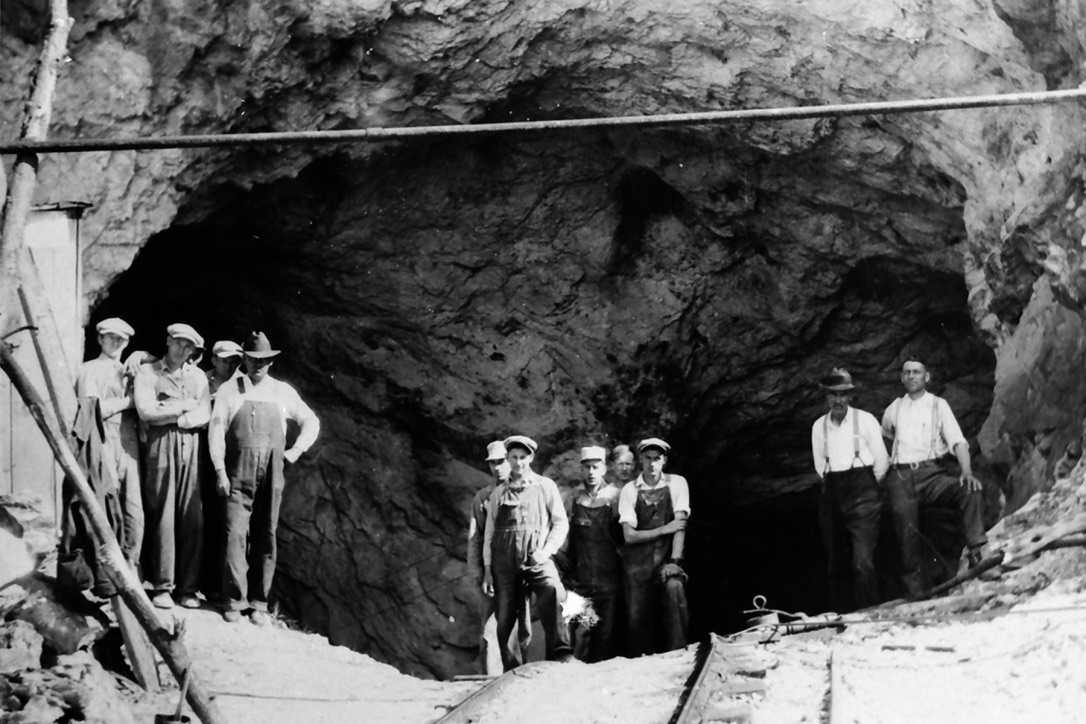
Note: The following photo of the (Chestnut Flats Mine) where the quartz for the 200-inch Palomar mirror was mined, is now closed and privately owned. Roger Ivester
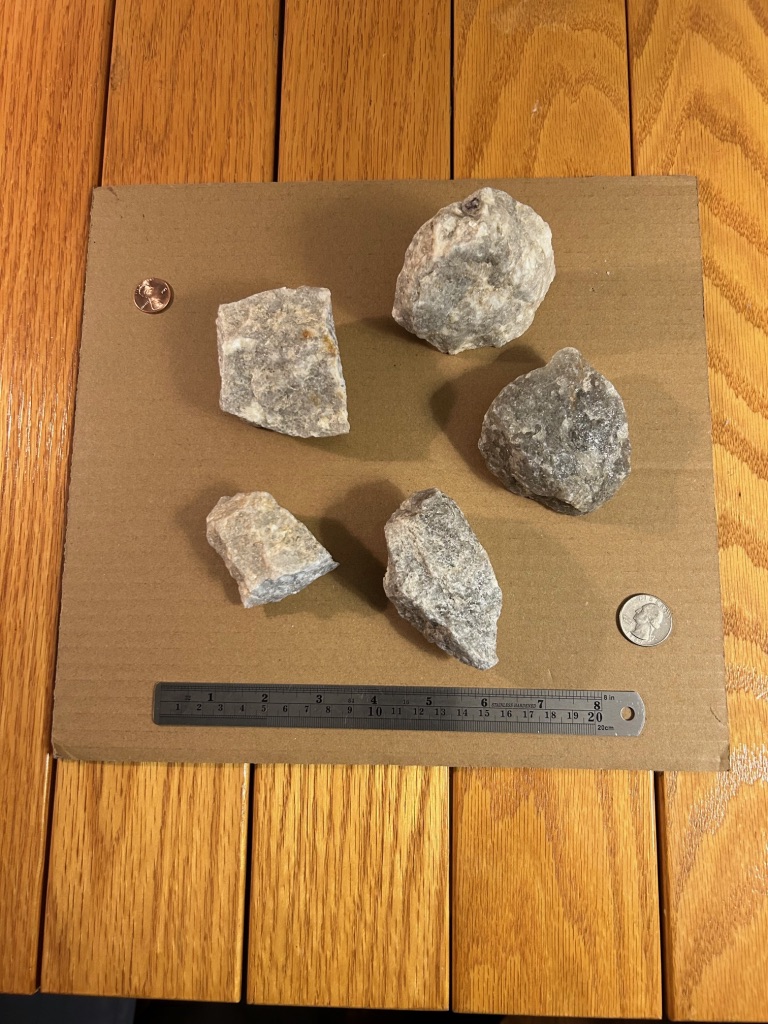
My personal quartz specimens as following from the Spruce Pine mining district:
Historic photo of the mine from days past. Photo credit: Mitchell County Historical Society
Comments:Comments Off on Spruce Pine, North Carolina: The Purist Quartz In The Entire World Comes From Spruce Pine And Used In The First 200-Inch Hale Telescope Mirror
Kenneth was one of the most talented people I have ever known. He previously worked at the hospital as a pulmonary technologist, former music shop owner, a master carpenter and was a perfectionist in everything he did.
Ken could play musical instruments and write songs. He was a combat veteran in Vietnam, a battlefield medic…surviving explosions, bombs and bullets. He never told me what wounds he attended to, but I figured if he wanted me to know, he would have told me.
He will be missed by his family and all of his friends, and I’m so fortunate and privileged to have been able to call Ken, my friend.
We spent many Sunday’s in church together and afterwards shared lunch at KFC/Taco Bell, Ken & Mary’s, or Shelby Cafe with his wife, Bonnie and my wife, Debbie.
I’m also including a YouTube video of the Battle of Cam Lo, by Ken to honor Larry Maxam who was killed during this battle.
Kenneth wrote and sings the songin the following video.
Comments:Comments Off on A Tribute To My Friend, Kenneth Walker Who Passed Away June 3, 2023
Posted May 17, 2023 by rogerivester Categories:Uncategorized
I have read articles over the years and heard stories about great telescopes in America for one reason or another, sit idle. Some of these telescopes are classic and very old, but still worthy of great things.
However, some are relatively new and computer controlled, but for reasons, and some very good reasons are no longer used. The following telescope is in an observatory that was “built in a bad location, dedicated in 1990” on-campus of Gardner-Webb University. However, at the time the observatory was built, this area was actually pretty dark.
I can’t be certain how much this telescope is currently being used, but with so many high intensity lights in close proximity, anything serious or noteworthy would be extremely difficult.
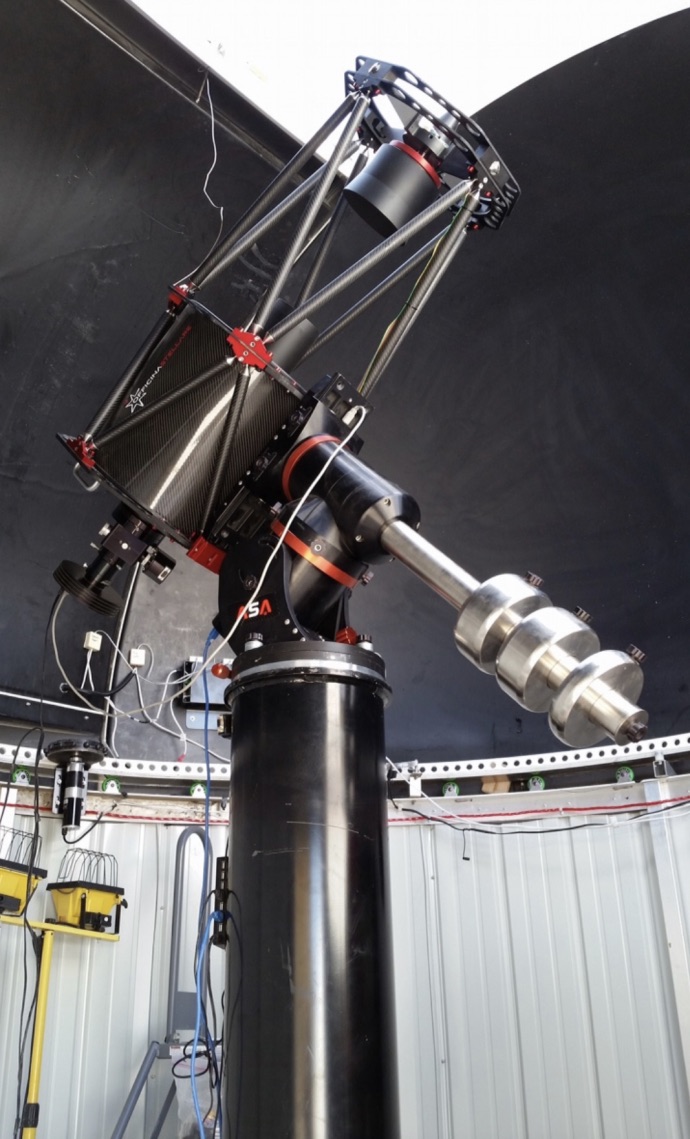
This is a serious research grade telescope with a Paramount GoTo mount and was a donation from Dr. James Herman, MD. The value of the telescope and mount at that time was near ~$75,000.
The observatory is now “unfortunately” surrounded by multiple soccer fields, a baseball field, and multiple tennis courts with a massive number of incredibly very bright LED lighting, so very close. And many of the athletic fields will often have their stadium lights on, at times well beyond midnight or longer. However, It would have been impossible for anyone at the time the observatory was built to know there would be so much growth in the area, and with eventually so much light pollution.
Unfortunately, the same thing has happened to many observatories throughout the country in the past 50 or so years. And with the increase and proliferation of high-wattage LED lighting, there are very few dark sites left, especially in the US. But also in the world.
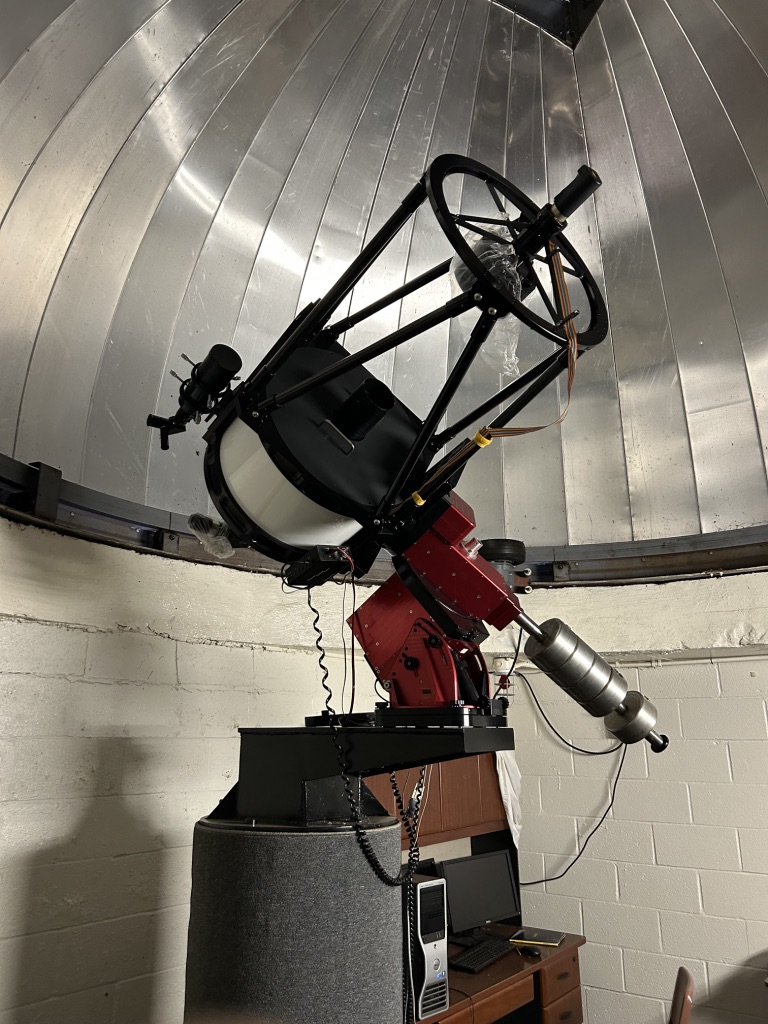
The following telescope sits idle on top of a famous mountain in Southern Nevada, but unfortunately now, the club that owns it has lost access, due to a land sale. This telescope was also a donation by Dr. James Herman, MD. I helped facilitate the donation and logistics of the move.
I’ve suggested to the club officers of the Las Vegas Astronomical Society: The telescope, mount and all salvageable domes and anything else related, should be brought down off the mountain, and put into storage. And then attempting to find a suitable and long-term site.
I was fortunate to be able to play a role in the Mount Potosi Observing Complex in Southern Nevada, facilitating the ~$50,000 telescope donation.
The facility was featured in the February 2016 Astronomy Magazine, the Las Vegas Review Journal, the LA Times, and other publications and media.
Click on the following link to read the story of this telescope in Astronomy Magazine, which was and still is the largest astronomy related publication in the world.
Note: The road to the top of Mount Potosi is listed as one of the most dangerous roads in Nevada. The mountain is “infamous” due to the Carol Lombard DC-3 plane crash in 1941.
Posted March 23, 2023 by rogerivester Categories:Roger's Articles
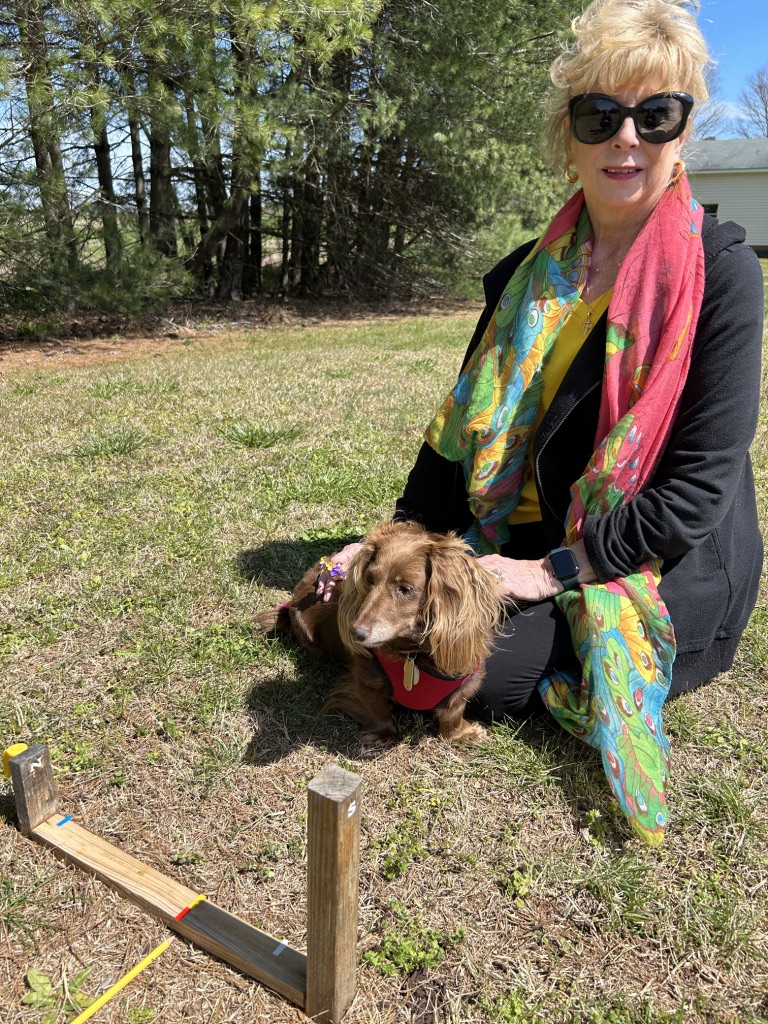
Beginning in (2022) my oldest grandson, needed a project to show the movement of the sun over a period of time….if possible an entire year. However, despite living more than 200 plus miles apart, we both made similar “solar devices” to measure the suns shadow, beginning on the Vernal Equinox (March 20th 2022) and beyond.
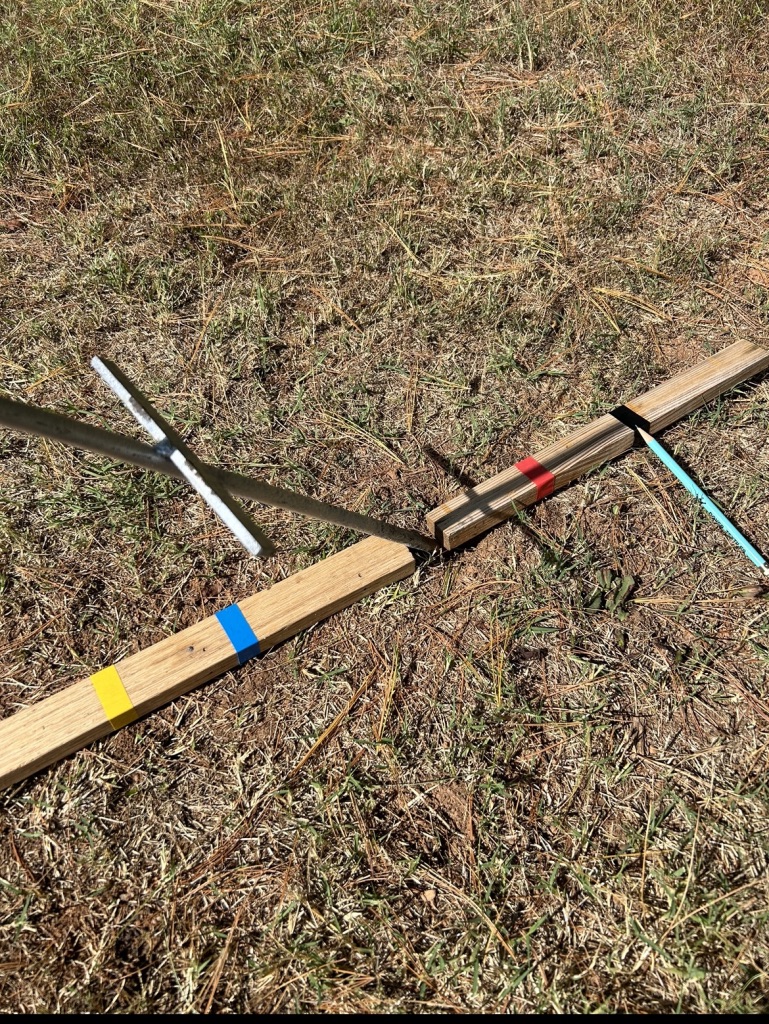
The following photo:
The yellow tape mark on the right side of the scale shows the sun shadow on the 2022 Spring Equinox. (This was my first measurement)
The white tape was placed on the first day of summer (June 20th 2022) which shows the longest day of the year. Note: the sun is not directly overhead using this method, as the shadow indicates.
The blue mark was placed on the scale, on the shortest day of the year, December 21st 2022, which is the longest shadow of the year for 2022.
A second way to measure the suns shadow, by Tom English.
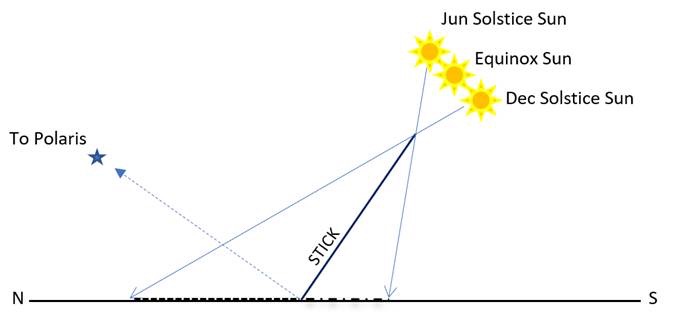
I thought of a variation that I might try someday: Put a straight pole into the ground, facing due south, and at an angle of 54 degrees (for you it would be 55 degrees)
Then on the two equinoxes it would cast no shadow at local noon.
On the June solstice the shadow will cast its greatest extent southward, and on the December solstice the shadow will cast at greatest extent northward of the stick.
Roger Ivester
My latitude is 35º 15′
(90º – 35º) = 55º
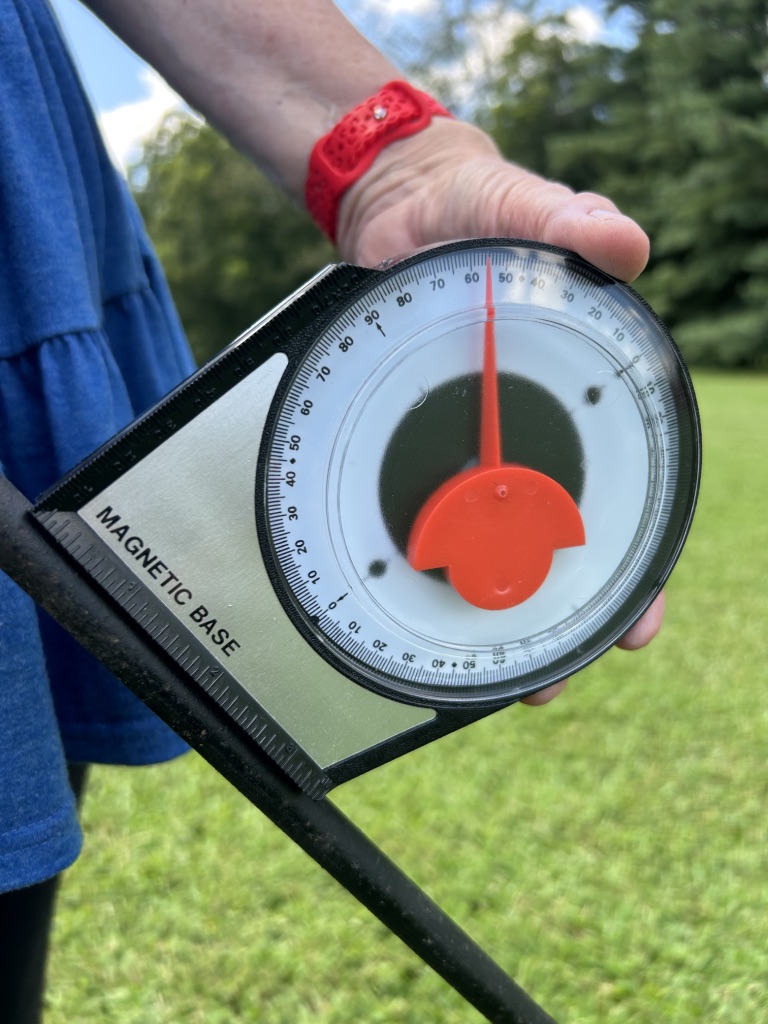
Debbie using an angle finder to insure the proper angle is at 55º.
The angle is toward the South at 55º
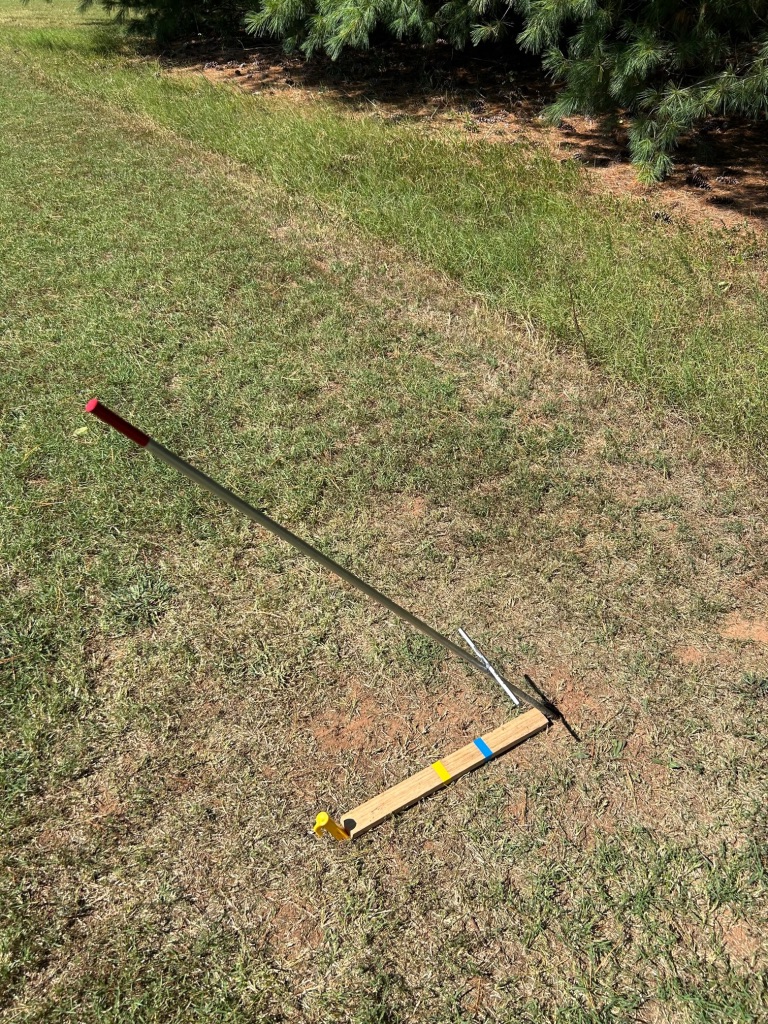
Point the steel rod toward North, but again the angle is toward the South.So draw a line, with the post, going South to North.
Note the shadow. It will be increasing each day to get shorter, until on September 22nd, there will be no shadow, as the sun will be “pointing down” the rod.
At 1:00 PM EDT, today (September 22nd) a photo was made, and indeed showing no shadow, as the sun was shining directly down the steel rod.
The previous marks (blue and yellow) on the scale indicate the positions of the suns shadow on different days, since August 24th.
The black mark shows the shadow on the first day of winter. The yellow mark was made on the longest day of the year….or the first day of summer.
Comments:Comments Off on Tracking The Suns Shadow For An Entire Year, Using Two Methods
Posted March 12, 2023 by rogerivester Categories:Roger's Articles
Deep-sky observing can be enjoyed with a group or solitary, however for me, I much prefer the latter. I always have a planned agenda, with the object or objects that I’m interested in observing.
Deep-Sky observing (galaxies, nebula and star clusters) are very serious business for me, with no time for idle chatter or distractions! There are pencil sketches and notes to make! 🙂
However, I did have one observing partner that was with me on a regular basis for almost 17 years, but she passed away in February 2016. Its been ten years now as of 2026, and I still miss and think about her often.
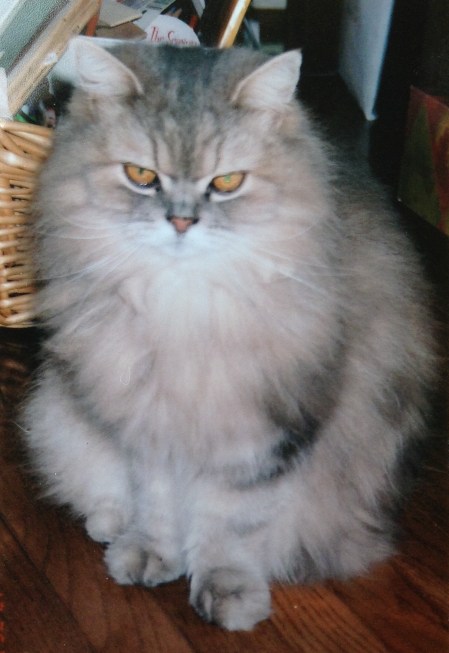
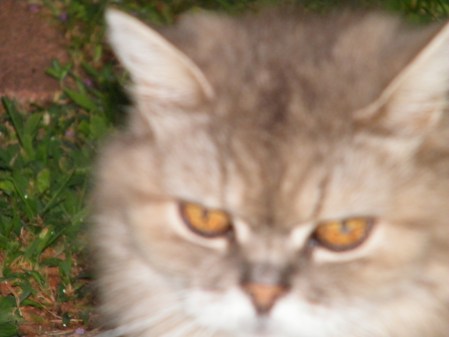
I can still see CJ, our Persian Cat, waiting anxiously at the back door, ready to go outside, while I’d be setting up my telescope on the deck or in the backyard.
When the door was finally opened, she would run out, fast as she could and so excited. She would walk around, climb the deck, play like she was catching something….pouncing and clawing the ground. However, after a short while, she’d end up on my lap, either due to being cold or to just feel safe.
CJ was going to stay with me for only a couple weeks and would then be moving to California, but that two weeks ended up being almost 17 years. I’m really glad the move didn’t work out.
Debbie and I held her in our arms from 11:30 AM till 8:15 PM. I had my hand on her chest when her little heart beat the last time, after 19 years. It was a very, very sad day.
CJ had a wonderful life. We treated her like a Princess.
Comments:Comments Off on Losing My Telescope Observing Partner After 17 Years: It Was A Sad Day.
Posted February 27, 2023 by rogerivester Categories:Roger's Articles
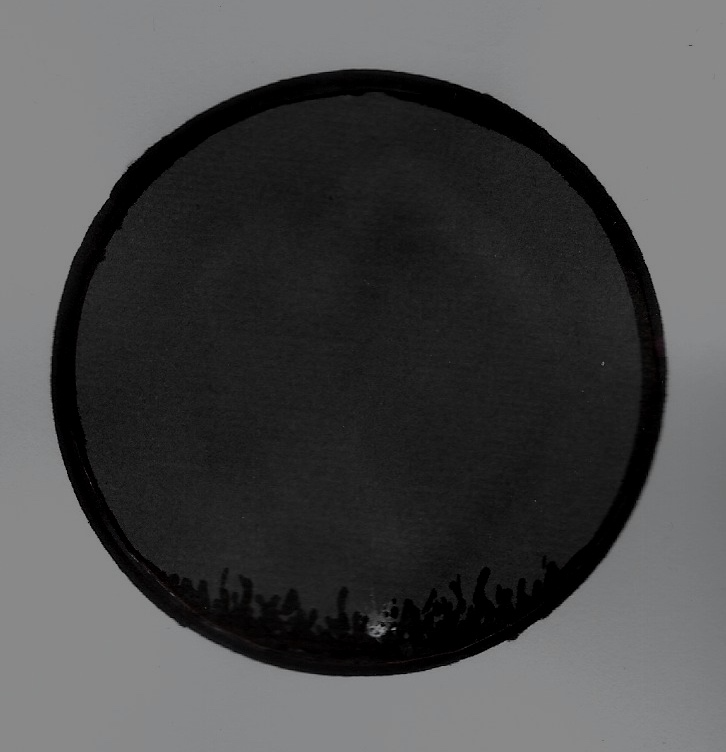
The following is a rough field sketch using chalk on “gray” cardstock, rather than “black” to better illustrate light pollution. Canopus is just visible in a distant tree line.
Canopus is located in the constellation Carina, and is the second brightest star in the sky. It has an absolute magnitude of -5.71and with the following coordinates:
Right ascension: 06h 23min declination -52º 41
In the early 90’s, amateur astronomer Tom English, promoted an event called “The Great Canopus Chase” in our local astronomy club. It was unknown at that time if Canopus could be seen from the area, and amateurs went far and wide looking for the perfect southern view.
Many observers saw the star, but most from different locations, within the local area. It was a fun event. When I first saw it, I was surprised, but have seen it many times since. It has actually become an annual event, so it will be again this year. (2025) Roger Ivester
From my (+35º 18′ ) in North Carolina, my theoretical south latitude 90º (-) 35º = ~ -55º.
Of course the terrain and light pollution can most often be the limiting factor for many in their limiting theoretical southern latitude.
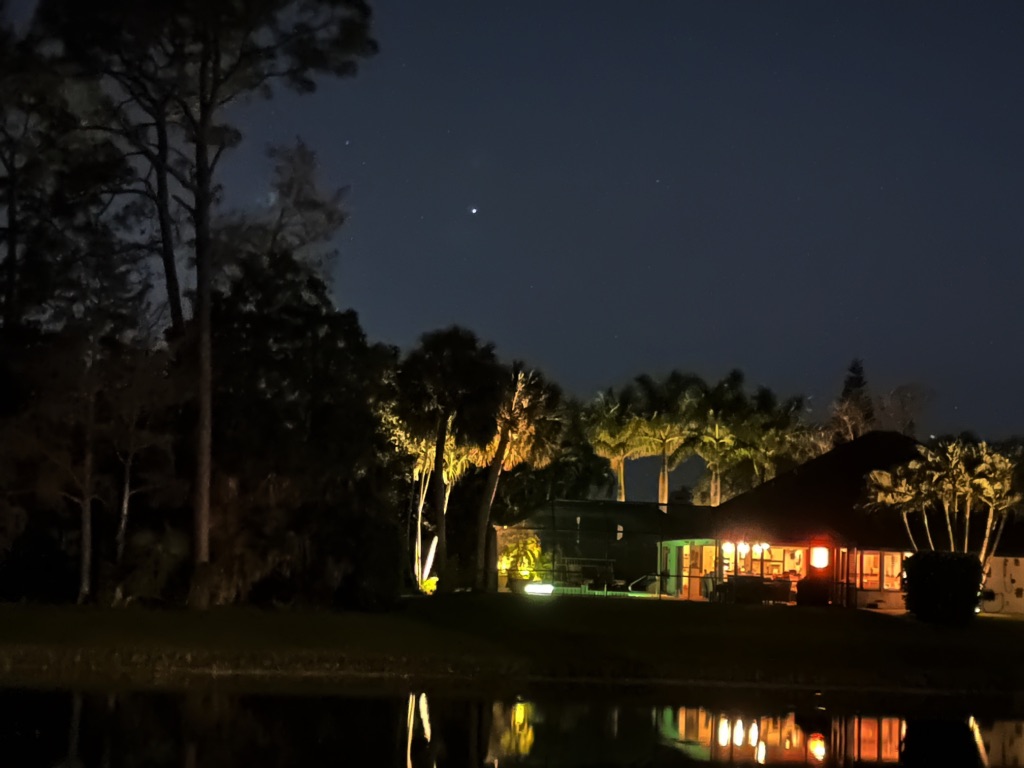
I can see the star Canopus at the south declination of (-52º 42′) but in a distant tree-line, however, it shines brightly! It’s easy to see without optical aid, but I normally take my 7 x 21 mini-binoculars to assist, but once located, it’s very easy naked eye.
So, from my location, Canopus @ -52º 42′ is only ~ 2.5º above the horizon.
The following is my rough chalk sketch, on charcoal “colored” card stock. I made this “rough sketch” as viewed from the north end of Stadium Drive, at the stop sign (junction to the Boiling Springs/Cliffside highway)
Notes and image as following by Mario Motta:
Canopus near its peak which is 11º, here at about 10º above the horizon in Naples, Florida.
I received this note from Richard Shuford, this morning: March 2nd 2023
“Back in 1976, when I was an undergraduate physics major at Lenoir-Rhyne College in Hickory, NC, catching a glimpse of Canopus was celebrated by some of my friends who observed it from a high hilltop in Burke County.” Richard Shuford
(Note: Hickory is about one hour north from my location of seeing Canopus. I was very surprised when reading the above notes from Richard Shuford. I thought our group in Boiling Springs, in the early 90’s was the first time anyone in this area (+ 35º) NC was able to see Canopus.
Chuck Vaughn: Observer from California
Now what is the likelihood of me finding and seeing this in a 30 year old magazine? Especially since I just completed a Canopus post on my site?
I was casually thumbing through a December 1992 Sky & Telescope, and the word “Canopus” seemingly jumped out of page-712 and hit me, right in the eye! His (Chuck Vaughn’s) latitude is +37º 49′ which puts Canopus on the ~horizon, and being able to see it without optical aid!
The following is a brief of that article:
“Canopus, too! Chuck Vaughn of Fremont, California…..claims to have caught sight of the star without optical in November 1991, and three years earlier in December. Has anyone else seen it from such a northerly location?” CV
Note for reference: Richmond, Virginia has a latitude of +37º 53′ just about the same as Fremont, California.
I’m hoping someone reading, with a clear southern horizon, with a latitude of ~40º’s will attempt to see Canopus. This would put the star below the horizon! Is this even possible?
Comments:Comments Off on Canopus From Western North Carolina @ +35º 18′: Also Sightings From Hickory NC, Richmond Va And Fremont California







 rogerivester.com
Recent Comments