Posted February 6, 2023 by rogerivester Categories:Roger's Articles
Orion Telescope and Binoculars has an incredible amount of solar equipment and everything you need to know, concerning solar observing.
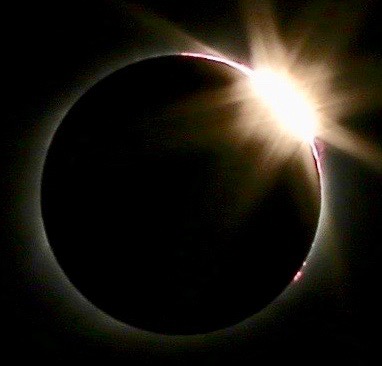
The followingimage by Barre Spencer and Patrick White, using a Canon Rebel with a 200 mm zoom lens from the 2017 total eclipse, presents the Diamond Ring and Bailey’s beads very nicely.The image was made from Columbia, South Carolina.
Unfortunately my friend of many years, Barre Spencer, passed away on June 1st 2022.
Our story of witnessing the August 2017 total solar eclipse from Laurens, South Carolina:
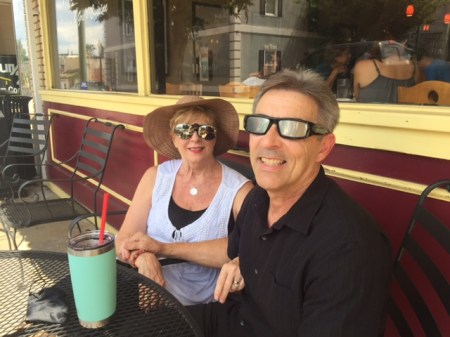
A group of folks from various places met outside of an Italian restaurant to enjoy the solar eclipse together. We were all surprised how few came to this quaint little town to observe this historic event. The totality duration was ~ 2 mins 34 seconds, and with perfect weather!
During totality the sky darkened to a surprising level, but not as dark as a clear full moon night. Venus appeared very bright in the western sky and Jupiter in the southeast. I could not see any stars naked eye.
We were amazed at the sudden flash of the diamond ring!
The temperature drop was very significant. A weather bureau report from Newberry, SC, only 30 miles away, and also in the line of totality, recorded a temperature drop of 11º Fahrenheit. So, we can assume that this temperature drop would have been similar in Laurens.
When the sun began to re-emerge, we noticed a shimmering of light waves on the pavement in front of us, known as shadow bands. A very interesting phenomenon, which I was hoping we’d see…and we did!
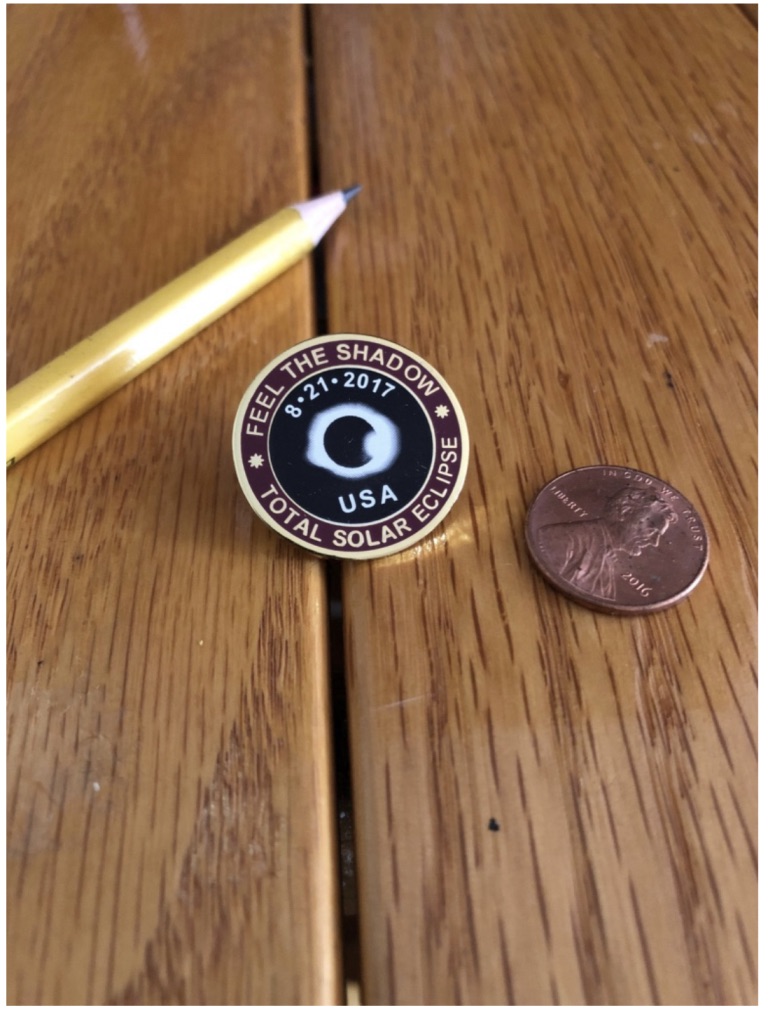
John Goss, who at that time was the President of the Astronomical League, sent both us two very nice and high-quality pins. I wear mine often to this day, with many questioning and asking what the pin is all about.
I’m really glad we have our 2017 pins, to remind us of that special day in Laurens, South Carolina. For many reasons, we’d never “witnessed” a total solar eclipse, and I’m glad I took notes, and made this post, shortly afterwards.
There is nothing like the written word, as there are always plenty of images of the event online, but there will be no duplication of your thoughts, your feelings and what you saw.
Comments:Comments Off on 2017 Total Solar Eclipse, As Viewed From Laurens, South Carolina: An Event We Will Never Forget
Posted December 21, 2022 by rogerivester Categories:Roger's Articles
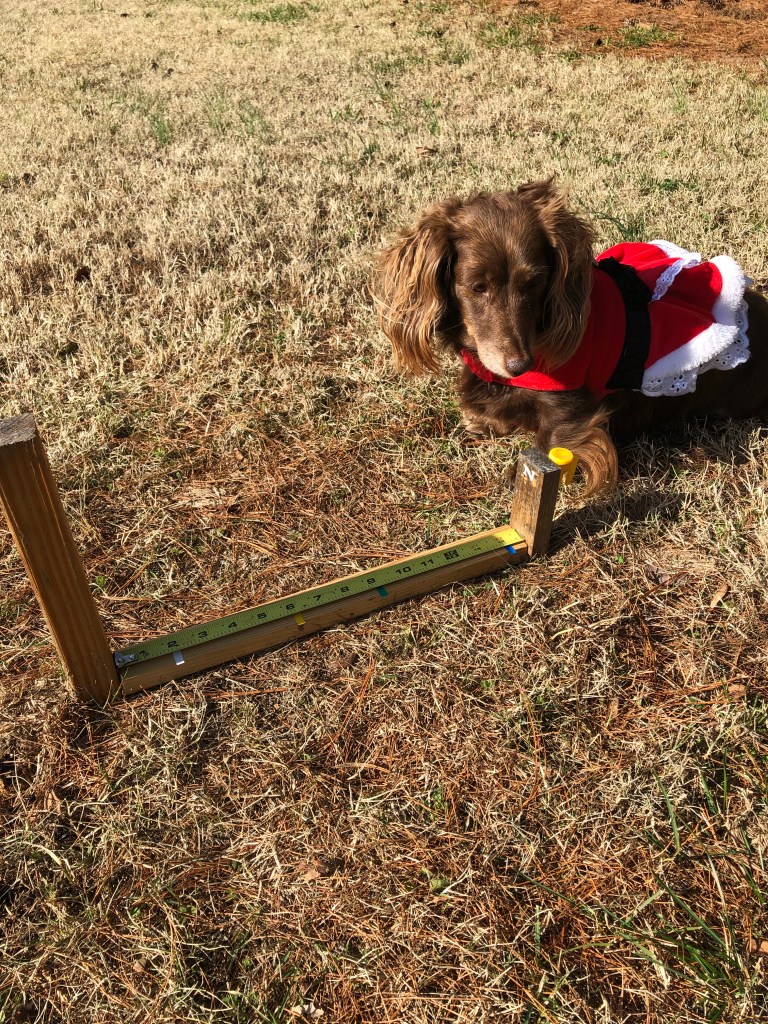
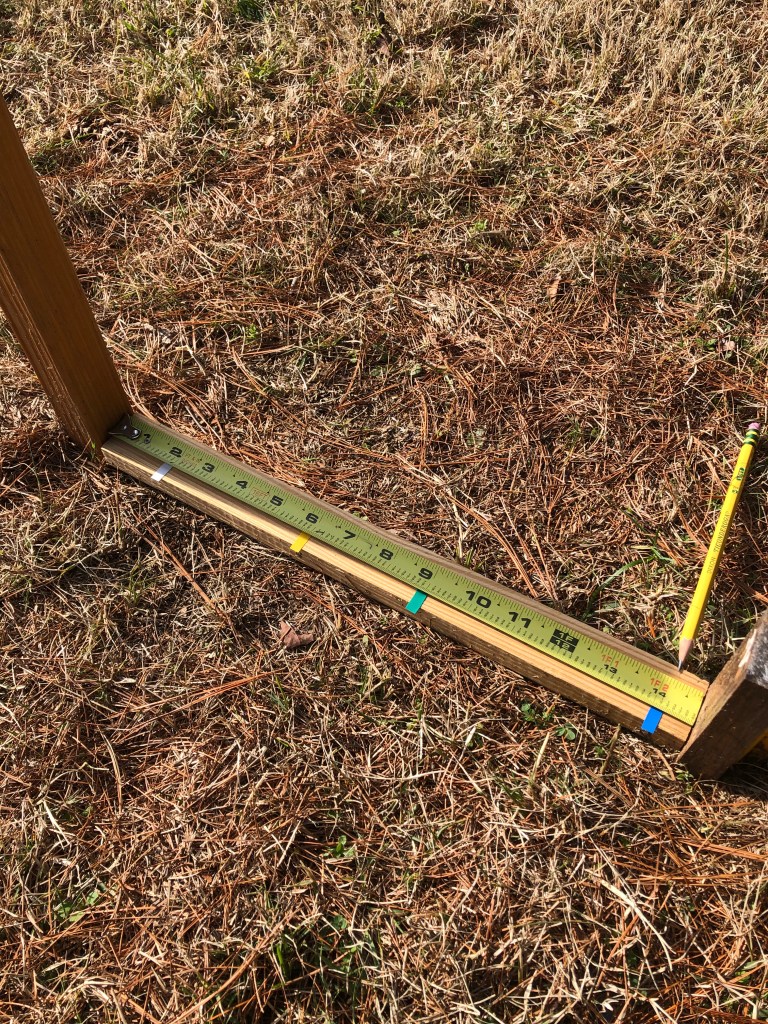
My oldest grandson needed a college project for showing the altitude of the Sun, via the shadow. I made a simple solar device in my back yard, and John-Winston fabricated a similar one in his yard at Myrtle Beach. We compared views fairly often and discussed our results.
We (Sophie, Debbie and myself) made the following photos today at 12:00 noon (December 21st 2022) EST.
The (blue mark) represents the Sun Shadow (today) at “precisely” 12:00 Noon EST, December 21st. Note that the shadow is “almost” at the end of the scale. This shows or presents the shortest day of the year in the northern hemisphere, which is a very long shadow.
The (green mark) on the measuring tape at nine-inches…was made on the the first day of fall (September 22nd.)
The (white mark) presents the sun shadow on the first day of summer (June 21st) and the longest day of 2022, which shows a very short shadow!
This would “also conclude” that the sun is never “perfectly” overhead for our latitude which is +35º 18′ north.
The scale on the ground is perfectly level and aligned north-south. The shadow post of the solar device is at a vertical 90º.
Nova Sophia (Sophie) looking at the longest shadow with interest.
See photos below: Note the longest shadow, the blue mark, which was made on the first day of winter, the shortest day of the year.
During DST, the time of the measurements of the shadow should be made at 1:00 PM. During EST, the shadow measurement should be made at 12:00 Noon.
Comments:Comments Off on The Shortest Day Of The Year In The Northern Hemisphere Is The Winter Solstice Or The First Day Of Winter. Measuring And Watching The Sun Shadow For An Entire Year…
Posted November 24, 2022 by rogerivester Categories:Roger's Articles
My son and granddaughter make frequent trips from Las Vegas to Los Angeles, traveling through Baker, California, via I-15 which crosses the desert.
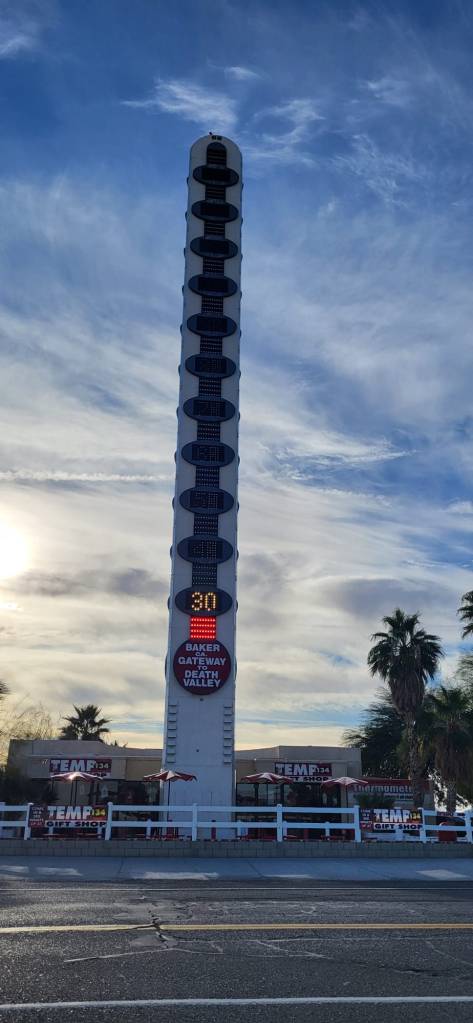
Baker is best known for having the tallest thermometer in the world at 134 feet, and considered the gateway to Death Valley.
The thermometer was built to commemorate the “official world record” setting temperature of 134º F, set in nearby Death Valley (Furnace Creek) on July 10, 1913. Yes, the hottest temperature on the planet earth, and a record that stands to this day.
Brad and Zoe took the following photo of the thermometer during a trip on Tuesday, November 22, 2022. The temperature as shown on the thermometer at the time they were there….was a cold 30º F.
Surprising! It gets cold in the desert also!
Roger Ivester
Comments:Comments Off on The Worlds Tallest Thermometer In Baker Was Built To Commemorate What Happened In Death Valley, California On July 10, 1913
Posted October 14, 2022 by rogerivester Categories:Roger's Articles
Warren D. Ivester: (1913-1986) Ruby Whisnant Ivester (1919-2006)
My Daddy loved sports cars. The following blue convertible is a Fiat 124 and the orange one (second photo) is a very rare Datsun Fairlady.He also had a couple more European cars, which was another Fiat and a French Peugeot.
Warren Ivester: “Circa 1976” driving his 1965 Datsun Fairlady1500 Roadster. A very rare car with a high-performance 4-cylinder (1,488cc engine) twin-carburetors and a four-speed transmission.
My Dad had an engineering mind with an ability to improvise a mechanical fix when he didn’t have the necessary parts. This was especially true as related to cars which were always his passion. In the early days, I remember him cutting copper-shims and placing underneath engine bearings rather than using new bearings. However, this was a common practice during the early years and even into the 60’s.
Helping my Dad at our home garage:
The garage was a very humble building with a dirt floor and comprised of a conglomerate of salvaged materials with a small coal burning stove.
While my Dad was rebuilding an engine or doing some serious engine work, I would try to help. And one of my jobs was to grind valves and valve seats in head blocks, when necessary. I would use a tool with a suction stopper on one end, attached to a wooden handle, using a variety of abrasives.
Born in 1913, my Dad grew up on a farm in the foothills of North Carolina when most roads in the area were dirt and things were far different than today. Those were the days of Ford T’s and later A-Models.
When my Dad was born it was only 10 years after the Wright Brothers made their first flight in December 1903, lasting only 12 seconds. And one year after the Titanic sank on April 12th 1912.
Working on the family cotton farm:
He would later begin working as an auto-mechanic, and would work for himself at times and then at many different garages over the coming years.
The story of the Savannah River Nuclear Facility:
My Mom told me on numerous occasions….Dad had an offer to work at the Savannah River Nuclear Facility, but decided against it. This facility was being built in the early 50’s to produce and fabricate nuclear weapons, primarily tritium and plutonian-239. Some “seriously dangerous materials” for sure! I can’t remember or be sure as to why he didn’t take the job, but was not due to the plutonian-239.
However, if my Dad had taken this job, it would have for certain changed the trajectory of my family, and It could have been beneficial to the family finances for sure.
It could have been really good for me also: As I needed my own bicycle, a serious astronomical telescope, a Lionel electric train, and other essentials that kids needed in those days. 🙂
Moving the Cape Hatteras Lighthouse:
When engineers were trying to figure out how to move the Cape Hatteras Lighthouse further inland, away from the ocean, I remember my dad having his own thoughts. The Outer Banks of North Carolina are very unstable land masses and constantly changing. His thoughts were as following, and I remember hearing him say the following, on a number of occasions.
“……it needs to be lifted up using the same principle as moving a house, then installing a massive rail-system underneath. The rails would extend the entire distance to be moved, or to its new and final resting location. The lighthouse would have to be moved very slowly, maybe only inches a day, which would allow very close monitoring of the process.”
Well…this was pretty much the exact way the famous lighthouse was moved.
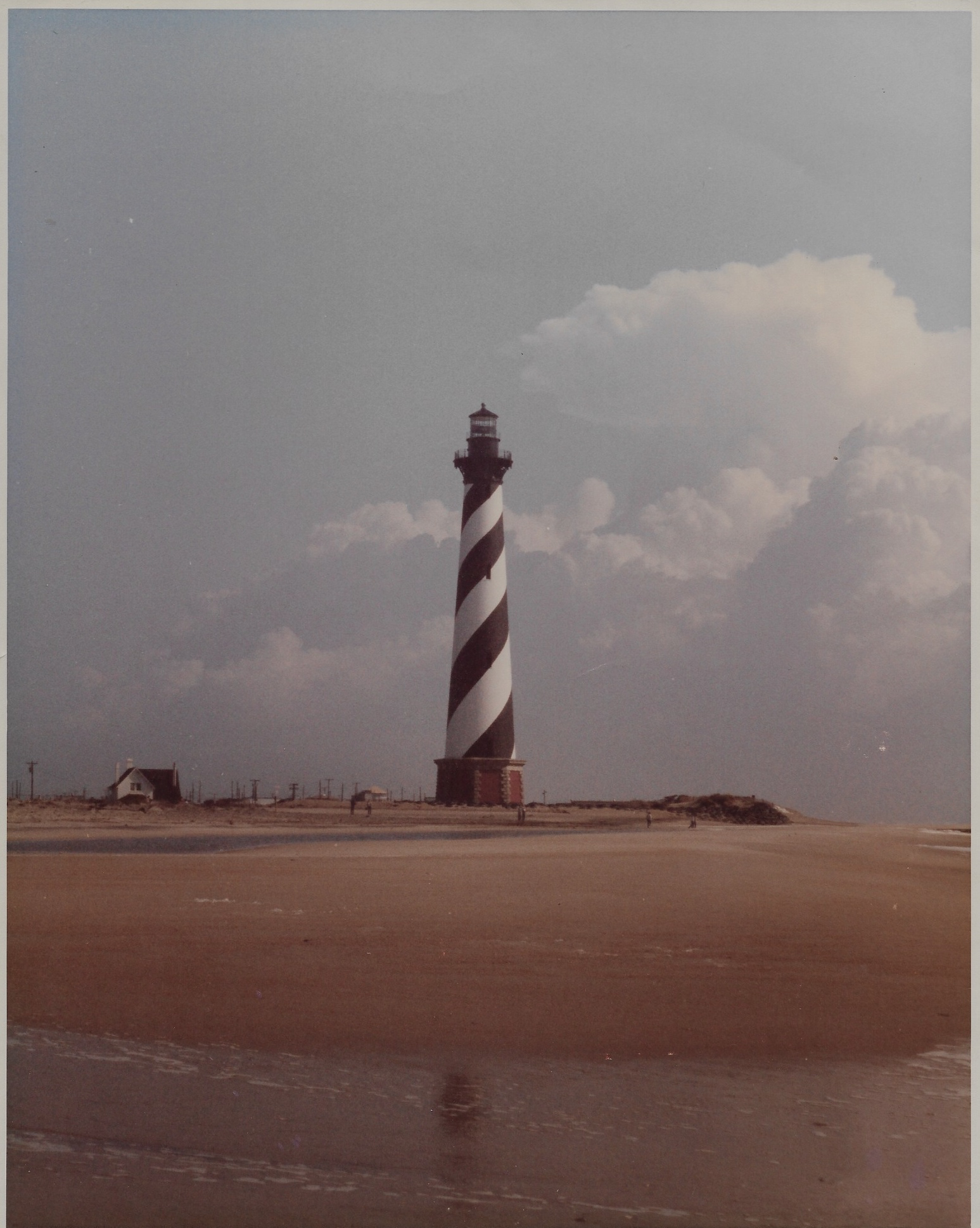
I made the following photo in April 1982 of the lighthouse in its original location, before being moved. Note how close the lighthouse was to the beach and ocean. Moving this massive structure was definitely an engineering marvel.
My Mom was the mother to six-boys and a wonderful mother she was.
She was very intelligent, excellent in math, very artistic, beautiful handwriting and well read in so many subjects. And this was many years before the internet. She would purchase one encyclopedia every month from the Shelby Winn-Dixie. We would get our groceries at Winn-Dixie, on either Friday nights or Saturday afternoons and most of the time I’d go. Our house was about 15 miles from Shelby, and we called this…going to town.
We received the National Geographic magazine, for about ten years, from about 1960 to 1968. With the addition of our grocery store encyclopedia’s, what more could we possibly need to learn about everything? My Uncle Boyd and Aunt Shelley who lived in Virginia gave the National Geographic magazines, to me and my brothers, in those early years. I remember being excited when the magazine came to our FFA (Future Farmers of America) concrete pedestal mailbox, each and every month. One of my brothers made the mailbox at Polkville School, and brought it home on the school bus.
How my Mom saved me from going to prison when I was 9 years old!
I sent off for a free stamp coin collection, or maybe it was all for a dime I’d sent them. Then I started receiving more and more (worthless) international stamps and more and more books.The company was located in Garden City, New Jersey. I then received a bill for $35. But, what to do? I just ignored the letter, but a month or so later they sent me a serious legal letter.
They advised me to seek legal counsel, as they would be sending their attorney to meet with me and my attorney in Shelby, NC, within the month. But my stamps/coins and books were suppose to be free…or covered by the dime I’d included in the envelope!
I showed the letter to my mom, and it scared her to death!
She quickly looked in our “savings” drawer and counted out $35 and put in an envelope. I’ll never forget the both of us cramming the stamps and books into a box with the money. Yes…cash in an envelope and sending to a bunch of shysters in New Jersey!
Relief! My life was saved!My Mom just couldn’t let her her youngest son go to prison for $35. The real criminals were the folks at the stamp and coin mail order company. (Note: Many years later, a law was passed by Congress, that allowed people to keep anything they didn’t order.) And I didn’t order boxes of books stamps, cheap aluminum coints and worthless books! Considering inflation, the $35 would be equivalent of $366 as of 2025. And my family needed this money!
When I was in about the 1st-4th grades (~1960-1963) she would work at a sewing company in Cherryville, and would ride with some of her friends in the area, who also worked there. My Mom would never have a drivers license. During periods when she was not working, she loved to watch soap operas, which she called “the stories.” She would talk with a few of her local friends on the telephone about the stories as if they were real. One thing for certain….she loved her family.
My mom also taught me so much about the Bible when I was really young, which inspired me to read the Bible, and my belief in Jesus Christ. I would begin to read the Bible on a regular basis, and had a couple that were given to me by my church. However, my favorite was a small Bible given to me at Polkville School, by the Gideons. Somehow at 11 or 12 years old, I managed to memorize the entire 34th Psalm. This is an amazing Psalm that says so much.
I remember so well, my Mom reading to me: Luke 16:19-31 KJV: She talked with me about Hell and eternity and said: “Can you imagine, constant torment that never ends?” Even at a very young age, this for sure caught my attention!
My Dad standing in the backyard during the summer of 1984:
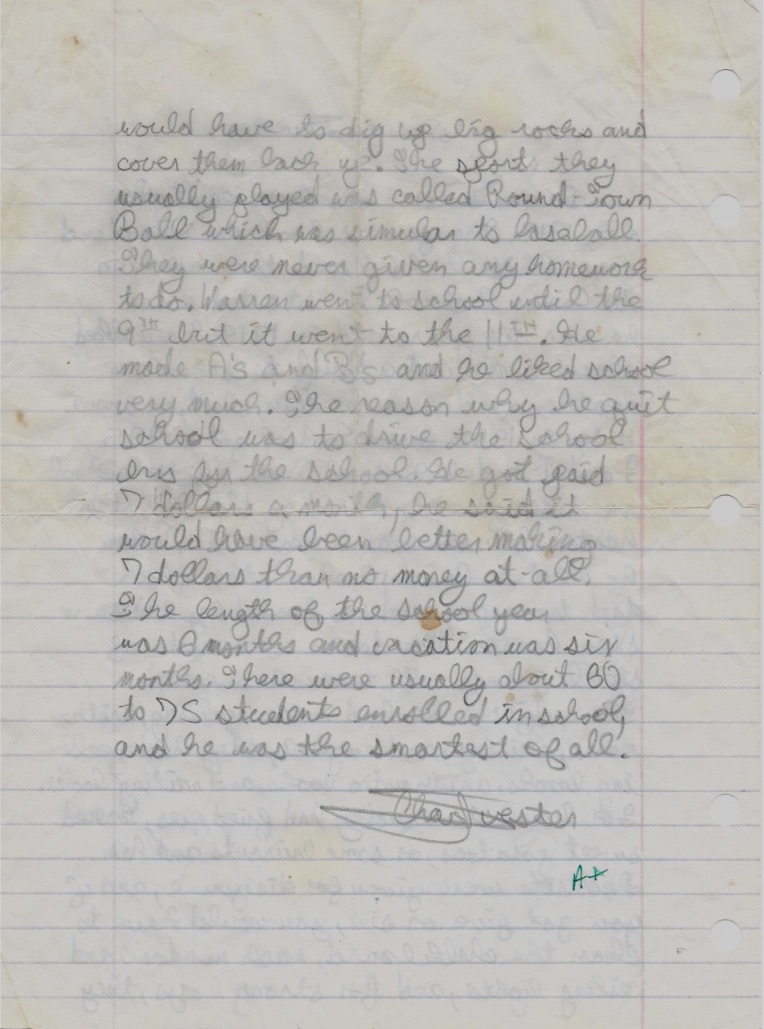
An interview and documentation as following by Chadwick Ivester: His elementary school assignment (4th grade, nine-years old in 1981) was to interview an older person that was significant in their life. Chad chose his grandfather.
Page 2:
The following is the story for easier reading. Only a few spelling changes were made and paragraphs for easier reading.
I would consider this an historical document: Roger
Warren Ivester was born on Feb. 4th, 1913. The first school he attended was White School and then went on to Casar School. He started when he was six years old in 1919. He walked about a mile and a half to school in weather conditions as rain, sleet, or snow.
Later in 1926 Casar School got a 1925 Ford T-Model Bus. White School was a single room building that was stem heated. It used coal to heat. Then when he went to Casar School, the school had two rooms and was heated by the same stem heater. The desk were made of steel frames with tarnished wood.
The subjects he had were spelling, arithmetic, writing, and english, they had spelling books, arithmetic books, and writing books. For lunch he usually had fried pies, baked sweet potatoes, or some biscuits and ham.
Demerits were given for disipline, and if you got five or six, you would have to clean the chalkboard, wash windows and ceiling lights, and for strong boys, they would have to dig up big rocks and cover them back up.
The sports they played usually played was called Round-Town Ball which was simular to baseball. They were never given any homework to do. Warren went to school until the 9th but it went to the 11th. He made A’s and B’s and he liked school very much. The reason why he quit school was to drive the school bus for the school. He got paid 7 dollars a month, he said it would have been better making 7 dollars than no money at all.
The length of the school year was 6 months and vacation was six months. There were usually about 60 to 75 students enrolled in school and he was the smartest of all.
Chad Ivester
Comments:Comments Off on A Tribute To My Mom And Dad For Both Mothers And Fathers Day And With Important Stories
Posted September 26, 2022 by rogerivester Categories:Roger's Articles
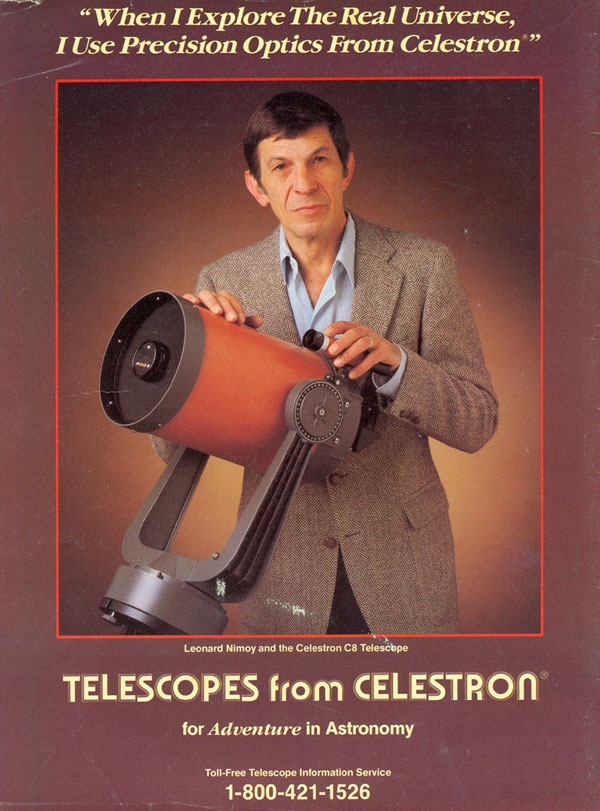
I pulled the following photo of (Leonard Nimoy) “Spock” and his “Orange-Tube” 8-inch Celestron Schmidt-Cassegrain telescope, from Phil Harrington’s vintage telescope advertisement post.
This is the telescope, that changed the world of amateur astronomy, with its introduction in 1970.
Amateurs wanted a more compact and portable telescope, and the 8-inch Schmidt-Cassegrain f/10 fit the bill. I’ve owned two SC scopes over the years, but for me, I still like the simplicity of a Newtonian Reflector, despite the bulk and weight.And should a problem present itself, there is always an “easy fix” maybe not so much so with a Schmidt-Cassegrain or Maksutov-Cassegrain.
However, the Schmidt-Cassegrain telescope is the choice of telescope for many amateurs, for their own personal reasons. I’d suggest mostly for portability, and astrophotography.
Newtonian Reflectors:
It’s my opinion, a 10-inch “equatorially mounted” (solid tube) reflector, is the largest reflector that can/could be considered portable. And that’s a stretch, as I have a very heavy 10-inch EQ reflector (solid tube) so this is based on my experience.
However, this is not the case for a Dobsonian design, as many take 20 to 25-inch Newtonian’s, and sometimes “even” larger to star parties on a regular basis. But for me, I was always happy for someone else to bring such a large telescope. 🙂
My experience with a 20-inch Dobsonian:
I’ll never forget being at a star party near Blowing Rock/Boone, North Carolina, and climbing a “really” tall ladder, to observe through a 20-inch Dobsonian. To make things worse there was a 15 to 20 mph wind, and “of course” in total darkness. I couldn’t wait to get back on ground, and decided my 10-inch reflector was all I needed! I just never thought astronomy should be a hazardous hobby, even greater than road cycling!
I’ve always preferred the simplicity of both a Newtonian and refractors:
For me, growing up looking at big Cave Newtonian’s (advertisements) and other brands, with massive German design equatorial mounts, was what an astronomical telescope should look like.
We can never escape our early years, and thoughts.
Roger Ivester
The following is an excerpt from Wikipedia, concerning Tom Johnson and Celestron telescopes.
…..Johnson, who had a strong interest in amateur astronomy, originally created Celestron as the “Astro-Optical” division of Valor Electronics in 1960.[2][3] Around 1960, Johnson had been looking for a telescope which could be used by his two sons, but found no such child-friendly models on the market at the time.[2] Johnson built a new telescope, a 6-inch reflector telescope, by himself, in 1960.[2] He was visiting his brother in Costa Mesa, California when he came upon his nephew, Roger, trying to grind the 6 inch diameter lens he purchased from the clearance table at a local hobby shop. Roger was tired of the project and offered the lens-grinding kit to his uncle. Thomas Jasper took the kit home and after several days of hand grinding, he invented a machine that would grind the lens for him. Thus, by accepting the lens grinding kit from his nephew, Roger L. Johnson, “TJ” (as the family called him) created that first lens of many.
Johnson’s interest in telescopes soon became a full-fledged business.[2] Johnson’s new company, Celestron, which descended from the “Astro-Optical” division of Valor Electronics, soon began selling more sophisticated Schmidt–Cassegrain telescopes in models ranging from just 4 inches to 22 inches.[2] However, the Schmidt–Cassegrain telescope proved difficult to mass-produce because the models needed Schmidt corrector plate, an advanced aspheric lens, which could be hard to manufacture.[2] To solve this production problem, Johnson and the company’s engineers invented a new type of telescope, the Celestron 8, in 1970.[2] The Celestron 8 was more compact, affordable and easier to manufacture than traditional telescopes, like the Schmidt–Cassegrain.[2] Johnson’s new telescope proved very popular in the amateur astronomy and educational industries, allowing the hobby to rapidly expand and reach more consumers.[2]
Posted September 22, 2022 by rogerivester Categories:Roger's Articles
2 Corinthians 12:7-11
The thorn in the flesh….
7 And lest I should be exalted above measure by the abundance of the revelations, a thorn in the flesh was given to me, a messenger of Satan to buffet me, lest I be exalted above measure. 8 Concerning this thing I pleaded with the Lord three times that it might depart from me. 9 And He said to me, “My grace is sufficient for you, for My strength is made perfect in weakness.” Therefore most gladly I will rather boast in my infirmities, that the power of Christ may rest upon me. 10 Therefore I take pleasure in infirmities, in reproaches, in needs, in persecutions, in distresses, for Christ’s sake. For when I am weak, then I am strong.
7 …..Therefore, in order to keep me from becoming conceited, I was given a thorn in my flesh, a messenger of Satan, to torment me. NIV
My thoughts concerning the “Thorn In The Apostle Pauls’ Side” as following: Roger Ivester
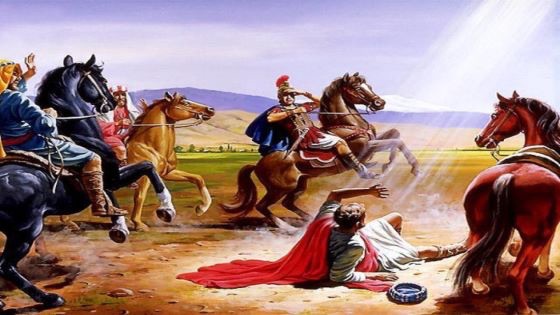
Could the “thorn in the Apostle Paul’s side” have been mental and his inability, therefore, as a human lacking the ability to forgive himself? Could Paul’s thorn have been guilt, due to his murder and torment of Christians. Mental pain and guilt can be more punishing than physical pain. Despite the supernatural event and his conversion on the road to Damascus…the thorn in his side remained.
Was Paul continually “tormented” by Satan, saying…? You have tortured and even murdered many followers of Jesus Christ. Who are you to profess faith in Jesus Christ, when his followers hate and fear you?
Disclaimer: This theory and conjecture is based on my own simple understanding of the Bible, and mine alone. Never will this humble servant pretend to understand or know “definitively” the many hidden meanings of the Bible.
…..years ago, a sentence from a Gideon’s KJV Bible had a profound effect on my ability to share that which I do not know or understand, concerning theBible: “It involves the highest responsibility, will reward the greatest labor, and will condemn all who trifle with its sacred contents.” Source:Gideon’s International.
Information compiled and personal thoughts by Roger Ivester
Saul’s conversion on the road to Damascus…blinded by Jesus.
Comments:Comments Off on The Thorn In The Apostle Paul’s Side. But What Was That Thorn? A Question That Has Been Asked For More Than Than 2,000 Years.
Posted September 14, 2022 by rogerivester Categories:Roger's Articles
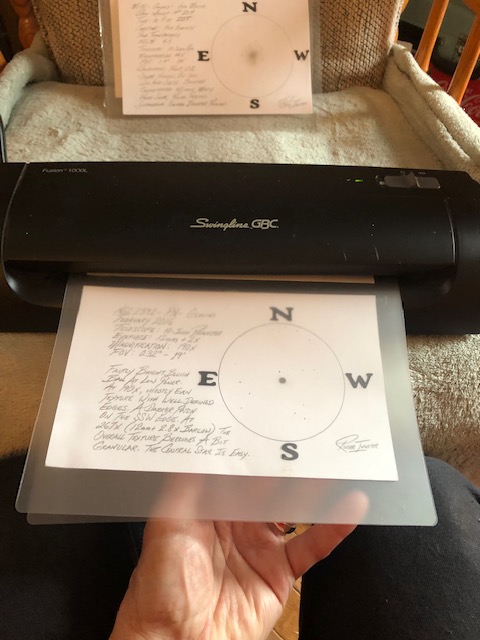
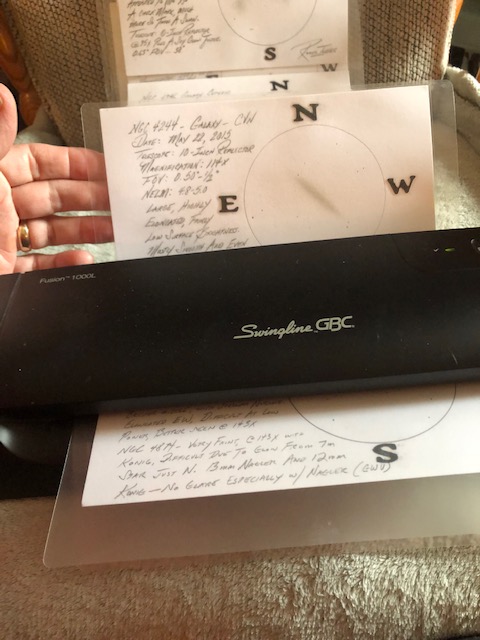
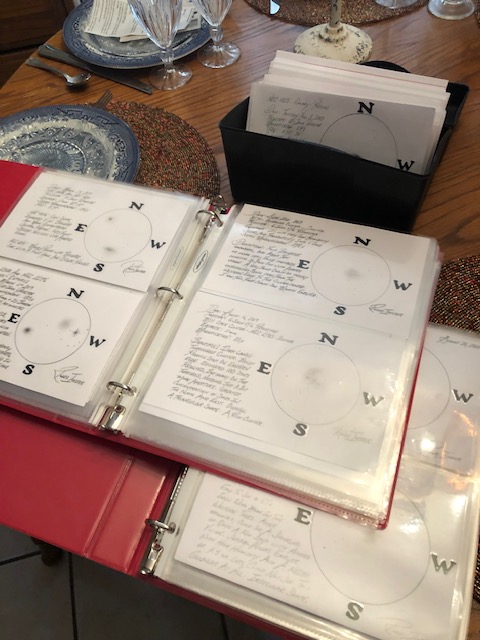
Several months ago, it occurred to me that I needed a more organized system of filing my pencil sketches and notes. I was just filing my 5 x 8 sketches in plastic boxes, without having a directory, and having to look through hundreds of sketches to find the one I might be looking for. I have spent about sixteen hours to-date, and with many more hours to go.
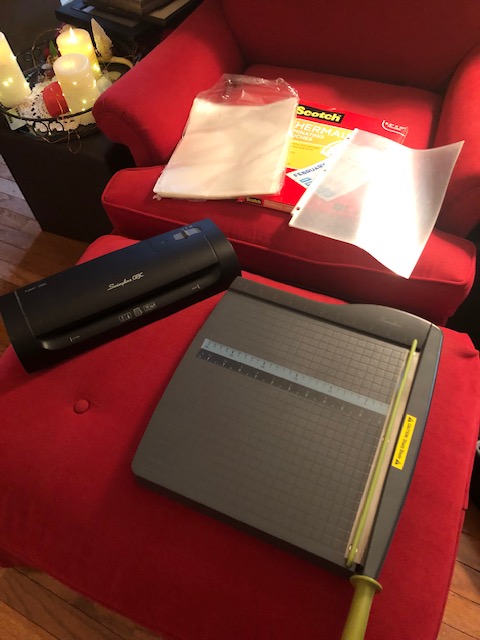
I am using a laminator, lamination plastic, a paper cutter, plastic page protectors, and plenty of 3-inch loose leaf notebooks. When finished, there will be a directory in front of each notebook, then a master list to find the notebook needed, and then the page number.
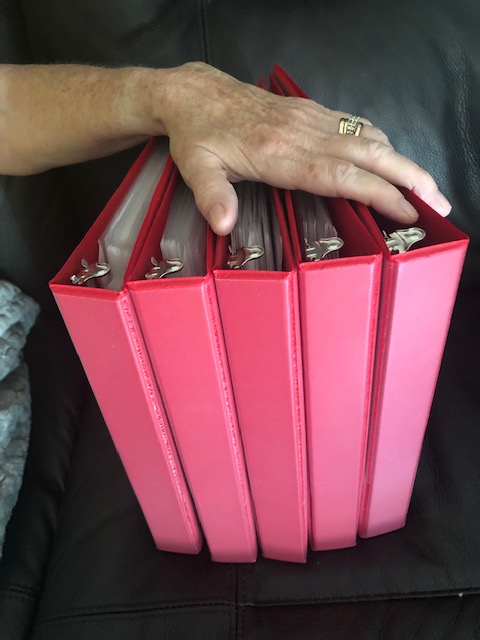
This is a preliminary post, and I will be adding more information when the task is finished. At this point, I havefive complete notebooks.I have all of my sketches digitized for the past fifteen years, but nothing like a “hard-copy.”
Four books now completed, with the fifth, just beginning. There is no way, I can laminate all of my sketches, and notes, as they are in different formats, journals, and too many small 3 x 5 cards to count.
Maybe a thousand or more small note cards ( 3 x 5) filed in plastic boxes, by constellation. So they are just fine, and easy to locate…the object I might be looking for.
The following are the books to-date with Debbie’s hand holding.
Comments:Comments Off on Organizing My Pencil Sketches And Notes, However, It’s Taking Much More Time Than I Thought.
Posted September 9, 2022 by rogerivester Categories:Roger's Articles
Richard Nugent and Bruce Berger saw the galaxy from Maine at +45º N latitude.
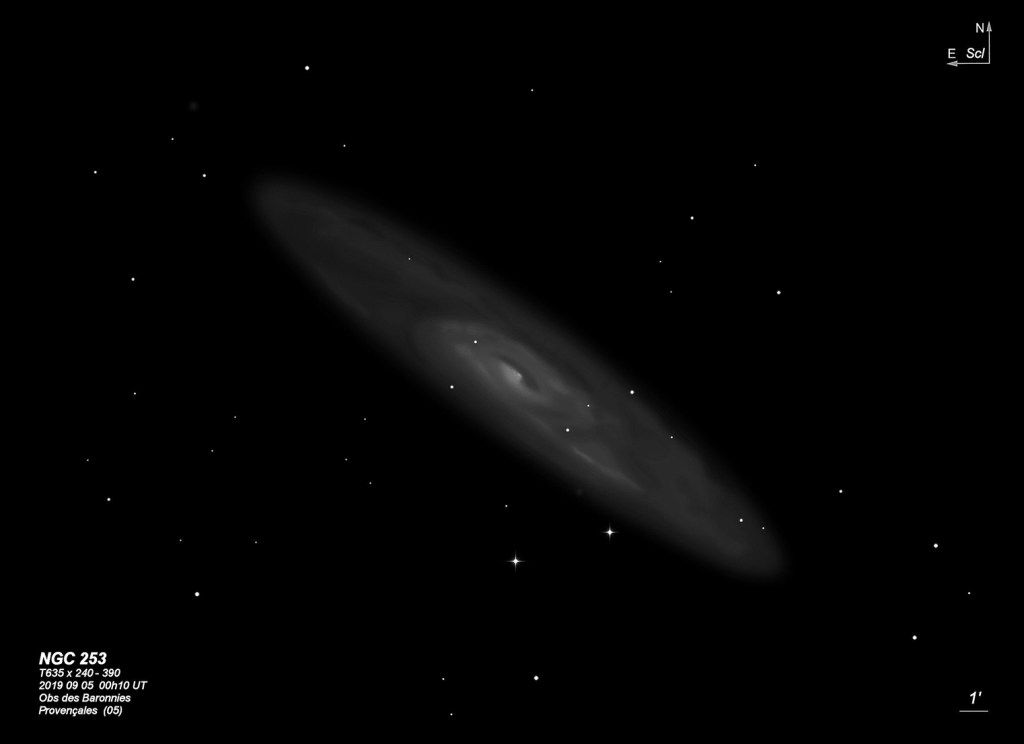
Pencil Sketch as following by Bertrand Laville from France, using a 25-inch Reflector:
Image by Mario Motta:
The data was collected in 2019, counting the number of subs, I have 70 min both Blue, and red filters, and 60 minutes Lum Filter. Green filter was only 40 minutes, likely it began to set in the west too low and could not get more.
This was taken with my 32-inch scope from Gloucester MA, with a ZWO ASI6200 camera.
Processed in Pixinsight
Image by James Dire:
Date/Location
November 15, 2009 Wildwood Pines Observatory, Earl, NC
Camera and Settings
SBIG ST-2000XCM CCD Camera -10°C
Telescope
Orion 190mm Maksutov-Newtonian f/5.3
Mount
Parallax HD150
Exposure
60 minutes (6 x 10 min)
Processing
CCDOpts, Image Plus 3.0, Photoshop
Other
Mag. 7.1 spiral galaxy in Sculptor. 26.9 x 4.6 arc minutes.
Pencil Sketch by Roger Ivesterfrom North Carolina:
14.5-inch reflector at 125x, from a local dark-site in North Carolina at +35º N latitude on October22nd 1995. I made thefollowing sketch using a white charcoal pencil on black card stock.
South is up, and East is to the right.
Pencil Sketch by Sue French from New York at +43º N latitude:
10-inch reflector at 68x
Comments:Comments Off on NGC 253 – Galaxy In Sculptor: It’s Far South -25º South Declination Deters Many Amateurs From Observing. However, It’s Possible To Be Observed From Anywhere in The Continental US.
Posted September 2, 2022 by rogerivester Categories:Roger's Articles
Stiction: Physics = “The friction which tends to prevent stationary surfaces from being set in motion”
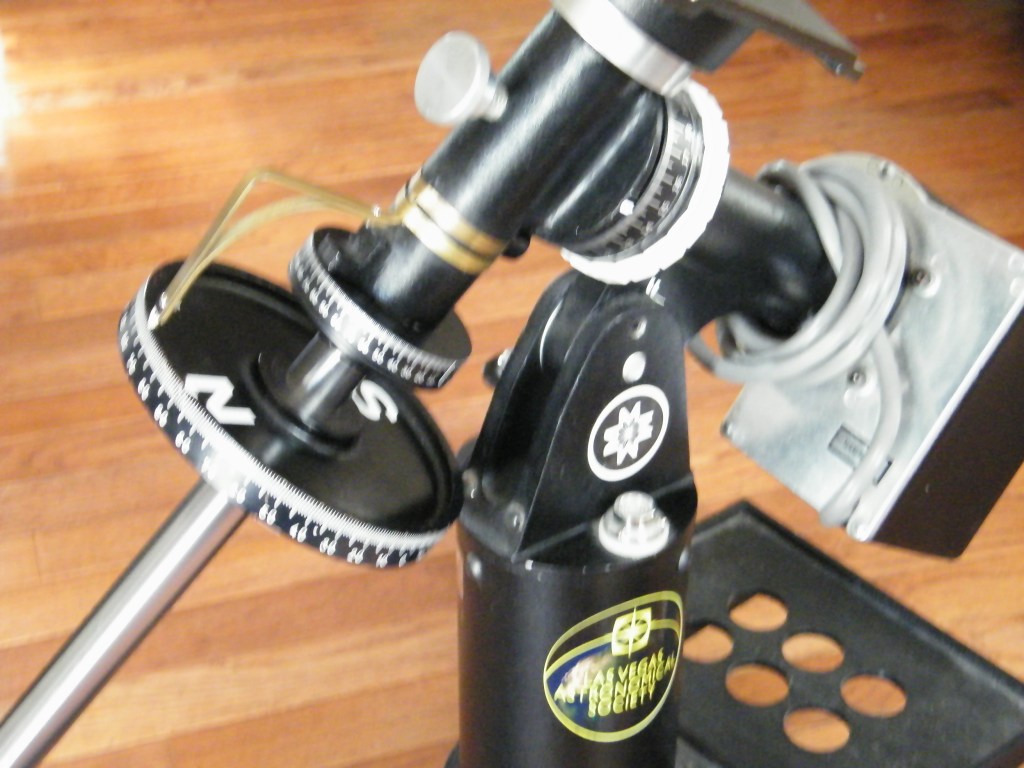
I have an older Meade “medium duty” equatorial mount. It’s been a while since I’d last used this mount. Unfortunately, while pointing the telescope, the RA and Declination shafts were “jerky” or sticking, when attempting to hand-move the mount. This is called “stiction.”
This mount has teflon/nylon split bearings, and over the past 30 years, knowing that a petroleum based lubricant can attack plastics, nylon and teflon, I have disassembled and used paraffin.
It occurred to me to use some Mobil 1 synthetic motor oil in a tiny plastic dropper, might just be the perfect lubrication.
I removed the counter weights, and flipped the RA and Dec shafts in all angles, and dripped small drops of Mobil 1 synthetic into the RA and declination lock down holes, which would allow permeation of the internal surfaces.
The Meade Medium Duty mount seems to now work beautifully.
Comments:Comments Off on Equatorial Mounts With Stiction, and How to Fix: What is Stiction?
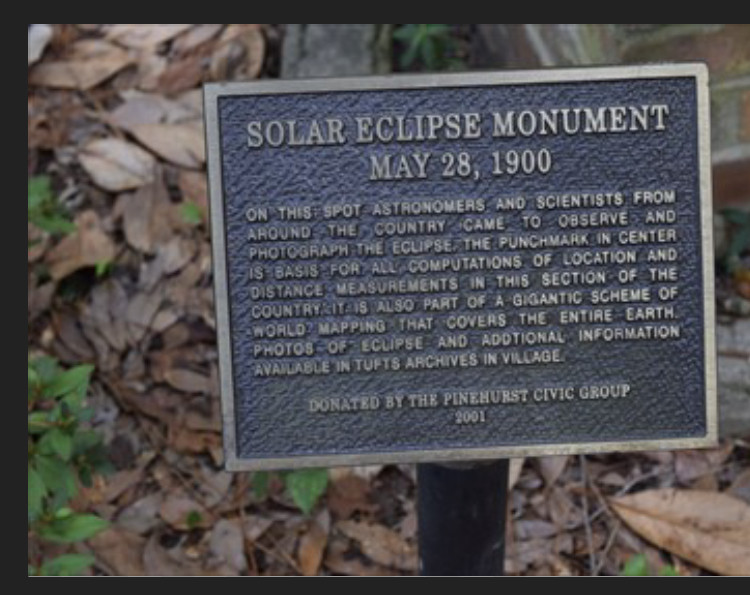
Supplemental: The path of totality, also included other popular sites for research groups, including Pinehurst, North Carolina, as well as Newberry, South Carolina, among many others.
The following is a photo of the historic marker for the event in Pinehurst. Unfortunately, there is no such marker, or even the general area is not known where the various groups observed from in Wadesboro, at least to my knowledge. Roger
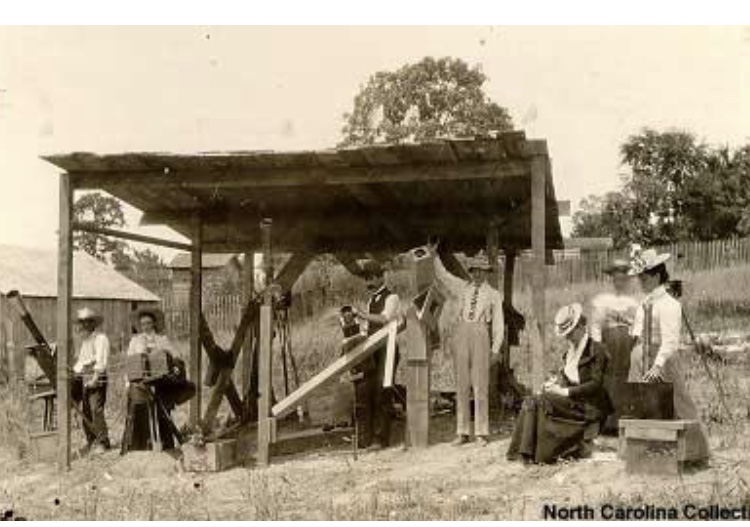
British Scientific Team at Wadesboro: Photo from the “NC Collection’s Photographic Archives”
The following information….again, provided by Tom English:
British Astronomical Association Eclipse Party at Wadesboro, NC, May 1900, courtesy NC Miscellany, UNC Libraries.
L-R: Rev. John M. Bacon, Gertrude Bacon, Nevil Maskelyne, George Dixon, and three women, not specifically identified, but most certainly Miss E. K. Dixon, Mary Elizabeth Woolston, and Ada Mary Maskelyne, the magician’s wife.
The BAA set up their station adjacent to the Princeton party led by Charles A. Young, at a site along what is now Brent Street in Wadesboro. Maskelyne, a famous London magician, brought his kinematograph and used it to make the first successful movie of an eclipse – the device is in front of him in the photo.
The Bacons had taken an earlier version of this camera to India in 1898 and used it to film that eclipse, but the film was stolen before it could be developed. John Mackenzie Bacon was a noted aerialist who once observed a the Leonid meteors from a balloon. His daughter Gertrude was also an aeronautical pioneer and a writer. Her biography of her father, Record of an Aeronaut, includes an account of the Wadesboro trip.
George Dixon was an organ designer, and Miss Dixon is likely his sister. There was one additional member of the BAA party not shown in the photo (perhaps he took the picture?) – David Hadden of Alta, Iowa, who joined them on eclipse day.
Hadden was a pharmacist and a Fellow of the Royal Astronomical Society who contributed solar observations to thePublications of the Astronomical Society of the Pacific and Popular Astronomy. The BAA account of the Wadesborough trip and the eclipse can be found in the official BAA report of the 1900 eclipse, compiled by Walter Maunder.
The US Naval Observatory Station at Pinehurst
A. N. Skinner, Professor of Mathematics at USNO, spent 2 days in April 1900 in Southern Pines, NC, searching for an observing site. He eventually selected Pinehurst, after James W. Tufts, of Boston, MA, who owned several hotels and cottages in Pinehurst, invited the USNO to set up their station there. C. D. Benbow, the general manager of the Tufts properties, worked out the details. The Lenox Hotel was kept open for the party. (Pinehurst was a resort destination for northerners in 1900, but by May the “season” was over and the accommodations were closing down.) Their observation site was 800 feet southeast of the Carolina Hotel which is still a popular Pinehurst resort.
Skinner & USNO Assistant Astronomer Theo I. King arrived in Pinehurst on 3 May. They sighted a meridian line that evening. The next day they staked out a plan for the expedition site structures. Their apparatus/instruments arrived on the 8th and the rest of their observing party shortly after, and the group got to work setting up their station, so that all was in order several days before the eclipse. A temporary telegraph line was established on the 12th so that they could get noon time signals from the USNO. Drills were conducted several times per day during the 3-4 days before the eclipse.
The primary focus of the USNO observing plan was spectral studies of the chromosphere and corona, and large format imaging of the corona using a 40-ft focal length camera. A similar 40-ft. instrument was set up at the Naval Observatory’s other station in Barnesville, GA. In addition to a team of USNO staff, the station included observers from Johns Hopkins, Yale, the University of Wisconsin, and Cincinnati Observatory. Details about the observers and equipment for these stations (and others) can be found in the expedition reports.
Nearby, in Southern Pines, a less technical eclipse party of observers from Carleton College (Northfield, MN) and Guilford College (Greensboro, NC) were stationed on the peach farm of Mr. John Van Lindley, a Guilford College Trustee. H. C. Wilson, the assistant editor of Popular Astronomy, which was published out of Carleton, was the primary astronomer at this site, and his report of the expedition in the June issue was the first formal publication of results from the May 1900 eclipse.
Comments:Comments Off on The 1900 Total Solar Eclipse From Wadesboro, North Carolina, And Also A Transcribed Report Of The Attendance By The Citadel, The Military College of South Carolina: All Information And Data Provided By Tom English.







 rogerivester.com
Recent Comments