“Snow in Meteor Crater for an ice effect as the sun was starting to set.” James Yeager
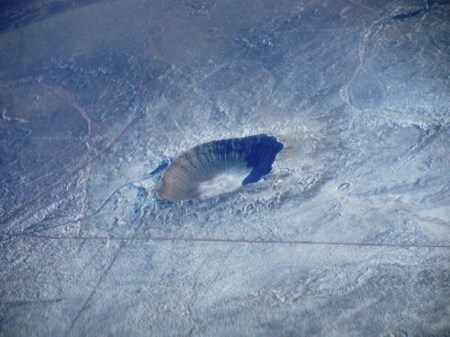
“Snow in Meteor Crater for an ice effect as the sun was starting to set.” James Yeager
Observing with a purpose for me, is having an objective or agenda for observing. This might be to observe the Messier catalog, the Herschel-400 list or even some personal lists of objects. If you can’t decide what to observe: The Astronomical League has plenty to consider.
Some of my observing notes, pencil sketches and deep-sky articles as following:
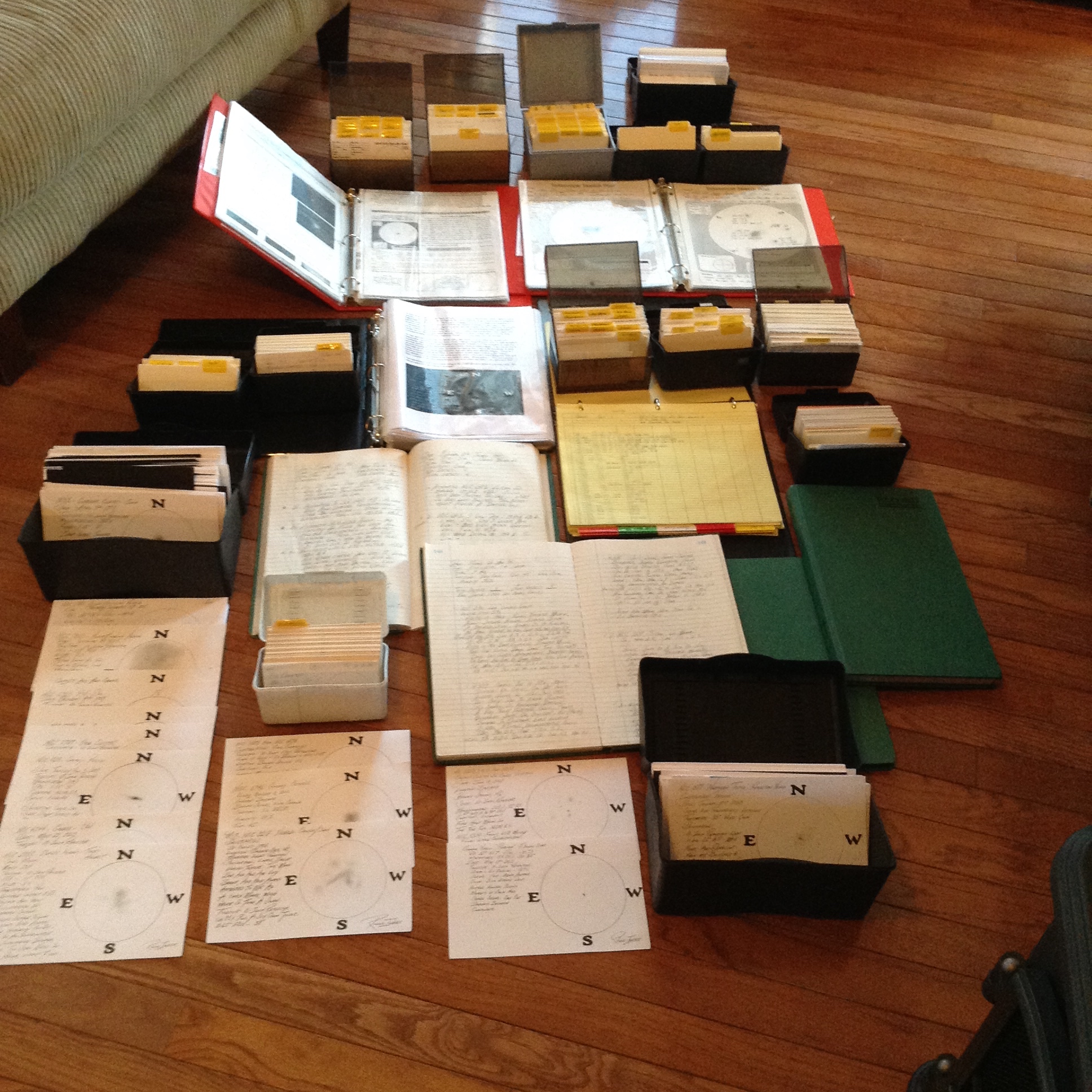
When I purchased my first serious telescope in March 1977, one of first observing reference books was “The Finest Deep-Sky Objects” by James Mullaney and Wallace McCall. This book featured observing notes for double stars, galaxies, nebulae, star clusters, and a few prominent red stars.
“1,000+ The Amateur Astronomer’s Field Guide to Deep-Sky Observing” by Tom Lorenzin:
In the early 90’s I began using “1000+” almost exclusively. I really liked how Tom documented his observations, which were relatively brief, but saying so much.
Visual observing for me is attempting to see the faintest of detail in deep-sky objects, then recording in words, and for some objects, making a pencil sketch.
Roger Ivester
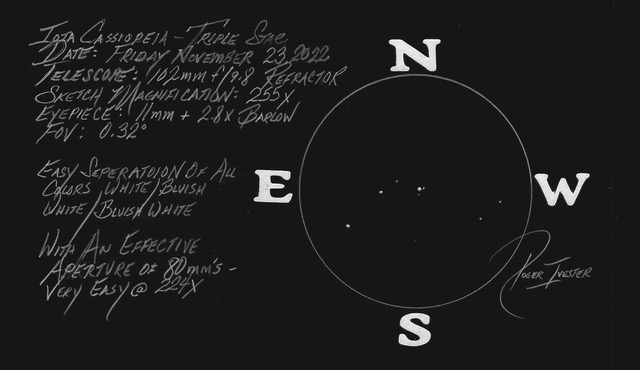
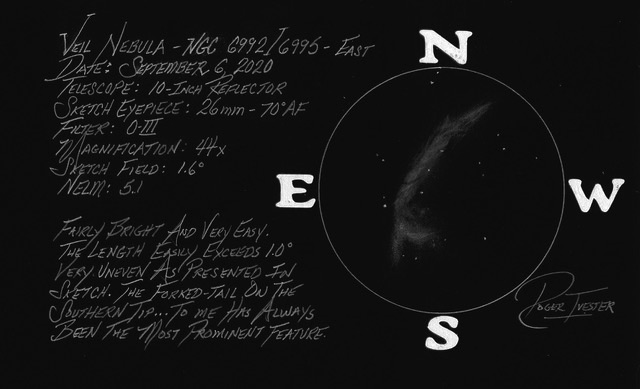
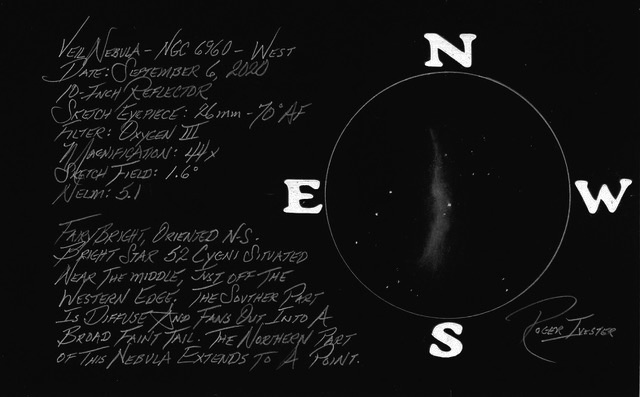
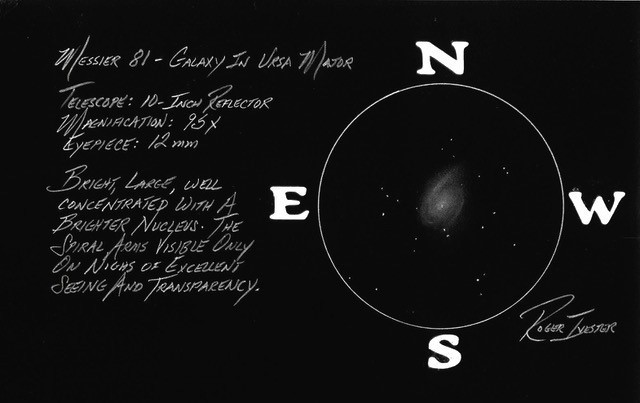
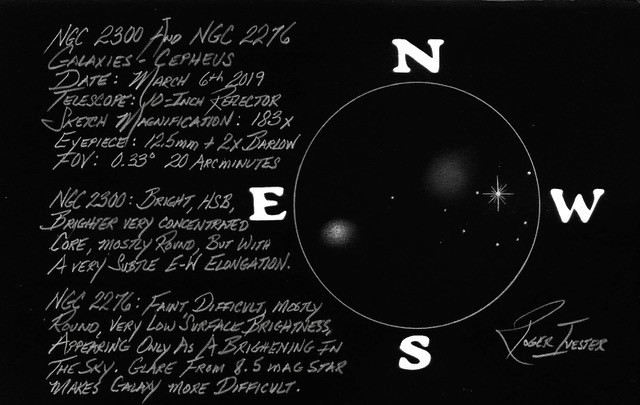
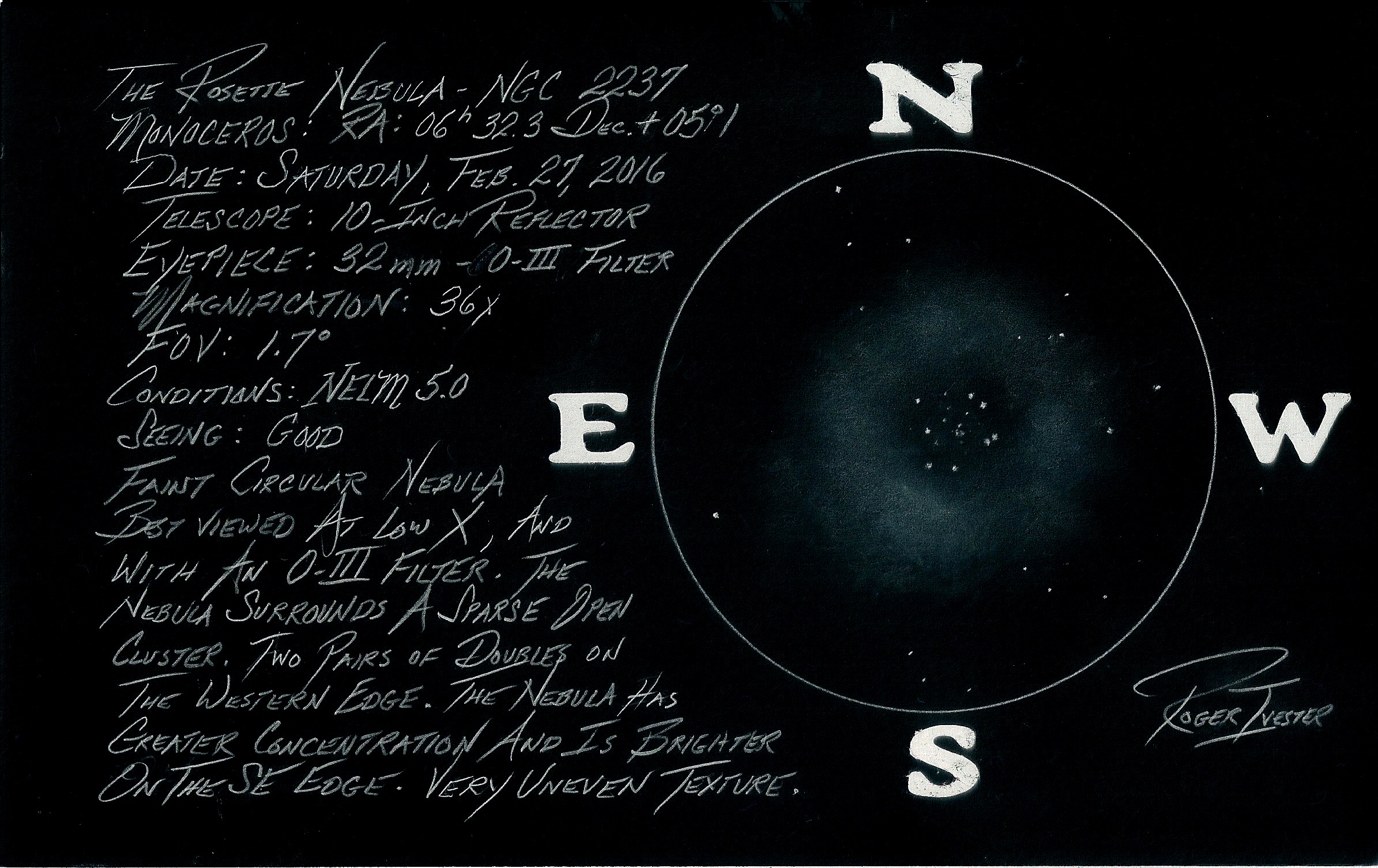
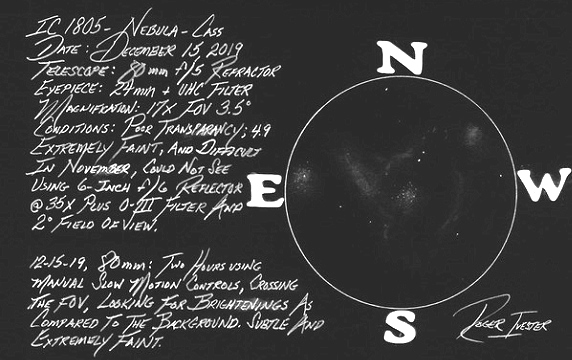
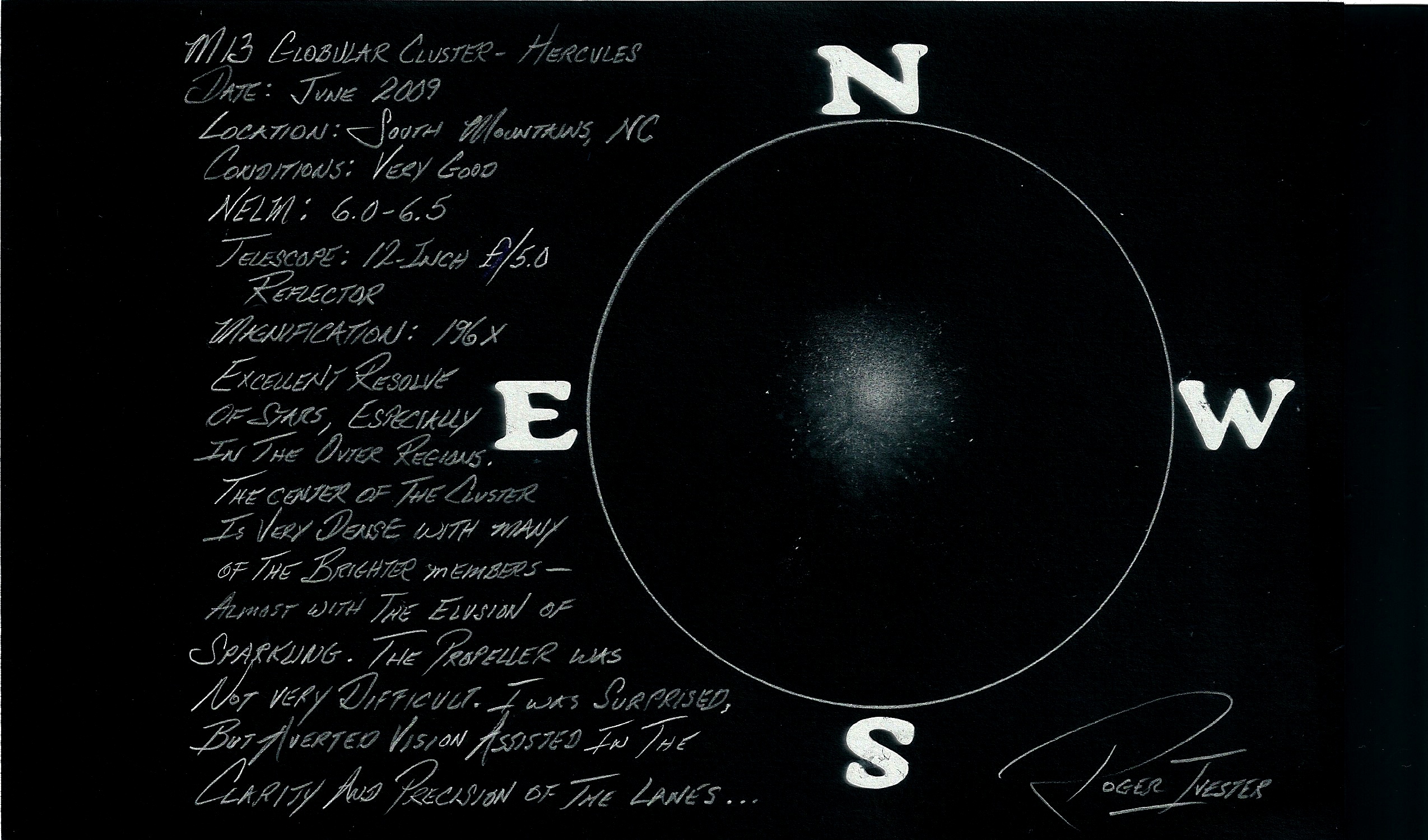
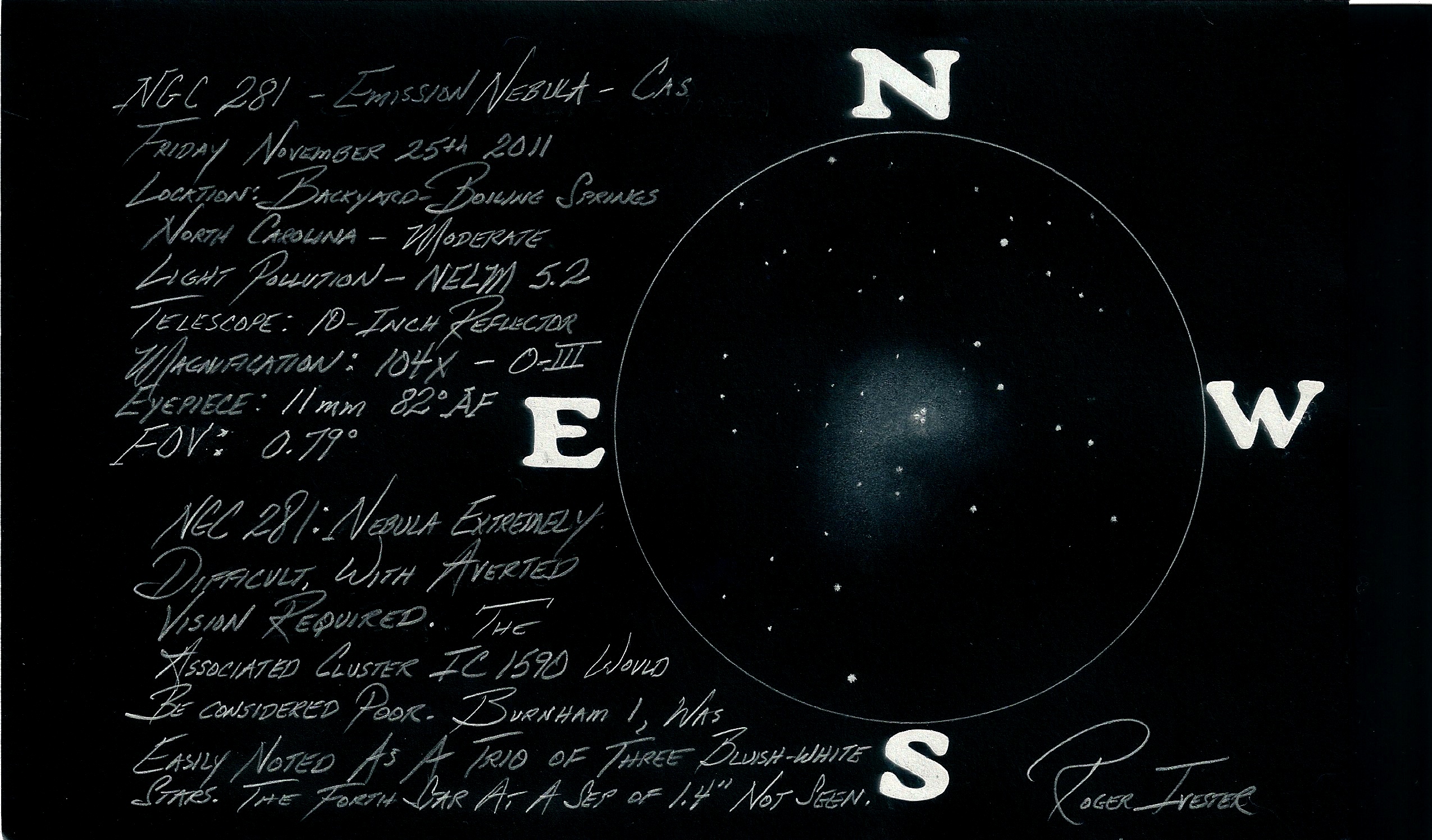
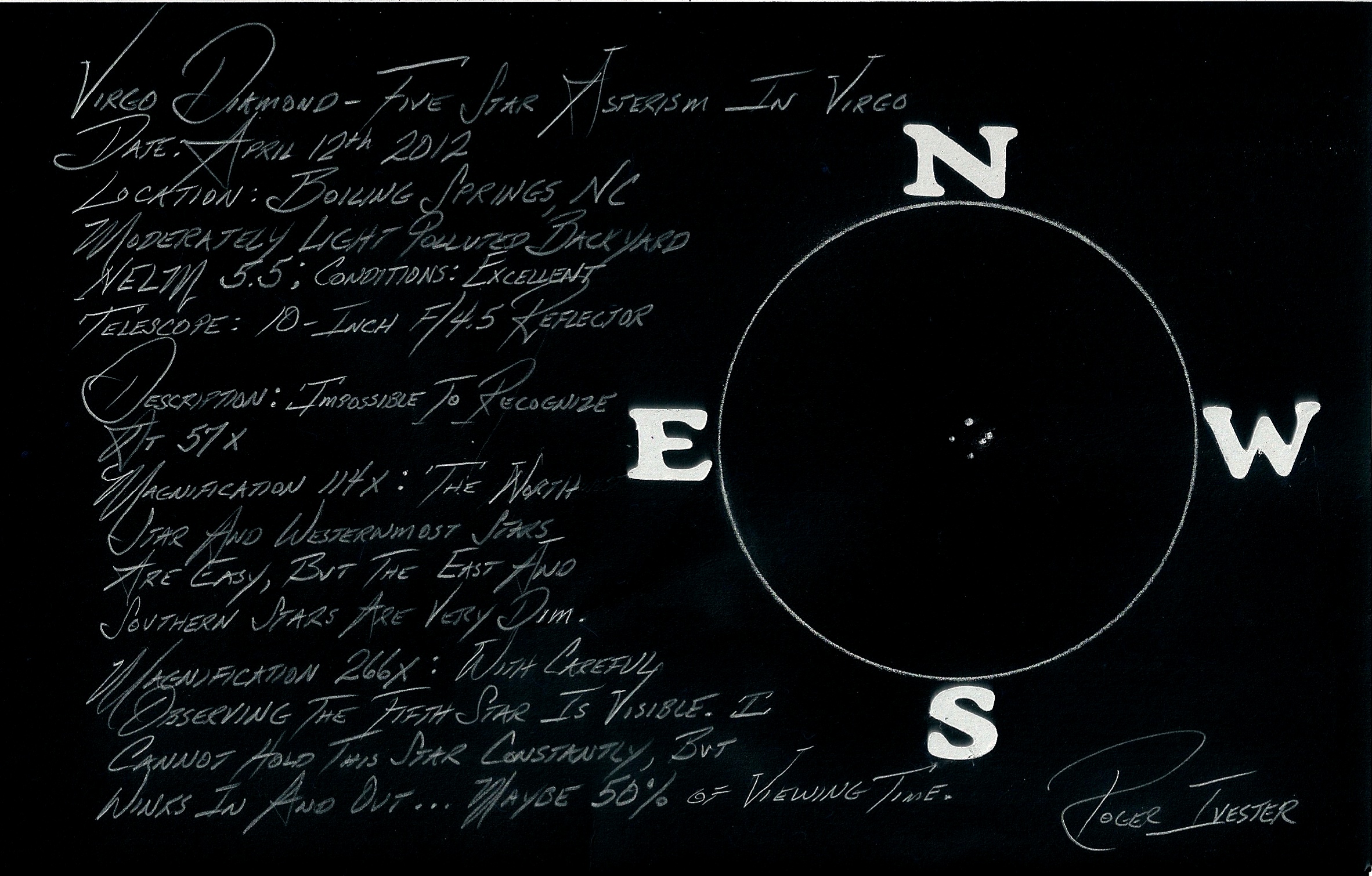
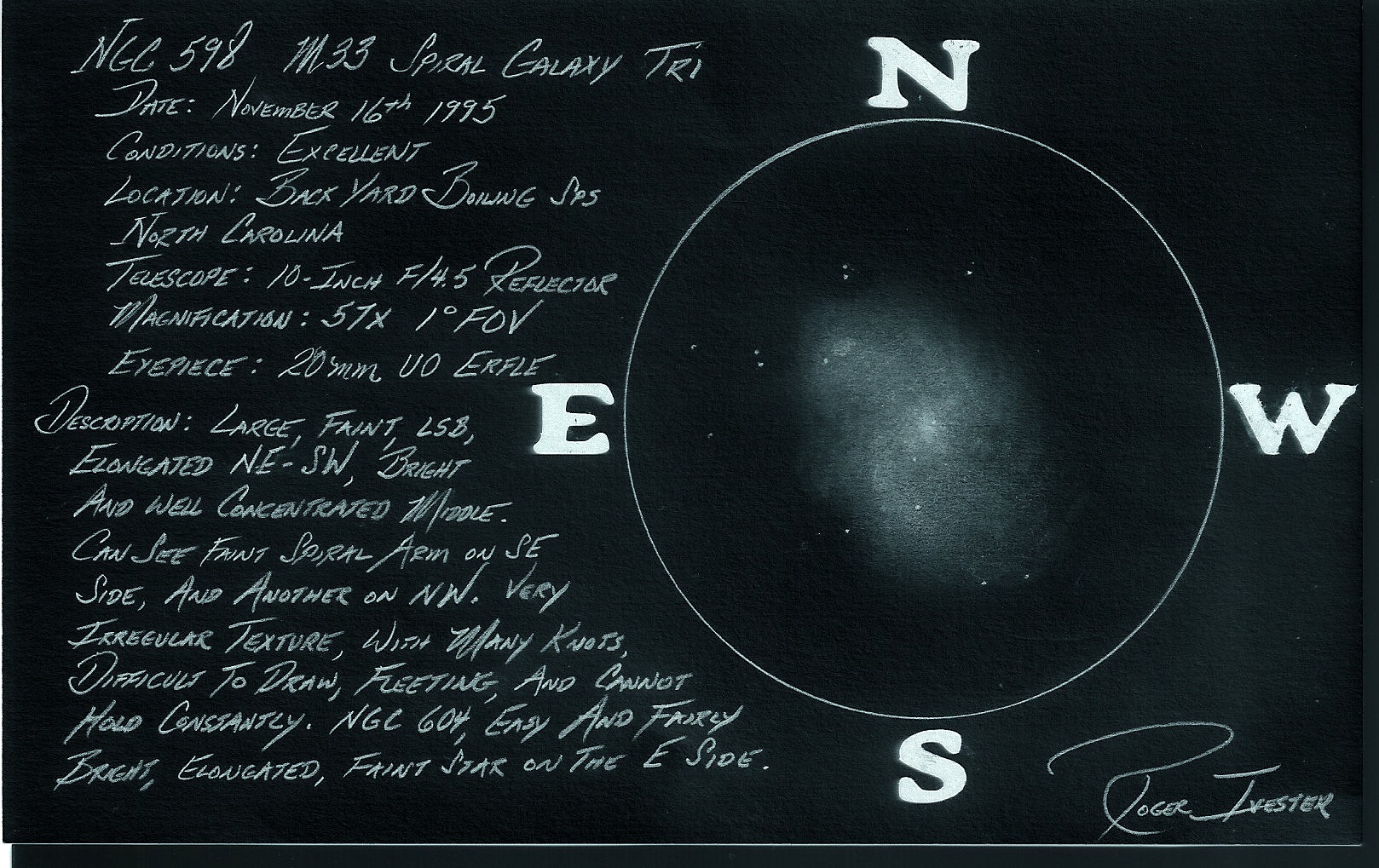
An few examples as following of my pencil sketches and observing notes:
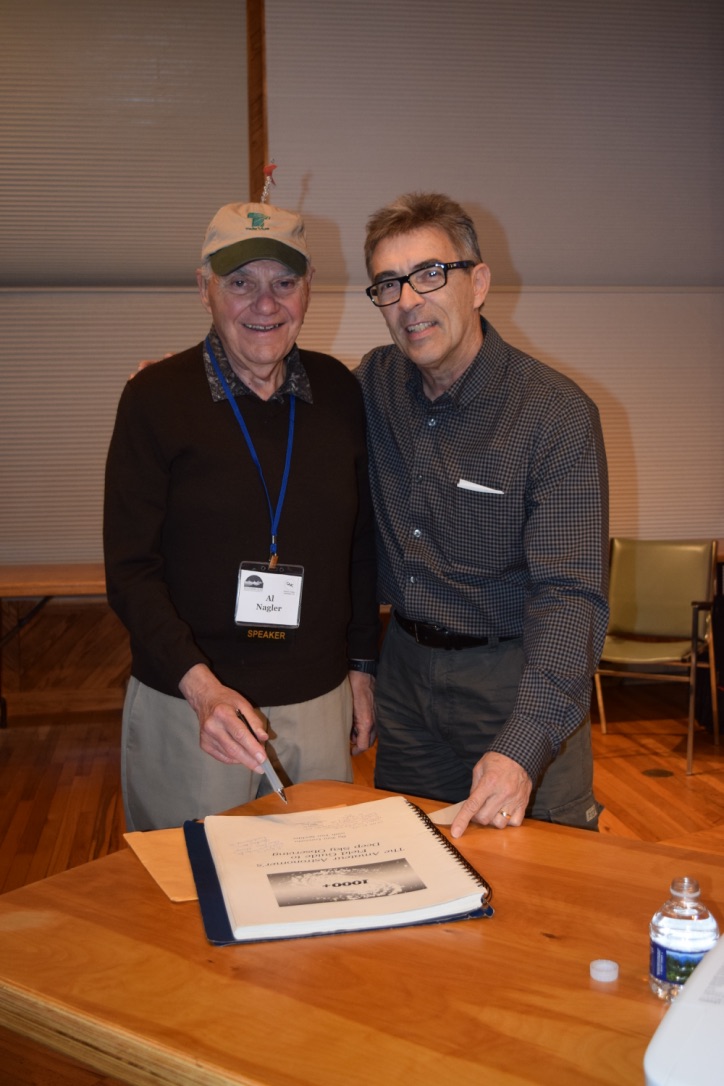
The late Al Nagler (optical engineeer, founder and owner of Televue Optics) and myself at the 2017 Southern Star Astronomy Convention in Little Switzerland, North Carolina.
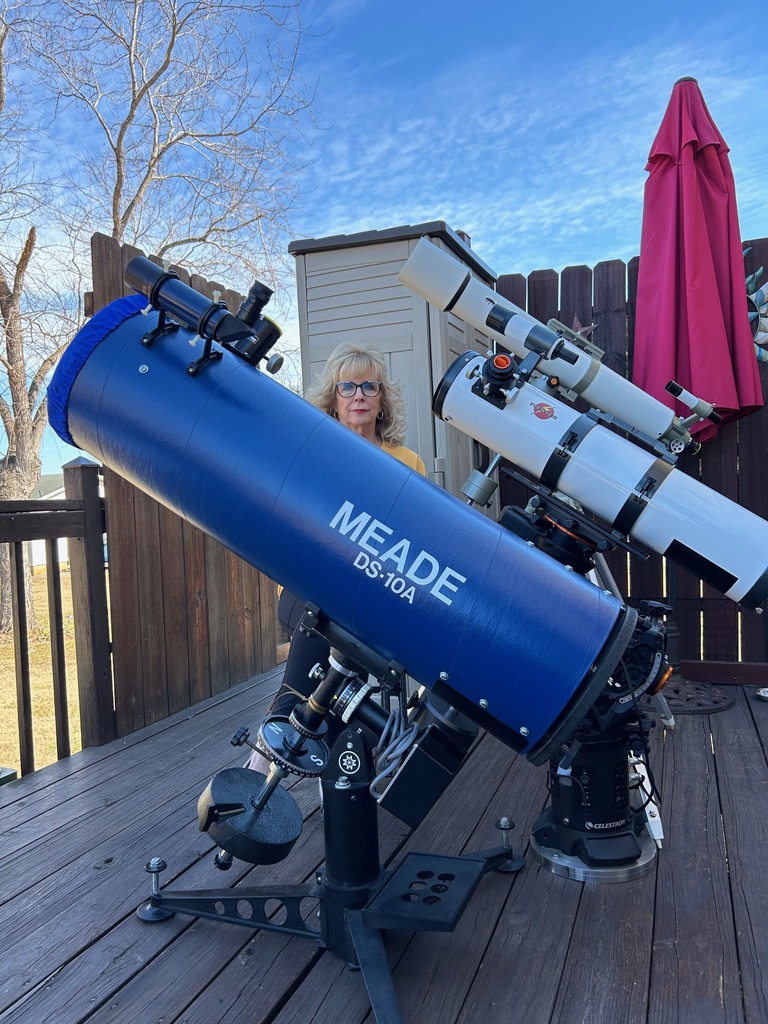
My 10-inch f/4.5 EQ Model DS-10A (pictured below, and sold in February 2026) as it had become just too large and heavy for me to use on a regular basis. However, the 10-inch served me well for 34 years and ~2,000 hours under a night sky.
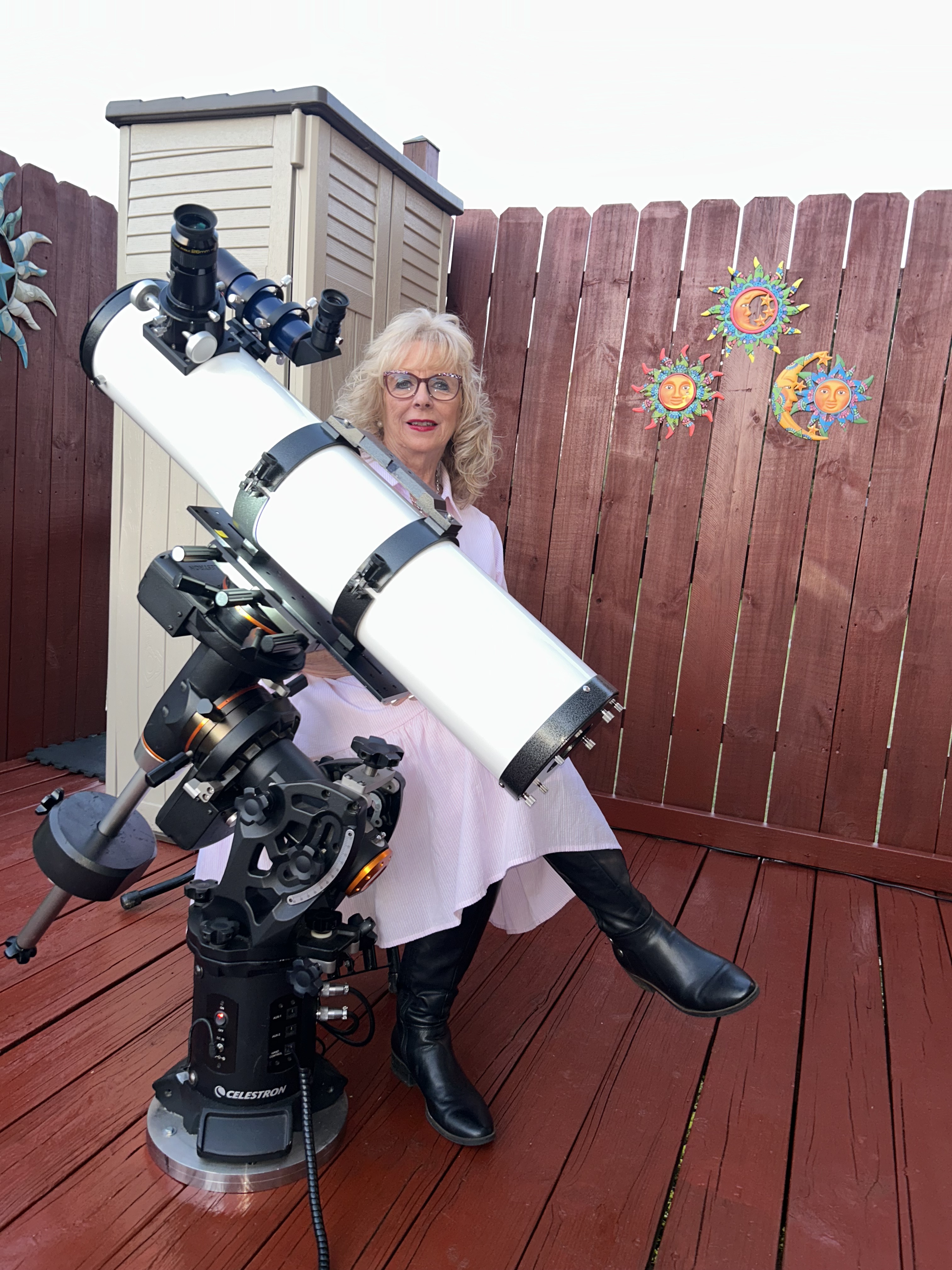
6-inch f/6 Newtonian (pictured below) is “now”my largest telescope since February 2026.
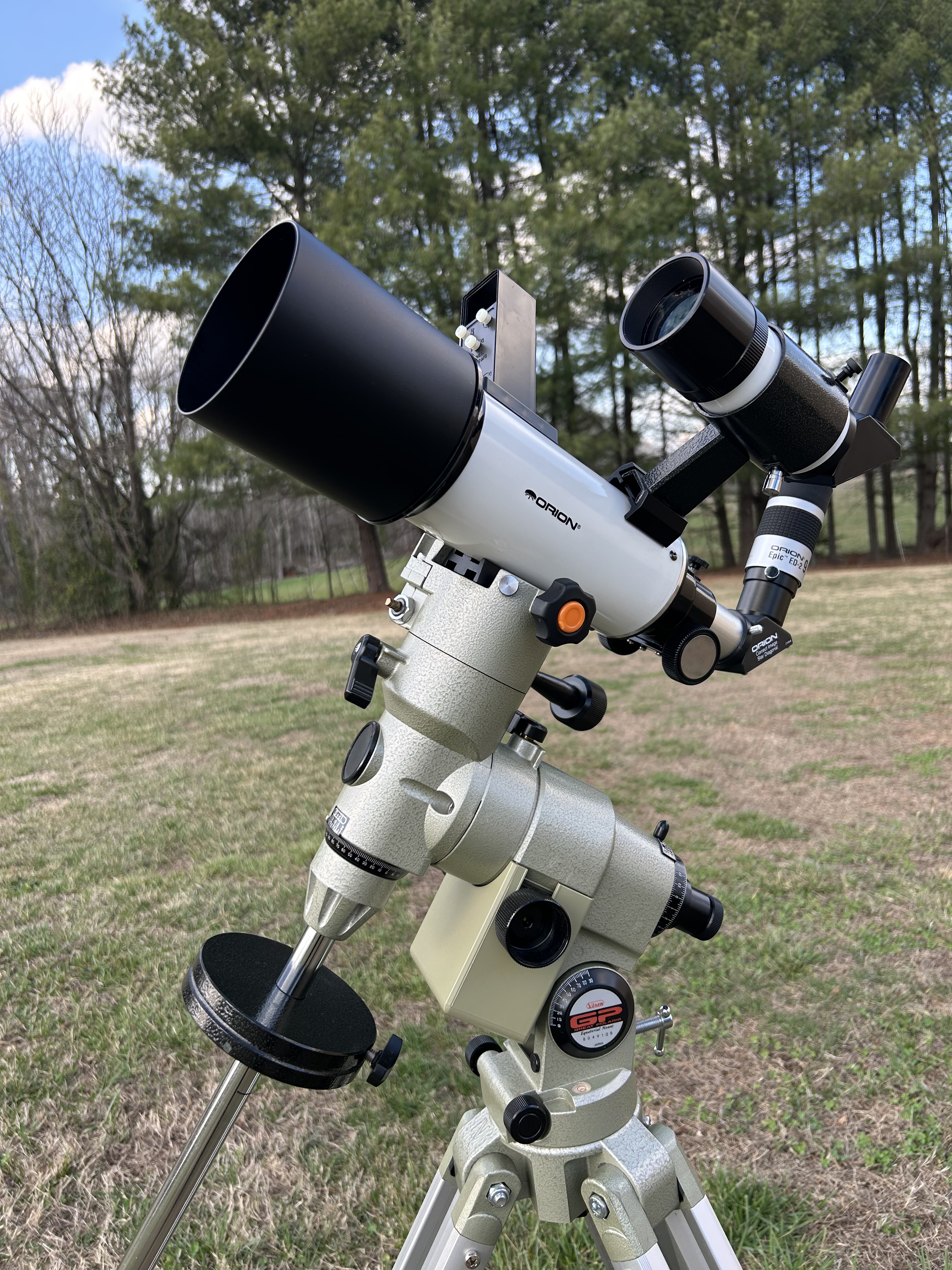
The following 80mm f/5 refractor was a birthday gift to me from my son, Brad…so this is a special telescope.
Observer’s Challenge Report: An international monthly report that allowed participation by any serious deep-sky observer from anywhere in the world.
Due mostly (in-part) to Sue French’s notoriety, writing “Deep-Sky Wonder’s” S&T magazine for 20 years: The Observer’s Challenge report has received over 200,000 world-wide .pdf downloads through (March 2026). The following link is still available for all to use as a reference for about 250 deep-sky objects.
All of the 185 monthly reports are included. We decided to end the report with the June 2024 edition. It was time…
https://rogerivester.com/category/observers-challenge-reports-complete/
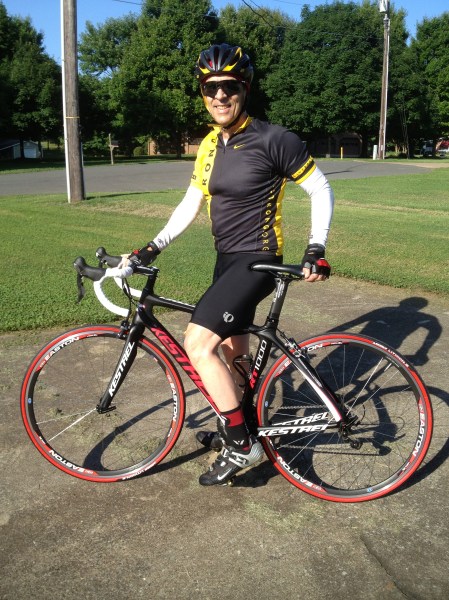
My other interest is cycling, with about 135,000 miles to-date. I began riding in June 1979, but never even thought that one day I’d be able to ride 100,000 miles.
The day I logged 60,000 miles, for the first time…it occurred to me that 100,000 miles was possible. However, from my very first ride in June 1979 it would take me 29 years to achieve this feat, which occurred in October 2009.
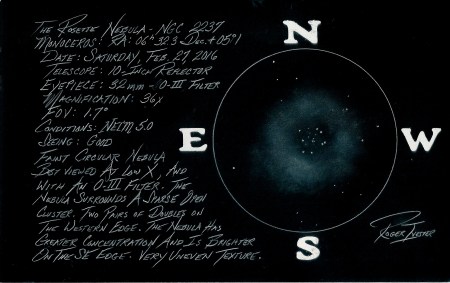
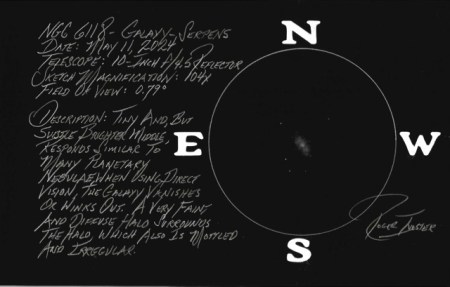
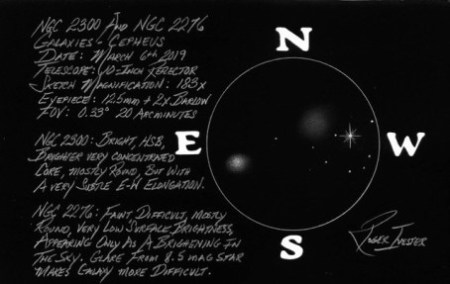
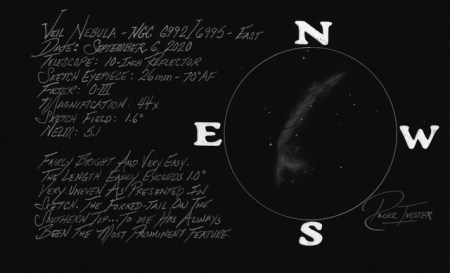
A few examples of my pencil sketches as following which were made at the telescope eyepiece without any embellishments or computer enhancements.
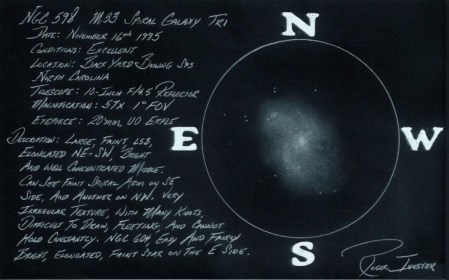
I located and recognized immediately using a 32mm eyepiece @ 36x with a 1.8º FOV. The first star I noticed was double star h1470, with the primary being a ruddy or rust color.
When increasing the magnification, using a 20 mm eyepiece @ 57x with a 1º FOV, at least eight or more pairs of double stars, making a circle could be seen and separated. This beautiful ring of doubles are framed very nicely within the 1º field. A fabulous and most interesting asterism. Dimensions: 40 x 40 arc minutes.
A pencil sketch by the writer using a blank 5 x 8 notecard with the colors inverted using a scanner.

Now for the complete story of Chaple’s Arc, and how the Cygnus Fairy Ring came to being…
The following is an excerpt from an article by Glenn Chaple and posted by “Skyscrapers, Inc.”
“Forgive me for the apparent ego trip, but this month I’m going to introduce you to an amazing little asterism called “Chaple’s Arc.” I stumbled upon the Arc in the mid-1970s while looking for the double star h1470. Instead of one double, I found four arranged in an arc 1/2° across. So smitten was I by its extraordinary appearance that I eventually wrote about it in the September 1980 issue of Deep Sky Monthly. New York amateur astronomer John Pazmino viewed the group and dubbed it “Chaple’s Arc.”
A quarter century later, I decided to introduce the Arc to a much larger audience by featuring it in my “Observing Basics” column in Astronomy. To my amazement, I saw the same group described in the British magazine Sky at Night. The writer called it the “Fairy Ring.” Uh-oh! Had I missed something?
After a little detective work and an assist from Sky and Telescope’s Sue French, I learned that the Arc had been seen by Utah amateur astronomer Kim Hyatt in the early 1990s. Like me, he found it during a search for h1470. Because he was using a larger telescope than I had, he was able to view some faint pairs that, along with my four, formed a ring of double stars. Not knowing about Chaple’s Arc, he and a friend christened it the Fairy Ring.” Glenn Chaple/Skyscrapers, Inc.


NGC 752 – Open Cluster in Andromeda
Date: October 27th 1994 – Location: North Carolina Foothills
Conditions: Poor; NELM 4.5 – Telescope: 10-inch f/4.5 reflector – Magnification: 20mm Erfle EP @ 57x FOV: 1º
Notes: Naked eye object with a dark sky. A very large open cluster easily fills a 1º eyepiece field of view. Approximately 75 or more stars could be counted. Two prominent bright stars, one being yellow and the other reddish or rust lies to the SSW. This cluster is mostly irregularly round with many chains of stars crossing throughout.
NGC 7243 – Open Cluster in Lacerta Date: September 30th 1994 – Location: North Carolina Foothills
Conditions: Fair; NELM 5.0 – Telescope: 10-inch f/4.5 reflector – Magnification: 20mm Erfle EP @ 57x FOV: 1º
Notes: Very irregularly shaped, fairly loose open cluster. Double star Struve 2890 with both stars at mag 8.5 lies in the center. A dark lane crosses the central region.
NGC 7789 – Open Cluster in Cassiopeia – Date: December 20th 1994 – Location: North Carolina Foothills
Conditions: Good; NELM 5.5; Telescope: 10-inch f/4.5 reflector; Magnification: 16mm University Optics Konig EP @ 71x and FOV: 0.92º
Notes: Circular chains or patterns of stars. This cluster is large, very rich and condensed. Beautiful and refreshing after looking at faint objects.
Roger Ivester
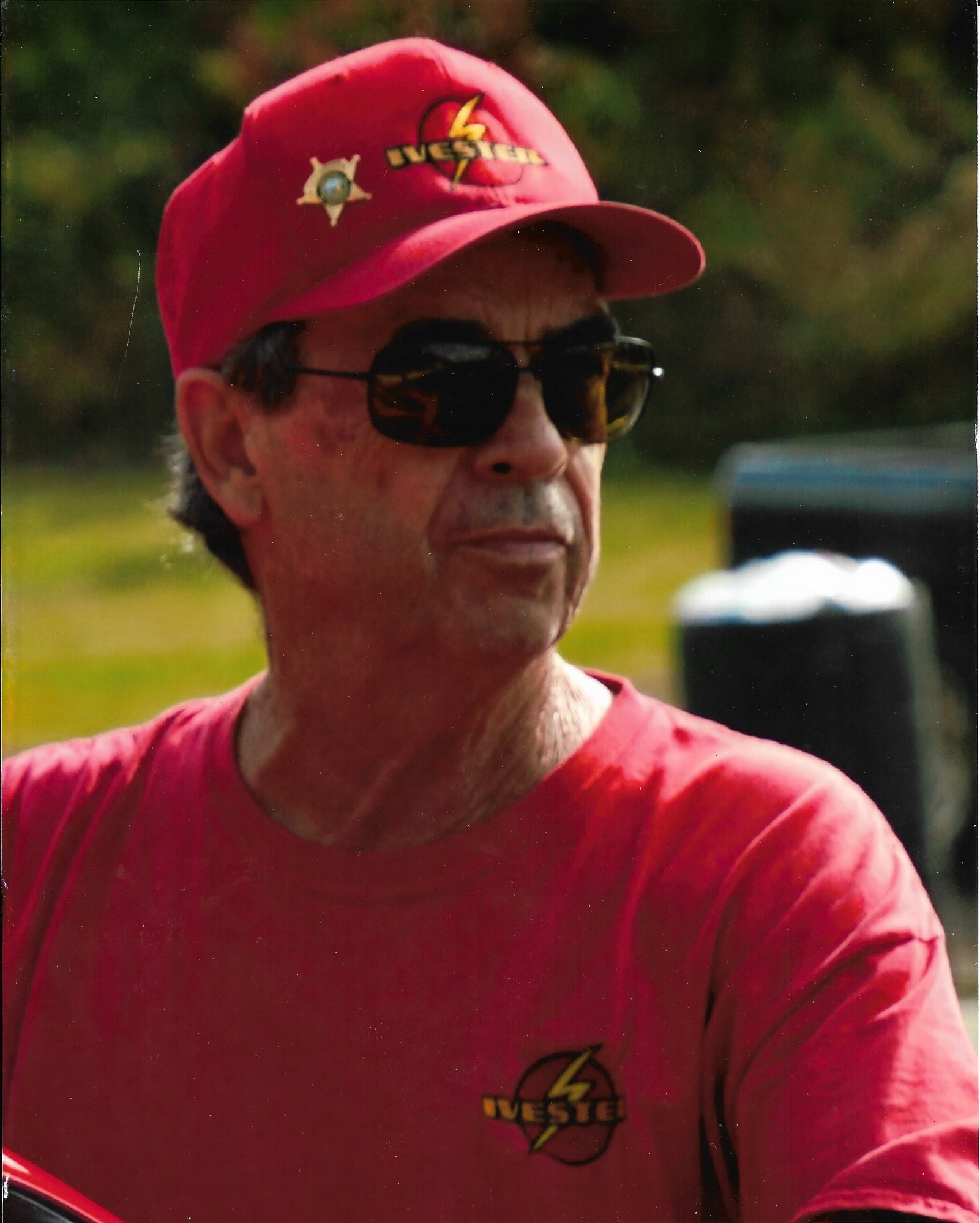
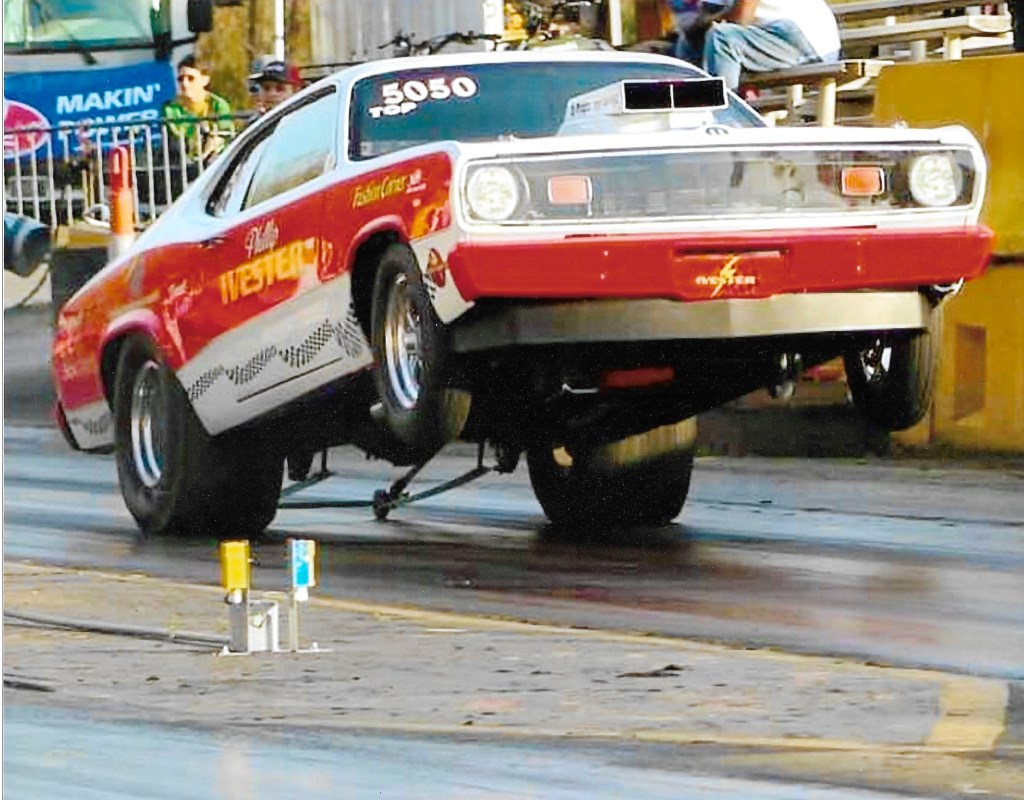
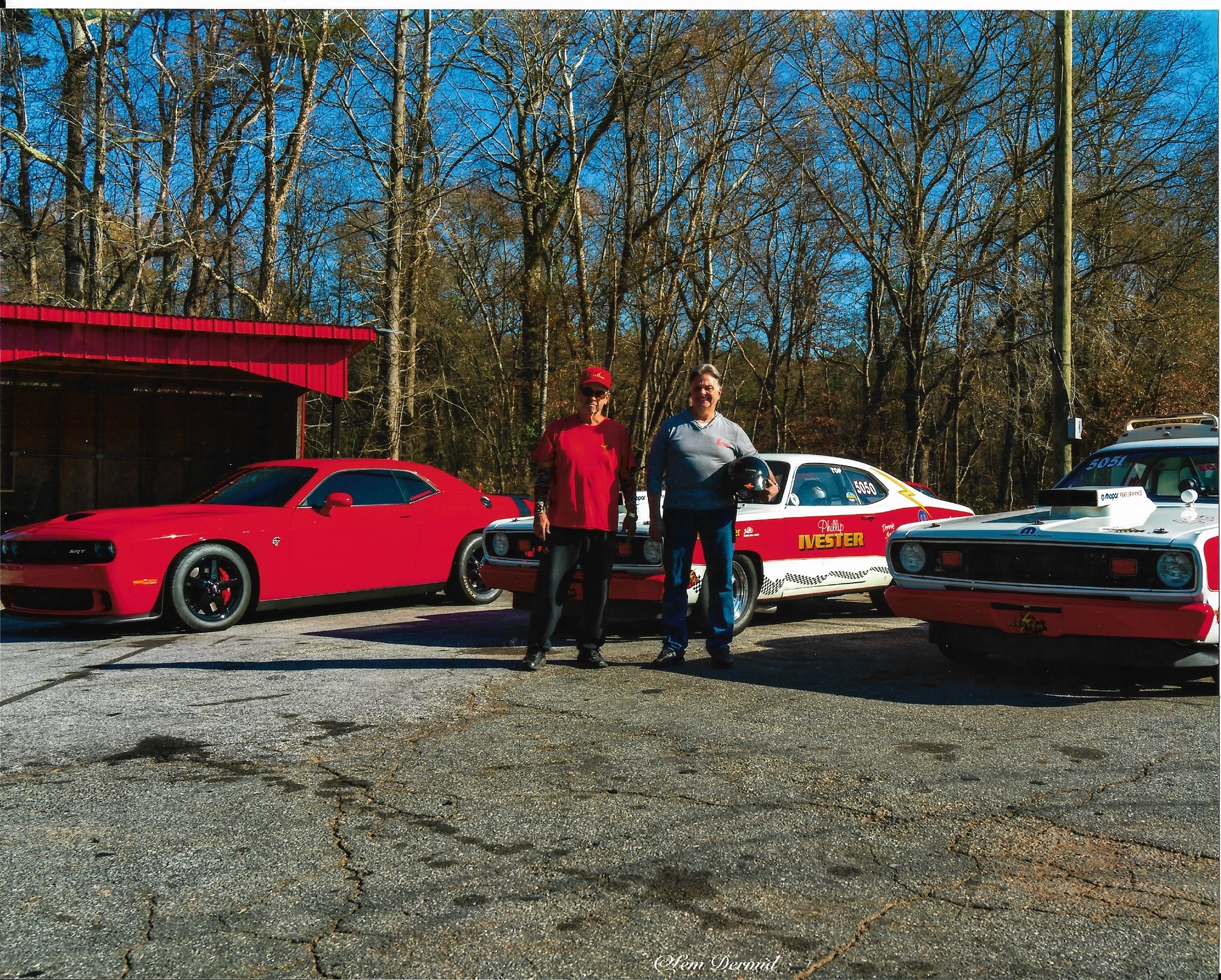
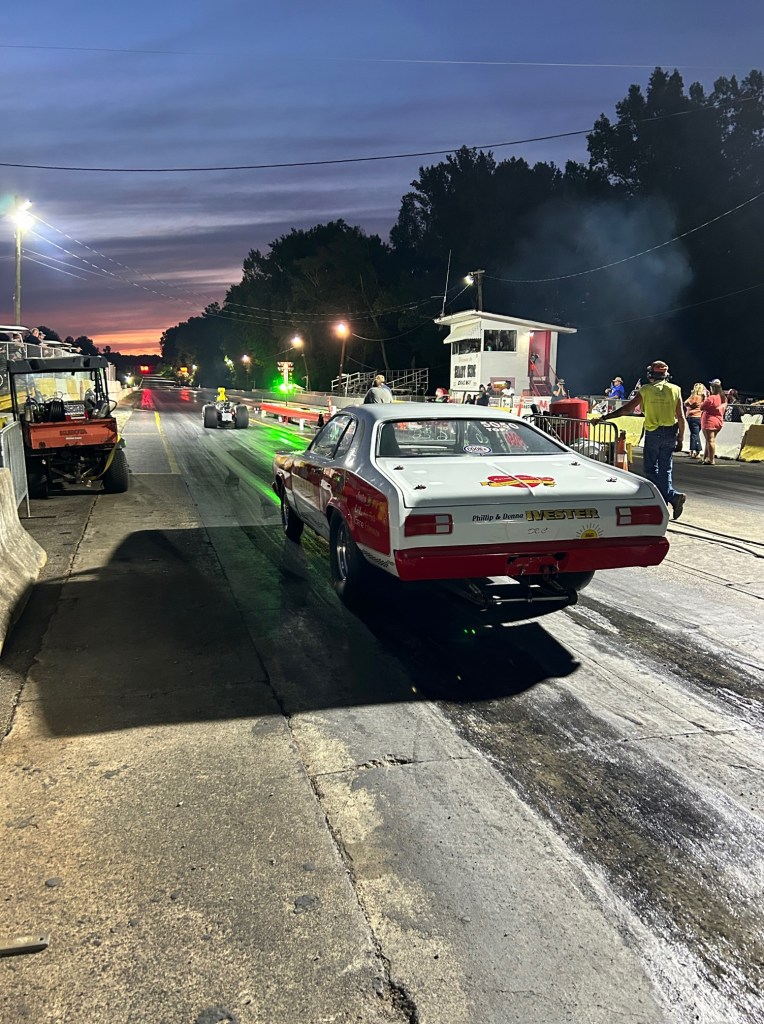
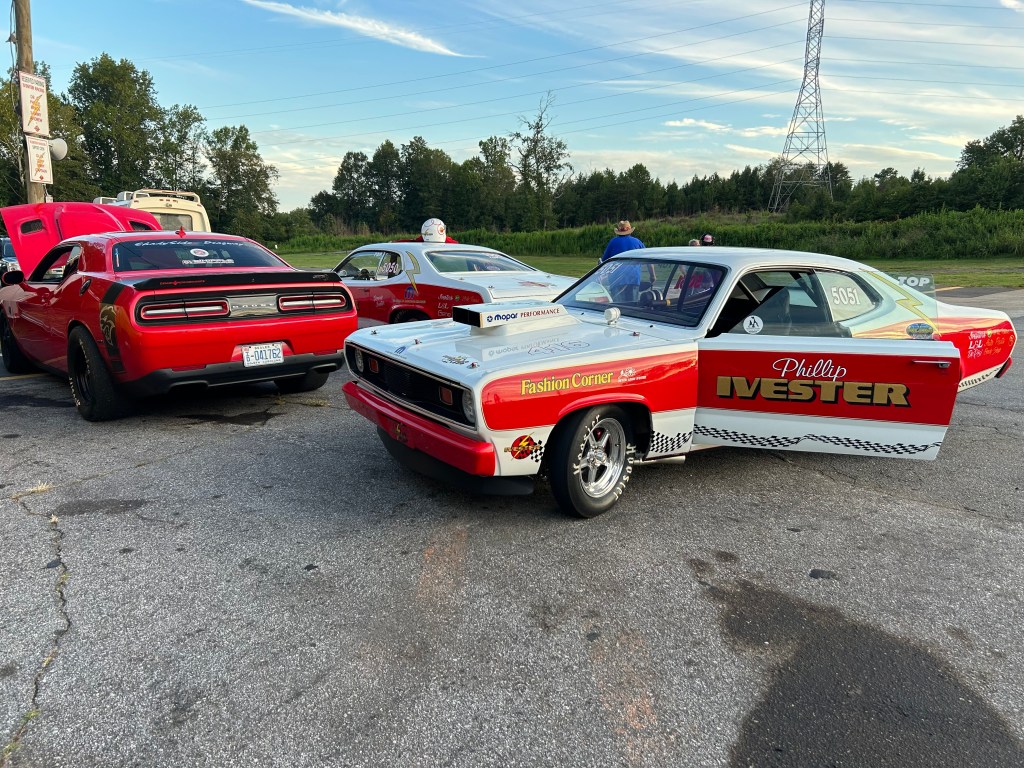
Phillip Ivester has had excellent success in drag racing, winning “an amazing” 164 events. He has also built many race engines and helped others into the world of drag racing. It’s been more than five years now when he began working with Dr. James Caserio, MD from Hendersonville.
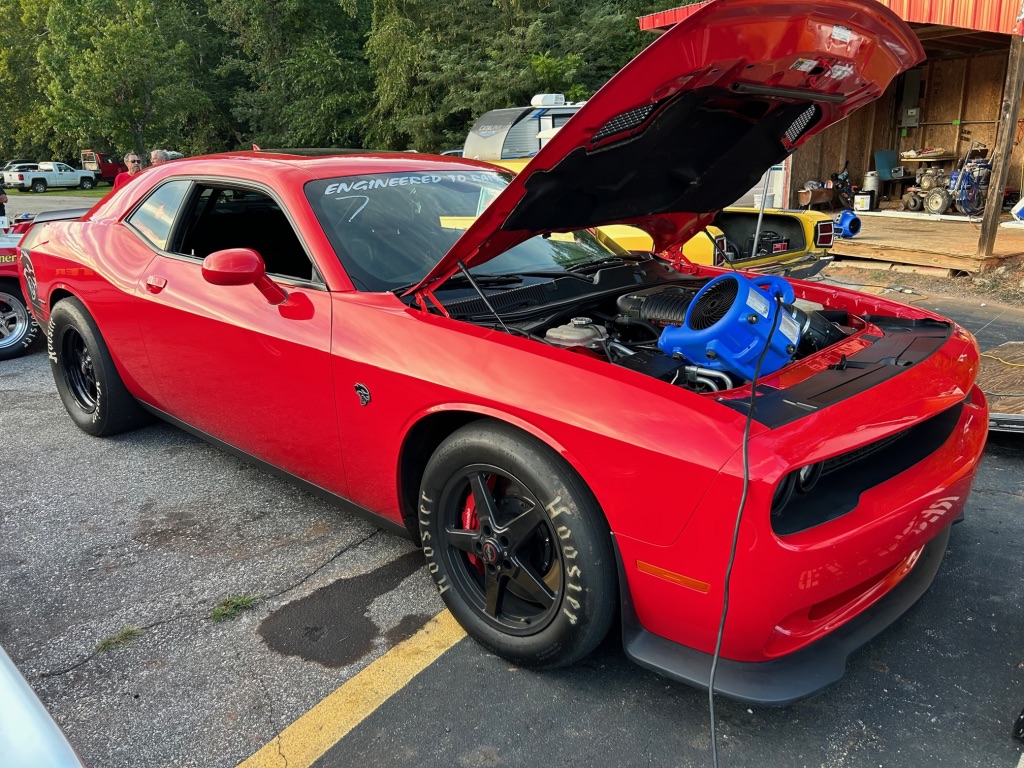
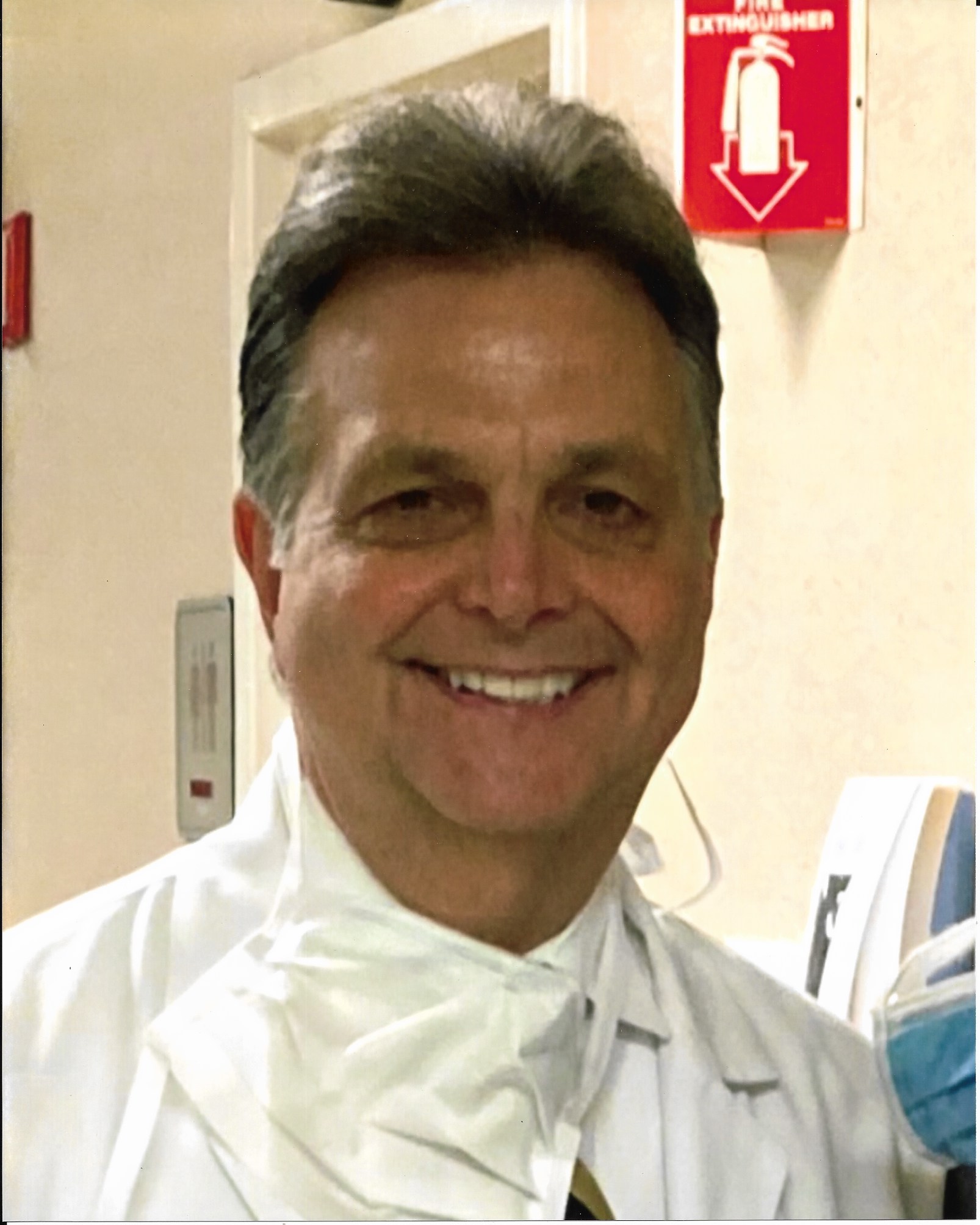
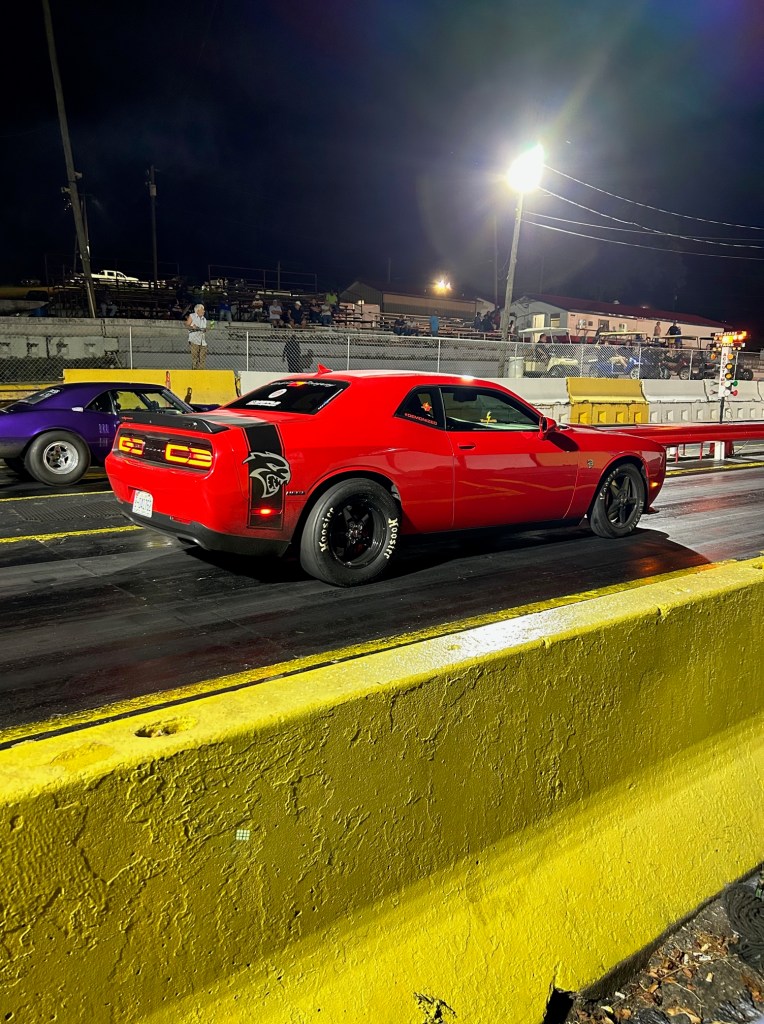
Dr C. as he’s known by had been racing for years earlier, and now no one can drive his 1350 horsepower Hellcat Challenger as well as he can. His fastest time has been 6.00 seconds at 120 miles per hour in only 1/8 mile, or 660 feet. The car with driver and fuel weighs in at a very heavy, 4650 pounds! With this amount of horsepower and weight, breakage of critical parts have and are bound to happen on occasion.
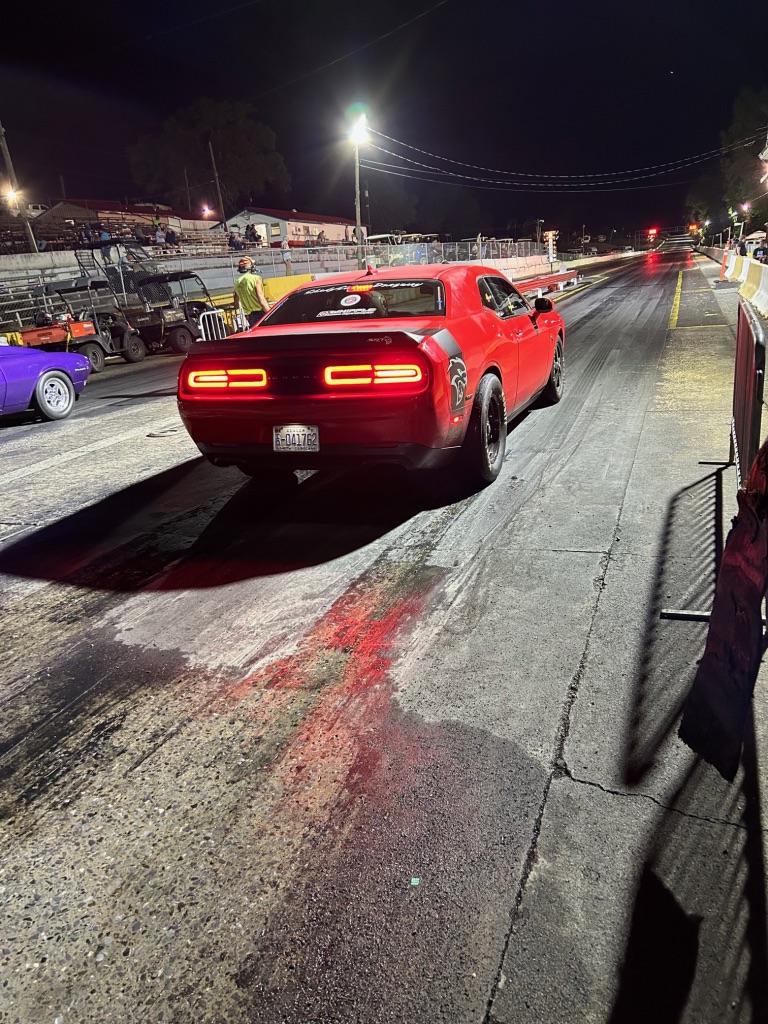
It should be noted that Dr. Caserio has “most likely” saved the lives of at least two Pro Motorcyclist, at Shady Side Drag Strip. This drag strip is located only a few miles south of Boiling Springs, North Carolina.
Back to the motorcyclists crashes:
Dr. C. knew exactly how to best treat the traumatic injuries sustained by the crashes at well over 100 MPH. His many years as a doctor and emergency room physician, served him well for these two horrific and critical injuries. And this was on site at the drag strip, providing life saving treatment on the ground…not in an emergency room!
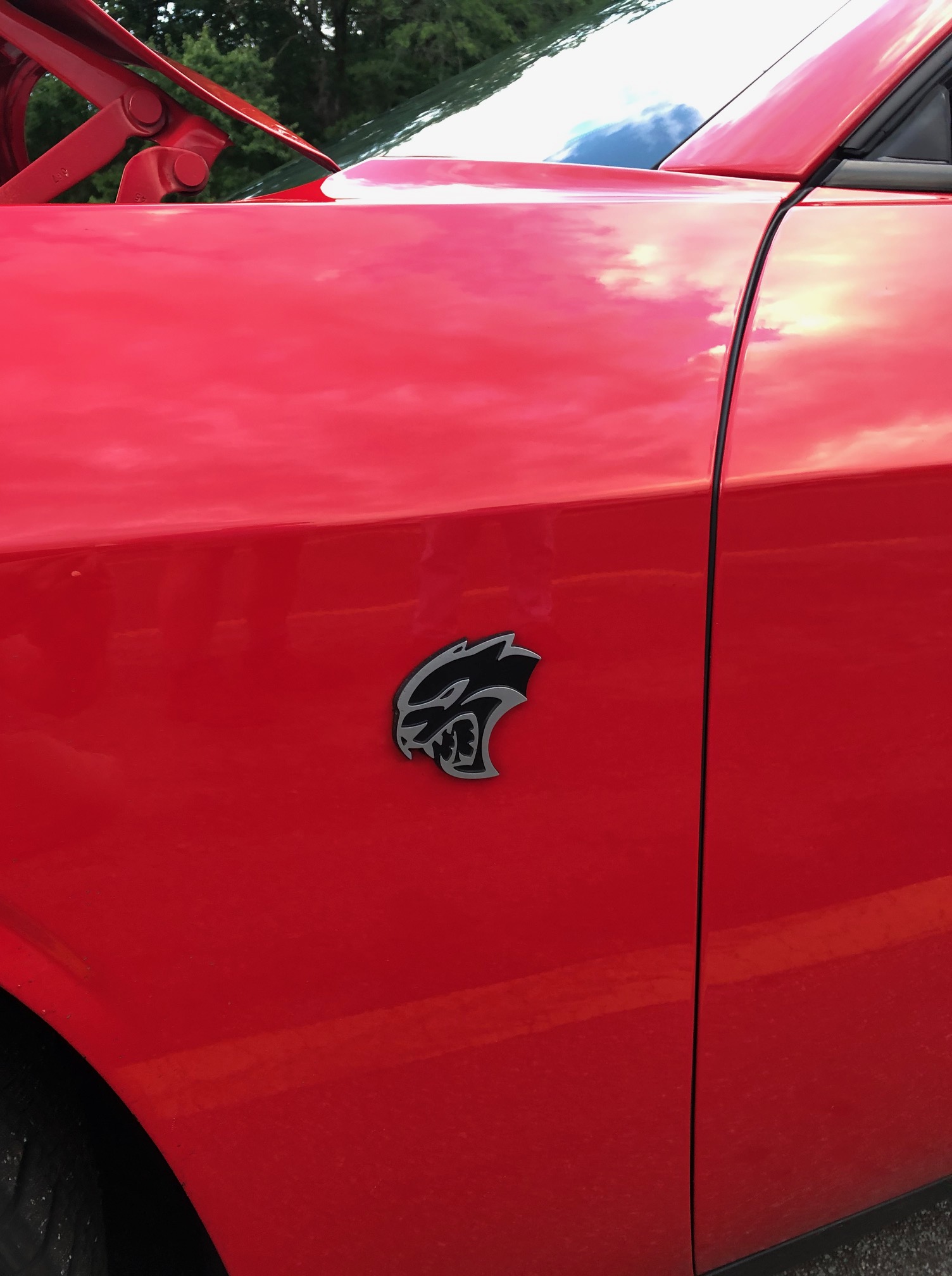
Following photo: This is not just a Hellcat, but a (Demonized Hellcat) which indicates the car has received performance modifications, and now has well over 1,140 horsepower (at the rear wheels). The engine has 1,350 HP!
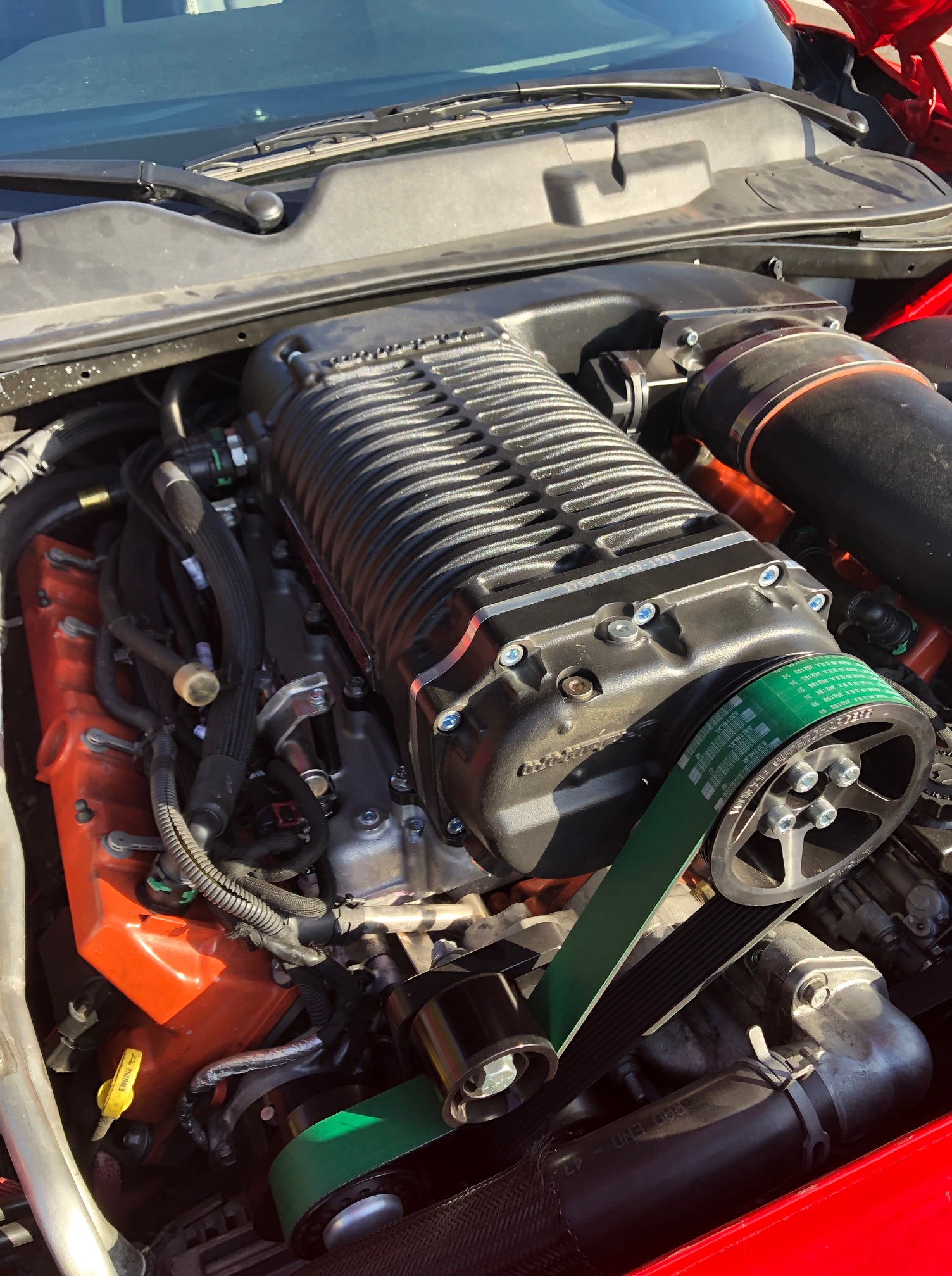
Below photo: Whipple Supercharger….not your standard supercharger!
Thursday night, March 31st 2022 at Shady Side Dragway in Boiling Springs, North Carolina:
Dr. C. ran his fastest E.T. (elapsed time) and miles per hour with at an incredible 6.00 flat, at 120 in 1/8 mile or only 660 feet. Again, keep in mind, this car weights over 4,600 pounds with driver and fuel.
Dr. C and Phillip work together to insure that the Hellcat is always ready to race…
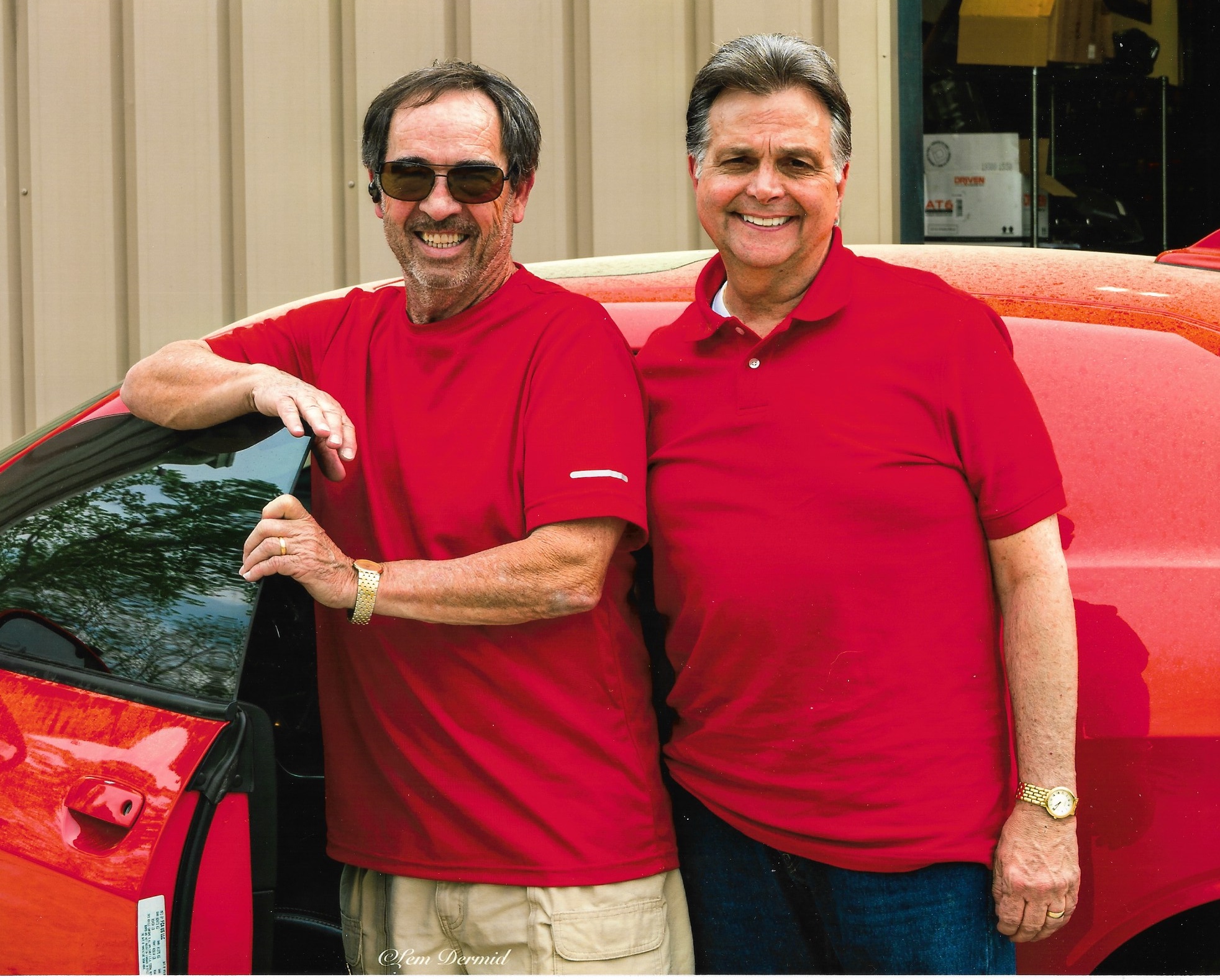
Phillip Ivester
Below: Dr. C in his life as a doctor of internal medicine, or his day job and sometimes night job.
Dr. C and his Hellcat with Phillip and both of his race cars.
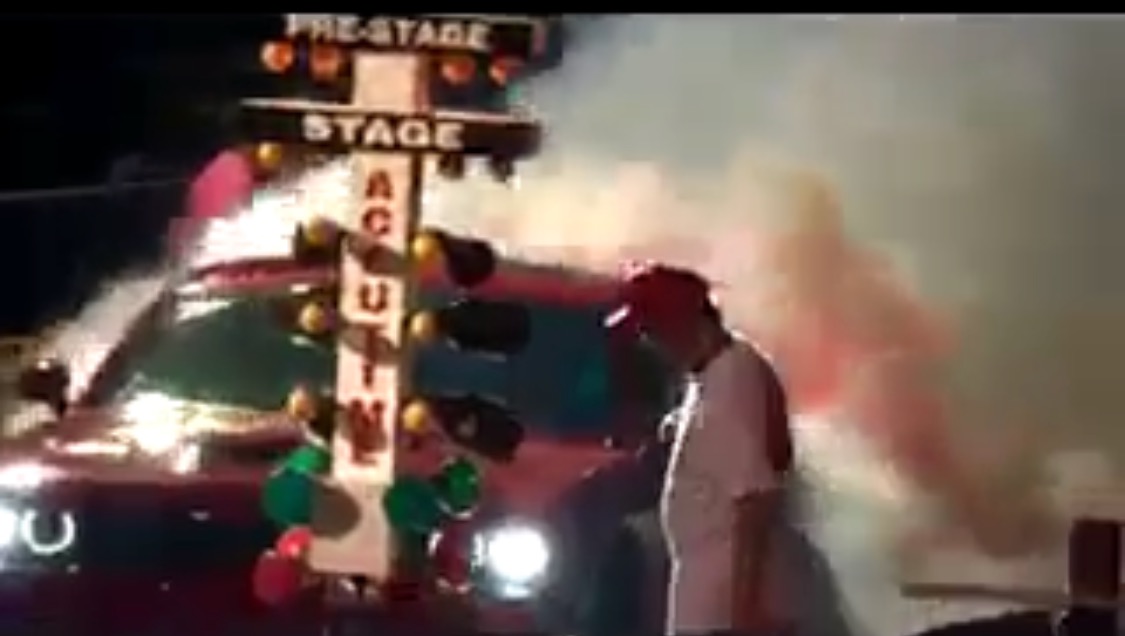
Heating up the rear tires for better traction…
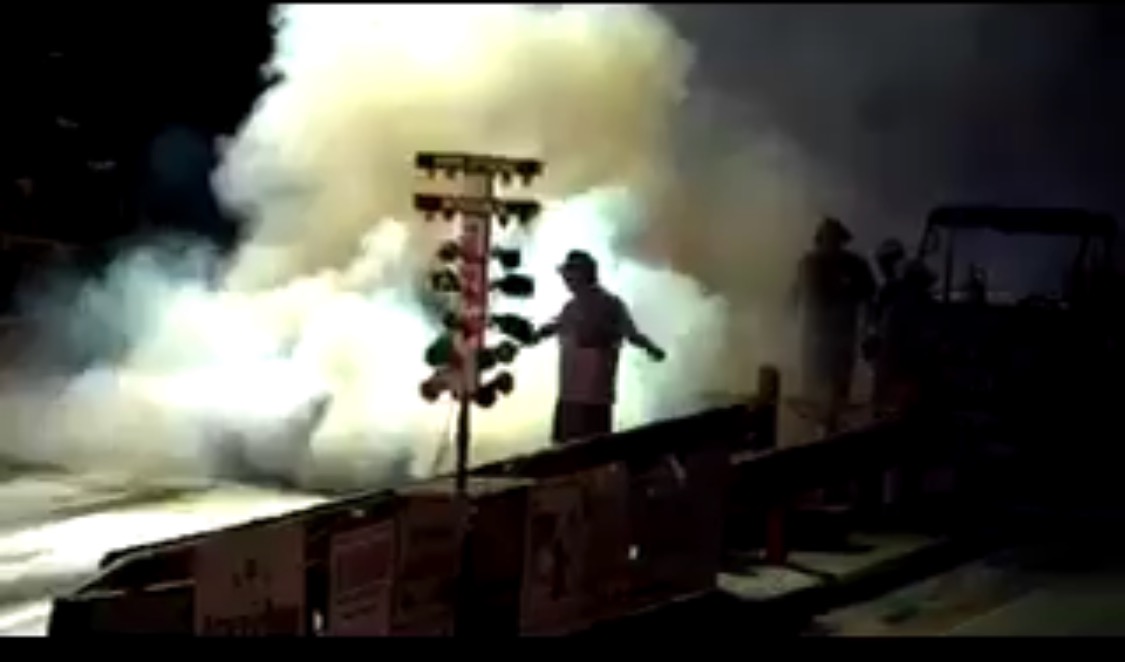
September 2023:
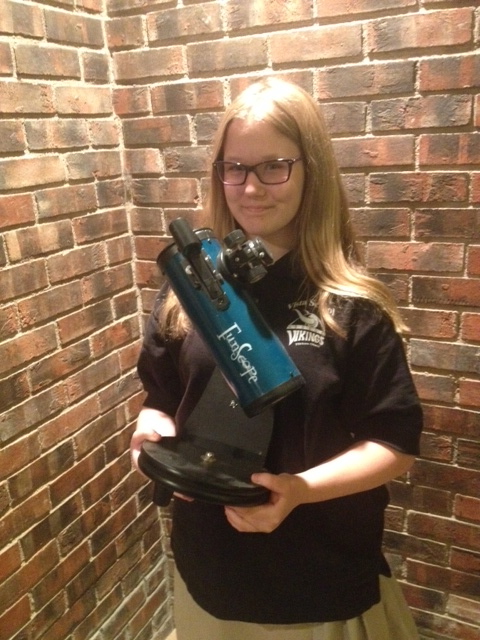
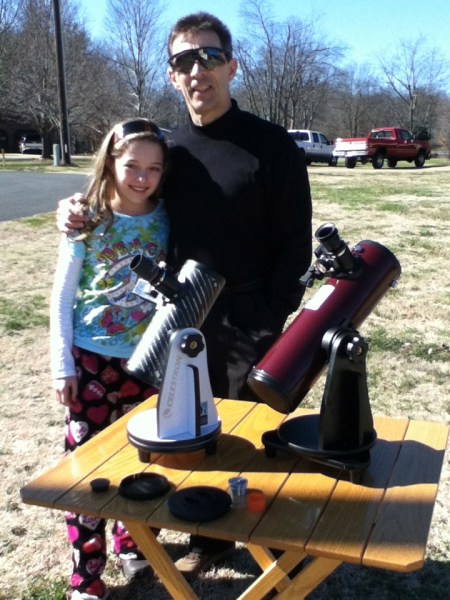
My west coast granddaughter, Zoe with her 76mm Orion Telescope.
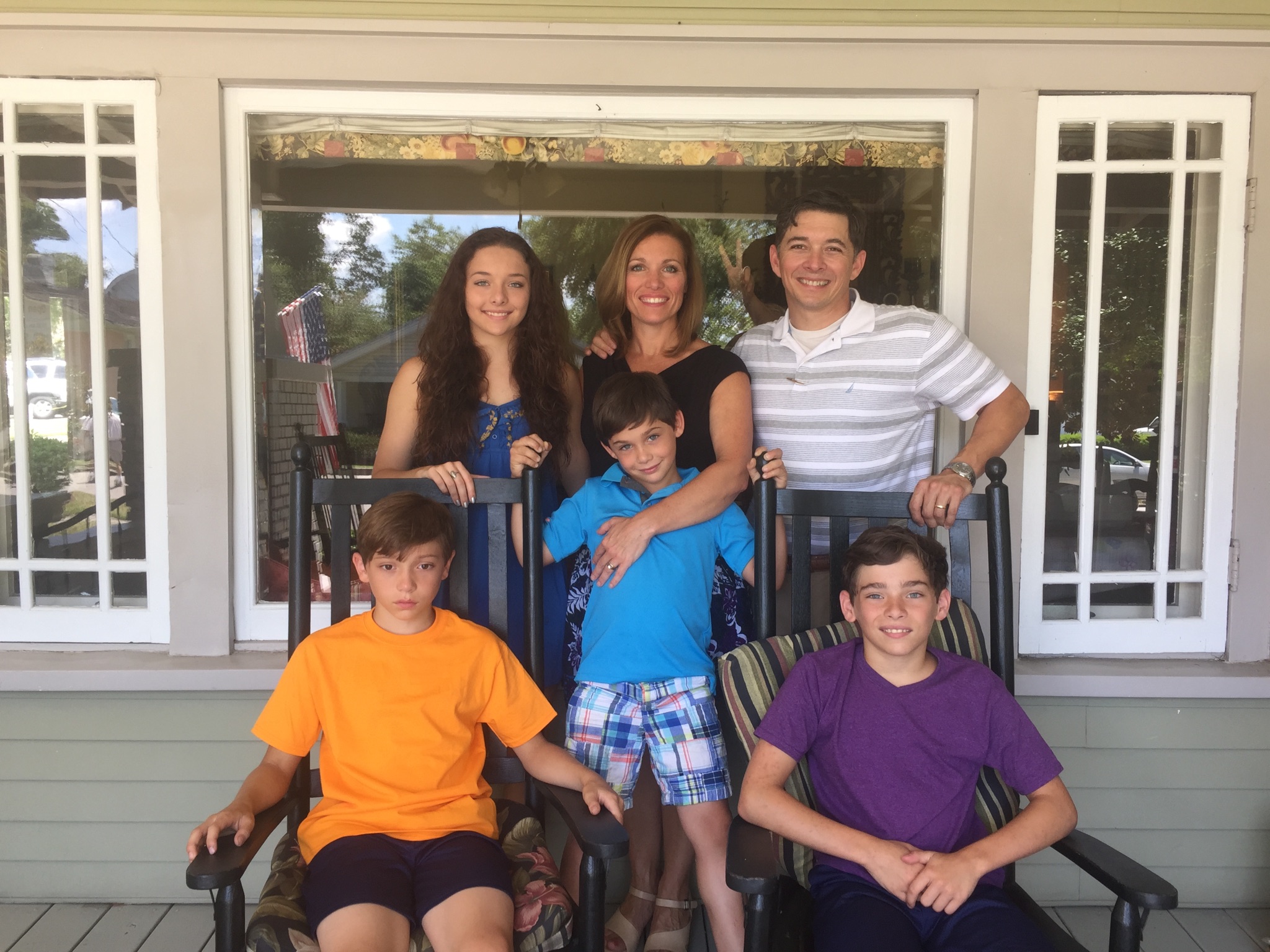
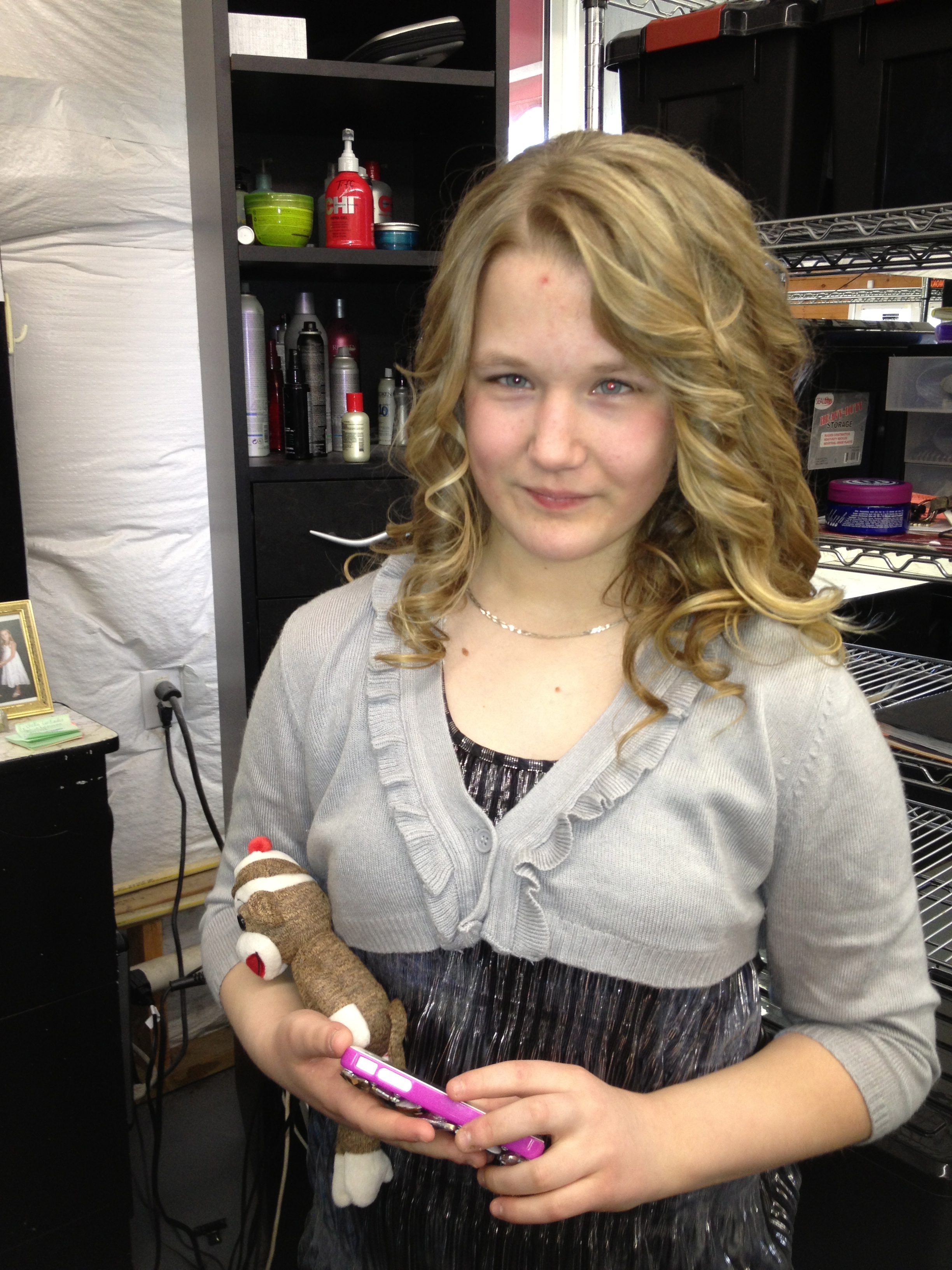
My son, Chad, daughter-in-law, Tina, and grandkids. Zoe is below, visiting a beauty Salon.
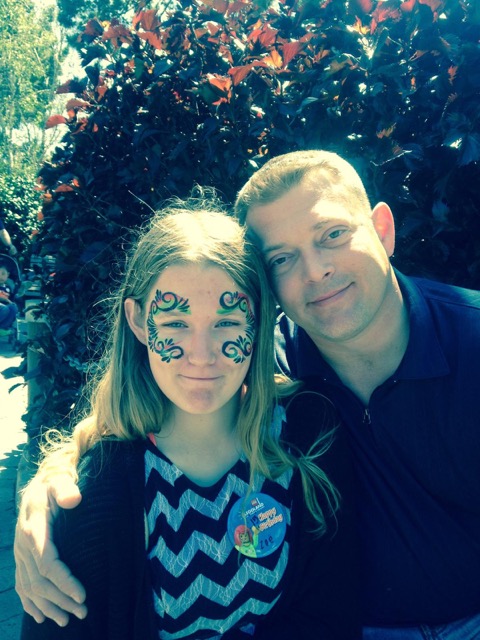
Zoe and her Dad in California after a bit of face painting.
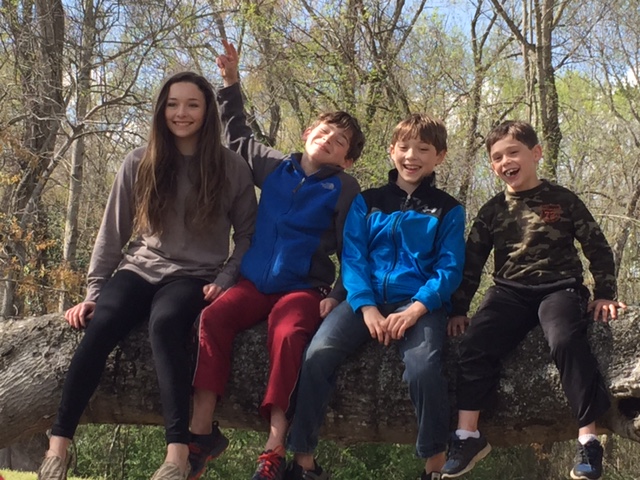
East Coast grandkids: L-R: Anna-Grace, John-Winston, Isaac, and Elisha…

My wife Debbie, with a 1997 Orion/Vixen 102mm refractor, which allowed me to see Sirius B
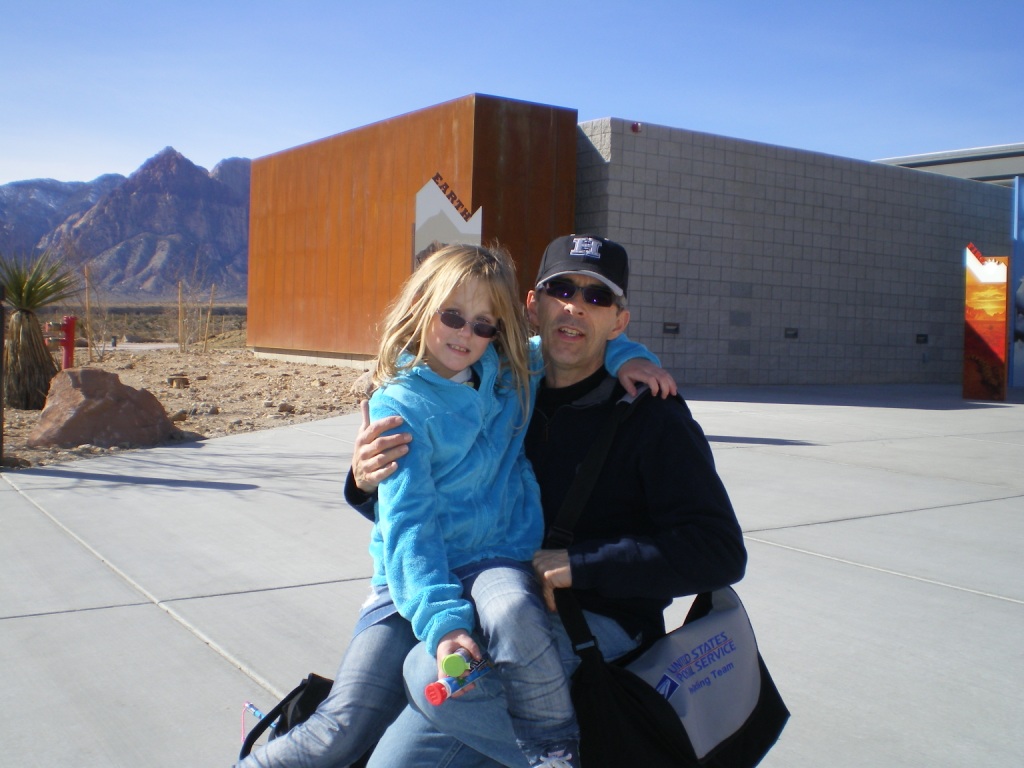
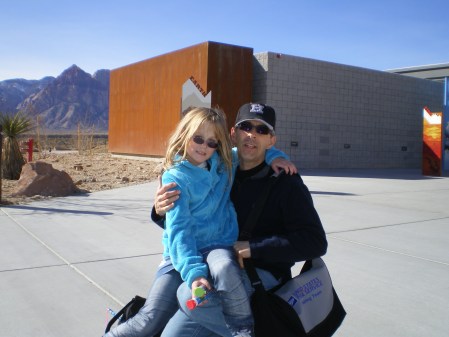
This is one of my favorite pictures from 2011. Zoe and I were at the Red Rock Canyon visitors center, just outside of Las Vegas.
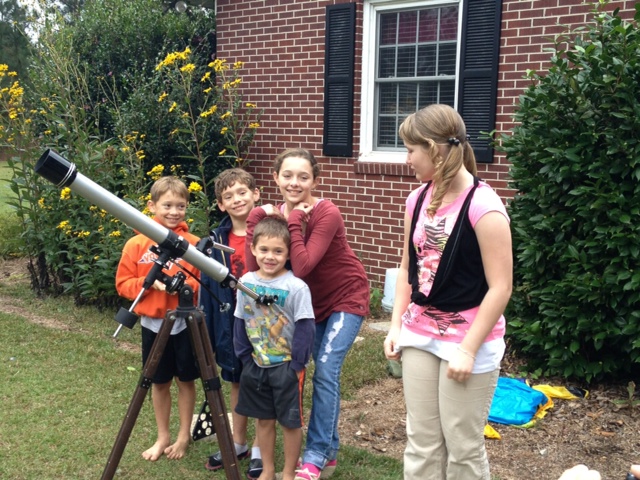
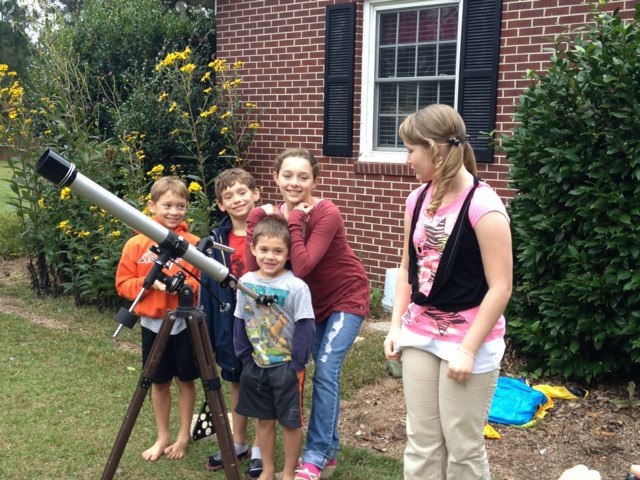
“A moment in time” when I was able to have all of my grandkids together in South Carolina. The vintage 60mm refractor telescope shown was a gift to the kids by a good friend.
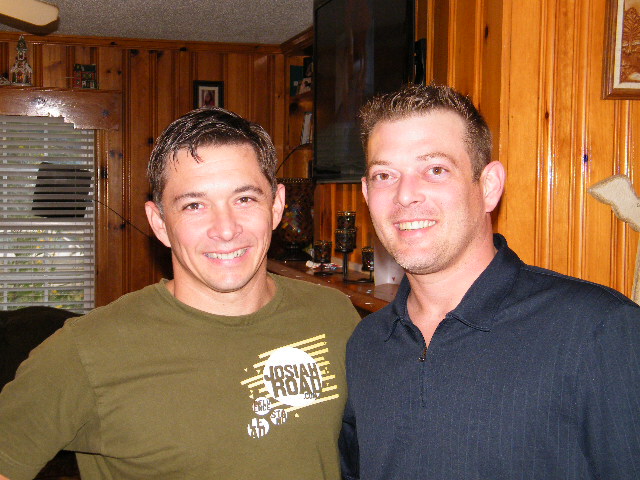
My two sons, Roger Chadwick (L) and Bradley Jason. I’m really fortunate to have sons like these guys. It’s difficult for them to get together as Chad lives on the East Coast and Brad on the West Coast. A very special photo to me…
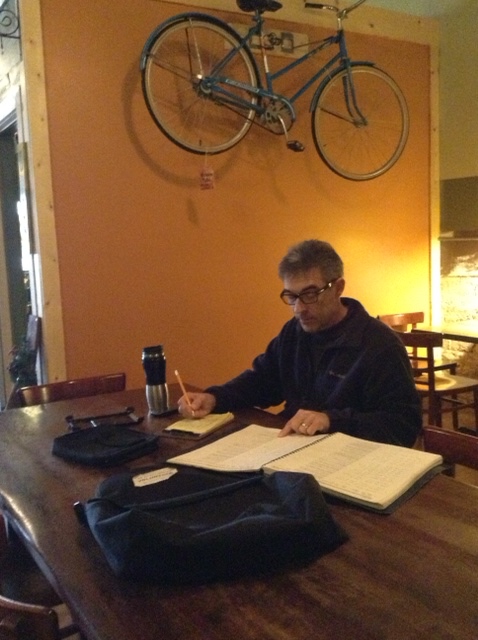
Hey…this is me, working on an astronomy article at the coffee shop on a cold day with light snow.
 Anna-Grace…aggravating one of her brothers, John-Winston.
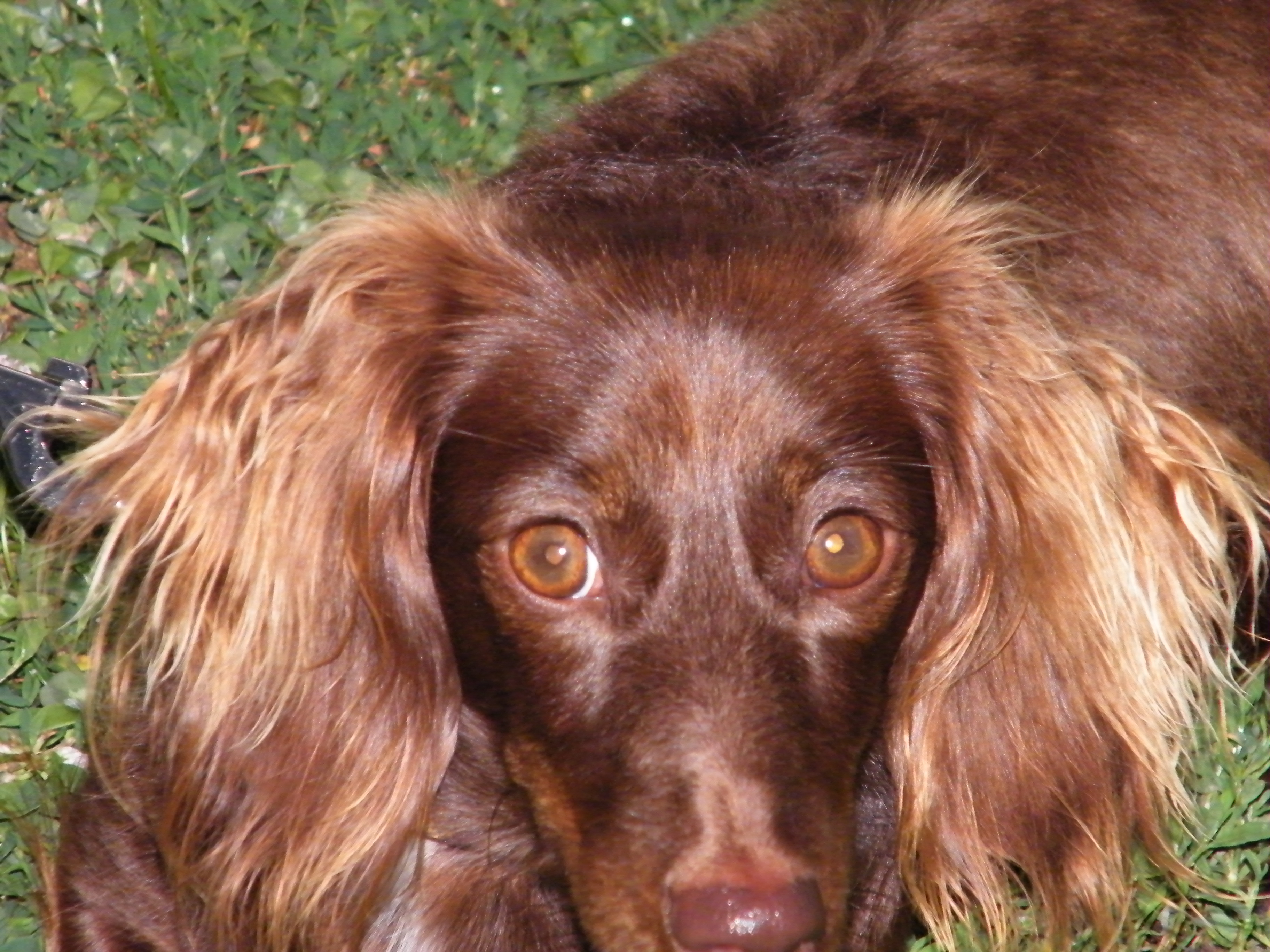
Our Dachshund, Nova Sophia.
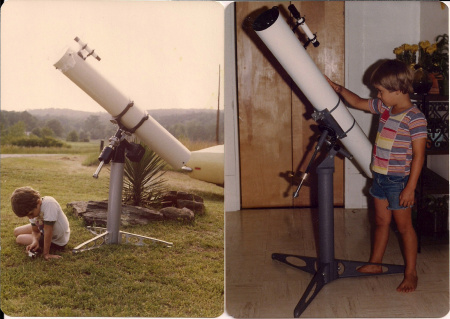
The telescope to the right is my first serious telescope which I purchased in March of 1977, an Edmund Scientific 4.25-inch f/10 reflector.
Realizing the need for more aperture, I purchased a 6-inch Criterion RV-6 a year or so later. My oldest son standing beside both telescopes, in 1978 and 1979 respectively…
Granddaughter in Red Rock Canyon, Nevada
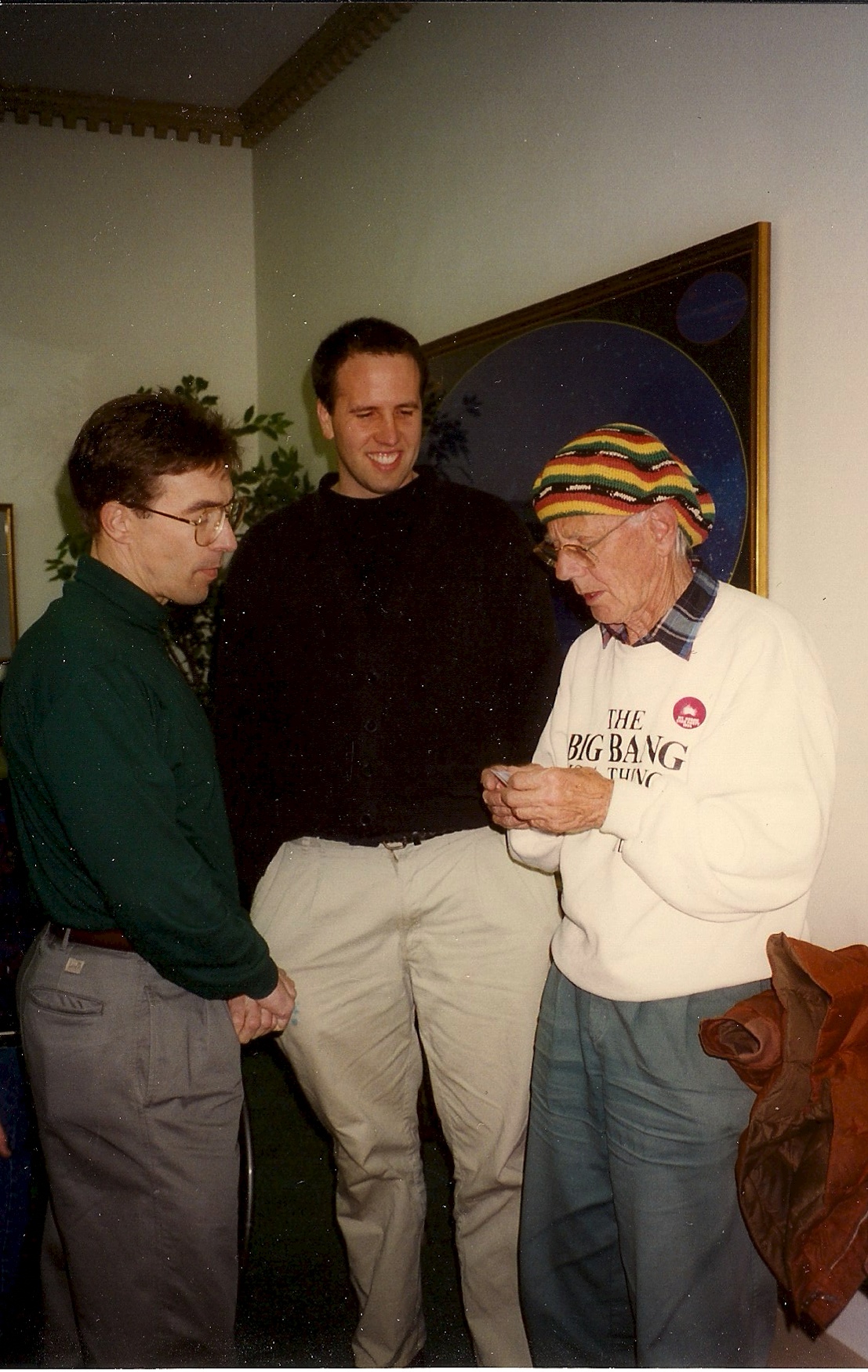
A memorable meeting with John Dobson:
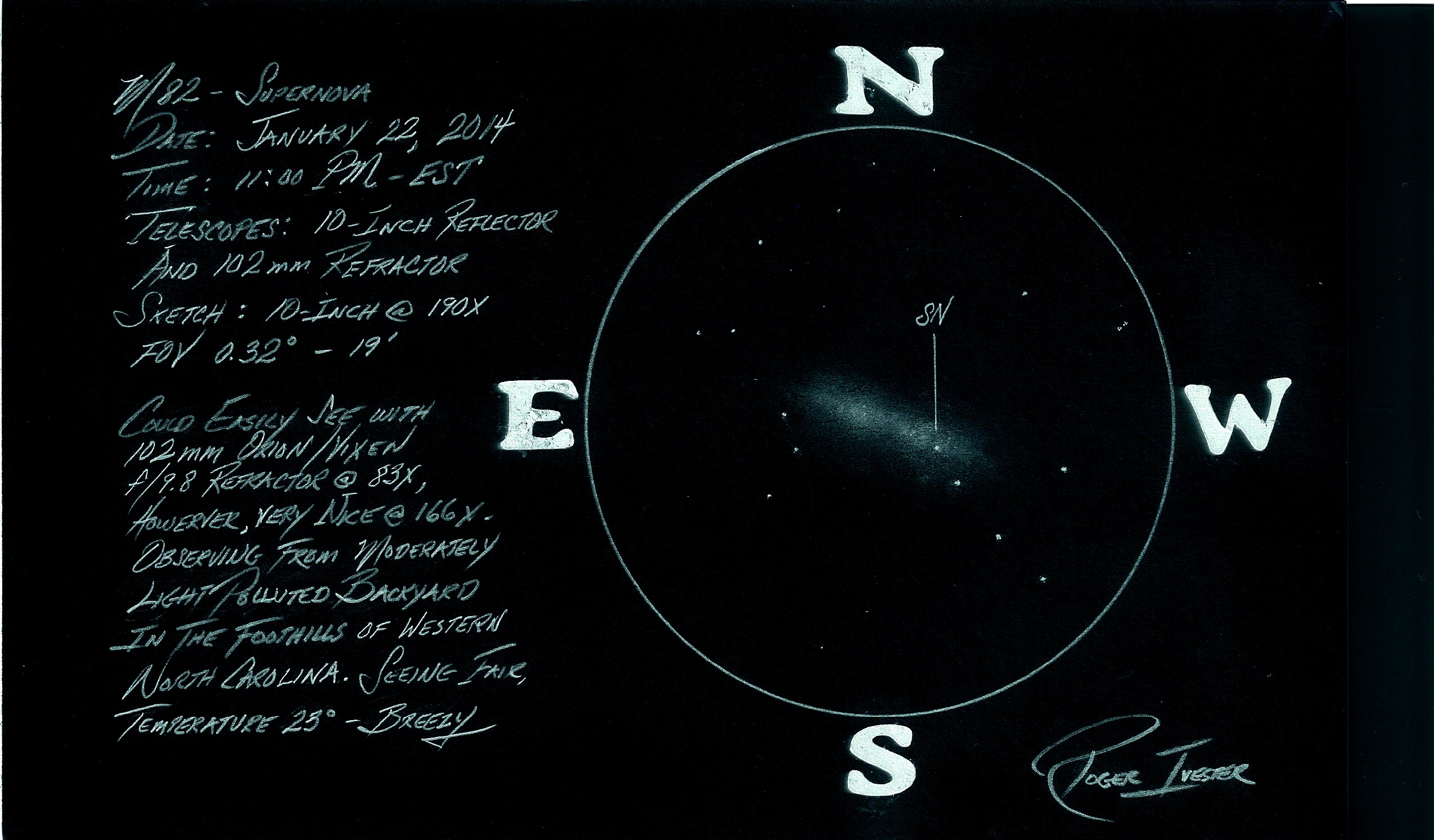
Over the past…almost thirty years, I’ve always enjoyed attempting to estimate the magnitude of any supernova within reach of a moderate backyard telescope.
The following are my estimates of the most recent M82 SN:
It was not the best of conditions, but I was able to easily observe the latest SN in galaxy, M82, in Ursa Major. Telescopes used: A vintage Meade 10-inch (model DS-10a) and an Orion 102mm Orion/Vixen f/9.8 refractor.
The SN could easily be seen in the small refractor (102mm) even at low magnification, however, the best view came at 166x.
I made the following pencil sketch, using the 10-inch reflector at 190x. Both seeing and transparency were a bit lacking, however, I was very surprised to see so much mottling in galaxy, M82.
The following pencil sketch was made using a 10-inch reflector, on a blank 5 x 8 note card, with the colors inverted using a scanner.
Date: January 22nd 2014
 rogerivester.com
Recent Comments